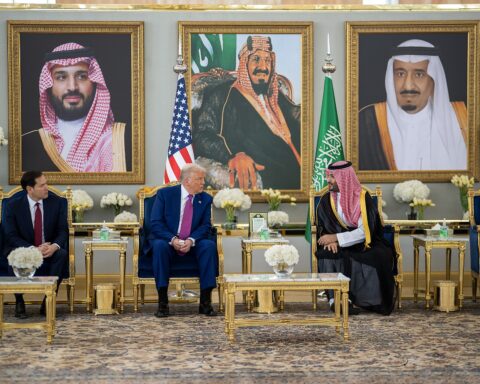
RIYADH — The ceasefire extension that Donald Trump announced on April 21 does not contain a single clause requiring Iran to restore International Atomic Energy Agency monitoring access — no cameras, no seals, no inspector at a gate. That omission means the nuclear clock is running without a referee. Iran held 440.9 kilograms of uranium enriched to 60% as of June 2025, enough for eight to eleven crude fission devices. The IAEA has not verified a gram of it since February 28. And somewhere between Riyadh and Washington, a civilian nuclear cooperation agreement — the 123 Agreement that would give Saudi Arabia its own enrichment pathway — is waiting for a congressional window that closes the moment Iran’s threshold status becomes a fact no senator can pretend not to know.
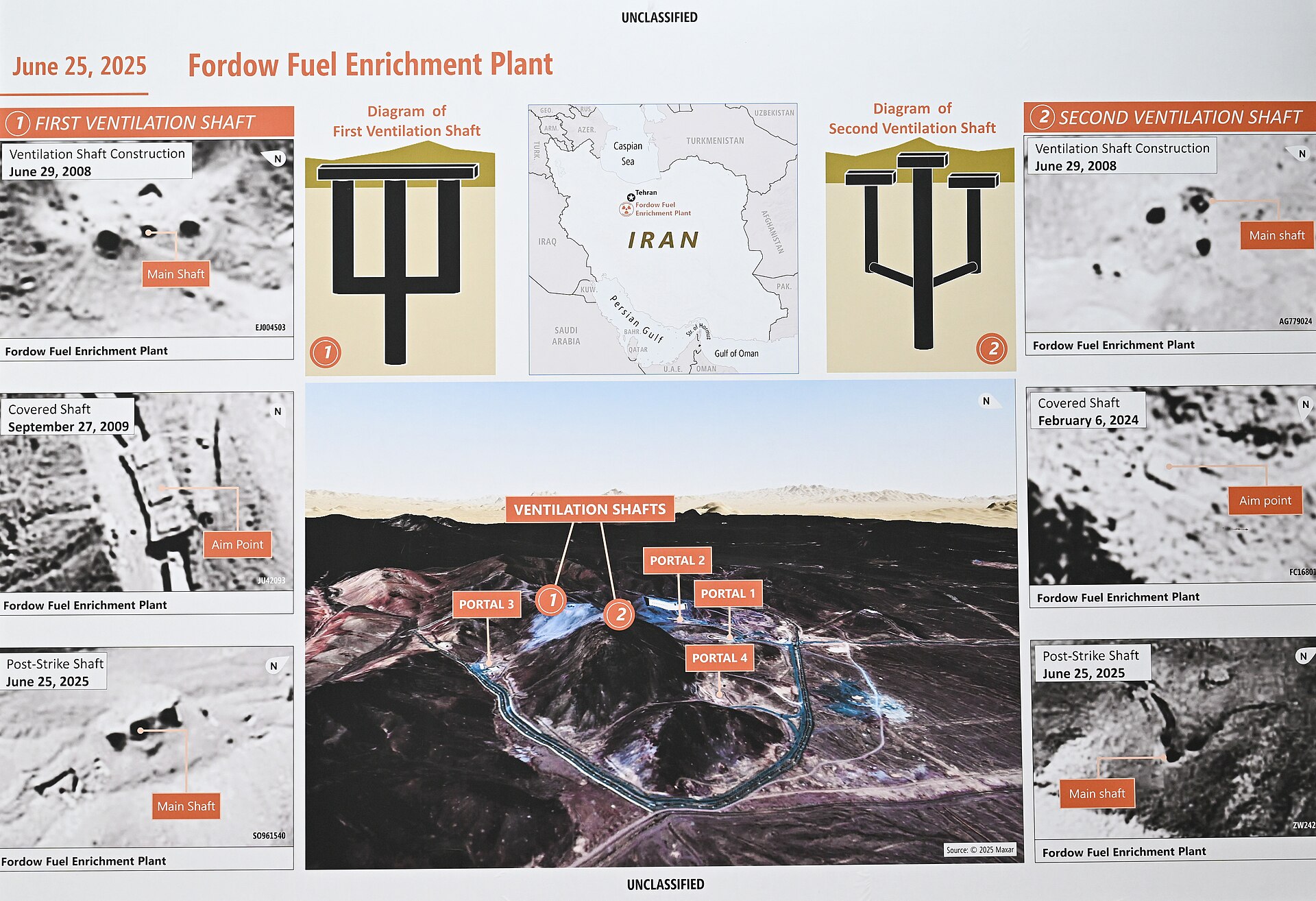
Table of Contents
- The Longest Verification Blackout in IAEA-Iran History
- How Fast Can Iran Reach Weapons-Grade Uranium?
- What Does the Ceasefire Extension Actually Cover?
- The Studio-Apartment Problem
- Why Does Iran’s Breakout Timeline Threaten Saudi Arabia’s Civilian Nuclear Deal?
- The Gold Standard That Riyadh Refused
- The Congressional Math
- The Stimson Counterargument — and Its Flaw
- What Happened the Last Time Monitoring Went Dark
- FAQ
The Longest Verification Blackout in IAEA-Iran History
Iran terminated all IAEA access on February 28, 2026. Surveillance cameras at Fordow, Natanz, Isfahan, and Arak were disabled. Seals were removed from all four declared facilities. The agency’s director general, Rafael Grossi, confirmed during the March 2026 Board of Governors meeting that the shutdown was total — there was no degraded-access arrangement, no remote monitoring fallback, no negotiated pause. Iran simply stopped cooperating.
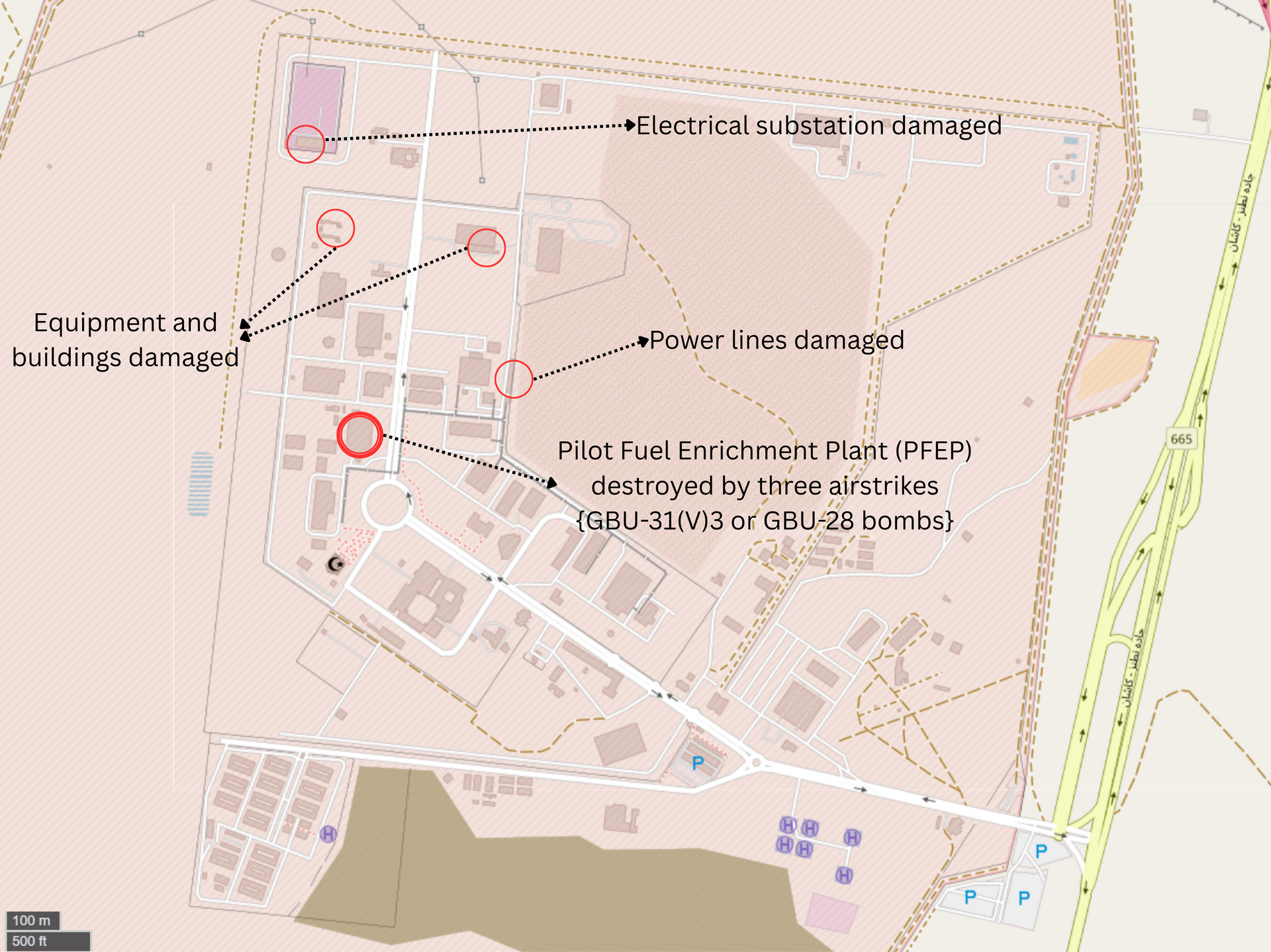
The blackout is now in its fifty-third day. It is the most complete interruption of IAEA verification since North Korea expelled inspectors in December 2002. But where Pyongyang’s expulsion followed a years-long deterioration of the Agreed Framework, Tehran’s cutoff was immediate and unilateral, timed to the opening of hostilities. The agency cannot verify stockpile quantities, centrifuge operations, material flows, or the status of facilities damaged in the June 2025 US-Israeli strikes — Operations Rising Lion and Midnight Hammer.
What Grossi could say, from his last access window, was limited. He told the Bulletin of the Atomic Scientists in March 2026 that Iran had “a bit more than 200 kilograms, maybe a little bit more” of 60%-enriched uranium at Isfahan. That figure does not match the IAEA’s own June 2025 baseline of 440.9 kilograms across all facilities. The discrepancy is the point. Satellite imagery analyzed by François Diaz-Maurin and colleagues at the Bulletin showed eighteen blue containers — consistent with VPVR/M Type B transport casks, each capable of holding up to 44 kilograms of UF6 — being moved into Isfahan’s south tunnel entrance on a flatbed truck on June 9, 2025. Up to 540 kilograms of high-enriched uranium may have been relocated underground before the strikes began. No one outside Iran knows exactly where it is now.
Grossi’s access blackout has not stopped China and Russia from meeting with him in Vienna. On April 24, Beijing and Moscow joined Iran for their third trilateral session with the IAEA Director General — timed two days before the next Muscat round — in what amounts to a coordinated effort to pre-write nuclear terms before any US-Iran bilateral can close. Beijing and Moscow’s co-authorship claim over Iran’s nuclear framework leaves Saudi Arabia excluded from both the Vienna trilateral track and the Muscat bilateral track simultaneously.
How Fast Can Iran Reach Weapons-Grade Uranium?
The enrichment gap between 60% and 90% — the threshold generally considered weapons-grade — is narrower than most non-specialists assume. Ted Postol, professor of science, technology, and national security policy at MIT, explained the physics to Al Jazeera on April 22, 2026.
The Middle East briefing 3,000+ readers start their day with.
One email. Every weekday morning. Free.
Let’s say it takes seven minutes to get 33 percent enrichment… It only takes me one minute to get to total enrichment.
Ted Postol, MIT, Al Jazeera, April 22, 2026
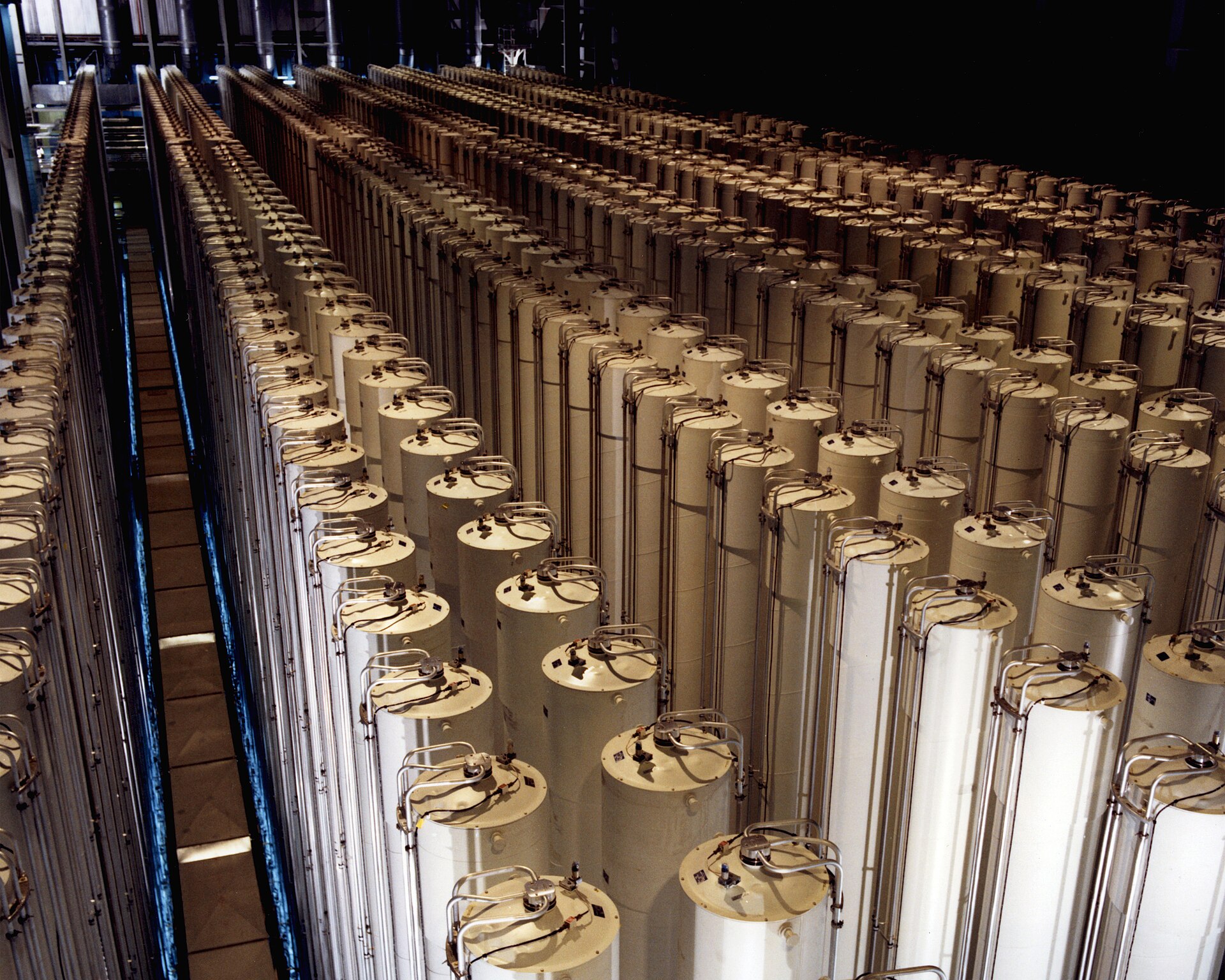
Postol’s point is not that enrichment is literally instantaneous. It is that the separative work — measured in separative work units, or SWUs — required for the final sprint from 60% to 90% is a fraction of the work already completed. Roughly 500 SWUs are needed to take 50 kilograms of 60%-enriched uranium to weapons-grade, compared to the approximately 5,000 SWUs required to enrich natural uranium to 60% in the first place. A cascade of 200 IR-6 centrifuges can complete that final step in approximately ten days. Pre-strike, Iran operated at least ten cascades of 174 IR-6 machines — 1,740 centrifuges. Even with strike damage, the residual capacity for a sprint is measured in weeks, not months.
The consensus breakout estimate as of April 2026, from both the CSIS Nuclear Network and IranWarRoom.com’s tracking dashboard, is one to three months from known stockpile. Before the June 2025 strikes, it was one to three weeks. The strikes bought time. The monitoring blackout is spending it.
What Does the Ceasefire Extension Actually Cover?
Trump’s April 21 announcement extended the ceasefire indefinitely, at Pakistan’s request, with no fixed end date. Iran must submit a new proposal. The naval blockade of Iranian ports remains in effect. The terms are military and economic: cessation of kinetic operations, continuation of maximum pressure on oil exports, and an expectation — not a requirement — that Iran will come to the table.
The nuclear dimension appears nowhere in the extension’s operative language. There is no clause requiring Iran to readmit IAEA inspectors. There is no timeline for restoring monitoring. There is no condition linking sanctions relief, blockade relaxation, or diplomatic recognition to verification access. The omission is not accidental. Iran’s five-point counter-proposal, delivered through Araghchi in Islamabad before the ceasefire’s original April 22 expiry, lists five demands: an end to US-Israeli attacks, security guarantees, war reparations, international recognition of Iranian sovereignty over the Strait of Hormuz, and — on the nuclear question — nothing. No enrichment concessions. No monitoring restoration. No downblending commitment beyond Araghchi’s vague offer to reduce 60% stocks to roughly 20%, which is not a halt but a ceiling.
Mohammad Eslami, head of Iran’s Atomic Energy Organization, was explicit in February 2026:
Enrichment, uranium ownership, dilution or non-dilution — these are the country’s internal affairs in which no foreign entity has any right to interfere.
Mohammad Eslami, AEOI chief, PressTV, February 17, 2026
The ceasefire extension, in other words, stops the shooting. It does not stop the centrifuges. And because the IAEA is locked out, no one can confirm whether the centrifuges are spinning at declared facilities, undeclared facilities, or both.
The Studio-Apartment Problem
The floor space required for a covert breakout cascade is approximately sixty square meters — no larger than a studio apartment. Postol emphasized this to Al Jazeera: a single cascade of IR-6 centrifuges, capable of sprinting 50 kilograms to weapons-grade in days, fits in a room that could be concealed inside any industrial building, warehouse, or tunnel complex in Iran. A Prius hybrid, he noted, could power four or more such cascades.
This is the structural reason the monitoring blackout is not a side issue but the central proliferation risk. The June 2025 strikes damaged Fordow’s deep-bunker facility, but the Defense Intelligence Agency assessed the damage at roughly 30% — contradicting the “obliterated” language used by both Trump and Netanyahu. The CSIS analysis by Schiff in July 2025 concluded the strikes had imposed “only months-long setbacks.” By December 2025, satellite imagery showed new roofs constructed over damaged buildings at both Natanz and Isfahan, blocking further overhead assessment. Separately, excavation of a new underground site at Kuh-e Kolang Gaz La — eighty to one hundred meters deep under granite, designed to withstand GBU-57 Massive Ordnance Penetrators — was documented by the Foundation for Defense of Democracies in January 2026.
Iran does not need to rebuild what was destroyed. It needs sixty square meters that no one is watching. With 3,000-plus IR-6-equivalent machines inferred from pre-strike capacity, and an IRGC command structure that President Pezeshkian himself has accused of operating outside civilian authority, the conditions for a covert sprint are not hypothetical. They are architectural.
Why Does Iran’s Breakout Timeline Threaten Saudi Arabia’s Civilian Nuclear Deal?
The US-Saudi 123 Agreement exists in a political equilibrium that depends on Iran remaining a threshold state — close enough to a weapon to justify Saudi nuclear ambitions, but not so unambiguously across the line that Congress treats every new nuclear cooperation agreement as proliferation. The moment Iran’s status shifts from “latent capability” to “demonstrated or presumed weapons state,” the congressional calculus inverts.
The framework was announced in November 2025 as a Joint Declaration on Civil Nuclear Energy Cooperation. It has not yet been formally submitted to Congress, but the architecture is already visible. The draft does not expressly prohibit Saudi uranium enrichment — a direct departure from the 2009 UAE agreement, which explicitly forswore both enrichment and reprocessing. The draft allows a unique bilateral US-Saudi safeguards arrangement that could supplement, but does not require, the IAEA Additional Protocol. Trump used an NDAA waiver to bypass the Additional Protocol requirement, submitting the required report to Congress in November 2025.
Saudi officials have been unambiguous about their intentions. Prince Abdulaziz bin Salman, the energy minister, told a Dhahran conference in January 2025: “We will enrich it and we will sell it and we will do a yellowcake.” Mohammed bin Salman’s September 2023 statement to Fox News remains operative doctrine: “If they get one, we have to get one.” Saudi FM Faisal bin Farhan updated the formula in December 2025: “If Iran gets an operational nuclear weapon, all bets are off.”
These statements are not rhetorical. Saudi Arabia’s National Project for Atomic Energy, approved in July 2017, has active reactor bids from China’s CNNC, France’s EDF, South Korea’s KEPCO, and Russia’s Rosatom. The kingdom has identified domestic uranium deposits. The 123 Agreement is the legal gateway to fuel-cycle autonomy — and it is open only as long as Congress is willing to treat Saudi enrichment as civilian hedging rather than a proliferation cascade triggered by an Iranian bomb.
That distinction depends on ambiguity. The IAEA blackout is destroying the ambiguity.
The Gold Standard That Riyadh Refused
When the UAE signed its 123 Agreement in 2009, it accepted what became known as the gold standard: an explicit prohibition on enrichment and reprocessing, plus full adherence to the IAEA Additional Protocol. The agreement was held up for a decade as the model for nonproliferation-compliant civilian nuclear cooperation in the Gulf.
Saudi Arabia refused the model. The draft framework announced in November 2025 omits the enrichment prohibition and does not require the Additional Protocol. Kelsey Davenport, director of nonproliferation policy at the Arms Control Association, told PBS NewsHour in 2026 that the Saudi draft “raises concerns that the Trump administration has not carefully considered the proliferation risks” and “suggests that once the bilateral safeguards agreement is in place, it will open the door for Saudi Arabia to acquire uranium enrichment technology or capabilities.”
The permissive terms are not an oversight. They are the price of the deal. A kingdom managing its first wartime Hajj, absorbing a 30% production crash, and anchoring a two-corridor energy export strategy through Hormuz and Bab el-Mandeb has a negotiating position that a peacetime Saudi Arabia does not. Washington needs Riyadh’s cooperation on oil output, regional stability, and the containment architecture that underpins the ceasefire. The 123 Agreement is part of the payment.
But the permissive terms are politically survivable in Washington only if Iran has not yet crossed the weapons threshold. A confirmed or strongly presumed Iranian nuclear weapon transforms Saudi enrichment from a hedging strategy into the second domino in a regional cascade — and the same congressional coalition that might grudgingly accept the Saudi draft in a world of Iranian ambiguity will not accept it in a world of Iranian certainty.
The Congressional Math
Once a 123 Agreement is formally submitted, Congress has ninety days to pass a joint resolution of disapproval. The default favors the executive: if Congress does not act, the agreement takes effect. But Senator Ed Markey and colleagues introduced S.4243 in the 119th Congress, which would reverse the default — requiring an affirmative joint resolution of approval. If that bill passes, the 123 Agreement needs active congressional consent, not merely congressional inaction.
The opposition is bipartisan. Markey, Merkley, Kaine, Van Hollen, Wyden, Welch, and Sanders sent letters in March 2026 demanding gold-standard compliance. Senate Foreign Relations Committee chair Risch, a Republican, and ranking member Shaheen, a Democrat, both stated that any deal must include an enrichment and reprocessing prohibition. Representative Brad Sherman announced he would reintroduce the No Nuclear Weapons for Saudi Arabia Act and file a Resolution of Disapproval if the gold standard is not met.
The same coalition — or a closely overlapping one — that would block a permissive Saudi 123 Agreement is the coalition that has demanded no Iran deal allowing enrichment. Fifty-two senators and 177 House members wrote to Trump demanding he reject any Iran agreement that permits continued enrichment. The political logic is a closed loop: if Iran enriches, Saudi Arabia wants to enrich; if Saudi Arabia wants to enrich, Congress resists; if Congress resists, the 123 Agreement dies; if the 123 Agreement dies, Saudi Arabia’s civilian nuclear pathway is set back by years. Iran’s breakout does not just threaten Israel. It threatens Riyadh’s negotiating position in Washington.
| Agreement | Enrichment | Reprocessing | Additional Protocol | Status |
|---|---|---|---|---|
| UAE 123 (2009) | Explicitly prohibited | Explicitly prohibited | Required | In force |
| Saudi draft (2025) | Not prohibited | Not explicitly prohibited | Not required (NDAA waiver) | Not yet submitted to Congress |
| Jordan 123 (2008) | Not prohibited | Prohibited | Required | In force |
A Just Security analysis in 2026 warned that “the U.S. move to a bilateral agreement sets a troubling precedent that States seeking nuclear weapons, or a nuclear weapons capability, may seek to exploit to negotiate less intrusive inspections.” The precedent runs in both directions. If Washington grants Saudi Arabia enrichment rights while demanding Iran surrender them, the asymmetry is a negotiating liability. If Washington fails to demand Iran surrender them — because the ceasefire extension contains no nuclear provisions — the Saudi deal becomes the only proliferation architecture in play. Neither outcome is stable.
The Stimson Counterargument — and Its Flaw
The Stimson Center published an analysis in 2026 arguing that Saudi Arabia’s nuclear path “will not depend on Iran or the war’s outcome.” The argument deserves engagement because it represents the most sophisticated version of the case that the 123 Agreement and the Iranian breakout timeline are independent variables.
Reactive proliferation has been rare in the nuclear age. Far more common has been restraint, hedging, and the search for alternative forms of deterrence short of weaponization.
Stimson Center, 2026
The Stimson analysis characterizes Saudi objectives as “preserving long-term options by anchoring technical autonomy while remaining formally within NPT commitments.” This is accurate as a description of Saudi behavior. It is incomplete as a description of the political environment in which that behavior must be ratified.
Saudi Arabia’s nuclear ambitions may be structurally independent of Iran’s. Congressional willingness to ratify those ambitions is not. The Stimson framing treats the 123 Agreement as a bilateral negotiation between Riyadh and Washington. In practice, it is a trilateral calculation: Riyadh’s demands, Washington’s incentives, and Congress’s tolerance — and Congress’s tolerance is a direct function of the Iranian threat level. An Iran that is ambiguously close to a weapon creates political cover for a permissive Saudi deal (“they need a civilian deterrent hedge”). An Iran that has crossed the threshold eliminates it (“we cannot be the country that enabled a two-bomb Middle East”).
The Stimson Center is right that Saudi Arabia will pursue nuclear technology regardless. It may be wrong that Washington will supply it regardless. The 123 Agreement is an American instrument, subject to American politics, and American politics on nuclear proliferation are shaped by Iran — whether the Stimson Center wishes they were or not.
What Happened the Last Time Monitoring Went Dark
North Korea expelled IAEA inspectors in December 2002. It conducted its first nuclear test in October 2006 — three years and ten months later. The IAEA has never been able to verify the completeness and correctness of North Korea’s initial safeguards report. The monitoring gap did not prevent weaponization. It concealed it until the seismic signature made concealment impossible.
The parallel is imperfect — Iran’s program is more advanced in some dimensions, less in others — but the structural lesson is precise. Monitoring does not stop proliferation. It provides early warning. When early warning is removed, the policy options narrow to two: pre-emptive military action against facilities whose status is unknown, or acceptance of a fait accompli. The June 2025 strikes were the pre-emptive option, and the CSIS assessment by Schiff concluded they imposed “only months-long setbacks.” A second round of strikes against hardened, relocated, or undeclared facilities — with centrifuges potentially operating sixty meters under granite at Kuh-e Kolang Gaz La — would face a different target set than the first.
Libya’s case reinforces the lesson from the opposite direction. When UK and US inspectors entered Libya in October 2003, after Gaddafi’s voluntary disarmament, they found “more extensive Libyan nuclear activities than previously thought.” The A.Q. Khan network had provided Libya an actual nuclear weapons design. The IAEA had not detected it. Pakistan’s own program proceeded for two decades outside safeguards before the May 1998 tests. In every case, the absence of monitoring did not mean the absence of progress. It meant the absence of knowledge.
Iran’s enrichment history maps this trajectory with uncomfortable precision. The JCPOA capped enrichment at 3.67% in 2015, with a breakout time exceeding twelve months. The US withdrew in 2018. Iran resumed enrichment in January 2020, reached 60% by 2021, and compressed breakout to two to four weeks by 2023. The June 2025 strikes pushed it back to one to three months. The IAEA blackout, now approaching two months, means the current estimate is a guess informed by the last verified data point — not a measurement.
| Date | Event | Estimated Breakout Time |
|---|---|---|
| July 2015 | JCPOA implemented | 12+ months |
| May 2018 | US withdraws from JCPOA | 12 months |
| January 2020 | Iran resumes enrichment | 3-6 months |
| April 2021 | Iran reaches 60% enrichment | 3-4 months |
| Mid-2023 | 60% stockpile exceeds 120 kg; breakout compressed to weeks | 1-3 weeks |
| June 2025 | US-Israeli strikes (Rising Lion / Midnight Hammer) | 1-3 months (est.) |
| February 28, 2026 | IAEA access terminated | Unknown (1-3 months est.) |
| April 21, 2026 | Ceasefire extended — no monitoring clause | Unknown |
The expiry of OFAC General License U on April 19 and the Rubio sanctions push on April 18 both reflect Washington’s attempt to maintain economic coercion as a substitute for military and verification tools. The zero-revenue outcome of Iran’s Hormuz toll scheme — $0 collected in thirty-six days — suggests that economic isolation is working as a pressure mechanism. But economic pressure does not slow centrifuges. It does not restore cameras. And it does not tell Congress whether Iran has crossed a line that makes the Saudi 123 Agreement unsignable.
The IRGC’s self-declared “full authority” over Hormuz and the reversal of Araghchi’s Hormuz opening both illustrate the authorization ceiling problem: even if Pezeshkian’s government wanted to negotiate nuclear monitoring restoration, the IRGC command structure that controls the actual facilities may not comply. The ceasefire extension extends the diplomatic runway. It does not extend Riyadh’s nuclear window.
The domestic political face of this authorization ceiling became fully visible on April 22 when Judiciary Chief Mohseni-Ejei threatened prosecution of any Iranian negotiator who compromised on “red lines,” signalling that the hardliner bloc views the ceasefire extension as an opportunity to consolidate leverage rather than a pathway to concessions — as covered in Iran’s Judiciary Chief and IRGC Answer Trump’s Ceasefire Extension with Missile Parade and Prosecution Threat.
Saudi Arabia’s civilian nuclear future depends on an American legislative act. That act depends on a political environment that Iran’s enrichment program is degrading by the day. The centrifuges and the congressional calendar are on the same clock. Only one of them has a known deadline.
FAQ
Has Iran formally withdrawn from the Nuclear Non-Proliferation Treaty?
No. Iran remains a signatory to the NPT and has not invoked Article X, which requires ninety days’ notice of withdrawal. Terminating IAEA access violates safeguards obligations under the NPT but is not equivalent to withdrawal. North Korea is the only state to have formally withdrawn, in January 2003. Iran’s approach — maintaining formal NPT membership while eliminating verification — creates a legal grey zone that complicates both diplomatic and military responses, since the NPT framework assumes verified compliance, not unverified membership.
Could Saudi Arabia pursue enrichment without a US 123 Agreement?
Technically, yes. Saudi Arabia could source reactor technology and fuel-cycle components from China, Russia, France, or South Korea without US involvement. The kingdom has existing agreements with Rosatom (June 2015) and active bids from CNNC and KEPCO. However, a non-US pathway would forfeit American reactor technology, fuel supply guarantees, and — above all — the implicit US security umbrella that accompanies a bilateral nuclear cooperation agreement. The 123 Agreement is not just a commercial license. It is a strategic alignment instrument. Pursuing enrichment outside it would signal a decoupling from Washington that Riyadh has, so far, been unwilling to accept.
What would IAEA monitoring restoration actually require?
At minimum: reinstallation of surveillance cameras at Fordow, Natanz, Isfahan, and Arak; replacement of tamper-evident seals on all centrifuge cascades and material storage areas; resumption of inspector access for unannounced visits under the Additional Protocol (which Iran suspended in February 2021); and a new baseline inventory verification to account for material movements during the blackout. The last requirement is the hardest. The IAEA would need to re-verify the location and quantity of all enriched uranium — including whatever was moved into the Isfahan tunnel complex in June 2025 — against Iran’s declarations. Given the nine-month gap in continuity of knowledge, that verification could take months and would require Iranian cooperation that no current diplomatic framework compels.
What is the E3 snap-back mechanism, and is it still available?
The E3 (UK, France, Germany) triggered the JCPOA snap-back mechanism on August 28, 2025, reimposing UN Security Council sanctions on September 27-28, 2025. The mechanism was a one-time use provision — once triggered, it cannot be invoked again. It expired on October 18, 2025. When Secretary Rubio urged the EU to reimpose Iran sanctions on April 18, 2026, he was calling for new, autonomous European sanctions, not a UNSC snap-back. Russia and China’s failed counter-resolution to extend the JCPOA expired at the same endpoint. There is no remaining multilateral mechanism for automatic sanctions reimposition.
How does the Iran-Saudi nuclear dynamic affect other Gulf states?
The UAE’s 2009 gold-standard agreement included an explicit clause allowing renegotiation if a neighboring state receives more permissive terms. If the Saudi 123 Agreement is ratified without an enrichment prohibition, Abu Dhabi has grounds to demand equivalent treatment — unwinding the nonproliferation framework that the gold standard was designed to establish. Turkey, Egypt, and Jordan have all expressed civilian nuclear ambitions. A permissive Saudi deal, in a region where Iran is enriching without monitoring, creates what the Washington Institute described as a “cascade risk” — not a single proliferation event but a sequential erosion of the restraint norm across multiple states. The structural argument for why the war has removed Washington’s ability to insist on the gold standard — and what the UAE’s renegotiation clause triggers next — is examined in the US-Saudi nuclear enrichment deal Washington cannot walk back.