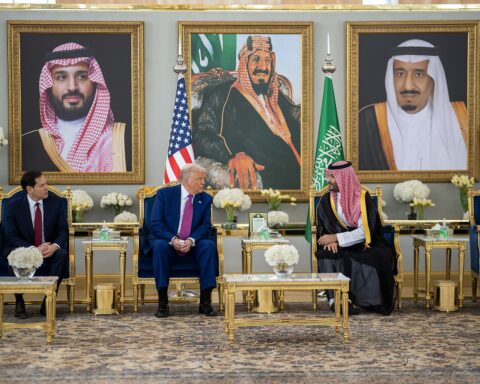
WASHINGTON — President Donald Trump faces a May 1 deadline under the War Powers Resolution to either obtain congressional authorization for the 55-day-old military campaign against Iran or begin withdrawing US forces from the theater, a constitutional tripwire that five Senate votes and one House vote have failed to defuse and that now forces Gulf states to recalculate every assumption about the war’s duration. The deadline, triggered by Trump’s March 2 notification to Congress two days after Operation Epic Fury began on Feb. 28, arrives with no Authorization for Use of Military Force introduced in either chamber, no White House statement addressing the legal clock, and US gasoline prices above the $4-per-gallon threshold that traditionally reshapes midterm politics, according to AAA pump-price data.
Table of Contents
What the Clock Requires
The War Powers Resolution of 1973 gives a president 60 days from the date of a formal report to Congress to prosecute military operations without authorization. After 60 days, the president must either secure an AUMF, begin withdrawal, or invoke a single 30-day extension by certifying in writing that “unavoidable military necessity” requires additional time for the “safety” of withdrawing forces. The statute offers no fourth option.
Trump submitted his War Powers notification on March 2, 2026 — 48 hours after US and Israeli strikes on Iranian nuclear and military facilities began. The report claimed authority solely under Article II of the Constitution, the president’s role as commander-in-chief. It did not acknowledge the War Powers Resolution’s authority over the operation. It did not invoke the 2001 AUMF passed after Sept. 11 or the 2002 AUMF that authorized the Iraq war.
Scott R. Anderson of the Brookings Institution wrote in Lawfare that “the Trump administration’s attack on Iran pushes even the executive branch’s generous understandings of the President’s legal authority to their limits.” The administration’s refusal to invoke either existing AUMF was a deliberate choice: the 2001 authorization targets al-Qaeda and associated forces, not Iran’s conventional military; the 2002 authorization was specific to Iraq and was formally repealed by Congress in 2023.
The 60th day falls on May 1. No president has ever continued large-scale combat operations past the War Powers deadline without either obtaining authorization or claiming the operations do not constitute “hostilities” — the argument President Barack Obama used in Libya in 2011. That argument relied on the absence of US ground troops, zero American casualties, and no sustained exchanges of fire. None of those conditions apply to the Iran campaign, where the United States has lost aircraft, sustained casualties, and engaged in daily kinetic operations for nine weeks.
Five Senate Votes, One House Vote, Zero Results
Congress has attempted to assert its war powers authority six times since Operation Epic Fury began. The Senate has voted five times on resolutions demanding withdrawal:
The Middle East briefing 3,000+ readers start their day with.
One email. Every weekday morning. Free.
March 4: 46-51, defeated.
A second vote days later: 47-52, defeated.
A third attempt: 46-51, defeated.
April 15: 52-47, with the majority voting to block the resolution from advancing.
April 22-23: 46-51, defeated.
In every vote, a single Republican — Sen. Rand Paul of Kentucky — crossed party lines to vote yes. In every vote, a single Democrat — Sen. John Fetterman of Pennsylvania — crossed to vote no. The pattern has held with mechanical consistency across all five attempts.
The House came closer. A war powers resolution failed 213-214 — a single vote. That margin is the most consequential number in the congressional war powers debate and has received the least attention. One member changing position, one absence on the other side, one special election result would flip the outcome. House Minority Leader Hakeem Jeffries called the conflict “this war of choice, this reckless and costly war” that “was entered into without any plan, any objective, any exit strategy.”
Senate Minority Leader Chuck Schumer has pledged that Democrats will “continue to force war powers votes every week until Republicans see reason.” The strategy amounts to an endurance test: force enough votes that the political cost of sustaining the war eventually exceeds the political cost of breaking with the president.
Sen. Paul, the lone Republican dissenter, has estimated the conflict’s cost at approaching $30 billion. Public polling shows 55 percent of Americans oppose the war; 32 percent support it, according to a Foreign Policy survey published April 19.
Who Flips the War?
Three Republican senators have publicly conditioned their continued support on congressional authorization, creating a narrow path to either an AUMF or a war powers resolution with teeth.
Sen. Susan Collins of Maine has been the most explicit. “I have been clear from the beginning of this military operation that the President’s power is not unlimited as Commander in Chief, as the Constitution gives Congress an essential role in matters of war and peace,” Collins said April 19. “If this conflict exceeds the 60 days specified in the War Powers Act, or if the President deploys troops on the ground, I believe that Congress should have to authorize those actions.”
Sen. Thom Tillis of North Carolina framed authorization as binary. “I think after 60 days, the way the War Powers Resolution reads is you either are articulating an exit plan that would make an AUMF moot, or you’re planning to be there for an extended period of time, which means the AUMF is necessary,” Tillis told Foreign Policy. In a separate interview with NOTUS, he added: “I can’t be comfortable because I don’t know what the strategy is.”
Sen. John Curtis of Utah, the third Republican to publicly flag the deadline, has not elaborated as extensively but has signaled that post-May 1 operations without authorization would test his support.
Other Republican senators have expressed discomfort without drawing hard lines. Sen. Josh Hawley of Missouri told NOTUS: “Where does this go next, I don’t know…I hope that there’s a time, there’s a plan to draw this to a conclusion.” Sen. Jon Husted of Ohio said the “military operation needs to be brief and successful.” Neither has committed to voting for a war powers resolution.
Senate Majority Leader John Thune has walked both sides of the line. He told NOTUS that the administration needs “a plan for how to wind this down, how to get an outcome that actually leads to a safer, more secure Middle East.” But he also publicly acknowledged the 30-day extension path on CBS News: “The president’s still within that allotted time, he can extend it, I think, 30 days unilaterally.”
That statement is a tell. Thune does not volunteer legal options on camera without coordination. The public acknowledgment of the extension mechanism suggests the White House has privately signaled that invoking the 30-day window — rather than seeking an AUMF — is the preferred path past May 1.
Why Does the 30-Day Extension Create a Trap?
The 30-day extension is not a continuation of war authority. Maryam Jamshidi, a law professor at the University of Colorado, told Al Jazeera that “the president must certify, in writing, to Congress that the continuing use of armed force is a result of ‘unavoidable military necessity.’” The Congressional Research Service specifies that this extension exists solely to permit orderly withdrawal of forces, not continued prosecution of hostilities.
If Trump invokes the extension on May 1, the new deadline becomes May 31. That date falls five days after the Day of Arafah on May 26 — the spiritual apex of the Hajj pilgrimage — and in the final days of the Hajj season. The extension clock would expire while 1.2 to 1.5 million pilgrims are still in or departing Saudi Arabia.
The legal problem is structural. An administration that certifies “unavoidable military necessity” for withdrawal while simultaneously conducting offensive strikes, seizing Iranian tankers, and maintaining a naval blockade would be making a claim that contradicts the observable conduct of the operation. The Libya precedent does not help: Obama argued operations were not “hostilities” at all, a framing that at least had internal consistency even if it strained credulity. Certifying a withdrawal necessity while escalating is a different category of legal exposure.
Speaker Mike Johnson has attempted to pre-empt the constitutional debate entirely. He called the War Powers Resolution “unconstitutional” and described congressional constraints on the commander-in-chief as a “frightening prospect.” That position has no Supreme Court backing — the constitutionality of the War Powers Resolution has never been directly adjudicated — but it signals that House Republican leadership will not bring an AUMF or a war powers resolution to the floor voluntarily.
Trump’s own first-term history complicates the administration’s position. In May 2020, the Senate passed an Iran-specific war powers resolution 55-45. Trump vetoed it. The Senate failed to override, 49-44. The 2020 resolution came after the Qassem Soleimani strike — a single operation with no sustained campaign. The current conflict is orders of magnitude larger.
The Gulf Calculus Trump Cannot Control
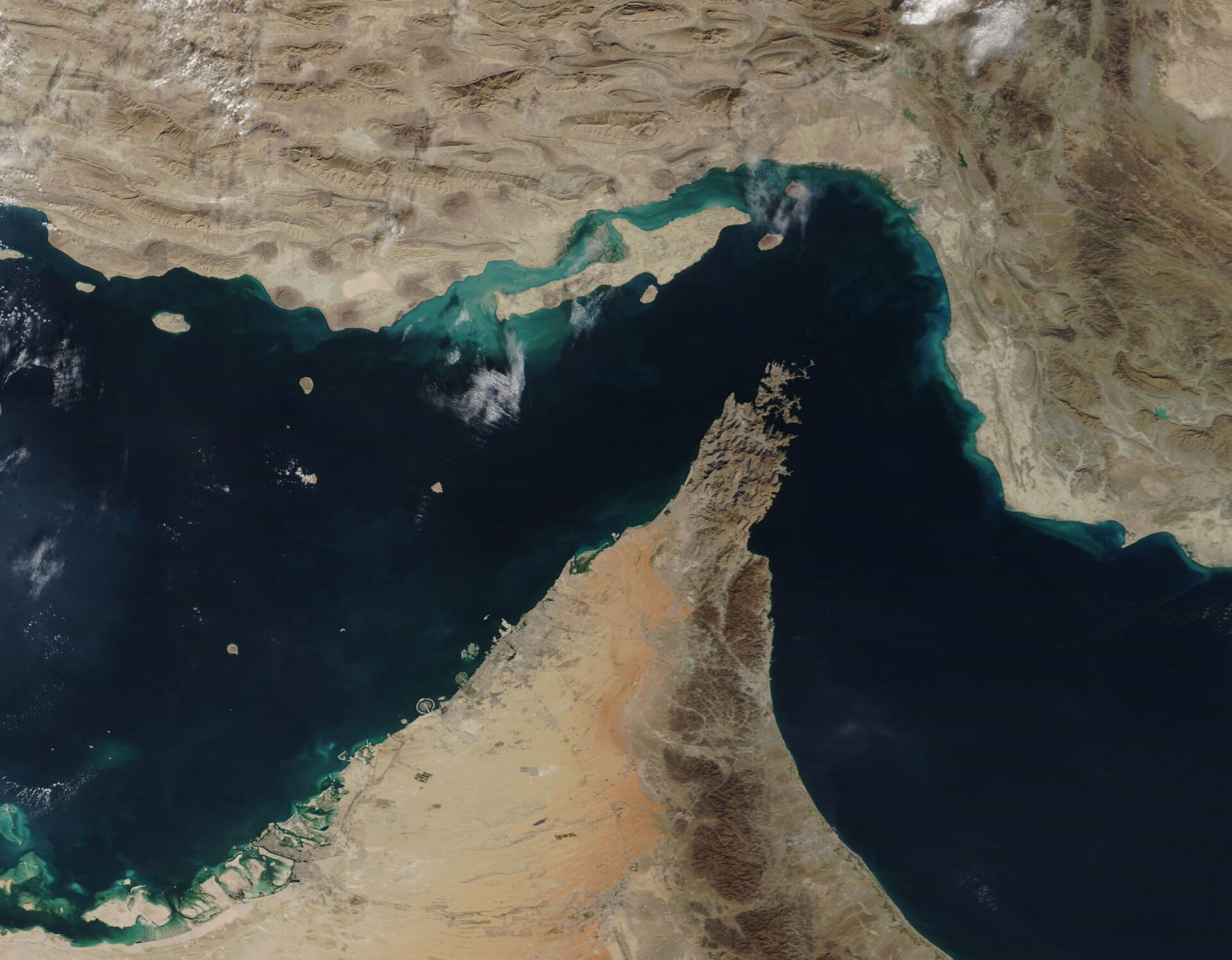
For Saudi Arabia and the Gulf states, the May 1 deadline introduces an externally imposed variable that no amount of bilateral diplomacy can alter. The War Powers Resolution is a US domestic statute. Riyadh has no vote, no lobby registration that can move the clock, and no mechanism to extend US military operations if Congress forces a withdrawal.
Saudi Arabia’s fiscal position has deteriorated sharply during the conflict. The kingdom’s March production fell to 7.25 million barrels per day, according to the International Energy Agency — down from 10.4 million bpd in February, a 30 percent drop that the IEA called the “largest disruption on record.” Brent crude has traded in the $103-106 range, below the $108-111 per barrel fiscal break-even that Goldman Sachs and Bloomberg estimate when accounting for Public Investment Fund commitments. Goldman projects a war-adjusted fiscal deficit of 6.6 percent of GDP, double the official 3.3 percent figure.
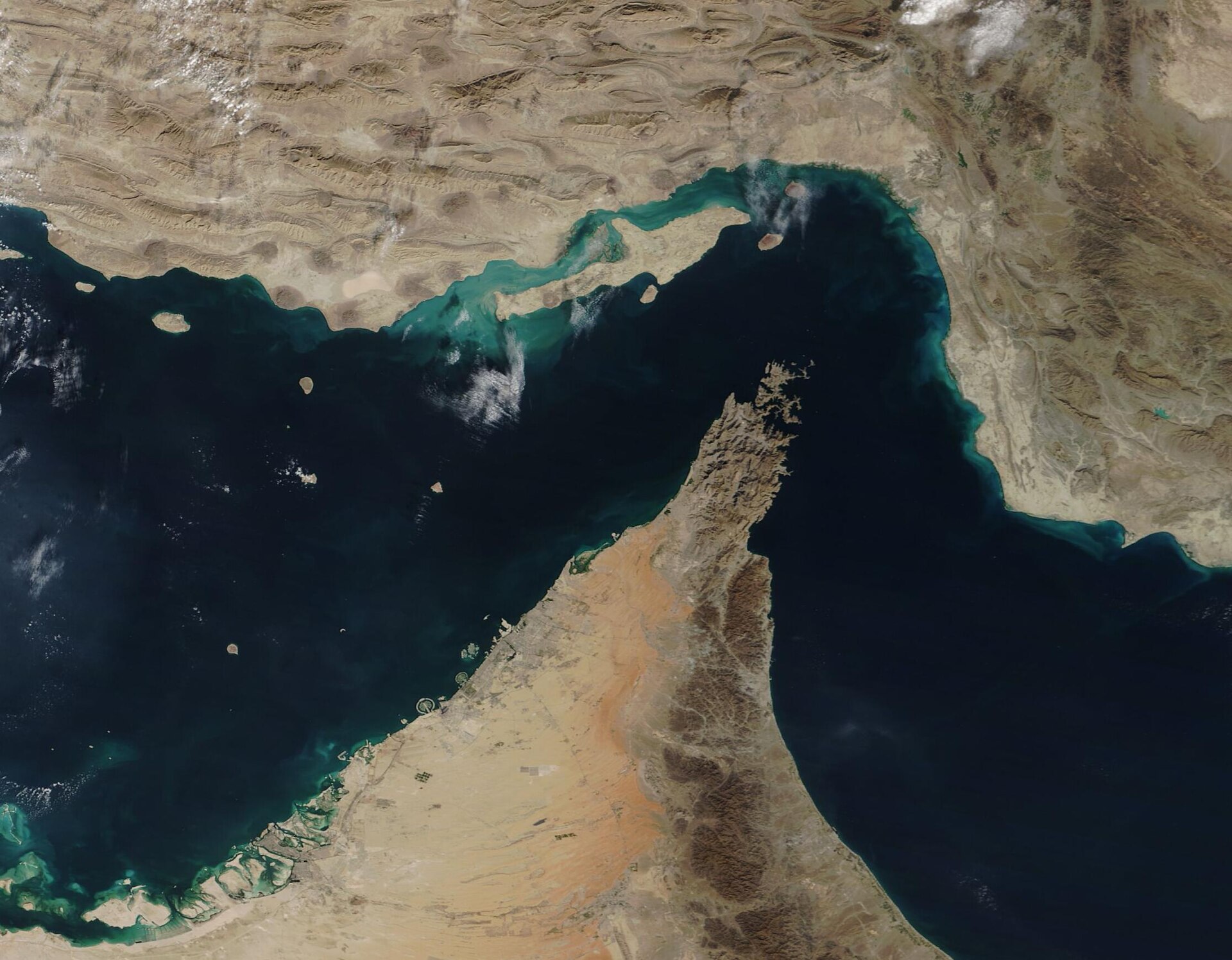
The Saudi production crash has exposed the limits of the East-West Pipeline bypass through Yanbu, which loads at a ceiling of 4 to 5.9 million bpd against a pre-war Hormuz throughput of 7 to 7.5 million bpd — a structural gap of 1.1 to 1.6 million bpd that no infrastructure investment can close before the war ends.
If Trump invokes the 30-day extension and the new deadline falls on May 31, Saudi planners face a scenario in which US legal authority to operate in the theater expires during the final days of the Hajj. The kingdom has already deployed a five-layer air defense architecture — THAAD, PAC-3, KM-SAM, laser systems, and Skyguard — to protect the holy sites, with PAC-3 stocks estimated at roughly 400 rounds, about 14 percent of pre-war levels. The wartime Hajj is the first in the kingdom’s modern history, and the ceasefire negotiated at Islamabad expires April 22, nine days before the War Powers deadline.
The timing creates a cascade. If US forces begin withdrawing under a 30-day extension while IRGC forces retain the operational posture described in their “full authority” declaration over Hormuz, Saudi Arabia loses its primary external military guarantor during the period of maximum vulnerability. The IRGC Navy’s Strait management — which has produced zero toll revenue in 36 days but has redirected commercial shipping through a 5-nautical-mile corridor inside Iranian territorial waters — would face no naval counterbalance.
The carrier dimension compounds that pressure: all three US strike groups currently in the Middle East are operating outside the Gulf, and as a separate analysis of the carrier posture details, the May 1 War Powers deadline arrives while Lincoln, Ford, and Bush remain locked out of the Persian Gulf by the same mine threat that makes withdrawal operationally complex.
Where Is the AUMF?
The absence of any AUMF from the congressional floor is the structural fact that defines the May 1 deadline. No administration official has requested one. No committee chair has introduced one. The only known draft is being developed by Sen. Lisa Murkowski of Alaska, a Republican who has described her framework as including “guardrails” — requirements for disclosure, transparency, and defined objectives.
Murkowski’s draft has not been formally introduced as of April 24. It could be brought to the floor as a privileged resolution requiring only a simple majority. But the White House has shown no interest in seeking authorization that would, by definition, impose constraints on the commander-in-chief’s operational discretion.
The political logic is straightforward. An AUMF would require Trump to define the war’s objectives, its geographic scope, its duration, and its conditions for termination. Every one of those definitions would create a measurable standard against which the war’s progress could be judged. The administration has avoided articulating any of these parameters. Salar Mohendesi, a political scientist at Bowdoin College, told Al Jazeera that Trump will likely “continue to escalate in the hopes of eking out some sort of victory” because his political brand depends on winning.
The Murkowski draft represents the only Republican path to authorization. Its absence from the floor is itself a data point: it means either Murkowski cannot find 50 votes, or the White House has signaled that an AUMF with guardrails is less acceptable than operating in legal ambiguity past the deadline.
If Collins, Tillis, and Curtis follow through on their stated conditions — that post-60-day operations require authorization — and vote with the 46 Democrats and Paul who have supported war powers resolutions, the math reaches 50. Vice President JD Vance would break the tie. But Collins, Tillis, and Curtis have not committed to voting for a withdrawal resolution; they have said authorization should be required, which is a different proposition. They could vote for an AUMF while voting against withdrawal — splitting the difference in a way that extends the war with constraints rather than ending it.
How Does Tehran Read the Clock?
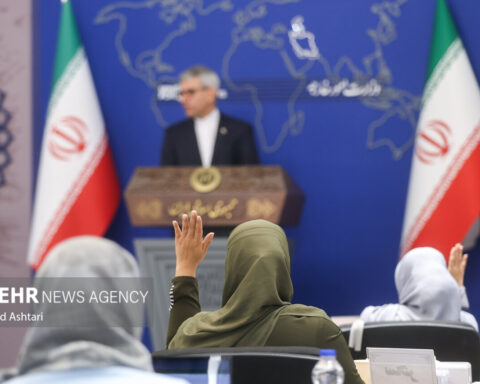
Iranian officials have framed the War Powers debate as confirmation of the war’s domestic illegitimacy in the United States. Parliament Speaker Mohammad Bagher Ghalibaf, who served as IRGC Aerospace Force commander from 1997 to 2000, asked on PressTV April 21: “What is Trump trying to ‘make great again’ as he sells war to Americans?”
A senior Iranian political-security official, unnamed, told PressTV: “The end of the war will occur when Iran decides it should end, not when Trump envisions its conclusion.” That framing inverts the War Powers clock: where Washington sees a deadline forcing a binary choice, Tehran presents the timeline as irrelevant because Iran holds the decision on war termination.
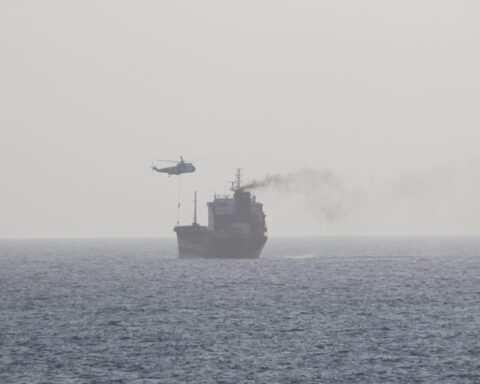
The IRGC’s operational posture supports the rhetoric. Military operations have continued despite the ceasefire framework negotiated at Islamabad: the United States seized the Iranian tanker Touska on April 21; Iran seized the MSC Francesca and the Epaminondas on April 22 — an act of coercive diplomacy targeting a vessel owned by the Aponte family, who have personal access to both Trump and Macron; US naval forces intercepted three Iranian tankers in Asian waters in the same week. The US blockade declared April 13 applies to Iranian ports and toll-collecting vessels, while Iran’s mine chart published between February 28 and April 9 designated standard shipping lanes as a danger zone.
China condemned the original strikes as violating “fundamental norms of international relations.” Russia called them “a deliberate, premeditated, and unprovoked act of armed aggression.” Neither Beijing nor Moscow has publicly referenced the May 1 deadline, but both have used the War Powers debate in state media to frame the conflict as domestically unsanctioned.
The authorization ceiling problem that has defined Iranian decision-making throughout the conflict — President Pezeshkian’s public accusation that IRGC commanders Vahidi and Abdollahi sabotaged ceasefire negotiations, Supreme Leader Khamenei’s extended absence from public view — intersects with the US constitutional clock in a specific way. If Tehran calculates that the war’s legal basis expires May 1 and that Trump will invoke a withdrawal extension rather than seek an AUMF, the rational response is to absorb punishment for 30 more days while the American legal framework collapses under its own weight. The 30-day extension, designed to facilitate withdrawal, becomes an Iranian strategic asset: a countdown that Tehran can wait out.
The counterargument — advanced by Mohendesi and others — is that Trump’s political identity makes compliance with the War Powers Resolution unlikely regardless of its legal requirements. Every modern president since Nixon has disputed the resolution’s constitutionality. Trump’s willingness to operate outside statutory frameworks is well-documented. The question is not whether Trump will comply but whether enough Republican senators will force the issue, and the five-vote record suggests they will not.
Frequently Asked Questions
Has any president ever been forced to withdraw troops under the War Powers Resolution?
No president has withdrawn forces solely because the 60-day clock expired. In practice, presidents have either obtained authorization (as George H.W. Bush did for the Gulf War and George W. Bush did for Afghanistan and Iraq), claimed operations were not “hostilities” (Obama in Libya), or ended operations before the deadline arrived. Congress has never tested enforcement through the courts, and the Supreme Court has never ruled on whether the 60-day clock is judicially enforceable. The Iran conflict is the first case where large-scale, sustained combat operations with US casualties are approaching the deadline without any form of authorization on the table.
Can Congress cut off funding for the war instead of using the War Powers Resolution?
Congress holds the power of the purse under Article I, Section 9 of the Constitution. A funding cutoff would be legally unambiguous and would not face the same constitutional questions as the War Powers Resolution. However, it would require passing legislation through both chambers and surviving a presidential veto — a two-thirds majority in each. The 213-214 House vote and the 46-51 Senate votes indicate that opponents of the war lack the numbers to override a veto by substantial margins. A funding rider attached to must-pass legislation, such as a defense appropriations bill, is theoretically possible but would trigger a government shutdown standoff.
What happens if Trump simply ignores the May 1 deadline?
The War Powers Resolution has no self-executing enforcement mechanism. If the president continues operations past the deadline without authorization or a certified extension, the legal remedy would be a lawsuit — likely filed by members of Congress — seeking a federal court order to halt operations. Federal courts have historically avoided ruling on war powers disputes under the political question doctrine, treating them as matters between the executive and legislative branches rather than justiciable legal questions. The most likely outcome of non-compliance is political, not legal: it would give Republican senators like Collins, Tillis, and Curtis a concrete basis for voting to restrict operations, and it would provide ammunition for the 2026 midterm campaigns in which all 435 House seats and 33 Senate seats are contested.
How does the War Powers deadline interact with the Iran ceasefire negotiations?
The Islamabad ceasefire framework expired April 22, nine days before the May 1 deadline. Pakistan, which served as both venue and enforcer for the talks, has signaled that “new dialogue” is expected in coming days, according to Pakistani Foreign Minister Ishaq Dar. But the ceasefire’s collapse has not halted military operations on either side. If the War Powers clock forces a US withdrawal or drawdown, it could paradoxically strengthen Iran’s negotiating position by removing the military pressure that ceasefire advocates argue is the only incentive for IRGC compliance. Conversely, an AUMF that authorizes extended operations would signal to Tehran that the US commitment is open-ended, potentially extending the conflict but also increasing the pressure for a negotiated settlement.
Could Trump invoke the 2001 AUMF to cover operations against Iran?
The 2001 AUMF authorizes force against those responsible for the Sept. 11 attacks and “associated forces.” Iran was not involved in the Sept. 11 attacks, and the IRGC — while designated a foreign terrorist organization — is not an “associated force” of al-Qaeda under any existing legal interpretation. The 2002 Iraq AUMF was repealed by Congress in 2023. The Trump administration’s March 2 report did not invoke either AUMF, relying solely on Article II commander-in-chief authority. Retroactively invoking the 2001 AUMF would face immediate legal challenge and would contradict the administration’s own initial legal framing, though executive branch lawyers have historically shown creativity in stretching authorization language to cover operations far removed from the original statutory intent.
With the collapse of the Islamabad track — Trump cancelling the Witkoff-Kushner mission after Araghchi had already departed — the May 1 deadline arrives with no diplomatic fallback and four Republican senators publicly wobbling on authorization. The full picture of what the Islamabad cancellation means for the War Powers calculus is in Trump Cancels Islamabad Trip, Collapsing the Only US-Iran Diplomatic Channel With Six Days Until the War Powers Deadline. Trump’s five deadline extensions and what they mean for the May 1 War Powers clock — including the repositioned launcher problem Hegseth acknowledged — are examined in The Ceasefire Was an Iranian Operational Maneuver — Hegseth Admitted It, and Now Trump’s 3-5 Day Ultimatum Has No Military Teeth.