
UAE Exits OPEC After 59 Years, Stripping Saudi Arabia of Its Last Enforcement Lever
ABU DHABI — The United Arab Emirates formally withdrew from OPEC effective May 1, 2026, ending a membership that began when Abu Dhabi joined the cartel in 1967 and removing approximately 4.8 million barrels per day of production capacity from the organization’s quota framework two days before the remaining OPEC+ members convene on May 3.
The departure does not merely subtract a producer. It dismantles the two-sided enforcement mechanism — quota relief as carrot, collective discipline as stick — that Saudi Arabia has used for decades to hold the cartel together. Riyadh now enters the May 3 meeting bearing roughly 45% of total voluntary cuts, running a wartime fiscal deficit Goldman Sachs estimates at 6.6% of GDP, and needing Brent crude somewhere between $108 and $111 per barrel. WTI briefly surpassed $100 on the UAE announcement, according to NBC News.
Table of Contents
A Baseline Dispute Five Years in the Making
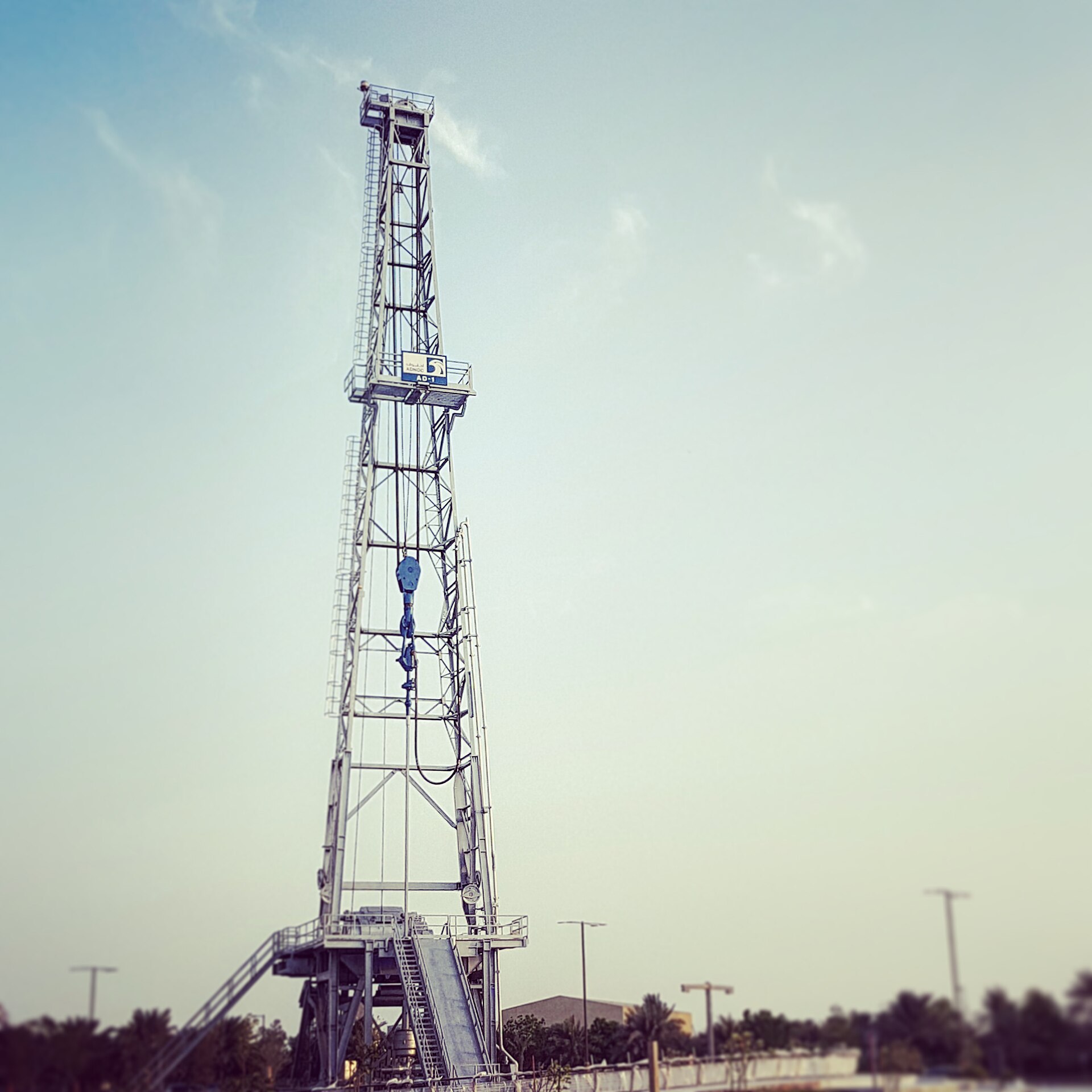
The rupture traces back to October 2018, when OPEC+ set the production baselines that would govern its coordinated cuts. The UAE’s baseline was fixed at approximately 3.2 million bpd — a number that reflected capacity at the time but which Abu Dhabi regarded as a temporary placeholder. By 2020, UAE capacity had grown to 3.8 million bpd. By 2026, ADNOC had pushed it to 4.8 million bpd, with a target of 5 million bpd by 2027.
The gap between quota and capacity widened into a structural grievance. The UAE’s assigned OPEC+ quota stood at approximately 3.4 million bpd — a 1.4 million bpd suppression against actual capacity. At $90 per barrel Brent, that gap represented roughly $46 billion in annual revenue Abu Dhabi was leaving underground. Baker Institute researchers estimated in 2023 that unconstrained UAE production could generate upwards of $50 billion in additional annual revenues versus the quota ceiling.
In July 2021, the dispute surfaced publicly. The UAE refused to extend OPEC+ production cuts unless its baseline was raised to reflect real capacity. Saudi Arabia and Russia granted a partial adjustment. Abu Dhabi accepted it, but regarded the fix as inadequate. The $150 billion ADNOC had committed in capital expenditure over 2023-2027 to expand capacity was, under the quota regime, economically inert — investment in barrels that could not legally be sold.
“For years, Abu Dhabi has been looking to monetise its investment in expanding capacity,” Helima Croft, head of global commodity strategy at RBC Capital Markets, told the Malay Mail on April 29.
The Middle East briefing 3,000+ readers start their day with.
One email. Every weekday morning. Free.
UAE Energy Minister Suhail Mohamed Al Mazrouei framed the departure as neighborly. “This has nothing to do with any of our brothers or friends within the group,” he told CNBC on April 28. “Our exit at this time is the right time for it, because it will have a minimum impact on the price and it will have a minimum impact on our friends at OPEC and OPEC+.” Sultan Al Jaber, ADNOC’s group CEO, called the decision “sovereign” and aligned with “its true production capability and its national interest.”
Al Mazrouei also confirmed the decision was unilateral — taken without consulting other OPEC members.
What Does OPEC Enforcement Look Like Without the UAE?
OPEC has never had a binding enforcement mechanism. Its discipline rests on two informal levers: the carrot of quota relief for compliant members, and Saudi Arabia’s willingness to swing-produce — flooding the market to punish defectors by crashing prices. The UAE held the second-largest pool of spare capacity in the cartel after Saudi Arabia. Its presence inside the group gave Riyadh a partner in the implicit threat: comply, or we can bury you in cheap barrels.
That partner is gone. “Losing a member with 4.8 million barrels per day of capacity… takes a real tool out of the group’s hands,” said Jorge Leon, head of geopolitical analysis at Rystad Energy and a former OPEC official, speaking to Al Jazeera on April 28. Leon described the withdrawal as producing “a structurally weaker OPEC.”
Gary Ross, CEO of Black Gold Investors, put it more bluntly to the Malay Mail: “Saudi Arabia was essentially OPEC — the only country with spare capacity.” Saudi Arabia holds approximately 12.5 million bpd of capacity against current production under 10 million bpd. It is now the sole remaining member with meaningful room to swing. Every other major producer inside OPEC+ is either producing at or above quota or lacks the reserves to threaten anyone.
The compliance data tells the story of what Saudi Arabia is left to police. Aggregate OPEC+ compliance in April 2025 stood at 67%. Iraq — the second-largest OPEC producer after Saudi Arabia — was at 54%. Kazakhstan: 61%. Russia: 65%. Those three alone accounted for 890,000 bpd of the 1.2 million bpd monthly overproduction recorded by HCOB Economics and FactSet. In January 2026, the OPEC secretariat received updated compensation plans from Iraq, the UAE, Kazakhstan, and Oman requiring them to offset a combined 708,000 bpd of cumulative overproduction by June 2026. The UAE’s share of that obligation vanished on May 1.

Saudi Arabia’s Wartime Arithmetic
The timing compounds the structural damage. Saudi Arabia entered the Iran-Gulf war in late February 2026 as the world’s swing producer. By March, production had crashed from 10.4 million bpd to 7.25 million bpd — a 3.15 million bpd drop, or 30%, driven by infrastructure damage including the Khurais field (300,000 bpd offline with no announced restoration timeline).
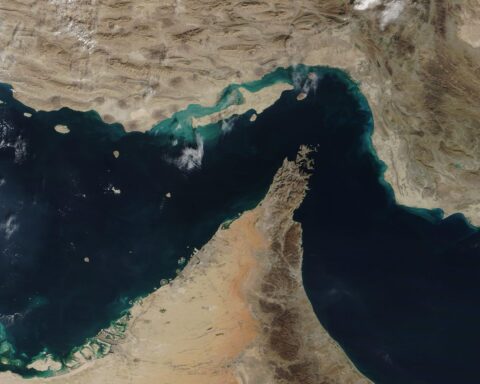
Hormuz Strait restrictions have reduced Gulf transits to 3.6% of pre-war baseline. The East-West Pipeline bypass through Yanbu provides a ceiling of 4-5.9 million bpd against the 7-7.5 million bpd that moved through Hormuz before the war.
Bloomberg’s PIF-inclusive fiscal break-even for Saudi Arabia sits between $108 and $111 per barrel — well above the $90-100 range where Brent has been trading. Goldman Sachs put the war-adjusted fiscal deficit at 6.6% of GDP against the official 3.3% projection.
In this environment, Saudi Arabia’s swing-producer threat is theoretical. To flood the market and punish overproducers, Riyadh would need to increase production — but its infrastructure is constrained, its fiscal position demands high prices, and every additional barrel it puts on the market pushes Brent further below its own break-even. The UAE’s departure removes the one ally that could have helped absorb the burden of market discipline.
| Country | Compliance Rate | Overproduction (bpd) | Status |
|---|---|---|---|
| Saudi Arabia | ~100% | — | OPEC member |
| UAE | Below target | Part of 708K compensation plan | Exiting May 1 |
| Iraq | 54% | ~400,000+ | OPEC member |
| Kazakhstan | 61% | ~250,000+ | OPEC+ ally |
| Russia | 65% | ~240,000+ | OPEC+ ally |
Three Exits in Seven Years — Who Follows the UAE Out?
Qatar departed OPEC in January 2019, citing a desire to focus on natural gas. Its production was modest — roughly 600,000 bpd of crude. Angola left in January 2024 after OPEC+ assigned a quota below its actual production; Luanda refused further cuts and walked. Angola’s capacity was approximately 1.1 million bpd. The UAE’s exit dwarfs both: 4.8 million bpd of current capacity, third-largest producer in the organization, fourth-largest in the OPEC+ framework.
Each departure has been larger than the last. Each followed the same pattern: a member whose production capacity exceeded its quota concluded that the revenue suppression outweighed the benefits of collective action. The template is now proven at scale.
Matt Smith, lead oil analyst at Kpler, flagged Kazakhstan as the “key candidate” for a potential exit, citing its persistent overproduction — 39% non-compliance over the past year. Saul Kavonic, energy analyst at MST Marquee, pointed to Venezuela, which “could be next off the rank in wake of leadership change there to a more US-friendly position.” Steven A. Cook of the Council on Foreign Relations wrote on April 28 that “if the UAE can prove that leaving OPEC is not harmful, other countries might consider following suit.”
The free-rider arithmetic is straightforward. Members inside OPEC+ bear the cost of production restraint — forgoing revenue to support prices that benefit every producer, including those outside the cartel. Members who leave can produce at capacity while still benefiting from whatever price support the remaining group provides. The UAE has just demonstrated that the costs of departure — diplomatic friction, market uncertainty — are manageable. Al Mazrouei’s language was calibrated to reinforce exactly this message: minimum impact on price, minimum impact on friends.
OPEC’s share of global supply has already declined from above 50% at its 1960s peak to approximately 30%. The broader OPEC+ grouping controlled roughly 41% before the UAE’s exit. William F. Wechsler, senior director of Middle East programs at the Atlantic Council, assessed on April 28 that the departure would likely produce “lower global prices but with increased volatility” — the worst combination for a fiscal-break-even-dependent producer like Saudi Arabia.
The $20 Billion Swap Line Behind the Exit
The UAE did not leave OPEC without a financial backstop. US Treasury Secretary Scott Bessent confirmed during Senate testimony on April 22 a $20 billion emergency dollar swap line for the UAE. The context, reported by CNBC on April 24: UAE Central Bank Governor Khalid Mohamed Balama had privately warned Bessent that if dollar liquidity tightened, Abu Dhabi could settle some oil sales in yuan.
The swap line serves multiple functions. It insulates UAE oil revenues from any dollar-funding disruption that might follow the exit. It binds Abu Dhabi more tightly to the dollar settlement system at a moment when yuan-denominated oil settlement is expanding — Indian refiners have already settled Iranian crude purchases in yuan via ICICI Bank’s Shanghai branch. And it signals Washington’s tacit acceptance of the UAE’s departure from a cartel the US has alternately courted and criticized for decades.
The 50-year Saudi-US petrodollar arrangement lapsed in 2024. Bessent’s approach has shifted to bilateral dollar swap lines with individual Gulf states — a retail model replacing the wholesale framework that anchored Gulf oil in dollars for half a century. The UAE’s $20 billion line is the largest publicly confirmed. Whether Saudi Arabia has a comparable facility remains undisclosed.
Can the May 3 Meeting Hold Together?
The eight OPEC+ countries that voted on April 5 to implement a 206,000 bpd production increase in May will reconvene on May 3 — this time as seven, without the UAE. The remaining members are Saudi Arabia, Russia, Iraq, Kuwait, Kazakhstan, Algeria, and Oman. The meeting’s agenda was already fraught: the April production increase was the group’s first upward adjustment in months, and a 4.57 million bpd cumulative overproduction obligation — the total members had vowed to offset by June 2026 — remains largely unaddressed.
The UAE’s absence reshapes the room. Abu Dhabi was simultaneously one of the group’s most technically capable producers and one of its most persistent over-producers — a member that both contributed to the cartel’s credibility and eroded its discipline. Its departure removes a compliance problem but also a production buffer that could have been called upon in emergencies.
Saudi Arabia’s options on May 3 are constrained. It can maintain current voluntary cuts — absorbing the fiscal pain to support prices. It can push for deeper collective cuts — a demand unlikely to find takers among members already cheating their quotas. Or it can signal tolerance for higher production, accepting lower prices in exchange for market share — the strategy it deployed from late 2014, which drove oil to $26 per barrel by early 2016 and devastated the Saudi budget for two years.
None of these options address the structural problem. OPEC’s enforcement architecture assumed that the threat of collective overproduction — led by Saudi Arabia and the UAE together — would deter free-riding. With the UAE producing independently and Iraq, Kazakhstan, and Russia already above quota, Saudi Arabia would be waging a price war alone, against its own fiscal needs, during an active military conflict.
WTI briefly surpassed $100 per barrel on the UAE announcement, according to NBC News — a move that reflected the market pricing in near-term supply disruption rather than the medium-term deflationary pressure of unconstrained UAE production. The gap between the spot reaction and the structural implication is where Saudi Arabia’s problem lives.
Four days after Abu Dhabi’s unilateral exit, MBS called MBZ for the first time in six weeks — framed as a condemnation of Iranian strikes on the UAE, but also the first attempt to patch the bilateral fracture the OPEC withdrawal had opened. That call, and why Saudi Arabia’s rhetorical support cannot translate into action while 30,000 Iranian pilgrims remain on Saudi soil, is examined in MBS Breaks Six-Week Silence with MBZ to Condemn Iran’s UAE Strikes.
Frequently Asked Questions
How quickly can the UAE ramp production after leaving OPEC?
ADNOC’s current capacity is 4.8 million bpd against a former quota of 3.4 million bpd. The company could add approximately 1.4 million bpd to global markets within weeks of the May 1 exit, though logistical constraints — tanker availability, refinery contracts, and Hormuz transit conditions — may slow the ramp to full capacity. ADNOC’s stated target is 5 million bpd by 2027.
Does the UAE exit affect the Iran-Gulf war’s oil dynamics?
Directly, yes. The double blockade on Hormuz — US controls on the Arabian Sea side, IRGC controls on the Gulf of Oman side — has reduced transits to 3.6% of pre-war levels. The UAE exports crude through Fujairah on the Gulf of Oman coast, which sits outside the inner Strait; to the extent that route remains accessible, Abu Dhabi holds a logistical advantage over Saudi Arabia’s Hormuz-dependent eastern terminals. Unconstrained UAE production through Fujairah could partially offset supply lost to the blockade, putting downward pressure on the war-premium pricing that Riyadh needs to sustain. That logistical advantage narrowed sharply on May 4: the May 4 Fujairah strike hit the VTTI terminal complex at the discharge end of the Habshan–Fujairah pipeline — the facility through which Abu Dhabi crude reaches tankers in the Gulf of Oman without entering the strait at all.
Has any country returned to OPEC after leaving?
Ecuador is the only precedent. It departed in 1992, rejoined in 2007, and left again in 2020. Ecuador’s departures were driven by fiscal distress and small production volumes (roughly 500,000 bpd). No major producer has ever returned. Qatar, which left in January 2019, has shown no interest in rejoining. Angola, which departed in January 2024, has not signaled any reconsideration.
What happens to OPEC+ if Kazakhstan also exits?
Kazakhstan’s compliance rate of 61% and persistent overproduction of approximately 250,000 bpd make it the most frequently cited candidate for a follow-on exit. Kazakh crude — predominantly from the Tengiz and Kashagan fields operated by international consortia including Chevron and Shell — moves through the CPC pipeline to Russia’s Black Sea port of Novorossiysk. An exit would further reduce OPEC+ to a Saudi-Russian bilateral arrangement with a collection of smaller members, none of whom have demonstrated consistent compliance.
Could Saudi Arabia and the UAE reach a bilateral production agreement outside OPEC?
Theoretically possible but structurally difficult. The two countries’ interests have diverged: Saudi Arabia needs high prices and restrained production; the UAE wants to maximize volume from its $150 billion investment in expanded capacity. A bilateral deal would require Abu Dhabi to accept output limits without the multilateral cover that OPEC provided — an arrangement less politically palatable than cartel membership. The Al Mazrouei statement explicitly framing the exit as “sovereign” suggests Abu Dhabi is not seeking a replacement constraint mechanism. That divergence did not emerge in a vacuum: Iran has deliberately engineered the Saudi-UAE split, using the disclosure of its own threats against Abu Dhabi as a weapon inside Saudi decision-making rather than a warning meant to reach the UAE directly. Tehran’s subsequent move — filing a $270 billion counter-reparations claim at the UN Security Council against all six Arab states — may have inadvertently given Saudi Arabia diplomatic cover to exit the accountability deadlock on its own terms.