{“content”: “
ABU DHABI u2014 The United Arab Emirates ended 58 years of OPEC membership on April 28, and the immediate question u2014 what happens to the cartel u2014 obscures the more consequential one: what happens to the state that stays. Saudi Arabia now holds sole institutional responsibility for OPEC’s price-management function at exactly the moment it cannot exercise it. War-damaged upstream capacity, a Yanbu export ceiling well below pre-war Hormuz throughput, and Brent trading $18u201321 below the Kingdom’s PIF-inclusive fiscal break-even combine to produce a structural trap with no short-term exit. The UAE’s departure does not weaken OPEC gradually. It removes the second-most-disciplined Gulf producer from a quota architecture that already cannot enforce compliance on Iraq or Russia u2014 and it does so while Iran holds an existing OPEC exemption that allows re-entry without quota obligation on any ceasefire timeline.
n
The House of Saud Daily Briefing
Saudi Arabia's news in 3 minutes, every morning. Free. See today's issue
Table of Contents
n
- n
- The Anchor Without a Chain
- Why Did the UAE Leave Now?
- Can Saudi Arabia Defend a Price Floor Alone?
- The Yanbu Ceiling Problem
- How Does Iran Benefit From a Weaker OPEC?
- The Compliance Fiction
- What Does Goldman’s $90 Brent Mean for Riyadh?
- The Bessent Swap Line and What It Bought
- The Post-War Price Architecture
- FAQ
- n
n
n
n
n
n
n
n
n
n
n
n
n
n
n
The Anchor Without a Chain
n
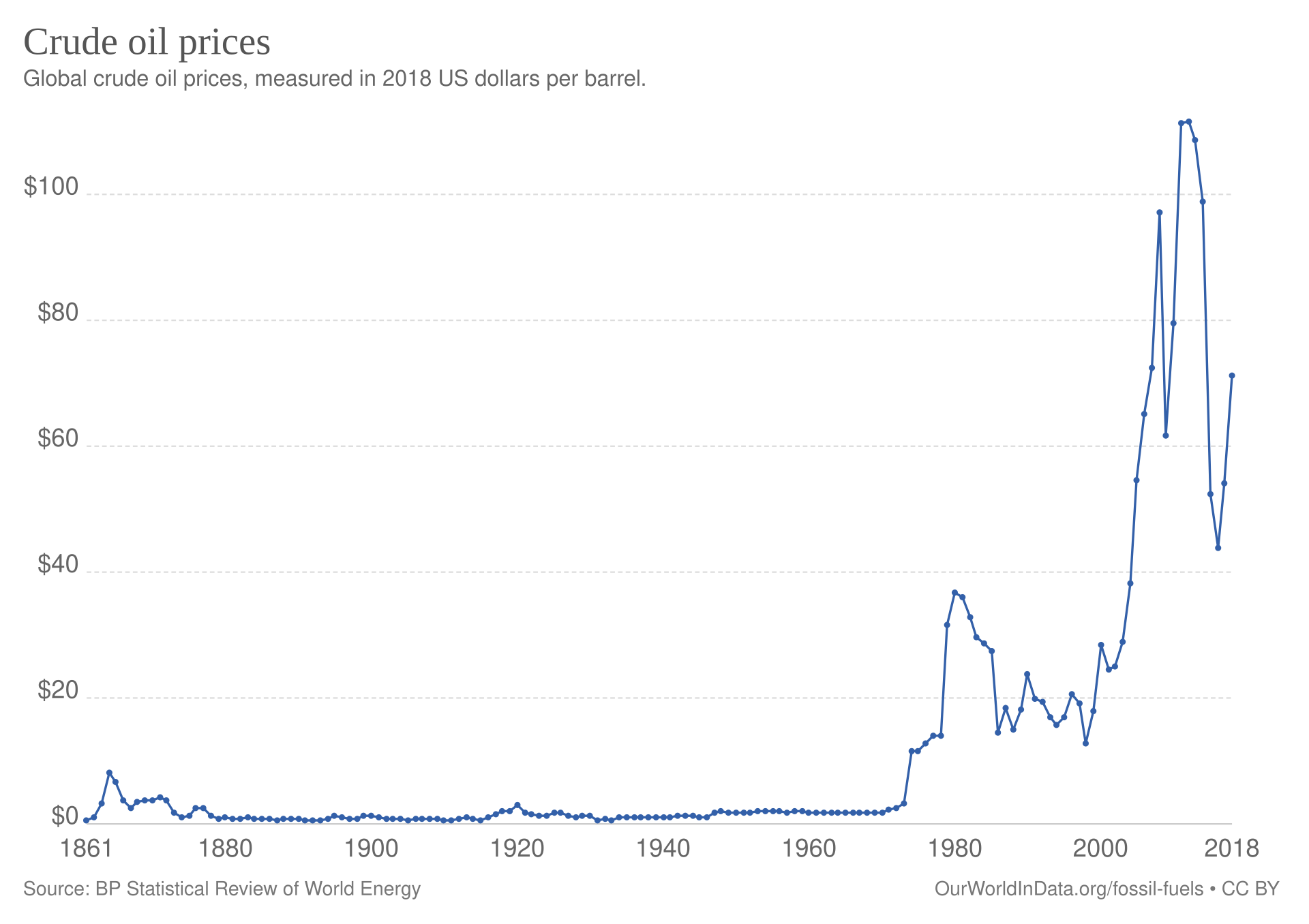
OPEC’s organizational logic since the 1973 embargo has rested on a single structural premise: at least one member with large spare capacity, fiscal patience, and institutional credibility must be willing to cut production to defend a price floor. For five decades, that member was Saudi Arabia u2014 sometimes alone, sometimes in coordination with the UAE and Kuwait. The arrangement survived the 1986 price war, the 1998 Asian crisis, the 2014 shale standoff, and the 2020 pandemic collapse.
n
It did not survive the Iran war.
n
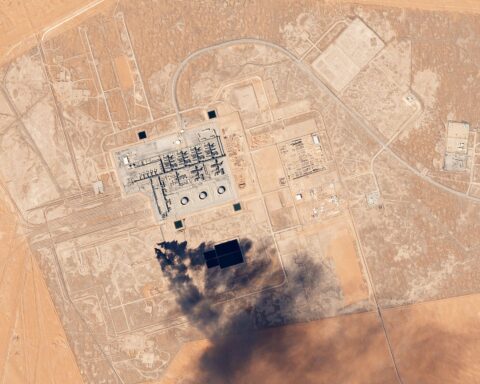
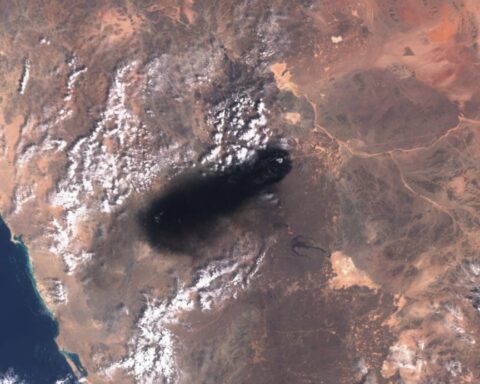
Saudi Arabia’s March 2026 output fell 30% to 7.25 million barrels per day from February’s 10.4 million bpd, the sharpest single-month decline in the Kingdom’s production history. Khurais u2014 300,000 bpd u2014 remains offline with no restoration timeline announced. The East-West Pipeline, struck by IRGC forces on April 8 despite the nominal ceasefire, operates at reduced throughput. Wood Mackenzie’s head of upstream analysis, Fraser McKay, estimates war-damaged infrastructure “could take six to nine months to restore in a worst case.”
n
The Kingdom’s disclosed impairment stands at 1.3 million bpd combined: 600,000 bpd upstream and 700,000 bpd in East-West Pipeline throughput reduction. The Yanbu terminal on the Red Sea coast u2014 Saudi Arabia’s Hormuz bypass u2014 loads at a ceiling of 5.9 million bpd against pre-war Hormuz throughput of 7u20137.5 million bpd. The arithmetic produces a structural export gap of 1.1u20131.6 million bpd that persists regardless of upstream recovery.
n
This is the anchor paradox. Saudi Arabia is now the only OPEC member with both the institutional standing and the theoretical spare capacity to manage global oil prices. It is also the only major producer structurally prevented from deploying that capacity at the scale required to matter. The anchor exists. The chain does not reach the seabed.
n
Why Did the UAE Leave Now?
n
Suhail Mohamed al-Mazrouei, the UAE’s energy minister, framed the exit in technocratic language: “This is a policy decision. It has been done after a careful look at current and future policies related to level of production. This has nothing to do with any of our brothers or friends within the group.” The phrasing itself u2014 “brothers or friends” u2014 acknowledged the relationship it sought to depersonalize.
n
The structural precursors are well documented. In July 2021, the UAE refused to endorse an OPEC+ supply-increase extension unless its production baseline was raised from 3.17 million bpd to 3.65 million bpd. Abu Dhabi won that fight. ADNOC then committed $150 billion in capital expenditure through 2027 to reach 5 million bpd capacity, accelerating a target originally set for 2030. By April 2026, the UAE held 4.8 million bpd of capacity against an OPEC quota of approximately 3.5 million bpd u2014 roughly 1.3 million barrels per day of idle capacity generating zero revenue.
n
The Baker Institute estimated that unconstrained UAE production could generate “upwards of $50 billion in additional annual revenues.” That figure u2014 larger than many Gulf states’ entire government budgets u2014 had been sitting on the table since 2023. The war provided the exit window. Bernard Haykel of Princeton summarized: “They finally did it, probably because of the war. Everything is up in the air.”
n
But the financial arithmetic alone does not explain the timing. The UAE did not consult Saudi Arabia before the announcement, a breach of Gulf diplomatic protocol that CNBC reported on April 28. Anwar Gargash, Abu Dhabi’s most senior diplomatic voice, had already criticized other GCC nations for their “weakest” historical stance in response to Iranian attacks. The UAE demanded that any US-Iran settlement “explicitly guarantee Strait of Hormuz freedom of navigation, effectively granting Abu Dhabi veto power over ceasefire negotiations,” per Fortune. When that guarantee did not materialize, Abu Dhabi chose a different form of insurance.
n
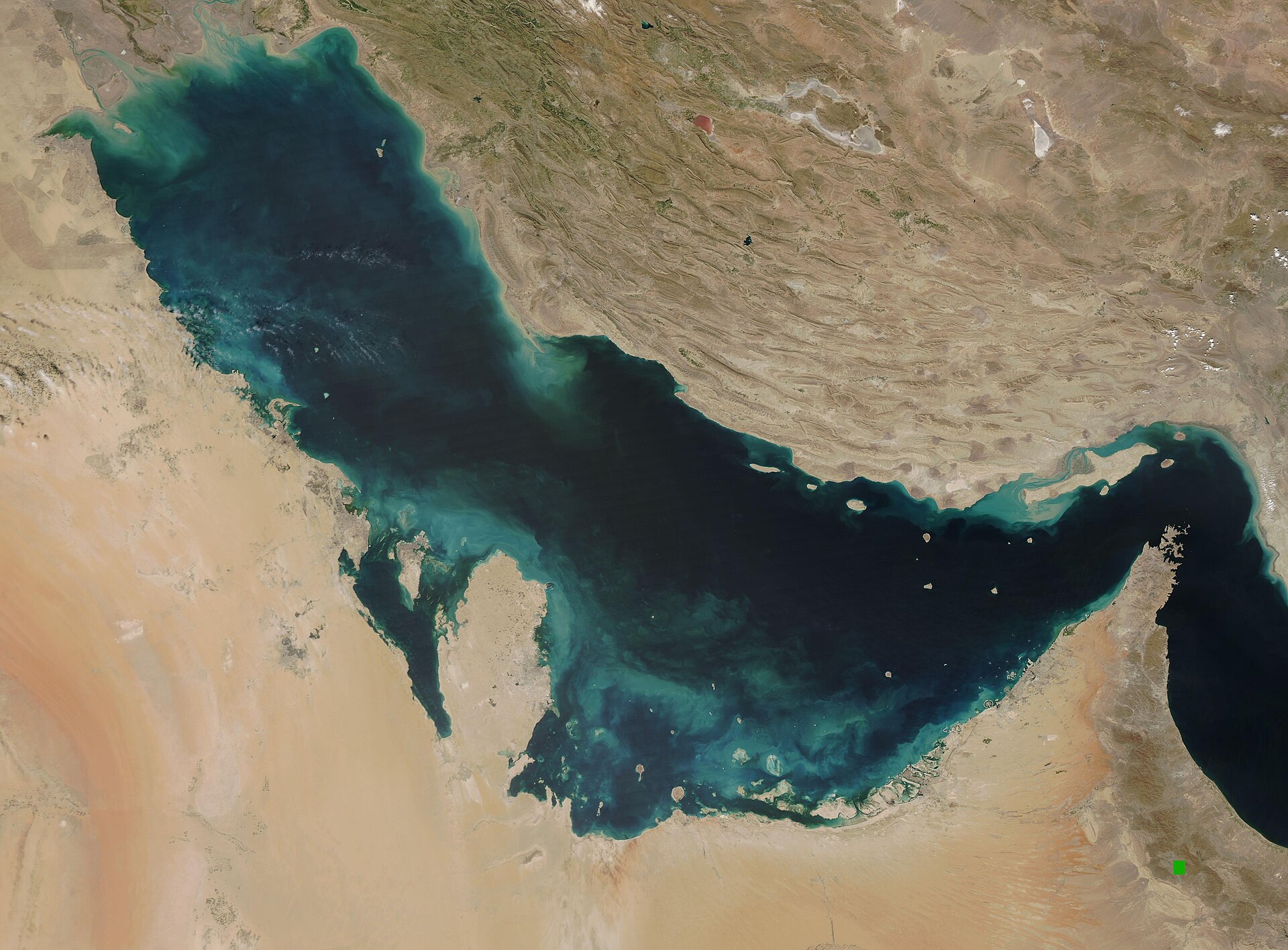
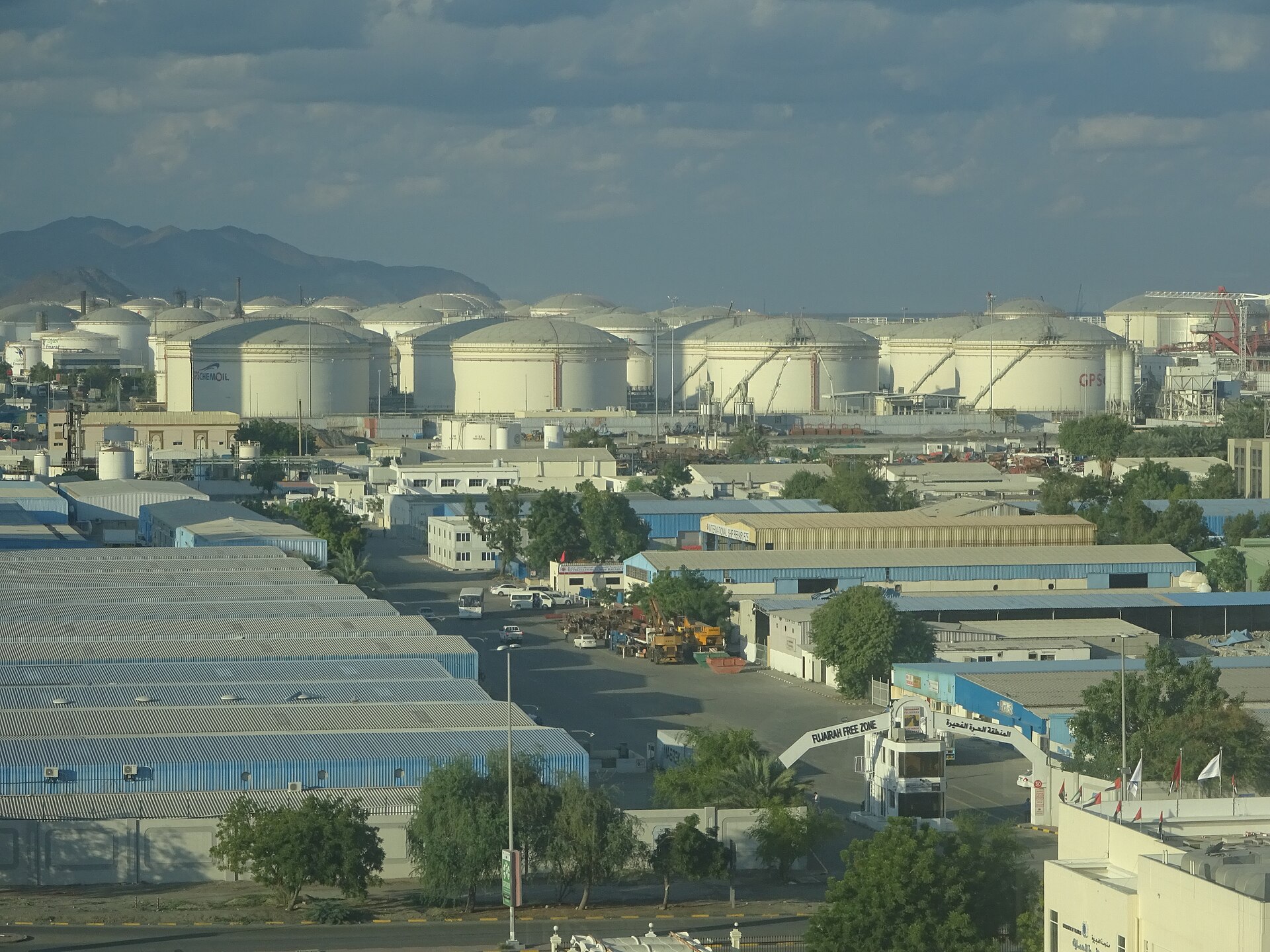
The ADCOP pipeline u2014 1.8 million bpd capacity running from Habshan to Fujairah on the Gulf of Oman u2014 allows UAE crude to bypass Hormuz entirely. Pre-war UAE exports ran at approximately 3.5 million bpd; wartime Fujairah bypass volumes reached 1.9 million bpd. The UAE is the only Gulf producer with a functioning Hormuz alternative at industrial scale. Its decision to leave OPEC is, in part, the decision to monetize that advantage without sharing the proceeds through quota compliance.
n
n
Can Saudi Arabia Defend a Price Floor Alone?
n
The question answers itself through arithmetic. Defending a price floor requires the ability to withdraw barrels from the market u2014 to cut production below capacity and absorb the revenue loss. Saudi Arabia’s March output of 7.25 million bpd is already 3.15 million bpd below its February level, not by choice but by war damage. There are no voluntary barrels left to withdraw. The Kingdom is producing at its effective wartime maximum.
n
OPEC’s total production plunged 7.88 million bpd in March 2026 to 20.79 million bpd u2014 a supply shock exceeding the May 2020 pandemic cut of 6.28 million bpd. The bloc voted a 206,000 bpd increase in its latest meeting, and the market did not react, because the increase existed on paper only. No member had the available capacity to deliver it.
n
Sergey Vakulenko of the Carnegie Russia Eurasia Center identified the structural bind: OPEC is “substantially weakened without the UAE, as Iran and Iraq lack meaningful spare capacity reserves.” Iraq’s March output fell to 1.63 million bpd u2014 down 2.56 million bpd u2014 and Kuwait dropped 53% to 1.21 million bpd. The war did not merely disrupt OPEC’s output. It eliminated the spare-capacity buffer that made the organization’s pricing mechanism functional.
n
Jorge Leon of Rystad Energy put it directly: losing the UAE “takes a real tool out of the group’s hands” and produces a “structurally weaker OPEC long-term.” The tool he described is not abstract. It is the 1.3 million bpd of idle UAE capacity that, until April 28, sat inside the architecture as a deployable reserve. That reserve now belongs to a sovereign actor with no obligation to coordinate its deployment.
n
The Yanbu Ceiling Problem
n
Saudi Arabia’s export infrastructure tells a story that production figures alone do not. The East-West Pipeline u2014 also called Petroline u2014 runs 1,200 kilometers from Abqaiq in the Eastern Province to the Yanbu terminal complex on the Red Sea. Its design capacity is 7 million bpd. Its effective wartime throughput, following the April 8 IRGC strike on a pumping station, is reduced by 700,000 bpd.
n
Yanbu’s loading ceiling sits at 5.9 million bpd. Pre-war Saudi exports through the Strait of Hormuz ran at 7u20137.5 million bpd. Even if every barrel of upstream war damage were repaired tomorrow u2014 an impossibility given McKay’s 6-to-9-month timeline u2014 the Yanbu bypass cannot replace the full Hormuz throughput. The structural gap of 1.1u20131.6 million bpd exists at the infrastructure level, not the reservoir level.
n
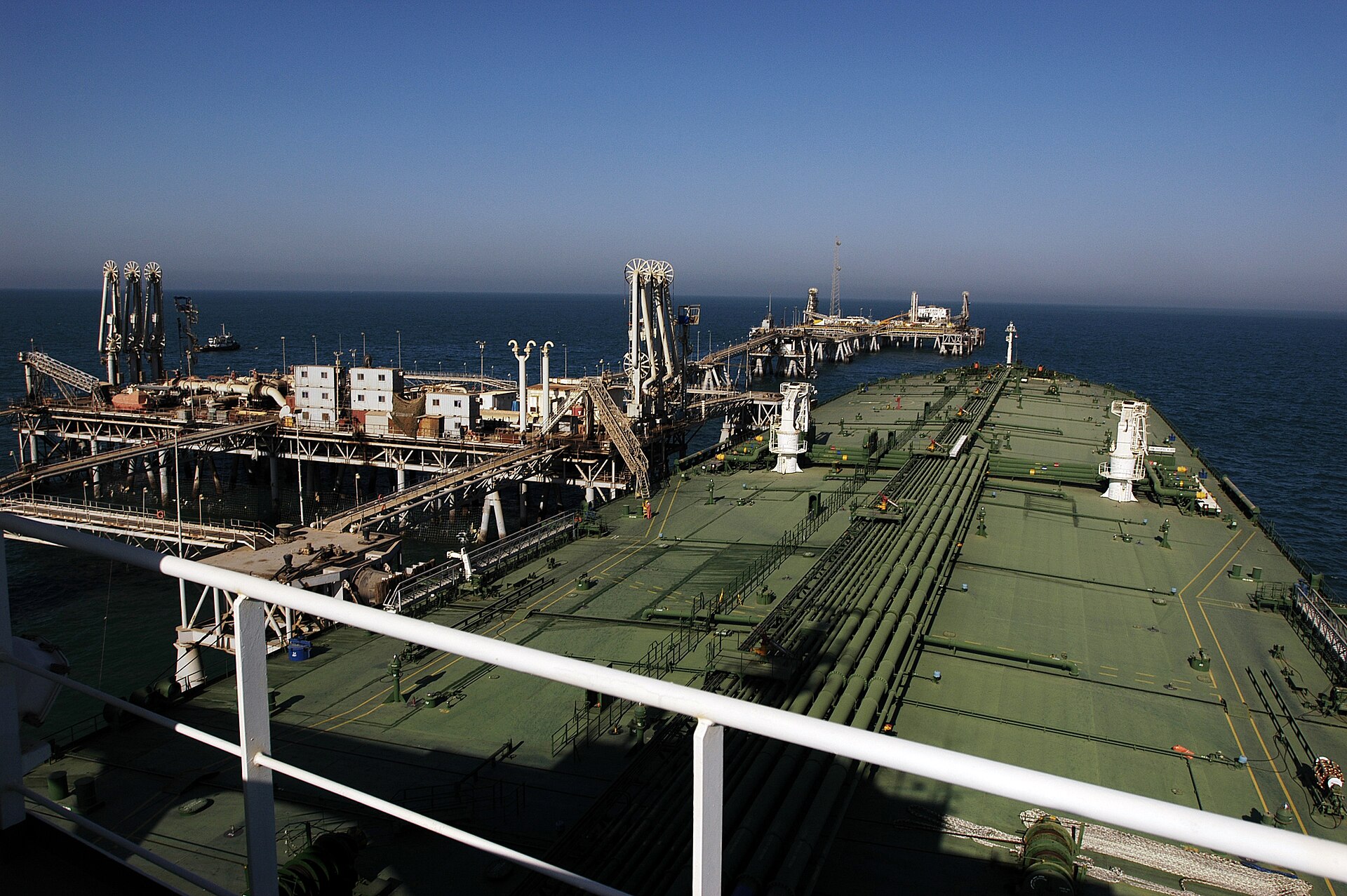
This distinction matters for OPEC price management. Saudi Arabia’s nominal spare capacity u2014 the difference between current production and maximum sustainable capacity u2014 appears large on paper. But spare capacity that cannot reach a tanker is not spare capacity in any market-relevant sense. A double blockade persists at Hormuz: the US controls Arabian Sea entry, the IRGC controls Gulf of Oman exit, and 45 transits since the April 8 ceasefire represent 3.6% of the pre-war baseline.
n
The Yanbu ceiling converts Saudi Arabia from a swing producer into a constrained exporter. It can produce more crude. It cannot ship more crude. The distinction between those two capabilities is the distinction between OPEC’s theoretical price-management function and its actual one.
n
| Producer | Pre-War Exports (bpd) | Wartime Effective Capacity (bpd) | Hormuz Bypass (bpd) | Structural Gap (bpd) |
|---|---|---|---|---|
| Saudi Arabia | 7.0u20137.5M | 5.9M (Yanbu ceiling) | 5.9M (Petroline) | 1.1u20131.6M |
| UAE | ~3.5M | ~1.9M (Fujairah) | 1.8M (ADCOP) | ~1.6M |
| Iraq | ~3.3M | 1.63M | None operational | ~1.7M |
| Kuwait | ~2.6M | 1.21M | None | ~1.4M |
n
n
Sources: IEA April 2026 OMR; OPEC Monthly Report April 13, 2026; CNBC/Global Energy Monitor for ADCOP capacity; Wood Mackenzie for Saudi upstream impairment.
n
How Does Iran Benefit From a Weaker OPEC?
n
Iran holds, and has held since the 2016 OPEC+ framework, a formal exemption from quota cuts. The exemption u2014 shared with Libya and Venezuela u2014 was designed to accommodate members whose output was constrained by sanctions or civil conflict. The practical effect in April 2026 is that Iran can re-enter global oil markets on any ceasefire or sanctions-relief timeline without negotiating a production quota with OPEC.
n
Iran’s crude and condensate capacity stands at 3.6 million bpd. March crude exports fell 440,000 bpd to 1.8 million bpd under the CENTCOM blockade that took effect April 13. The blockade constrains exports, not production capacity. On any relaxation u2014 partial sanctions relief, blockade modification, or ceasefire terms that include export access u2014 Iranian barrels return to the market incrementally. Each barrel arrives outside OPEC’s architecture.
n
The price-band asymmetry is the non-obvious dimension. Saudi Arabia’s PIF-inclusive fiscal break-even sits at $108u2013111 per barrel, per Bloomberg. Goldman Sachs forecasts Q4 2026 Brent at $90 u2014 $18u201321 below that threshold. Iran’s fiscal arithmetic, by contrast, functions at $80u201390 Brent. The pre-war price of $65u201370 was catastrophic for Tehran; wartime and post-war prices in the $90u2013100 range are manageable.
n
Iran re-entering as a non-OPEC-constrained swing producer at a price band that damages Saudi Arabia more than itself is not an incidental outcome. It is a structural feature of the post-UAE OPEC. Saudi Arabia would need the cartel to hold a price floor above $108 to balance its budget. That requires discipline from Iraq (historical compliance: approximately 72%), Russia (overproducing at an estimated 9.2u20139.5 million bpd against a 9.0 million bpd target in March), and whichever remaining members retain enough functional capacity to matter. The UAE u2014 the only member besides Saudi Arabia with a consistent compliance record u2014 is no longer in the room.
n
The Compliance Fiction
n
OPEC’s enforcement mechanism has always been reputational rather than contractual. No treaty binds members to their quotas. No penalty applies for overproduction beyond the erosion of institutional credibility and, occasionally, the displeasure of Riyadh. The system functioned when Saudi Arabia and the UAE together held enough spare capacity to flood the market as punishment u2014 the threat that disciplined the 1986 and 2014-2016 price wars.
n
That threat is inoperative. Saudi Arabia cannot flood the market through a 5.9-million-bpd pipeline. The UAE has removed itself from the obligation to participate in any coordinated response. Iraq’s compliance record u2014 72% over the OPEC+ era u2014 reflects Baghdad’s structural inability to subordinate its fiscal needs to cartel discipline; March output at 1.63 million bpd is a war casualty, not a policy choice, and will reverse as infrastructure repairs proceed. Russia’s compliance has been a diplomatic fiction since 2022.
n
Arne Lohmann Rasmussen of Global Risk Management u2014 “This is a big blow to OPEC. We could be writing its obituary” u2014 captures the market sentiment. Steven Cook of CFR offered the contrarian anchor: the departure is “unlikely to undermine OPEC itself.” HSBC similarly judged “limited near-term impact on OPEC+ from UAE departure.” The divergence between these views turns on whether OPEC is assessed as an institution or as a price-management mechanism. The institution will persist. The mechanism requires capacity, compliance, and coordination u2014 and on April 28, the cartel lost meaningful quantities of all three.
n
William Wechsler of the Atlantic Council’s Rafik Hariri Center characterized the exit as “a long time coming,” noting the UAE economy is “more significantly tied to global economic growth than to the global price of oil.” The observation points to a deeper divergence. Abu Dhabi’s post-oil economic model u2014 logistics, finance, tourism, technology u2014 benefits from lower energy input costs. Riyadh’s Vision 2030 diversification program remains funded by oil revenue at $108-plus Brent. The two Gulf anchors now have structurally opposed price preferences, and only one remains inside the architecture designed to reconcile them.
n
n
What Does Goldman’s $90 Brent Mean for Riyadh?
n
Goldman Sachs’ Q4 2026 Brent forecast of $90 per barrel, published April 27, implies a Saudi fiscal gap of $18u201321 per barrel against the PIF-inclusive break-even of $108u2013111. The IMF’s narrower central-government-only break-even of $86.60 offers less comfort than it appears: it excludes PIF capital calls, NEOM and other gigaproject drawdowns, and defense spending that has escalated since February 28.
n
Saudi Arabia’s 2026 approved borrowing plan authorizes SAR 217 billion ($57.87 billion), covering an official deficit of SAR 165 billion ($44 billion) plus debt repayments. Goldman’s war-adjusted deficit estimate is 6.6% of GDP u2014 double the official 3.3%. The Kingdom’s January 2026 bond issuance of $11.5 billion, in four tranches with an order book of $31 billion at 2.7 times coverage, demonstrated that credit markets remain open. PIF cash reserves at approximately $15 billion at end-2024 u2014 the lowest since 2020 u2014 demonstrated that internal buffers are thin.
n
Brent closed at $111.16 on April 28, buoyed by seven consecutive sessions of gains and the immediate supply-uncertainty premium from the UAE exit. WTI reached $99.24. The World Bank’s April 2026 Commodity Outlook projects a 24% energy price surge for the year but averages Brent at $86 for 2026 u2014 below even the IMF’s central-government break-even.
n
The fiscal arithmetic produces a borrowing dependency that constrains Saudi Arabia’s ability to absorb voluntary production cuts. Every barrel withheld from the market in the name of OPEC price discipline is a barrel of revenue forfeited from a budget already running a war-adjusted deficit approaching 7% of GDP. The anchor function has always required fiscal patience u2014 the willingness to accept short-term revenue loss for long-term price stability. Saudi Arabia’s fiscal position in April 2026 offers less patience than at any point since the 2020 pandemic. The price paradox that makes this patience impossible to sustain — where $114 Brent is simultaneously above the fiscal floor and inside the demand-destruction ceiling — is the subject of Why $114 Oil Is the Price Saudi Arabia Cannot Afford, which maps the seven-dollar operating band Iran’s bypass-elimination doctrine now controls.
n
The Bessent Swap Line and What It Bought
n
Treasury Secretary Scott Bessent negotiated a $20 billion swap line with the UAE between April 18 and April 22, during the IMF and World Bank spring meetings. He testified to the Senate on the arrangement. Fortune reported it on April 28, the same day the OPEC exit became effective.
n
The sequencing invites a structural reading. Ellen Wald of the Atlantic Council observed: “It is possible that this break could also be [the] result of some sort of ‘deal’ between [the] UAE and Israel [and the] US.” Landon Derentz, the Atlantic Council’s vice president for energy and infrastructure and a former White House energy director, described the exit as a “symbolic political blow” but noted OPEC has been “largely ineffective for some time.”
n
The swap line’s function is liquidity insurance for a state that is about to increase production into an uncertain price environment while simultaneously financing wartime Fujairah bypass operations at 1.9 million bpd. The $20 billion provides a floor under Abu Dhabi’s fiscal position as it ramps toward the 5-million-bpd ADNOC target u2014 production that, without OPEC quota constraints, can now proceed on commercial rather than political timelines.
n
For Washington, the calculation is transparent. IEA Executive Director Fatih Birol identified 13 million bpd offline globally u2014 “the biggest energy security threat in history.” Every barrel of unconstrained UAE production that reaches the market through the Fujairah bypass is a barrel that does not depend on Hormuz reopening. The swap line purchases supply certainty at a moment when the US has limited alternative tools to increase global crude availability.
n
The cost is borne by Riyadh. Each additional UAE barrel produced outside OPEC’s architecture compresses the price toward a band that satisfies Washington’s inflation concerns and Abu Dhabi’s fiscal needs while sitting below Saudi Arabia’s break-even. The swap line did not cause the UAE’s OPEC exit. It insured its consequences.
n
The Post-War Price Architecture
n
The price architecture that emerges from the UAE’s departure depends on three variables: the timeline for Saudi upstream repair, the terms of any Iran ceasefire that includes export access, and the speed at which UAE production ramps outside OPEC constraints.
n
On the first variable, Wood Mackenzie’s worst-case repair timeline means the Yanbu ceiling constraint persists through at least Q4 2026 and possibly into Q1 2027. The 1.3-million-bpd disclosed impairment does not include undisclosed damage to gathering systems, water-injection infrastructure, or downstream processing u2014 categories that Wood Mackenzie’s assessment covers but Saudi Arabia’s public disclosures do not.
n
On the second, Iran’s OPEC exemption means that any ceasefire permitting resumed crude exports adds barrels to the market with no quota offset. Iran’s 3.6-million-bpd capacity is not immediately deployable u2014 sanctions-related maintenance backlogs, insurance complications, and tanker availability all constrain the ramp rate. But even a partial return of 500,000u2013800,000 bpd over six months would apply downward pressure at the margin, and the margin is where Saudi fiscal arithmetic lives.
n
On the third, Vakulenko of Carnegie noted that the UAE plans to boost production by roughly 30%, a trajectory “incompatible with OPEC constraints.” ADNOC’s $150 billion capital program was designed for 5 million bpd by 2027. Without quota discipline, the ramp can accelerate. The ADCOP pipeline’s 440,000 bpd of spare capacity provides immediate headroom; additional Fujairah terminal expansion is already permitted.
n
| Producer | Fiscal Break-Even ($/bbl) | Preferred Price Band ($/bbl) | OPEC Membership | Quota Obligation |
|---|---|---|---|---|
| Saudi Arabia | $108u2013111 (PIF-inclusive) | $100u2013120 | Yes (anchor) | Full compliance |
| UAE | ~$60u201370 (diversified economy) | $85u2013100 | No (exited May 1) | None |
| Iran | $80u201390 | $85u201397 | Yes (exempt) | Exempt from cuts |
| Iraq | ~$85u201390 | $90u2013110 | Yes | ~72% historical compliance |
n
n
Sources: Bloomberg (Saudi break-even); IMF Article IV consultations; Goldman Sachs April 2026; OPEC Monthly Report for compliance data.
n
The table illustrates the structural divergence. Saudi Arabia’s preferred price band overlaps with no other Gulf producer’s fiscal comfort zone. The UAE and Iran both operate comfortably in the $85u2013100 range u2014 a band that generates chronic fiscal stress for Riyadh. Iraq needs higher prices but lacks the discipline or capacity to help defend them. The post-war price architecture, in other words, is one in which Saudi Arabia bears the full institutional burden of price defense while every other major Gulf producer benefits from prices that sit below the Kingdom’s break-even.
n
Ajay Parmar of ICIS identified the diplomatic dimension: the departure “signals deterioration in the historically strong UAE-Saudi alliance.” The deterioration is not merely diplomatic. It is structural. Two states that spent five decades coordinating production policy now have opposed interests on the single variable u2014 price u2014 that production policy exists to manage.
n
n
“We could be writing its obituary.”u2014 Arne Lohmann Rasmussen, Global Risk Management, April 28, 2026
n
The post-war oil market will not lack supply. Between Saudi repair timelines extending production back toward 9u201310 million bpd, Iranian re-entry at 500,000-plus bpd on ceasefire terms, and UAE ramp toward 5 million bpd unconstrained, the medium-term supply picture is one of abundance compressed into a 12u201318-month window. The question is whether any institutional mechanism exists to manage that abundance in a way that supports prices above $100.
n
Before April 28, the answer was OPEC u2014 imperfect, undisciplined, but structurally capable when Saudi Arabia and the UAE acted in concert. After April 28, the answer is Saudi Arabia alone, operating through a 5.9-million-bpd pipeline, with a budget that requires $108 Brent to balance, facing two Gulf producers whose fiscal models function at $85u201397 and who carry no obligation to help.
n
FAQ
n
Has any OPEC exit of this magnitude happened before?
n
Qatar left OPEC in January 2019 and Angola in December 2023, but neither held meaningful spare capacity. Qatar produced approximately 600,000 bpd of crude at exit; Angola around 1.1 million bpd with declining fields and no spare capacity buffer. The UAE’s 4.8 million bpd capacity with 1.3 million bpd idle makes this the largest spare-capacity removal in OPEC’s 65-year history. Indonesia suspended membership twice (2009, 2016) and Ecuador departed in 2020, but neither was a price-setting producer. The closest structural parallel is the UAE’s own 2021 standoff, which ended in compromise u2014 this time, Abu Dhabi chose exit over negotiation. Qatar’s own divergent calculus from the GCC bloc became explicit on April 28, when Doha’s FM spokesman publicly framed Hormuz not as a crisis to be resolved but as a potential permanent condition u2014 Qatar’s warning about a frozen Hormuz conflict and what it reveals about the GCC’s fracture lines is examined in full.
n
Could the UAE rejoin OPEC under different terms?
n
OPEC’s statute permits readmission by majority vote of existing members. Qatar’s 2019 departure was followed by informal discussions about return conditions that never materialized. The structural obstacle is not procedural but economic: ADNOC’s $150 billion capital program targets 5 million bpd by 2027, requiring production rates that exceed any plausible OPEC quota Abu Dhabi would accept. ADNOC has already permitted additional Fujairah terminal expansion; the infrastructure investment path is locked in. Readmission would require either a quota above 4.5 million bpd or a structural reversal of UAE economic strategy. Neither appears imminent.
n
What happens to OPEC+ (the broader coalition including Russia) after the UAE exit?
n
OPEC+ survives as a coordination forum, but its enforcement credibility depends on Saudi-Russian alignment that has frayed since 2022. The OPEC+ Declaration of Cooperation, signed in December 2016, does not bind non-OPEC participants to quotas with the same institutional weight as OPEC membership u2014 Russia’s overproduction against its stated target is a structural feature, not an aberration. Vakulenko of Carnegie assessed the broader group as “substantially weakened” without the UAE. The OPEC+ framework retains value as a diplomatic channel for managing Russian production narratives, but its price-management function depends on Saudi capacity that is currently constrained to a 5.9-million-bpd export ceiling.
n
How does the Habshan-Fujairah pipeline change Gulf export dynamics?
n
The ADCOP pipeline u2014 1.8 million bpd capacity with an estimated 440,000 bpd of spare headroom as of April 2026 u2014 is the only Gulf crude pipeline that bypasses the Strait of Hormuz at industrial scale and terminates at a deep-water export terminal. Saudi Arabia’s Petroline terminates at Yanbu on the Red Sea, which requires tankers to transit the Bab el-Mandeb strait u2014 itself a conflict zone. Iraq’s Basra-Ceyhan pipeline through Turkey has been offline since March 2023 due to a legal dispute. The UAE is therefore the only Gulf producer with an unobstructed, non-chokepoint crude export route currently operational, a geographic advantage that increases in value with every day the Hormuz double blockade persists. The formal mechanics of that departure — the 59-year membership timeline, the ADNOC capacity figures, and how Abu Dhabi navigated the exit alongside the Jeddah summit — are detailed in UAE Exits OPEC After 59 Years, Stripping Saudi Arabia of Its Last Enforcement Lever.
n”}
The House of Saud Daily Briefing
Saudi Arabia's news in 3 minutes, every morning. Free. See today's issue