{“content”: “
{“content”: “
n
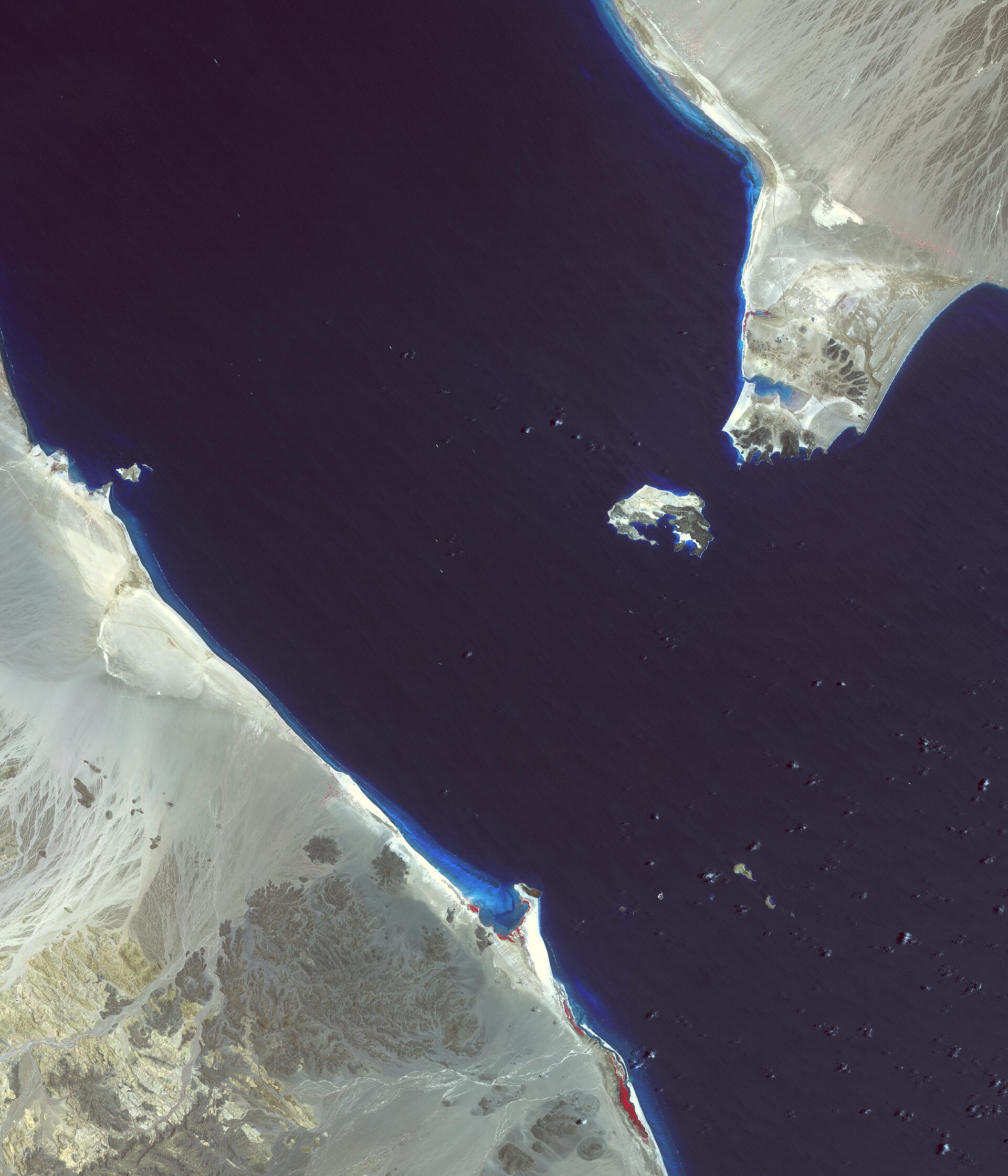
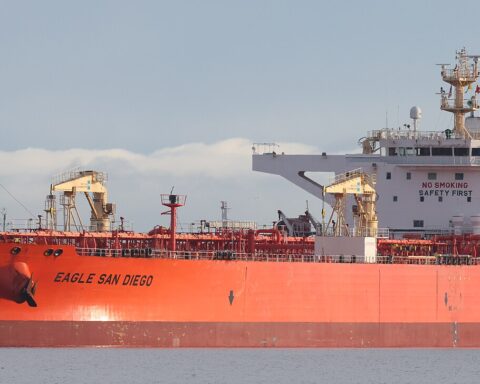
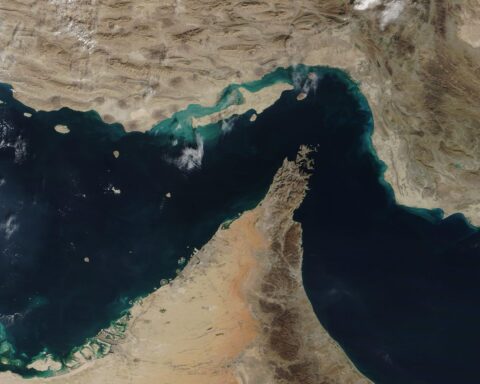
DUBAI u2014 Only five ships transited the Strait of Hormuz in the 24 hours ending April 24, according to vessel-tracking data compiled by Kpler u2014 one of them an Iranian-sanctioned oil products tanker u2014 as the compounding effects of a US naval blockade and Iran’s own maritime enforcement reduced traffic through the world’s most important energy chokepoint to 3.6 percent of its pre-war baseline.
n
n
The Middle East briefing 3,000+ readers start their day with.
One email. Every weekday morning. Free.
n
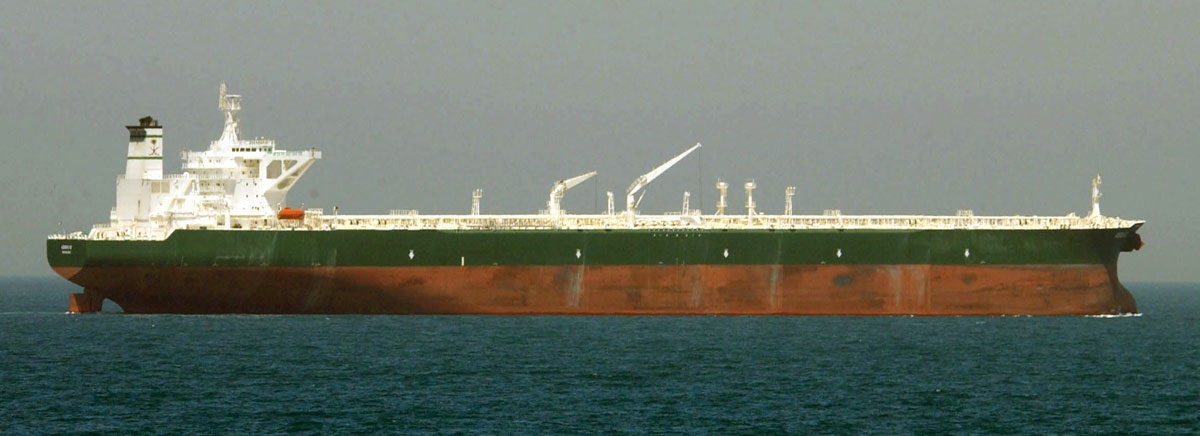
The near-total shutdown, which Bloomberg on Saturday characterized as a “double blockade,” has persisted despite a ceasefire nominally in effect since April 8 and despite Iran’s foreign ministry declaring the strait “completely open to commercial shipping” on April 24. Before the war began on February 28, between 100 and 140 vessels passed through Hormuz daily, carrying roughly 20 percent of the world’s oil supply. The International Energy Agency’s executive director, Fatih Birol, told CNBC on April 23 that the disruption now amounts to 13 million barrels per day offline u2014 “more than the two 1970s oil crises combined.”
n
n
n
The dual-chokepoint dynamic has now extended to the Red Sea. On April 26, Houthi forces fired two anti-ship ballistic missiles at the MV Andromeda Star, an Aframax tanker carrying Russian Urals crude toward the Rosneft-owned Nayara Energy refinery at Vadinar, India — striking the vessel approximately 15 nautical miles south-west of Mokha even though its cargo and charter were aligned with the Russia-China-friendly profile Houthi screening doctrine is supposed to pass. The Indian Navy destroyer INS Kochi responded and escorted the vessel. Full reporting on the Andromeda Star strike and the India-Rosneft supply chain exposure is here. The broader strategic consequences u2014 Saudi Arabia’s Yanbu bypass now blocked at both ends u2014 are examined in the April 26 dual-vessel attack analysis.
n
n
n
n
Table of Contents
n
n
n
- n
- How the Double Blockade Works
- What Ghalibaf Conditioned u2014 and What He Cannot Deliver
- Enforcement by the Numbers
- Why Did Iran’s “Open” Declaration Change Nothing?
- Iran’s Parliament Moves to Legislate the Closure
- Can the Strait Be Cleared Even If Both Sides Stand Down?
- Market Fallout and the Yanbu Ceiling
- Background
- FAQ
n
- n
n
n
n
n
n
n
n
n
n
n
n
n
n
n
n
n
n
n
n
n
n
n
n
n
n
n
n
n
n
n
n
n
n
n
n
n
n
n
How the Double Blockade Works
n
n
n
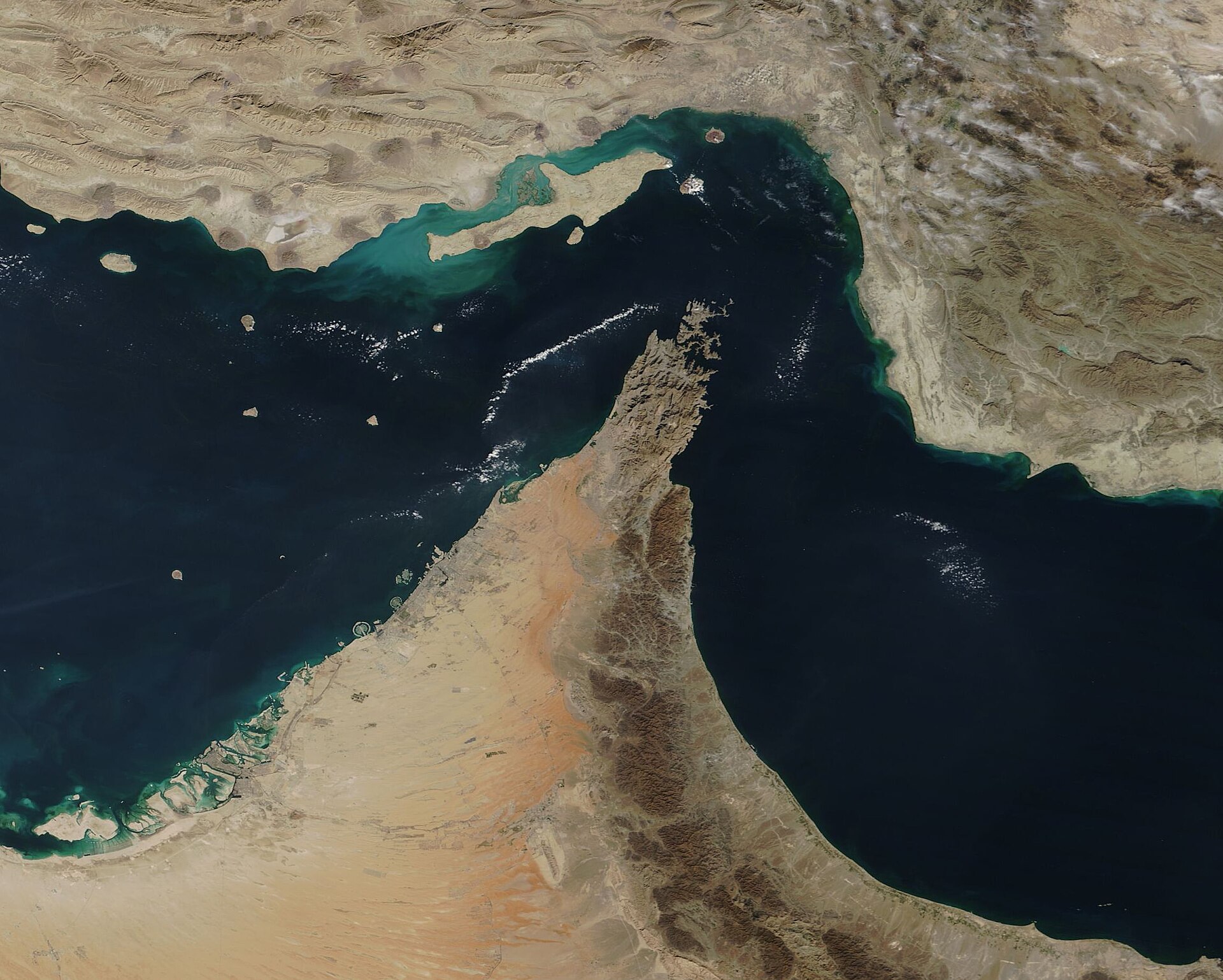
The mechanism is straightforward in principle and nearly impossible to unwind in practice. Since March 4, when the IRGC Navy declared “full authority” over Hormuz, Iran has controlled which vessels can exit the Persian Gulf into the Gulf of Oman. Since April 13, when US Central Command declared it would blockade “the entirety of the Iranian coastline,” the US Navy has controlled which ships can enter from the Arabian Sea side.
n
n
n
A commercial vessel now needs approval from both militaries to complete a transit. Neither blockade has been lifted. CNBC reported on April 23 that rival militaries effectively control entry and exit points, creating what amounts to a structural deadlock with no single point of release. That command authority question has grown more complicated since April 30: the question of who in Tehran actually issued the IRGC Navy orders — and whether that person can be held to any subsequent commitment — is examined in the legitimacy vacuum analysis here.
n
n
n
The US blockade’s scope was narrowed within 14 hours of its announcement. President Trump’s initial Truth Social post on April 13 threatened “any and all Ships” transiting the strait. CENTCOM’s formal press release, issued at 10 a.m. ET the same day, specified the blockade applied to ships entering or departing Iranian ports u2014 not all Hormuz traffic. Todd Huntley of Georgetown University Law Center wrote in Lawfare that “a total blockade of all maritime traffic through the Strait of Hormuz would violate international law.” The port-focused framing, as Frank G. Hoffman of the Foreign Policy Research Institute noted, “appears better suited to satisfy international law.”
n
n
n
But the operational effect has been broader than the legal framing suggests. Since the ceasefire on April 8, only 45 ships total have entered or exited the strait, according to Kpler data cited by Al Jazeera and Al-Monitor on April 24.
n
n
n
What Ghalibaf Conditioned u2014 and What He Cannot Deliver
n
n
n
Iran’s parliament speaker, Mohammad Bagher Ghalibaf, posted on X on April 22 what amounted to the first formal public linkage of Hormuz reopening to US blockade removal. “A complete ceasefire only has meaning when it is not violated by a naval blockade and the holding hostage of the global economy, and if the Zionist warmongering across all fronts is halted,” he wrote. “Reopening the Strait of Hormuz is not possible under a blatant breach of the ceasefire.”
n
n
n
The statement was carried by France 24 and Voice of Emirates. Four days earlier, on April 18, Ghalibaf had been blunter: “It is impossible for others to pass through the Strait of Hormuz while we cannot.”
n
n
n
The linkage creates a policy trap. The US maintains the blockade because Iran closed the strait. Iran now formally conditions reopening on the blockade’s removal. Each side’s instrument gives the other a domestic justification to maintain its own.
n
n
n
On April 26, as both blockades held, Trump and Starmer agreed in a direct call that Hormuz must reopen unconditionally — even as Iran’s foreign minister was flying to Moscow to build the diplomatic architecture that prevents it.
n
n
n
Bahrain had already anticipated this trap at the Security Council level. On April 6, Manama submitted a draft resolution invoking UNCLOS transit passage rights and demanding Iran stand down from its Hormuz enforcement architecture — knowing that a Russian and Chinese veto would expose both powers as enablers of the blockade rather than neutral parties to the conflict.
n
n
n
Beijing’s veto posture has persisted into the diplomatic sphere. Thirteen days after China killed the Bahrain resolution, Xi Jinping called MBS to urge “normal passage” through the same strait his veto helped keep closed — a structural contradiction that reveals why Beijing treats Hormuz as a relationship management problem rather than a logistics problem it intends to solve.
n
That contradiction resolved operationally on May 13. The COSCO Yuan Hua Hu’s toll-free passage through Larak Island — confirmed as Trump’s aircraft landed in Beijing — was not improvised: Beijing’s operational Hormuz deal, concluded eight days before the Trump-Xi summit, shows China was extracting bilateral concessions from Iran while publicly calling for universal Hormuz access.
n
n
n
But Ghalibaf’s statement is political, not operational. He is parliament speaker u2014 a former IRGC Aerospace Force commander (1997u20132000), fluent in the language of military escalation, but with no authority over IRGC Navy operations. The IRGC Navy reports to the Supreme Leader under Article 110 of Iran’s constitution, not to the Majlis. Khamenei has not been seen publicly for more than 50 days. President Pezeshkian publicly accused IRGC-aligned former Defense Minister Vahidi and Khatam al-Anbiya commander Abdollahi on April 4 of wrecking ceasefire efforts u2014 an admission that the civilian government cannot command the IRGC to stand down.
n
n
n
The Institute for the Study of War reported on April 19 that “the IRGC appears to be controlling Iranian decision-making instead of Iranian political officials who are engaging with the United States in negotiations.” Ghalibaf’s statement aligns with IRGC demands but does not bind IRGC operations. It is political institutionalization of the closure, not an operational command.
n
n
n
n
n
n
Enforcement by the Numbers
n
n
n
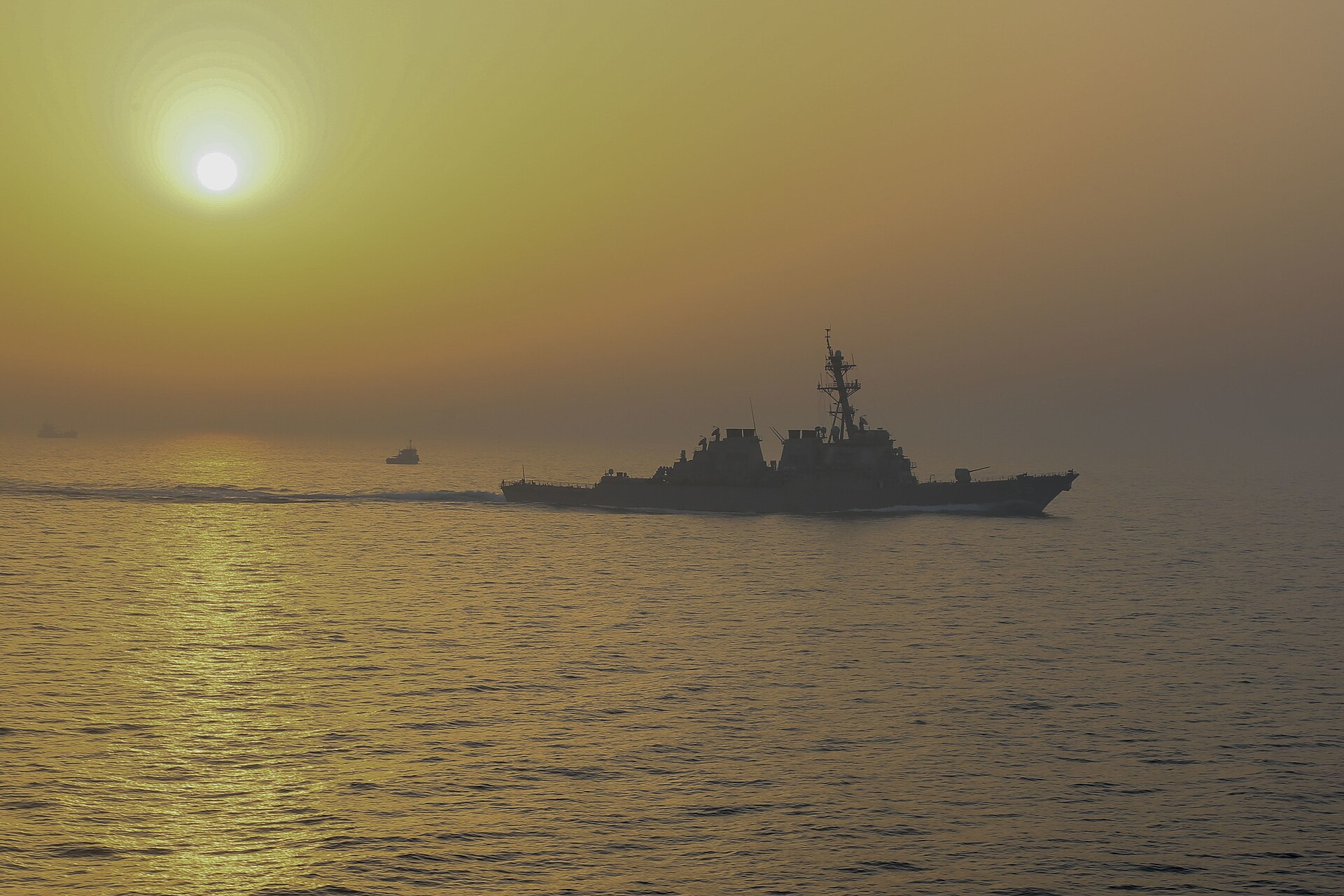
On the US side, CENTCOM has deployed at least 27 Navy vessels u2014 roughly 41 percent of all actively deployed US warships worldwide u2014 including three carrier strike groups led by the USS Abraham Lincoln and the USS George H.W. Bush, with a third en route. Stars and Stripes reported on April 14 that the force includes 16,500 sailors and Marines, with named destroyers USS Mason, USS Ross, USS Donald Cook, and USS Spruance, mine countermeasures vessels USS Chief and USS Pioneer, Boeing P-8 Poseidon maritime patrol aircraft, and the 31st Marine Expeditionary Unit.
n
n
n
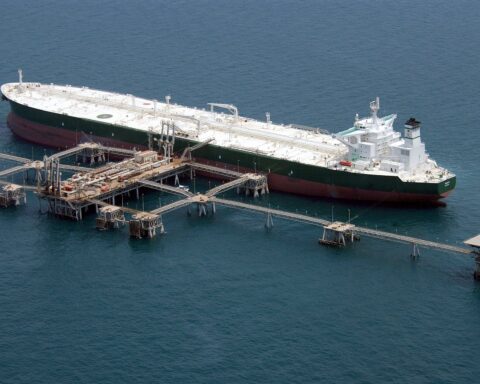
Through April 24, CENTCOM had turned around 31 Iranian-linked vessels. The first seizure came on April 19, when the USS Spruance disabled the engine of the Iranian-flagged MV Touska with 5-inch gunfire. Two VLCCs followed: the Tifani on April 21 and the Majestic X on April 23, each carrying approximately 1.9 million barrels. Lloyd’s List reported that at least 26 Iranian vessels had evaded the blockade by April 20.
n
n
n
n
| Date | Vessel | Action | Cargo |
|---|---|---|---|
| April 19 | MV Touska (Iranian-flagged) | Engine disabled by USS Spruance gunfire | Undisclosed |
| April 21 | VLCC Tifani | Seized | ~1.9M barrels |
| April 23 | VLCC Majestic X | Seized | ~1.9M barrels |
| April 22 | MSC Francesca (Liberia-flagged, 11,660 TEU) | Seized by IRGC | Container cargo |
| April 22 | Epaminodas (Panama-flagged, 6,690 TEU) | Seized by IRGC | Container cargo |
n
n
n
n
n
n
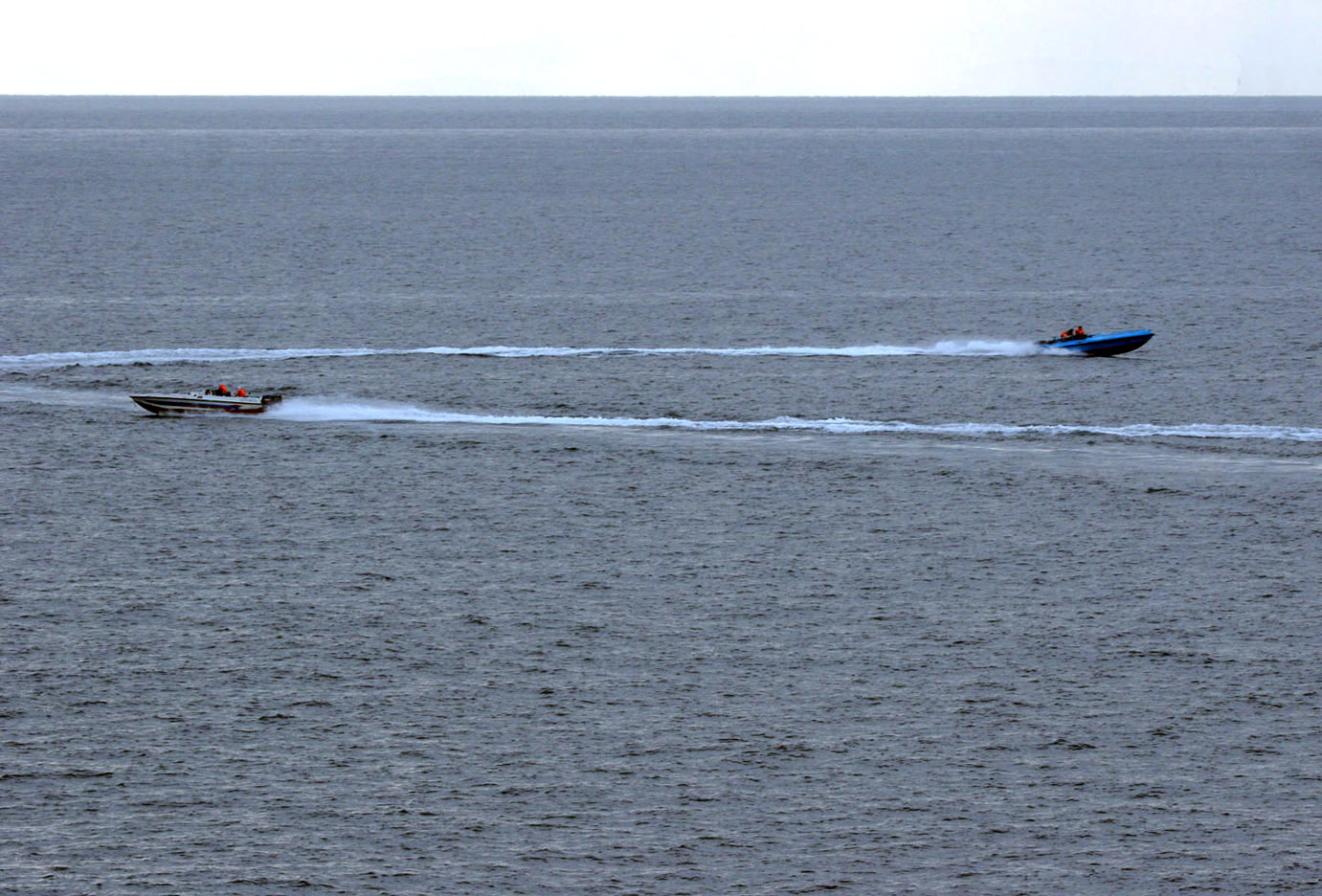
On Iran’s side, the IRGC Navy operates approximately 50,000 personnel across five Gulf sectors, with 38 controlled islands and more than 10 fortified bases, according to Asharq Al-Awsat. The fleet includes over 100 fast-attack craft, mine-laying boats, drone platforms, the Shahid Bagheri drone carrier (a converted container ship), and miniature submarines.
n
n
n
Michael B. Petersen, a non-resident senior fellow at FPRI, described the US approach as “a ‘distant (or semi-distant)’ blockade of vessels that have paid a toll to Iran,” adding that “this approach requires significant assistance from allies and partners to be fully successful.” That assistance has not materialized. Unlike the 1987u201388 Tanker War, when NATO allies provided mine countermeasures support, no allied nation has committed naval assets to the 2026 operation.
n
n
n
Why Did Iran’s “Open” Declaration Change Nothing?
n
n
n
On April 24, Iran’s foreign ministry declared the Strait of Hormuz “completely open to commercial shipping.” Bloomberg’s vessel-tracking data the following day showed two small Iranian fuel carriers and one coastal cargo ship transiting u2014 functionally indistinguishable from zero commercial traffic.
n
n
n
The declaration failed for two reasons, one on each side of the strait. On the Iranian side, the IRGC had seized the MSC Francesca (11,660 TEU, Liberia-flagged) and the Epaminodas (6,690 TEU, Panama-flagged) on April 22 u2014 two days before the “open” announcement. The IRGC claimed the ships “had endangered maritime security by operating without the required authorization and by tampering with navigation systems.” UKMTO reporting contradicted this, indicating both vessels had received Iranian passage clearance before being seized.
n
n
n
Jakob Larsen, chief safety and security officer at BIMCO, told The National on April 24: “The fact that ships were attacked following apparent Iranian approval to transit underscores the complexity and volatility of the security situation.” He added that “for most shipping companies, they will need a stable ceasefire and assurances from both sides.”
n
n
n
On the US side, Defense Secretary Pete Hegseth announced on April 23u201324 that the blockade would last “as long as it takes,” with a single condition: that Iran “abandon a nuclear weapon in meaningful and verifiable ways, or instead they can watch the regime’s fragile economic state collapse.” He added: “Our blockade is growing and going global.” On April 24, Trump ordered Navy personnel to shoot and kill Iranian mine-laying crews in the strait.
n
n
n
Peter Sand, chief analyst at Xeneta, said on April 24: “The latest seizures make clear, even an ‘open’ Strait of Hormuz is not a safe Strait of Hormuz for seafarers, ships and cargo.”
n
n
n
n
n
n
Iran’s Parliament Moves to Legislate the Closure
n
n
n
While Ghalibaf made his demands publicly, Iran’s parliamentary National Security and Foreign Policy Committee was advancing a 12-article bill titled “Law on Establishing Iran’s Sovereignty over the Strait of Hormuz.” The bill, reported by PressTV on April 21 and confirmed by GlobalSecurity, would ban vessels from “hostile countries” from transiting without Supreme National Security Council approval, prohibit all Israeli-linked cargo, impose rial-denominated tolls, authorize confiscation of 20 percent of cargo from non-compliant vessels, and extend the transit ban to states that do not use “Persian Gulf” in official documents.
n
n
n
Named lawmakers behind the bill include Vahid Ahmadi and Mohammad Reza Rezayi Kouchi. The legislation would codify what the IRGC has imposed by force since March 4 u2014 transforming an emergency military posture into permanent statute.
n
n
n
This is the same dynamic that rendered Foreign Minister Araghchi’s earlier Hormuz declarations meaningless. The civilian government can announce openings. The IRGC can seize ships the same day. And parliament can legislate the closure into law while the foreign ministry promises the opposite.
n
n
n
Can the Strait Be Cleared Even If Both Sides Stand Down?
n
n
n
Even in a scenario where both blockades are simultaneously lifted, the strait would not reopen immediately. The Pentagon told the House Armed Services Committee that clearing Iranian mines from Hormuz could take up to six months after any peace deal is reached. Iran began planting mines around March 10, and more than 20 GPS-guided devices have been reported, according to Pentagon briefings. Iran has acknowledged losing track of some of its own mines.
n
n
n
The US mine countermeasures capability in the region has degraded. Four Avenger-class MCM ships were decommissioned at their Bahrain homeport in September 2025. Only USS Chief and USS Pioneer remain in theater u2014 two ships to clear a waterway where the 1991 Kuwait mine clearance operation, covering roughly 200 square miles, required four Avengers.
n
n
n
The command vacuum within the IRGC Navy compounds the problem. Commander Alireza Tangsiri was killed on March 30. No named successor has been announced. The force that laid the mines has no identified commanding officer, raising questions about who could provide mine charts or coordinate clearance in any future agreement. The engineering constraints on mine clearance u2014 four ships, 30-percent-operational equipment, and a six-month timeline that does not bend to political deadlines u2014 determine when Saudi Arabia’s exports recover.
n
n
n
Market Fallout and the Yanbu Ceiling
n
n
n
The mutual blockade has exposed the limits of Saudi Arabia’s East-West Pipeline bypass. Bloomberg reported on April 24 that actual loadings at Yanbu were running at approximately 4 million barrels per day against a port ceiling of 5.9 million bpd and a pipeline capacity of 7 million bpd. Pre-war Saudi exports through Hormuz totaled 7 to 7.5 million bpd, leaving a structural shortfall of 1.1 to 1.6 million bpd that no bypass can close. Goldman Sachs has put a name to this scenario: a “sloppy peace” that converts Saudi Arabia’s temporary war deficit into structural fiscal drain, with the Yanbu bottleneck persisting indefinitely. That bottleneck is now threatened from the Red Sea end as well: how the Bab el-Mandeb threat closes Saudi Arabia’s Yanbu bypass u2014 trapping the kingdom between two straits it cannot control u2014 is the subject of Saudi Arabia’s Yanbu Bypass Is About to Lose the Only Strait That Made It Work. The Fujairah terminal u2014 the UAE’s bypass equivalent u2014 was struck on May 4 and May 5, eliminating the only remaining high-volume alternative: Iran’s thirty-day bypass denial campaign now leaves Yanbu as the sole functioning Gulf export outlet. The IEA’s May 2026 Oil Market Report quantifies what that ceiling costs the global market: inventories are drawing down at 8.5 million barrels per day, with the Yanbu structural gap surviving any diplomatic agreement.
n
n
n
The deeper asymmetry is political, not logistical. Saudi Arabia bears 83% of Iran’s strikes and the steepest production crash in the war u2014 yet has no seat in the US-Iran negotiations where Hormuz reopening terms, ceasefire architecture, and oil market recovery conditions are being decided. Qatar, by contrast, secured structural leverage over that same ceasefire timeline through an entirely different instrument: the $38 billion Al Udeid expansion signed May 14 converts Doha’s basing dependency into an active stake in the war’s diplomatic resolution. How that structural exclusion compounds the bypass gap is the subject of Saudi Arabia Bears the War’s Highest Cost and Has No Seat at the Table. That cost crystallised further on May 15 when Trump, departing Beijing, publicly disowned the April 8 framework — an analysis of how Saudi Arabia absorbed the cost of a ceasefire its own patron later called a favour to Pakistan is here.
n
n
n
Matt Wright, principal freight analyst at Kpler, told The National on April 24 that “it’s the re-entries that are the real test of what’s going on” u2014 meaning the market is watching not for declarations of openness but for actual inbound vessel traffic. That divergence is already visible in the price signal: on April 13, physical crude reached $148.87 while Brent futures sat at $97, a $47 spread that Physical Crude at $150 While Futures Say $97 identifies as the market pricing actual barrel delivery risk rather than diplomatic probability.
n
n
n
Jared Cohen, co-head of the Goldman Sachs Global Institute, told Fortune on April 25 that even in a best case, “you may have traffic flowing through, but the Iranians will likely maintain partial or unilateral control.” He characterized the current situation as “sloppy peace” u2014 “a bunch of half solutions on all the big issues.”
n
n
n
Goldman’s April 27 revision pushed Q4 2026 Brent to $90 — up from $83 two weeks prior — after shifting its Hormuz normalisation assumption from mid-May to end-June. The revision embeds the double blockade’s duration directly into the price path: Goldman’s $90 Q4 forecast is $18 below Saudi Arabia’s PIF-inclusive fiscal break-even, meaning every additional week of mutual blockade deepens a deficit that no price increase within Goldman’s probable range can close.
n
n
n
The double blockade’s fiscal consequences for Saudi Arabia’s long-term development programme are examined in full in Vision 2030 Turned Ten the Same Week the Blockade Was Confirmed, which shows why the 2030 Annual Report’s record-breaking 2025 KPIs are structurally incapable of reflecting the wartime economy in which they were published.
n
n
n
n
| Metric | Pre-War | Current | Source |
|---|---|---|---|
| Daily Hormuz transits | 100u2013140 | ~5 | Kpler / Al Jazeera |
| Total transits since ceasefire (April 8u201324) | u2014 | 45 | Kpler / Al-Monitor |
| US vessels deployed | u2014 | 27 (~41% of fleet) | Stars and Stripes |
| Iranian vessels turned back | u2014 | 31 | CENTCOM |
| Energy offline | u2014 | 13M bpd | IEA |
| Yanbu actual loadings | u2014 | ~4M bpd | Bloomberg |
| Saudi structural shortfall | u2014 | 1.1u20131.6M bpd | Bloomberg |
n
n
n
n
n
n
War-risk insurance premiums have surged several-fold since February 28, according to BIMCO. Xeneta’s recovery projections assume unhindered passage u2014 conditions that do not exist. Tankers and dry bulk may reach full recovery by July; container ships roughly 50 percent by July, normalizing in August; LNG carriers not until September.
n
n
n
Kenneth Katzman, a former Congressional Research Service analyst, told Al Jazeera on April 24 that Iran has 160 to 170 million barrels of crude in floating storage u2014 enough to maintain revenue flows until approximately August. Trump “probably won’t” maintain the blockade that long, Katzman said. Adam Ereli, a former US ambassador to Bahrain, told the same outlet that Iran “can tolerate pain for a lot longer than most American decision makers calculate.”
n
n
n
n
n
n
“There is no safe and free passage through the Strait of Hormuz. This is the weaponization of trade, with both sides recognizing the pain they can inflict.”Peter Sand, Chief Analyst, Xeneta, April 22
n
n
n
n
n
n
n
n
n
Background
n
n
n
The current Hormuz crisis is the most severe since the 1987u201388 Tanker War, when Iraq carried out 283 attacks on shipping and Iran 168, killing 116 merchant sailors. The USS Samuel B. Roberts struck an Iranian mine on April 14, 1988, triggering Operation Praying Mantis u2014 the US Navy’s largest surface engagement since World War II. During that conflict, NATO allies provided mine countermeasures and escort support; no equivalent coalition has formed in 2026. A Northwood planning conference on April 22–23 brought more than 30 nations together to design one, but French preconditions and the double-blockade architecture mean no mission date has been set.
n
n
n
The sequence that produced the double blockade unfolded in stages: the IRGC declared “full authority” over Hormuz on March 4; the US imposed its Iranian port blockade on April 13; the IRGC cited the US blockade as justification for continued closure on April 17u201318; Ghalibaf formalized the linkage on April 22; Iran’s parliament advanced sovereignty legislation on April 21; the IRGC seized the MSC Francesca while the strait was supposedly “open” on April 22; Trump ordered shoot-to-kill on April 24; and Hegseth declared “as long as it takes” the same day.
n
n
n
Max Boot, the Jeane J. Kirkpatrick Senior Fellow at the Council on Foreign Relations, published an “Open for Open” analysis arguing that the mutual-trap logic means “neither one will lose face by opening it u2014 as long as the other one does the same.” The problem, Frederic Schneider of the Middle East Council on Global Affairs told Al Jazeera, is that Trump faces a May 1 congressional deadline on the blockade while Iran is playing “the longer game.”
n
n
n
FAQ
n
n
n
How does the US blockade differ legally from Iran’s closure?
n
n
n
The US blockade is port-targeted u2014 it applies only to ships entering or departing Iranian ports, giving it defensible standing under international law. Iran’s approach has none: UNCLOS Articles 38u201344 guarantee transit passage through international straits for vessels of all nations regardless of origin or destination, and no provision allows a coastal state to require advance IRGC authorization as a condition of transit. Both operations inflict equivalent economic damage, but the US has constructed a narrower legal exposure.
n
n
n
What would a simultaneous withdrawal look like operationally?
n
n
n
A stand-down agreement would not reopen the strait on day one. The Pentagon estimates mine clearance alone could take up to six months u2014 and that assumes full cooperation including Iranian mine charts. With only two MCM vessels in theater (USS Chief and USS Pioneer) and no allied mine clearance commitments, the timeline could extend further. Insurance underwriters would need to see sustained safe passage before reducing war-risk premiums, and shipping companies would require what BIMCO’s Larsen calls “a stable ceasefire and assurances from both sides” before routing vessels back through the strait.
n
n
n
How long can Iran sustain revenue under the blockade?
n
n
n
Katzman estimates Iran’s 160u2013170 million barrels in floating storage could sustain revenue flows until roughly August 2026. Schneider noted that Iran also has crude oil reserves in onshore floating-roof tanks. But the blockade’s economic damage extends beyond oil exports. Iran’s Central Bank has circulated an internal memo projecting 180 percent inflation and a 12-year recovery timeline if the crisis persists, according to reporting by Iranian media in April. The parliament’s proposed rial-denominated toll system has collected zero revenue in 36 days of operation. Iran reversed that on April 23, with parliament confirming the first cash deposit of Hormuz toll revenue into the Central Bank, converting the collection mechanism from a coercive instrument into an institutional budget line.
n
n
n
Why hasn’t Saudi Arabia’s Yanbu bypass fully compensated for the Hormuz closure?
n
n
n
Three constraints compound. The East-West Pipeline’s port loading ceiling (5.9 million bpd) is below pre-war Hormuz export volumes (7u20137.5 million bpd), leaving a minimum 1.1 million bpd gap even at full capacity. Actual loadings are well below the ceiling u2014 partly because Saudi production has fallen sharply since the war began, reducing the volume available to route through either corridor. And the bypass does nothing for non-Saudi Gulf producers u2014 Kuwait, Iraq, and UAE crude has no Red Sea alternative, leaving most of the strait’s pre-war throughput entirely blocked. Iran is now extending this architecture to a second chokepoint, with Houthi toll mechanisms for Bab el-Mandeb reportedly designed with Iranian involvement u2014 potentially closing Saudi Arabia’s only remaining export corridor to Asia as well. Riyadh is simultaneously running Saudi Arabia’s parallel diplomatic track outside the Islamabad and Oman frameworks, with Prince Faisal working Baghdad, Amman, Ankara, and Madrid in a single day on April 26 to build leverage in the talks where Saudi Arabia has no seat. Simultaneously, at the EU summit in Cyprus on April 24, GCC Secretary-General Al-Budaiwi used multilateral European cover to harden reopening terms u2014 locking missile and proxy conditions into the transatlantic record as described in the GCC Cyprus conditions analysis.
n
n
n
What is the significance of Iran’s 12-article sovereignty bill?
n
n
n
The bill would transform the IRGC’s emergency military posture into permanent Iranian law, making any future reopening contingent on legislative repeal rather than a military stand-down order. It would also establish legal grounds for cargo confiscation (20 percent of non-compliant shipments), rial-denominated tolls, and a ban on vessels from states that do not use “Persian Gulf” in official documents u2014 a provision that would technically bar ships flagged in several Arab states. If enacted, it would make Hormuz closure the legal default rather than an exceptional wartime measure. The question of who benefits most from a conflict that never fully resolves is examined from a GCC perspective in Qatar’s warning about a frozen Hormuz conflict u2014 and why Qatar’s fiscal architecture gives it structural incentives that diverge sharply from Saudi Arabia’s.
n
n
n
On April 27, with the double blockade still in force, Putin received Araghchi at the Kremlin and placed Hormuz on the agenda alongside the nuclear file — Moscow inserting itself as an indispensable broker on the one negotiation track where both the US and Iran still have an incentive to move. The Astana Process parallel — how Russia’s co-guarantor role structurally excludes Saudi Arabia from the negotiations that determine Hormuz’s future — is examined in Russia Is Running the Astana Playbook on Saudi Arabia’s Existential Crisis.
n
n
n
The humanitarian dimension of the double blockade moved to the Security Council table when IMO Secretary-General Dominguez briefed the Council on the 20,000 seafarers trapped across 1,600 vessels, marking the first time the maritime agency has formally addressed the body on an active chokepoint crisis.
n
n
n
The compounding pressure on Iranian trade infrastructure intensified further on April 26, when an explosion at the Shahid Rajaei port container yard destroyed 15 hectares of Iran’s dominant Gulf gateway u2014 adding a third simultaneous chokepoint to the double blockade already reducing Hormuz transits to 3.6 percent of pre-war baseline.
n
n
n
Iran’s phased proposal, transmitted via Pakistan on April 25–27, exploits the double blockade precisely because it sequences ceasefire first and Hormuz governance second — ensuring that lifting the US blockade validates the toll architecture before nuclear talks begin. The structural logic is examined in Iran’s Hormuz-First Proposal Is Not a Concession. It Is a Sovereignty Claim Dressed as a Peace Plan.
n
n
n
On the same day Araghchi met Putin in St. Petersburg, Trump convened his senior national security principals in the White House Situation Room — the third US decision node on the Hormuz-first proposal in 16 days. Trump’s Situation Room deliberation on April 27, the composition of the room, and why the “open for open” formula proposed by CFR’s Max Boot may be the only framework that lets both sides move without admitting they moved are examined in full.
n
n
n
The US definitional rejection of Iran’s Hormuz governance claim arrived on April 27, when Rubio characterised the IRGC permission regime as extortion and refused to treat Hormuz reopening as a valid concession in any phased framework. Why Rubio’s statement closes the interim-deal track on Hormuz is examined in full.
n
n
n
Rubio’s Sunday statement also makes the concession that could dissolve the double blockade politically radioactive for any future administration; the full consequences for Saudi Arabia’s fiscal position and the “open for open” off-ramp are examined in Rubio Calls Iran’s Hormuz Offer Extortion, Closing the US Negotiating Window.
n
n
n
The managed-passage architecture beneath the double blockade became visible on April 25, when Mordashov’s $500M superyacht Nord transited Hormuz without IRGC interdiction or US challenge — a single vessel revealing the selective-exemption logic that governs the 3.6 percent of pre-war traffic still moving. How the Nord transit exposes the blockade’s operating architecture is examined in full.
n
n
n
The Security Council option that might have provided a multilateral resolution to the double blockade was permanently closed on April 7 when Russia and China vetoed the Hormuz resolution — even after Gulf sponsors stripped it of Chapter 7 and all enforcement powers. How the double veto closed the UN multilateral track on Hormuz permanently is analysed in full.
n
n
n
The physical mine clearance timeline that makes any Hormuz deal structurally insufficient — Iran’s inability to locate mines it laid haphazardly, the absence of US MCM vessels at war’s outbreak, and the six-month Pentagon estimate that begins only after hostilities end and ships arrive from Japan — is documented in detail in Iran Cannot Find Its Own Hormuz Mines — and the US Has No Ships to Clear Them.
n
n”}
n
The managed-passage architecture also produced its first visible crack in late April, when both a Japanese VLCC and an Emirati LNG carrier cleared Hormuz outside the Larak corridor within 48 hours of each other u00e2u0080u0094 only one with Tehranu00e2u0080u0099s authorization. The Idemitsu Maru and Mubaraz transits and what the Mubaraz ghost transit reveals about the double blockadeu00e2u0080u0099s enforcement capacity are examined in full.
n
The escalatory alternative to the double blockade — a partial ground-force seizure of the Strait itself — is one of three options CENTCOM briefed Trump on April 30, all of which require Saudi basing, airspace, and air defense that Riyadh has not been publicly asked to provide; the full Saudi exposure matrix is examined here. That option has since escalated: an analysis of how CENTCOM’s Hormuz seizure option has already done more diplomatic damage through its publication than it could achieve as a military operation is examined in a companion analysis published May 18.
n
Saudi Arabia’s refusal to publicly endorse either the US convoy or the rival UK-France Hormuz coalition — while both depend on Riyadh’s legitimacy to function — gives the Kingdom a structural veto over any reopening framework: why both Hormuz coalitions need Saudi Arabia and Saudi Arabia needs neither is examined in full.
n
Iran’s 14-point proposal, submitted via Pakistan on May 1–2, removed the precondition that the US blockade end first — but left nuclear and missile items entirely outside negotiation.
n
That proposal also attached a 30-day ultimatum to US blockade removal, expiring June 1–2 — the first days after Hajj dispersal reduces the kinetic cost of IRGC escalation. Why Iran’s 30-day blockade deadline is an undeliverable June tripwire is analysed in full.
n
The administrative formalization of IRGC transit control—the PGSA transit permit regime, launched May 5 with an email address, permit codes, and a cargo-screening system routed through Hormozgan Provincial Command—converts the double blockade from a physical standoff into a standing legal institution.
n
The US MOU’s acceptance of Hormuz-first sequencing — converting the double blockade’s structural trap into a formal negotiating concession — is documented in Washington’s Hormuz-First Concession Hands the IRGC a Structural Veto Over Nuclear Talks. The PGSA’s 40-question questionnaire institutionalizes the administrative layer of that blockade — how the PGSA questionnaire architecture converts the double blockade from a physical standoff into a standing compliance trap. The human cost of the blockade has now been publicly certified at the highest level: Gen. Dan Caine, Chairman of the Joint Chiefs, confirmed that approximately 22,500 mariners aboard more than 1,550 vessels remain trapped inside the Persian Gulf, triggering MLC 2006 abandonment obligations that operate on a separate clock from any MoU nuclear framework. The diplomatic sequence designed to resolve the double blockade u2014 Trump’s Riyadh arrival on May 13, the MOU deadline window, and why Beijing’s leverage over Tehran runs the sequence in reverse u2014 is analysed in Trump’s Riyadh-Beijing Sprint and the Clock Only Xi Controls. The financial dimension of that trapped supply — how Aramco built a record-profit quarter precisely because captive Asian buyers had no alternatives under the double blockade — is the subject of Aramco Q1 2026 Earnings: The War Quarter That Won’t Repeat. The double blockade’s operational reality was crystallised on the MOU deadline itself: simultaneous tanker war coercion on May 8 — Iran seizing the Ocean Koi while CENTCOM disabled two Iranian-flagged tankers — showed both sides are building legal architecture faster than diplomats are drafting text.
n
Why the double blockade’s resolution now runs through Beijing rather than Islamabad or Muscat — and what Saudi Arabia’s absence from the Trump-Xi summit means for any settlement that emerges — is the subject of Trump-Xi Beijing Summit: Saudi Arabia Frozen Out of the Hormuz Endgame.
n
The first empirical test of the double-blockade framework arrived on May 13, when the COSCO-owned VLCC Yuan Hua Hu transited toll-free through the Larak corridor while both layers of enforcement stood down — a structural gap this analysis examines in full: A Chinese Supertanker Just Showed the World What the US Hormuz Blockade Cannot Do.
n
There is an additional engineering constraint that neither side’s negotiators have resolved: Iran’s mine-location failure means Tehran cannot produce the accurate chart any reopening deal requires. Without a master record of where the mines were laid, verified clearance — the prerequisite for lifting the CENTCOM blockade — cannot begin.
n
On May 14, the IRGC’s 112-boat fast-craft drawdown — timed to the opening of the Trump-Xi summit — provided Beijing with a concrete demonstration that Tehran could de-escalate the double blockade’s kinetic layer on demand; how that signal shaped Xi’s Hormuz endorsement is examined in Xi Jinping’s Hormuz Endorsement Was a Managed Chinese Pivot, Not a US Diplomatic Victory.
n
The same day the IRGC’s 112-boat drawdown signalled to Beijing that Tehran could de-escalate on demand, CENTCOM commander Admiral Brad Cooper told the Senate Armed Services Committee that American forces had destroyed more than 90 percent of Iran’s naval mine inventory through over 700 airstrikes — a claim that, if accurate, removes the primary engineering obstacle to reopening while leaving the double blockade’s legal and political architecture entirely intact. Why the strait remains closed despite that percentage is the subject of Cooper Says 90 Percent of Iran’s Mines Destroyed. The Strait Remains Closed.
n”}
Iran’s administrative layer of the double blockade has since acquired permanent institutional form. The PGSA — Iran’s Persian Gulf Strait Authority, launched May 16 — is not a wartime toll booth but a customs bureaucracy with a vessel identification form, a country-ranking system, and a Majlis bill that would give it statutory force independent of any ceasefire. Why no draft deal currently contains language to dissolve it is examined in Iran Built a Customs Authority on Hormuz — and Nobody Is Negotiating to Dismantle It.
The formal legal architecture for the double blockade’s Iranian layer — the PGSA permit system, Azizi’s sovereignty announcement, and why European shipowners are now negotiating with the IRGC Navy despite the OFAC trap — is reported in Iran Announces Formal Hormuz Toll Mechanism — 74 Days After the IRGC Already Built One.