DOHA — Qatar’s Prime Minister Sheikh Mohammed bin Abdulrahman Al Thani met Vice President Vance in Washington on May 8, flew to Miami on May 9 to sit with Secretary Rubio and envoy Witkoff, then immediately called Saudi Foreign Minister Prince Faisal bin Farhan. Within 48 hours, Doha engaged every principal in America’s Iran diplomacy — and briefed the kingdom that once blockaded it.
The shift answers a question Washington has avoided since the Islamabad Accord collapsed: what happens when a mediation channel delivers messages to Iranian officials who cannot authorize what a ceasefire requires? Pakistan talks to Araghchi and Pezeshkian — elected civilians with no operational authority over the IRGC. Qatar, per Axios, talks to “senior IRGC generals involved in Iran’s decision-making.” Under Article 110 of Iran’s constitution, that is the difference between delivering mail and reaching the recipient.
Iran’s formal response to Trump’s 14-point MOU framework arrived via Pakistan on May 10. Trump called it “TOTALLY UNACCEPTABLE.” The same day, Iranian drones struck Qatar. Doha kept mediating. The country hosting CENTCOM’s forward headquarters is now the country calling IRGC commanders — and understanding why requires understanding what Qatar needs from Iran, and what kind of deal it would deliver.
Table of Contents
- The Miami Sequence — 48 Hours, Three Principals, One Phone Call
- Why Did Washington Choose Qatar Over Pakistan?
- Can the Country Hosting CENTCOM Mediate With the Country Bombing It?
- The North Field Imperative
- What Does Qatar Want That Saudi Arabia Doesn’t?
- From Denial to Engagement in Six Weeks
- Does Iran Accept Qatar as a Legitimate Channel?
- The Deal Qatar Would Deliver
- Frequently Asked Questions
The Miami Sequence — 48 Hours, Three Principals, One Phone Call
The itinerary itself was the message. Sheikh Mohammed bin Abdulrahman Al Thani — Qatar’s prime minister and the architect of Doha’s Taliban, Hamas, and Iran diplomatic channels — arrived in Washington on May 8 for a meeting with Vice President Vance. He then traveled to Miami on May 9 for a separate session with Secretary of State Rubio and special envoy Steve Witkoff. No Qatari premier had previously engaged all three of the administration’s top Iran diplomats within a single 48-hour window.
The Miami meeting was deliberate in its location: Rubio’s home turf, away from the institutional choreography of the White House. Witkoff’s presence confirmed the meeting’s purpose — he handles the Iran file exclusively. The sequencing told its own story. Before flying to Washington, MbAR called Pakistani Prime Minister Shehbaz Sharif. After Miami, he called Saudi Foreign Minister Prince Faisal. Pakistan was notified before departure; Saudi Arabia was called after Miami.
Trump had personally intervened. According to Axios, the president “raised Qatar’s expanded mediation role directly with Emir Sheikh Tamim al-Thani.” White House officials described Qatar as “especially effective in negotiations with Iran.” The request was not exploratory — it was a commission, one Qatar had previously resisted accepting.
The Middle East briefing 3,000+ readers start their day with.
One email. Every weekday morning. Free.
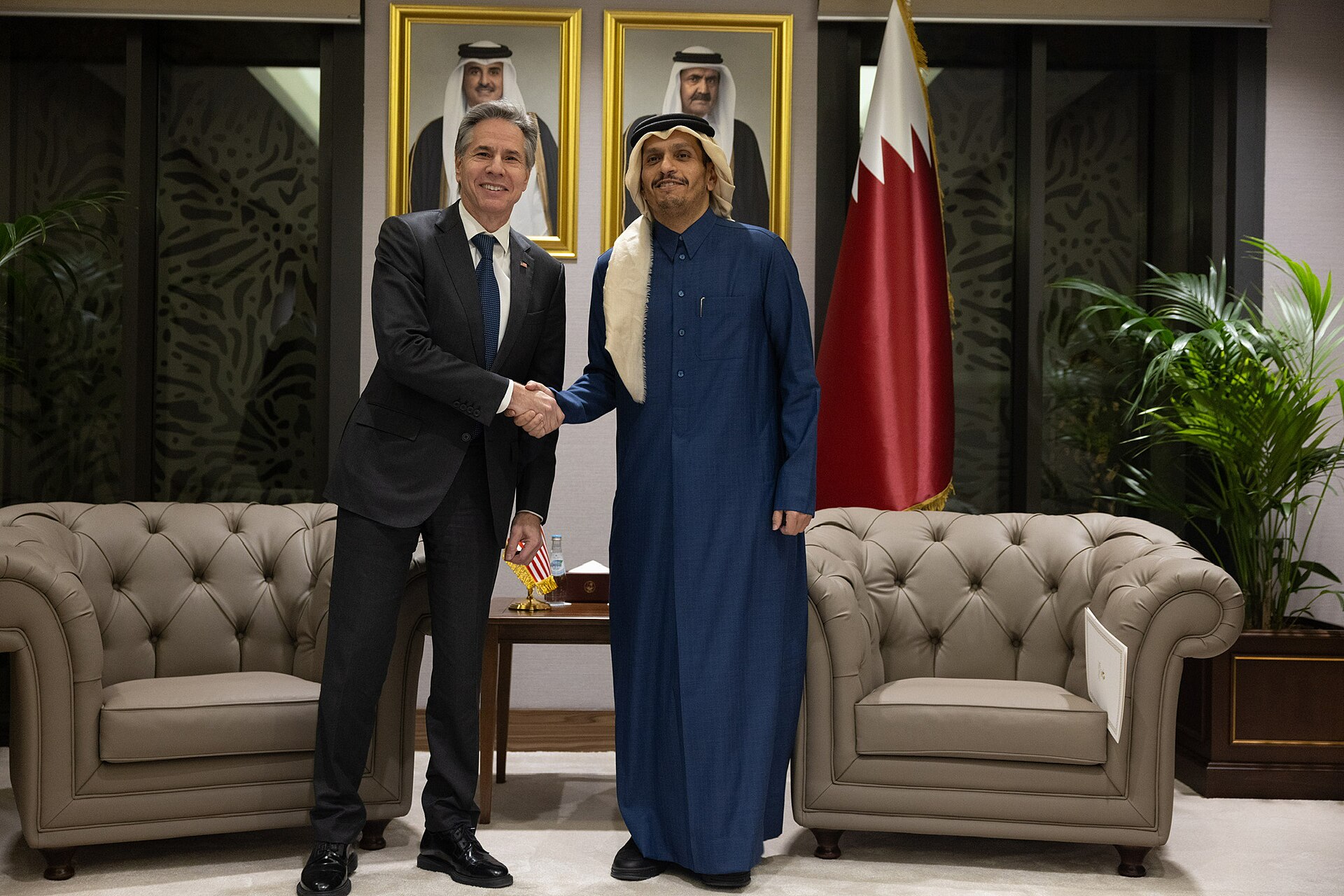
The Washington Times headlined the Vance meeting by noting that Qatar had stressed “the importance of Pakistani mediation” — publicly endorsing Islamabad’s primacy while privately building a parallel track with IRGC generals under Trump’s personal mandate. MbAR arrived already on record. Speaking to al-Araby al-Jadeed before the Vance meeting, he said: “There is a high probability that the U.S. and Iran will reach a deal.” Forty-eight hours later, he had sat with every American who could deliver one.
Why Did Washington Choose Qatar Over Pakistan?
Washington chose Qatar because Pakistan’s mediation channel runs through Iranian civilian officials — Foreign Minister Araghchi and President Pezeshkian — who have no operational authority over the IRGC under Article 110 of Iran’s constitution. Qatar’s contacts, per Axios, reach “senior IRGC generals involved in Iran’s decision-making” directly, bypassing the authorization ceiling that structurally prevented Pakistan from delivering enforceable agreements.
Pakistan’s channel was never deficient in effort. Pakistan’s National Security Coordinator Munir personally visited Khatam al-Anbiya headquarters — the IRGC Engineering Corps command under General Abdollahi — on April 16. He went to the building. He sat with the commanders. But Munir reached these men as an external visitor appealing across institutional lines, not as someone working a pre-existing relationship. Qatar’s IRGC contacts are embedded — developed over decades of shared gas-field management, sanctions-era trade, and Doha’s hosting of intermediaries whose networks overlap with the Revolutionary Guard’s economic apparatus.
The authorization ceiling became undeniable on April 4, when Pezeshkian publicly accused SNSC Secretary Vahidi and IRGC-E Commander Abdollahi of wrecking the Islamabad Accord by deviating from the negotiating delegation’s mandate. The president of Iran — naming his own security officials as saboteurs — confirmed that the elected government could negotiate but could not deliver. Pakistan was relaying positions to a government that could not bind its own military.
The structural failure has a constitutional address. Article 110 reserves supreme command of the armed forces, declaration of war and peace, and final authority over security policy to the Supreme Leader — not the president. Khamenei has been absent from public view for over 70 days. Mojtaba Khamenei — the Supreme Leader’s son, believed to be managing affairs during his father’s absence — has communicated by audio only. The IRGC operates under standing authorities that do not require presidential approval, which means Araghchi can agree to a ceasefire that Vahidi’s forces are under no obligation to observe.
Pakistan’s structural position as the ceasefire’s sole enforcement mechanism was always constrained by the fact that Munir’s interlocutors on the Iranian side were the same elected officials Pezeshkian had publicly accused of impotence. The Islamabad Accord’s collapse followed a specific sequence: Munir relayed positions to Araghchi’s delegation, Araghchi negotiated, Vahidi demanded Zolghadr be added to the team, and Abdollahi’s deviation from the mandate triggered the walkout. The failure was not in Pakistan’s mediation. It was in Pakistan’s address book.
The structural limits of that address book acquired a harder edge on May 12, when CBS News confirmed Pakistan had been sheltering Iranian military aircraft at PAF Base Nur Khan in Rawalpindi while simultaneously hosting ceasefire talks Saudi Arabia bankrolled. The revelation collapsed the distinction between Pakistan as neutral facilitator and Pakistan as an active participant in Iranian force protection during the negotiations it was supposedly running.
Qatar’s channel does not solve the authorization problem — no external mediator can force the IRGC to obey a civilian president. But it reaches the command layer where operational decisions are made.
Can the Country Hosting CENTCOM Mediate With the Country Bombing It?
Al Udeid Air Base hosts approximately 10,000 US military personnel, CENTCOM’s forward headquarters, the Combined Air Operations Center, and — since January 12, 2026 — the MEAD-CDOC, a missile defense coordination cell integrating 17 nations. Operation Project Freedom is staged and directed from Qatari soil. Iran has struck that soil with more than 700 missiles and drones since the war began.
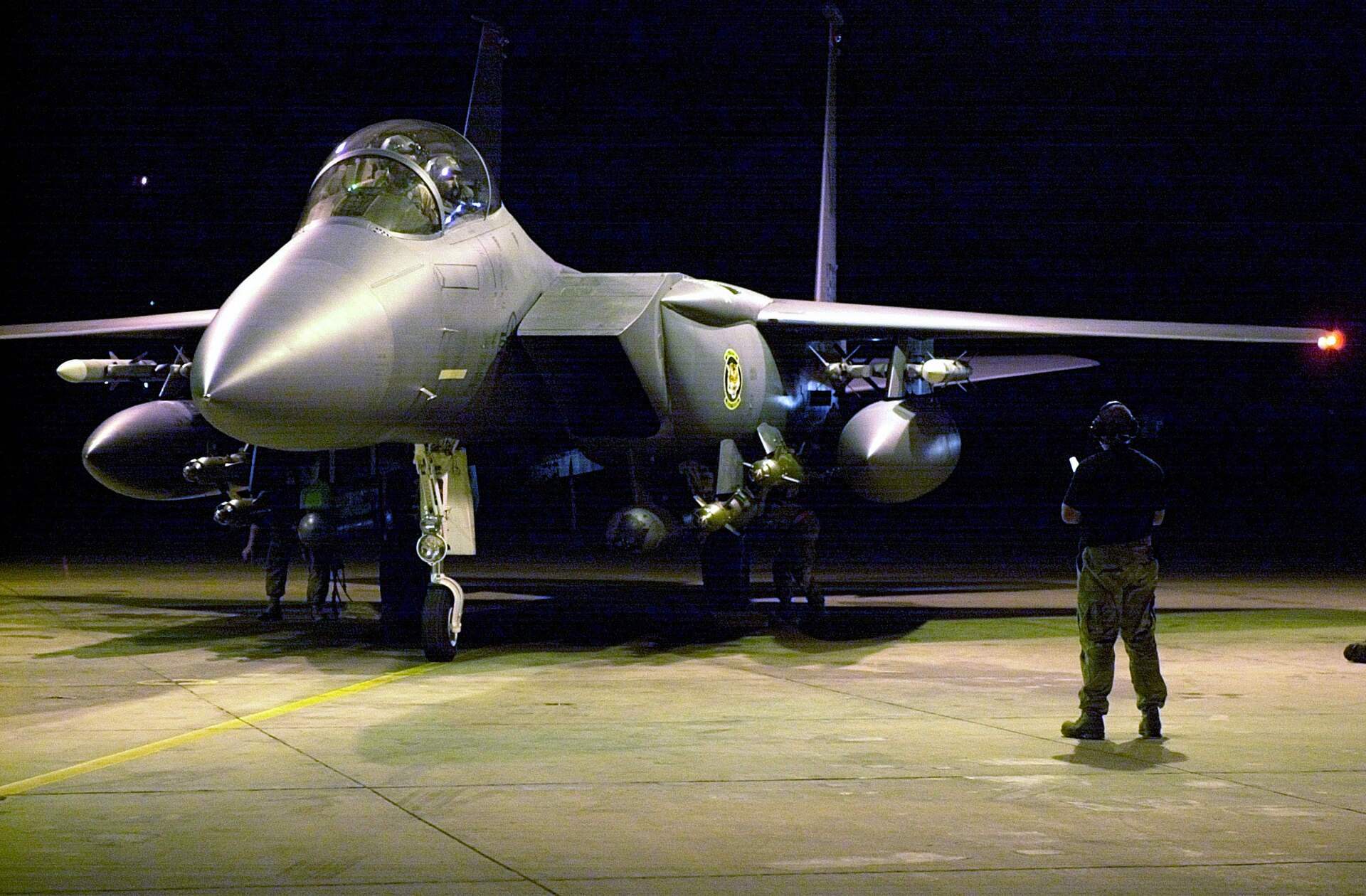
The contradiction is operational, not rhetorical. On March 2, Qatari F-15s shot down two Iranian Su-24 bombers that came within minutes of hitting Al Udeid. A $20,000 Shahed drone destroyed the AN/FPS-132 Block 5 UEWR — a $1.1 billion early-warning radar with a 5,000-kilometer detection range. In a single exchange, Qatar intercepted 63 missiles and 11 drones. On May 10, the same day Qatar’s expanded mediation role was fully public, Iranian drones struck Qatar alongside the UAE and Kuwait.
Qatar’s pre-war posture reflected a small state trying to maintain both relationships simultaneously. The Foundation for Defense of Democracies documented that Qatar told the US “more than once” it would not allow American forces to launch attacks on Iran from Al Udeid. “While Qatar’s warnings did not turn into action,” FDD’s Natalie Ecanow wrote on April 29, “they are a stark reminder that Doha possesses leverage over the U.S.” Before Iranian missiles started landing, Qatari officials referred to US strikes as “attacks on the sisterly Islamic Republic of Iran.”
The missiles ended the performance. Once Ras Laffan and Mesaieed — the two industrial complexes that produce and export Qatar’s LNG — were struck, forcing QatarEnergy to halt production and declare Force Majeure, Qatar’s posture shifted from studied neutrality to active self-defense. The estimated restoration timeline for full LNG capacity is five years. Annual revenue losses reach $20 billion — roughly 37 percent of government revenue.
The basing dimension extends beyond Qatar. Saudi Arabia denied US basing access in early May, removing a component of Operation Project Freedom’s forward posture within 36 hours. That decision made Al Udeid even more operationally central — and Qatar’s position over Washington even more concrete. A country that depends on both its American security guarantee and its Iranian gas field cannot afford to alienate either. Washington’s Axios sourcing suggests the administration views Qatar’s structural inability to choose as a credential, not a liability. That structural leverage deepened further on May 14, when Qatar committed $38 billion to expand Al Udeid itself, converting passive basing dependency into an active financial stake in the base’s permanence. How the Al Udeid expansion converts base dependency into structural leverage over the ceasefire timeline is examined in detail.
The North Field Imperative
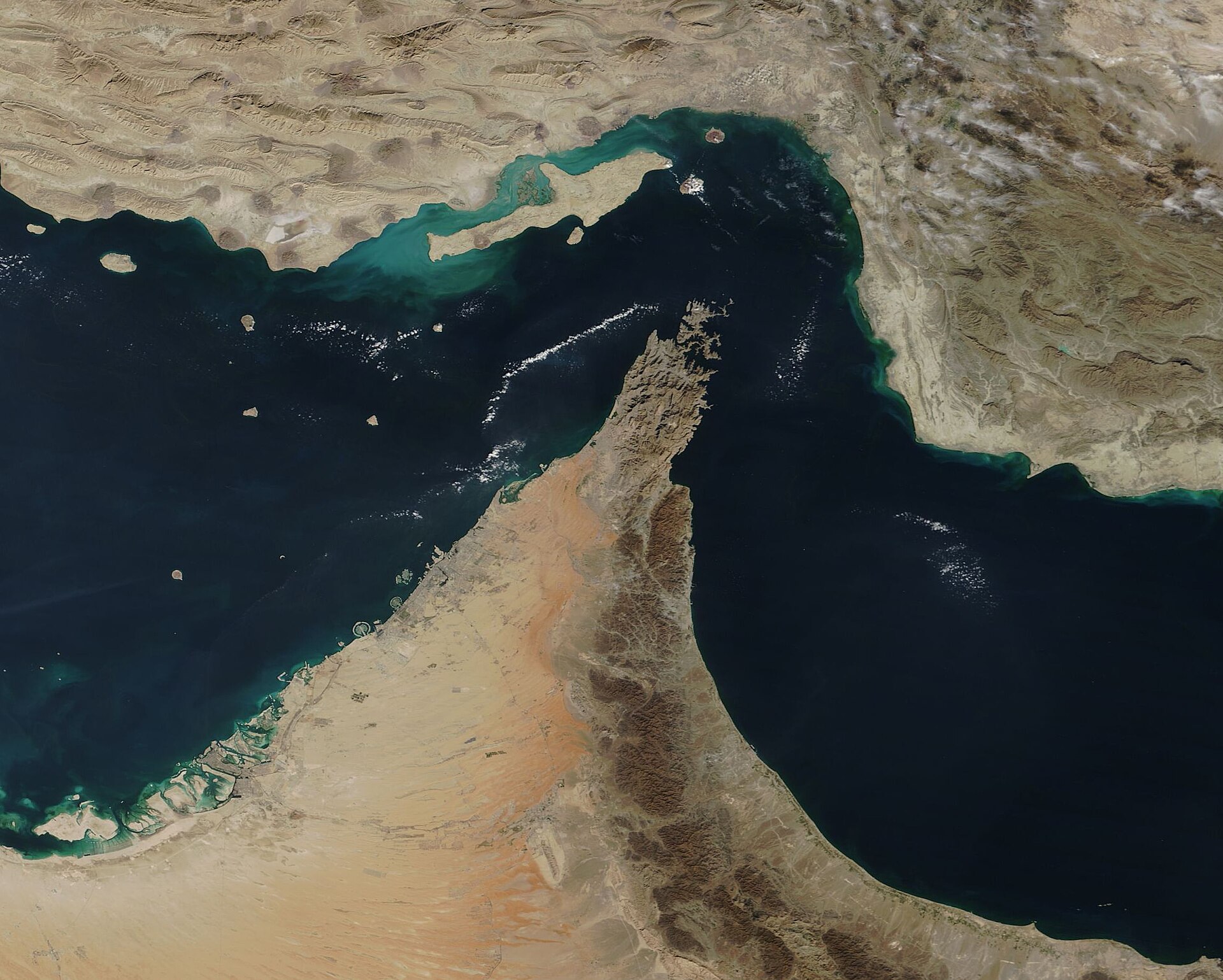
The North Field/South Pars gas reservoir — the largest on earth — spans 9,700 square kilometers beneath the Persian Gulf. Qatar’s concession covers 6,000 square kilometers; Iran’s covers 3,700. Qatar extracts approximately 18.5 billion cubic feet per day, generating roughly 80 percent of government revenue. Iran extracts about 2 billion cubic feet per day from its side — one-ninth of Qatar’s rate.
The ratio matters more than the resource. Under reservoir physics, faster extraction from one side creates a pressure differential that draws gas across the geological boundary. Iran’s South Pars output is forecast to decline by more than 30 percent over the coming decade — partly because Qatar’s $29 billion investment with Western energy majors to boost North Field production by 30 percent accelerates the drawdown on the Iranian side.
This creates an incentive structure that no amount of diplomatic rhetoric obscures. Qatar needs Iran stable enough to manage the shared reservoir cooperatively — or at minimum, stable enough not to weaponize extraction disputes. A collapsed Iranian state, or one radicalized beyond its current posture, could attempt aggressive drilling, dispute boundary definitions, or sabotage Qatari infrastructure at the seabed level. A negotiated settlement that leaves Iran economically functional is not Qatar’s preference — it is Qatar’s geological necessity.
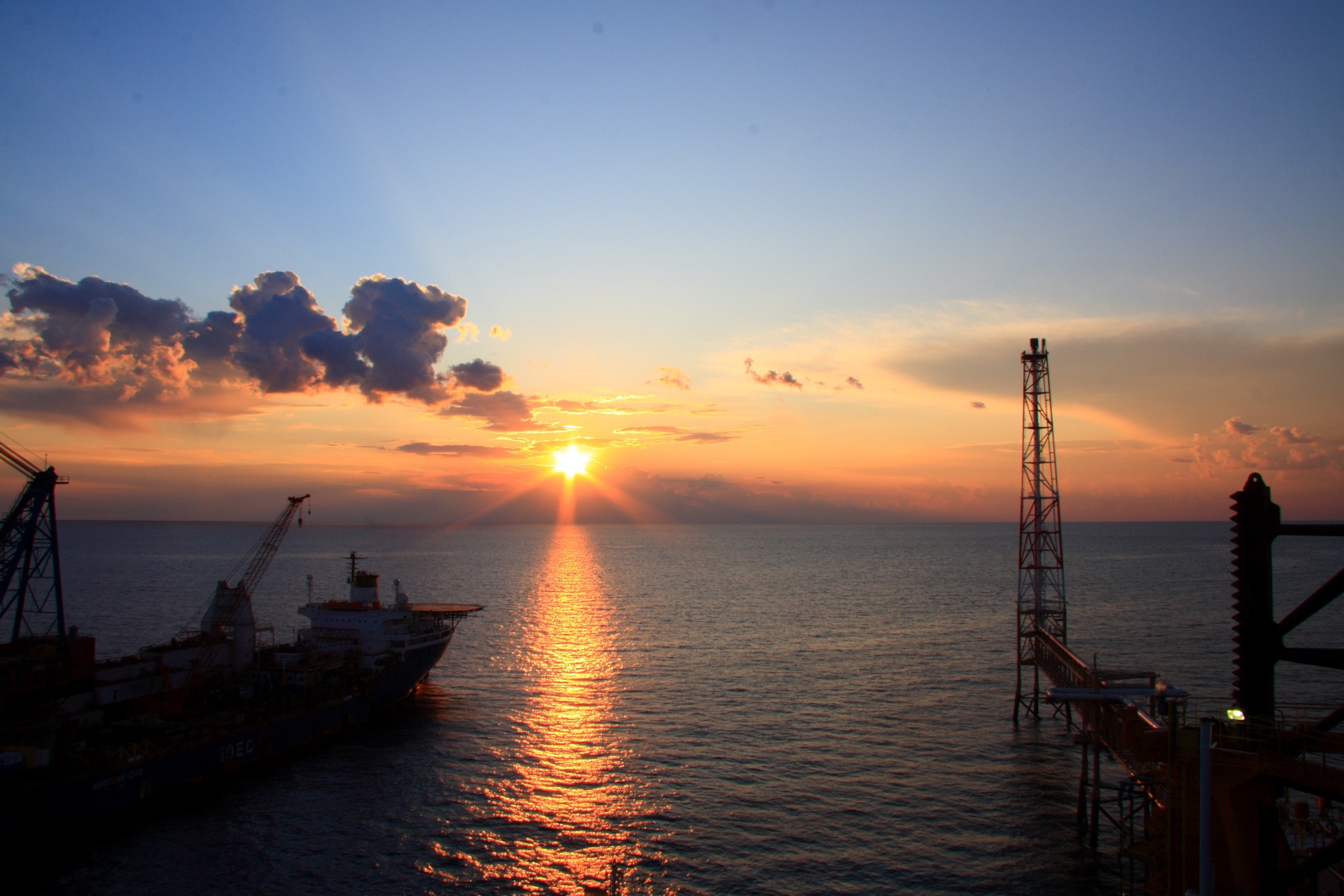
Qatar’s North Field expansion — projected to reach 740 million cubic meters per day by 2030 — was designed with TotalEnergies, Shell, ConocoPhillips, and ExxonMobil. The investment assumed operational stability across the shared reservoir. Any settlement that destabilizes Iran’s gas infrastructure management — or incentivizes Iranian retaliation against North Field operations — threatens the largest active energy investment in the Gulf. MbAR has publicly stated: “We will be neighbours [with Iran] for the future of humankind.” The North Field will produce for decades. Iran sits across the reservoir boundary for all of them.
During the 2017 blockade, when Saudi Arabia, the UAE, Egypt, and Bahrain severed relations and imposed an embargo, Qatar survived partly because Iran opened its airspace and facilitated alternative supply routes. One of the blockade’s 13 demands was that Qatar sever Iran ties. Qatar refused every condition. The Al-Ula Declaration of January 2021 reconciled Qatar with the blockading states without requiring any change to Doha’s Iran posture. Prince Faisal now receives Qatar’s post-Miami briefing calls on Iran — calls on a channel the blockade was designed to prevent.
What Does Qatar Want That Saudi Arabia Doesn’t?
Qatar’s preferred outcome, as described by the European Council on Foreign Relations, is a settlement “comprehensive enough to curtail Iranian support for armed proxies and resolve the Strait of Hormuz question on a lasting basis — but not one that destabilizes Iran to the point of collapse.” Saudi Arabia wants an accountability framework with enforceable consequences for strikes on Ras Tanura, Khurais, and Eastern Province infrastructure. These objectives overlap in scope but diverge at the point of enforcement.
Saudi Arabia has absorbed devastating infrastructure damage, lost 30 percent of its pre-war production capacity, and watched its fiscal deficit balloon to an estimated 6.6 percent of war-adjusted GDP. Riyadh wants a deal that establishes responsibility. Qatar wants a deal that preserves the neighbor. A mediator’s preferred outcome shapes which side gets pushed harder, which concession gets described as reasonable, which demand gets framed as an obstacle.
The Qatari PM’s call to Prince Faisal after the Miami meeting addressed this tension on its surface. According to Qatari readouts, MbAR stressed “freedom of navigation” and warned against using the Strait of Hormuz “as a pressure card.” The language tracked Qatar’s public position. But it also aligned with one of Tehran’s core framing demands — that any Hormuz settlement be multilateral rather than an Iranian concession extracted under blockade. Qatar and Iran share a Hormuz interest: both need the strait open, both reject unilateral control, both prefer a negotiated framework to a forced capitulation.
Saudi Arabia’s interest differs. Riyadh has already prepared its framework for Trump’s visit — one that binds Iran operationally, not just diplomatically. The kingdom’s Yanbu bypass has a ceiling of 5.9 million barrels per day against pre-war Hormuz throughput of 7 to 7.5 million bpd, leaving a structural gap of 1.1 to 1.6 million bpd that only full Hormuz reopening closes. Saudi Arabia cannot accept a deal that trades accountability for stability. Qatar cannot accept one that trades stability for accountability.
The Qatari PM publicly stressed “the importance of Pakistani mediation” to Vance — language that acknowledged Pakistan while Qatar was constructing its own parallel channel. The Washington Times headline from the Vance meeting did not mention IRGC contacts. Qatar’s public narrative preserved Pakistani primacy; its operational reality established an alternative. MbAR called Prince Faisal after Miami to brief him. He did not call to coordinate.
From Denial to Engagement in Six Weeks
On March 24, 2026, an advisor to Qatar’s Prime Minister issued a statement through the Ministry of Foreign Affairs: “Qatar Not Engaged in US-Iran Mediation, Backs Diplomatic Efforts to End War.” The language was categorical. Six weeks later, the same prime minister sat across from Rubio and Witkoff in Miami, having already met Vance the previous day, with Axios reporting that his government was using “contacts with senior IRGC generals” in active negotiations.
The reversal has a traceable cause. Between March 24 and May 8, the Pakistan track collapsed in public view. Iran’s formal ceasefire response, delivered May 10, demanded an end to hostilities, Hormuz “maritime security” talks, nuclear program negotiations, and sanctions relief — a maximalist position Trump immediately rejected. The Iran parliament’s advance of a 12-article Hormuz sovereignty law and the IRGC’s seizure of two commercial vessels on April 22 — MSC Francesca (11,660 TEU) and Epaminodas (6,690 TEU) — signaled that the authorization ceiling was hardening, not softening.
That maximalist public posture — the $270 billion reparations demand and Hormuz sovereignty claim broadcast on IRNA before Washington could respond — is the subject of Iran’s Peace Proposal Wasn’t Designed to Be Accepted, which argues that the broadcast itself, not the terms, was Iran’s strategic act: making any Pezeshkian concession a publicly witnessed capitulation before Qatar or any other mediator could close the gap.
Qatar’s hesitation during this period was genuine. Axios reported that Doha feared being “blamed if talks collapsed or accused of bias toward Iran by pro-Israel hawks if they succeeded.” The risk was asymmetric: failure would be attributed to the mediator, success to Trump. Qatar would absorb the political cost in either direction.
What changed was Trump’s direct intervention. The president raised Qatar’s expanded role with Emir Tamim personally — head-of-state to head-of-state, not through deputies or diplomatic channels. For a state that depends on its American security guarantee as existentially as it depends on its Iranian gas field, a direct presidential request carries constitutional weight of its own. Qatar’s March 24 denial and its May 9 engagement are sequential: the first reflected Doha’s preference, the second reflected Washington’s. India, meanwhile, was assembling a different kind of forum: the BRICS New Delhi meeting on May 14–15, where Araghchi would sit in proximity to Saudi and UAE foreign ministers for the first time since the war, with no formal mediation mandate and no Omani shuttle required.
Does Iran Accept Qatar as a Legitimate Channel?
Iran has neither publicly endorsed nor rejected Qatar as a mediation partner. Tehran sent its formal May 10 MOU response through Pakistan — maintaining Islamabad as the official conduit. No Iranian state media outlet — IRNA, Tasnim, Fars — has described Qatar as a preferred or accepted channel. Iran’s posture is deliberate ambiguity: keeping the Qatari door open without walking through it in public.
The behavioral evidence tells a different story. On April 26, Foreign Minister Araghchi called MbAR directly. PressTV — Iran’s English-language state broadcaster — reported the conversation approvingly, noting that Qatar’s PM had stressed Hormuz freedom of navigation. Iran’s state media framed Qatar’s Hormuz position as aligned with Tehran’s economic interests. Araghchi and MbAR “reviewed efforts aimed at achieving peace and enhancing security and stability,” according to Qatar’s Ministry of Foreign Affairs readout.
Iran’s strategic calculation is visible in what it does and does not say. Qatar talks to IRGC generals — those conversations happen regardless of what IRNA publishes. Formal endorsement would constrain Tehran by committing Iran to accept whatever Qatar transmitted as its position. Strategic silence preserves optionality: Iran can engage through Qatar’s back channel while disavowing any outcome by pointing to Pakistan as the sole recognized conduit.
The May 10 drone strikes on Qatar — simultaneous with UAE and Kuwait — did not interrupt the diplomatic process. Iran has struck every Gulf state throughout the war regardless of diplomatic engagement. That the IRGC’s operational posture and its negotiating posture run through different institutional chains is precisely what makes Qatar’s contacts with the Guard’s command layer a different proposition from Pakistan’s contacts with Iran’s diplomats.
The Seoul Economic Daily reported on May 10 that “Iran maintains strategic silence as Russia and Qatar vie for mediator role.” Putin offered to store Iranian enriched uranium; Trump rejected the proposal. Washington embraced Qatar’s overtures while rejecting Russia’s. Iran’s silence spans both — a posture of watching competing bids while committing to neither. On May 1, Araghchi stated: “Iran will end the war when it decides to do so and when its own conditions are met.”
The Deal Qatar Would Deliver
A Qatar-mediated settlement would differ from a Pakistan-mediated one in structure, not just venue. Pakistan’s channel, constrained to civilian interlocutors, could only produce agreements the elected government would sign and the IRGC would subsequently ignore — the pattern that destroyed the Islamabad Accord. Qatar’s channel, reaching IRGC generals directly, could produce arrangements reflecting what the military is actually willing to accept.
The distinction matters most for Hormuz. The quadrilateral diplomatic architecture emerging from the Turkey-Saudi-Egypt-Pakistan framework envisions Hormuz reopening as a ceasefire condition. But the IRGC Navy declared “full authority to manage the Strait” on April 5 and April 10 while Araghchi was negotiating in Islamabad. The IRGC Navy operates on standing orders that do not run through the Foreign Ministry. A Hormuz commitment Araghchi signs is worth less than one the IRGC Navy command accepts through a Qatari intermediary — if such acceptance can be extracted at all.
Qatar’s North Field interest shapes the substance of any deal it brokers. Doha would push for economic normalization provisions that protect shared resource management — terms implicitly requiring sanctions relief sufficient for Iran to maintain South Pars infrastructure. Saudi Arabia’s accountability framework, which would sustain economic pressure as enforcement, is structurally at odds with Qatar’s geological interests.
The parallel with Qatar’s Taliban mediation is instructive. The Doha Agreement of February 2020 produced a US withdrawal timeline that served Qatar’s interests — ending a war destabilizing its neighborhood — while leaving the Taliban’s governance commitments unenforceable. The deal was operational. The enforcement was theoretical. A Qatar-mediated Iran settlement could follow the same structural pattern: specific terms on Hormuz transit that Qatar needs, aspirational language on accountability and nuclear safeguards that Saudi Arabia and the US need but that require enforcement mechanisms Qatar is not positioned to provide.
The criticism from defense hawks — that Qatar’s reliability is binary, either with America or against it — does not account for a state whose largest revenue source sits beneath a geological boundary shared with the country America is fighting. Qatar will pursue what its interests require. Those interests include the American security guarantee and the Iranian gas field simultaneously.
Trump’s 14-point MOU demanded a 30-day pause in hostilities and that Iran weaken its military grip on Hormuz. Iran’s response, delivered through Pakistan on May 10, demanded hostilities end, Hormuz talks proceed on a “maritime security” basis, nuclear discussions open, and sanctions ease. The gap between these positions is not a negotiating distance — it is a disagreement about sequencing and sovereignty. Qatar’s insertion does not close it. Iran’s response came through Pakistan. MbAR told CBS News he thought a deal was highly probable.
Frequently Asked Questions
Has Qatar successfully mediated between the US and an adversary before?
Qatar hosted the Taliban’s political office starting in 2011, which enabled the Doha Agreement of February 29, 2020, setting the terms for the US withdrawal from Afghanistan. Doha served as the primary indirect channel between Israel, the US, and Hamas during the Gaza hostage negotiations from October 2023 onward. In June 2022, Qatar hosted indirect JCPOA revival talks where EU envoy Enrique Mora shuttled between Iran’s Ali Bagheri Kani and US envoy Rob Malley — talks that established institutional precedent for the current role despite ending without agreement. Qatar’s Foreign Ministry maintains a dedicated mediation office established in 2008.
What is the MEAD-CDOC at Al Udeid?
The Middle Eastern Air Defense – Combined Defense Operations Cell was activated by CENTCOM at Al Udeid Air Base on January 12, 2026 — six weeks before the Iran war began. It integrates missile defense coordination across 17 nations, creating a unified air picture for ballistic missile, cruise missile, and drone defense across the Gulf theater. The cell coordinates PAC-3, THAAD, and allied systems from a single operations floor. Its pre-war activation reflected intelligence assessments that regional conflict was imminent and that existing bilateral coordination was insufficient for a multi-axis threat.
What was Pakistan PM Sharif’s April 16 visit to Qatar about?
Pakistani Prime Minister Shehbaz Sharif visited Doha on April 16, 2026, as part of a Saudi-Qatar-Turkey shuttle diplomacy sequence. Emir Tamim pledged “full support for Pakistan-led diplomatic initiatives” — language that acknowledged Pakistani primacy while positioning Qatar as a parallel participant. Sharif’s visit came the same day Pakistan’s NSC Munir visited Khatam al-Anbiya headquarters in Tehran, appealing directly to IRGC-E commanders. The simultaneous moves — Sharif in Doha, Munir in Tehran — reflected Pakistan’s awareness that its channel needed reinforcement from Doha’s embedded IRGC relationships.
How did the 2017 blockade shape Qatar’s Iran relationship?
The June 2017 blockade by Saudi Arabia, the UAE, Egypt, and Bahrain included a demand that Qatar sever relations with Iran — one of 13 conditions presented as non-negotiable. Qatar refused all of them. Iran immediately opened its airspace to Qatari commercial flights and facilitated emergency food shipments during the blockade’s initial supply disruptions. Qatar upgraded diplomatic relations with Tehran to full ambassadorial level in August 2017 — ties that had been downgraded in January 2016 after protesters attacked the Saudi embassy in Tehran. The blockade, intended to isolate Qatar from Iran, instead transformed the relationship from a diplomatic choice into a survival dependency that persists through the current war.
Has Qatar stated a public position on Hormuz transit?
Qatar’s official position, articulated by MbAR in both his April 26 call with Araghchi and the May 9 call with Prince Faisal, is that “freedom of navigation is a well-established principle that must not be compromised, and that closing the Strait of Hormuz or using it as a pressure card would only lead to deepening the crisis.” Approximately 80 percent of Qatar’s LNG exports must transit the strait to reach Asian markets. Qatar’s Hormuz stance is a revenue position as much as a diplomatic one — the country’s LNG revenue, which generates roughly 80 percent of government income, depends entirely on the strait remaining navigable.
How Saudi Arabia leveraged the same diplomatic window — converting MBS’s role in brokering the Trump-al-Sharaa meeting into direct pressure capital on the Iran file — is examined in MBS Brokered the First US-Syria Meeting in 25 Years. The Prize Was Never Syria.