
RIYADH — Saudi Arabia informed the United States military that it could not use Prince Sultan Airbase or Saudi airspace to support Operation Project Freedom, the Strait of Hormuz escort mission that President Trump announced on social media on May 4, NBC News reported on May 7, citing two US officials. The denial killed the operation within approximately 36 hours of its launch.
Crown Prince Mohammed bin Salman communicated the decision directly to Washington without any public statement. A phone call between Trump and MBS failed to reverse it. Kuwait simultaneously denied overflight access. By Tuesday May 6, Trump announced that Project Freedom — which CENTCOM had resourced with 15,000 personnel and more than 100 aircraft — would be “paused for a short period of time.”
The episode is structurally different from every prior Saudi signal on the Hormuz crisis. MBS did not express reluctance, condition cooperation, or issue warnings. He denied access — a binary act within the US military’s ABO (access, basing, and overflight) framework that left no room for negotiation before the operational consequences took hold. What follows examines the confirmed mechanism, the geography that made it fatal, and the precedent it sets for Gulf security architecture.
Contents
- What Did Saudi Arabia Do to Project Freedom?
- Why Is Prince Sultan Airbase Irreplaceable for Hormuz Operations?
- Did the Trump-MBS Call Resolve the Access Dispute?
- How Did Pakistan Confirm Saudi Arabia’s Role?
- What Is Iran Reading from the Collapse?
- Has a US Ally Ever Denied Basing Access During Active Operations?
- Frequently Asked Questions
- Saudi Arabia and Jordan — basing
- Kuwait — overflight
- Oman — overflight and naval logistics
What Did Saudi Arabia Do to Project Freedom?
Saudi Arabia “informed the U.S. it would not allow the U.S. military to fly aircraft from Prince Sultan Airbase southeast of Riyadh or fly through Saudi airspace to support the effort,” NBC News reported. The denial covered both basing and overflight — the two components that the US military categorizes under the acronym ABO, which stands for “access, basing and overflight.”
The trigger was Trump’s unilateral announcement. “Trump surprised Gulf allies by announcing Project Freedom on social media Sunday afternoon,” NBC reported. A White House official claimed allies were “briefed in advance,” but Qatar and Oman were not consulted before the announcement, according to NBC News and The New Arab.
NBC’s ABO breakdown identified four countries as operationally necessary for the mission:
The Middle East briefing 3,000+ readers start their day with.
One email. Every weekday morning. Free.
All four were described as “operationally irreplaceable.”
Kuwait’s denial came simultaneously. A US administration official confirmed that Kuwait suspended access to its bases and airspace in parallel with Saudi Arabia. “Kuwait is critical for overflight,” one official stated (Democracy Now, Middle East Eye). The coordination between Riyadh and Kuwait City — two Gulf capitals denying ABO within hours of each other — indicates prior communication, though no official from either country has confirmed coordination publicly.
Neither government issued a statement. The confirmation came exclusively from US officials speaking to American media. MBS communicated the denial directly to Washington and let the consequences speak for themselves.
Why Is Prince Sultan Airbase Irreplaceable for Hormuz Operations?
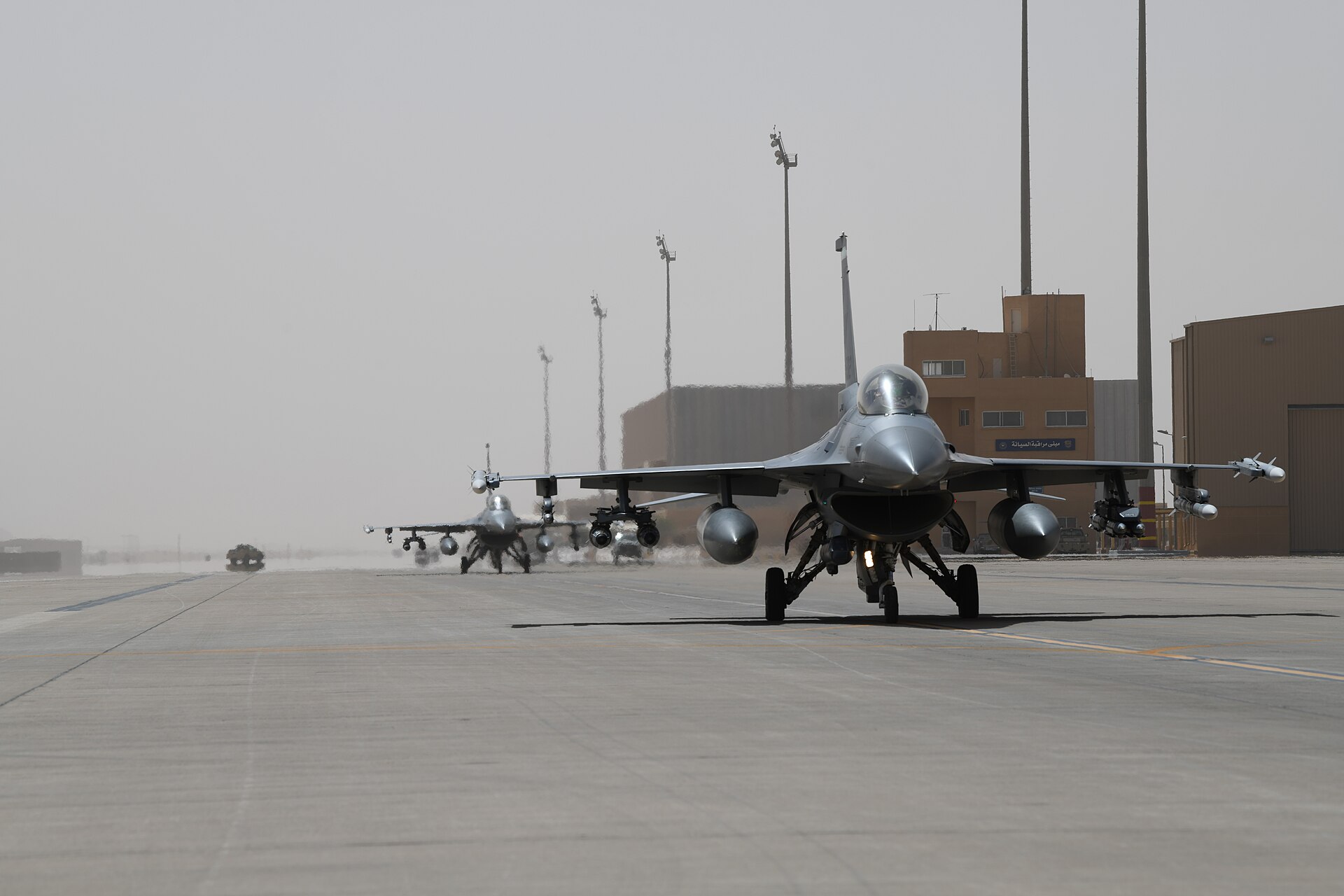
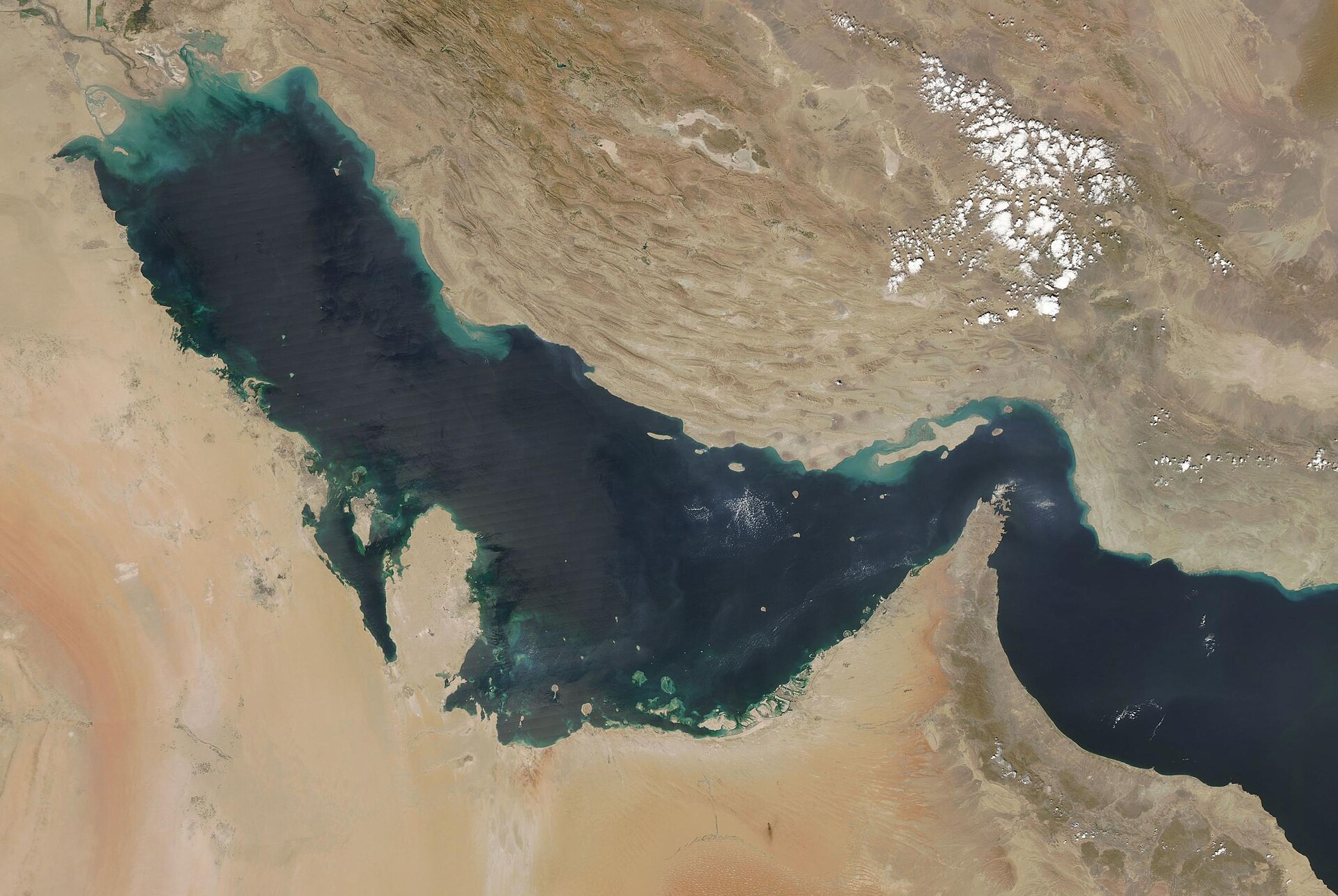
Prince Sultan Airbase sits at Al Kharj, approximately 90 kilometers southeast of Riyadh and roughly 1,200 kilometers from the Strait of Hormuz. The F-16 fighters stationed there cannot reach the Strait without the base’s 22 KC-135 aerial refueling tankers. That distance — and the tanker dependency it creates — explains why the Saudi denial was operationally fatal rather than merely inconvenient.
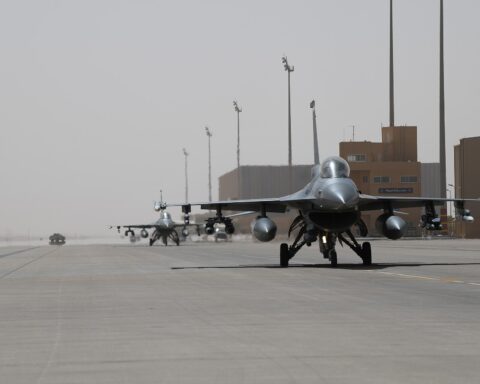
Satellite imagery analysis published by Defense News in mid-2025 identified 53 F-16 Fighting Falcons, 22 KC-135 Stratotanker aerial refueling aircraft, and at least 11 C-130 Hercules transport aircraft at the base. Two 4,000-meter runways give PSAB the capacity to bed down five fighter squadrons simultaneously, according to GlobalSecurity.
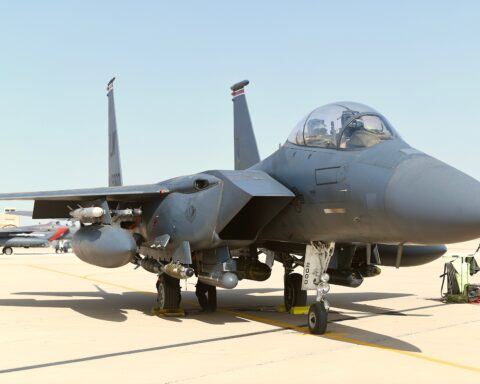
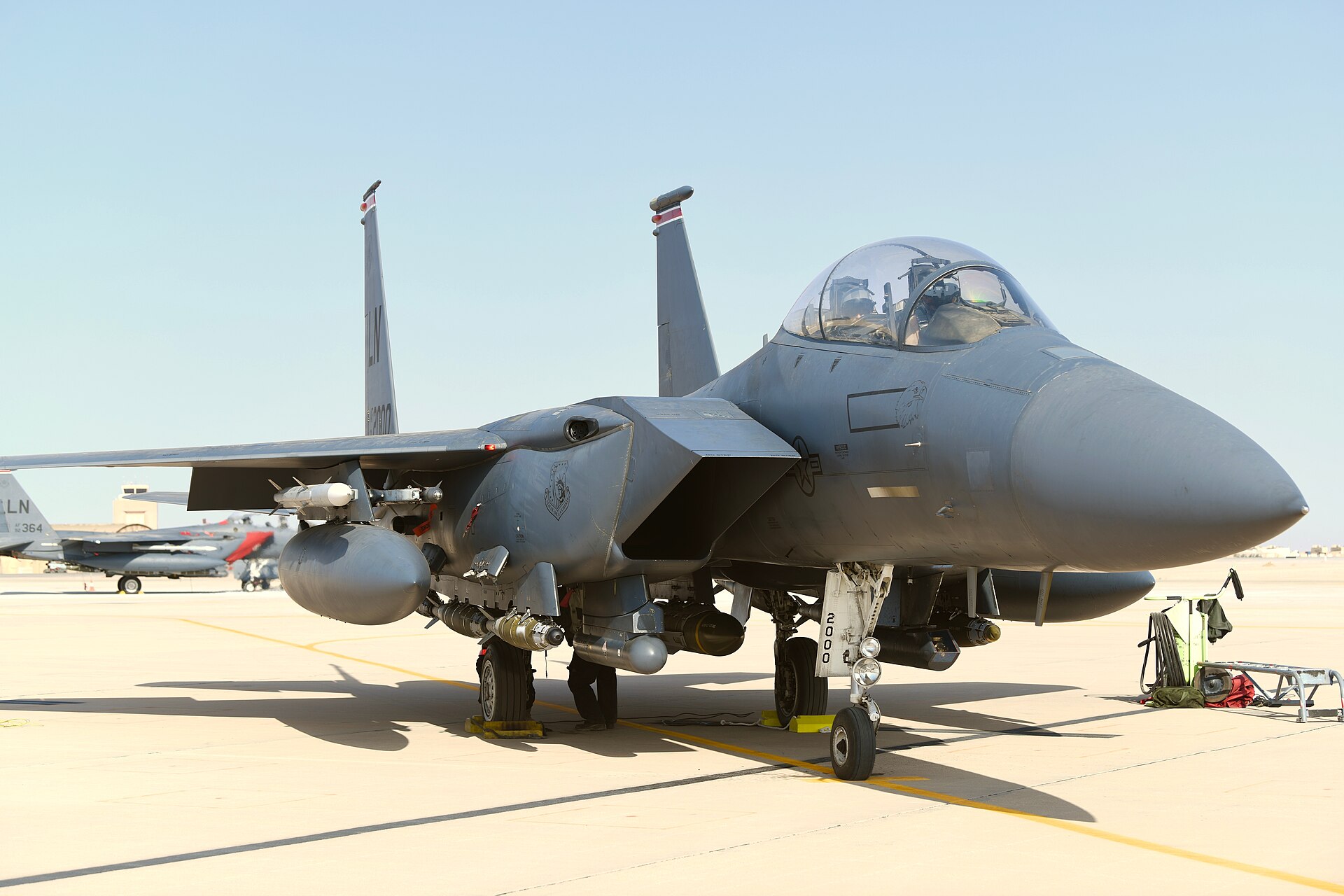
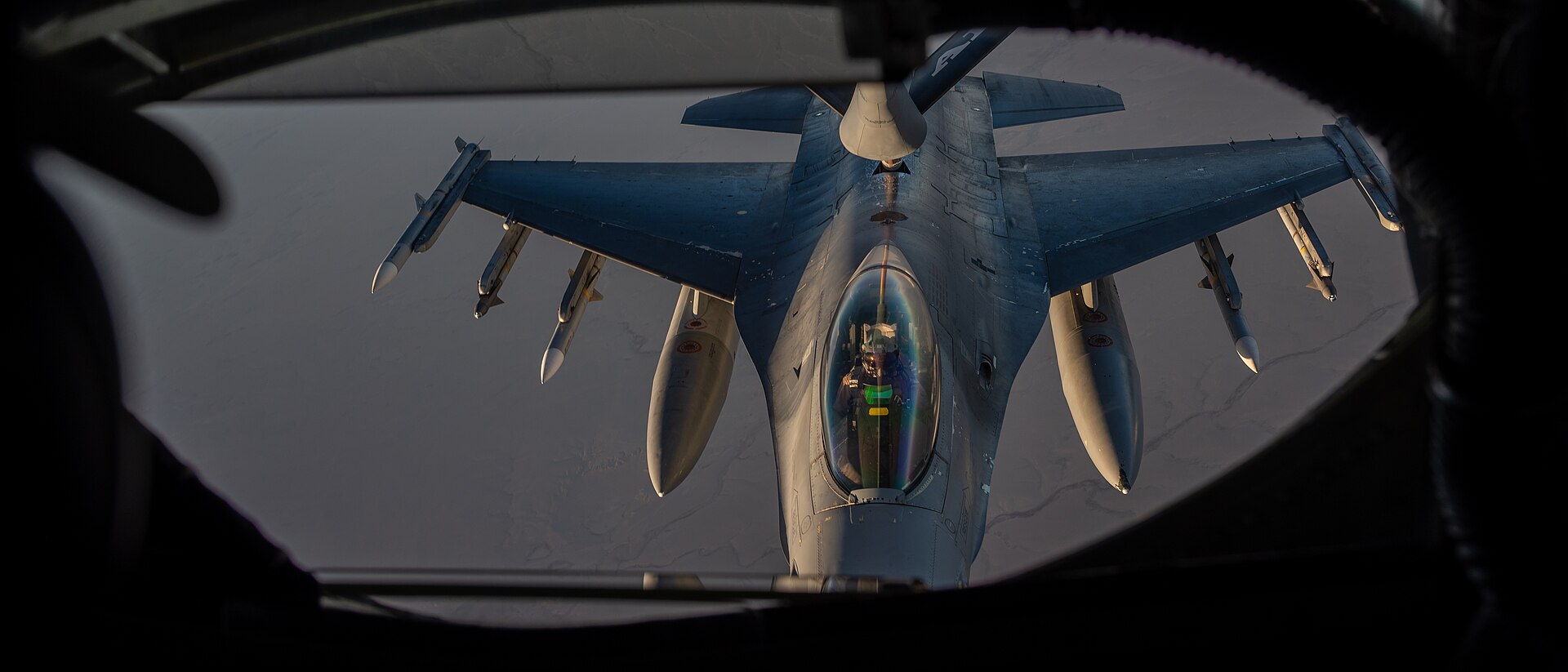
The arithmetic is unforgiving. The F-16’s unrefueled combat radius is approximately 550 kilometers — less than half the distance from Al Kharj to Hormuz. The F-15E Strike Eagle, with external fuel tanks, reaches approximately 1,000 kilometers — borderline for a one-way sortie with no loiter time over the Strait. The 22 KC-135 tankers at PSAB are not a convenience. They are a mathematical prerequisite for any sustained fighter escort or strike mission to Hormuz.
The base was already under Iranian attack before the access dispute. In early March 2026, US media reported that several US Air Force refueling aircraft were damaged in an Iranian missile strike on PSAB. On March 27, a further strike damaged several US refueling aircraft and injured fifteen US soldiers, five critically (Wall Street Journal), at a base whose air defense supply chain already depends on Ukrainian counter-drone systems to cover PAC-3 gaps. HOS has previously reported on the scale and opacity of Iranian damage to US basing infrastructure across the Gulf.
Saudi Arabia had absorbed those strikes without denying access. The denial came only after an uncoordinated US announcement. That sequence reveals the nature of the decision: it was not about threat tolerance. It was about sovereignty and the strategic cost of co-belligerent status.
Did the Trump-MBS Call Resolve the Access Dispute?
It did not. NBC News reported that “a call between Trump and Saudi Crown Prince Mohammed bin Salman did not resolve the crisis.” No readout was issued by either the White House or the Saudi Royal Court — itself unusual for a head-of-state call during an active military operation.
The failed call is the most revealing detail in NBC’s reporting. Access denials can reflect bureaucratic friction or miscommunication between defense establishments. A denial that survives direct presidential pressure is a political decision at the highest level of the Saudi state. MBS held the line.
Trump announced the pause on Truth Social on May 6, framing it as a diplomatic accommodation. Project Freedom would be “paused for a short period of time” to allow space for talks mediated by Pakistan, he wrote (NPR). The White House described the pause as conditional on diplomatic progress — a framing that NBC’s sourcing directly contradicts. The pause was not a choice. It was an operational necessity imposed by the denial of the infrastructure required to sustain the mission.
Saudi Arabia’s fiscal position reveals the weight of MBS’s decision. The kingdom posted a $33.5 billion deficit in Q1 2026 — the largest quarterly shortfall since 2018 (Al Jazeera). Brent crude sat at approximately $99.40 on May 7, below the $108-111 per barrel fiscal break-even estimated by Bloomberg. Saudi production had already fallen 30 percent from pre-war levels, to 7.25 million barrels per day in March, according to the International Energy Agency. MBS made this decision while absorbing the largest revenue shock since the 2020 oil price collapse.
Riyadh’s strategic logic — detailed in HOS’s reporting on Saudi Arabia’s two-chokepoint trap — held that any US military operation overflying Saudi territory converts Riyadh from a mediator into a co-belligerent in Iranian targeting calculus, inviting IRGC retaliation against Saudi energy infrastructure at a moment when the kingdom can least afford further disruption. The confirmed denial demonstrates MBS applied that logic as a binding operational decision, not merely as a rhetorical position.
How Did Pakistan Confirm Saudi Arabia’s Role?
Pakistani Prime Minister Shehbaz Sharif provided the most explicit public confirmation of Saudi Arabia’s role. In a statement posted to X on May 6, Sharif thanked Trump for pausing Project Freedom and credited the pause specifically to “appeals by Pakistan and other brotherly countries, particularly the Kingdom of Saudi Arabia and Crown Prince Mohammed bin Salman” (Pakistan Today, Express Tribune).
“The President’s gracious response to these requests will go a long way in advancing regional peace, stability and reconciliation during this sensitive period,” Sharif wrote.
Sharif’s statement confirms that the Saudi intervention extended beyond the basing denial. Riyadh also made direct diplomatic appeals to Washington — a parallel track that combined operational denial with conventional diplomacy.
The Iranian and Saudi foreign ministers were in contact on the same day. PressTV reported on May 6 that “Iranian and Saudi FMs called for regional cooperation to prevent tensions.” The simultaneity suggests MBS paired the access denial with active diplomatic engagement aimed at de-escalation — using the denial to create the space that months of negotiations, including the protracted MOU process from which Riyadh was largely excluded, had failed to produce. When Iran struck three more GCC states on May 10, Riyadh issued its MFA condemnation the following day — a statement notable for its omissions as much as its language; the full analysis of what the Saudi MFA said, and what it chose not to say, is here.
Pakistan’s role as both mediator and confirming source reflects the triangular architecture of Gulf crisis diplomacy. Islamabad’s mediation of the Iran talks gives it visibility into both the US and Saudi positions. Sharif’s public crediting of MBS was not a diplomatic accident. It served Pakistani interests by demonstrating that the Islamabad mediation channel remains operative — and that Saudi Arabia, Pakistan’s largest bilateral creditor, is aligned with that framework rather than working against it.
What Is Iran Reading from the Collapse?
Iran’s state media ran two simultaneous and contradictory narratives in the 48 hours following the pause — first claiming the collapse resulted from Iranian deterrence, then pivoting to amplify the Saudi basing denial as a wedge between Washington and Riyadh. Both framings serve Tehran’s strategic interests.
The deterrence narrative landed first. IRGC Navy Deputy for Political Affairs Mohammad Akbarzadeh told PressTV: “At the negotiation table, Trump encountered a crushing response from Iran, and was forced to withdraw the ‘Freedom Project’ in the Strait of Hormuz within 48 hours.”
The second narrative emerged after NBC’s report. PressTV then ran “Trump halted ‘Project Freedom’ after backlash from Saudi Arabia: US officials” — amplifying the Saudi angle to drive a wedge between Washington and Riyadh. The same outlet that credited Iranian deterrence hours earlier now highlighted Saudi opposition to the US mission.
If the deterrence framing holds domestically, Iran’s coercive posture is vindicated. If the Saudi-denial framing circulates internationally, it introduces friction into the US-Saudi alliance — a structural objective Iran has pursued since the war fundamentally altered Saudi security dependence on Washington.
One notable absence: no Iranian official specifically credited Saudi Arabia’s denial as a factor. Iran’s preferred framing keeps Saudi Arabia as a passive party and presents the reversal as a direct US-Iran bilateral outcome. Crediting Saudi Arabia would complicate Iran’s ongoing diplomatic overture to Riyadh — visible in the same-day foreign minister call and in Araghchi’s broader regional tour.
IRGC commanders have broadened the narrative beyond Project Freedom. “Tehran’s responses to any future attack will exceed enemy calculations,” the IRGC stated — reading the pause as confirmation that deterrence applies to any US escalation in the Gulf theater. Whether that reading is correct matters less than the fact that it will inform IRGC decision-making in the weeks ahead, as oil markets react to each signal from the Strait.
Has a US Ally Ever Denied Basing Access During Active Operations?
The closest precedent is Operation Nickel Grass in October 1973, the US airlift to Israel during the Yom Kippur War. European allies and Arab states denied overflight and landing rights to US transport aircraft. Portugal’s Lajes Field in the Azores became the sole staging point. C-141 and C-5 aircraft flew the middle of the Mediterranean to avoid allied airspace.
The 2026 denial is structurally different. In 1973, the denying states were transit countries — they declined to allow US aircraft to cross their territory en route to a destination elsewhere. Saudi Arabia in May 2026 denied access to the base itself. Prince Sultan Airbase is not a waypoint. It is the operational hub from which sorties would launch and to which aircraft would return for refueling, rearming, and maintenance. The difference is between a country refusing to let a truck drive through its territory and a country locking the garage where the truck is parked.
Turkey’s denial of basing access for the 2003 Iraq invasion offers another parallel. Ankara’s parliament voted against allowing the US 4th Infantry Division to stage through southeastern Turkey, forcing the division to reroute through Kuwait. That denial reshaped the opening phase of the Iraq war. But Turkey was not hosting the active operational base — US assets were pre-positioned on ships, not yet ashore.
The Saudi denial of May 2026 has no direct precedent. A US ally hosting a major operational base, with US personnel and aircraft on the ground, denied access for a mission the US president had already publicly announced. The denial held after a direct call from the US president. And the denying government issued no public statement.
The silence is itself a mechanism. Public denials create diplomatic crises that require formal resolution. Silent denials create facts on the ground that Washington must absorb. MBS chose the approach that maximized operational impact while minimizing the surface area for a public confrontation with the United States.
The episode inverts the assumed power structure of the alliance. For decades, the operating premise held that Saudi Arabia needed American military protection more than America needed Saudi bases. The Iran war has compressed that asymmetry. Saudi Arabia has demonstrated it can route the majority of its exports through the East-West Pipeline bypass to Yanbu — the production crash is severe but survivable. The US, by contrast, cannot project sustained air power to Hormuz from any base outside the Gulf without the tanker fleet and airspace access that Saudi Arabia and Kuwait just denied.
As one US official summarized for NBC News: “In some cases there is no other way around.”
Frequently Asked Questions
Could the US military operate Project Freedom from bases outside Saudi Arabia?
Al Udeid Air Base in Qatar and Al Dhafra in the UAE remain operational, but neither fully substitutes for PSAB’s tanker fleet. The 22 KC-135s at Al Kharj represent the largest aerial refueling concentration in the theater. Qatar has not publicly denied access, but Doha’s position on the Hormuz crisis has closely tracked Riyadh’s since March 2026. Al Dhafra’s proximity to the Iranian coast — approximately 280 kilometers — creates survivability concerns that PSAB’s 1,200-kilometer standoff distance does not share.
What is Saudi Arabia’s legal authority to deny basing access?
US forces at Prince Sultan Airbase operate under a bilateral status-of-forces framework that grants Saudi Arabia sovereign authority over access decisions. Unlike NATO installations in Germany or Japan, where multilateral treaty obligations constrain host-nation authority, US presence at PSAB rests on bilateral executive agreements modifiable by the host government without legislative approval. The US withdrew from PSAB in 2003 partly due to Saudi political sensitivities after September 11, and returned in 2019 following the Abqaiq-Khurais drone attacks — both moves illustrating the bilateral flexibility that made the May 2026 denial legally straightforward.
Has Saudi Arabia signaled whether the denial is permanent or conditional?
No Saudi official has made any public statement on the denial. NBC’s US official sources described the Project Freedom pause as “conditional on Saudi access being restored,” implying Washington views the denial as reversible. Sharif’s language — “appeals” rather than “demands” — frames the Saudi position as a request. The absence of any public Saudi statement preserves maximum flexibility: MBS can restore access quietly if conditions change without reversing a public position or absorbing domestic political costs.
What role did Jordan and Oman play in the ABO breakdown?
NBC identified Jordan as a basing partner and Oman as providing overflight and naval logistics. Neither has been reported as denying access. Jordan’s usefulness for Hormuz operations is limited by geography — Amman sits approximately 1,800 kilometers from the Strait, further than Al Kharj’s already-challenging 1,200 kilometers. Oman’s Duqm naval base provides ship maintenance and logistics support but lacks the air combat infrastructure — runways, hardened shelters, tanker parking — that makes PSAB irreplaceable for sustained air operations.
Project Freedom’s pause has a direct humanitarian cost that extends beyond the operational calculus. While the escort mission stalled, Gen. Dan Caine publicly certified that 22,500 mariners remain trapped inside the Persian Gulf aboard more than 1,550 vessels — a figure that now triggers MLC 2006 abandonment obligations on flag states regardless of whether any escort framework resumes. That calculus shifted on May 7-8 when Saudi Arabia and Kuwait restored US basing and overflight access after a second Trump-MBS call, clearing the Pentagon to resume escort operations.
With Saudi basing denied, CENTCOM struck Qeshm and Bandar Abbas from destroyers in international water — a move that sidestepped the veto entirely. The structural implications of what Riyadh’s red line bought, and what it could not stop, are analysed in Riyadh’s Veto Stopped at the Waterline — and CENTCOM Noticed. The deterrence logic behind that veto became explicit when a senior Iranian adviser framed Hormuz as a capability equivalent to an atomic bomb — a public declaration that explained why no basing arrangement, however permissive, could resolve the underlying strategic asymmetry Trump arrived in Riyadh to negotiate.