ANKARA — Four foreign ministers, three formal meetings in ten weeks, one nuclear-armed signatory, and a combined 1.9 million troops under arms — and not one of them has put a treaty text on the table. That is the achievement, not the gap. Saudi Arabia, Turkey, Pakistan and Egypt are building a security architecture that operates in parallel to NATO, the GCC and the US-led order at the same time, and the absence of a single founding document is what lets each capital tell Washington it has signed nothing while behaving as if it has signed everything.
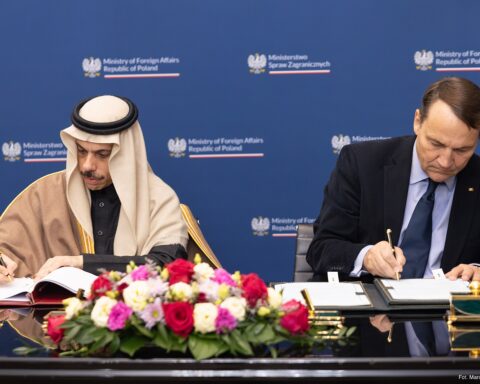
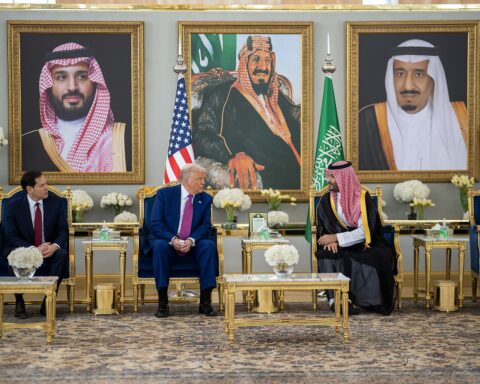
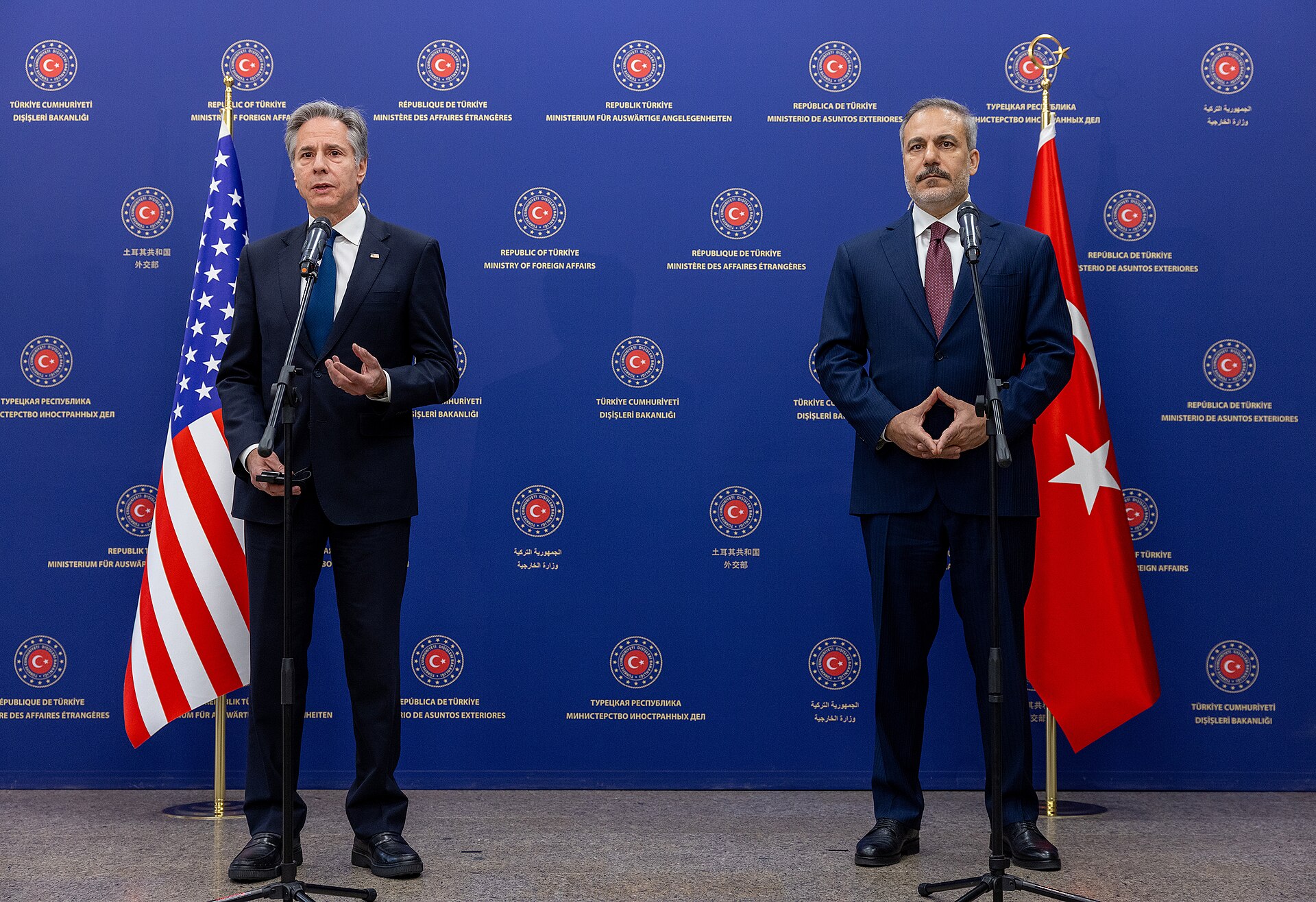
Prince Faisal bin Farhan landed in the Turkish capital on May 6 to co-chair the third Turkish-Saudi Coordination Council since the body was established in 2016 — a framework that is nine years old, with a wartime activation that is six weeks old. Hakan Fidan stood next to him and signed a visa exemption for diplomatic and service passports — modest in itself, calibrated to read as routine — while Middle East Eye reported that Ankara was pushing for a four-way security pact involving Riyadh, Cairo and Islamabad. Both readings are correct, and that is the whole problem for Washington.
Table of Contents
- What Actually Happened in Ankara on May 6
- The SMDA Is the Floor, Not the Ceiling
- Why Has the Quartet Met Three Times in Ten Weeks?
- The Hormuz Consortium Nobody Reported
- Is This a Dual-Loyalty Problem or a Dual-Use Asset?
- MBS and the Architecture of Indispensability
- Why Is Egypt the Weakest Link in the Quartet?
- Why Hasn’t Washington Pushed Back?
- Tel Aviv Is Building the Counter-Bloc
- What the Quartet Has to Produce Before the Ceasefire Window Closes
- Frequently Asked Questions
What Actually Happened in Ankara on May 6
The official Turkish and Saudi readouts described May 6 as the third session of the Turkish-Saudi Coordination Council — bilateral, structured, focused on regional security, connectivity and economic ties. The body was set up in 2016 and met in Ankara in 2017 and Riyadh in 2025. So the institutional vessel is old. Nine years old. Three meetings is not a pattern of intensity by any normal diplomatic standard.
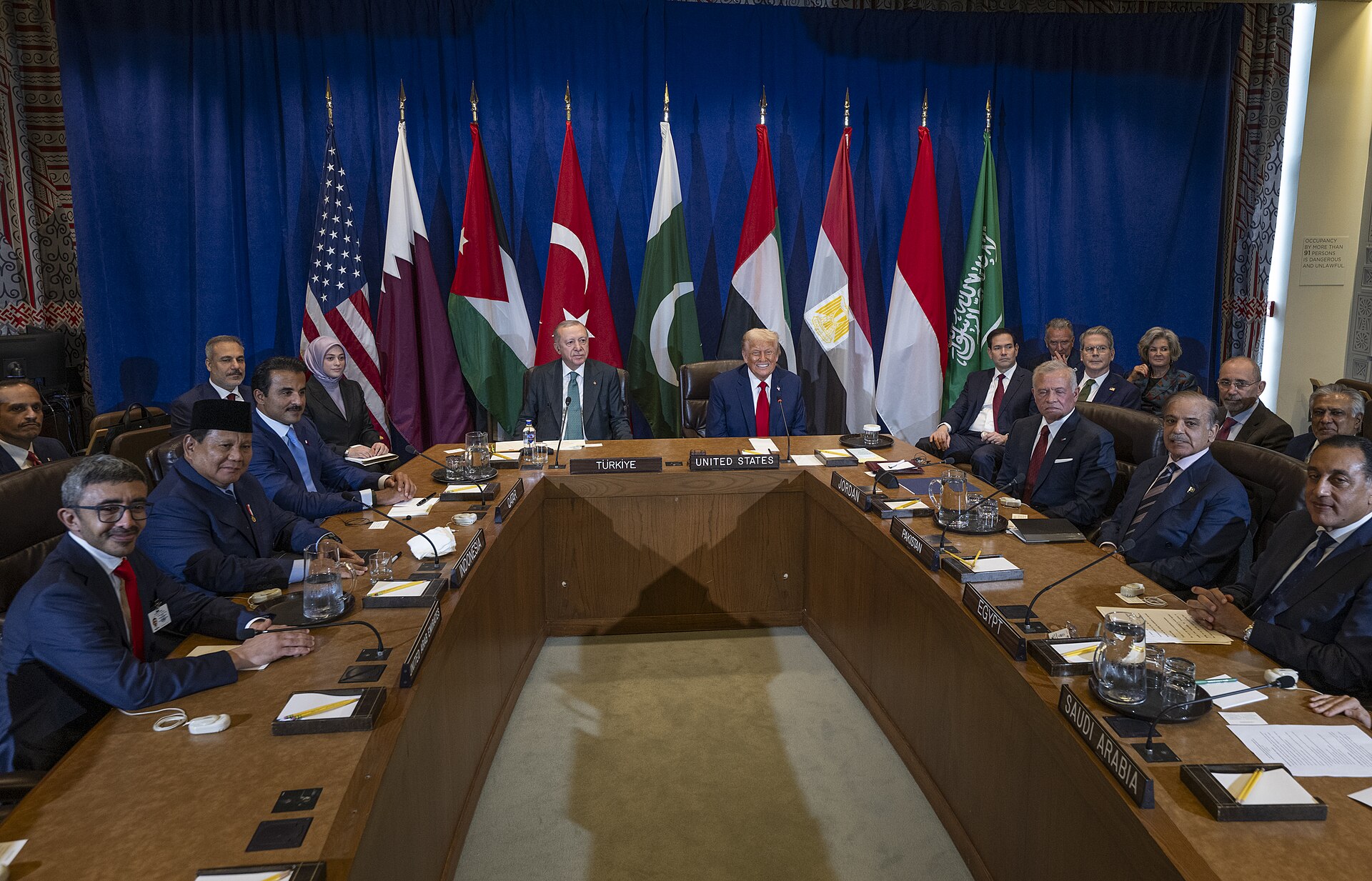
What changed is what the meeting was used for. Faisal bin Farhan arrived in a Turkish capital that had hosted Egyptian foreign minister Badr Abdelatty at the Antalya Diplomacy Forum on April 17, and whose foreign minister had sat with Pakistani counterpart Ishaq Dar at a quadrilateral in Islamabad on March 29 and another on the sidelines of the Islamic summit in Riyadh on March 19. Three quadrilateral foreign-minister formats in ten weeks. A family photo on Turkish state media. And then a bilateral in Ankara that the Turkish side briefed Middle East Eye as a security-pact push and the Saudi side described as routine bilateral coordination.
That gap between the two readouts is the diplomatic product. Ankara wants the headline. Riyadh wants the optionality. Both get what they need from the same room.
The visa agreement is the tell. It applies only to diplomatic and service passports, which Saudi and Turkish bureaucrats already obtained more or less on demand. The signature is symbolic — a piece of paper for the cameras that commits neither government to reciprocal access for ordinary travellers, businessmen, or pilgrims. The choice of an instrument with this much theatre and this little substance was deliberate. It produces a photograph without producing a constraint.
The Middle East briefing 3,000+ readers start their day with.
One email. Every weekday morning. Free.
The SMDA Is the Floor, Not the Ceiling
Everything sitting on top of the May 6 meeting rests on a single document signed at Al-Yamamah Palace in Riyadh on September 17, 2025. Mohammed bin Salman and Pakistani Prime Minister Shehbaz Sharif put their names on the Strategic Mutual Defence Agreement — the first formal military pact between an Arab Gulf state and a nuclear power. The operative line reads: “any attack against either state shall be considered an attack against both states.” Article 5 language, in everything but the alliance it is written into.
The Middle East Institute called the SMDA “a profound reordering of alignments in the Gulf and South Asia, reflecting and reinforcing the broader erosion of US preeminence in the Eurasian security architecture.” CSIS — the United States’ own establishment think tank — published the question explicitly under the headline “Could the Pakistani-Saudi Defense Pact Be the First Step Toward a NATO-Style Alliance?” When the question is on a CSIS title page, the answer is already politically live in Washington, and the formal lack of an American objection becomes the operative position.
What makes the SMDA the architectural floor and not the building itself is its enforcement ambiguity. The Asia Pacific Leadership Network’s “Paper Promises” analysis lays out the limit cleanly — there is no defined trigger, no force-commitment timeline, no command structure to invoke. The treaty’s practical ceiling sits where Field Marshal Asim Munir decides it sits, which is exactly the dynamic now playing out as Munir runs ceasefire diplomacy with Tehran under Pakistan’s 27th Constitutional Amendment and the elected government watches from outside the room.
Pakistan’s Defence Production Minister told Reuters in January that “the Pakistan-Saudi Arabia-Turkey trilateral agreement is already in pipeline” and that the draft had been under review for ten months. Ten months. So the foundations of the trilateral were laid in the first quarter of 2025 — before the war began, before MBS signed at Al-Yamamah. Egypt was not in the original. Ankara has been working to bring Cairo in for most of the past year, and the visible result is the four-way foreign-minister format that emerged in March.
| Bilateral Pair | Instrument | Date | Headline Number |
|---|---|---|---|
| Saudi Arabia – Pakistan | Strategic Mutual Defence Agreement (SMDA) | Sept 17, 2025 | First Arab Gulf–nuclear power pact |
| Turkey – Saudi Arabia | Coordination Council (3rd session) | May 6, 2026 | $8.5bn bilateral trade |
| Turkey – Saudi Arabia | Bayraktar Akinci UCAV deal | Active 2025–26 | $3 billion |
| Turkey – Egypt | Defence cooperation package (Sisi-Erdogan) | Feb 2026 | $350 million |
| Saudi Arabia – Pakistan – Turkey | Trilateral framework (Defence Production Minister, Reuters) | “In pipeline” — Jan 2026 | 10 months in draft |
| Quartet (4-state) | FM-level formats: Riyadh, Islamabad, Antalya | Mar 19 / Mar 29 / Apr 17, 2026 | 3 sessions / 10 weeks |
Why Has the Quartet Met Three Times in Ten Weeks?
The compression of the diplomatic calendar is the answer to most of the questions about whether this is a real architecture or a public relations operation. Take the dates seriously: Riyadh on March 19 on the sidelines of the Islamic summit; Islamabad on March 29 — the quadrilateral that produced the Hormuz consortium proposal that nobody outside specialist outlets has registered; Antalya on April 17 with a family photo; Ankara on May 6, bilateral but with three of the four foreign ministers having sat together within the previous six weeks.
That cadence does not happen by accident in a region where state visits are usually months in the planning. It happens because the people in the rooms believe the window for shaping the post-war order is narrow, and that the diplomatic architecture has to be visibly in place before the United States and Iran arrive at any final settlement. Andreas Krieg, who teaches defence studies at King’s College London, put it most cleanly: “Fear of US abandonment is pushing states to build more diplomatic mass, even if they cannot yet build an integrated military bloc.”
“Diplomatic mass” is the right phrase, because none of the four states is building a unified command and none has signed a multilateral treaty. What they have instead is a thickening web of bilateral defence-industrial agreements, a habit of meeting, a joint statement archive, and a public photograph that gets reused. That is the same way ASEAN started, and the same way the GCC started before it fractured. The mass accumulates faster than the formal architecture, and at a certain point the formal architecture has to catch up with the political reality on the ground or be repudiated by it.
The other reason for the cadence is the calendar of the war itself. The Iran ceasefire window has been running on forty-five-day extensions since the original Islamabad framework. Saudi Arabia has been in daily contact with Iranian counterpart Abbas Araghchi, sometimes twice a day. Riyadh wants the four-state architecture cemented before any final deal forecloses options — because once the United States either re-engages with full military weight or formally withdraws, the optionality the architecture provides collapses in either direction.
The Hormuz Consortium Nobody Reported
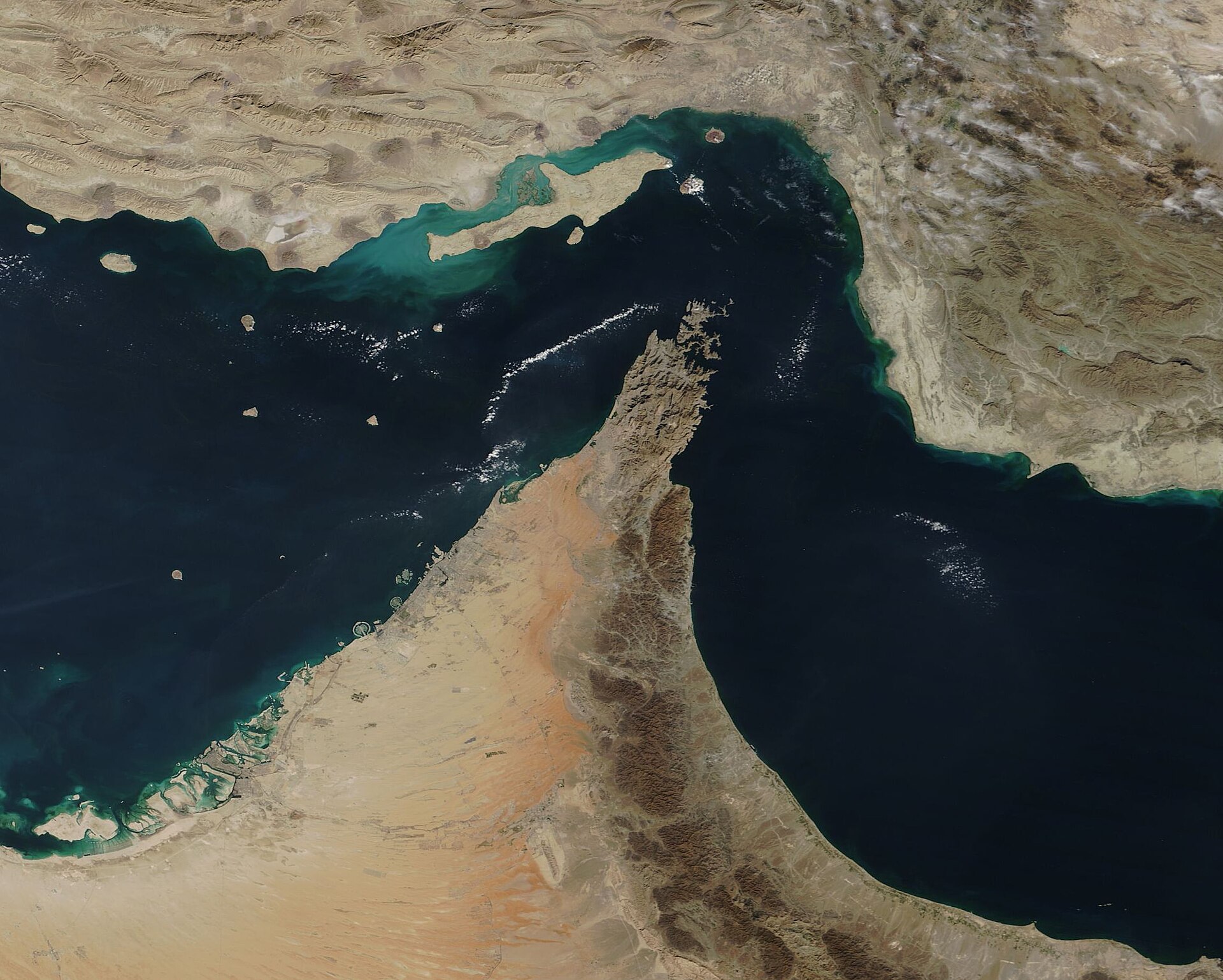
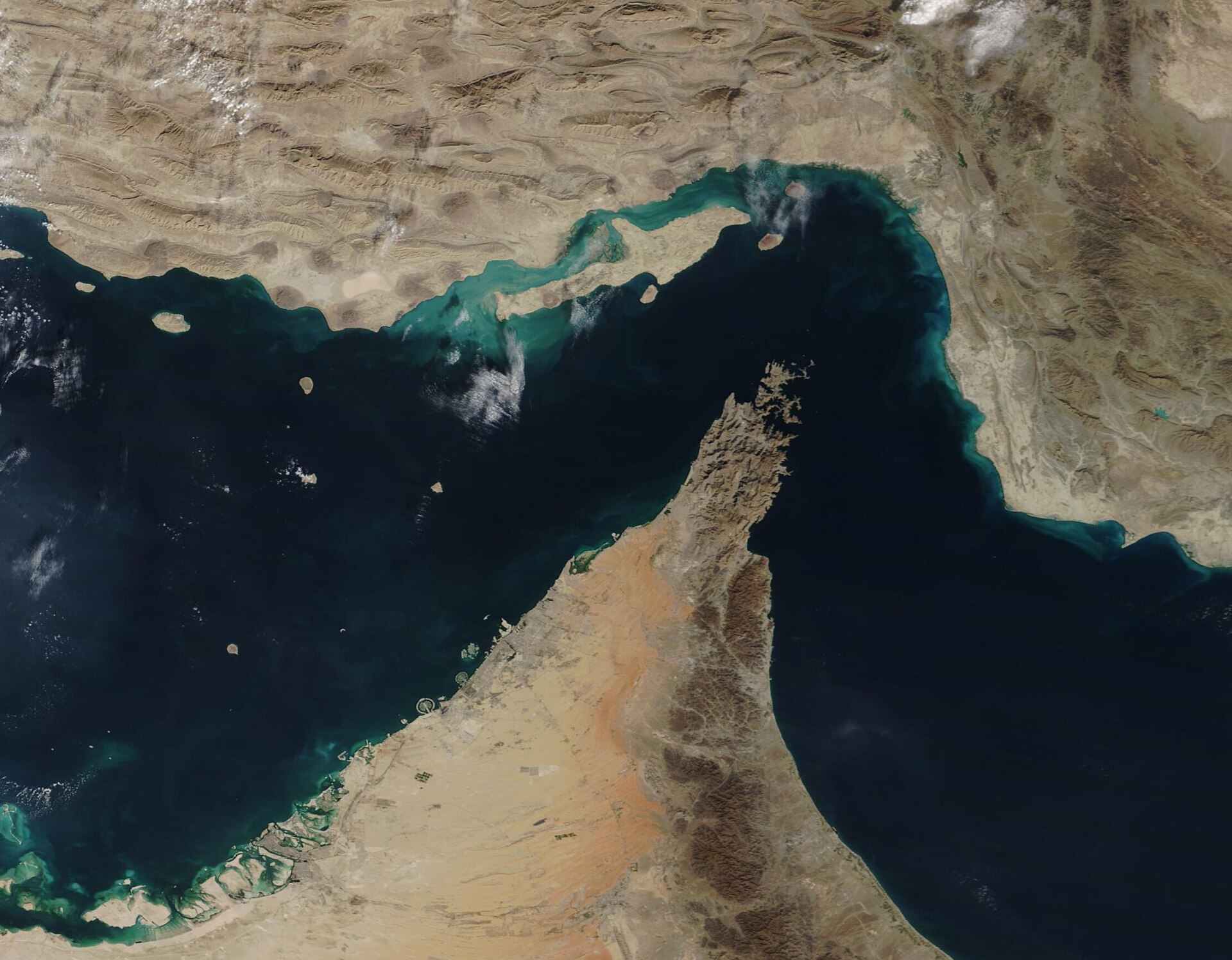
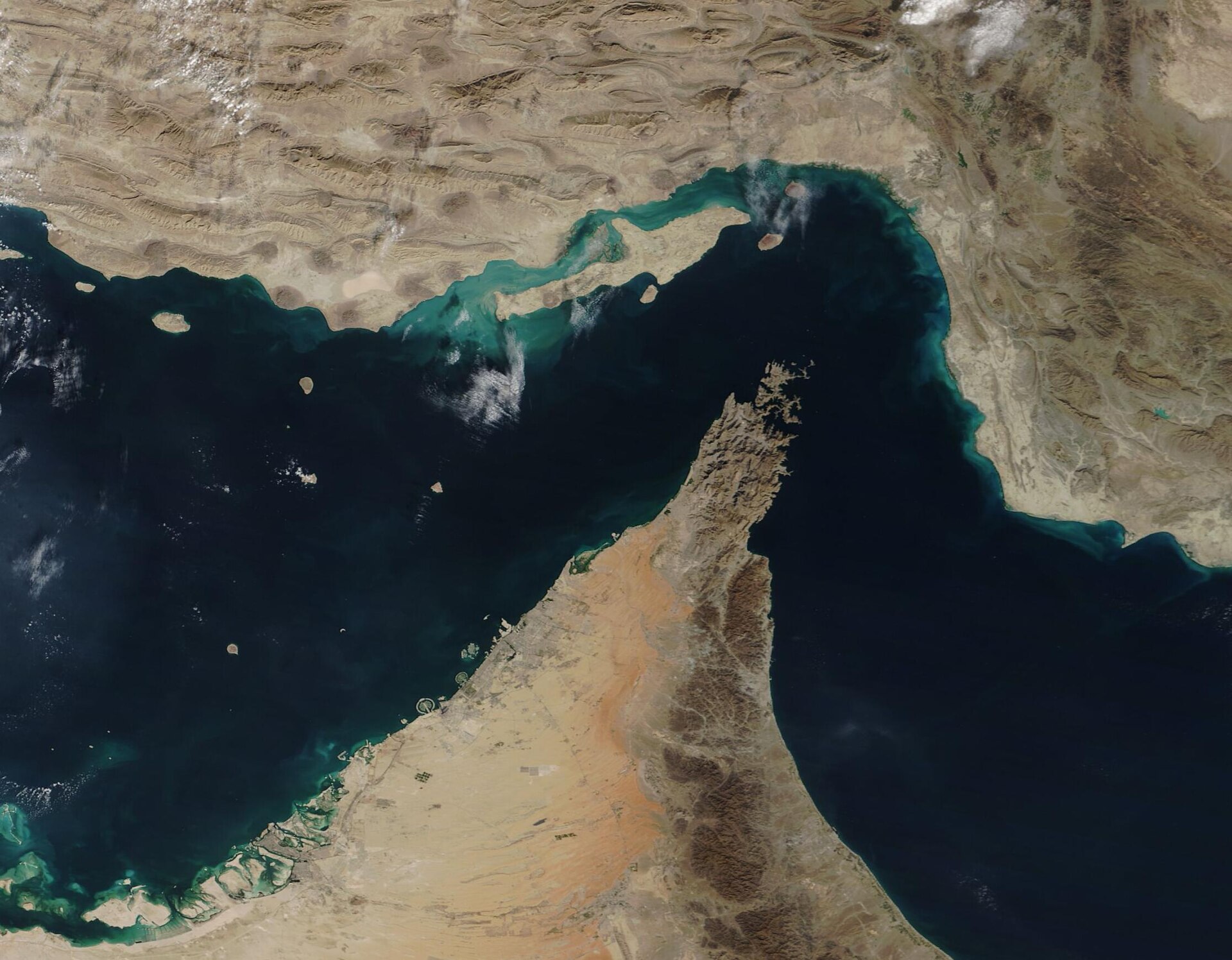
The Islamabad quadrilateral on March 29 produced a single concrete policy output that has been almost entirely absent from Western coverage. Turkey, Egypt and Saudi Arabia proposed creating a multilateral consortium to manage oil flows through the Strait of Hormuz, modelled on Suez Canal management, and asked Pakistan to participate. The proposal was transmitted to both the United States and Iran. EADaily and Pravda Turkey reported the substance. Anglophone outlets did not pick it up.
The legal architecture matters. UNCLOS Article 26 prohibits transit charges on international straits. Trump’s pitch — the “joint venture” Hormuz toll the United States and Oman discussed in April — runs head-on into that prohibition, which is why every law-of-the-sea specialist has called it unworkable. The four-state Suez model navigates the prohibition by structuring fees as transit service fees rather than tolls, with the operator being a multilateral institution rather than a coastal state collecting from passing ships.
Suez sits inside Egyptian sovereign territory, administered by Egypt. Hormuz is a natural international passage. So a Suez analogy is legally imperfect — but the political architecture it points at is the operational form: an international body with multiple shareholders, transparent fee schedules, neutral commercial governance, and a structure that gives Iran a face-saving sovereignty framing while removing the ability of any single capital to switch the strait off.
“The Pakistan-Saudi Arabia-Turkey trilateral agreement is already in pipeline.”
Pakistan Minister for Defence Production, to Reuters, January 2026
If the consortium proposal advances, the four-state architecture acquires its first operational function: Saudi Arabia becomes a founding member of the institution that governs the world’s most critical energy chokepoint; Egypt becomes the technical administrator, the only state with operational experience running a comparable institution; Turkey becomes the commercial-political broker; Pakistan becomes the diplomatic interface with Tehran. That is a functional division of labour, and it is the only Hormuz governance proposal currently on the table that has not been rejected outright by either Tehran or Washington.
The proposal is also why Riyadh declined to align with Ankara and Islamabad on language condemning Iran’s strikes during the March 29 statement — which Middle East Eye reported as a Saudi-side divergence. Faisal bin Farhan was not going to endorse condemnation language while the same architecture he was building was simultaneously sending a Hormuz consortium proposal to Tehran. The diplomatic discipline was deliberate. That same discipline now extends to the European dimension: France’s deployment of the Charles de Gaulle carrier group through the Suez, and Iran’s deliberate targeting of two CMA CGM vessels to deter it, is covered in Iran Has Struck Two French Ships in 17 Days. The Charles de Gaulle Just Entered the Suez.
Is This a Dual-Loyalty Problem or a Dual-Use Asset?
The predictable response from US-aligned analysts focuses on the obvious tensions. Turkey is a NATO member with Article 5 commitments. Pakistan is an SCO member that simultaneously serves as Iran’s protecting power in the United States — has done since 1992 — and now holds a formal mutual defence treaty with Saudi Arabia. Egypt receives $1.3 billion a year in US military aid under the Camp David framework and has been doing so since 1979. Saudi Arabia hosts 20,000 American troops at Prince Sultan Air Base and is in late-stage negotiation for 48 F-35 aircraft.
Sinan Ciddi at the Foundation for Defense of Democracies wrote the most explicit warning in January, calling Ankara joining a defence pact with Riyadh and “a nuclear-armed Islamabad” a “serious conflict of interest” and saying that “NATO’s southern flank might face strategic incoherence if Ankara’s obligations were to diverge from the alliance’s priorities.” It is the right diagnosis from inside the US national security frame. It is also irrelevant to the question of whether the architecture proceeds.
Chatham House’s January reading is the better guide to what Ankara is actually doing. Turkey’s pursuit, the analysis ran, represents “Ankara’s opportunistic ‘hedging’ strategy — seeking alternatives to existing alliances to create leverage within them, rather than to replace NATO.” The flexibility of an alternative defensive structure “would allow Turkey to shape NATO policy by threatening to withhold its own forces or to ‘opt out’ of alliance commitments.” That is a much sharper claim than the FDD framing. Erdogan is not exiting NATO. He is buying himself an exit option that he can use to extract concessions inside it.
The same logic applies in modulated form to each of the other three. Pakistan is using the SMDA to extract Saudi financial cover (the $5 billion loan package, the $3 billion deposit MBS sent in early 2026) while reserving the right not to operationalise the treaty’s mutual defence clause if a Saudi-Iran kinetic crisis forced Munir’s hand. Egypt is using the Turkey defence pact to diversify away from US military aid dependency without giving up the dependency. Saudi Arabia is running every possible track simultaneously and will do so until one of them produces a formal post-war settlement that closes the others.
Eleonora Ardemagni at ISPI offered the most precise reading of what the bloc is actually about: the possible expansion of the Saudi-Pakistan SMDA to Turkey “would be primarily related to Israel’s containment.” Not Iran. Not the United States. Israel. That single sentence reorganises every other interpretation of the architecture, because it tells you what the four states agree on when they cannot agree on Iran.
MBS and the Architecture of Indispensability
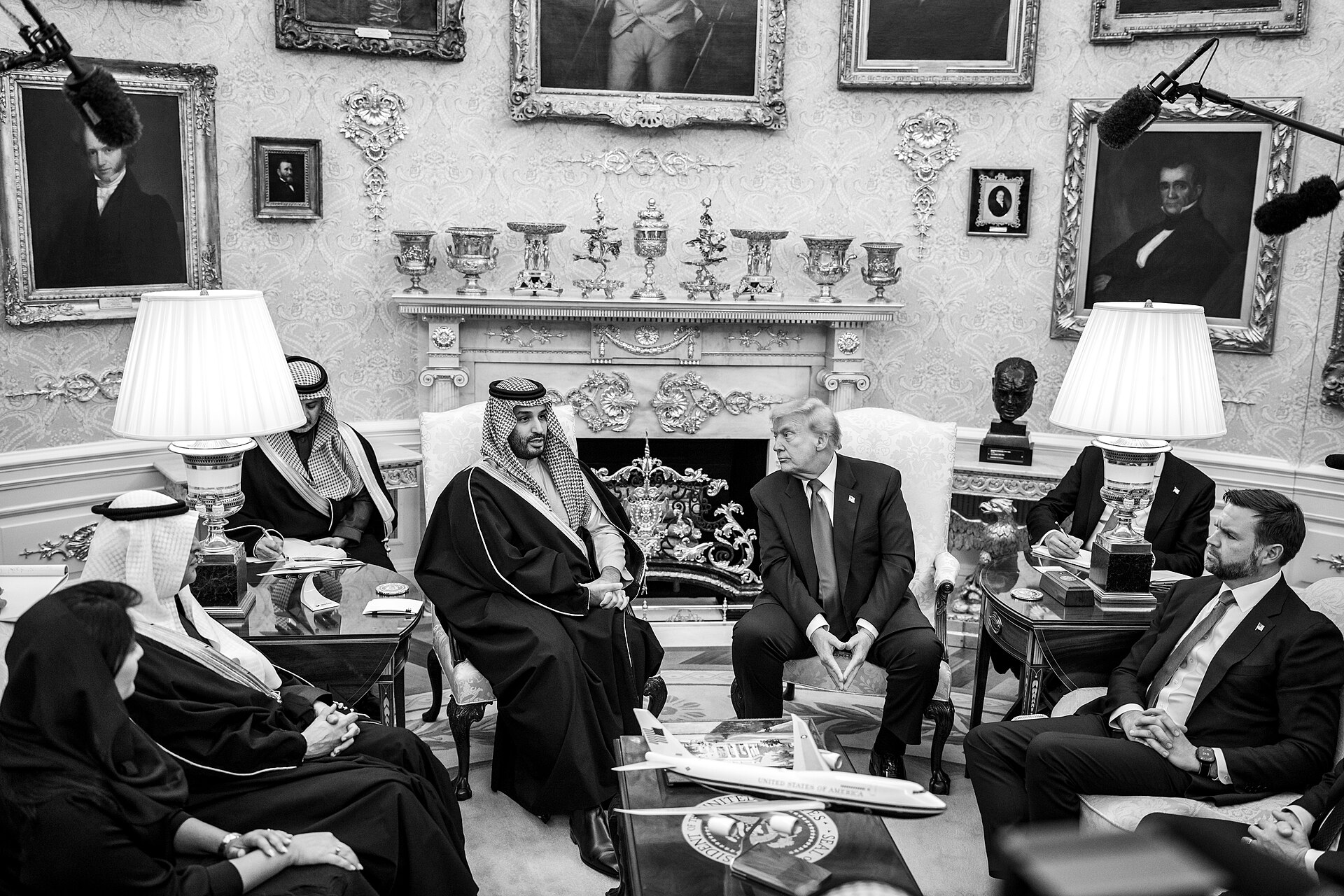
Mohammed bin Salman has signed, accelerated or activated bilateral arms agreements with at least seven nations since the war began on February 28: the United States, China, South Korea, Turkey, Ukraine, the United Kingdom and France. Saudi Q1 2026 active-production and deployment procurement runs to roughly $20 billion across these tracks — not counting the F-35 contract, which was approved in November 2025 and reconfirmed at FII Miami on March 28 but whose full $40-plus billion value is spread over a multi-year delivery schedule. The F-35 sale covers 48 aircraft — three combat squadrons. The Bayraktar Akinci deal with Turkey is $3 billion with local assembly inside Saudi Arabia under a SAMI joint venture, with the first locally assembled Akinci UCAVs projected for 2026.
None of those tracks contradicts any of the others. They are the architecture of indispensability — the deliberate construction of a diplomatic position in which no single power, including the United States, can extract a concession from Riyadh by threatening to withhold its own. China cannot threaten to walk because South Korea is already there. The United States cannot threaten to walk because Turkey, France and the United Kingdom are already there. Pakistan cannot threaten to walk because the SMDA cuts both ways and Riyadh is its lender of last resort.
| Counterparty | Asset / Track | Status |
|---|---|---|
| United States | 48 F-35 aircraft (3 squadrons) | Approved Nov 2025; FII Miami March 28 |
| Turkey | $3bn Bayraktar Akinci UCAVs + SAMI assembly | Active production 2026 |
| China | Air defence, missile, infrastructure tracks | Active |
| South Korea | KM-SAM, ammunition, ground systems | Active |
| United Kingdom | Sky Sabre Royal Artillery battery (deployed late March 2026) | Operational |
| France | Air defence, naval cooperation | Active |
| Ukraine | Drone & EW track | Activated 2026 |
| Q1 2026 total estimated procurement | ~$20 billion | |
The four-state architecture is the version of indispensability that does not require American sign-off, and that is what makes it different from the other tracks. The F-35 deal needs a Congressional notification, a State Department certification, and a Pentagon end-user agreement; the Akinci deal needed Turkish export approval and nothing else; the SMDA needed a Pakistani cabinet decision; the Hormuz consortium proposal needs four governments and the operator. None of it needs Washington — and that is the structural innovation MBS is buying.
The point is not anti-American. The point is post-American. The architecture is being built to function in a region where the United States may not be the decisive external power by 2030, regardless of whether Trump’s Riyadh visit later this month produces a deal or breaks the table. Saudi Arabia under MBS is preparing for both outcomes simultaneously, which is what Hesham Alghannam at the Carnegie Middle East Center calls the “central GCC fault line” — Riyadh building hedges that Abu Dhabi reads as betrayal, with the UAE responding by walking out of OPEC on May 1 without consultation.
Anwar Gargash, the UAE presidential diplomatic adviser, said the quiet part out loud in April: the GCC’s wartime posture, “politically and militarily, I think their position has been the weakest historically.” Gargash was not criticising the GCC as an institution. He was telling Riyadh that Abu Dhabi no longer accepts Saudi Arabia’s right to define the bloc’s collective position. The UAE OPEC exit five days later was the operational consequence. Iran has struck the UAE on consecutive days while the Pentagon publicly characterised those strikes as “below threshold” — the kind of language that tells you the United States is not going to defend Abu Dhabi in any way that closes Riyadh’s options for it.
Why Is Egypt the Weakest Link in the Quartet?
Egypt’s structural position is the most exposed of the four. Cairo receives approximately $1.3 billion a year in US military aid under a programme that has been continuously authorised since the Camp David Accords of 1979. The Congressional Research Service’s most recent report (RL33003, updated February 25, 2026) describes the relationship as institutionalised through 35 Military Cooperation Committee meetings to date. That is not a programme that gets walked away from. It is a nearly five-decade structural commitment that defines the Egyptian armed forces’ equipment base, training pipeline, and spare-parts logistics.
Layered on top is the Gulf financial dependency. Arab Center DC’s reporting puts the figure at “tens of billions of dollars in grants, Central Bank deposits, and investments” from GCC states to Cairo since the 2013 transition. Saudi Arabia, the UAE and Qatar have all been Egypt’s lenders of last resort at various points. Cairo cannot walk away from that either, because there is nothing else in the international system that fills the same role at the same speed.
Then there is the new layer — the Turkey-Egypt $350 million defence cooperation package Sisi and Erdogan signed in Cairo in early February 2026. The deal covers $130 million for Tolga short-range air defence systems, $220 million for a 155mm long-range artillery ammunition factory inside Egypt, production lines for 7.62mm and 12.7mm small arms ammunition, and a joint venture company for regional exports to Africa and the Middle East. That is not a symbolic agreement — it is industrial, putting Turkish defence firms on Egyptian soil, building Egyptian capacity, with Egyptian export rights. It is the first non-American major defence-industrial relationship Cairo has entered into in a generation.
Chatham House said in December that “Egypt’s foreign policy will remain too little, too late in 2026,” noting that Egypt has been moving closer to Qatar and Turkey “as well as Saudi Arabia” — using the war as cover for alignment shifts it could not make in peacetime. That is the right reading. Cairo’s participation in the four-state architecture is enabled by the Iran war, not by any reorientation of the Egyptian economy or military. Once the war ends, the constraints reassert themselves — unless the architecture itself becomes the new constraint.
The most concrete role Egypt brings to the quartet is operational, not financial. Cairo runs the Suez Canal, which is the only multilateral chokepoint governance institution in the region with a continuous operating history. If the Hormuz consortium proposal advances, Egypt is the only state with the technical, legal and bureaucratic experience to administer it. That is why Egypt was the third state, alongside Turkey and Saudi Arabia, that the Islamabad statement names as the originator of the consortium proposal — Pakistan was the recipient, Egypt was the architect.
Why Hasn’t Washington Pushed Back?
This is the question that produces the most surprised reactions in Western capitals. The CSIS framing is on the table. The FDD warning is on the table. Sinan Ciddi has written about NATO southern-flank coherence. The Times of Israel has run pieces on Turkey’s behaviour as “no longer a normal NATO ally.” And yet — as the FDD itself acknowledged in January — “neither Washington nor Tel Aviv has expressed serious opposition to the Saudi-Pakistan defence agreement” through formal diplomatic channels.
The reason is that Washington is doing the same thing the four states are doing, in reverse. The United States is simultaneously deepening its basing posture at Prince Sultan, completing F-35 negotiations, expanding THAAD coverage in the Eastern Province, and running Iran nuclear diplomacy out of Oman. Every one of those tracks requires Saudi cooperation. None of them survives a public American confrontation with Riyadh over the four-state pact. So the formal channel stays quiet, and the policy machine processes the architecture as a manageable irritant rather than a strategic break.
The other reason is that the United States cannot openly object without contradicting its own messaging on burden-sharing. Trump has spent two terms telling allies they need to do more for their own security. Saudi Arabia is now doing exactly that — at $20 billion a quarter — and the architecture it is building includes a NATO member, a major non-NATO ally, and the largest Arab military. From the White House’s perspective, that is what burden-sharing looks like in practice. Objecting to it requires a coherent alternative theory of regional security that no one in Trump’s Iran cabinet has produced.
The third reason — and this is the one that matters for what happens next — is that the architecture’s first concrete output is a Hormuz consortium proposal that the United States has formally received. Washington has not rejected it, the State Department has not briefed against it, and there is no leaked memo from Foggy Bottom calling it unworkable. That silence is the most important data point on US posture in the past six weeks — the absence of a “no” while four foreign ministers meet three times in ten weeks is functionally a “yes you may proceed.”
“Fear of US abandonment is pushing states to build more diplomatic mass, even if they cannot yet build an integrated military bloc.”
Andreas Krieg, King’s College London — The New Arab, 2026
Tel Aviv Is Building the Counter-Bloc
The Israeli reading of the quartet is the most operationally useful one to listen to, because Israel is the only regional actor whose security calculation is directly threatened by it. Ardemagni’s identification of “Israel’s containment” as the bloc’s most likely shared interest aligns with how Tel Aviv is publicly responding. Jerusalem Post reporting from January identified the Israeli government’s effort to form “a counter-group to encircle Muslim states in response to the ever-growing links between Turkey, Saudi Arabia, Egypt and Pakistan.”
The first concrete Israeli counter-move was a December 2025 Israel-Greece-Cyprus trilateral maritime and aviation safety pact, framed publicly as a technical agreement on Eastern Mediterranean shipping and air traffic. Read against the four-state architecture, the trilateral is a structural mirror — three NATO-aligned states, one of them a NATO member, building a Mediterranean security framework that operates parallel to any Turkish-led architecture in the same waters.
The second move is messaging. Israeli analysts and Emirati commentators have developed convergent talking points for US audiences framing Turkey as introducing “instability and revisionism” into the regional order, and that convergence is not coincidence. The UAE and Israel are the two states with the strongest bilateral interest in seeing the four-state architecture characterised in Washington as a threat rather than a hedge, and both have access to senior US policymaking and have been deploying it.
What Tel Aviv has not yet done is force a binary choice on Washington — and it is not clear that it can. The Trump administration’s Iran cabinet contains figures aligned with the Israeli view (Witkoff’s coordination with Dermer is the open one) and figures aligned with the Saudi view (Rubio’s “better than expected” on Iran’s proposal). The current US posture is to keep both lanes open, which is exactly the posture that lets the four-state architecture proceed.
What the Quartet Has to Produce Before the Ceasefire Window Closes
The architecture has produced three things so far: a habit of meeting, a defence-industrial web, and one concrete policy proposal. To survive the post-war order, it has to produce at least two more before any final US-Iran settlement is signed. The first is an institutional name and a permanent secretariat. The IISS characterised the grouping in May as “a fluid consultation and coordination mechanism rather than a formal alliance,” and that is exactly the description the four states want for now — but cannot tolerate after a final settlement closes the window in which architecture-building is politically costless.
The second is a force-employment scenario in which the Pakistan SMDA actually applies. APLN’s “Paper Promises” critique identifies the gap precisely: the SMDA has no enforcement trigger or force-commitment timeline, and its practical ceiling depends on Pakistan Army leadership decisions at the moment of crisis. If that gap is not closed — through staff talks, joint exercises, basing access agreements, or named force packages — the architecture remains rhetorical. Natasha Lindstaedt at the University of Essex put the upper-bound number on what the architecture could be: “a combined military force of more than 1.9 million active troops, a nuclear arsenal, NATO’s second-largest army, and the Arab world’s biggest defence budget.” That is the ceiling. The current floor is four foreign ministers and a family photo.
The third — and this is the one most likely to be operationalised first — is the Hormuz consortium proposal moving from Pakistani transmission to Iranian and American formal consideration. Riyadh’s structural Hormuz veto means the consortium cannot launch without Saudi sign-off, and Saudi sign-off cannot happen without an Iranian commitment that survives the next forty-five-day extension. Tehran’s Persian Gulf Strait Authority announcement is the rival proposal — unilateral, sovereignty-claiming, designed to foreclose the multilateral consortium before it can advance.
The race is now between a four-state multilateral consortium framework and an Iranian unilateral authority claiming exclusive jurisdiction over the same waters. Iran’s Hormuz sovereignty law is moving through the Majlis. The four-state architecture has to produce a counter-text within the same calendar window or surrender the institutional first-mover advantage to Tehran.
That is what makes the May 6 Ankara meeting more than a routine bilateral. The third Turkish-Saudi Coordination Council session in nine years was used to coordinate the next phase of an architecture that has to produce a treaty text, a force-employment framework, or a chokepoint governance institution before either the United States and Iran sign a final deal or the IRGC declares the Persian Gulf Strait Authority operational. The window is measured in weeks. MBS has spent $100 billion on this war already and is still spending. The architecture is the return on that spending — or it is what the spending has bought him in the absence of a return.
Faisal bin Farhan flew home from Ankara on May 7. Fidan briefed Middle East Eye that Turkey was pushing for a four-way pact. Tehran rolled the next page of the Hormuz sovereignty bill toward the Majlis floor. The window closes when somebody writes a treaty. Right now, four foreign ministers are deciding whose name goes on it.
Russia is running a parallel track: Lavrov called Faisal on May 8 proposing to restore the pre-February Hormuz navigation baseline, then called the Qatari PM and the Omani FM in the same week — the same four-state window, a different author. Moscow timed the calls to land before Trump arrives in Riyadh on May 13, inserting itself into the architecture debate without joining any of the rooms where the text is being written.
Frequently Asked Questions
What is the difference between the Turkish-Saudi Coordination Council and the four-way security pact discussion?
The Turkish-Saudi Coordination Council is a bilateral framework established in 2016 with three sessions to date — Ankara 2017, Riyadh 2025, Ankara May 6 2026. It covers the bilateral relationship only. The four-way security pact discussion involves Saudi Arabia, Turkey, Pakistan and Egypt, has produced three foreign-minister-level sessions in ten weeks (Riyadh, Islamabad, Antalya), and is layered on top of the Pakistan-Saudi SMDA signed September 17, 2025. The Coordination Council is the institutional vessel; the four-way discussion is the wartime political content being moved through it and through parallel formats. The two were stitched together in the May 6 session — which is the institutional novelty even though the council itself is nine years old.
Does the Pakistan-Saudi SMDA cover Iran?
Not by name. The treaty’s operative line — “any attack against either state shall be considered an attack against both states” — is generic and does not identify any adversary. APLN’s “Paper Promises” analysis found the agreement has no defined enforcement trigger, no force-commitment timeline, and no named scenario list. The practical answer to whether it covers an Iranian attack on Saudi Arabia depends on a Pakistan Army decision at the moment of crisis. Pakistan also serves as Iran’s protecting power in the United States (since 1992) and is running ceasefire mediation under Field Marshal Munir, meaning the SMDA’s enforcement is structurally constrained by Pakistan’s simultaneous role as Tehran’s interlocutor.
What does the Hormuz consortium proposal mean for global oil shipping?
If implemented, transit through Hormuz would be governed by a multilateral institution with Saudi, Turkish, Egyptian and Pakistani shareholders rather than by either Iranian unilateral claim or US-Omani bilateral arrangement. Fees would be structured as transit service fees rather than UNCLOS-prohibited toll charges, modelled on Suez Canal management. Roughly 20 million barrels per day of oil and a third of seaborne LNG traverse the strait, so a multilateral operator would replace the current dual-claim regime with predictable commercial governance. The proposal was transmitted to the United States and Iran on March 30, 2026; neither has formally accepted, but neither has formally rejected, and Iran’s parallel Persian Gulf Strait Authority announcement is the unilateral counter.
How much defence procurement has Saudi Arabia signed since the war began?
Approximately $20 billion in Q1 2026 active-production and deployment contracts, across at least seven bilateral tracks — Turkey ($3 billion Bayraktar Akinci UCAVs with SAMI joint-venture assembly), China, South Korea, the United Kingdom (Sky Sabre Royal Artillery battery, deployed late March), France, Ukraine, and the United States on non-aircraft tracks. The F-35 contract (48 aircraft, three combat squadrons, approved November 2025 and reconfirmed at FII Miami March 28) is a separate multi-year commitment; if the full 48-aircraft contract closes within the calendar year, the annualised total exceeds $40 billion. Bilateral trade with Turkey reached $8.5 billion by end-2025, before the Akinci production line activated.
Could Egypt actually leave the US military aid framework?
No, and Cairo is not trying to. Egypt receives approximately $1.3 billion a year in US Foreign Military Financing under a programme institutionalised by 35 Military Cooperation Committee meetings since Camp David. The February 2026 Turkey-Egypt defence pact is additive — calibrated to diversify dependency, not replace it. Egypt’s military role in the quartet is also constrained by Article 145 of its 2014 constitution, which requires a parliamentary majority to authorise any troop deployment outside Egyptian borders. That provision effectively caps Cairo’s contribution at the diplomatic, intelligence and administrative levels — which is precisely where Egypt adds the most value to the Hormuz consortium proposal, given that the Suez Canal Authority employs roughly 44,000 staff and administers the only precedent for transparent multinational-use transit fee structures in the region.
Three days after Ankara, the quartet’s diplomatic momentum continued with Faisal’s May 9 calls to Lavrov and Abdelatty — locking in Russian and Egyptian endorsement of Saudi Arabia’s Hormuz framing ahead of Trump’s May 13 arrival. The structural logic behind why this four-state grouping succeeded where the GCC failed is examined in GCC Was a Club With No Sellers. STEP Fixed That.