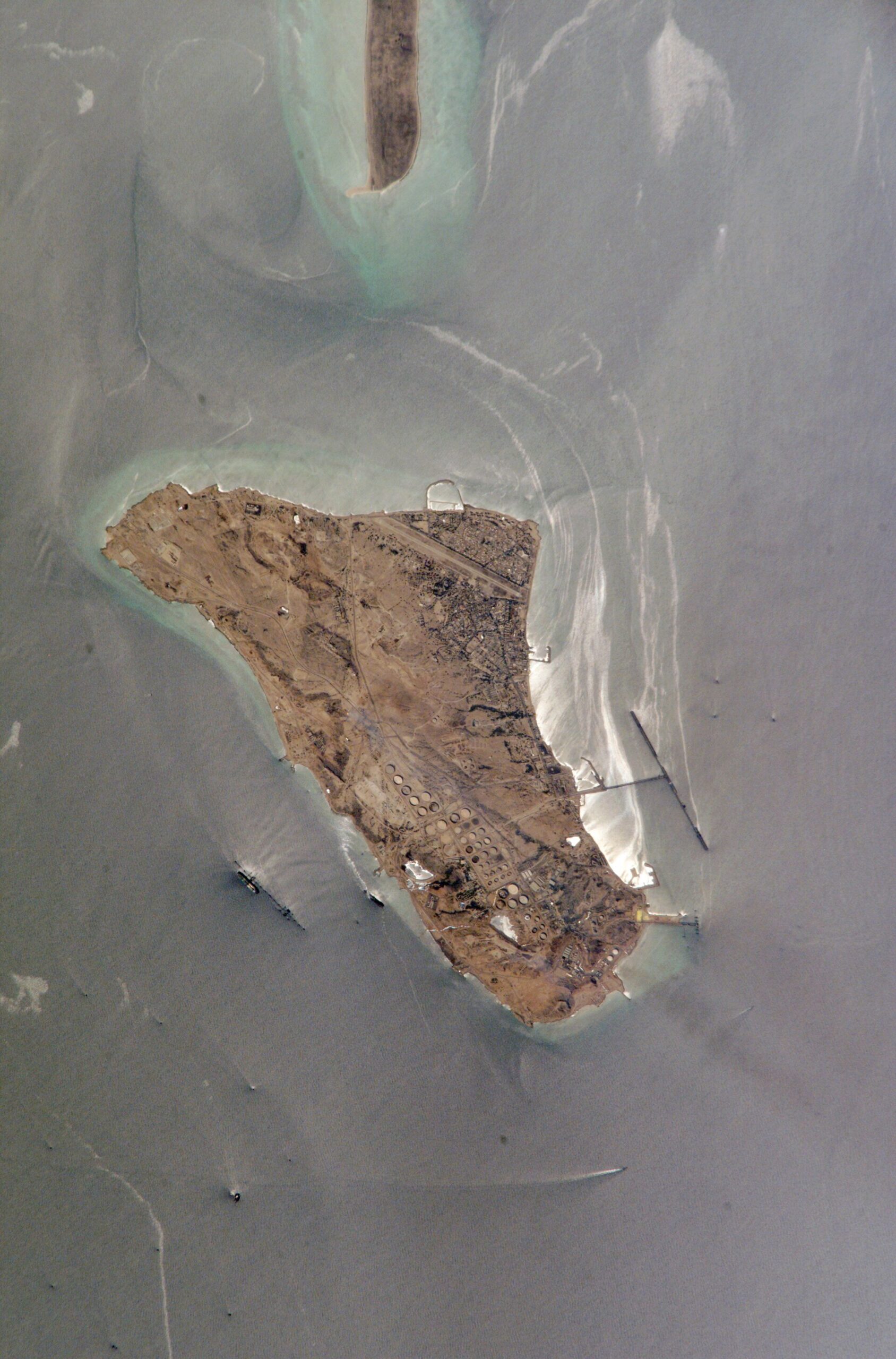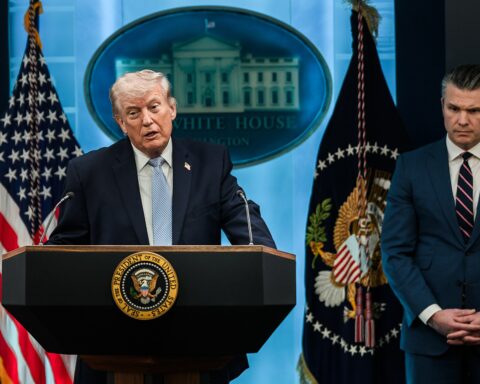

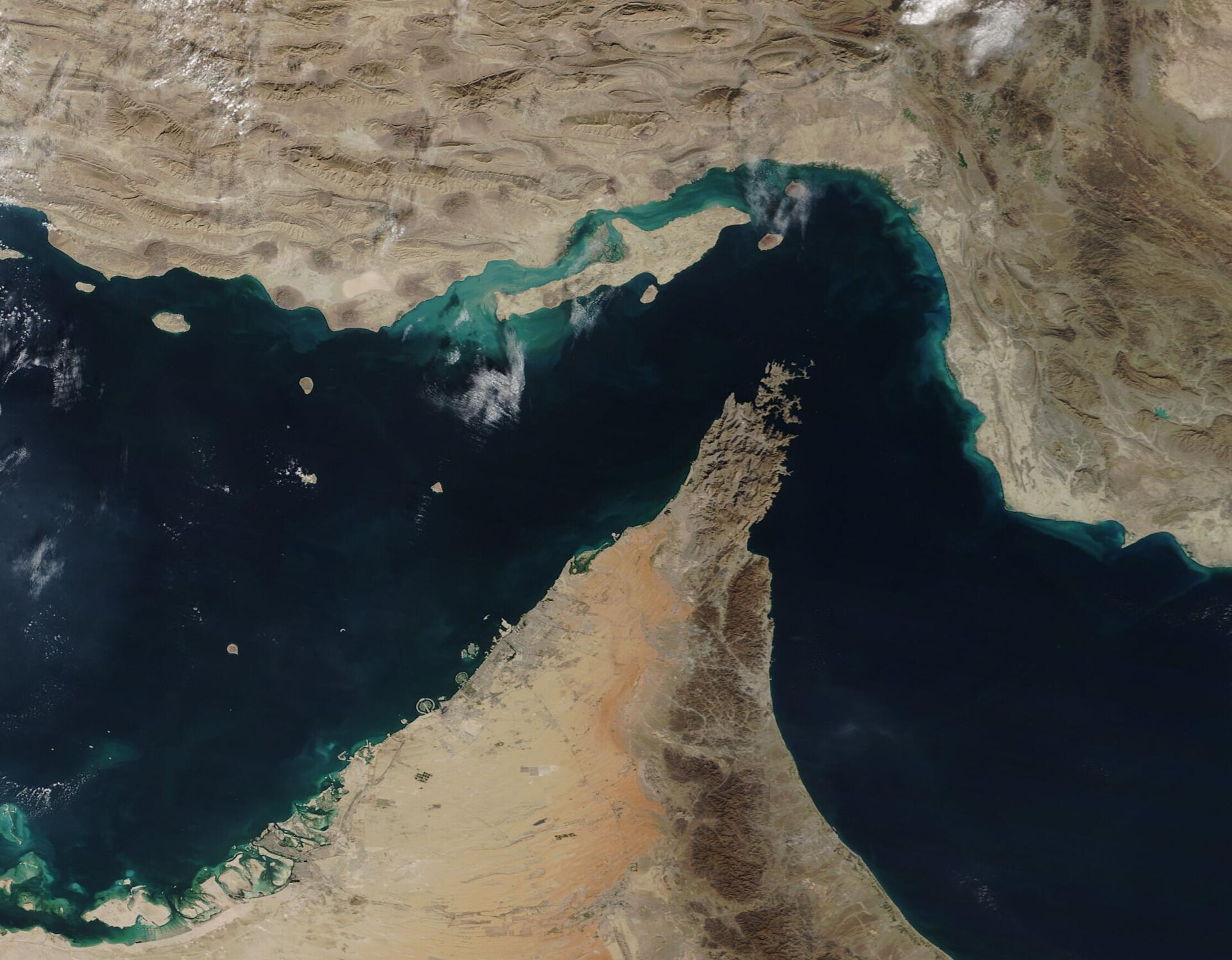
MANAMA — Iran did not threaten to close the Strait of Hormuz on Friday. It threatened something more useful: to keep the strait open for everyone except the countries it does not like, and to do it forever. Ebrahim Azizi, who runs the parliamentary national security commission in Tehran, named Bahrain by name and called it a microstate, which is the diplomatic equivalent of pointing at the smallest child in the room and explaining what is about to happen to him.
The Persian Gulf Strait Authority — the new bureaucratic vehicle Iran stood up on May 5 with a 40-question vessel registration form and an OFAC alert attached — now makes country-specific denial operationally credible for the first time since the Tanker War of 1984. The target is not Bahrain but the four-day window before Donald Trump lands in Riyadh on May 13, and the GCC unanimity the United States needs to get its draft Security Council resolution through before he gets there. Bahrain, which hosts 8,500 American military personnel and the Fifth Fleet on 62 acres of central Manama it cannot move and Iran cannot stop targeting, is the pressure point Tehran chose because Tehran knows Saudi Arabia chose it first.
Table of Contents
- The “Forever” Word Is Not Rhetoric
- What Is the Persian Gulf Strait Authority?
- Why Bahrain, and Why Now?
- The UNSC Draft Iran Is Trying to Kill
- The Fifth Fleet Is the Trap
- Does Iran’s Selective Denial Violate International Law?
- How Does Saudi Arabia Benefit From the Threat Against Bahrain?
- How Is This Different From the Tanker War?
- The Four Days Before Trump Lands
- FAQ
The “Forever” Word Is Not Rhetoric
Azizi’s full warning, delivered to Iranian state media on Friday and amplified almost immediately by Tasnim and Mehr, ran two ways at once. The first was a general threat to the strait: “The Strait of Hormuz is a vital lifeline; do not risk closing it on yourselves FOREVER.” The second was a specific naming exercise: “We warn governments, including microstates like Bahrain, that siding with the U.S.-backed resolution will bring severe consequences.” Two sentences, one structural argument — the closure is not a button Iran will press in anger, it is a regime Iran is constructing in legislation, and once a country is on the wrong side of the bill it stays on the wrong side of the bill.
The architecture for this language already exists. On April 21 the parliamentary national security and foreign policy committee, chaired by Mohammadreza Rezayi Kouchi, ratified a 12-article Hormuz sovereignty bill that codifies precisely the kind of permanent, country-specific exclusion Azizi was advertising on Friday. Article 1 bars vessels linked to Israel unconditionally. Article 2 puts ships from “hostile” states under Supreme National Security Council screening. Article 3 — the operative clause for Bahrain — denies passage to states that “caused damage to Iran” until compensation is paid in full, with no mechanism specified for how that bar gets lifted. Tehran has now decided that the country hosting the headquarters from which the United States ran February’s strikes is, as a matter of Iranian domestic law, owed nothing but a denial code.
This is the part Western coverage has so far underplayed. The 12-article bill is not a threat instrument; it is a status instrument. It does not tell countries what Iran might do, it tells them what Iran says they already are. Bahrain, under Article 3, is already in the permanent-exclusion category from the moment the bill becomes law, because Naval Support Activity Bahrain has hosted strike operations against Iranian targets continuously since the night of February 28. Azizi is not warning about a future consequence — he is announcing the legal classification under which Bahrain has been operating since the war began.
Mehr News, on the day the committee passed the bill, quoted a parliamentary deputy speaker using the phrase “new legal regime” — Iranian framing borrowed almost verbatim from the language used to describe the Panama Canal Authority and the Suez Canal Authority. The implication, carefully constructed for Iranian domestic audiences and equally carefully constructed for Chinese and Russian diplomats at the United Nations, is that Iran is not closing a strait but operating one.
The Middle East briefing 3,000+ readers start their day with.
One email. Every weekday morning. Free.
What Is the Persian Gulf Strait Authority?
The Persian Gulf Strait Authority — PGSA — was stood up on May 5 as the operational arm of the 12-article bill, four days before Azizi’s “forever” warning and one week before Trump’s expected arrival in Riyadh. Its work product is a single document. Commercial vessels seeking to transit Hormuz now submit a permit application running to more than forty questions, covering vessel name, IMO number, every previous name the hull has ever carried, the country of origin, the country of destination, cargo type and declared value, the nationality of every member of the crew, the ownership structure of the operator, and the underwriter of every layer of insurance. On submission and review, the applicant receives a transit authorisation code. Without the code, the IRGC Navy considers the vessel non-compliant — and according to a statement from the IRGC Navy this week, compliance is “good.”
The IRGC Navy did not specify which shipping companies have actually complied. The Office of Foreign Assets Control did. OFAC’s sanctions alert, issued within days of the PGSA’s launch, told American and allied flag carriers that compliance with PGSA fees or registration “could constitute” a US sanctions violation. The bind for any tanker or container line operating between Asia and Europe is now structural and unresolvable: comply with Iran and lose American banking access; refuse to comply and face IRGC interception in a strait where roughly 45 vessels have transited since the April 8 ceasefire — about 3.6% of the pre-war baseline — and where Iran has declared a new maritime control zone in the Gulf of Oman extending well beyond the strait itself.
| Element | Detail | Operational implication |
|---|---|---|
| Form length | 40+ questions | Establishes precedent for port-state-style review |
| Crew nationality field | Required for every crewmember | Allows screening by passport, not flag |
| Previous vessel names | All historical names required | Defeats reflagging as a sanctions workaround |
| Cargo declared value | Required | Provides basis for tonnage-linked or value-linked transit fee |
| Insurance underwriter | Required at every layer | Identifies Western P&I clubs for selective exclusion |
| Owner / operator nationality | Required | Operationalises Article 3 country denial |
| Country of origin / destination | Required | Allows trade-route specific denial (e.g. Israel-bound) |
| Transit fee | Payable in Iranian rial | Bypasses dollar clearing, captures FX revaluation |
The shape of the form gives away the strategic intent. Every field except cargo value is designed to identify a category of vessel — by ownership, by crew, by route, by underwriter — that Iranian authorities can subsequently exclude under Articles 1, 2 or 3 of the sovereignty bill. None of it is needed to assess transit safety, which is what an actual canal authority does. All of it is needed to administer a denial regime by nationality. James Kraska of the Naval War College, who has been one of the most cited voices on this since April, has called it what it is: there is no legal basis under international law for Iran’s toll regime, and the form is the toll regime’s evidence file.
A fee regime premised on bordering-state discretion to screen, price, and selectively deny passage would transform a legal right of passage into a purchased license.EJIL:Talk! legal analysis, April 2026
Earlier coverage established that the IRGC designed its maritime rules to outlast the memorandum of understanding Tehran’s own diplomats are negotiating — which means PGSA is structurally unrepealable even if Pezeshkian were to sign every paper Witkoff puts in front of him.
Why Bahrain, and Why Now?
The choice of Bahrain is not improvised, and the choice of “microstate” as the operative noun is not casual. Iran has been pressing the Al Khalifa monarchy since the 1979 revolution, when it first claimed the islands as its 14th province. The 1981 Iranian-linked coup plot, the 2011 uprising suppressed only when Saudi Peninsula Shield troops crossed the King Fahd Causeway, and the diplomatic rupture in January 2016 over Sheikh Nimr al-Nimr’s execution — none of these have closed. Diplomatic relations between Tehran and Manama have not been restored in nearly a decade. The Shia citizens who form a majority of Bahrain’s population, marginalised under a Sunni monarchy, give Iran a domestic pressure channel none of the other GCC capitals possess at anything approaching the same depth.
What Bahrain did this week made the channel impossible to deny. On the same day Azizi issued his warning, Bahrain’s Interior Ministry announced the arrest of 41 individuals accused of belonging to an IRGC-linked network. The arrests were not coincidence — they were the choreography of a state demonstrating to Washington, in the four-day window before Trump’s visit, that it had chosen its side and was prepared to police it. The arrests followed earlier rounds totalling more than 160 people detained since March, and 69 Bahrainis stripped of citizenship in April for “sympathising with Iran.” The Manama government is publishing its allegiance daily, in numbers, because it cannot afford the United States to doubt where it stands.
And Iran knows it. The “microstate” framing — repeated in three separate sentences across the Friday warning — is the rhetorical equivalent of explaining to the rest of the GCC that this consequence is reserved for the small. Saudi Arabia, which co-signed the same UNSC draft, was not named. The UAE, which co-signed the same UNSC draft, was not named. Kuwait and Qatar, both supportive of the same UNSC draft, were not named. Only Bahrain — an attempt to fracture the unanimity by demonstrating that the price of unanimity will be borne unequally, and that the smallest signatory will pay it first.
The UNSC Draft Iran Is Trying to Kill
The Security Council resolution that triggered Azizi’s warning is the second attempt by Bahrain and the United States to put Iran’s strait policy under international law. The first attempt, on April 7, was vetoed 11-2 by Russia and China, with Colombia and Pakistan abstaining. The original draft contained Chapter VII use-of-force language. Russia’s Vassily Nebenzia objected that the draft “presented Iranian actions as the sole source of regional tensions” and that US-Israeli strikes were “not mentioned at all.” China’s Fu Cong argued the resolution “failed to capture the root causes and the full picture.”
The new draft, expected to come to a vote in coming days according to the State Department, has been narrowed deliberately. Chapter VII force authorisation has been removed — a concession explicitly aimed at avoiding a second Russian and Chinese veto. What remains is a demand that Iran “immediately cease all attacks and threats against merchant and commercial vessels in the Strait of Hormuz,” with specific reference to mines and “illegal tolling.” It is the tolling reference that turns this into a direct attack on the PGSA. If passed, the resolution would put the United Nations Security Council on record describing the May 5 authority as outside the bounds of international law, in language China and Russia could not block.
That is what Iran cannot let stand. UNSC Resolution 2817, passed on March 11, already reaffirmed navigation rights through Hormuz and described Iranian threats to the strait as a breach of international law. A second binding resolution targeting the PGSA specifically would convert the legal pressure on the authority from advisory to operational, giving every flag state and every P&I underwriter a Security Council ruling to point to when refusing PGSA fees. The narrower the new draft is, the harder it is to veto — and the harder Iran has to work to peel away one signatory before the vote is called.
The diplomatic context behind Riyadh’s sequencing on these resolutions — how Saudi Arabia’s veto stopped at the waterline and CENTCOM noticed — explains why the Saudi position on UNSC drafts has been, throughout this war, deliberately constructed to leave room for an outcome Tehran can live with.
The Fifth Fleet Is the Trap
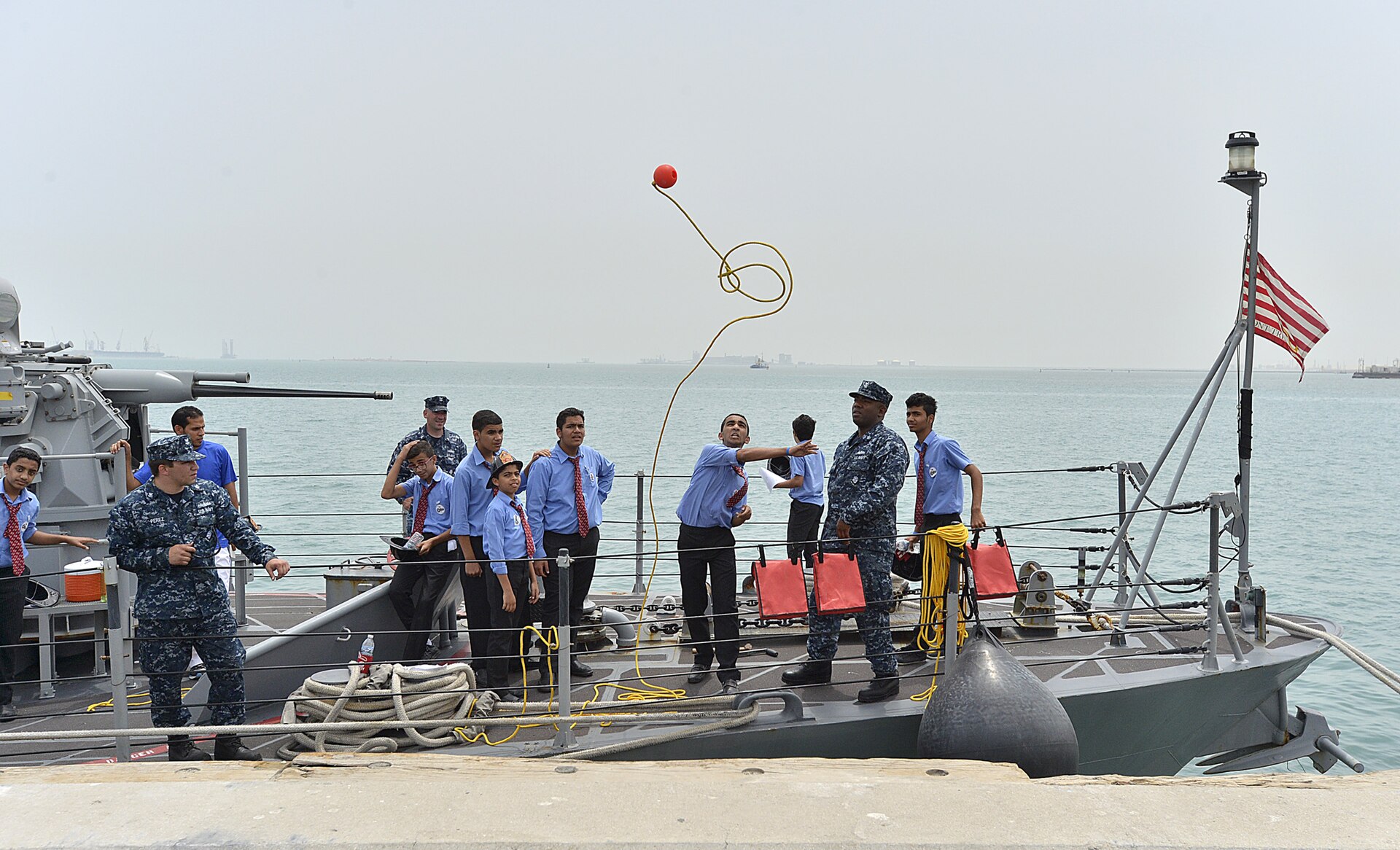
Naval Support Activity Bahrain occupies 62 acres in central Manama, hosts 7,600 American servicemembers and roughly 900 Department of Defense civilians, houses 78 separate tenant commands, and contributes around $500 million annually to the Bahraini economy from a Defense Department budget allocation that exceeded $770 million in fiscal year 2025. It is the operational headquarters of US Naval Forces Central Command and the Fifth Fleet, and it has been there since 1995. There is no alternative Gulf host with comparable capacity, comparable political willingness, and comparable geographic position — any relocation would take years, and there is no political will to start one.
The trap is structural: the American security guarantee that makes Bahrain safe from Iran is the same thing that makes Bahrain a target. NSA Bahrain’s SATCOM terminals were destroyed on the night of February 28 — the opening day of the war — establishing the base, and therefore the country it sits inside, as Iran’s primary Gulf target from the conflict’s first hour. Manama cannot evict Fifth Fleet without making itself instantly less defensible, and it cannot keep Fifth Fleet without remaining target number one. Every escalation cycle in this war has reaffirmed both ends of the bind simultaneously.
| Metric | Figure |
|---|---|
| Total acreage in central Manama | 62 |
| US military personnel | 7,600 |
| DOD civilian personnel | ~900 |
| Tenant commands hosted | 78 |
| Annual economic contribution to Bahrain | ~$500M |
| FY2025 DOD allocation for the base | $770M+ |
| Years on station as Fifth Fleet HQ | since 1995 |
| Days from war’s first night to SATCOM destruction | 0 |
The Saudi Arabia / Kuwait basing access decision — Riyadh and Kuwait lifting US basing restrictions as Washington moves to revive Hormuz escort operations — does not relieve this problem. Saudi and Kuwaiti basing access expands American maritime escort capacity, but neither country has offered, or will offer, to host the Fifth Fleet headquarters itself. The fleet flag stays in Manama, the hostage relationship stays in Manama, and the only thing that changes about Bahrain’s exposure is the depth of the threat queue stacked behind it.
This is why Azizi could afford to be specific. The cost to Iran of singling out Bahrain by name is essentially zero, because Bahrain has no exit option that does not impose a worse cost than absorbing the threat. A country hosting the Fifth Fleet headquarters in its capital cannot abstain on a US-drafted UNSC resolution — the abstention itself would constitute a more visible break with Washington than complying with the resolution would constitute a break with Tehran, and Iran built its threat to be optimal under exactly that constraint.
Does Iran’s Selective Denial Violate International Law?
Yes — but Iran has built itself a procedural escape route by never ratifying the United Nations Convention on the Law of the Sea. UNCLOS Article 38 establishes the right of transit passage through international straits, Article 42(2) bars discrimination among foreign ships, and Article 44 prohibits suspension of transit passage outright. Iran signed but never ratified, leaving itself outside the treaty’s binding jurisdiction.
Iran’s standing legal position is that only the older “innocent passage” regime applies to Hormuz — a regime under which a coastal state retains broader authority to suspend passage on security grounds. The procedural argument is real, and it gives Tehran a technical defence in any forum that requires UNCLOS ratification as a precondition for jurisdiction.
The international legal consensus rejects this position. EJIL:Talk!’s analysis from April established that a selective system allowing some states to pass while excluding others does not escape Article 42 merely because some traffic still moves — for the targeted vessels, the practical effect is indistinguishable from suspension. Chatham House’s parallel analysis was sharper still: Iran’s selective denial policy “transforms a legal right of passage into a system of political screening,” which is precisely what the law of straits was designed to prevent.
The reason this matters operationally rather than only academically is that the new UNSC draft, by referencing “illegal tolling” and merchant vessel obstruction, would import this academic consensus into binding Security Council language. Once that language exists, every flag state, every P&I club, and every shipowner has a Security Council resolution to cite when refusing PGSA fees. Iran’s non-UNCLOS-party defence dies the moment the resolution passes, because Chapter VI Security Council determinations operate independently of UNCLOS membership. Killing the draft is therefore not a matter of Iranian face — it is a matter of preserving the legal scaffolding under which the PGSA can continue to function at all.
How Does Saudi Arabia Benefit From the Threat Against Bahrain?
Saudi Arabia benefits a great deal, and silently. Riyadh signed the UNSC draft because not signing it would have meant breaking with the United States in the four days before Trump’s arrival, which was untenable — but Saudi Arabia’s preferred outcome for any ceasefire architecture, as its own diplomats have made repeatedly clear, includes zero-accountability language for Iran’s wartime conduct, which a binding UNSC resolution explicitly precludes. Tehran’s selective threat against Bahrain serves Riyadh’s interest in seeing the resolution fail without Riyadh having to oppose it.
The structure here is precise. If Bahrain were to crack — to abstain, to seek a delay, to ask for the toll language to be softened — Saudi Arabia would gain political cover to do likewise, framing the move as solidarity with a fellow GCC member rather than substantive disagreement with Washington. The “tried but couldn’t protect the smaller states” alibi writes itself, and it costs Riyadh nothing because the breach is being attributed to Iranian pressure on a third party. Trump arrives in Riyadh on May 13 to a Crown Prince who, having outwardly signed the draft, has plausible deniability for its failure if Bahrain wobbles in the meantime.
This reading is consistent with the broader Saudi sequencing tracked through April and into May. The Faisal-Lavrov-Abdelatty pre-visit diplomacy showed Riyadh writing the script for Trump’s arrival before Trump boarded the plane; the seventy-two hours in Riyadh framing captured the Saudi posture of being indispensable in the room while pursuing outcomes that minimise American accountability mechanisms inside the eventual settlement.
Carnegie Endowment put the underlying point bluntly in April: the GCC has never operated as a unified actor in its approach toward Iran, and Saudi Arabia, the UAE and Bahrain have remained the most structurally adversarial — but even within that grouping, calculations diverge. The Azizi threat is calibrated precisely to that divergence: it does not ask Bahrain to side with Iran, it asks Bahrain to break with Saudi Arabia, and it does so in language pitched at exactly the GCC member with the least room to refuse.
How Is This Different From the Tanker War?
The 1984-1988 Tanker War is the only historical precedent for state-specific Gulf targeting at this scale, and the differences are more important than the similarities. Iran began selectively attacking Kuwaiti tankers in May 1984 because Kuwait was financially backing Iraq — a campaign relying entirely on physical force: mines, speedboats, anti-ship missiles, unambiguously kinetic and legally unambiguous as acts of war. Kuwait’s eventual response, requesting US reflagging of its tankers in 1987, produced Operation Earnest Will and the direct US-Iran naval confrontations that followed.
The PGSA represents a deliberate move away from that template. Selective denial via a registration authority — bureaucratic exclusion rather than kinetic interdiction — is significantly harder to characterise as an act of war: it produces an unanswered email and a denied authorisation code rather than dead crew or burning tankers. The diplomatic and military responses available to a country whose vessels are being administratively rejected are categorically narrower than those available to a country whose vessels are being mined. Reflagging does not solve a problem keyed to ownership, crew nationality and country of registration, all of which the 40-question form captures and Article 3 of the sovereignty bill operationalises.
| Dimension | Tanker War | PGSA / Article 3 |
|---|---|---|
| Targeting basis | Vessel flag (Kuwaiti) | Owner, crew, route, underwriter, host state |
| Method | Mines, speedboats, missiles | Registration denial, fee non-issuance |
| Reflagging defence | Effective (Earnest Will) | Defeated by historical-name disclosure field |
| Casus belli threshold | Crossed repeatedly | Avoided structurally |
| Legal cover | None claimed | “New legal regime” framing, parliamentary statute |
| US response capacity | Naval escort and reflagging | Sanctions enforcement, UNSC drafting |
| Duration model | Conflict-bounded | Indefinite (until “compensation paid”) |
The 1984 Kuwaiti precedent is also why the IRGC Navy’s “good compliance” statement this week was crafted with the precision it had. By saying compliance is good without naming compliers, the IRGC achieves two effects at once: it implies, to insurers and shipowners watching the Asia-Europe trade, that competitors have already submitted, creating a private incentive to follow; and it leaves the United States nothing to refute, because no specific company has been publicly identified as having violated OFAC. Both effects favour Iran, and both depend on the bureaucratic rather than kinetic posture of the entire architecture. This is the Tanker War run through a procurement department.
The Four Days Before Trump Lands
Trump arrives in Riyadh on May 13; Azizi delivered his warning on May 9. The UNSC vote on the new draft is expected, per the State Department, “in coming days” — a phrase that in this context means before Trump’s arrival, because every hour the draft is unvoted after he lands is an hour the Crown Prince is asked publicly to defend it. Tehran’s window to fracture GCC unanimity is therefore four days, and Bahrain’s 41-arrest demonstration on Friday was Manama’s attempt to convince the United States that the window can be held closed.
The architecture Iran has built for this window is multi-layered: the 12-article sovereignty bill provides the legal classification, the PGSA provides the institutional vehicle, the 40-question form provides the discrimination instrument, the OFAC alert provides the third-party squeeze, and the Azizi warning provides the deniable political signal — all of it with eight days of operational existence before Trump lands, long enough to look established but short enough that no shipping company has yet had time to test it definitively.
The writing on the wall about Trump’s actual reception in Riyadh is in the preceding weeks’ diplomacy: Iran’s two voices on the MOU deadline and Pezeshkian’s visit to Mojtaba Khamenei both explain why the diplomatic conditions for a binding settlement remain absent inside Tehran, and why the Iranian calculations are less about what the Riyadh visit produces than about the legislative architecture Iran intends to leave standing regardless of what it produces.
What Bahrain does between now and the vote will determine whether the architecture survives its first real test. If the resolution passes with a Bahraini yes vote, the PGSA’s legal cover collapses immediately and the threats against the country are exposed as having failed to extract a concession. If it passes with Bahrain abstaining, Iran has demonstrated proof of concept on selective denial as a political instrument and the rest of the GCC takes notice. If it fails to pass at all because the GCC fractures, Tehran achieves more in four days than its negotiators have achieved in the entirety of the post-ceasefire period. And the Crown Prince, who never had to choose, gets to host the American president on Tuesday with both sides convinced he is on theirs.
The question Bahrain has to answer this weekend is which kind of microstate it intends to be on the day the vote is called — and Iran, by publishing the 12-article bill before the ballot is called, has already circulated the reading list.
FAQ
Has any commercial shipping company publicly confirmed it has applied for a PGSA permit?
No. As of this week, no major flag carrier, P&I club, or operator has publicly disclosed a PGSA application. The IRGC Navy’s “compliance is good” statement on the 9th was unaccompanied by named entities. Industry trackers including Splash247 have noted that several Greek-owned tankers operating Iranian crude routes are believed to have submitted, but none have confirmed publicly because confirmation would trigger immediate OFAC engagement.
Could Bahrain legally request the Fifth Fleet relocate to Saudi Arabia or the UAE?
It could request it; neither would accept it on the relevant timeline. Saudi Arabia’s recent basing-access expansion is for escort operations, not headquarters relocation, and the UAE’s diplomatic posture since the May 1 OPEC+ exit makes an additional permanent US headquarters politically prohibitive. Estimates from naval planning circles put any feasible Fifth Fleet HQ relocation at three to five years minimum, including infrastructure, family housing, command-and-control wiring, and the legal status-of-forces renegotiation.
What happens to the 1,500 vessels currently trapped in the Gulf if Iran applies Article 3 retroactively?
Per General Dan Caine’s May 5 Al Jazeera figures, roughly 1,500 vessels with around 22,500 crew remain inside the Gulf. The 12-article bill does not contain explicit retroactive language, but Article 3’s compensation requirement is silent on cut-off dates, leaving open the question of whether vessels that transited under hostile-state flags before the bill’s enactment owe compensation for past passage. Marine insurance underwriters have been pricing this ambiguity into Gulf-departure premiums since mid-April, with Lloyd’s listing the entire region as a war-risk zone.
Does the 30%/70% revenue split in the bill mean Iran intends to raise toll revenue from PGSA?
The split — 30% to military infrastructure, 70% to public welfare — was inserted to pass the bill domestically by giving deputies from non-military constituencies a tangible benefit to point to. The Quincy Institute has put potential PGSA-style toll revenue at $1.5 billion to $3.9 billion per month at full compliance, but compliance is the variable that determines whether any revenue is captured at all. That range assumes something close to pre-war throughput, which at 3.6% of baseline would yield almost nothing — making the domestic fiscal promise largely theoretical at current transit volumes.
Has Russia or China endorsed the PGSA?
Neither has formally endorsed the authority. Both vetoed the April 7 UNSC draft on procedural grounds — failure to address US-Israeli strikes — without making positive statements about the PGSA itself. Chinese state media has carried positive coverage of Iran’s “new legal regime” framing without committing Beijing diplomatically. Russia’s posture has been quieter still, with Lavrov’s recent Riyadh visit avoiding the subject in public remarks. Both governments have reasons to want PGSA preserved as a complication for US Gulf policy without becoming legal sponsors of it. That framing received its starkest articulation yet when a senior Iranian adviser declared Hormuz “a capability equivalent to an atomic bomb” — positioning the strait not as a negotiating chip but as a permanent deterrent asset that Iran has no intention of surrendering in any phase of a deal. The same pattern of escalation timed to diplomatic milestones rather than battlefield conditions applies to the IRGC Aerospace Force’s May 9 declaration: Mousavi’s “missiles locked” statement, issued at the moment the 48-hour MOU response window expired, was a coordinated veto of the US-drafted nuclear framework, not a response to the tanker strikes that provided its proximate justification.