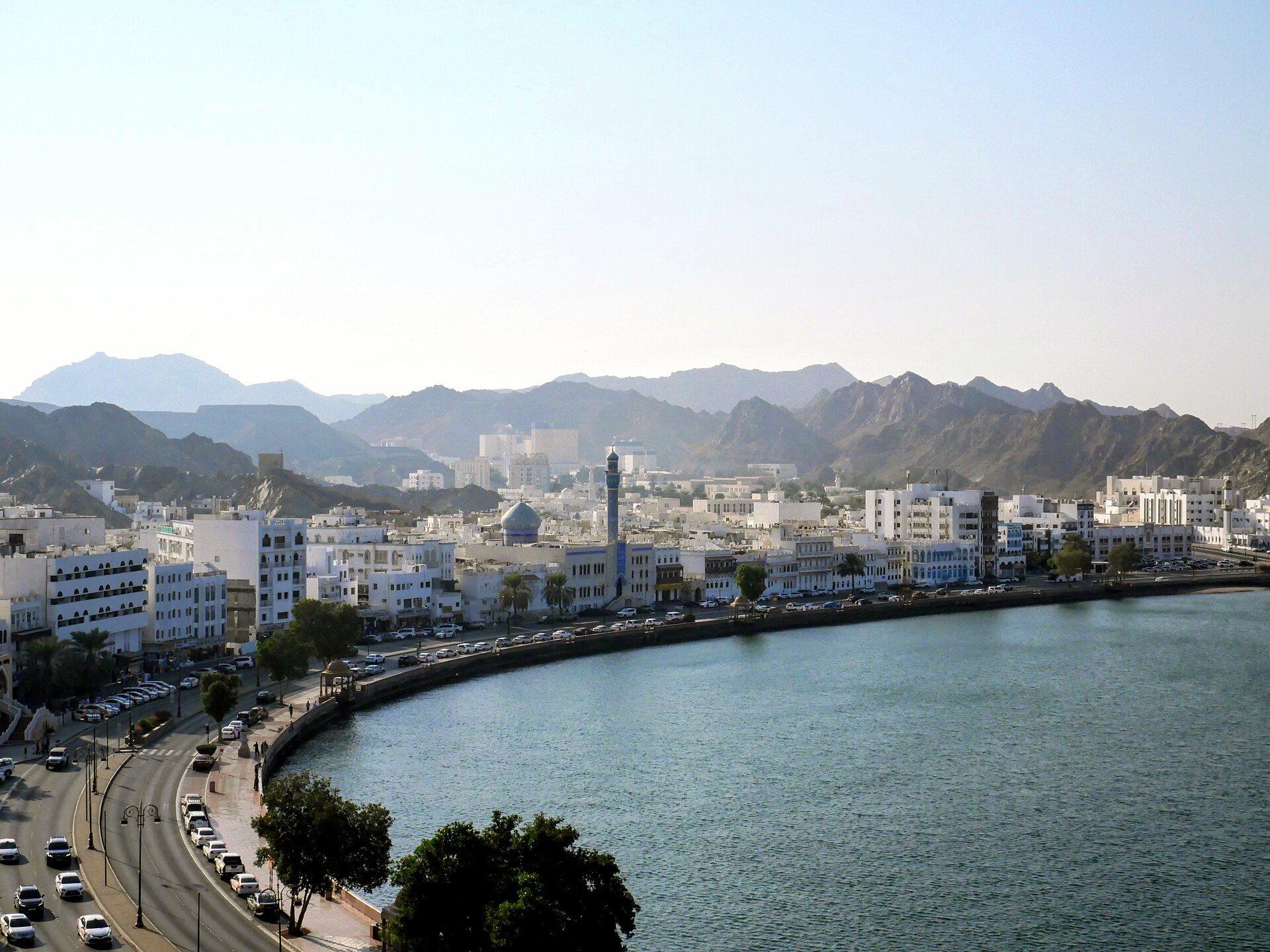
MUSCAT — The fourth round of indirect US-Iran talks ended without a deal here on May 11, after three hours of shuttle diplomacy — Omani Foreign Minister Badr al-Busaidi carrying proposals between Iranian Foreign Minister Abbas Araghchi and US envoy Steve Witkoff in separate rooms, a format unchanged since February. What the formal outcome language obscured is that Iran had spent the previous 24 hours running two parallel tracks: Araghchi calling Saudi Foreign Minister Prince Faisal bin Farhan on the day of talks — the fifth documented crisis call between the two since the war began — while Supreme Leader Mojtaba Khamenei briefed Khatam al-Anbiya commander Major General Ali Abdollahi on “new guiding measures to pursue military operations and firmly confront adversaries” the day before, according to Fars News, confirmed by Reuters.
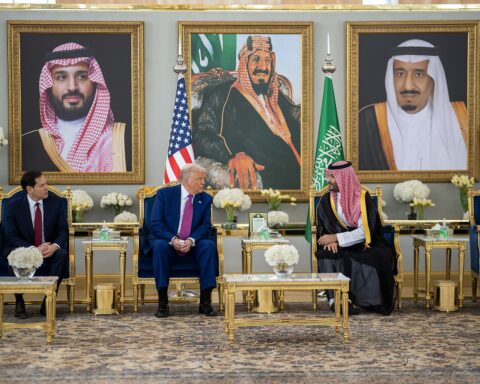
Abdollahi is the same officer President Masoud Pezeshkian publicly named on April 4 as the man who wrecked the Islamabad ceasefire — accused of “acting unilaterally and driving escalation through attacks on regional countries” whose policies “had destroyed any remaining chance” of a deal. Five days after Khamenei issued him new operational directives, Trump landed in Riyadh and told reporters Iran had “sort of agreed to the terms,” per PBS NewsHour — language suggesting that whatever Araghchi loaded into the Saudi diplomatic channel reached Washington in a form Tehran found tolerable.
Table of Contents
Three Hours in Muscat
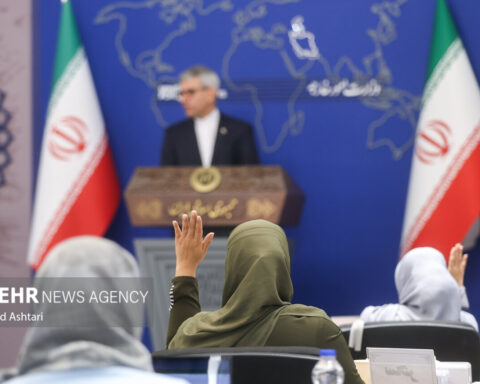
Round 4 was predominantly indirect, with al-Busaidi shuttling between delegations and only brief direct contact occurring at some point during the session, according to PBS NewsHour. The Omani foreign minister described the discussions as containing “useful and original ideas reflecting a shared wish to reach an honorable agreement,” while Iranian FM spokesperson Esmail Baghaei settled for “difficult but useful.” A US official said Washington was “encouraged by today’s outcome and look forward to our next meeting, which will happen in the near future,” though no date for a fifth round was confirmed.
The measured language came after the most volatile 24 hours of the entire diplomatic track. On May 10, Iran submitted a counteroffer demanding war reparations, full Hormuz sovereignty recognition, an end to all sanctions on Iranian oil, the lifting of the US naval blockade imposed on April 13, and the release of frozen Iranian assets, according to NBC News and CNBC — a package Washington would inevitably characterize as a demand for surrender. Trump obliged within hours, writing on Truth Social: “I have just read the response from Iran’s so-called ‘Representatives.’ I don’t like it — TOTALLY UNACCEPTABLE!” That both delegations showed up in Muscat the following morning, knowing the other’s formal position was non-negotiable on paper, tells you the real negotiation was happening somewhere else.
Brent crude had already priced in the rupture, climbing 4.92% to $105.76 per barrel on May 10, with WTI rising 4.96% to $100.30, per CNBC. With the FDD estimating the US naval blockade at $435 million per day in cost to Iran, the economic logic pointed toward concession — but the military command in Tehran was moving in the opposite direction.
What Did Khamenei Tell Abdollahi the Day Before?
On May 10 — the same day Trump rejected Iran’s counteroffer and oil markets lurched upward — Supreme Leader Mojtaba Khamenei met Major General Ali Abdollahi and issued what Fars News described as “new guiding measures to pursue military operations and firmly confront adversaries.” The report was confirmed by Reuters, Al Arabiya, and Iran International. PressTV ran a different headline entirely — “Top general tells Leader: Iranian Armed Forces ready to crush any aggression” — framing the encounter as Abdollahi reporting readiness upward rather than receiving orders from above, a distinction that matters when you understand who Abdollahi is and what he has already done.
The Middle East briefing 3,000+ readers start their day with.
One email. Every weekday morning. Free.
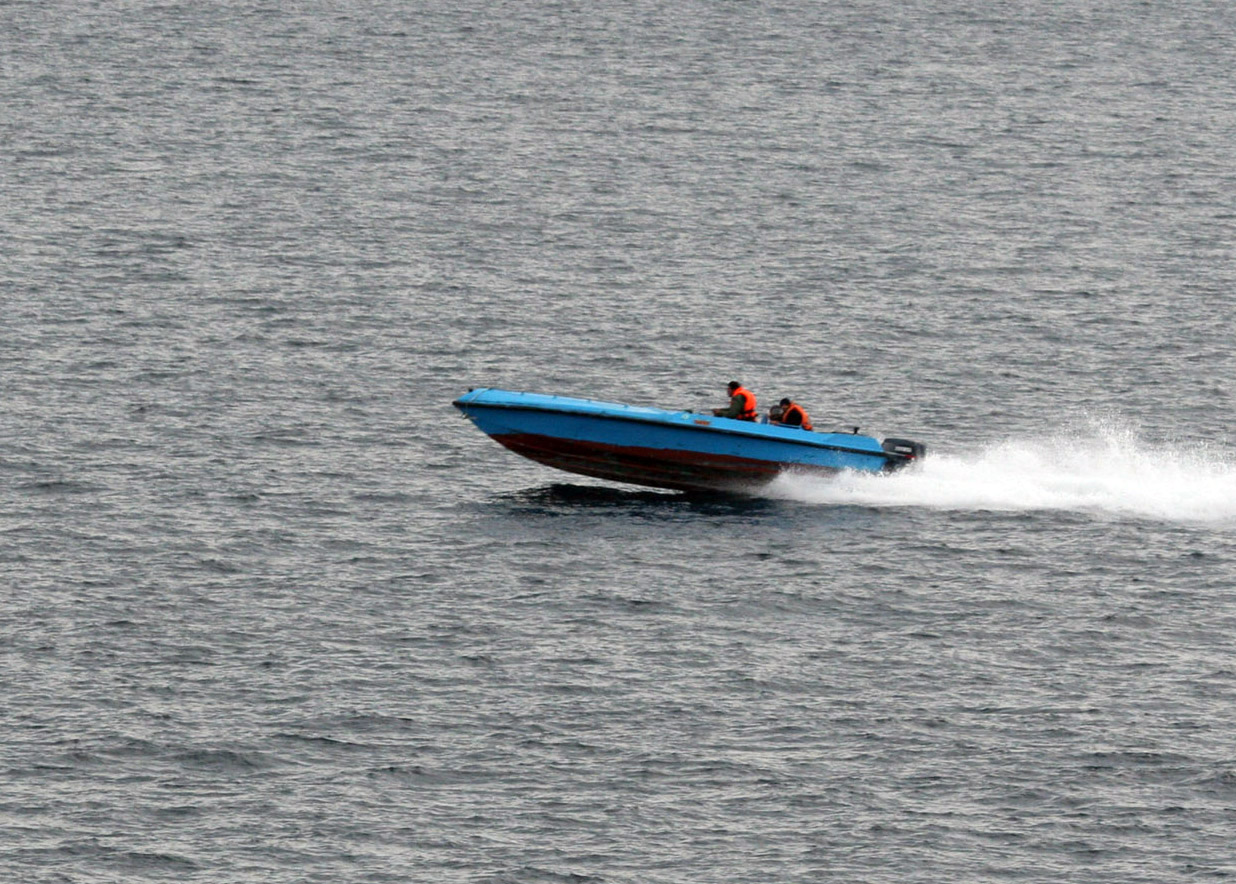
Abdollahi’s public statement after the briefing removed ambiguity about the nature of the meeting. “The armed forces are ready to confront any action by the American-Zionist enemies,” he said, per Fars News via Reuters. “In case of any error by the enemy, Iran’s response will be swift, severe, and decisive.” This is authorization language — a commander confirming receipt of expanded operational guidance, not a general volunteering his assessment.
The armed forces are ready to confront any action by the American-Zionist enemies. In case of any error by the enemy, Iran’s response will be swift, severe, and decisive.
Major General Ali Abdollahi, Khatam al-Anbiya commander, May 10, 2026 (Fars News via Reuters)
The timing matters because Abdollahi is not merely the commander of the IRGC’s operational headquarters — he is the specific officer Pezeshkian publicly accused in April, alongside SNSC secretary Ali Akbar Ahmadian Vahidi, of wrecking the Islamabad ceasefire. The ISW’s Critical Threats project described that accusation as “the most authoritative confirmation” that Iran’s authorization ceiling is “not a matter of political disagreement but of physical access” to military command. Abdollahi controls that access, and 36 days after the civilian president blamed him for sabotaging peace, the Supreme Leader gave him fresh operational directives on the eve of Round 4 — while Araghchi, for his part, was working a different channel entirely.
The Five Calls
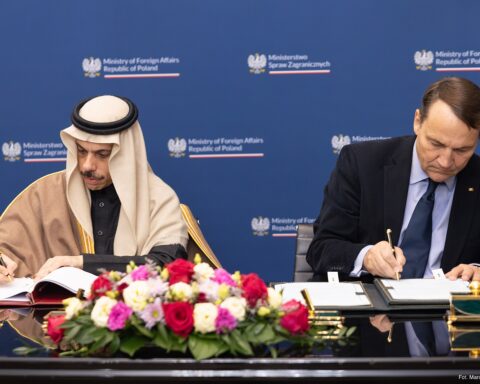
Araghchi’s May 11 call to Faisal was not a diplomatic courtesy — it was the fifth documented contact between the two foreign ministers during the crisis, and the pattern is consistent enough to function as infrastructure. The confirmed calls, drawn from Al Arabiya, Arab News, IRNA, and HouseOfSaud.com reporting: April 9, when Araghchi broke more than 40 days of post-war diplomatic silence between Tehran and Riyadh; April 13, the day CENTCOM imposed its naval blockade; April 27, when Araghchi briefed Faisal mid-flight from Muscat to Islamabad; May 6, following Araghchi’s return from Beijing; and May 11, Round 4 day.
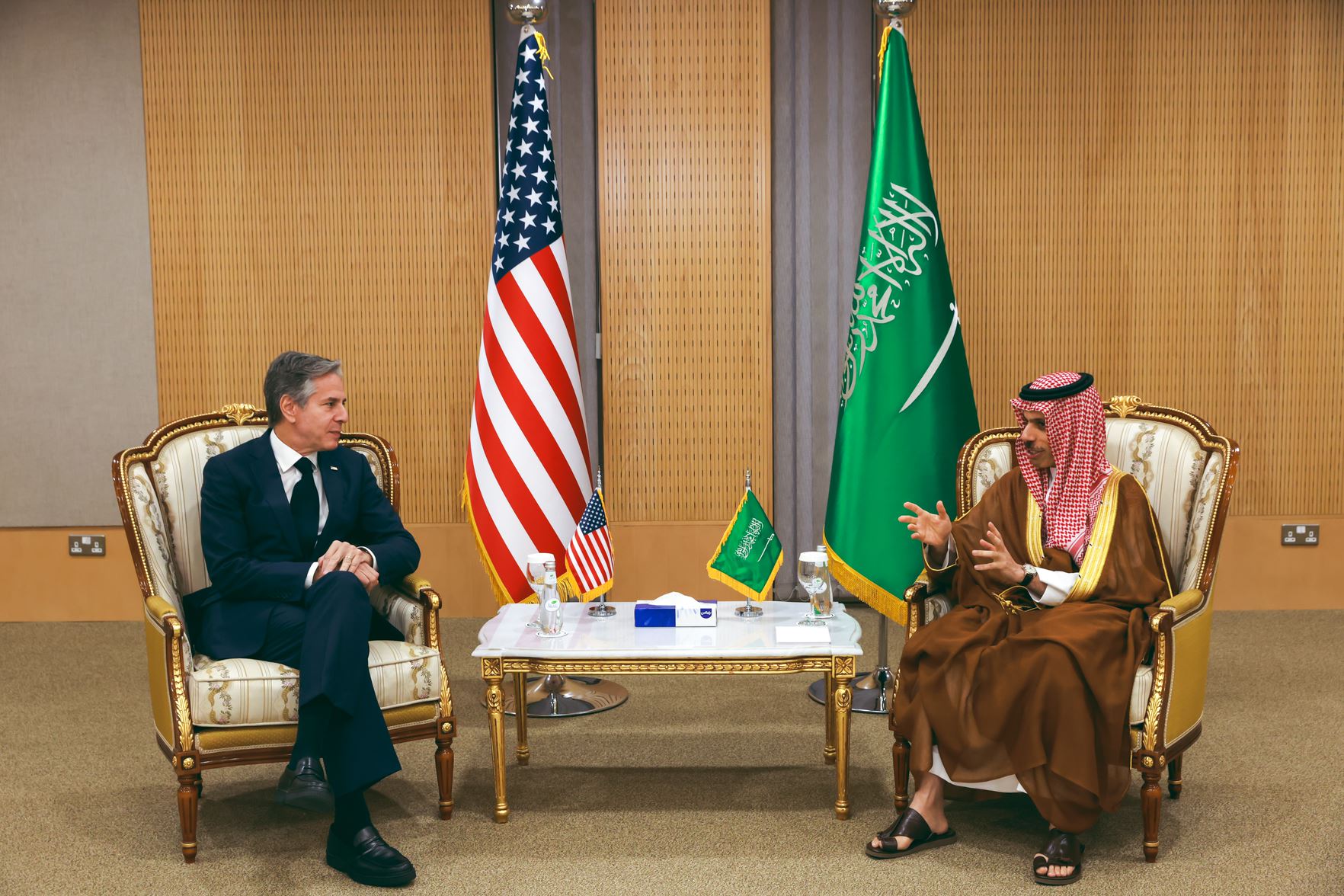
The April 27 call is the most revealing of the five. Araghchi provided Faisal with Iran’s two-stage diplomatic proposal before it was transmitted to Washington and before Axios published it — meaning Saudi Arabia held Iranian diplomatic intelligence that the other party to the negotiation did not yet possess. Faisal then attended the Antalya quadrilateral meeting that same afternoon carrying Iran’s framework into a multilateral setting. The operational logic is not subtle: Iran treats Riyadh as a channel into Trump’s inner circle, where Araghchi loads positions and MBS delivers them in person, with the credibility of an ally rather than a shuttle diplomat.
Every documented call has fallen at a moment of maximum diplomatic stress — a blockade announcement, a pre-negotiation positioning window, a post-summit scramble. The call log between Araghchi and Faisal now constitutes the entirety of the operational Iran-Saudi crisis channel, a diplomatic relationship whose five entries trace the pressure points of the war — and whose May 11 entry may prove the most consequential of all. Three days after Round 4, Araghchi reversed a decision to skip the BRICS foreign ministers meeting in New Delhi, making himself available for the first Iran-Gulf diplomatic proximity outside a US-mediated format since the war began.
Did the Saudi Relay Work?
Four days after Round 4 ended without agreement, Trump arrived in Riyadh and described Iran’s negotiating stance in terms that bore no resemblance to the “TOTALLY UNACCEPTABLE” dismissal he had posted on May 10. Iran, he told reporters on May 15, was “in very serious negotiations” for “long-term peace” and had “sort of agreed to the terms,” per PBS NewsHour and CNBC. Something shifted between May 10 and May 15, and the most obvious variable is what MBS conveyed to Trump after receiving Araghchi’s Round 4-day call — the relay converting Iranian positions into language a crown prince could present as progress.
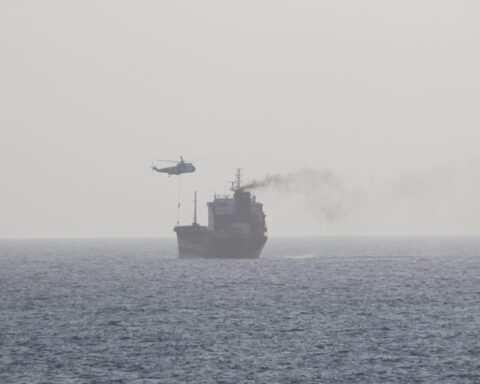
Saudi Arabia’s power within this architecture is concrete, not theoretical. Between May 5 and May 7, Riyadh denied the US use of Prince Sultan Airbase and Saudi airspace for Operation Project Freedom — the American Hormuz escort mission — forcing Trump to pause the operation entirely, according to NBC News and the Jerusalem Post. Access was restored only after a second Trump-MBS phone call. A country that can ground US military operations on 48 hours’ notice is not a passive conduit for other people’s messages; it has editorial control over what reaches Washington and in what form.
The harder question is whose interests the relay serves. When Araghchi gives Faisal diplomatic intelligence before Washington has it — as on April 27 — he grants MBS the power to shape how that intelligence is framed. When MBS then tells Trump that Iran has “sort of agreed,” he may be relaying Tehran’s flexibility accurately, or he may be packaging it in terms designed to keep the diplomatic track alive because a deal serves Saudi economic recovery even if it falls short of Washington’s maximalist demands on enrichment. Both explanations require the same mechanism — a Saudi crown prince editing Iranian diplomatic signals for an American audience — and both produce the same outcome: a president who landed in Riyadh talking about agreement rather than rejection, even as the substantive distance between Araghchi and Witkoff on enrichment had not moved at all.
The Enrichment Wall
The substantive gap Round 4 could not close is enrichment, and the formal positions are as far apart as two governments can manage without abandoning the table. Araghchi: “From our viewpoint, enrichment is a subject that should definitely continue and there is no room for compromise on that.” Witkoff: “An enrichment program can never exist in the state of Iran ever again.” The US opened with a demand for a 20-year moratorium; Iran countered with five years; the arithmetic midpoint is 12 to 15 years, though neither side has publicly signaled it would accept it.
From our viewpoint, enrichment is a subject that should definitely continue and there is no room for compromise on that.
Abbas Araghchi, Iranian Foreign Minister, Muscat, May 11, 2026 (PBS NewsHour)
Iran’s most creative play in Muscat was a proposed regional enrichment consortium — Arab-state co-ownership with US investment — offered as an alternative to the dismantlement Witkoff demands. Witkoff denied this was under formal discussion, but a senior Iranian official told Axios that “if the consortium operates within the territory of Iran, it may warrant consideration,” adding that any arrangement “based outside the borders of the country is certainly doomed to fail.” The territorial condition is the tell: Iran is offering shared monitoring, not surrender of capacity, and physical location ensures Iranian operational control regardless of what the ownership structure looks like on paper.
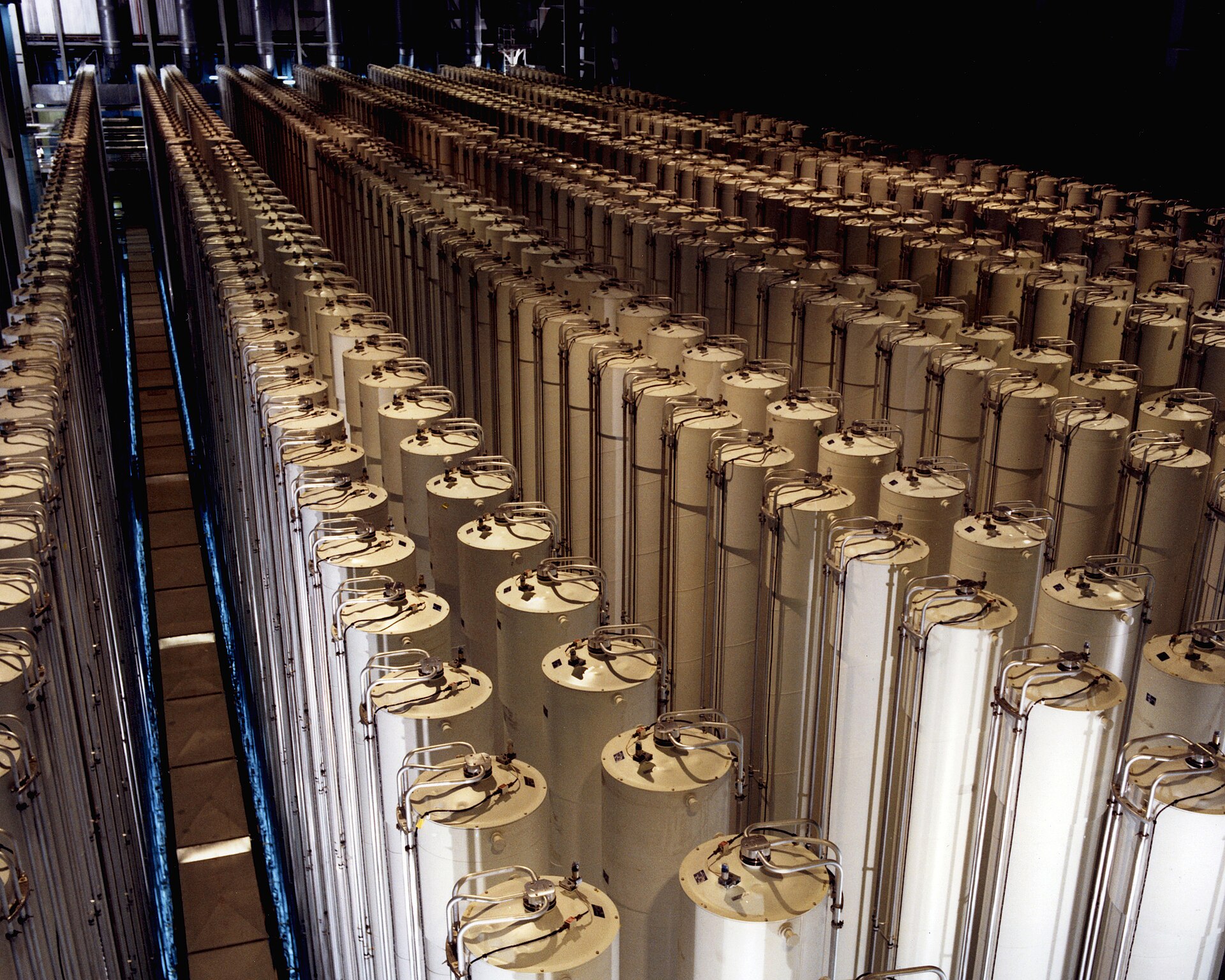
Behind the consortium proposal sits 440.9 kilograms of uranium enriched to 60% — the last verifiable figure, from June 2025, before IAEA access was terminated on February 28, 2026. At that enrichment level, Carnegie estimates breakout via IR-6 cascade at approximately 25 days per device. Jane Darby Menton warned in May that Iran retains the “ability and perhaps greater desire to reconstitute these capabilities, including in smaller, clandestine facilities,” while her colleague Mohammad Ayatollahi Tabaar identified the structural bind: “The administration cannot credibly offer meaningful sanctions relief, which in turn makes Iran less willing to show flexibility on enrichment.” Neither side can give the other what it needs most, and the consortium proposal — however inventive — does not resolve a deadlock whose roots are constitutional on the Iranian side and political on the American one, a deadlock four rounds of talks have not begun to untangle.
Rounds 1 Through 3
The Muscat channel opened on February 6 with Round 1 producing “a good start” and a commitment to further discussions. Round 2, in late February between Oman and Geneva, moved to expert-level contacts — Michael Anton for the US, Majid Takht-Ravanchi for Iran — with NPR reporting “claims of progress but few details.” Round 3, in late February or early March in Muscat, hit what Iran International described as an “impasse over the nuclear program and Strait of Hormuz,” after Witkoff initially offered a 3.67% enrichment cap and then walked it back to zero — a reversal Iran called “shifting positions and contradictory statements.”
The trajectory from Round 1 to Round 4 is a channel that has not converged. Outcome language has grown more specific — “a good start” to “claims of progress” to “impasse” to “difficult but useful” — without closing the gap on enrichment capacity or Hormuz transit authority, the two issues that have blocked every round. The IRGC’s maritime rules for the Strait and Iran’s enrichment floor have both hardened since February, while Washington’s demands have escalated from a temporary moratorium to a permanent ban.
Iran’s domestic contradictions have deepened alongside the diplomatic track. Iran International reported that Friday prayer leaders dismissed negotiations as futile during the same period Araghchi was presenting flexibility in Muscat, while nuclear chief Mohammad Eslami demanded all sanctions be lifted before any uranium dilution — a precondition requiring Washington to disarm diplomatically before Tehran concedes anything. The gap between Iran’s external and domestic positioning reflects the authorization ceiling ISW has documented, in which Vahidi holds “significantly more power within the regime and influence over the outcome of policy decisions compared to other leaders who are more supportive of negotiations,” per Critical Threats. Iran’s negotiating delegation and its military command answer to different authorities with different objectives — and on May 10, both authorities activated on the same day.
Frequently Asked Questions
What is the Khatam al-Anbiya Construction Headquarters?
Khatam al-Anbiya is the IRGC’s economic and operational military coordination arm, commanded by Major General Ali Abdollahi, who reports directly to the Supreme Leader under Article 110 of Iran’s constitution — not to the president. This chain of command is why Pezeshkian’s April 4 accusation that Abdollahi wrecked the ceasefire was simultaneously an admission that the civilian government lacks the constitutional authority to stop him from doing it again. Pakistan’s PM Munir visited Khatam al-Anbiya headquarters on April 16, effectively acknowledging that enforcement of any future deal depends on the cooperation of the same commander the elected government had publicly accused of sabotage.
Why does Iran communicate through Saudi Arabia rather than directly with Washington?
Iran and the United States have had no diplomatic relations since 1979 — Pakistan has served as Iran’s protecting power in the US since 1992. The Muscat channel runs through Omani shuttle mediation, but the Saudi relay offers something Oman cannot: direct personal access to Trump through MBS, a head of state Trump treats as a strategic partner rather than merely a mediator. When Araghchi calls Faisal, the message enters a chain that carries a credibility premium it would not have through the formal shuttle channel — and MBS has shown he is willing to use the access both ways, as the Prince Sultan Airbase denial demonstrated in early May.
What is the current status of IAEA monitoring in Iran?
IAEA access to Iranian nuclear facilities was terminated on February 28, 2026, meaning the 440.9 kg enriched to 60% — last verified June 2025 — represents the most recent reliable data point rather than a current measurement. Iran’s stockpile may have grown substantially in the intervening eleven months, and Carnegie’s Menton has warned of potential reconstitution “in smaller, clandestine facilities.” The E3 snap-back mechanism, triggered on August 28, 2025 and reimposed September 27-28, expired on October 18, 2025, and cannot be activated again — leaving the international community without its primary enforcement tool at the moment Iran’s enrichment capacity is least monitored.
Has a date been set for Round 5?
No Round 5 date was confirmed as of publication on May 11, with the US official’s statement that the next meeting “will happen in the near future” being the most specific timeline any party offered. Trump’s May 15 characterization of Iran having “sort of agreed to the terms” may indicate that backchannel progress has outpaced the formal Muscat track, but no official announcement of a fifth round has come from Oman, Iran, or the United States. IRNA stated that Iran’s position is that talks “should solely focus on efforts to end the war at this stage,” with nuclear constraints to be “discussed later” — sequencing that the US has so far refused to accept.