{“content”: “
n
n
n
n
n
TEHRAN u2014 Iran’s Islamic Revolutionary Guard Corps published new maritime control rules for the Strait of Hormuz and the inner Arabian Gulf on May 4-5, establishing a statutory transit authority with a more than 40-question vessel declaration form and fees reaching $2 million per ship, according to Iran International and CNN u2014 and it did so four full days before President Masoud Pezeshkian’s government was due to respond to Washington’s 14-point memorandum of understanding. The Persian Gulf Strait Authority, headquartered in Tehran and coordinated with the IRGC Navy, requires every commercial vessel to email completed declarations to info@PGSA.ir before entering the waterway, a system that Brigadier General Hossein Mohebbi, the IRGC spokesperson, said on May 4 would provide “security and safety” to compliant ships while warning he would “forcefully stop” those that defied the protocols, according to PressTV.
n
The PGSA is not a negotiating position to be traded away at the table u2014 it is an institution, with a founding date (May 5, 2026), a statutory charter, a published form, and an enforcement arm that answers to the Supreme Leader rather than the president. Under Article 110 of Iran’s constitution, Pezeshkian has no authority over the IRGC, which means the maritime rules operate on a separate track from whatever diplomatic text the civilian government accepts or rejects. Even if Iran signs the MOU in full, the IRGC’s transit requirements remain in force until the IRGC itself issues a separate, unannounced reversal u2014 a reversal that no one in Tehran’s civilian government has the constitutional power to order.
The Middle East briefing 3,000+ readers start their day with.
One email. Every weekday morning. Free.
n
n
Table of Contents
n
- n
- The Persian Gulf Strait Authority
- Why the Rules Followed Project Freedom’s Collapse
- Can Pezeshkian Override the IRGC’s Maritime Regime?
- What Happened When the MOU Deadline Expired?
- 1,550 Ships and the Compliance Trap
- Background
- Frequently Asked Questions
- n
n
n
n
n
n
n
n
n
n
n
The Persian Gulf Strait Authority
n
Ayatollah Khamenei issued the founding directive on April 30, ordering implementation of “new management” over the Strait of Hormuz and Persian Gulf, and warning that foreigners with “ominous plots” had “no place in the region except at the bottom of its waters,” according to PressTV. The IRGC Navy Command responded the following day with a statement u2014 reported by PressTV on May 1 u2014 that “equations and rules governing the new management of the Persian Gulf have been set, and will be enforced,” language that framed the coming rules not as proposals or options but as accomplished facts.
n
n
Foreigners with ominous plots had no place in the region except at the bottom of its waters.
n
Ayatollah Khamenei, April 30 directive establishing “new management” of the Persian Gulf u2014 PressTV
n
n
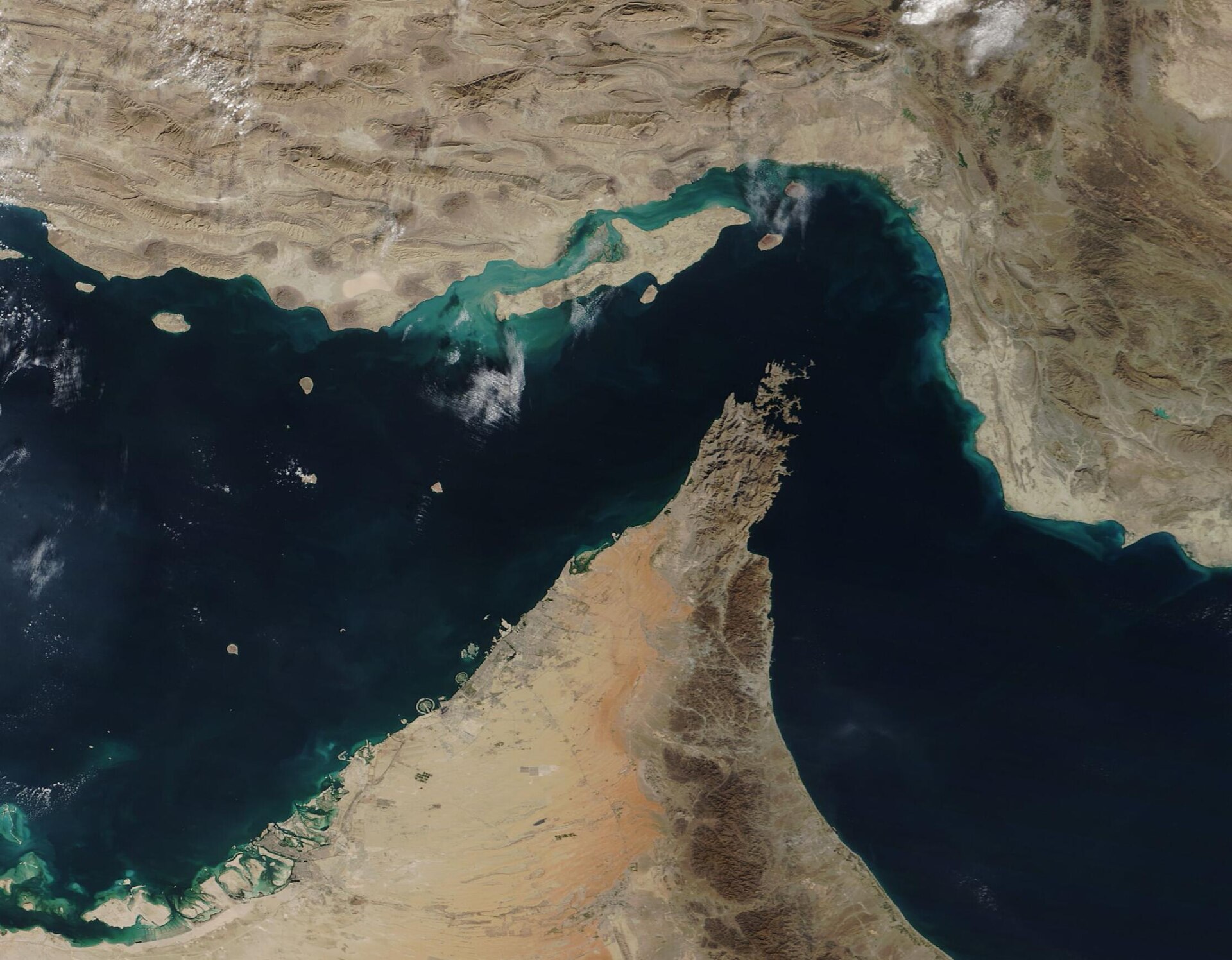
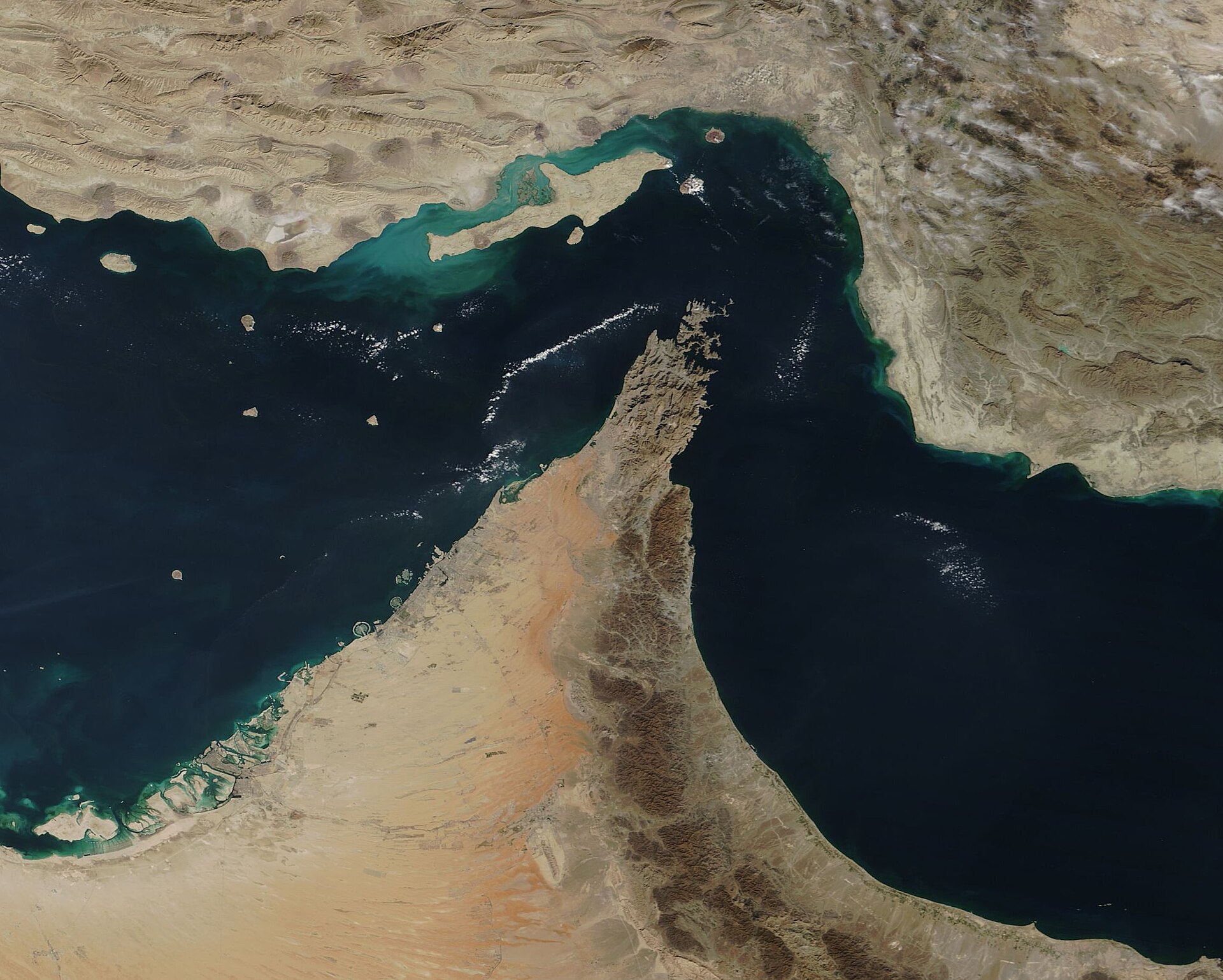
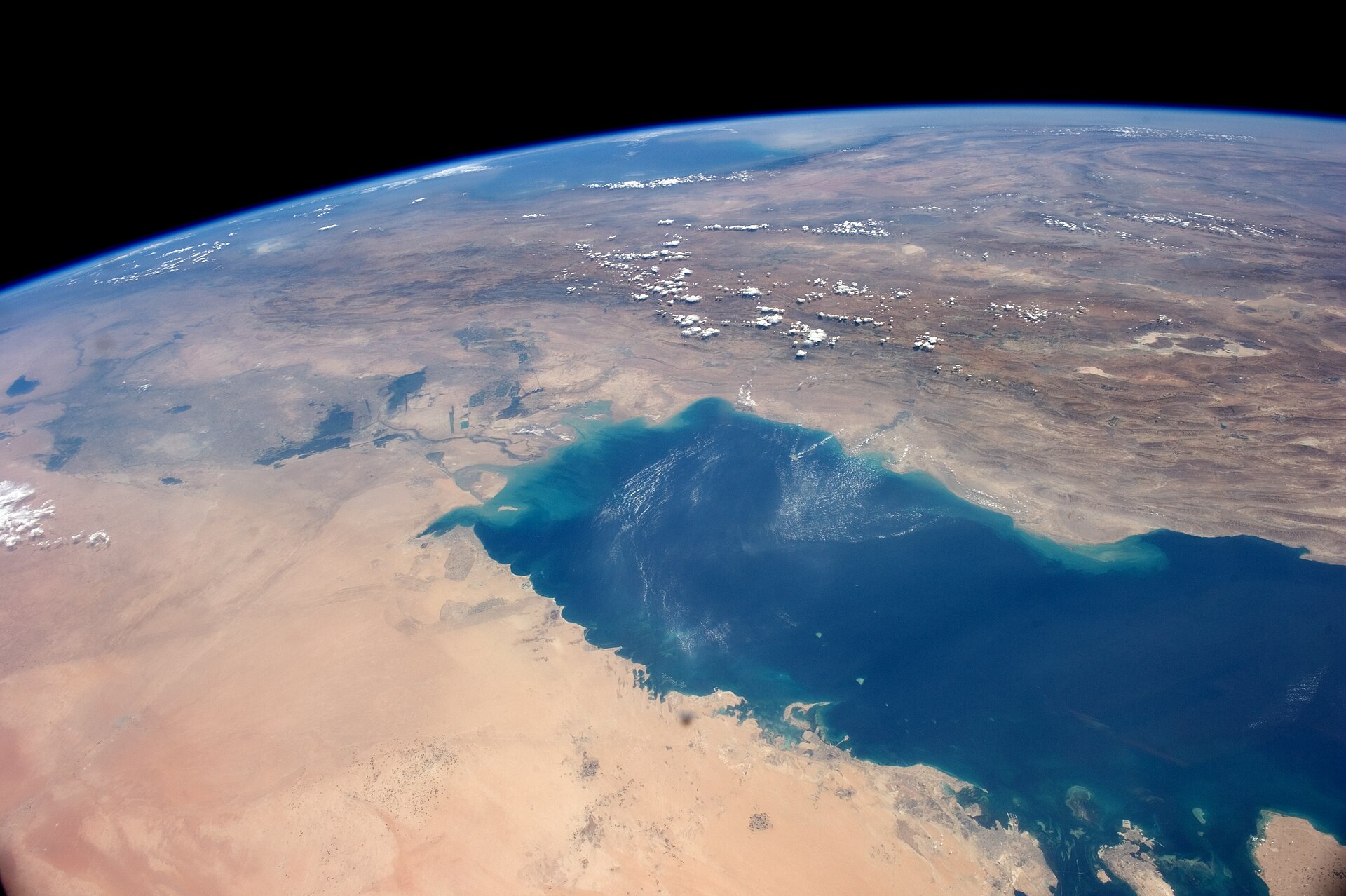
The PGSA launched on May 5, with geographic boundaries that extend well beyond the Strait itself into the inner Arabian Gulf. Tasnim News Agency reported the control zone’s limits as running from Mount Mobarak on Iran’s coast to south of Fujairah in the UAE along the southern boundary, and from the end of Qeshm Island to Umm Al Quwain in the UAE along the western boundary u2014 a zone that covers the approaches to UAE ports, the main tanker traffic lanes, and the routes toward Saudi and Kuwaiti terminals. The IRGC Navy Command stated it would control “nearly 2,000 kilometres of Iran’s coastline” under the new regime, according to PressTV and India Shipping News on May 5.
n
n
What vessels actually face when entering this zone is the PGSA’s “Vessel Information Declaration” u2014 a form comprising more than 40 questions that demand the vessel’s name, identification number, previous names, country of origin and destination, nationalities of registered owners and operators, crew nationalities, and full cargo details, according to Iran International and CNN on May 7. Fees for transit have reached $2 million per vessel, according to BirdsAdvice and multiple shipping sources, though the PGSA’s own published documents do not specify the fee schedule u2014 CNN reported on May 7 that Tehran has framed Hormuz as a “potential revenue stream” for post-war reconstruction. The PGSA warns in its published guidance that “complete and accurate information is essential” and that “any incorrect or incomplete information provided will be the sole responsibility of the applicant,” language that Iran International reported on May 7.
n
Richard Meade of Lloyd’s List Intelligence told Gulf News that the PGSA system appeared designed to “formalize” Iranian authority over transits u2014 not as a temporary wartime measure but as a durable institutional architecture with its own bureaucratic inertia. PressTV offered a different framing, describing the PGSA as providing “verifiable guidance” to protect shipping companies from “fraudulent transit document scams” and headlining the May 5 announcement as “Iran activates new Strait of Hormuz transit system as US blockade ends in failure.” The IRGC chose to formalize this authority on the day after the last American alternative for Hormuz transit security collapsed.
n
Why the Rules Followed Project Freedom’s Collapse
n
Trump’s “Project Freedom” initiative u2014 a plan to provide US military escorts through Hormuz u2014 was announced and then abandoned within approximately 48 hours, between May 2 and May 4, after Saudi Arabia denied basing access to the US military. The IRGC’s formal PGSA announcement came on May 5, the day after Project Freedom was abandoned, and PressTV’s coverage of the launch explicitly cited the escort initiative’s failure as context u2014 a framing that suggests the IRGC was monitoring the American plan and had its institutional move prepared for the moment the plan died.
n
What the sequence reveals is the IRGC filling a vacuum rather than responding to a provocation. While the US escort plan existed u2014 even for only 48 hours u2014 it represented an alternative theory of Hormuz transit security, one in which ships moved under American military protection without requiring Iranian permission or payment. When Project Freedom collapsed, the IRGC moved within 24 hours to ensure that no successor framework could emerge, establishing a bureaucratic and legal architecture that makes IRGC authorization the only available path through the waterway.
n
The IRGC’s own recent behavior offers a precedent. On April 9, the IRGC published a danger zone chart that redirected vessels into a narrow 5-nautical-mile channel between Qeshm and Larak islands, inside Iranian territorial waters u2014 an informal military version of what the PGSA now formalizes through administrative language, published forms, and email addresses. The April chart could be withdrawn overnight by a military announcement; the PGSA, as a statutory authority, requires institutional action to disband u2014 and the institution that would need to act is the one that built it.
n
Can Pezeshkian Override the IRGC’s Maritime Regime?
n
The PGSA was established under the Government of Iran u2014 technically a civilian statutory authority u2014 but it coordinates with the IRGC for enforcement, and the IRGC is the body that actually controls the water. Under Article 110 of Iran’s constitution, the Supreme Leader commands the armed forces, including the IRGC, and the president does not. Pezeshkian cannot order the IRGC Navy to stop enforcing the transit rules, cannot dismiss the PGSA’s IRGC coordination mandate, and cannot compel any change to the form or the fee structure u2014 even if the MOU he signs explicitly requires all of these things.
n
The problem deepens because the IRGC Navy has been operating without a named commander for 40 days. Admiral Ali Reza Tangsiri was killed on March 30, and no successor has been announced u2014 the May 4-5 rules were issued by “IRGC Navy Command” as an institutional entity rather than by any individual officer, according to CNN and KRDO on May 7. Major General Yadollah Javani, the IRGC’s political deputy, was named by PressTV and GlobalSecurity as involved in the May 5 transit system activation, but the power to reverse the rules sits with Khamenei under Article 110 u2014 and Khamenei’s April 30 directive ordering “new management” of the Gulf contains no sunset clause, no conditional language, and no reference to the MOU track.
n
Pezeshkian has already tested the limits of his authority over the IRGC and lost. He publicly accused IRGC commanders Vahidi and Abdollahi in April of wrecking the ceasefire negotiations, and went to Mojtaba Khamenei seeking authority to rein in the Guards u2014 only to emerge carrying their demands instead. The PGSA is the maritime expression of the same constitutional dynamic: whatever text the civilian government signs has no binding effect on the IRGC body that holds the waterway and enforces the transit rules, and on May 8, the day the MOU’s 48-hour response window expired, the IRGC demonstrated what that means in practice.
n
What Happened When the MOU Deadline Expired?
n
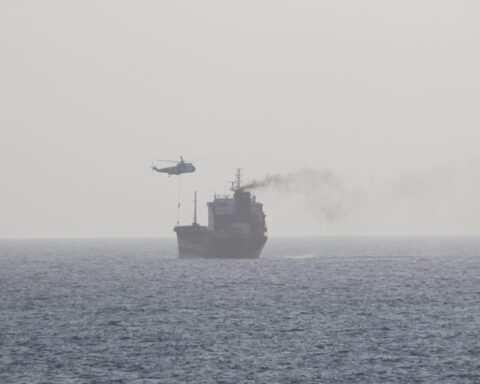
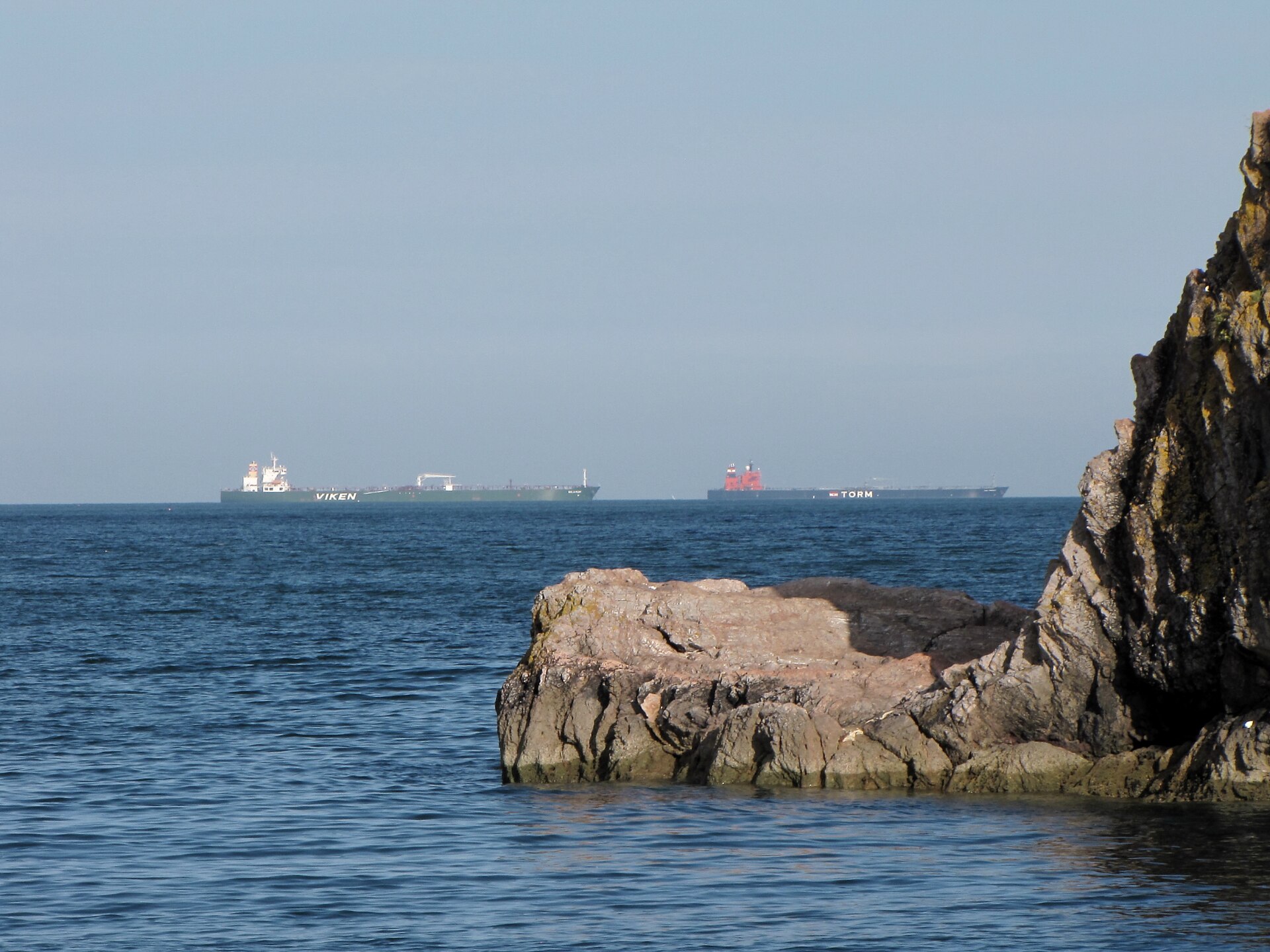
On May 8, the IRGC seized the tanker Ocean Koi u2014 a Barbados-registered vessel u2014 with the stated justification that the ship “attempted to disrupt oil exports and the interests of the Iranian nation,” according to Al Jazeera. On the same day, CENTCOM disabled two Iranian-flagged tankers attempting to access Iranian ports in the Gulf of Oman, with CENTCOM Commander Admiral Bradley Cooper stating that “US forces in the Middle East remain committed to full enforcement of the blockade of vessels entering or leaving Iran,” Al Jazeera reported. The three vessels caught in the crossfire on deadline day demonstrated that two separate enforcement regimes are now operating on the same water u2014 the PGSA providing the legal instrument for one, CENTCOM’s blockade providing the other.
n
Iran had not provided a definitive response to the 14-point MOU as of the morning of May 9. Iran “offered a new response on the draft peace deal” around May 1 that Trump found unsatisfactory, according to Axios, and as of May 6-7, Iranian officials were still “reviewing” the US one-page framework, the Times of Israel and Pakistan Today reported. Secretary of State Marco Rubio told CNBC that “we don’t have to have the actual agreement written in one day” but that “we have to have a diplomatic solution that is very clear on the topics they are willing to negotiate on and the extent of the concessions they are willing to make at the front end.”
n
n
The dual enforcement architecture u2014 Iran controlling one side of Hormuz, the US controlling the other u2014 has left shipowners facing what Lloyd’s List described as an impossible compliance choice: pay the IRGC and risk US sanctions, or defy the IRGC and risk vessel seizure. The sanctions trap embedded in the PGSA’s fee structure means that even a shipowner willing to comply with Iran’s rules would be violating OFAC guidance u2014 a bind that keeps 1,550 ships and 22,500 mariners locked in place between two enforcement regimes that cannot be satisfied simultaneously.
n
1,550 Ships and the Compliance Trap
n
Before the war, approximately 120 vessels transited Hormuz daily, according to BirdsAdvice and industry data. That number has fallen to approximately 40 per week u2014 roughly 5% of pre-war baseline u2014 a collapse that an Iranian parliament official confirmed to Iran International on May 7 by stating that approximately 1,550 ships were awaiting Tehran’s clearance under what the official called Iran’s “exclusive supervision” of the waterway. US Joint Chiefs Chairman General Dan Caine reported more than 22,500 mariners trapped in the Persian Gulf, according to the Washington Times on May 6.
n
The US Treasury’s position is unambiguous. OFAC guidance states that “payments to the government of Iran or the Islamic Revolutionary Guard Corps (IRGC), directly or indirectly, for safe passage through the Strait of Hormuz would not be authorized for US persons or entities, or for US-owned or -controlled foreign entities.” Any shipowner who pays the PGSA’s fees to avoid seizure faces sanctions exposure from Washington; any shipowner who refuses to pay faces the enforcement regime that seized the Ocean Koi on May 8 u2014 a regime now backed by a statutory authority, a published form, and an IRGC spokesperson who has publicly promised to “forcefully stop” non-compliant vessels. The compliance trap extends beyond commercial shipping: Iran’s parliamentary security commission has warned Bahrain that any support for a US-backed UNSC Hormuz resolution would result in the strait being closed to Bahraini vessels “forever” u2014 a threat that turns the PGSA into an instrument of selective diplomatic coercion, not just a commercial toll regime. The Azizi warning and Iran’s selective denial doctrine are examined in full here.
n
War risk insurance has moved from under 1% of cargo value before the war to 3-10% at current rates, according to the Washington Times and Lloyd’s u2014 a shift that adds hundreds of thousands of dollars to each transit, if a shipowner can find an insurer willing to write the policy at all. Hapag-Lloyd, one of the world’s largest container lines, has reported costs of approximately $60 million per week from the disruption, according to company filings and shipping analysts. Matt Wright of Kpler told Gulf News that even under long-term Iranian control, transits could reach only “40-50% of export capacity” u2014 a ceiling that assumes the PGSA system becomes functional and accepted, which the OFAC sanctions guidance makes unlikely for any vessel with American commercial exposure.
n
Sean Pribyl, a maritime attorney, told the Washington Times on May 6 that the strait “remains too dangerous” and that “we’re not anywhere near to returning to a free flow of traffic,” while Razat Gaurav, a supply chain analyst, told the same outlet that ocean shipping typically requires “weeks or months” for normalization even after conditions improve u2014 a timeline that assumes the conditions have improved, which the PGSA rules and the Ocean Koi seizure suggest they have not. For Saudi Arabia, the arithmetic is particularly bad: the Yanbu bypass pipeline on the Red Sea coast can handle 4 to 5.9 million barrels per day against pre-war Hormuz throughput of 7 to 7.5 million bpd, leaving a structural gap of 1.1 to 1.6 million barrels per day that only Hormuz reopening can close.
n
Dimitris Maniatis, CEO of the maritime consultancy Marisks, told Gulf News what the trapped ships represent in human terms, stripped of the geopolitical framing: “Mariners are not soldiers u2014 they are civilians piloting vessels managing global trade.” The PGSA’s declaration form, among its other demands, asks for every one of their nationalities.
n
Background
n
The PGSA represents the institutional endpoint of an escalation of Iranian maritime control that began with the IRGC’s April 9 danger zone chart u2014 which redirected vessels into a narrow channel inside Iranian territorial waters u2014 and continued through the double blockade described by Bloomberg on April 26, where the US controls the Arabian Sea approach and the IRGC controls the Gulf of Oman exit. Iran has not ratified the United Nations Convention on the Law of the Sea, and the Opinio Juris legal analysis noted on May 6 that while the San Remo Manual on naval warfare allows a belligerent bordering a strait to treat the area as a zone of military operations, it does not legally authorize transit fees or permit requirements u2014 a distinction that has not prevented the IRGC from imposing both.
n
The IRGC’s seizure of commercial vessels predates the current war: Iran seized two Greek tankers in May 2022 and held them until November of that year, and in November 2025 the IRGC boarded the M/V Talara by helicopter and steered it into Iranian waters, according to GlobalSecurity and the Times of India. The April 22 seizures of the MSC Francesca (11,660 TEU) and the Epaminondas (6,690 TEU) followed the same pattern but occurred under the new wartime control regime, and Iran’s diplomatic track through Beijing has operated entirely separately from the IRGC’s maritime enforcement u2014 a separation that Iranian state communications maintain deliberately, discussing the PGSA without any reference to the MOU and the MOU without any reference to the PGSA.
n
Frequently Asked Questions
n
Could the PGSA outlast the war?
n
Yes, and there is reason to believe it was designed to do exactly that. Unlike a naval blockade or military operation, which ceases when hostilities end, the PGSA is a statutory authority established under Iranian law with a headquarters in Tehran, published protocols, a founding charter, and an IRGC enforcement mandate. A ceasefire u2014 or even a comprehensive peace agreement u2014 does not automatically dissolve a statutory body. Disbanding the PGSA would require legislative action by the Iranian parliament or an executive directive from the Supreme Leader, and Khamenei’s April 30 directive establishing “new management” of the Gulf contains no sunset clause, no expiration date, and no language tying the PGSA’s existence to the continuation of hostilities.
n
What flag was the Ocean Koi flying, and does that affect the response?
n
The Ocean Koi was registered in Barbados, a flag of convenience that provides no naval protection obligations and minimal diplomatic weight. When a vessel flies a flag of convenience u2014 typically a small state with limited maritime enforcement capacity u2014 the flag state has neither the naval assets nor the political incentive to intervene in a seizure, retrieve the vessel, or impose costs on the seizing state. This contrasts with vessels flagged to NATO members or major maritime powers, where seizure could trigger diplomatic or military responses, and it helps explain why the IRGC has targeted convenience-flagged vessels rather than ships flying the flags of states with blue-water navies.
n
Has any country formally challenged the PGSA at the IMO?
n
No formal challenge to the PGSA’s authority had been filed at the International Maritime Organization as of May 9, 2026. Iran signed UNCLOS in 1982 but never ratified it, which complicates jurisdictional challenges u2014 Tehran can argue it is not bound by UNCLOS transit passage provisions, even though customary international law independently guarantees the right of transit passage through international straits. The IMO’s Maritime Safety Committee could issue a safety advisory regarding the PGSA’s requirements, but the organization’s advisories are non-binding and carry no enforcement mechanism. Gulf states have protested the PGSA bilaterally but have not, as of this writing, pursued a multilateral legal challenge through the IMO or the International Court of Justice.
n
What happens to the 1,550 ships already inside the Gulf?
n
The vessels and 22,500 mariners reported by General Caine were already inside the Persian Gulf when the PGSA rules took effect on May 5. These ships entered the waterway under the pre-war expectation of free transit passage guaranteed by international maritime custom, and now face retroactive application of requirements they did not consent to u2014 including the declaration form and fees of up to $2 million. To exit the Gulf, each vessel must transit the IRGC’s declared control zone, submit to the PGSA process, and navigate the OFAC sanctions guidance that prohibits the fee payments Iran requires u2014 a sequence of contradictory requirements that has, in practice, kept most of the trapped fleet at anchor.
The IRGC’s calculation that these rules can outlast any diplomatic framework is reinforced by a structural constraint Washington has not publicly acknowledged: Operation Epic Fury depleted roughly 80 percent of the US JASSM-ER stockpile and up to 80 percent of available THAAD interceptors, meaning the military pressure that might otherwise shorten the IRGC’s strategic patience is operating at a fraction of its pre-war capacity. That depletion timeline — and what it means for Iran’s willingness to wait out any deal — is examined in Trump Wants to Resume the Iran War. The Arsenal Says He Cannot.
The IRGC’s calculation that these rules can outlast any diplomatic framework is reinforced by a structural constraint Washington has not publicly acknowledged: Operation Epic Fury depleted roughly 80 percent of the US JASSM-ER stockpile and up to 80 percent of available THAAD interceptors, meaning the military pressure that might otherwise shorten the IRGC’s strategic patience is operating at a fraction of its pre-war capacity. That depletion timeline — and what it means for Iran’s willingness to wait out any deal — is examined in Trump Wants to Resume the Iran War. The Arsenal Says He Cannot.
n
How long has Iran typically held seized vessels?
n
Iran’s track record suggests seized vessels are held for months rather than days or weeks. Two Greek tankers seized in May 2022 during peacetime were not released until November of that year u2014 a six-month detention that ended only after a complex diplomatic negotiation involving Athens, Tehran, and third-party intermediaries. The wartime context and the PGSA’s institutional framing make the timeline for vessels seized under the new regime less predictable: Iran is likely to characterize seizures as regulatory enforcement of published transit rules rather than as hostage-taking, which would make release conditional on compliance with the PGSA’s requirements rather than on the kind of diplomatic bargaining that resolved previous incidents. The blockade’s impact on Iranian crude exports surfaced as a literal environmental event when a 71 sq km oil slick appeared off Kharg Island on May 6 amid disputed attribution. The PGSA’s enforcement calculus intersects with a parallel pressure point: the Rainbow Site tritium allegation surfaced on the MOU deadline morning, complicating any nuclear annex language that the PGSA’s maritime sovereignty framing was designed to shield. That institutional architecture explains why a senior Iranian adviser could publicly declare Hormuz “a capability equivalent to an atomic bomb” just days before the MOU deadline — the PGSA is not a bargaining position but the operational expression of a deterrence doctrine the IRGC has no mandate to trade away.
n”}