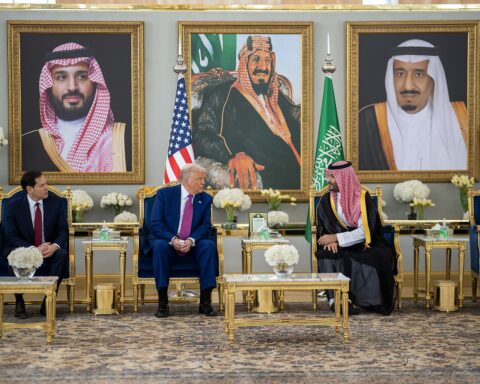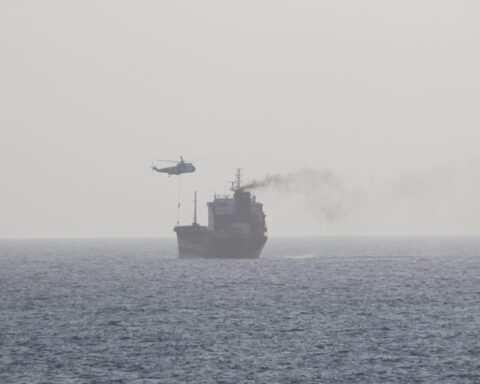

WASHINGTON — The National Security Council convenes Tuesday in the Situation Room with the chairman of the Joint Chiefs of Staff and the Secretary of Defense in the room, which means the options on the table are executable, not theoretical. They are not, however, executable by the United States alone. Every credible kinetic option short of a B-2 sortie from Diego Garcia runs through Prince Sultan Air Base or Saudi airspace, and on May 5 Saudi Arabia closed both for thirty-six hours and stopped an authorized US naval escort mission in the water.
The May 19 meeting is the first time in this conflict that an American war cabinet will sit down to decide on military escalation against Iran while knowing — with operational certainty rather than theoretical worry — that the foreign sovereign whose airspace and basing the strike plan requires has already exercised a veto once and may exercise it again. The seat map describes the decision authority. The map of the Arabian Peninsula describes who can deliver it.
Table of Contents
- What Does the Seat Map at Tuesday’s NSC Meeting Actually Signal?
- The Four Military Options Under Review
- Why Does the May 5 Basing Denial Change the Strategic Calculation?
- Saudi Arabia Is Already Conducting Its Own War, on Its Own Terms
- The $142 Billion That Bought Procurement, Not Hosting Rights
- What Can the United States Actually Do Without Saudi Basing?
- The Closest Historical Precedent Is Turkey in 2003
- Iran Is Threatening the Basing Infrastructure the NSC Options Depend On
- Decision Authority Without Operational Capacity
- Frequently Asked Questions
What Does the Seat Map at Tuesday’s NSC Meeting Actually Signal?
The Tuesday session in the Situation Room is convened by President Trump and attended by Vice President Vance, Secretary of State Rubio, Defense Secretary Hegseth, CJCS Gen. Dan Caine, DNI Ratcliffe, special envoy Witkoff, Treasury Secretary Bessent, and Chief of Staff Wiles, according to Axios reporting on May 17. The composition is the variable that matters. When the chairman of the Joint Chiefs and the Secretary of Defense are in a room with the Director of National Intelligence and the Treasury Secretary, the agenda is not whether to draft options. The agenda is which option to execute.
Caine has been “drafting military options for potentially striking Iran” since February, with service chiefs “quietly summoned directly to his office,” Axios first reported on February 23. CNN described Hegseth on March 31 as “the biggest proponent of a military campaign against Iran within the cabinet.” On approximately May 1, Caine and CENTCOM Commander Brad Cooper briefed Trump for forty-five minutes on a “short and powerful” strike package designed to break the negotiating deadlock. Those briefings have now graduated, in the space of seventeen days, from preparatory work to a war cabinet sitting in the Situation Room with three carrier strike groups in theater at peak.
Saturday’s preparatory meeting at Trump’s Virginia golf club produced the Truth Social post that should be read as the input rather than the output: “For Iran, the Clock is Ticking, and they better get moving, FAST, or there won’t be anything left of them. TIME IS OF THE ESSENCE!” Two US officials told Axios on May 17 that talks were deadlocked as of Sunday and gave the ceasefire a “one percent chance of surviving.” Tuesday is not where decisions begin. It is where the decisions that have been built over a quarter of a year are either taken or deferred.
Caine has been advising that a renewed campaign carries “significant risks including protracted conflict,” Axios reported in February, but has stated he will support and execute any decision the president makes. The phrase doing the work in that sentence is “execute.” The chairman of the Joint Chiefs cannot execute a strike on Iran from Iowa.
The Middle East briefing 3,000+ readers start their day with.
One email. Every weekday morning. Free.
The Four Military Options Under Review
Public reporting from Axios across April 30 and May 11 has identified the specific options being staffed inside the building. Each has a different relationship to Saudi territory, and that relationship is the structural fact the seat map cannot change.
| Option | Description | Saudi dependency | Status as of May 18 |
|---|---|---|---|
| Restart Project Freedom | Naval escort mission for Hormuz transits with 100+ aircraft and 20+ warships | High — air component runs from Prince Sultan Air Base | Paused after May 5 Saudi airspace closure; partially restored on Saudi terms |
| Resume strike campaign | Approximately 25% of original Iranian target set not yet struck | High — most strike packages route through Saudi airspace | Briefed; awaiting authorization |
| “Short and powerful” strike | CENTCOM-prepared infrastructure strike to break negotiating deadlock | High — designed around regional basing | Caine and Cooper briefed Trump approximately May 1 |
| Special forces HEU mission | Ground operation to secure Iran’s 440.9 kg enriched uranium stockpile | Variable — staging dependent | Trump has characterized as “highly risky” |
The HEU figure is not a target. It is a clock. Iran holds 440.9 kg of uranium enriched to 60% — the last verified figure before IAEA inspectors lost access in February 2026 — roughly twenty-five days from weapons-grade through an IR-6 cascade by IAEA and FDD estimates. Iranian parliament National Security and Foreign Policy Committee member Ebrahim Rezaei told Euronews on May 12 that Iran could push enrichment to 90% if Washington resumes strikes. Euronews noted in the same piece that Rezaei “is a hard-liner known for making extreme proclamations that do not necessarily reflect policy” — the qualification matters, and it is the kind of caveat Tuesday’s meeting cannot make. An analysis of how CENTCOM’s Hormuz seizure plan has already done diplomatic damage before NSC authorization — collapsing Saudi leverage and the ceasefire simultaneously — is examined in a companion analysis published May 18.
Why Does the May 5 Basing Denial Change the Strategic Calculation?
On approximately May 4-5, 2026, Saudi Arabia suspended US military access to Prince Sultan Air Base and closed national airspace, forcing the pause of Project Freedom. NBC News, the Times of Israel, and Defense News all reported the suspension in the first week of May. The trigger, according to NBC and Defense News reporting, was that MBS was angry Trump had announced the operation on social media without advance coordination. The duration was approximately thirty-six hours. The mechanism was sovereign control over airspace and ramp space.
This is the first confirmed instance in the current conflict of a treaty-adjacent partner exercising a sovereign veto over a US-authorized military operation in real time, while simultaneously receiving $142 billion in US defense equipment and hosting US troops on its territory. Saudi Arabia grounded American air power, and Washington accepted it — a sentence that fifteen years ago would have been categorically wrong and that on May 5 became a description of an after-action report.
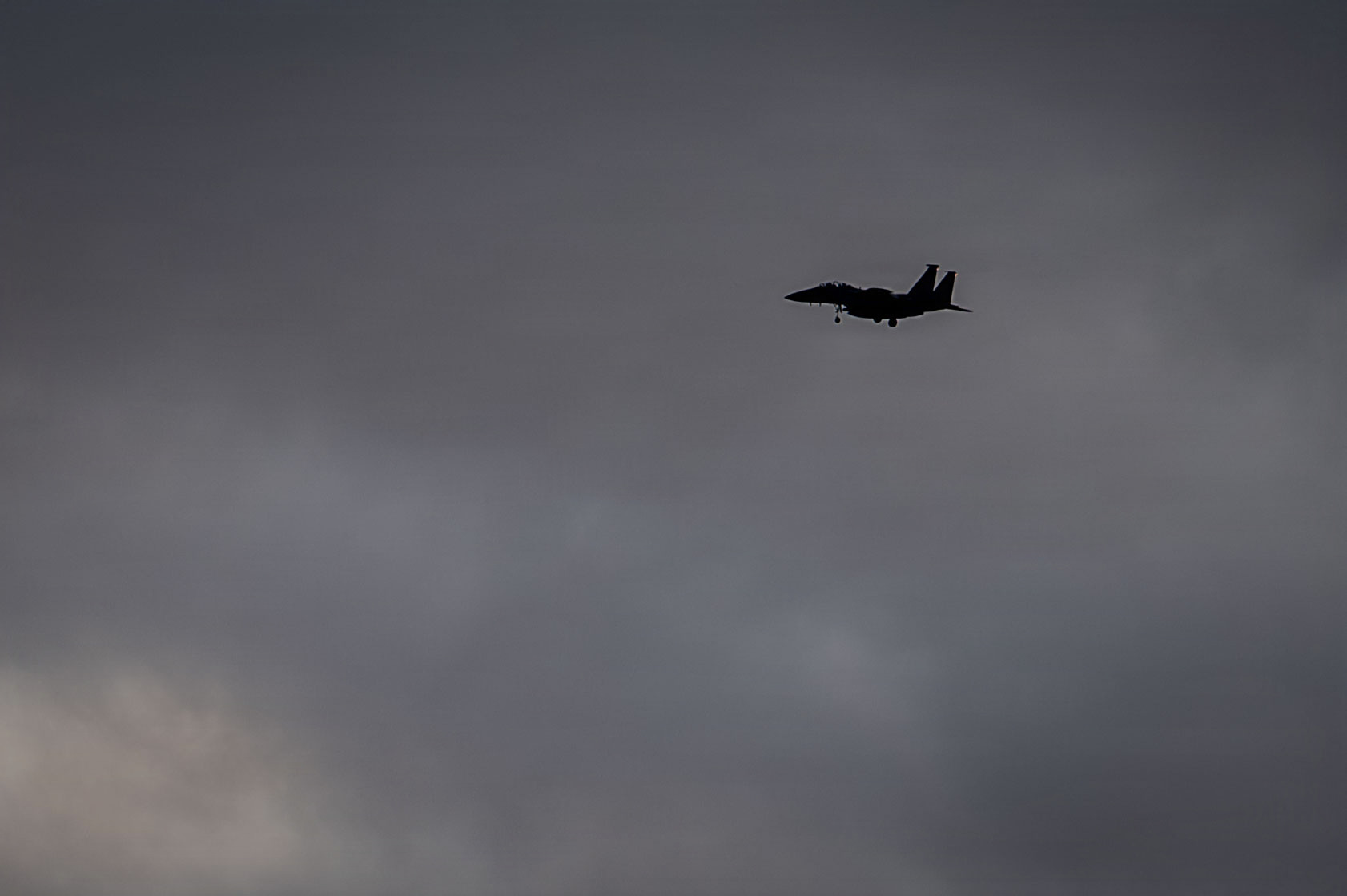
Iran International, citing Wall Street Journal reporting on May 7, confirmed that access was eventually restored. The reversal happened on Saudi terms and on a Saudi timeline. The lesson Riyadh delivered was not that it would refuse cooperation; the lesson was that cooperation is conditional and revocable, and that the trigger threshold is whatever MBS decides it is on any given afternoon. Prince Sultan Air Base and the price of American access describes the structural mechanism in detail. Tuesday’s NSC meeting takes place with that precedent thirteen days old.
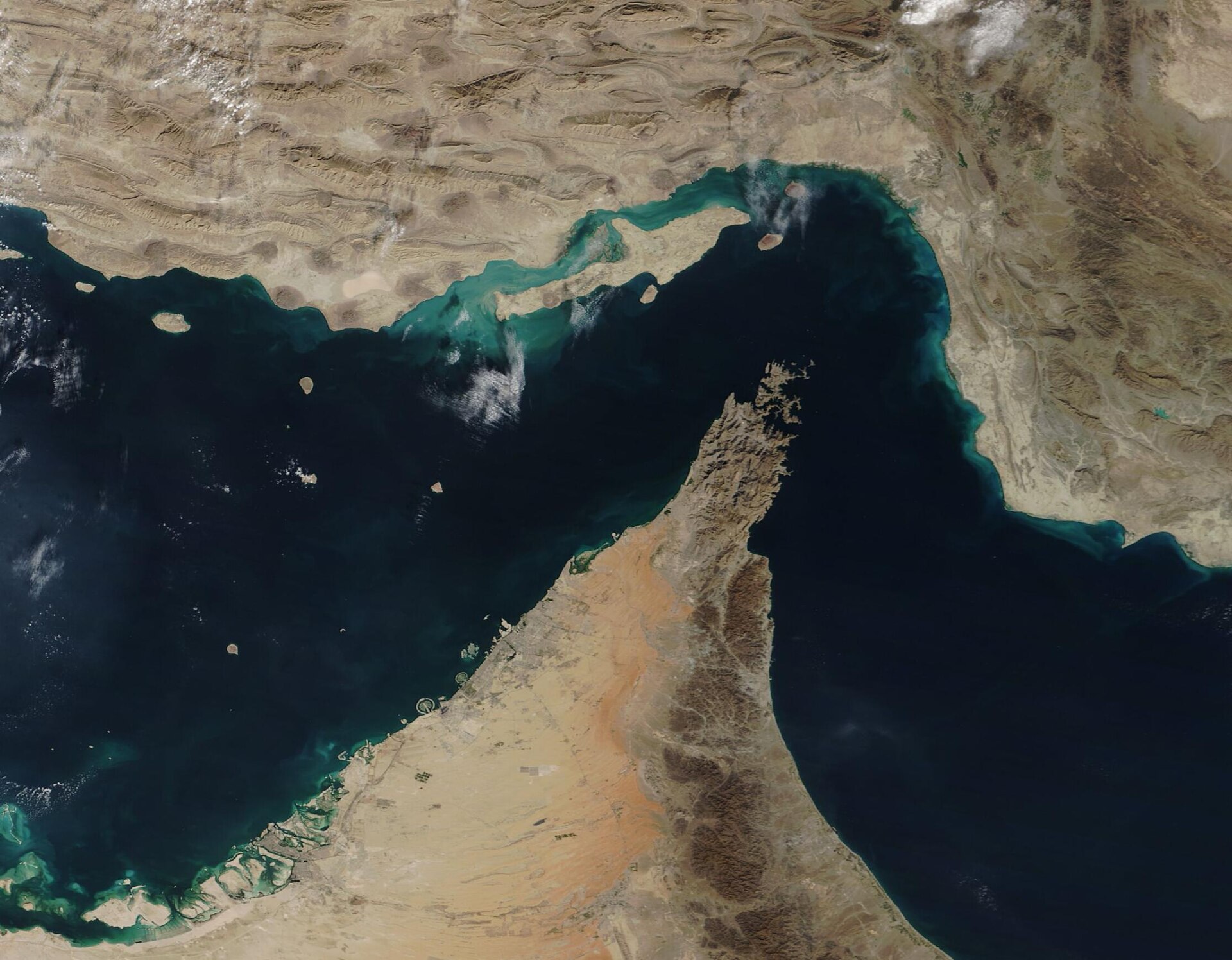
The F-15E combat radius from Prince Sultan to Natanz is roughly 1,400 km, well within range with external tanks. The combat radius from Prince Sultan to Fordow is roughly 1,300 km. Without Saudi airspace, a strike package launched from any other Gulf base — Al Udeid in Qatar, Al Dhafra in the UAE, Ali Al Salem in Kuwait — either requires Saudi overflight or extends combat radius beyond practical refueling support for sustained operations. The geometry is not editorial. It is the geometry.
Saudi Arabia Is Already Conducting Its Own War, on Its Own Terms
Reuters reported on May 12 that Saudi Arabia conducted covert air strikes against Iranian targets in late March 2026, informing Tehran in advance and using the strikes as a bilateral bargaining tool rather than as coalition support for Washington. Iranian attacks on Saudi territory dropped 76% in the week that followed, per the same reporting. Bloomberg first surfaced elements of the bilateral track on March 6.
Hussain Abdul-Hussain, a research fellow at the Foundation for Defense of Democracies, characterized the Saudi posture on May 12 as maintaining “near-daily backchannel contact with Tehran” while rebuffing Israeli pressure. MBS rejected MBZ’s call for a joint strike on Iran and then struck alone — the pattern is consistent.
The most precise public statement of the Saudi position came in MBS’s communication to Iranian President Masoud Pezeshkian: Saudi territory would not be used to attack Iran. This was delivered, per Reuters, alongside the late-March covert strikes — Riyadh telling Tehran what it had done and what it would not allow, in the same channel, on the same day. The covert strike with advance notice is not a hostile act in the conventional sense. It is a calibration tool.
Our negotiations are moving forward under the supervision of officials and with the approval of the leadership.
Mojtaba Khamenei representative, May 17, 2026
The Mojtaba representative’s statement on May 17 is — if genuine — the first public signal in more than forty-four days that Khamenei remains personally engaged in the negotiating track. Mojtaba met Iran’s war commander and the ceasefire died in that room; whether the May 17 statement reverses that reading is one of the questions the Tuesday meeting must answer with intelligence rather than inference. The Iranian state media response to the US proposal — that it constituted “Iran’s surrender to Trump’s excessive demands” — does not suggest a side preparing concessions.
The $142 Billion That Bought Procurement, Not Hosting Rights
The May 13, 2025 US-Saudi arms package — the largest defense sales agreement in American history at $142 billion — created zero legal US obligation to defend Saudi Arabia and zero Saudi obligation to host US military operations against third parties. The Major Non-NATO Ally designation governs procurement access and interoperability. It is not an Article 5-equivalent mutual defense framework. There is no provision in the arrangement that says Riyadh must open Prince Sultan Air Base to a strike on Iran in exchange for F-35 deliveries.
This is the gap Tuesday’s meeting cannot legislate away. The NSC can authorize. The NSC can resource. The NSC cannot compel a Saudi airspace clearance, and the May 5 episode demonstrated that the airspace clearance is the binding constraint. A new complication entered the corridor calculus this week: Iraq’s Popular Mobilization Forces deployed across 52,279 square kilometres of western Anbar in an operation called “Imposing Sovereignty,” reaching the Arar border crossing — the same corridor any ground logistics track from Jordan to Saudi Arabia would have to cross.
| Capacity | US controls | Saudi Arabia controls |
|---|---|---|
| Authorization to strike | Yes — NSC, presidential authority | No |
| Carrier-based airpower | Yes — 2 CSGs in theater | No |
| B-2 / GBU-57 against hardened sites | Yes — operable from Diego Garcia | No |
| F-15E / F-35 sustained strike sorties | Limited without Saudi basing | Effective veto via airspace |
| Prince Sultan Air Base access | Conditional and revocable | Sovereign |
| Saudi national airspace overflight | Conditional and revocable | Sovereign |
| Refueling tanker basing in-theater | Depends on Saudi/UAE/Qatar access | Partial veto via geography |
| Long-range standoff weapons | Yes — Tomahawk from sea | No |
The architecture works for a narrow strike from Diego Garcia and from the carriers. It does not work for a sustained air campaign of the kind any of the four Axios-reported options would require to be operationally meaningful.
What Can the United States Actually Do Without Saudi Basing?
Diego Garcia is, in the US military’s own characterization, “an all but indispensable platform” for Middle East operations. The B-2 Spirit’s 6,000 nautical mile unrefueled range — extending past 10,000 nautical miles with a single aerial refueling — means a strike from Diego Garcia can reach any Iranian target. The B-2 is also the only US aircraft that can deliver the GBU-57 Massive Ordnance Penetrator against hardened sites like Fordow. As of May 11, two carrier strike groups remained in theater — USS Abraham Lincoln and USS George H.W. Bush — with twenty warships between them, per The War Zone.
The Ford CSG transited the Suez Canal northbound on May 1 heading home after a record 314-day deployment. Peak deployment in theater hit three CSGs, 200+ aircraft, and 15,000 personnel. The remaining force can support a short, sharp strike. It cannot support a sustained campaign without the regional land-based airpower that lives at Prince Sultan, Al Dhafra, and Al Udeid.
And Diego Garcia is no longer immune. On March 20-21, 2026, Iran attempted to strike Diego Garcia with Khorramshahr-4 ICBMs, range approximately 4,000 km. Neither missile struck. Al Jazeera, Army Recognition, Bloomberg, and military.com all reported the attempt within forty-eight hours. The strike failed. The targeting succeeded. A platform once described as the indispensable rear arsenal is now within a demonstrated, if unreliable, Iranian strike radius. Diego Garcia is approximately 3,900 km from the Iranian Strait coast. The Khorramshahr-4 demonstrated 4,000 km in attempted strike geometry. The margin is one hundred kilometers.
The Closest Historical Precedent Is Turkey in 2003
On March 1, 2003, the Turkish parliament voted 264-251 against a resolution authorizing the deployment of 62,000 US troops, 255 warplanes, and 65 helicopters to open the northern front against Iraq. The coalition was forced to abandon simultaneous north-south attack planning. The 4th Infantry Division had to be rerouted through the Persian Gulf, arriving in theater weeks after the original H-hour. The Atlantic Council has subsequently noted that “Turkish objections to US requests is nothing new” and that Incirlik access for kinetic operations “is a historical outlier.”
The Turkish case is the closest precedent and the imperfect one. Turkey rejected access through a parliamentary vote — a constitutional process visible to allies and adversaries weeks in advance. Saudi Arabia’s May 5 denial happened in approximately thirty-six hours, in private, with no parliamentary procedure, with no advance signaling beyond MBS’s anger over a Truth Social post. The mechanism is faster, more deniable, and more reversible. It is also more usable as bilateral pressure in the same week that pressure is needed.
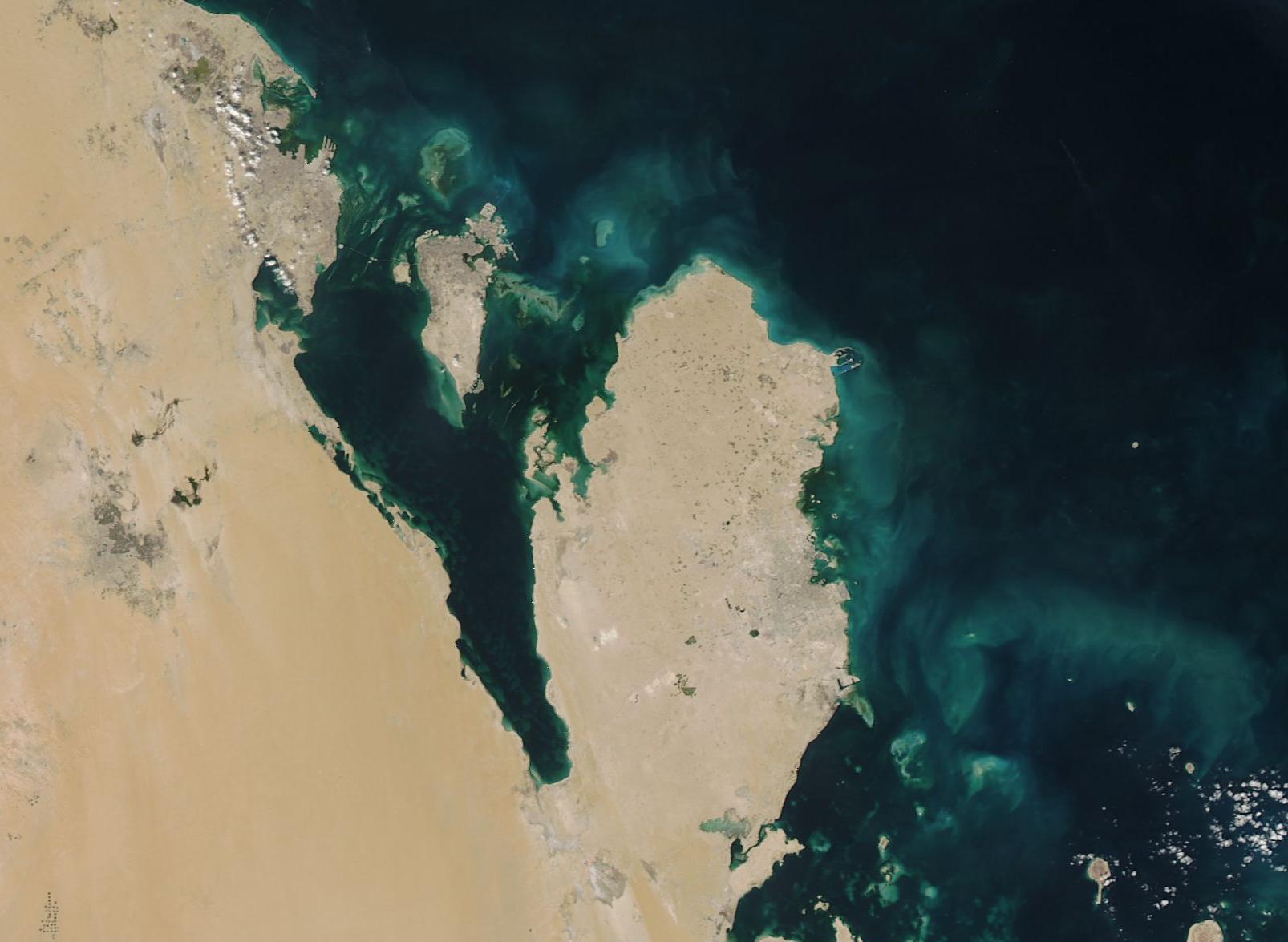
Operation Sledgehammer is a war powers clock-reset, and the Saudi veto is what decides whether it runs — the same structural logic applies to whatever decision exits the Situation Room Tuesday. The decision can be made in Washington. The execution depends on a sovereign in Riyadh who has demonstrated, thirteen days ago, that he will exercise it.
Iran Is Threatening the Basing Infrastructure the NSC Options Depend On
IRGC spokesperson Ebrahim Zolfaghari told Iranian state media that “in the near future, all US military bases in the southern Persian Gulf will be deactivated.” On May 17 — the same day Trump convened the Virginia preparatory session — Zolfaghari added: “In the past 24 hours, the IRGC Navy did not allow any vessel to pass through the Strait of Hormuz.” The closure claim has not been independently verified at the scale Zolfaghari described, but the policy direction is consistent with the architecture CENTCOM’s own missile inventory assessments have flagged for months: Iran retained substantially more strike capacity than the US public assessment claimed.
Separate intelligence assessments confirm the operational picture: Iran’s Hormuz missile reconstitution during the ceasefire has reached 30 of 33 sites — meaning the strike infrastructure the NSC must assess before voting Tuesday is within 9% of its pre-war operational posture.
The Iranian foreign ministry position, per NBC News on May 18, is that Tehran sought a complete end to the war, formal US recognition of Iranian sovereignty over the Strait of Hormuz, and full sanctions relief — Hormuz sovereignty as precondition rather than Phase 2 item. The US position requires a 20-year enrichment moratorium against Iran’s offered 5-year window. The negotiating gap is fifteen years and one chokepoint.
Iran’s two governments gave two answers to Trump’s nuclear terms; the May 17 Mojtaba statement may be evidence the leadership has now imposed a single answer, or evidence that the Pezeshkian-elected track and the Khamenei-clerical track are simply running parallel and producing contradictory signals on the same day. The NSC will have to discriminate between those two readings with intelligence Tuesday’s meeting may not yet possess.
The Zolfaghari “deactivation” rhetoric and the Hormuz transit-zero claim are paired statements. They function as a single message: Iran is asserting that the regional basing architecture US options depend on is itself targetable. The Khorramshahr-4 attempt on Diego Garcia in March established the strike envelope. The May 17 IRGC statement establishes the policy intent. Whether the capability matches the intent is the intelligence question Ratcliffe will brief on Tuesday.
Saudi territory has absorbed more direct kinetic damage in this conflict than US territory has — Ras Tanura struck, the King Fahd Causeway closed under ballistic missile threat, SAMREF Yanbu hit, the Khurais 300,000 bpd offline as of mid-April. Riyadh is not running a backchannel with Tehran because it is undecided about Iran. It is running a backchannel because its losses already exceed the threshold at which assuming additional American risk would be defensible to a domestic audience. The May 12 FDD characterization of Saudi posture — appease Iran, rebuff Israel — describes a kingdom that has run the cost-benefit on co-belligerence and arrived at a conclusion Washington has not yet metabolized.
Decision Authority Without Operational Capacity
The American war cabinet that meets Tuesday afternoon will sit in a room with no analogue in modern US military history. NSC sessions during Operation Desert Storm proceeded with a Saudi government that had requested the deployment. Sessions during the 2003 Iraq invasion proceeded with a Turkish parliamentary “no” that had been delivered three weeks earlier, with planners already pivoting. Sessions during the 2011 Libya operation proceeded with Italian, British, and French bases that had been pre-cleared.
There is no precedent for an NSC session deciding on a strike on Iran with Saudi Arabia holding the launch position, with a thirteen-day-old precedent of Saudi airspace closure stopping an authorized US operation in the water, and with the recipient sovereign of $142 billion in US arms simultaneously running a bilateral de-escalation channel with the target. Saudi Arabia’s reverse co-belligerent trap is the operational consequence: the more the US assumes Riyadh will cooperate because of the arms relationship, the more Riyadh demonstrates that the arms relationship does not constrain its sovereign judgment.
What this means for the room: Caine and Hegseth will brief options that are kinetically possible, and Witkoff will brief a negotiating channel that two US officials describe as having a one-percent survival probability. The choice is real. The seat map signals it is real. And the structural gap between an authorized order and an executed strike runs through a runway in Al Kharj that has been closed once already this month.
The most consequential conversation in Tuesday’s meeting may not be the one between Caine and Hegseth on strike packages. It may be the one between Rubio and Witkoff on whether Riyadh has been told what will be requested of it, and what its answer is expected to be. That conversation has not been reported. The May 5 episode suggests it had not happened before Project Freedom was announced. The May 17 Truth Social post suggests it may not have happened before Saturday’s meeting either.
For Iran, the Clock is Ticking, and they better get moving, FAST, or there won’t be anything left of them. TIME IS OF THE ESSENCE!
President Donald Trump, Truth Social, May 17, 2026
The Truth Social post is addressed to Tehran. The operational message it generates is addressed to Riyadh. MBS will read the May 17 post the same way he read the Project Freedom announcement that triggered the May 5 closure. Tuesday’s meeting will produce a decision. The hours that follow will reveal whether the decision can be delivered. MBS’s decision to publicly request the delay — named on Truth Social by Trump himself — means Saudi Arabia now carries a public share of that outcome regardless of what the Situation Room decides.
Frequently Asked Questions
What time is the May 19 NSC Situation Room meeting on Iran?
Axios reported May 17 that Trump convened his national security team Saturday at his Virginia golf club, with a formal NSC Situation Room session scheduled for Tuesday afternoon. Specific timing has not been publicly confirmed, consistent with standard NSC protocol for sessions discussing live military options. The Saturday session lasted long enough for Trump to issue his Truth Social warning immediately after attendees departed.
How long would a B-2 strike from Diego Garcia take to reach Iranian targets?
The flight from Diego Garcia to the Iranian coast is approximately 3,900 km. At B-2 cruise speed of roughly 900 km/h, total transit is approximately 4.5 hours one-way before strike geometry adjustments. A two-aircraft strike sortie with single-refuel profile is a standard option in the B-2 mission set, and the GBU-57 Massive Ordnance Penetrator is the only conventional munition certified to defeat the hardened structures at Fordow.
Has Saudi Arabia explicitly committed to refusing strike access for any Iran operation?
MBS told Iranian President Pezeshkian directly that Saudi territory would not be used to attack Iran, per Reuters reporting on May 12. The statement was delivered alongside Saudi covert strikes on Iranian targets in late March, with advance notification to Tehran. The formulation matters: Saudi Arabia is conducting kinetic operations against Iran while denying its territory to US kinetic operations against Iran, on the basis that the two tracks serve different strategic logics.
Does the $142 billion US-Saudi arms deal include defense or hosting obligations?
No. The May 13, 2025 agreement is a sales package governing procurement and interoperability. The Major Non-NATO Ally designation that frames it provides no Article 5-equivalent mutual defense commitment. Past US-Saudi arms agreements, including the 2017 package, have similarly excluded reciprocal hosting or defense obligations. Riyadh’s basing decisions remain fully sovereign as a matter of treaty law.
What is the current status of US carrier strike groups in the Middle East?
As of May 11, 2026, two CSGs remained in theater: USS Abraham Lincoln and USS George H.W. Bush, with approximately 20 warships between them, per The War Zone. The USS Gerald R. Ford strike group transited the Suez Canal northbound on May 1 after a record 314-day deployment, reducing peak in-theater airpower from 200+ aircraft to approximately 130-150 carrier-based aircraft. Tanker support remains the binding logistical constraint for sustained operations without Saudi basing. That constraint resolved itself when MBS, MBZ, and Tamim jointly requested the stand-down the same morning the NSC vote was expected — the strategic logic behind the three-leader Gulf veto and the divergent risk calculations each state brought to it are examined in why MBS, MBZ, and Tamim stopped the May 19 strike they may still need later.