RIYADH — On Saturday, Tom Barrack sat in Damascus telling Syria’s president that his country was “a laboratory for a new regional alignment.” On Sunday, he flew to Riyadh to brief the Saudi foreign minister. On the same Sunday, Saudi Arabia informed Washington that American jets at Prince Sultan Air Base would remain grounded — and Washington accepted. These were not three separate events. They were one transaction.
The Syria reconstruction play is the price the United States is paying for Saudi strike restraint during the Iran war. While every foreign desk in the Western world tracks missile trajectories and Hormuz transit counts on Day 80 of the conflict, Saudi Arabia is quietly assembling something far more durable than a ceasefire: a $216 billion claim on the Levant’s entire postwar architecture. The Kingdom is converting wartime power — the airbase veto, the mediation lifeline, the Hormuz bypass — into peacetime monopoly over Syria’s roads, airports, fiber-optic cables, and airline routes. No one is writing about it because everyone is watching Iran.
Table of Contents
- What Did Tom Barrack Actually Do in Damascus and Riyadh?
- The Price of Restraint
- How Large Is Syria’s Reconstruction Prize?
- STC, Flynas, ACWA: The Infrastructure Lock-In
- Why Is Iran Structurally Excluded from Post-Assad Syria?
- The Turkish-Qatari Counter-Bid
- The Prince Sultan Coincidence That Isn’t
- What Does Saudi Arabia Actually Buy with Syria?
- FAQ
What Did Tom Barrack Actually Do in Damascus and Riyadh?
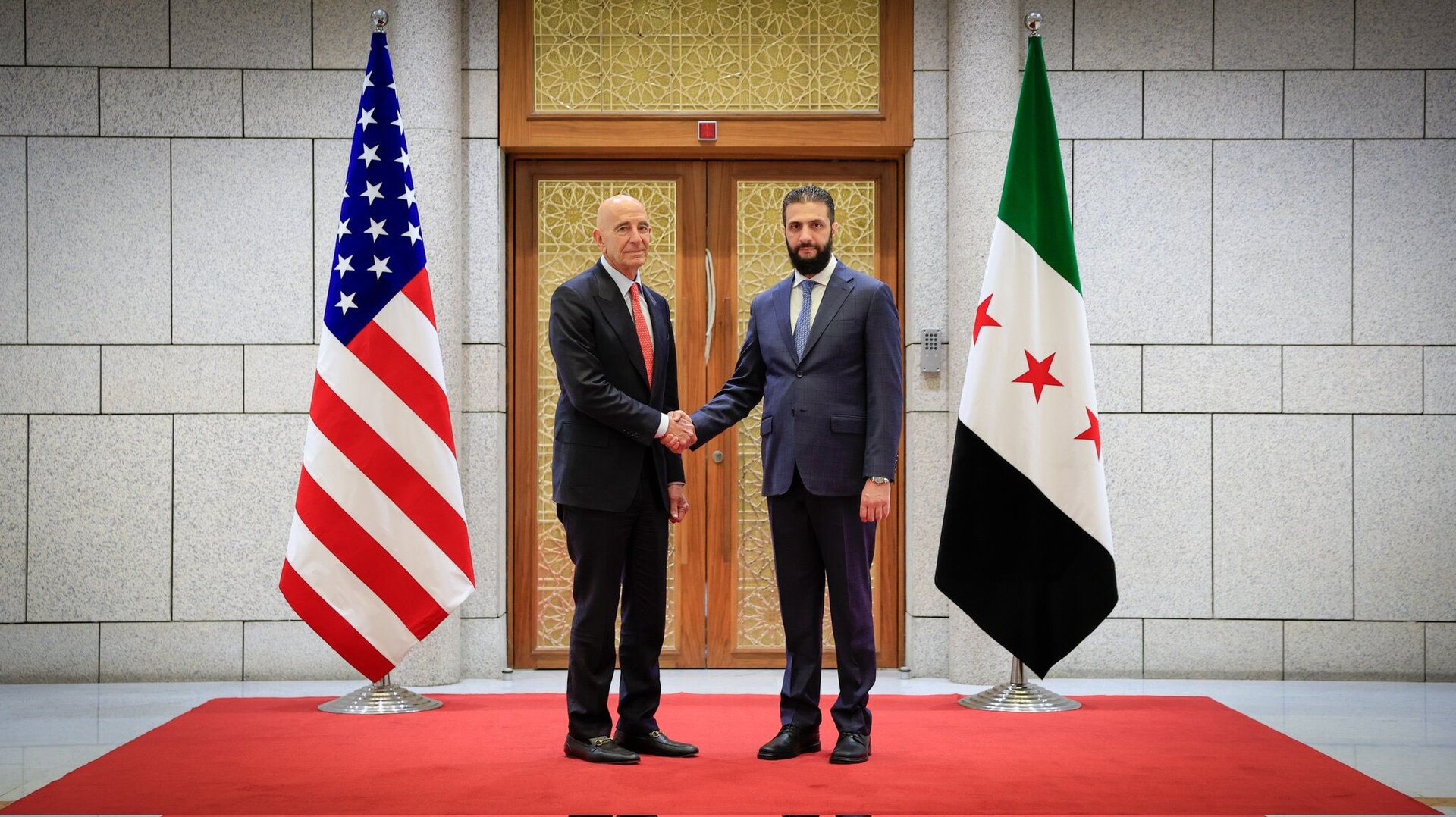
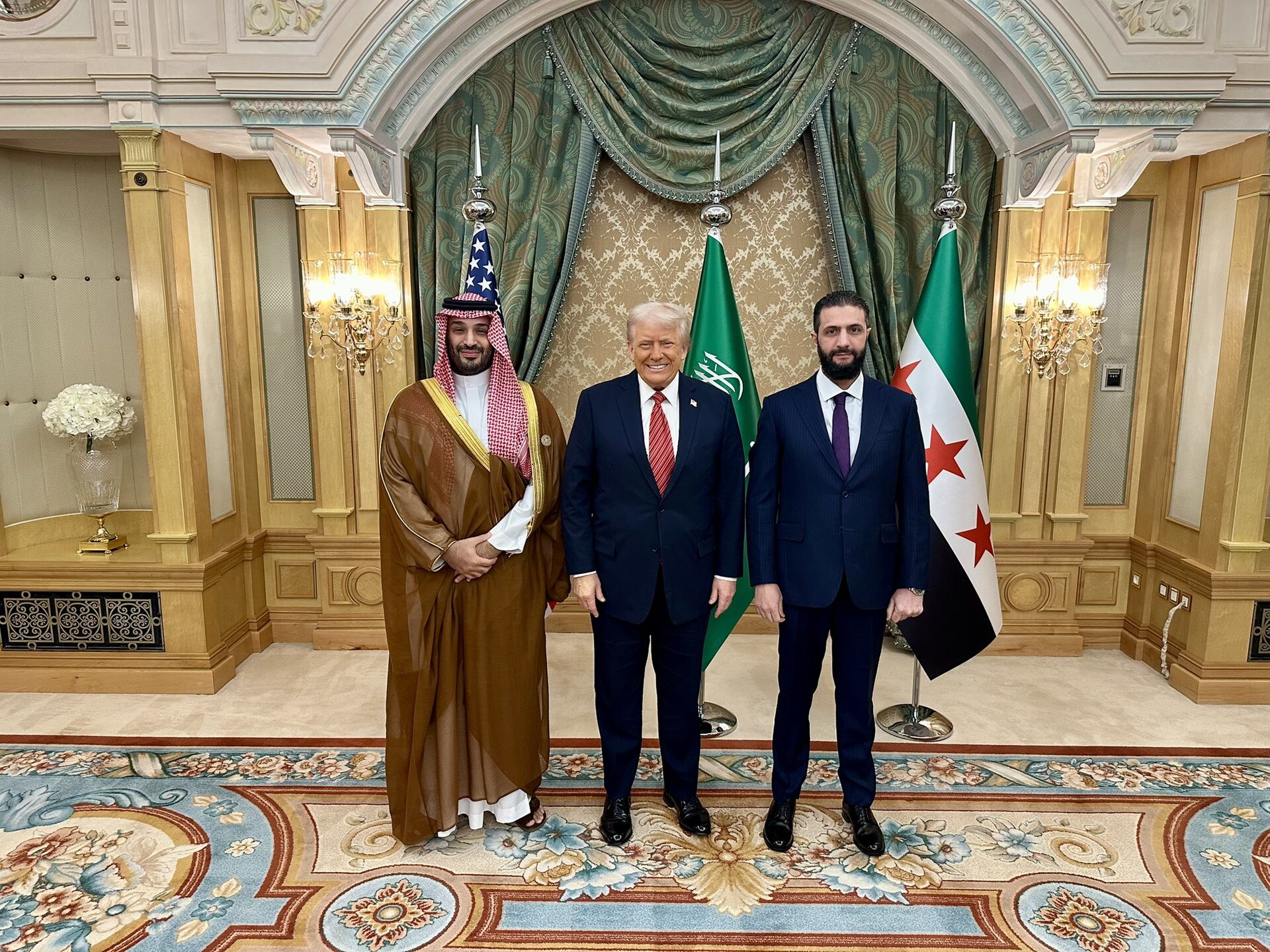
The itinerary tells the story that the readouts obscure. On May 16, Barrack — a career real estate investor, longtime Trump confidant, and the rare American principal-level envoy to engage directly with Ahmad al-Sharaa — arrived at the People’s Palace in Damascus. The official Syrian Arab News Agency reported discussions on “recent developments in Syria and the region, as well as economic cooperation and other issues of mutual interest.” Barrack told reporters that investment in Syria’s energy sector “could open the door to jobs and improved living conditions.” The language was deliberately anodyne.
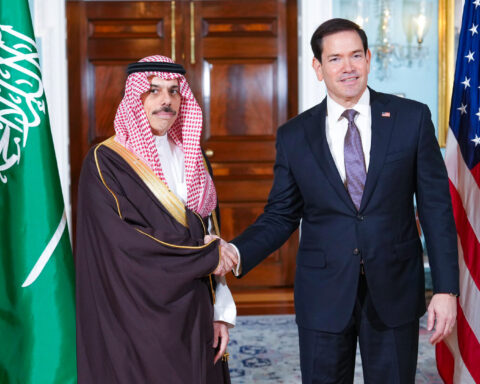
The next morning, Barrack was in Riyadh sitting opposite Prince Faisal bin Farhan, the Saudi foreign minister who has served as the structural guarantor of every diplomatic channel between Washington and Tehran since the war began in February. Al Arabiya reported the meeting as routine diplomatic coordination. It was anything but. The sequencing — Damascus on Saturday, Riyadh on Sunday — replicates the January 2026 summit format in which Saudi Arabia convened GCC states, Syria, the US, and the EU under one roof with Riyadh as host and arbiter.
What Barrack carried from Damascus to Riyadh was not a message. It was confirmation that the division of labor holds: the United States pursues sanctions relief and diplomatic normalization; Saudi Arabia assumes responsibility for stabilization and reconstruction. The Arab Gulf States Institute in Washington described this arrangement explicitly — “The United States pursues accelerated sanctions relief and diplomatic normalization, while the Gulf, led by Saudi Arabia, assumes responsibility for Syria’s stabilization and reconstruction.” Barrack’s shuttle was the live demonstration.
The Price of Restraint
Saudi Arabia is running a $33.5 billion quarterly deficit. Its oil production crashed 30 percent between February and March. Eighty days into a war it did not start, the Kingdom has absorbed Iranian missile strikes on Ras Tanura, watched its Eastern Province airspace become a combat zone, and kept American jets on the ground at Prince Sultan rather than allow its territory to become a launchpad for strikes on Iran. MBS rejected MBZ’s call for a joint strike on Iran. This restraint has a price, and Washington is paying it in Syria.
The Middle East briefing 3,000+ readers start their day with.
One email. Every weekday morning. Free.
The logic is not complicated. Saudi Arabia holds three cards that the United States cannot replicate: the airbase veto (Prince Sultan hosts the only forward-deployed American fighter wing in the Arabian Peninsula), the Iran mediation channel (Prince Faisal called Araghchi on blockade day, April 13), and the Hormuz bypass capacity through the East-West Pipeline to Yanbu. Each card individually gives Riyadh negotiating power. Together, they make the Kingdom indispensable to any American military option against Iran — and to any diplomatic off-ramp.
Syria is where the payment lands. The Caesar Act — the sanctions regime that froze Syria’s reconstruction for a decade — was repealed in Trump’s NDAA signing on December 18, 2025, after an Executive Order revoking Syria sanctions effective July 1, 2025. HTS was removed from the Foreign Terrorist Organization list in July 2025. Al-Sharaa was personally delisted from the Specially Designated Global Terrorist list on November 7, 2025. The UN Security Council removed HTS from its sanctions list in February 2026. Each delisting removed a legal barrier to the Saudi investment machine that was already staged and waiting. The timeline was not coincidental — it was coordinated.
Consider what the United States got in return for this sanctions-clearance sequence. Saudi Arabia absorbed Iranian missile strikes without retaliating. It kept Prince Sultan grounded when Pentagon planners wanted forward-deployed fighter coverage. It maintained the diplomatic channel to Tehran that produced the Islamabad talks. And it continued pumping through the Yanbu bypass — at reduced capacity but without interruption — when the alternative was a complete Gulf export shutdown. Washington gave Saudi Arabia Syria because the alternative was losing Saudi cooperation on everything else.
How Large Is Syria’s Reconstruction Prize?
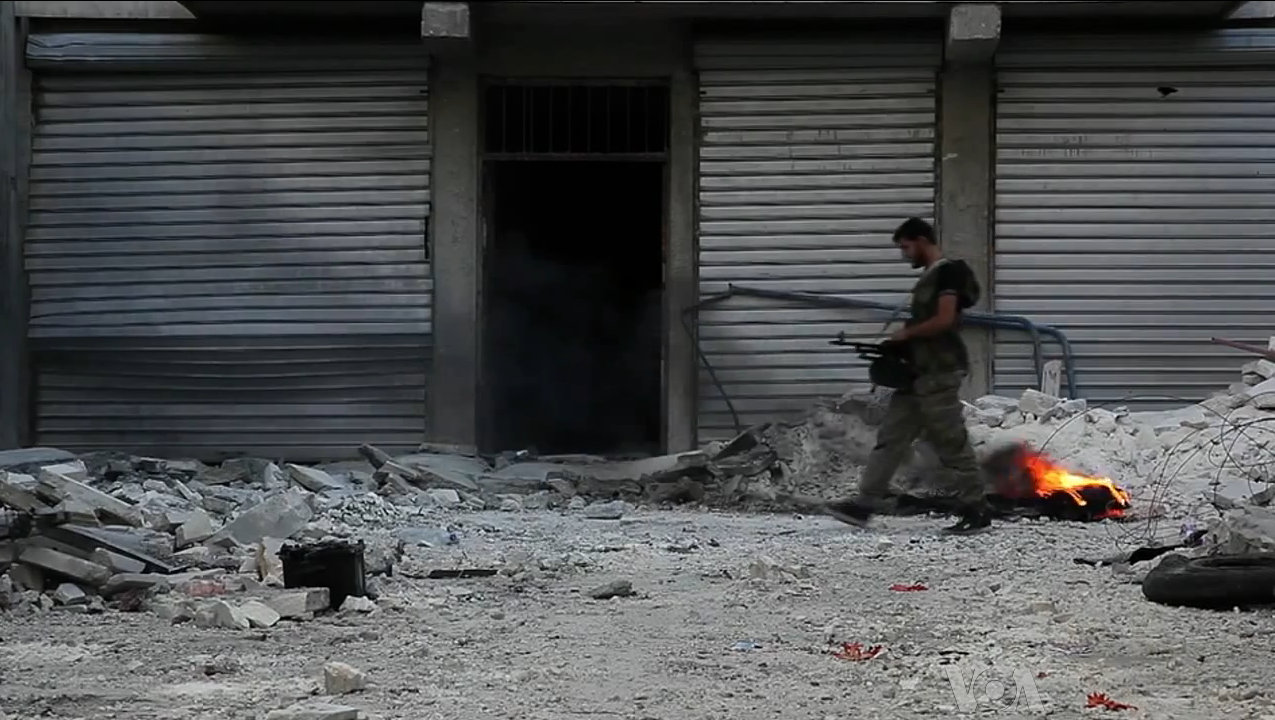
The World Bank published its assessment in October 2025: $216 billion in conservative reconstruction costs, with the true range spanning $140 billion to $345 billion. That figure is nearly ten times Syria’s projected 2024 GDP. Broken down: $75 billion in residential reconstruction, $59 billion in non-residential building, and $82 billion in infrastructure. Every road, power line, water treatment plant, and telecommunications tower destroyed in thirteen years of civil war represents a contract waiting to be signed.
| Saudi Syria Investment | Value | Sector | Source |
|---|---|---|---|
| FII Package (47 deals, 100+ companies) | $6.4 billion | Multi-sector | NBC News, Feb 2026 |
| Projects already commenced | $7 billion | Multi-sector | Al-Sharaa at FII |
| Elaf Fund — Aleppo airports | $2 billion | Aviation infrastructure | Al Jazeera, Feb 7, 2026 |
| STC Silk Link (fiber/data centers) | ~$800 million | Telecommunications | Al Jazeera, Feb 2026 |
| Flynas Syria (51% Syrian-owned) | Undisclosed | Aviation | Al Jazeera, Feb 7, 2026 |
| ACWA Power agreement | Undisclosed | Water/power generation | The National, Feb 7, 2026 |
| Syria World Bank debt clearance | $15.5 million | Sovereign debt | Atlantic Council, May 2025 |
At the Future Investment Initiative in Riyadh in February 2026, Saudi Arabia announced 47 deals involving more than 100 Saudi companies totaling $6.4 billion — the largest single investment package in Syria since sanctions were lifted. Al-Sharaa himself confirmed that Saudi companies had already commenced projects worth $7 billion: not pledges, but concrete already poured. Investment Minister Khalid al-Falih announced that the Elaf fund would commit $2 billion specifically to develop two airports in Aleppo — a city that was still under bombardment three years ago.
Saudi Arabia and Qatar jointly paid off all of Syria’s outstanding World Bank debt — approximately $15.5 million — and pledged salary support for Syrian public-sector workers. The debt clearance is trivial in dollar terms but decisive in institutional terms: it restored Syria’s borrowing eligibility with the international financial institutions, unlocking concessional lending that Saudi bilateral investment alone cannot replicate. The move transformed Syria from a pariah debtor into an eligible recipient overnight.
STC, Flynas, ACWA: The Infrastructure Lock-In
The individual deals matter less than what they collectively represent: control over the infrastructure layer that determines which direction Syria’s economy faces for the next thirty years. STC — Saudi Telecom Company — won the contract to build Syria’s entire national fiber-optics network, data centers, and internet infrastructure under the project name “Silk Link,” investing more than 3 billion Saudi riyals. The contract is the digital nervous system of a country that currently has almost none — and six competing Gulf-backed fiber-optic corridors are racing through Syrian and Iraqi territory toward Europe. Saudi Arabia just won the race without anyone noticing.
Syria’s stated ambition is to “lead supply routes” — an overland corridor connecting the Gulf to Europe and the Mediterranean. STC’s Silk Link directly monetizes that geography. The project converts Syria from a transit country into a Saudi-operated node in the data architecture connecting Riyadh to Frankfurt. Enab Baladi reported the corridor ambition in April 2026; by May, Saudi Arabia already held the fiber contract that makes the ambition operational.
Flynas Syria represents something equally structural. The Saudi budget carrier and the Syrian Civil Aviation Authority signed an agreement to establish a new airline, 51 percent Syrian-owned, with commercial operations slated for Q4 2026. The 51 percent local ownership structure satisfies sovereignty optics while embedding Saudi operational control — fleet procurement, route networks, code-sharing, maintenance contracts — into Syria’s aviation sector for decades. ACWA Power’s water and power generation agreement with Syria’s Ministry of Energy completes the trifecta: data, air connectivity, and baseload electricity, all under Saudi corporate control before any competitor breaks ground.
The Hoover Institution characterized this pattern as “transactional stabilization” — calibrated investment designed to produce strategic loyalty rather than aid without conditions. Every airport, fiber line, and power plant creates dependency. Syria does not owe Saudi Arabia money. It owes Saudi Arabia its ability to function.
Why Is Iran Structurally Excluded from Post-Assad Syria?
Iran spent thirteen years and an estimated $30 billion keeping Bashar al-Assad in power — and when Assad fell in December 2024, it got nothing back. The new Syrian government under al-Sharaa has “held back from opening relations with Iran,” as Responsible Statecraft documented in its analysis of Iran’s post-Assad irrelevance. Tehran, once Damascus’s most steadfast ally, now relies on Turkey, Qatar, and Saudi Arabia as intermediaries to maintain any dialogue with the Syrian government. The reversal is total.
Al-Sharaa told Chatham House in April 2026 that “Syria will remain outside the conflict” — a direct refusal to allow his country to become a front in the US-Iran war that has consumed eighty days and counting. Will Todman at CSIS described al-Sharaa’s approach as “a three-pronged strategy for Syria’s recovery: diplomatic balancing, territorial consolidation, and investment-led economic recovery.” The Iran war “threatens each pillar of that strategy,” which means Syria’s survival depends on remaining equidistant from both belligerents — and Iran has nothing to offer a country that needs construction capital, not militia networks.
The AGSI assessment is blunt: “Damascus has recognized that Saudi Arabia — not Iran or Russia — is now the indispensable gateway to postwar normalization and economic reintegration.” Syria’s sovereignty and economic recovery depend “less on ideological alignments and more on embedding the country within a Saudi-led, Western-endorsed framework.” Iran cannot build airports, lay fiber, or capitalize a national airline — its economy is under blockade, its currency in freefall, its military burning through munitions at an unsustainable rate. The structural exclusion is not a policy choice by al-Sharaa. It is a material reality imposed by Iran’s own war.
Syria is a laboratory for a new regional alignment of diplomacy, integration and hope for the entire region.Tom Barrack, US Special Envoy for Syria, May 2026
The Turkish-Qatari Counter-Bid
Saudi Arabia is not the only player at the table. A Turkish-Qatari consortium has pledged $14 billion in urban development with 200,000 jobs — the main competing reconstruction bloc. Qatari firms have already begun investing in Damascus Airport and power generation. Erdogan traveled to Saudi Arabia in February 2026 and pledged joint stabilization, but the underlying dynamic is competitive: Turkey wants the security architecture and operational contracts; Saudi Arabia wants the financial architecture and infrastructure concessions. Both want political influence over al-Sharaa’s government.
The Atlantic Council formula resolves the tension on paper — “a two-pronged division of labor: bolstering Syria’s security sector through expanded partnerships and coordination, while mobilizing Gulf financing and Turkish operational capacity to accelerate reconstruction.” In practice, this means Turkey trains the army while Saudi Arabia builds the economy. The IISS noted in May 2026 that “a new geopolitical bloc involving Egypt, Pakistan, Saudi Arabia and Turkey has been forming in the Middle East” — not formalized, but increasingly operational. Syria is where this bloc’s internal hierarchy gets tested.
The Saudi-UAE divergence adds another layer. IPS News reported in April 2026 that Saudi-UAE competition “might well turn reconstruction into an influence auction in Gaza, Iraq, Sudan, Syria and Yemen.” The Soufan Center’s May 14 assessment was sharper: “Saudi Arabia favors accommodation with Iran; UAE believes military confrontation can produce transformative change.” This divergence — visible in MBS’s rejection of MBZ’s joint-strike proposal — means Abu Dhabi is not part of the Saudi reconstruction consortium. The $6.4 billion is Riyadh’s money, not Gulf money.
The Prince Sultan Coincidence That Isn’t
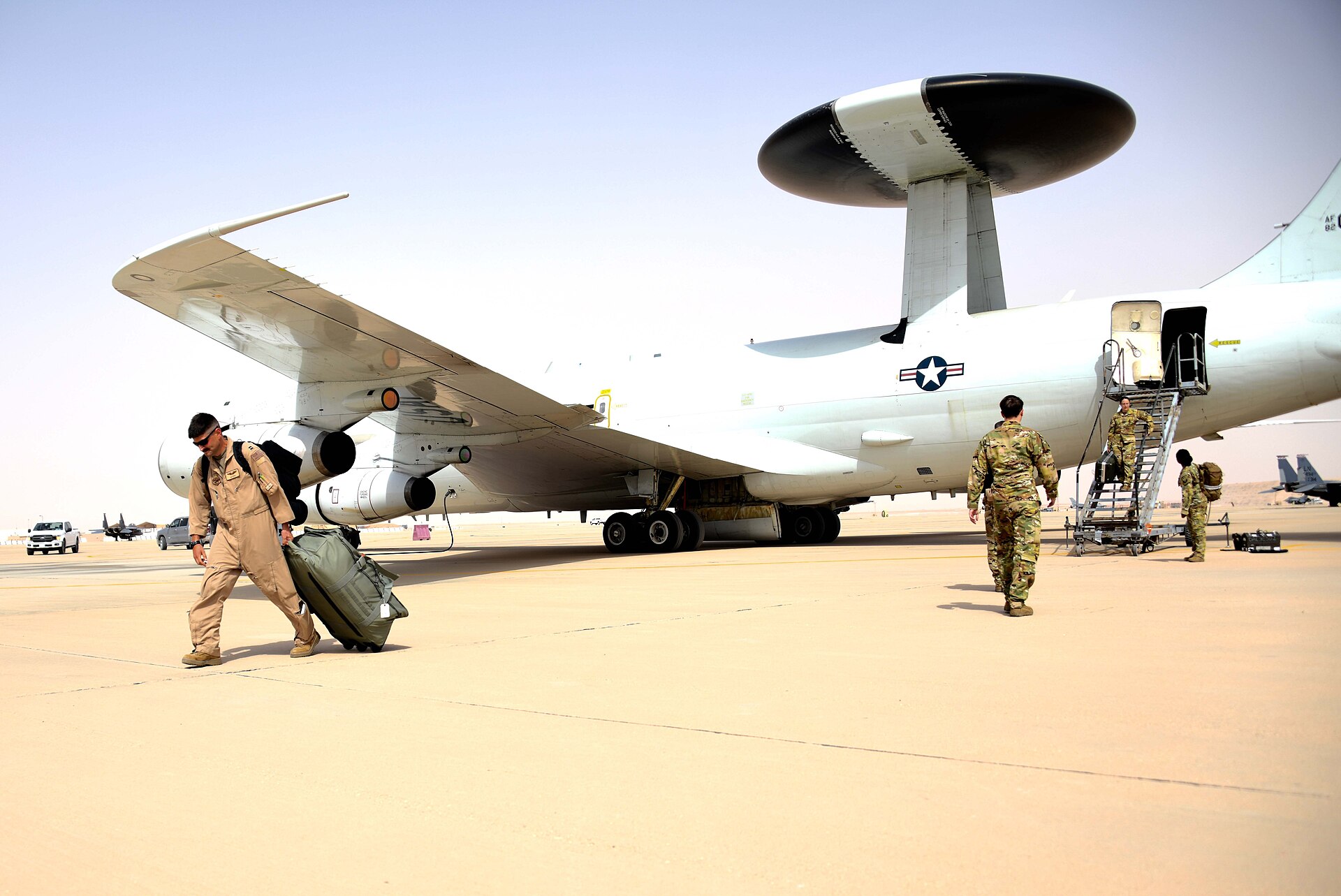
On May 17, 2026 — the same day Barrack sat in Riyadh briefing Prince Faisal on his Damascus meetings — Saudi Arabia informed Washington that American jets at Prince Sultan Air Base would remain grounded. The grounding order is not new; it has been in effect since early in the conflict. But its reaffirmation on the same day as Barrack’s Riyadh visit, with a Tuesday NSC meeting on military options approaching, converts what could appear to be passive non-cooperation into an active veto timed against escalation planning.
No existing coverage has connected these three data points — Barrack in Damascus Saturday, Barrack in Riyadh Sunday, grounding order reaffirmed Sunday — as a single coordinated transaction. But the logic is inescapable. Saudi Arabia is telling Washington: you can have our airspace for Iran strikes, or you can have our co-sponsorship of your Syria envoy’s reconstruction diplomacy, but you cannot have both. Washington chose the reconstruction track. The jets stayed grounded.
This is the mechanism through which Saudi Arabia converts wartime pressure into peacetime position. Every day the Iran war continues without Saudi Arabia joining the kinetic campaign, Riyadh’s restraint becomes more expensive for Washington to take for granted — and therefore more expensive to buy. The Syria concession was affordable in February when the war was young. By May, with Brent at $111 and the NSC debating expanded strikes, the price has risen. MBS brokered the first US-Syria meeting in 25 years not as a favor but as a demonstration that Saudi mediation infrastructure is the only game in town — for Syria, for Iran, for everything.
What Does Saudi Arabia Actually Buy with Syria?
The AGSI identified three imperatives at the core of Riyadh’s post-Assad strategy: security containment, geopolitical balancing, and economic opportunity. Saudi Arabia’s engagement is “a preemptive strategy to shape conditions before rival actors can fill the vacuum.” But that framing understates what Syria offers: a geographic key that unlocks three things Riyadh currently lacks — a Mediterranean port relationship, an overland trade corridor to Europe that bypasses both Suez and Hormuz, and a Levantine anchor for the Egyptian-Pakistani-Turkish bloc that the IISS identified as emerging in May 2026.
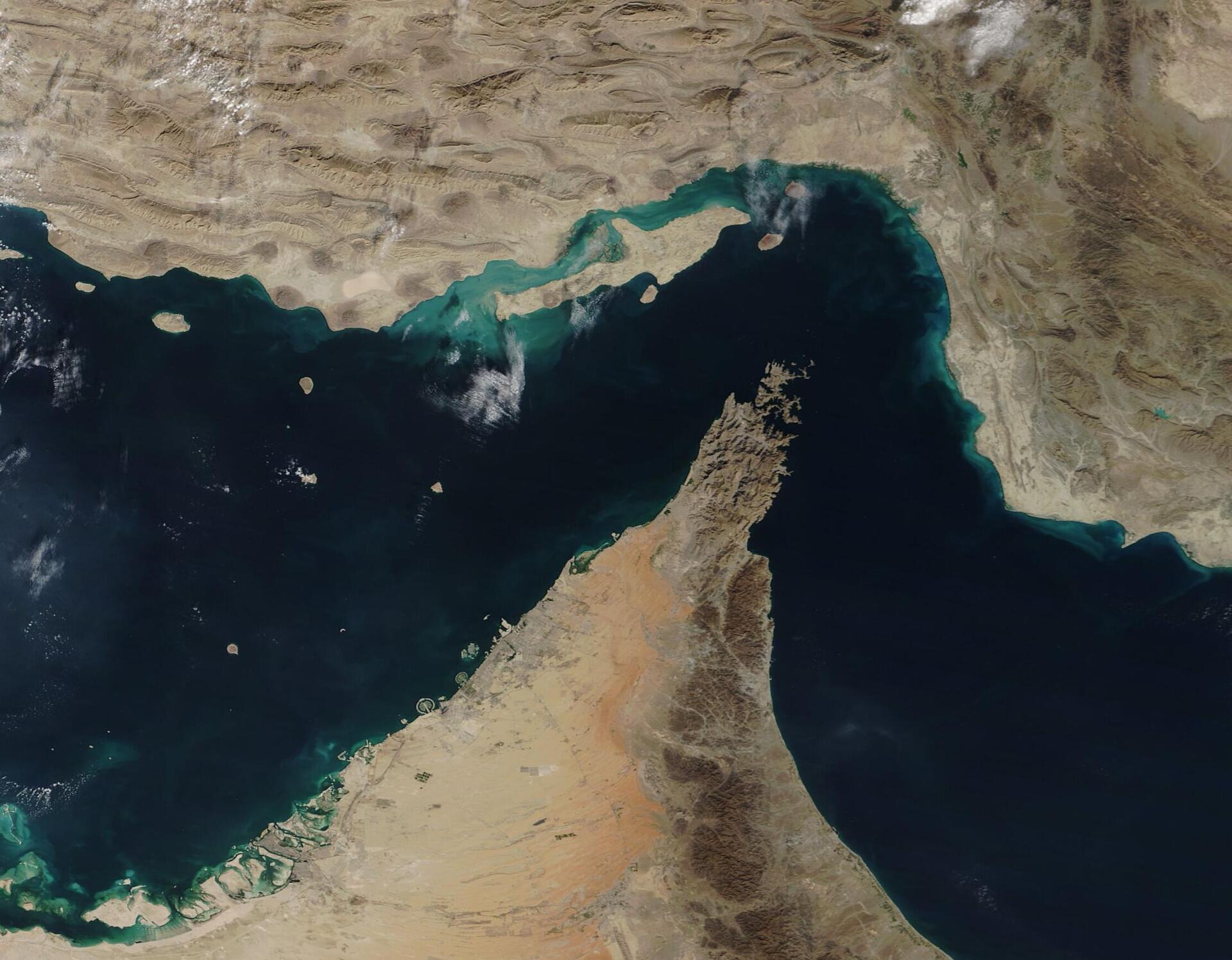
The Hormuz bypass logic is central. Saudi Arabia learned in February 2026 that maritime chokepoint dependency is an existential vulnerability — the East-West Pipeline to Yanbu covers only 80-85 percent of pre-war export volume, and even that ceiling requires pipeline infrastructure that Iran has already struck once. An overland corridor through Syria to the Mediterranean — carrying data, goods, and eventually energy — creates redundancy that no naval blockade can threaten. STC’s Silk Link is the first physical manifestation of that corridor. The $6.4 billion is not reconstruction charity. It is infrastructure insurance against the next Hormuz closure.
The FDD raised a dissenting flag in February 2026, arguing that “foreign investment in Syria’s reconstruction carries terror finance risk” given HTS’s prior designation history. The concern is not trivial — al-Sharaa’s personal delisting was only six months old when Saudi companies began breaking ground. But the counterargument, which Riyadh clearly accepts, is that the risk of not investing — of allowing Turkey, Qatar, or Iran-aligned networks to capture Syria’s economic architecture — exceeds the compliance risk of investing under a newly delisted government.
| Timeline | Event | Significance |
|---|---|---|
| December 2024 | Assad falls | Iran loses its $30B investment |
| February 2025 | Al-Sharaa’s first foreign trip — to Riyadh | Saudi Arabia established as primary partner |
| July 1, 2025 | US Syria sanctions revoked (EO) | Legal barrier to Gulf investment removed |
| November 7, 2025 | Al-Sharaa delisted from SDGT | Personal sanctions cleared |
| November 10, 2025 | Al-Sharaa at White House | First Syrian leader in Washington since 1946 |
| December 18, 2025 | Caesar Act repealed (NDAA) | Final statutory barrier removed |
| February 2026 | UN delists HTS; FII $6.4B announced | Saudi investment machine activated |
| May 16-17, 2026 | Barrack Damascus-Riyadh shuttle | US co-sponsors Saudi anchor role |
Al-Sharaa’s trajectory tells the same story from the Syrian side. His first foreign trip as transitional president was to Riyadh in February 2025 — not Ankara, not Doha, not Washington. His first White House visit in November 2025 was the first by any Syrian head of state since independence in 1946, but it came after the Saudi relationship was already cemented. The January 2026 Riyadh summit that convened GCC, Syria, US, and EU foreign ministers confirmed what al-Sharaa’s travel calendar already demonstrated: Saudi Arabia is the convening power for Syria’s reintegration into the international system. Washington provides the legal architecture — sanctions relief, delisting, diplomatic recognition. Riyadh provides the capital and the contracts.
The speed of execution is itself a strategic weapon. Saudi Arabia severed ties with Assad’s Syria in 2011. The Arab League readmitted Syria on May 7, 2023, and Assad attended the Jeddah summit twelve days later. When Assad fell in December 2024, Saudi Arabia did not pause to reassess — it accelerated. Within two months, al-Sharaa was in Riyadh. Within twelve months, Saudi companies were breaking ground across multiple sectors. By the time other actors — the EU, the World Bank, even the UAE — began debating Syria engagement frameworks, Saudi companies were already pouring foundations. First-mover advantage in reconstruction is permanent: you do not rebid a fiber-optics contract or reissue an airline license once the incumbent is operational.
FAQ
How does Saudi Arabia’s Syria investment protect it if the Iran war ends badly?
A ceasefire that leaves Iran economically intact — or an escalation that produces an Iranian regime collapse — both create reconstruction competition. If Iran stabilizes, the Gulf states will race to fill the post-sanctions vacuum across the Levant; Saudi Arabia’s existing contracts give it a legal and operational head start over any Iranian return. If Iran fractures into competing factions, the overland corridor through Syria becomes the primary route for Gulf capital moving toward Turkey and Europe — bypassing any future Iranian territorial disruption entirely. Saudi Arabia is hedging both outcomes simultaneously.
Can other countries compete with Saudi Arabia for Syria’s reconstruction?
Turkey and Qatar have pledged $14 billion in urban development — larger in headline terms than Saudi Arabia’s $6.4 billion FII package. But the Saudi advantage is structural rather than financial: Riyadh controls the diplomatic normalization pipeline (the January 2026 summit format), holds the debt-clearance relationship (World Bank eligibility), and has already secured infrastructure concessions (STC fiber, ACWA power, Flynas aviation) that lock in decades of operational dependency. China has not entered the reconstruction market despite its role brokering Qatar LNG transits through Hormuz. Russia, Syria’s former patron, is financially exhausted by its own war and has no reconstruction capital to deploy.
What happens to Saudi Syria investments if the Iran war escalates further?
Al-Sharaa explicitly told Chatham House that “Syria will remain outside the conflict,” and CSIS assesses that Damascus has “largely succeeded” in maintaining neutrality. However, Todman warns that the Iran war “threatens each pillar” of Syria’s recovery strategy — diplomatic balancing becomes impossible if forced to choose sides, territorial consolidation stalls without security guarantees, and investment-led recovery depends on stability that regional war undermines. Saudi Arabia’s counter-strategy is speed: by embedding contracts and breaking ground before escalation forces a choice, Riyadh creates facts that survive any diplomatic realignment.
Why did al-Sharaa choose Saudi Arabia over Turkey as his primary reconstruction partner?
Turkey provided the military support that enabled HTS’s final offensive against Assad in late 2024, but al-Sharaa’s postwar calculus prioritizes economic independence over security patronage. Saudi Arabia offers capital without territorial claims — unlike Turkey, which maintains military presence in northern Syria and backs competing Syrian factions. The Atlantic Council formula gives Turkey the security-sector role while Saudi Arabia takes the economic architecture, but al-Sharaa’s February 2025 Riyadh trip — his first as president, before visiting Ankara — signaled that he values the funder over the guarantor when forced to sequence.
Is Saudi Arabia’s $33.5 billion deficit compatible with billions in Syria spending?
Saudi Arabia’s record Q1 2026 deficit reflects war-driven revenue loss (production down 30 percent, Asia exports down 38.6 percent) rather than fiscal incapacity. The Syria investments are structured through sovereign wealth vehicles (Elaf fund, PIF-adjacent entities) and corporate balance sheets (STC, ACWA Power, Flynas) — not direct budget expenditure. The Kingdom is spending corporate and fund capital, not treasury reserves, on Syria. More critically, the Syria play is itself a hedge against the deficit: an overland corridor to the Mediterranean reduces future dependence on the Hormuz transit that war has proven unreliable.