
ABU DHABI — Iranian Revolutionary Guards officials stayed at Sheikh Tahnoun bin Zayed al Nahyan’s private guest house in Abu Dhabi last week. UAE officials then flew to Tehran. The two-leg exchange, confirmed by Reuters on June 12, is the first face-to-face national security channel between the UAE and Iran since the war began — opened at the moment the broader deal text is being called final by one signatory and “still TBD” by the other.
Saudi Arabia was not present and has no equivalent mechanism. Riyadh’s direct channel to Tehran consists of near-daily communications with Iran’s ambassador, used to assert that Saudi territory is not hosting strikes. Abu Dhabi’s channel involves the IRGC, runs through the office of the deputy ruler, and comes packaged with between $10 billion and $20 billion in released funds, according to Reuters sources. Bloomberg reported on June 11 that the UAE opened the channel after concluding the Islamic Republic will not be removed from power despite the scale of US-led military pressure.
The GCC’s anchor state — the country that chairs collective defense and hosts CENTCOM’s regional air operations — now lacks the Iran channel that its smaller neighbor built. The Strait of Hormuz closure and the slow pace of US-Iran negotiations accelerated Abu Dhabi’s decision to act alone.
Table of Contents
What Happened at Tahnoun’s Guest House?
The talks had started weeks earlier but accelerated when IRGC officials arrived in Abu Dhabi last week. This is not a foreign ministry dialogue or an intelligence back-channel routed through a third party. The channel connects the institutional bodies that make targeting decisions on both sides — the IRGC on Iran’s end, the national security adviser’s office on the UAE’s. The format matters: when Oman hosted secret US-Iran talks before the JCPOA, the interlocutors were diplomats. When Pakistan carried letters to Tehran last week, the vehicle was a visiting interior minister. Abu Dhabi put the IRGC in the deputy ruler’s guest house.
Two regional sources told Reuters the UAE had agreed to release a total of $10 billion to Iran, more than $3 billion of which had already been delivered. Two other sources put the total at $20 billion, agreed in exchange for a halt to Iranian attacks on the UAE. Reuters could not establish whether the funds belong to the UAE itself or originate in long-blocked Iranian accounts in the Emirati banking system.
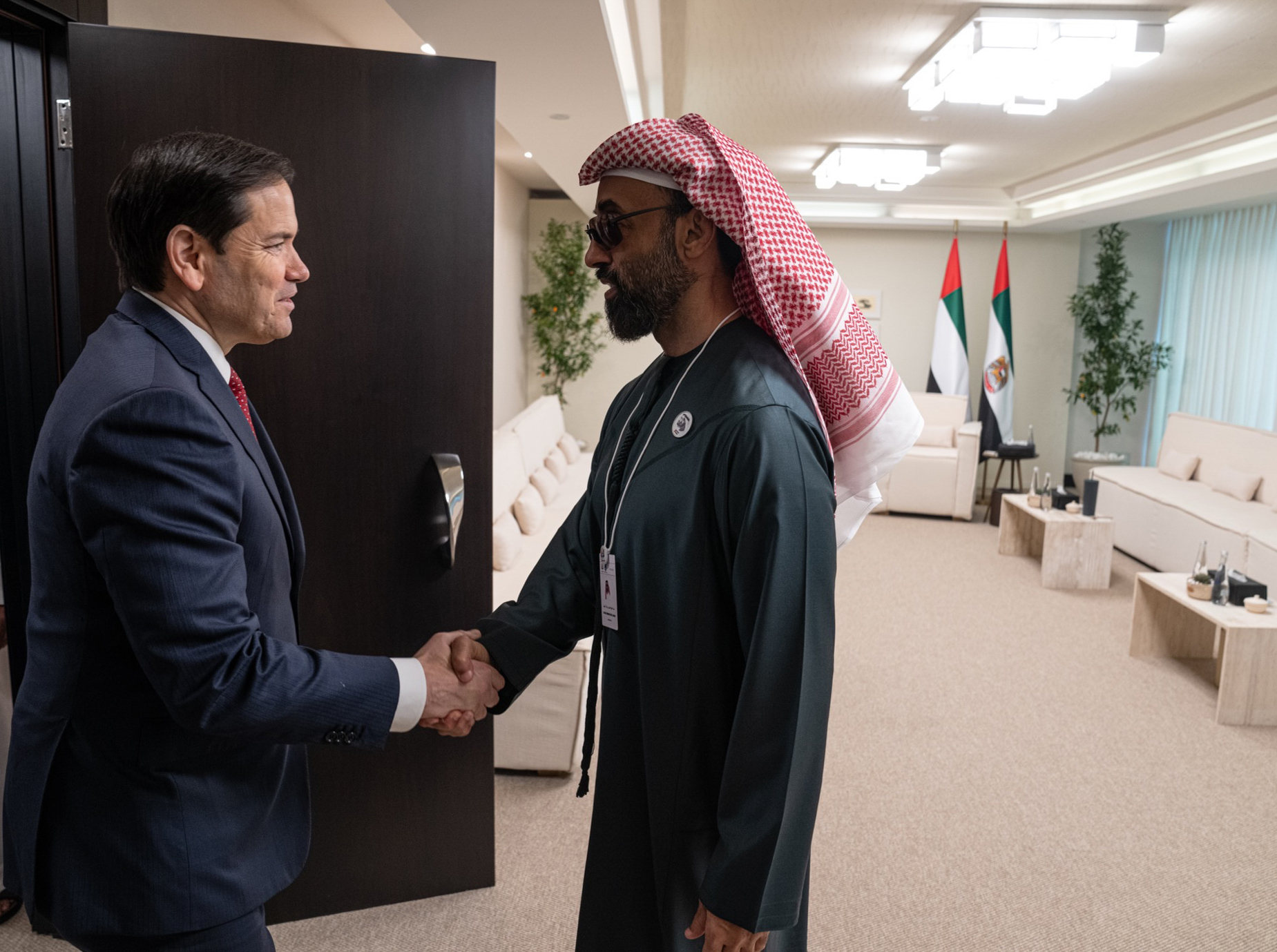
Bloomberg, which broke the meeting’s existence on June 11, described it as “a stark turnaround for both sides amid their growing acknowledgment of the importance of calmer bilateral ties.” The agency reported that the UAE opened the channel after concluding the Islamic Republic would not experience regime change despite the military pressure campaign that began in February 2026.
The Middle East briefing 3,000+ readers start their day with.
One email. Every weekday morning. Free.
Tehran’s state media framed the same event differently. PressTV reported that “during the recent military assault, the UAE betrayed its Persian Gulf neighbor Iran and facilitated US-Israeli strikes on the Islamic Republic,” and that Iran’s reprisal attacks “dealt a major blow to the Emirates’ reputation as a financial haven.” The message arriving at Tahnoun’s guest house carried its own subtext: Abu Dhabi came to the table because it was damaged, not because it had earned the seat.
Why the UAE Moved Now
Before dawn on March 1, 2026, Iranian Shahed drones struck two Amazon Web Services data centers in the UAE. CNBC confirmed structural damage, power disruption, fire, and water damage across the facilities. AWS’s Dubai region went offline. The local banking system was disrupted. Ride-hailing platform Careem, payments companies Alaan and Hubpay, and enterprise software provider Snowflake all reported service failures. The IRGC explicitly framed the strikes as retaliation for UAE facilitation of US military and intelligence networks.
In April, Brigadier General Ebrahim Zolfaghari of the IRGC released a video threatening “complete and utter annihilation” of OpenAI’s $30 billion Stargate data center in Abu Dhabi, opening on blurred satellite imagery of the desert site before switching to sharp night-vision footage of the sprawling campus. Microsoft had already committed $15.2 billion to UAE AI and cloud infrastructure through 2029, including a 200 MW data center expansion with G42’s Khazna Data Centers. The UAE’s post-oil economic identity — the strategy Abu Dhabi has spent a decade and tens of billions positioning — had become a target set.
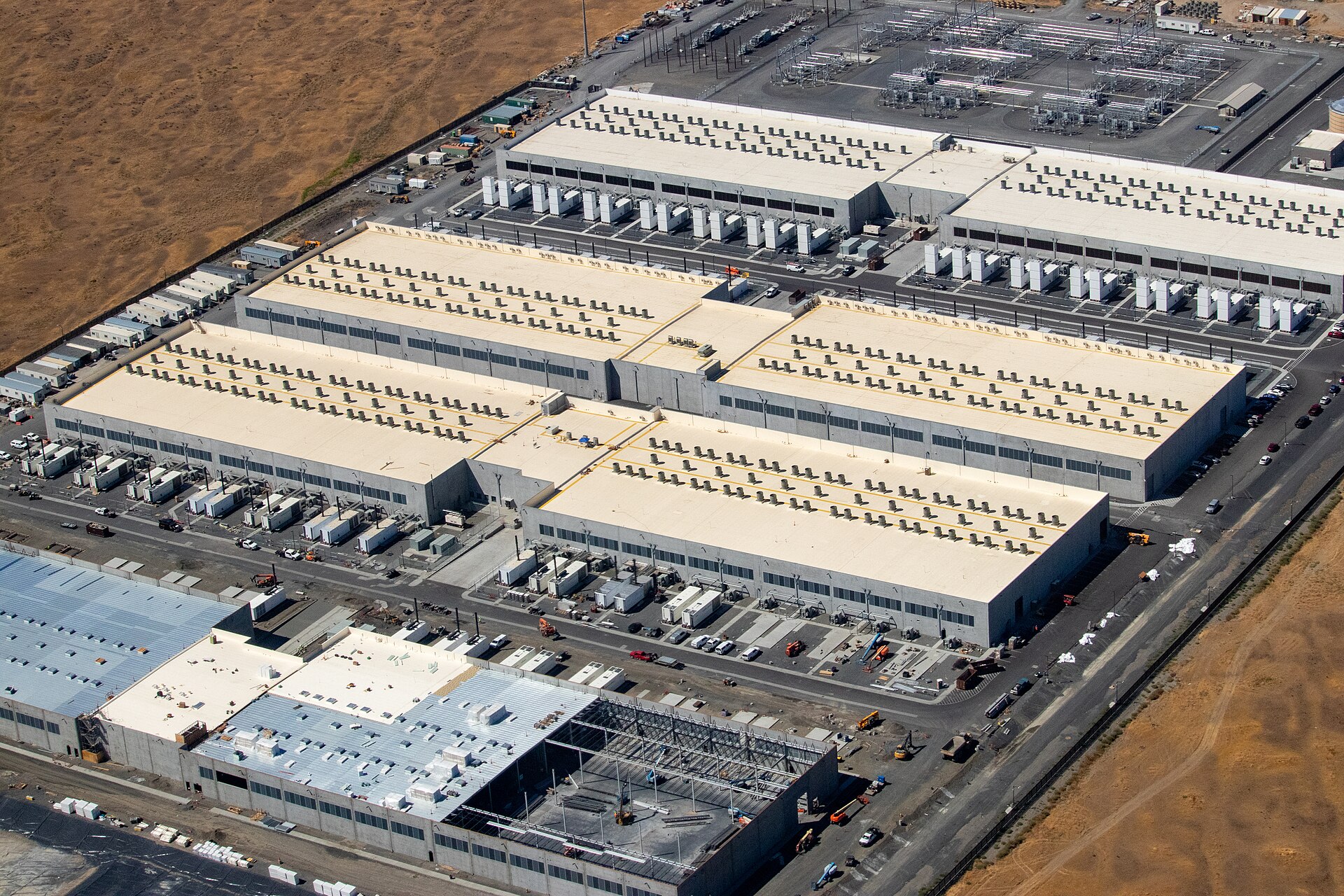
ECFR’s May 2026 analysis found the UAE had absorbed more Iranian attacks than all other GCC states combined during the war. Israel’s counter-drone lasers and Iron Dome batteries intercepted over 95 percent of Iranian projectiles targeting the Emirates — a defensive system Saudi Arabia does not have deployed on its territory. But interception is not immunity. The AWS strikes demonstrated that a small number of hits on commercially irreplaceable targets can inflict more strategic damage than a hundred missiles striking military installations in empty desert.
The Strait of Hormuz closure narrowed Abu Dhabi’s options further. The slow pace of US-Iran negotiations — the deal that Pakistan’s Prime Minister Sharif called “final” on the same day Reuters confirmed the bilateral channel, while Vice President Vance told CBS it remained “still TBD” — left the UAE without confidence that Washington would deliver a resolution before Iran’s next escalation cycle.
Abu Dhabi had already begun removing itself from Saudi-led institutional frameworks. On April 28, the UAE announced its exit from OPEC, effective May 1 — severing its last major institutional link to a Saudi-led organization after 59 years of membership. ADNOC had spent a decade building toward 5 million barrels per day of production capacity; under OPEC+ quotas, actual output consistently ran well below that ceiling. The UAE became the largest oil producer to leave the organization.
The OPEC exit was not about Iran — Abu Dhabi’s frustration with production quotas predated the war by years. But it established, weeks before the Tehran channel opened, that Abu Dhabi’s tolerance for calibrating its own capacity to what Riyadh preferred had expired.
What Does Saudi Arabia Have Instead?
Saudi Arabia’s direct channel to Tehran consists of regular communications with Iran’s ambassador in Riyadh, used primarily to assert that Saudi territory is not hosting strikes. This is an assurance mechanism, not a negotiating position. Riyadh has no security-to-security back-channel, and every third-party channel that might have served its interests has been closed, threatened, or rendered transparent.
Pakistan carried two separate letters to Tehran — one from Prime Minister Shehbaz, another from Army Chief Munir — establishing a dual-letter architecture that opened a back-channel to the IRGC. But Pakistan controls that channel, not Riyadh. Oman’s channel, historically the Gulf’s most reliable route to Tehran, was directly threatened when Trump told his Cabinet in May he would “blow them up” if Muscat continued brokering a joint Hormuz management protocol with Iran. The channel was suspended.
Qatar’s delegation to Tehran consulted Washington before departure, not Riyadh. The deal governing Saudi waters was negotiated without Saudi participation. Each channel that might have extended Riyadh’s reach into the Iran file either bypasses Saudi Arabia entirely or belongs to a third party that controls the access and sets the terms.
Saudi Arabia faces structural constraints the UAE does not share. Riyadh hosts 13,000 Pakistani troops in the Eastern Province under the Saudi Military Defense Agreement — a dependency that prevents it from protesting Islamabad’s independent Iran back-channel without jeopardizing its own eastern security architecture. Prince Sultan Air Base operates under a 1977 memorandum of understanding with no status-of-forces agreement, leaving US basing arrangements legally exposed in ways that constrain Riyadh’s room for independent diplomatic positioning. These are not diplomatic failures. They are structural conditions that make direct bilateral engagement with Iran functionally impossible for Riyadh in ways that have nothing to do with political will.
| Factor | UAE | Saudi Arabia |
|---|---|---|
| Direct Iran channel | Security-to-security (IRGC–Tahnoun) | Ambassador phone calls |
| Bilateral trade with Iran | $29.1B non-oil (2024–25 record) | Minimal direct trade |
| Financial instrument | $10–20B release mechanism | None identified |
| Territorial dispute with Iran | Abu Musa, Greater Tunb, Lesser Tunb (since 1971) | None |
| Foreign troop constraint | None | 13,000 Pakistani troops (SMDA) |
| US basing exposure | No PSAB equivalent | PSAB under MOU (no SOFA) |
| Israeli defense systems deployed | Iron Dome, counter-drone lasers (95%+ interception) | Not deployed |
| OPEC membership | Exited May 1, 2026 | Active member |
| Iranian attacks sustained in war | More than all other GCC states combined | PSAB struck March 27 |
Sources: Reuters (June 12, 2026); Bloomberg (June 11, 2026); Iran International (April 2026); ECFR (May 2026); Al Jazeera (April 29, 2026); UK House of Commons Library CBP-10833.
The $29 Billion Artery
UAE-Iran non-oil trade reached a record $29.1 billion in the Persian year ending March 20, 2025, according to Iran International. The UAE ranked first or second among Iran’s trading partners for most of two decades — a position no other Gulf state has held or pursued. Iran’s non-oil exports to the UAE alone reached $6.6 billion in the same period, according to TV BRICS.
Dubai served for years as Iran’s main offshore financial artery. Oil proceeds, petrochemical revenues, and rial conversions moved through the emirate’s banking system and free zones, converted into dollars, dirhams, and euros beyond the reach of Iran’s domestic system. The Middle East Forum described the UAE’s role as “pivotal in reviving Iran’s foreign trade.” That infrastructure survived sanctions escalations, diplomatic downgrades, and the 2016 reduction of Emirati diplomatic representation in Tehran after Saudi Arabia’s embassy was attacked. It survived the war. When Iran’s IRGC struck the AWS data centers in March, it was attacking the economy of a country whose financial system simultaneously processes Iranian commercial transactions worth tens of billions of dollars annually.
The $10 billion to $20 billion that Reuters reports the UAE has agreed to release is possible precisely because the financial plumbing already exists. Abu Dhabi is not constructing a new mechanism to move capital to Tehran. It is reopening one that both sides maintained in some form even while Iranian drones were striking Emirati soil. That Reuters could not establish whether the funds belong to the UAE or originate in long-blocked Iranian accounts is itself the point: ownership of frozen capital between these two economies is genuinely ambiguous.
Saudi Arabia has no analogous role in Iran’s financial architecture. Riyadh’s relationship with Tehran is strategic, sectarian, and military — never primarily commercial. There is no Saudi equivalent of Dubai’s free-zone companies routing Iranian crude revenue, no sanctions-era banking corridor that both sides quietly needed intact. Without economic interdependency, Riyadh has no mutual exposure with Tehran — nothing valuable enough to both sides that protecting it creates rational grounds for a direct channel.
Is Abu Dhabi Acting for Riyadh?
The evidence does not support a clean answer. CSIS reports that intra-GCC intelligence and security cooperation has “continued if not deepened” despite public divergence. Oman’s pre-JCPOA negotiations provide a precedent for smaller GCC members operating Iran channels Riyadh tacitly tolerated. But Bloomberg and Reuters identified no Saudi involvement in this channel’s design or execution.
The Oman precedent matters because it established the pattern. When Muscat hosted secret US-Iran talks in 2012 and 2013 that eventually produced the 2015 nuclear deal, Saudi Arabia was not a party and did not attempt to halt the process. Sultan Qaboos personally authorized the negotiations. The resulting Joint Comprehensive Plan of Action was a deal Saudi Arabia publicly opposed — but Oman’s hosting role was tolerated, not blocked. Riyadh accepted being outside the room in exchange for not bearing responsibility for what happened inside it.
If the intelligence pipeline between Abu Dhabi and Riyadh remains intact — and CSIS suggests it does — Saudi Arabia may be receiving readouts from the Tahnoun meetings. Absence from the negotiating table is not the same as absence from the information flow. A Saudi official communicating daily with Iran’s ambassador and simultaneously receiving intelligence from Abu Dhabi’s IRGC channel would have two streams of information that, together, approximate a picture of Tehran’s position without the liability of being seen to negotiate directly with the Revolutionary Guards.
“The emerging divergence between Abu Dhabi and Riyadh reflects competing models of regional order: one centered on flexible external projection and non-state partnerships, the other on territorial consolidation and state-centric hierarchy.”European Council on Foreign Relations, May 2026
But the structural evidence cuts against the outsourcing theory. ECFR’s description is not of two allies dividing labor. It is of two capitals with incompatible visions of how the Gulf should be organized after the war ends. Saudi air strikes earlier in 2026 targeted an Emirati convoy in Yemen — described by the UK House of Commons Library as “without precedent between the two allies” — after which Riyadh demanded full UAE withdrawal from the area. ECFR noted that “while Saudi Arabia’s outreach at an extraordinary GCC summit in Jeddah in late April helped prevent deeper rupture, the UAE is likely to continue distancing itself from institutions it views as ineffective and constraining.”
Brookings offered the starkest assessment: Saudi Arabia and the UAE, “once closely aligned on countering political Islam and containing Iran, had significantly diverged by 2026 and found themselves more in competition than agreement.” The Soufan Center titled its May 14 analysis “Iran War Widens Gulf State Fissures.” If Abu Dhabi’s Tehran channel is serving Riyadh’s interests, it is doing so without Saudi Arabia’s visible participation, without institutional endorsement, and inside a bilateral relationship between the two Gulf powers that has not been this strained since the 2017 Qatar crisis — a crisis they entered on the same side.
The Islands That Give Abu Dhabi a Seat
Abu Musa, Greater Tunb, and Lesser Tunb — three islands seized by Iran on November 30, 1971, the day before the UAE’s formal independence — remain disputed territory between Tehran and Abu Dhabi. Iran’s garrisons on the islands give it forward positions near the entrance to the Strait of Hormuz, along the shipping lanes that carry UAE crude exports and the commercial traffic that sustains Dubai’s port economy. RUSI has assessed their strategic value as disproportionate to their size, and Iran has maintained Revolutionary Guards garrisons on all three since the seizure.
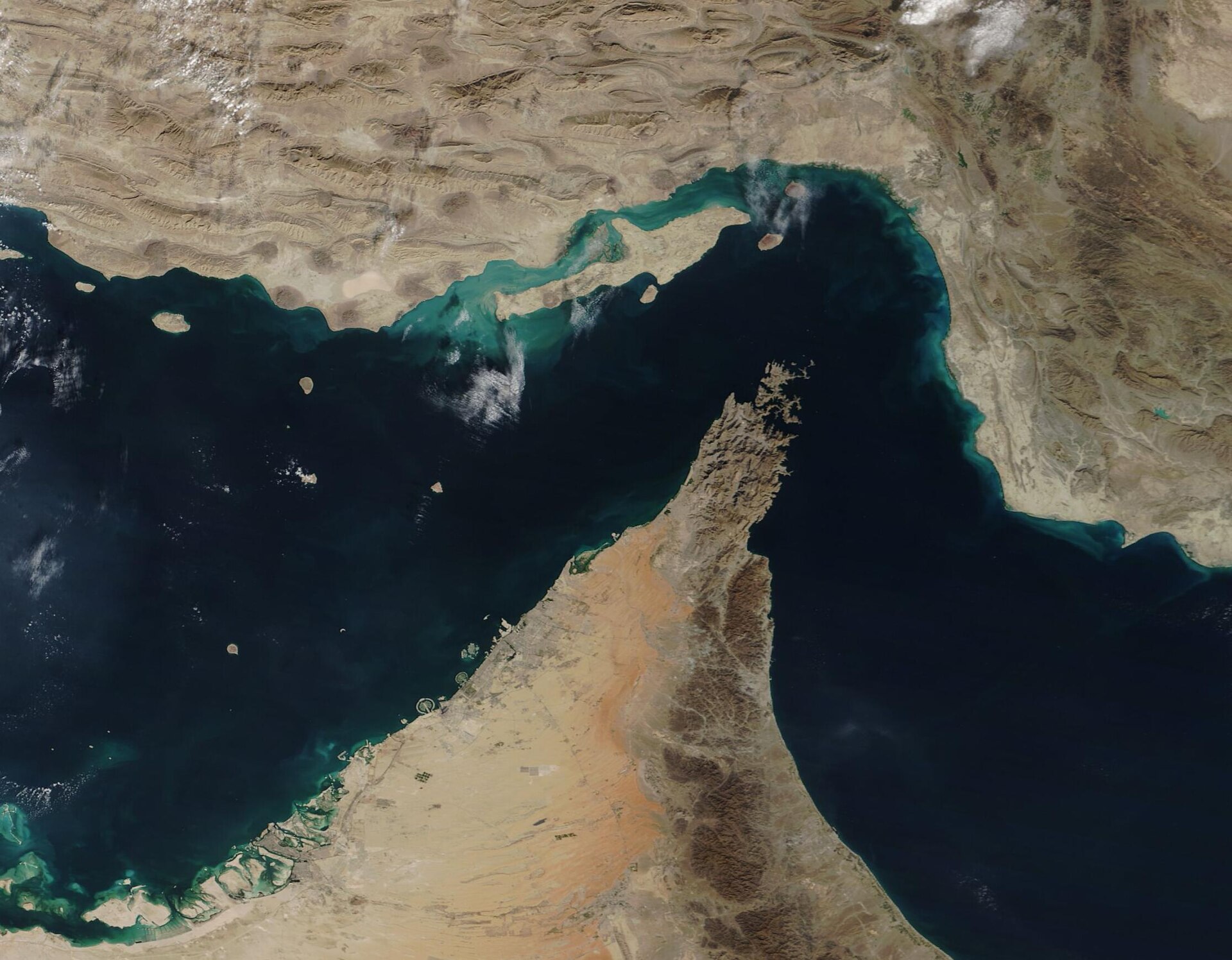
The dispute gives both sides something bilateral to resolve. It creates a mutual-interest basis for direct engagement that does not depend on US mediation, does not require GCC consensus, and predates the current war by more than half a century. The National reported in April 2026 that the islands issue resurfaced in GCC communiqués during the war — a signal that Abu Dhabi has not dropped its sovereignty claim even while opening a channel to the government that garrisons the territory. Saudi Arabia has no analogous territorial dispute with Iran. The closest equivalent — overlapping continental shelf claims in the Persian Gulf — has never generated sustained institutional diplomatic contact between Riyadh and Tehran.
This structural dimension rarely appears in coverage of the UAE-Iran channel. Abu Dhabi has a sovereignty claim that Iran must eventually address. Iran holds a military presence that Abu Dhabi must eventually confront or accommodate. That mutual bind creates conditions under which a direct back-channel is rational for both governments — not a concession by one to the other. The $10 billion to $20 billion and the AI investment exposure may have provided the immediate urgency. The islands provided the architectural basis: a bilateral file old enough and specific enough to sustain a diplomatic relationship independent of any broader regional negotiation.
What Does the GCC Look Like After Abu Dhabi’s Meeting?
The post-deal GCC is likely to function as bilateral arrangements rather than a unified bloc on Iran. Abu Dhabi’s Tehran channel, its OPEC exit, and its Yemen divergence establish a pattern of sovereign foreign policy that treats GCC consensus as optional. Riyadh’s collective defense architecture remains intact, but its diplomatic primacy on the most consequential regional file does not.
The UAE’s institutional divergence from Saudi-led frameworks is not a wartime development. Dissatisfaction with OPEC production caps preceded the conflict by years. Yemen operations diverged from Saudi strategy before the first Iranian drone crossed the Gulf in the current war. The Abraham Accords in 2020 normalized relations with Israel over Saudi insistence on a Palestinian state pathway. Each step established that Abu Dhabi’s foreign policy logic is sovereign, not coalitional — that the UAE would act on its own assessment of its own interests regardless of what Riyadh preferred.
Foreign Affairs posed the comparison Gulf officials have begun voicing in private: the UAE as “a new Qatar” — “a lone state pursuing an aggressive foreign policy in direct conflict with the interests of its neighbors.” In 2017, Saudi Arabia, the UAE, Bahrain, and Egypt blockaded Qatar for precisely that behavior. The result was not Qatari submission but Qatari acceleration: Doha deepened ties with Iran and Turkey, expanded Al Udeid’s strategic value to Washington, and emerged from the crisis with more diplomatic autonomy than it had before the blockade began. Kuwait and Oman refused to participate in the blockade at all.
The Carnegie Endowment observed in April 2026 that “GCC countries will not respond uniformly; each will develop its own strategy depending on its priorities, strengths and weaknesses, and outlook.” The Gulf International Forum put it more directly: “The GCC has never operated as a unified actor in its approach toward Iran, and it is unlikely to do so after the conflict ends.”
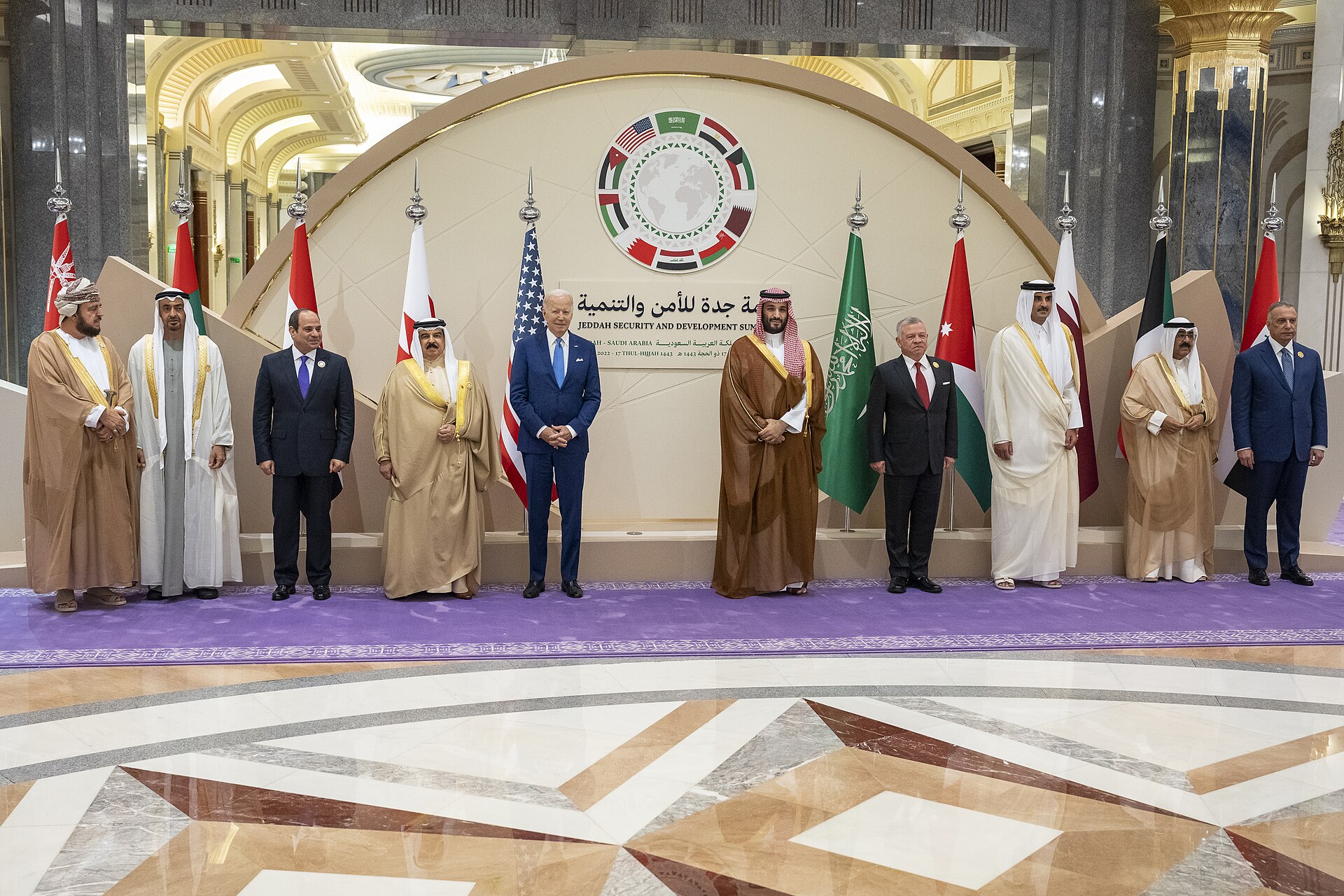
Riyadh still anchors collective defense. Saudi Arabia signed the GCC’s first-ever collective defense invocation for Kuwait after the June attacks. Its foreign minister asked Canada to help protect the Strait of Hormuz. It lifted its five-year ban on Lebanese exports on a day when no other autonomous diplomatic act was available. The country that organizes collective protection and signs mutual defense clauses cannot, at the moment that matters most, sit across from the IRGC at a bilateral table.
The Hajj shield — the 39-day window when 30,000 Iranian pilgrims in Saudi Arabia created a passive deterrent against Iranian escalation — expired on June 9. Three days later, Reuters confirmed that the IRGC had stayed at Sheikh Tahnoun’s guest house. Riyadh’s own nuclear agreement with Washington waives the safeguards the IAEA is simultaneously demanding from Tehran.
Frequently Asked Questions
Do Saudi Arabia and the UAE agree on what the outcome with Iran should be?
The disagreement runs deeper than channel-building or diplomatic timing. CSIS reported in 2026 that “the Iran war has widened differences between Saudi Arabia, which favors accommodation with Iran and Iran-backed regional actors, and the United Arab Emirates, which believes military confrontation with Iran and its allies can produce transformative change.” Brookings described the split more specifically: “Some reporting portrays a Saudi-led axis that favors diplomacy with Iran, versus an Emirati team that wants the United States and Israel to ‘finish off’ the Islamic Republic.” The UAE’s bilateral channel to Tehran opened against that backdrop — Abu Dhabi is not pursuing the same kind of accommodation Riyadh seeks, but bilateral damage control while supporting the continuation of military pressure on Iran’s nuclear and proxy infrastructure.
Did Saudi Arabia have a direct military channel with Iran before the war?
Briefly. Iran maintained a military attaché at its embassy in Riyadh as part of the diplomatic normalization that followed the 2023 Beijing-brokered agreement between the two countries. In March 2026, Saudi Arabia declared the military attaché, his assistant, and three additional embassy staff persona non grata, ordering their departure within 24 hours. Al Jazeera reported the expulsion severed the last direct military communication line between Riyadh and Tehran. What remained after the March expulsion was the civilian ambassador channel — the regular communications that Fortune and CSIS described as assurance traffic, not negotiation. Three months later, Abu Dhabi hosted IRGC officials at the deputy ruler’s private residence.
Has a smaller GCC member ever run a more effective Iran channel than Saudi Arabia?
This is the third documented case. Oman hosted the secret 2012-2013 talks between the United States and Iran that produced the Joint Plan of Action and eventually the 2015 JCPOA. Sultan Qaboos personally authorized the channel; US Secretary of State John Kerry traveled to Muscat for sessions that Saudi Arabia was not invited to attend. After the 2017 GCC blockade of Qatar, Doha deepened bilateral ties with Iran — including food imports, overflight access, and expanded diplomatic contact — as a survival mechanism, emerging with greater diplomatic range than it had before the crisis. Abu Dhabi’s June 2026 channel is the third instance of a smaller Gulf state building direct bilateral capacity with Tehran that the GCC’s largest member could not match or replicate.