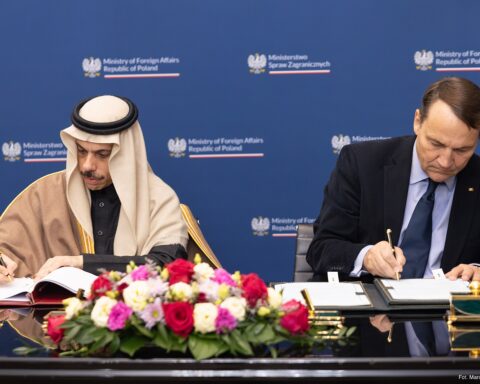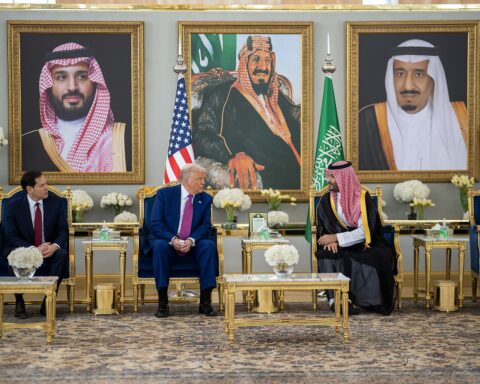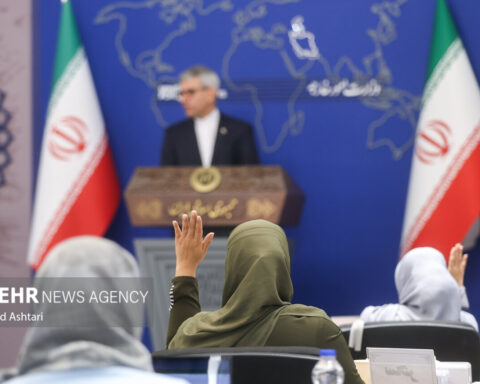

WASHINGTON — The Arms Control Association published its formal assessment of the US-Saudi 123 Agreement on June 12, 2026 — the same day the IAEA Board of Governors declared Iran in NPT non-compliance for the first time in approximately twenty years. Sharon Squassoni, a former government nonproliferation official now at George Washington University’s Elliott School, titled the ACA’s Arms Control Today feature what the agreement structurally is: a “gilded sweetheart deal” that “abandons every nonproliferation standard Washington spent seventeen years building.”
The 123 Agreement signed in Riyadh on May 13 omits all three pillars of the post-2009 “Gold Standard” that the United States established with the UAE: no enrichment ban, no reprocessing ban, and no precondition requiring Saudi Arabia to ratify the IAEA Additional Protocol before American nuclear export licenses are issued. It is the first nuclear cooperation agreement since 2009 to drop the Additional Protocol requirement for an NPT member state, and the Trump administration invoked the NDAA FY2020 Section 1264 waiver to do it — no prior administration has used that provision. Saudi Arabia voted for the IAEA censure resolution 48 hours before the non-compliance finding, supporting enforcement of verification standards that its own nuclear agreement was structured to circumvent.
Table of Contents
- What Makes the US-Saudi 123 Agreement a ‘Gilded Sweetheart Deal’?
- The First NDAA Section 1264 Waiver in History
- What Does the Additional Protocol Cover That Riyadh’s Deal Does Not?
- May 13 — Enrichment Rights in Riyadh, Enrichment Surrender in Muscat
- Does Saudi Arabia’s Censure Vote Undermine Its Own Nuclear Agreement?
- June 12 — The Verdict and Its Mirror
- How Do Iran’s Hardliners Read the Saudi Nuclear Deal?
- What Happens When the Congressional Clock Runs Out?
- Frequently Asked Questions
What Makes the US-Saudi 123 Agreement a ‘Gilded Sweetheart Deal’?
Squassoni’s label is not editorial shorthand. It is a technical description of what the agreement omits relative to every US nuclear cooperation agreement negotiated since 2009, when Washington and Abu Dhabi established the “Gold Standard” — a benchmark that required any partner state to forgo domestic enrichment, forgo reprocessing, and ratify the IAEA Additional Protocol before a single kilogram of US nuclear technology crossed the border. The Saudi deal drops all three requirements. In exchange for those concessions, Saudi Arabia received the agreement bundled with a $142 billion defense package during President Trump’s May 13 Riyadh visit, a transaction the Bulletin of the Atomic Scientists described with rare institutional bluntness: “While going to war over Iran’s uranium enrichment program, President Trump has given both South Korea and Saudi Arabia his blessing to acquire uranium-enrichment and spent-fuel-reprocessing programs, undermining the nuclear nonproliferation regime.”
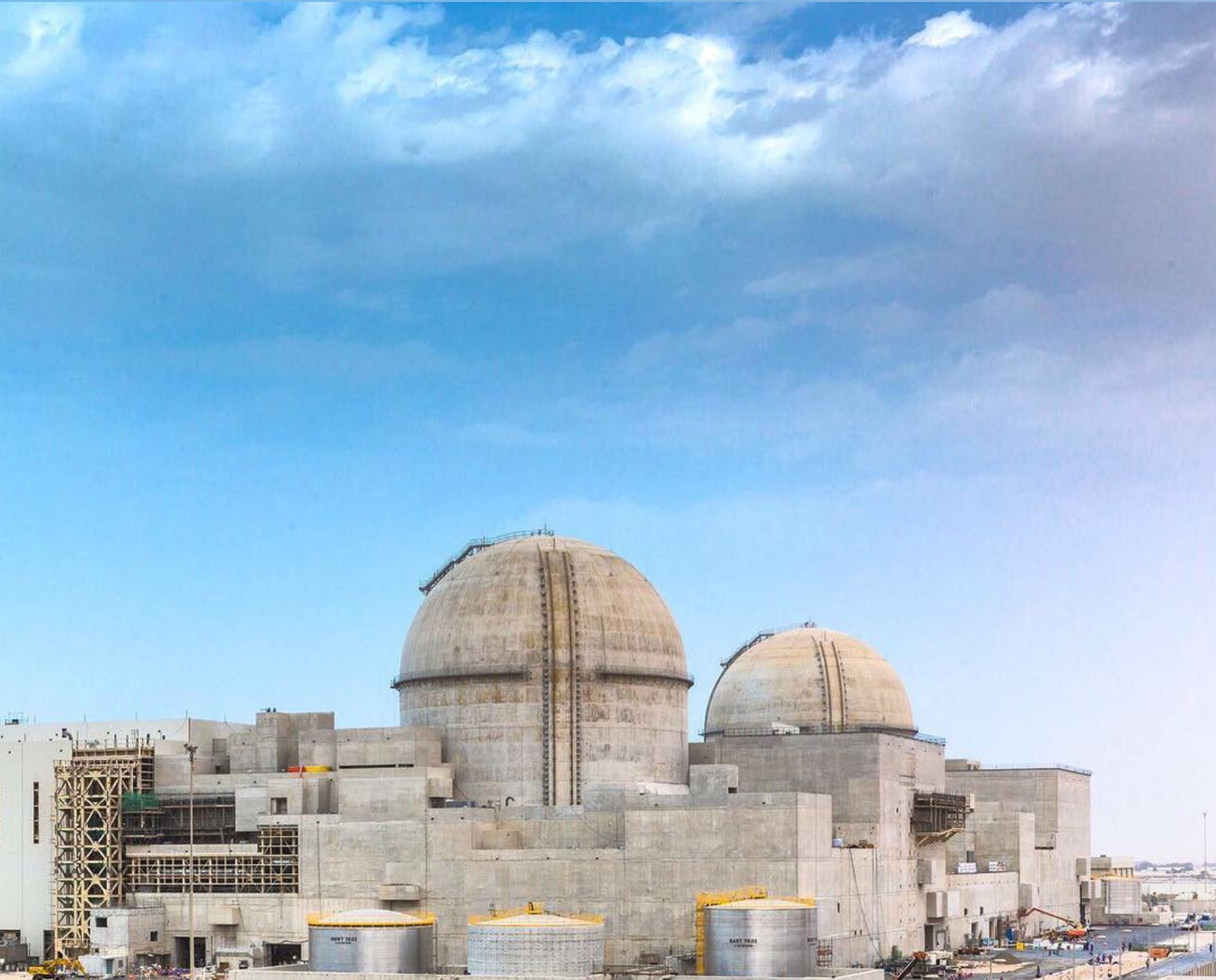
The UAE comparison is not abstract. Abu Dhabi’s 2009 agreement explicitly prohibits it from “possessing sensitive nuclear facilities within its territory or otherwise engaging in activities within its territory relating to enrichment of uranium or reprocessing of nuclear fuel.” The Barakah plant — four APR-1400 reactors, all operational — runs entirely on imported fuel under guaranteed supply assurances. Every US 123 agreement negotiated after Barakah used this framework as the floor, not the ceiling. The Saudi deal is the first to treat it as optional.
| Requirement | UAE (2009 Gold Standard) | Saudi Arabia (2026) |
|---|---|---|
| Uranium enrichment ban | Yes — permanent, treaty-level | No — omitted |
| Plutonium reprocessing ban | Yes — permanent, treaty-level | No — omitted |
| IAEA Additional Protocol required | Yes — precondition for exports | No — substituted with bilateral arrangement |
| IAEA verification scope | Entire nuclear program | Cooperation facilities only |
| Fuel supply model | Guaranteed external supply | Domestic fuel cycle permitted |
What makes the omission structural rather than merely permissive is that Saudi Arabia has stated its intentions on the record. Energy Minister Prince Abdulaziz bin Salman told an industry conference in 2023 that the kingdom wants “the entire nuclear fuel cycle, which involves the production of yellowcake, low-enriched uranium, and the manufacturing of nuclear fuel both for our national use and of course for export.” Crown Prince Mohammed bin Salman was more direct in a 2018 Fox News interview: “If Iran developed a nuclear bomb, we will follow suit as soon as possible.” The 123 Agreement did not create these ambitions, but it removed the principal legal barrier to pursuing them under American auspices.
“While going to war over Iran’s uranium enrichment program, President Trump has given both South Korea and Saudi Arabia his blessing to acquire uranium-enrichment and spent-fuel-reprocessing programs, undermining the nuclear nonproliferation regime.”
The HOS Daily BriefThe Middle East briefing 3,000+ readers start their day with.
One email. Every weekday morning. Free.
Bulletin of the Atomic Scientists, April 2026
Kelsey Davenport, the ACA’s director for nonproliferation policy, identified the operational consequence: “This suggests that once the bilateral safeguards agreement is in place, it will open the door for Saudi Arabia to acquire uranium enrichment technology or capabilities — possibly even from the United States.” The broader tension between Saudi Arabia’s IAEA vote and its own nuclear bargain has been visible since the first censure in November 2025. What Squassoni’s analysis adds is the mechanism — the specific verification architecture that converts a diplomatic contradiction into a nonproliferation gap.
The First NDAA Section 1264 Waiver in History
The 123 Agreement’s most consequential procedural feature is not what it contains but what the Trump administration had to bypass to submit it. Under normal law, Section 1264 of the FY2020 National Defense Authorization Act bars the executive branch from submitting the Nuclear Proliferation Assessment Statement — the analytical document required for congressional 123 review — for any country that has not accepted enhanced IAEA safeguards, meaning the Additional Protocol. Saudi Arabia signed a Comprehensive Safeguards Agreement with the IAEA in 2009 but has not signed the Additional Protocol. The barrier was explicit and intentional.
Section 1264 includes a waiver provision: the president can override the bar by submitting a report to Congress “describing the manner in which such agreement would advance the national security and defense interests of the United States.” The Trump administration invoked that waiver. No prior administration — Obama, Biden, or Trump in his first term — has done so, despite multiple 123 negotiations during that period. Every previous agreement was negotiated with a country that had already accepted the Additional Protocol, rendering the waiver unnecessary. The Saudi deal is the first to require it and the first to use it.
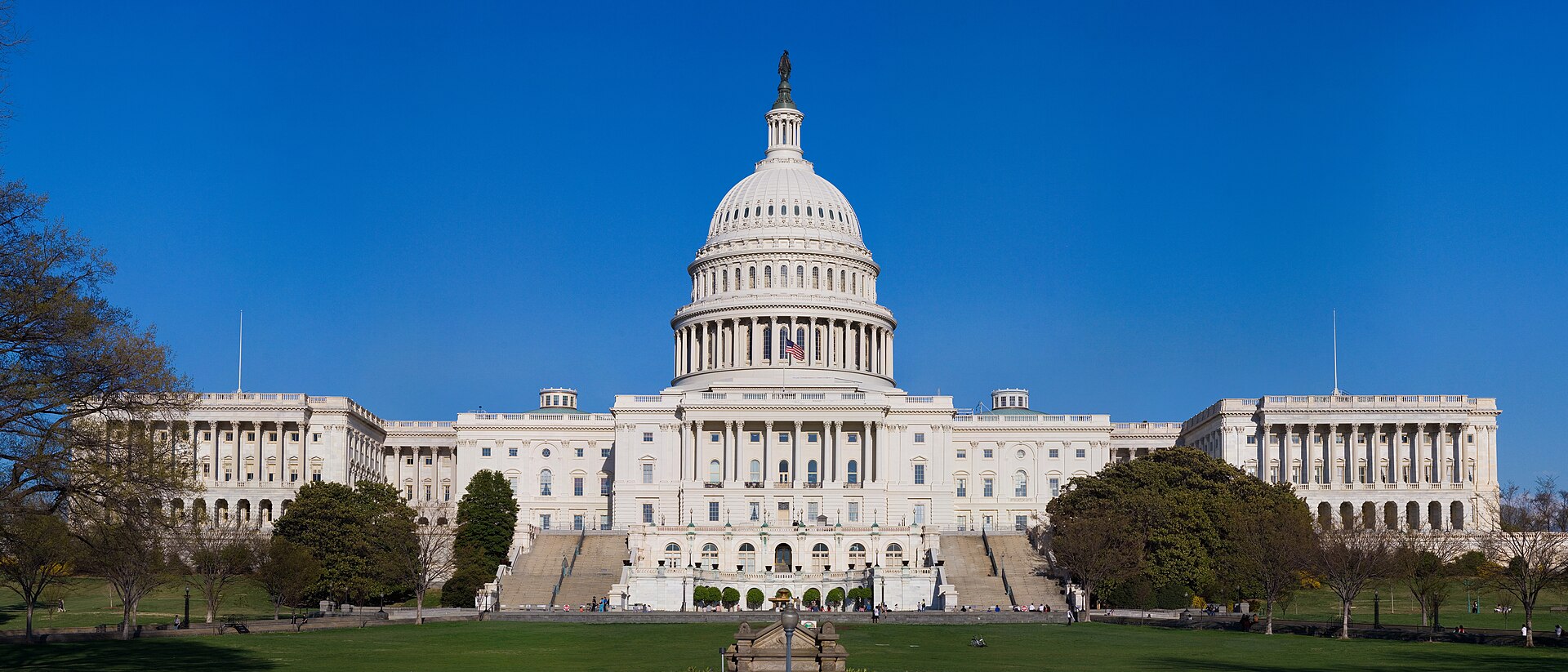
Rep. Brad Sherman of California, ranking member on the relevant House subcommittee, announced a Resolution of Disapproval in direct response, arguing that the waiver sets a precedent that cannot be contained. The waiver report itself has not been made public — it was provided to congressional committees in classified form, meaning the public rationale for overriding seventeen years of nonproliferation policy remains inaccessible to the public whose safety it is meant to protect. The parallel to other structural gaps in US-Saudi security architecture is difficult to ignore: as with the absence of a Status of Forces Agreement governing PSAB, Washington has substituted a bilateral workaround for the multilateral standard the international system was designed to enforce.
The precedent problem is immediate. South Korea, which received its own enrichment permissions from the Trump administration, Turkey, Egypt, and the UAE itself can now cite the Saudi terms when their own 123 agreements come up for renewal or renegotiation. The Gold Standard was a floor because it was universal; the Saudi waiver converts it into a ceiling that only Abu Dhabi chose to accept. Davenport warned that the administration “has not carefully considered the proliferation risks posed by its proposed nuclear cooperation agreement with Saudi Arabia or the precedent this agreement may set.”
What Does the Additional Protocol Cover That Riyadh’s Deal Does Not?
The Additional Protocol covers a state’s entire nuclear program — all facilities declared and undeclared, all nuclear-related activities past and future — with IAEA authority to conduct short-notice inspections anywhere. The US-Saudi bilateral safeguards arrangement covers only facilities where American cooperation is occurring, leaving any domestically developed enrichment capability outside its verification scope.
The Additional Protocol exists because of a specific intelligence failure. In the early 1990s, IAEA inspectors discovered that Iraq had pursued a covert nuclear weapons program at undeclared facilities while remaining technically compliant with its Comprehensive Safeguards Agreement — which only required accounting for declared nuclear material at declared sites. North Korea demonstrated the same vulnerability. The IAEA responded with Programme 93+2, which produced the Additional Protocol: a supplementary agreement that closes the gap between what a state declares and what it actually does.
Under the Additional Protocol, a state must declare all buildings on any nuclear site regardless of their function, all nuclear-related research and development activities past and present, and all plans for future nuclear-related activities including those at the design stage. The IAEA gains “complementary access” — the authority to conduct short-notice inspections at undeclared locations to verify the correctness and completeness of a state’s declarations. It can collect environmental samples at any location, monitor dual-use procurement, and investigate discrepancies without prior notification. More than 140 countries have adopted the Additional Protocol. Saudi Arabia has not.
| Verification Element | IAEA Additional Protocol | US-Saudi Bilateral Arrangement |
|---|---|---|
| Scope of coverage | Entire nuclear program, all facilities | Only facilities with US cooperation |
| Undeclared-site inspection authority | Yes — complementary access | No |
| Environmental sampling (any location) | Yes | Not specified |
| Declaration of past/future activities | Required | Not required |
| Dual-use procurement monitoring | Yes | Not specified |
| Short-notice inspections | Yes — 24 hours or less | Not specified |
| All buildings on nuclear sites declared | Yes — regardless of function | No — cooperation sites only |
The US-Saudi deal substitutes a “Bilateral Safeguards Agreement” that provides for IAEA “involvement” at enrichment, conversion, fuel fabrication, and reprocessing sites where US-Saudi cooperation is occurring. The specific measures in that bilateral arrangement have not been publicly specified, and the agreement would need approval from the IAEA Board of Governors. Administration officials have said the bilateral terms would “mirror those contained in the AP” — but mirroring the AP’s provisions at declared cooperation sites is categorically different from the AP’s central function, which is verifying what exists beyond declared sites.
The gap matters because Saudi Arabia’s nuclear footprint extends well beyond any facility that would fall under US cooperation. The kingdom has uranium deposits spanning more than 10,000 square miles of exploration territory, an active yellowcake cooperation program with Jordan, and the stated ambition to produce enriched uranium “for export.” The Stimson Center assessed in 2026 that Saudi Arabia’s current nuclear trajectory “would, if fully realised over 10 to 15 years, convert most of those technical ones and twos into threes and fours” on a five-point weapons capability scale. Any domestically developed enrichment capability outside the cooperation framework would fall under only Saudi Arabia’s basic Comprehensive Safeguards Agreement — the same instrument that failed to detect Iraq’s covert weapons program thirty-five years ago, and that cannot currently account for 440.9 kilograms of Iranian enriched uranium.
May 13 — Enrichment Rights in Riyadh, Enrichment Surrender in Muscat
The date the 123 Agreement was signed exposes a contradiction that no amount of diplomatic framing can resolve. On May 13, 2026, in Riyadh, the United States formalized a nuclear cooperation agreement granting Saudi Arabia the right to enrich uranium and reprocess spent fuel without the Additional Protocol safeguards that the international community considers the minimum verification standard. On the same day, in Muscat, American negotiators were presenting Iran with ceasefire conditions that included surrendering 440.9 kilograms of uranium enriched to 60% purity and accepting a twenty-year moratorium on enrichment of any kind.

The asymmetry is not merely optical. Washington was asking one NPT member state to abandon enrichment entirely while granting another NPT member state enrichment rights under verification standards weaker than the ones being demanded of the first. The Congressional Research Service identified the operational consequence in terms that congressional staff would recognize as a warning: “Will it be more challenging to negotiate enrichment limits and insist on the additional protocol if the United States is greenlighting a Saudi enrichment program with less intrusive safeguards?” The answer arrived not as analysis but as fact — Iran’s Supreme National Security Council rejected the Muscat terms within weeks, and the enrichment moratorium was the provision Iranian negotiators cited as structurally unacceptable.
The Bulletin of the Atomic Scientists placed the simultaneity in its broadest context that April, noting that the Trump administration was waging a military campaign predicated on the danger of Iranian enrichment while simultaneously removing legal barriers to Saudi and South Korean enrichment. The 123 Agreement does not merely grant Saudi Arabia technical permissions; it strips the United States of the credibility required to demand equivalent restrictions from adversaries. Researchers attributed more than 1,200 missile and rocket attacks on Saudi energy infrastructure and government facilities to Iran and Iran-backed groups between February and May 2026 alone — meaning the agreement permits enrichment infrastructure to be built in an active conflict zone that has already been demonstrated as a target-rich environment for the very adversary whose enrichment program the agreement’s advocates cite as justification.
“Will it be more challenging to negotiate enrichment limits and insist on the additional protocol if the United States is greenlighting a Saudi enrichment program with less intrusive safeguards?”
Congressional Research Service, CRS IF10799, March 2026
Does Saudi Arabia’s Censure Vote Undermine Its Own Nuclear Agreement?
On June 10, 2026, the IAEA Board of Governors voted 19 to 3 — with 12 abstentions — to adopt resolution GOV/2026/40, censuring Iran for failing to account for its enriched uranium stockpile, grant inspector access to declared nuclear sites, or comply with any of the Board’s outstanding demands from the November 2025 resolution. Russia, China, and Burkina Faso voted against. Saudi Arabia, which holds a Board seat through 2027, voted in favor — the second consecutive censure vote in which Riyadh supported enforcement of verification standards that its own bilateral nuclear agreement with Washington was drafted to avoid.
The resolution demands exactly what the Additional Protocol is designed to provide: full declaration of nuclear material inventories, design information for all facilities, and immediate inspector access to verify that information. Iran has not engaged the IAEA on outstanding compliance matters since suspending all verification activities on February 28, 2026. The IAEA confirmed that it has been denied access to twenty of twenty-two declared nuclear sites and “cannot provide any information on the current size, composition or whereabouts” of Iran’s enriched uranium stockpile. The Cairo accord — the last diplomatic instrument offering Iran a path back to voluntary compliance — was voided for the second time by the vote Saudi Arabia supported.
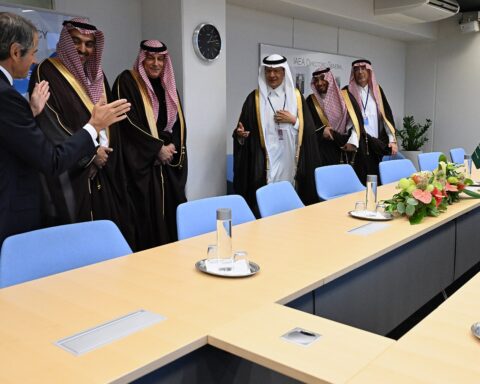
Nine days before the censure vote, IAEA Director General Rafael Grossi visited Riyadh on June 3, meeting both Energy Minister Prince Abdulaziz bin Salman and Foreign Minister Prince Faisal bin Farhan. Neither the IAEA nor the Saudi government disclosed whether Additional Protocol accession was discussed during those meetings. Grossi’s public statement on June 5 referenced “productive discussions on the Kingdom’s civil nuclear program” without specifying whether the discussions addressed the verification gap that his own agency had flagged in Iran’s case. The silence is itself a data point: Saudi Arabia is willing to vote for the enforcement of safeguards standards that it has not adopted and that its American nuclear partner has not required it to adopt.
The EU statement to the June Board session underscored the asymmetry without naming it. The European delegation noted that Iran “remains the only NPT non-nuclear-weapon State to have produced such a quantity” of highly enriched uranium — a distinction that carries weight precisely because the Additional Protocol is meant to ensure that no other NPT state can do the same undetected. Saudi Arabia’s 123 Agreement, by waiving the AP precondition, creates the structural possibility of a second such state. The censure vote that Riyadh supported was, in effect, an endorsement of the framework from which its own deal claims an exemption.
June 12 — The Verdict and Its Mirror
June 12, 2026, produced two documents that, read together, describe a nonproliferation regime arguing with itself. The IAEA Board of Governors issued its formal finding of Iranian non-compliance with NPT safeguards obligations — the first such statutory determination in approximately twenty years, since the 2006 referral that sent Iran’s file to the UN Security Council. The Board deferred a second referral to the Security Council, warning that the option “remains” if Iran does not reverse course, but the finding itself carries independent legal weight: it formally establishes that an NPT member state is in material breach of its safeguards obligations during an active military conflict in which its nuclear infrastructure has been physically struck.
Hours after the non-compliance finding, the Arms Control Association released its June issue of Arms Control Today with Squassoni’s “Gilded Sweetheart Deal” analysis as the lead feature. The timing was not coordinated — the ACA’s publication schedule and the IAEA Board calendar are independent processes — but the coincidence illuminated a structural problem that neither institution created. The same international system that declared Iran non-compliant for failing to meet verification standards also produced, through its most powerful member state, a nuclear cooperation agreement that exempts Saudi Arabia from the verification framework those standards rest on. One document says the Additional Protocol regime must be enforced; the other says it can be waived.
The 440.9 kilograms of Iranian uranium enriched to 60% purity have been unverified for more than 97 days — enough fissile material, if further enriched, for roughly ten nuclear weapons. Director General Grossi estimated that most of it — between 265 and 287 kilograms — is stored in the Esfahan tunnel complex, with approximately 80 kilograms at Fordow and 74 to 96 kilograms at Natanz, but those are estimates from the last verified inventory, not current confirmed positions. The non-compliance finding acknowledges that the IAEA does not know where all of this material is. The 123 Agreement, by declining to require the Additional Protocol, ensures that the international community will have a structurally similar blind spot if Saudi Arabia ever moves nuclear material outside the scope of its bilateral cooperation facilities — the very scenario the Gold Standard was created to prevent.
How Do Iran’s Hardliners Read the Saudi Nuclear Deal?
Tehran has argued for decades that it is “singled out” for enrichment restrictions that other NPT member states are not required to accept. That argument has always been weakened by the fact that the international community’s enhanced safeguards demands — the Additional Protocol, snap inspections, full declaration requirements — apply universally and have been adopted by the vast majority of NPT signatories. The US-Saudi 123 Agreement undermines that response by creating a specific, documented case in which Washington granted an NPT member state enrichment rights while waiving the enhanced safeguards framework it demands from Iran.
The institutional weight of this precedent registers most visibly in Iran’s parliament. MP Malek Shariati introduced a “triple urgency” bill in March 2026 — the “Support for the Nuclear Rights of the Iranian Nation Act” — with three pillars: withdrawal from the NPT, repeal of all JCPOA implementing legislation, and authorization to negotiate new international nuclear agreements outside the NPT framework. Parliament has not convened in person since the February 28 strikes, and the bill’s procedural status remains unclear. But the Saudi deal arms the hardliner position with a concrete exhibit: if the NPT produces asymmetric obligations — verification standards for Iran, verification waivers for Saudi Arabia — then the treaty’s value proposition for Tehran collapses from within.
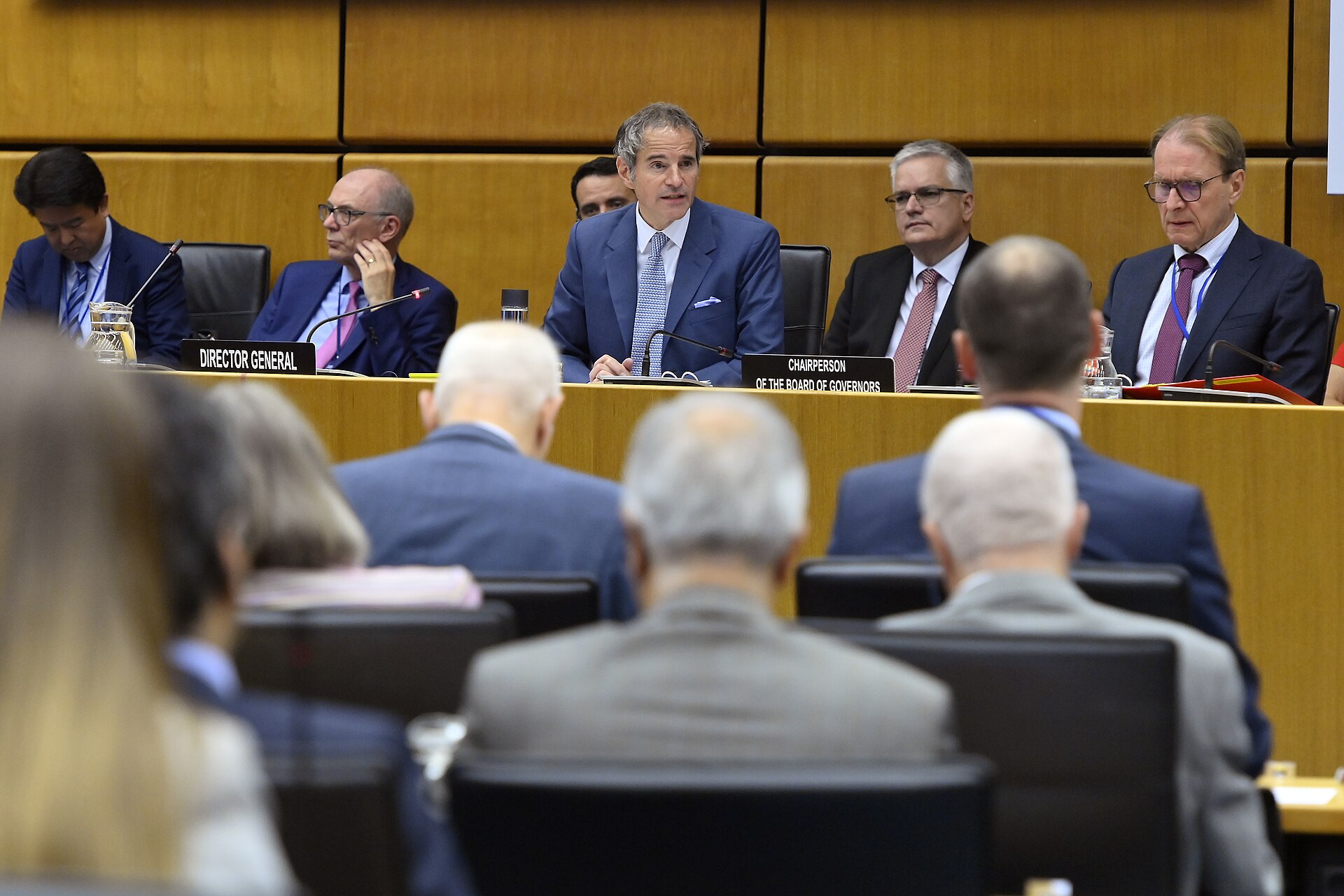
Iran’s Vienna mission responded to the June 10 censure by calling it “another political resolution on Iran’s peaceful nuclear activities, devoid of the professionalism expected from a technical body.” Deputy Foreign Minister Kazem Gharibabadi described the enforcement effort as “a dangerous attempt to whitewash accountability for aggressors and criminals.” These statements are diplomatically predictable, but the NPT withdrawal bill they accompany is not — it represents the first formal legislative mechanism for Iran to exit the treaty framework entirely, introduced in the same season that the United States waived that framework’s verification requirements for Iran’s principal regional rival.
Foreign Minister Abbas Araghchi placed the blame directly: “Washington bears responsibility for the current escalation surrounding Iran’s nuclear program.” The accusation is standard Iranian diplomatic rhetoric, but the 123 Agreement gives it a factual anchor it did not previously have. When the Trump administration’s communications with Tehran are already contested, the decision to simultaneously arm Iran’s NPT-withdrawal caucus with evidence of American nonproliferation double standards represents a strategic cost that the $142 billion defense package does not offset.
What Happens When the Congressional Clock Runs Out?
The Atomic Energy Act gives Congress two review periods totaling 90 days of continuous session after a 123 agreement is formally submitted. If Congress does not adopt a joint resolution of disapproval within that window, the agreement enters into force automatically — no affirmative vote required, no floor debate necessary. The mechanism is designed to favor executive authority: disapproval requires active majorities in both chambers and is subject to presidential veto. No president has ever been overridden on a 123 agreement, and the last serious disapproval effort — against the India deal in 2008 — did not reach a floor vote.
Rep. Brad Sherman has announced he will introduce a Resolution of Disapproval if the submitted agreement fails to include Gold Standard and Additional Protocol requirements, which it does not. Senators Ed Markey and Jeff Merkley have taken a different approach — their No Nuclear Weapons for Saudi Arabia Act, reintroduced in March 2026, would change the default mechanism entirely, requiring affirmative congressional approval rather than the pass-unless-disapproved structure. Their March 18 letter to Secretary Rubio asked explicitly: “How will the IAEA be involved?” The letter demanded the administration meet the Gold Standard of nonproliferation protections and justify any deviation. Neither the administration’s classified waiver report nor its response to the Markey-Merkley letter has been made public.
The political arithmetic favors the agreement’s survival. Republican majorities in both chambers, combined with the $142 billion defense package’s industrial base implications across multiple states, make a disapproval resolution unlikely to pass — and virtually certain to be vetoed if it did. The legislative fight matters less for its immediate outcome than for its precedent-setting function. The Foundation for Defense of Democracies, which supported the censure of Iran, has argued that “Washington must not relax nonproliferation standards for Saudi Arabia,” placing the Saudi deal in tension with the broader hawkish consensus on Iranian nuclear enforcement. The 90-day clock is running, but the structural consequence will outlast whatever Congress does with it: any future 123 negotiation with South Korea, Turkey, Egypt, or the UAE will cite the Saudi terms as the new baseline. What the kingdom receives in return — a reactor program whose strategic value is entirely contingent on Phase 2 enrichment talks Riyadh cannot enter — is the subject of The Enrichment Ceiling Will Be Set Without Riyadh in the Room.
The fiscal pressures reshaping Saudi Arabia’s Vision 2030 commitments add a dimension that the congressional debate has not yet absorbed. A nuclear fuel cycle built for “national use and of course for export,” as Prince Abdulaziz described it, requires capital expenditure on the order of tens of billions of dollars over a decade or more — investment that competes directly with the defense procurement, infrastructure, and debt obligations already straining PIF liquidity. The 123 Agreement grants the legal permission; whether Saudi Arabia can finance the ambition it enables is a separate question that the congressional review is not structured to evaluate.
The nuclear terms the MOU defers — enrichment caps, stockpile disposal, IAEA access schedules — are the same provisions Saudi Arabia’s own 123 Agreement does not require of itself, a structural asymmetry examined in detail in Sixty Days for Nuclear Terms Nobody Has Written. Abbas Araghchi’s June 13 CBS rejection of US demands to remove Iran’s HEU stockpile — while the Saudi 123 Agreement permits the enrichment Washington insists Tehran surrender — documents that asymmetry in real time: Washington Demands From Tehran What It Waived for Riyadh.
Frequently Asked Questions
Has Saudi Arabia built any enrichment or reprocessing facilities?
Saudi Arabia has no operational enrichment plants, reprocessing facilities, or weapons design laboratories. However, the kingdom’s nuclear infrastructure is not starting from zero. The King Abdullah City for Atomic and Renewable Energy (KACARE) has contracted Korea Electric Power Corporation (KEPCO) and Worley for site assessments at two planned reactor locations — Dumat Al-Jandal in the northwest and Khor Duweihin on the Gulf coast. China Nuclear Engineering Corporation signed a 2017 memorandum of understanding for a research reactor, and the kingdom’s geological survey has mapped uranium deposits across more than 10,000 square miles of exploration territory in the Arabian Shield. None of these facilities currently fall under the bilateral safeguards arrangement in the 123 Agreement because they are not yet sites of US-Saudi nuclear cooperation — meaning they would be covered only by the basic Comprehensive Safeguards Agreement, not by Additional Protocol-equivalent verification.
Could the UAE renegotiate its 2009 Gold Standard terms after the Saudi deal?
Legally, yes. The UAE’s 123 agreement includes a 40-year term with provisions for amendment and renewal, and Emirati officials have publicly expressed interest in revisiting the enrichment ban. The Saudi deal creates a “most favored nation” dynamic — Abu Dhabi accepted permanent enrichment and reprocessing restrictions in exchange for guaranteed fuel supply and American political goodwill, and the 123 Agreement with Riyadh demonstrates that Washington was willing to grant a neighboring state the same cooperation without those restrictions. Whether the UAE pursues renegotiation depends on political calculation rather than legal constraint; the Barakah plant’s operational success on imported fuel reduces the technical urgency, but the principle of unequal treatment is now documented in treaty text rather than speculation.
What happens if Congress passes a resolution of disapproval?
A joint resolution of disapproval requires simple majorities in both the House and Senate and is subject to presidential veto, which requires two-thirds supermajorities in both chambers to override. No president has ever been overridden on a nuclear cooperation agreement. The most significant congressional challenge to a 123 agreement — the opposition to the US-India deal in 2006-2008 — ultimately resulted in Congress passing the Hyde Act to impose additional conditions rather than blocking the agreement outright. If the Trump administration vetoes a disapproval resolution and the override fails, the agreement enters into force on the original timeline, and the congressional record of opposition becomes a political exhibit rather than a legal barrier.
How long would it take Saudi Arabia to build enrichment capacity?
The Stimson Center’s 2026 assessment estimates 10 to 15 years for Saudi Arabia to develop full fuel-cycle capability, assuming sustained investment and technology transfer. That timeline would convert Saudi Arabia’s current nuclear indicators — rated at “ones and twos” on a five-point weapons-relevant capability scale — into “threes and fours,” representing indigenous enrichment capacity, fuel fabrication competence, and the technical base from which a weapons program could, in theory, be pursued. The 123 Agreement removes the principal legal barrier to beginning that timeline, but the capital requirements are substantial: Pakistan’s enrichment program took approximately fifteen years and several billion dollars in 1970s-1980s currency; a modern centrifuge facility meeting commercial-grade specifications would cost significantly more, competing for resources with Saudi Arabia’s already-strained fiscal commitments.
What the June 12 documents describe, together, is a nonproliferation regime that has split its own logic in two. The same Washington that demands Iran surrender 440.9 kilograms of enriched uranium under threat of military escalation has waived the verification framework that would detect equivalent accumulations elsewhere. The 19-to-3 vote that censured Iran rests on a principle — enhanced safeguards as the minimum standard for any NPT state with nuclear ambitions — that the US-Saudi 123 Agreement formally exempted Riyadh from accepting. That exemption does not expire with the congressional clock. It is now treaty text. The same asymmetry means Riyadh holds no instrument to verify whether the Iran MOU’s nuclear terms — once written — will close the gap the 123 Agreement created: Saudi Arabia cannot authenticate the deal it approved.