
RIYADH — Saudi Arabia has been named as one of twelve approvers of a nuclear deal that does not contain nuclear terms. Phase one of the Islamabad Memorandum of Understanding — the document Donald Trump says Supreme Leader Mojtaba Khamenei has personally approved — covers a sixty-day ceasefire extension, Hormuz reopening, and sanctions relief. The nuclear question, the reason the deal exists and the reason Saudi Arabia’s name appears on it, is deferred entirely to a second phase of negotiations whose terms have not been drafted, whose participants have not been agreed, and whose timeline is shorter than any comparable nuclear negotiation in modern diplomatic history.
A senior Trump administration official, speaking on June 12, described the arrangement with unusual candour: “The Iranians commit to destroying and removing the enriched material, but how do you do that? It’s going to take a little bit of time to figure it out.” The same day, the International Atomic Energy Agency declared Iran in material non-compliance with its NPT Safeguards Agreement, and IRNA quoted unnamed Iranian officials insisting that enriched uranium would remain inside the country. Saudi Arabia’s Ministry of Foreign Affairs issued no statement on any of it.
Table of Contents
- What Is in Phase One — and What Is Not
- How Does a Sixty-Day Window Solve What Twenty Months Could Not?
- The Contradiction at the Centre of the Framework
- What Did Khamenei Actually Approve?
- Can Saudi Arabia Object to Enrichment It Just Permitted for Itself?
- Where Is Saudi Arabia’s Seat in Phase Two?
- The IAEA Non-Compliance Ruling
- The Trigger MBS Set in 2018
- Frequently Asked Questions
What Is in Phase One — and What Is Not
Phase one of the Islamabad MOU is, by the admission of both sides, a ceasefire-plus-sanctions-relief instrument. Iran’s Foreign Minister Abbas Araghchi confirmed to Iranian state television that the first phase covers the sixty-day ceasefire extension, Hormuz reopening without transit fees, mine clearance, Lebanon war termination, and mutual non-interference pledges — the terms that would take effect immediately upon signing, currently scheduled for Sunday, June 14, in Geneva, with Vice President JD Vance named as the American signatory.
What phase one does not contain is the substance that makes the document a nuclear deal in any recognisable sense of the term. Axios confirmed on June 12 that the only nuclear content in phase one is an Iranian “commitment not to pursue a nuclear weapon” and a statement that “the first issues to be negotiated during the 60-day window will be how to dispose of Iran’s highly enriched uranium and how to address Iranian enrichment.” There are no enrichment caps, no facility closure schedule, no IAEA access timeline, and no mechanism for verifying any commitment Iran has made — only a declaration of intent to negotiate those mechanisms later, in a process whose structure has not been defined.
The distinction matters because Saudi Arabia has been named as approving the entire framework, not phase one alone. Trump listed Saudi Arabia among twelve nations that had approved the MOU — a designation Riyadh has not acknowledged or responded to, even as Benjamin Netanyahu publicly stated that Israel is “not a party” to the arrangement. Saudi Arabia did not make even that clarification, leaving its name attached to a document whose nuclear content amounts to a promise to discuss nuclear content at a later date, in a room Saudi Arabia will not be invited to enter. Araghchi’s June 13 IRIB demand that the MOU cover “all fronts, including Lebanon” added a precondition that sits before Phase 2 can even begin: Iran conditioned the MOU on a Lebanon ceasefire that Hezbollah had already rejected — placing an organisation Tehran controls at the gate of a timeline Saudi Arabia is named as approving but cannot influence.
How Saudi Arabia’s state broadcaster has been filling that silence is the subject of a separate analysis. Al Arabiya’s role as Riyadh’s broadcast proxy for the deal — carrying Tehran’s apparent approval of a framework the Saudi MOFA will not confirm — creates a three-version contradiction that no party has resolved ahead of the Geneva signing window.
The Middle East briefing 3,000+ readers start their day with.
One email. Every weekday morning. Free.
How Does a Sixty-Day Window Solve What Twenty Months Could Not?
It does not. The closest structural precedent is the 2013 Joint Plan of Action, the interim agreement that preceded the JCPOA. The JPA left enrichment caps, stockpile limits, and verification protocols for subsequent negotiation — and those negotiations took twenty months, not sixty days.
The conditions the JPA negotiators worked under are also unavailable to the MOU: P5+1 participation — the United States, United Kingdom, France, Russia, China, and Germany — with detailed technical annexes, continuous IAEA monitoring throughout, and inspectors physically inside every declared Iranian nuclear facility. The 2026 MOU allocates sixty days for the same scope of work under none of those conditions.
| 2013 JPA → JCPOA | 2026 MOU Phase Two | |
|---|---|---|
| Negotiation window | 20 months | 60 days |
| Starting enrichment level | 3.67% | 60% U-235 |
| IAEA access during talks | Continuous | None since Feb 28, 2026 |
| Participating parties | P5+1 (6 nations) | Undetermined |
| Verified stockpile | 300 kg UF6 | 440.9 kg HEU (unverified 97 days) |
| Saudi role | Observer (via GCC consultation) | None — excluded from all 3 channels |
Carnegie Endowment scholars Jane Darby Menton and Mohammad Ayatollahi Tabaar observed in May that Tehran appears to be “pushing the enrichment issue down the negotiations agenda, recognizing that the gap between the two sides may be too wide for a solution, resembling the treatment of disarmament in the Hezbollah and Hamas negotiations with Israel where the issue was deferred to future steps after a ceasefire.” The pattern they describe is not speculative — it is the operational logic of every ceasefire-first, disarmament-later framework in recent Middle Eastern diplomacy, and in no case has the deferred disarmament materialised. UN Security Council Resolution 1559, which called for the disarmament of all Lebanese militias, was adopted in 2004 and remains unimplemented twenty-two years later.
The practical effect is that the party banking economic benefits in phase one — sanctions relief, asset unfreezing, Hormuz normalisation — enters phase two with diminished incentive to make concessions, and the sixty-day window stretches into something closer to the twenty months the JCPOA required, except without IAEA access, without multilateral participation, and without Saudi Arabia anywhere near the table where the terms that affect Saudi security would be decided. That gap has widened further since: Vienna Audited the Deal Geneva Has Not Yet Signed sets out the 15-year enrichment divergence and 108-day IAEA verification gap Phase 2 now inherits.
The Contradiction at the Centre of the Framework
The most revealing feature of the Islamabad MOU is not what it defers but what it claims to have settled while the two parties describe the settlement in mutually exclusive terms. On June 12, a senior Trump administration official told the Times of Israel liveblog: “We provide in the agreement that this material would be destroyed on site, and then taken out of the country.” The same day, IRNA cited unnamed Iranian officials as stating that Tehran would maintain its position on the “right” to uranium enrichment and on keeping enriched material inside the country during phase two.
“The Iranians commit to destroying and removing the enriched material, but how do you do that? It’s going to take a little bit of time to figure it out.”
— Senior Trump administration official, Times of Israel, June 12, 2026
These are not different interpretations of an ambiguous clause — they are contradictory descriptions of what the document says. The American position is that enriched material leaves Iran. The Iranian position is that it does not. Both positions were stated publicly on the same day, attributed to the same agreement, with no reconciliation offered by either side.
Araghchi himself, speaking to CBS Face the Nation in March, offered to “dilute those enriched material, or down-blend them, as they say, into lower percentage” — a process that by definition keeps the material on Iranian soil, reducing its enrichment level without removing a single gram from the country. The American description involves removal; Araghchi’s involves retention at a lower percentage. These are not two paths to the same destination. Araghchi’s CBS appearance on the same question — rejecting US demands to remove Iran’s HEU stockpile while Riyadh’s own 123 Agreement permits the enrichment Washington demands Iran surrender — is the subject of Washington Demands From Tehran What It Waived for Riyadh.
Whether 440.9 kilograms of highly enriched uranium stays in Iran or leaves Iran is not a procedural detail for phase-two implementation — it is the central question of nuclear nonproliferation in the Middle East and the question that determines whether Iran retains a breakout-capable stockpile. Saudi Arabia has been named as co-approving a document in which both answers are simultaneously claimed to be true, and the senior US official’s admission that it will take “a little bit of time to figure it out” is a concession that the framework’s most consequential provision has been deferred without an agreed method for resolving it.
What Did Khamenei Actually Approve?
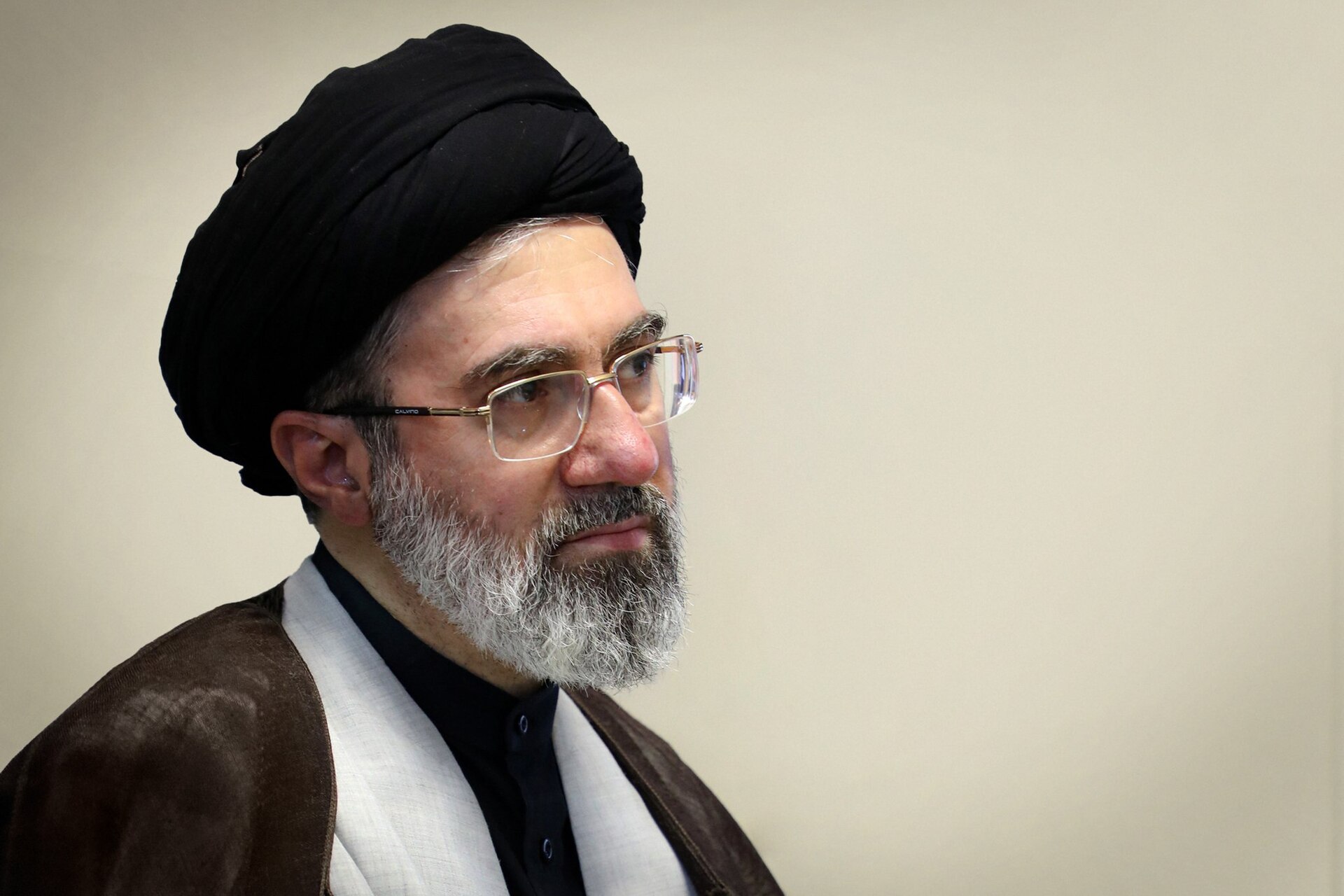
Probably a sixty-day deferral on the nuclear question — not nuclear disarmament itself. Trump, asked on June 11 whether Khamenei had approved the deal, replied: “I understand the answer is yes.” The claim has not been independently verified, and Iranian sources across the political spectrum have disputed it.
A diplomat from a mediating country told Axios on June 12 that the deal “had been approved on the Iranian side at high levels but likely not by Supreme Leader Mojtaba Khamenei,” adding that as of June 12 evening the agreement “still needed final sign-off.” Tasnim, the IRGC-affiliated news agency, stated that Trump’s claims “should not be taken at face value unless Iran officially announces an agreement.”
Araghchi’s own language has been carefully calibrated throughout — he described the MOU as “never been closer” while adding that “pending its finalization, the media should refrain from entering speculation about its content.” This is the posture of proximity rather than confirmation, consistent with Tehran’s pattern throughout the negotiation period of acknowledging progress without validating any specific text Trump has described. Iran’s Foreign Ministry spokesman Baghaei was even more pointed, telling France 24 that reports of an agreement were “speculative” and that “relevant authorities must reach conclusion on every provision” — language that implies the provisions themselves remain open, not merely unsigned.
The structural logic of the document tells the rest of the story. Iran’s ten-point plan, circulated in May 2026, called for American “acceptance” of uranium enrichment and removal of all sanctions — framing enrichment as a sovereign right rather than a concession to be negotiated away. The Iranian parliament’s active NPT withdrawal bill, introduced by MP Shariati, establishes a hardliner pressure floor below which no foreign minister can negotiate, regardless of what Khamenei may or may not have signalled to mediators. Araghchi’s room for concession in phase two is structurally constrained by a domestic political environment that treats enrichment not as a bargaining chip but as a non-negotiable sovereign right — the kind of position that does not bend in sixty days, particularly when no IAEA inspectors are present to verify whatever compromise might theoretically emerge.
Can Saudi Arabia Object to Enrichment It Just Permitted for Itself?
Structurally, no. Saudi Arabia’s own 123 Agreement, signed with Washington on May 13, 2026, omits what arms control specialists call the gold standard: no prohibition on uranium enrichment, no prohibition on plutonium reprocessing, and no requirement to ratify the IAEA Additional Protocol before export licences are issued.
The contrast is explicit. The agreement — part of a $142 billion defence package signed during Trump’s Riyadh visit, one month before the IAEA non-compliance ruling — was the legal prerequisite for American nuclear technology transfer to the Kingdom. The UAE’s 123 Agreement, signed in 2009 and widely cited as a model for the region, contains all three prohibitions explicitly. Saudi Arabia’s does not.
The Arms Control Association observed that Steve Witkoff, Trump’s lead negotiator for both the Saudi 123 Agreement and the Iran MOU, “did not have sufficient technical expertise or diplomatic experience to engage in effective diplomacy,” and that his “lack of knowledge and mischaracterization of Iran’s positions and nuclear program throughout the process likely informed Trump’s assessment that talks were not progressing.” The same negotiating apparatus that produced Saudi Arabia’s enrichment-permissive bilateral agreement also produced the Islamabad framework that is supposed to constrain Iran’s enrichment in phase two — a framework whose nuclear terms have not yet been written.
The asymmetry is structural, not coincidental. Saudi Arabia has approximately 60,000 tonnes of uranium ore reserves and a $20 billion reactor programme at Khor Duweihin, with four nations currently bidding for the construction contract — South Korea, France, Russia, and the United States (Westinghouse), according to the Arms Control Association. The 123 Agreement signed in May gives Riyadh the technical and legal pathway to enrich uranium on its own soil — the same sovereign right the MOU is notionally asking Iran to surrender in the sixty-day phase-two window. Saudi Arabia is being listed as approver of a framework that demands Iran concede something Saudi Arabia’s own bilateral agreement with the same American administration explicitly does not require.
Foreign Policy’s May 19 headline — “The Myth of Zero Enrichment” — captured the structural impossibility at the core of phase two. Iran’s draft of the MOU “offers no flexibility on the central US demand for a complete halt to uranium enrichment on Iranian soil.” Washington is asking Tehran to surrender a capability it simultaneously told Riyadh it could keep, and neither the enrichment-permissive posture toward Saudi Arabia nor the enrichment-prohibitive demand of Iran appears anywhere in the phase-one text that Saudi Arabia has been named as approving.
Where Is Saudi Arabia’s Seat in Phase Two?
There is no seat. Saudi Arabia was party to none of the three active negotiating channels that produced the Islamabad MOU. All three are expected to continue into phase two, and none of the three mediating states — Pakistan, Oman, Qatar — has indicated any intention to bring Riyadh into the room.
Pakistan’s dual-letter architecture — PM Shehbaz Sharif’s civilian channel and Army Chief Munir’s separate IRGC back-channel — was constructed without Saudi consultation, despite thirteen thousand Pakistani troops deployed to the Saudi Eastern Province under the Saudi Military Duty Agreement. Oman’s formal diplomatic track operates under direct American coercion, after Trump told his cabinet in May to “blow them up” if Oman continued brokering an Iran-Oman Hormuz joint-management protocol. Qatar’s channel is underwritten by a $6 billion credit line to Iran extended in May 2025, positioning Doha as a financial guarantor of the Iranian position rather than a neutral intermediary.
When phase two begins — assuming phase one is signed on Sunday and the sixty-day clock starts — the negotiations will address enrichment caps, stockpile disposal methods, facility access schedules, and IAEA verification mechanisms. These are the questions that determine whether Iran crosses the nuclear weapons threshold and, by extension, whether MBS’s conditional nuclear declaration is triggered. Riyadh has no channel into any of those conversations.
The Carnegie comparison to Hamas and Hezbollah ceasefire agreements applies with uncomfortable precision here, because in each of those cases the party most affected by the deferred disarmament question — civilian populations living under armed group control — had no seat at the table when that disarmament was theoretically to be discussed. Lebanon’s UNSCR 1559 disarmament clause, as noted above, has produced no enforcement mechanism in twenty-two years. Saudi Arabia’s position in the MOU mirrors that structural exclusion: named as a stakeholder in the outcome, absent from every forum where the outcome would be determined, with no mechanism to object if the sixty-day window closes without producing the nuclear terms that justify Saudi Arabia’s presence on the approvers list.
The IAEA Non-Compliance Ruling
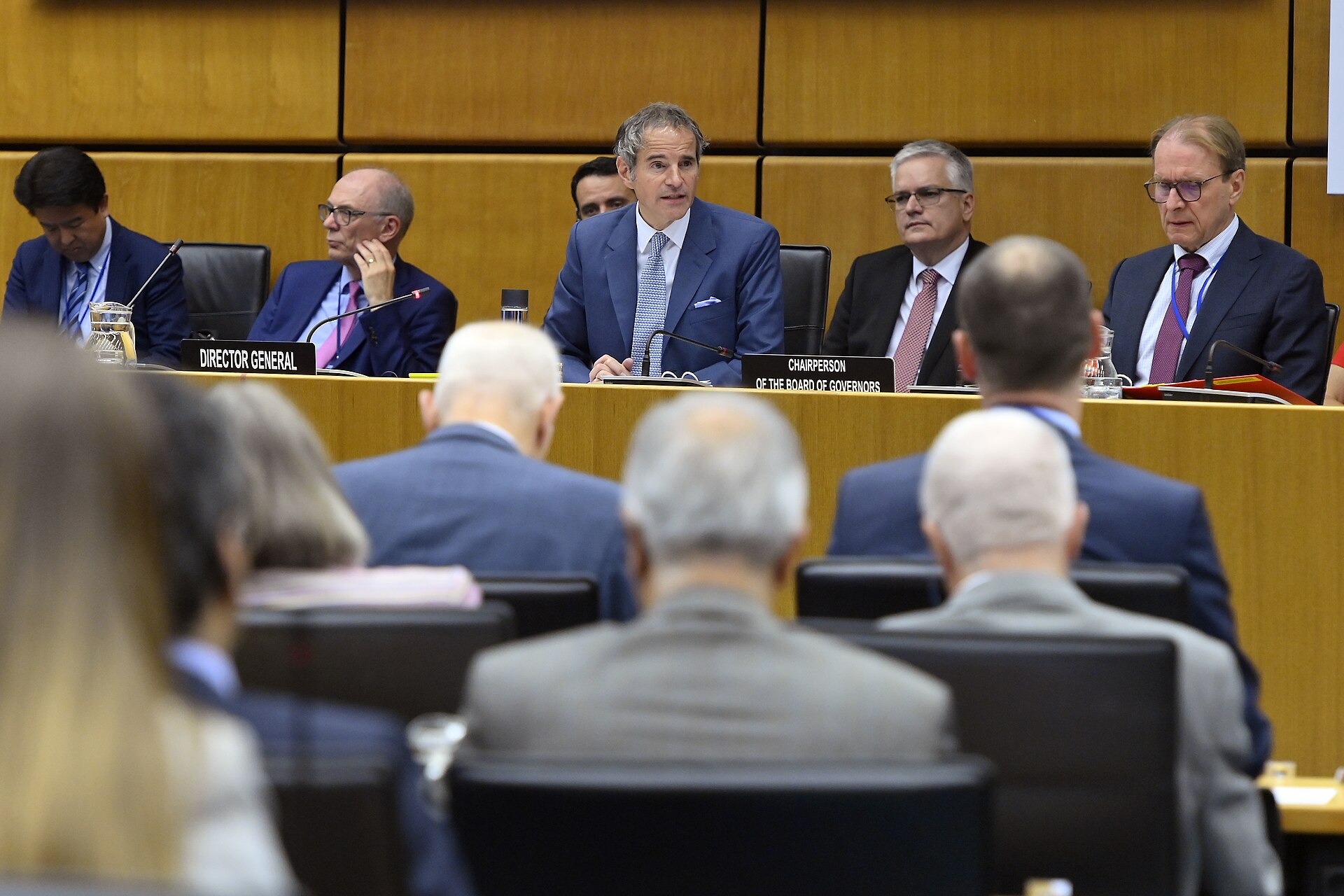
On June 12, the same day the MOU’s bifurcated structure became public through Axios and the Times of Israel, the IAEA Board of Governors declared Iran in non-compliance with its NPT Safeguards Agreement — the first such finding in twenty years and only the second formal non-compliance determination in the agency’s history. Saudi Arabia voted for the censure, which voided the Cairo accord for the second time and formally established that Iran is operating entirely outside the international nuclear oversight framework at the moment it is being asked to accept new nuclear commitments in phase two.
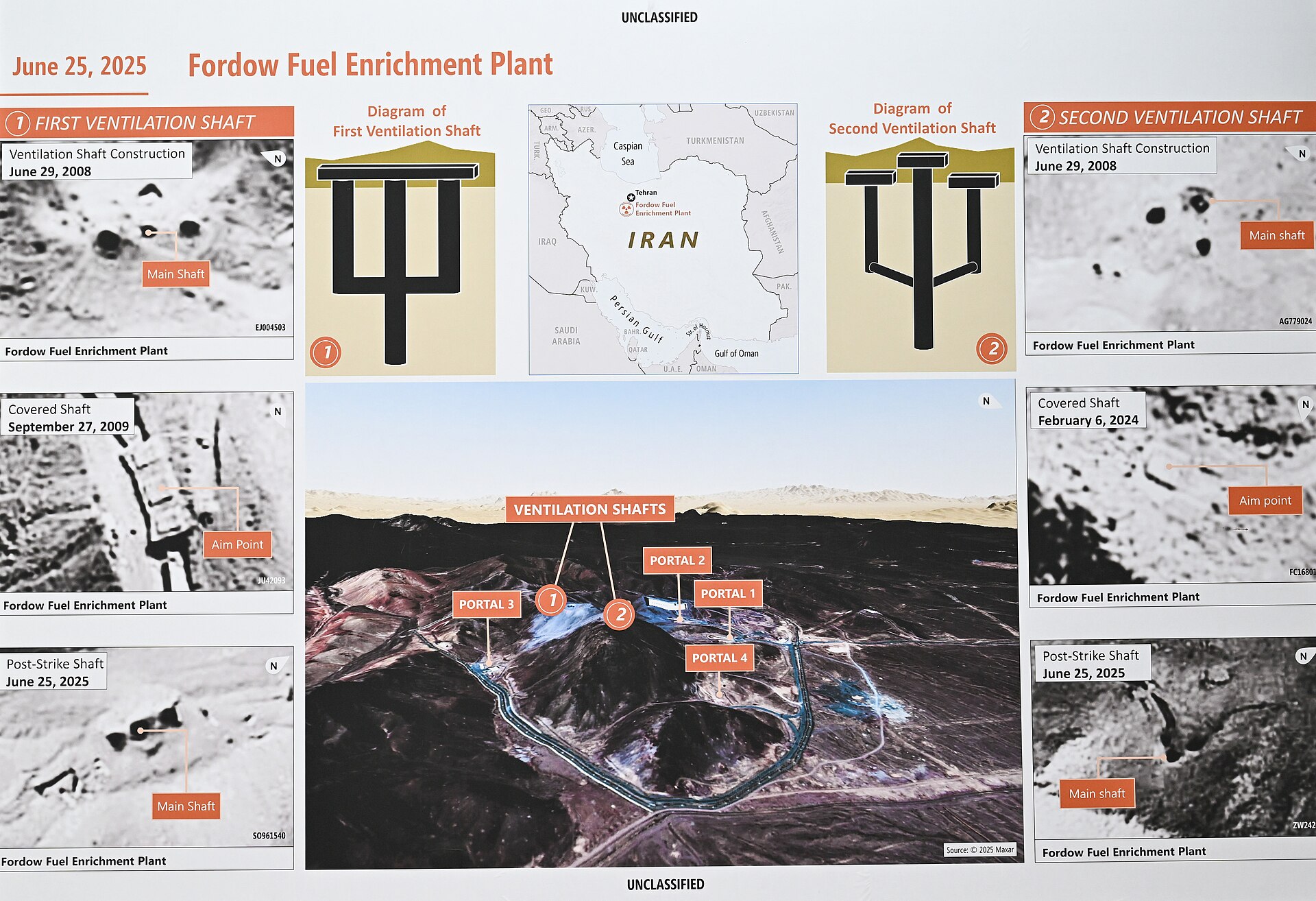
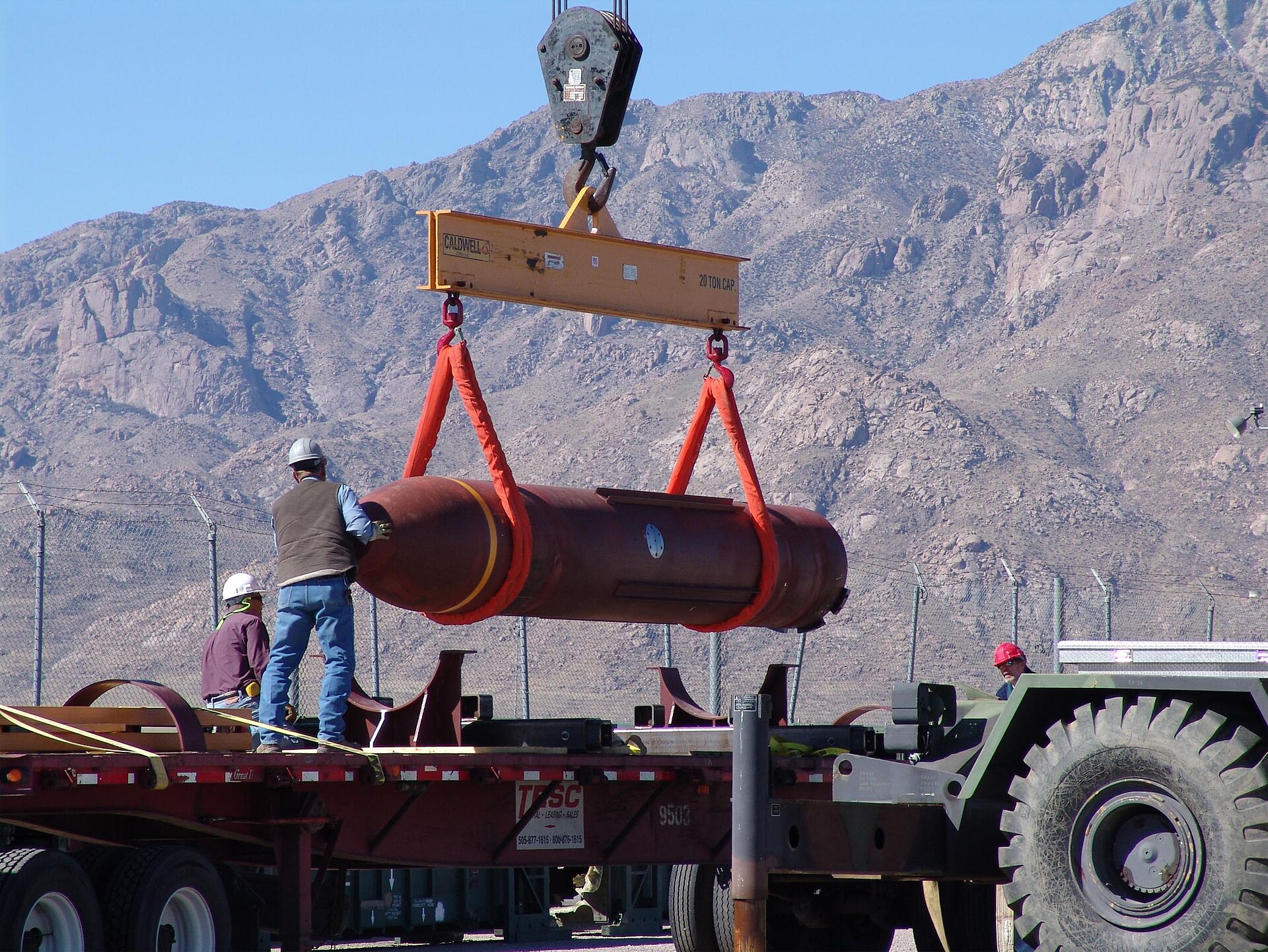
The timing creates a problem that is structural rather than merely awkward. Phase two is supposed to negotiate enrichment caps, stockpile disposal methods, and IAEA access schedules — but the agency itself has had no verification access to Iranian nuclear facilities since February 28, 2026. The 440.9 kilograms of HEU at 60% enrichment cited by the Institute for Science and International Security is the last independently assessed figure, now ninety-seven days stale and growing less reliable with each day that passes without inspector access. Fordow, the deep mountain bunker purpose-built to survive aerial attack, is estimated at only thirty percent damaged by American GBU-57 Massive Ordnance Penetrator strikes, according to ISIS — the Institute for Science and International Security — with the core enrichment infrastructure potentially intact, potentially operational, and entirely beyond the reach of external verification.
The gap between 60% and 90% enrichment — weapons-grade uranium — is technically narrow once centrifuge cascades are reconfigured, a process the Arms Control Association’s April 2026 assessment concluded Iran is far more likely to complete than not before any weaponisation decision. The MOU asks Saudi Arabia to approve a framework that treats IAEA re-entry as a phase-two deliverable, to be negotiated in the same sixty-day window as enrichment caps and stockpile disposal, at the precise moment the agency has declared it cannot account for what Iran currently possesses or is currently producing. Phase two would need to re-establish verification access before it could verify any agreement on the terms it is supposed to produce — a prerequisite inside a prerequisite, nested inside a sixty-day deadline that has no precedent for success.
The Trigger MBS Set in 2018
Mohammed bin Salman told CBS in 2018: “If Iran develops nuclear weapons, Saudi Arabia will do the same.” The statement has never been retracted, reframed, or softened by any Saudi official in the eight years since, and it remains the operative Saudi nuclear posture — a conditional commitment whose trigger is tied to a single variable: whether Iran crosses the nuclear weapons threshold.
“If Iran develops nuclear weapons, Saudi Arabia will do the same.”
— Mohammed bin Salman, CBS, 2018
The Islamabad MOU does not resolve that variable, and the structure of the document makes clear it was never designed to do so in phase one. Phase one contains a general Iranian “commitment not to pursue a nuclear weapon,” but the mechanisms that would verify or enforce that commitment — enrichment limits, facility closures, IAEA inspection schedules, stockpile removal or down-blending — are all allocated to the sixty-day phase-two window that has not been drafted and that Saudi Arabia will not participate in. MBS’s trigger condition is not defused but suspended, parked for sixty days inside a document that carries Saudi Arabia’s name and that the United States and Iran already describe in terms that cannot both be true.
That suspension became harder to maintain on June 16 when Trump publicly reduced the uranium removal demand to a question of scrap value at Évian — the same day CIA Director Ratcliffe warned that Iran’s private nuclear intentions already diverge from its public commitments. The sixty-day window opens from a position where the American red-line has moved toward Iran before the window begins.
If phase two produces a verifiable nuclear arrangement — with IAEA access restored, enrichment meaningfully constrained, and the 440.9 kilograms accounted for — the trigger remains dormant. If phase two fails, extends indefinitely, or produces a text as contradictory as the phase-one descriptions already circulating, then MBS faces the 2018 declaration in a region where his own 123 Agreement permits Saudi enrichment and his government has been listed as co-approving a framework that treated the nuclear question as someone else’s problem to solve in a timeline that has no historical precedent for success.
On Sunday, Vance is scheduled to sign the Islamabad MOU in Geneva. The enrichment caps, facility closures, and IAEA access schedules are supposed to be negotiated in the sixty days after that, by parties that do not include Saudi Arabia. The last time the international community attempted to produce those terms — with full P5+1 participation, detailed technical annexes, and IAEA inspectors already inside Iranian facilities — it took twenty months.
Frequently Asked Questions
Has any country completed nuclear disarmament within sixty days?
No nuclear disarmament programme of comparable scale has been completed in sixty days. South Africa’s voluntary dismantlement of six completed weapons took four years, from 1989 to 1993, with full government cooperation and IAEA verification throughout the process. Libya’s renunciation in December 2003 required nine months of supervised dismantlement and material removal by American and British technical teams, and Libya’s programme was far smaller than Iran’s — no enrichment beyond experimental quantities, no operating centrifuge cascades, and no hardened deep-bunker facilities like Fordow. Iraq’s supervised disarmament under UNSCOM ran from 1991 to 1998 without reaching full resolution, despite UN Security Council enforcement authority that the Islamabad MOU does not provide.
What happens to Iran’s sanctions relief if phase two negotiations fail?
Phase one would release frozen Iranian assets and lift specific sanctions as part of the ceasefire package, but no published sunset clause or automatic clawback mechanism has been reported for phase one benefits in the event that phase two fails to produce nuclear terms. The 2023 Qatar precedent offers limited guidance: $6 billion released to Iran in September was eventually re-frozen after the October 7 Hamas attack, but the re-freeze required weeks of diplomatic negotiation and a new presidential determination. Once sanctions relief has been operationalised and funds disbursed to Iranian accounts, reversing the economic benefit requires a separate political decision that the original framework does not guarantee and that Iran would characterise as a phase-one violation.
Could Saudi Arabia and Iran both enrich uranium simultaneously under the current framework?
Structurally, yes. The Saudi-US 123 Agreement signed on May 13, 2026, imposes no prohibition on Saudi enrichment or reprocessing. If phase two of the MOU fails to restrict Iranian enrichment — or produces a compromise allowing limited enrichment at reduced levels — both countries could operate enrichment programmes under their respective bilateral agreements with Washington. The Middle East would then host two enrichment-capable states, neither subject to the gold-standard safeguards the UAE voluntarily adopted in its own 123 Agreement in 2009, which explicitly prohibits both enrichment and reprocessing on Emirati soil. The Arms Control Association has cited the UAE agreement as the standard that should have been applied to Saudi Arabia.
Why has the Saudi Ministry of Foreign Affairs remained silent on the MOU?
Saudi MOFA has not issued a public statement on the Islamabad MOU, on Trump’s designation of Saudi Arabia as an approver, or on the IAEA’s non-compliance finding — a silence now exceeding twenty-three days since the ministry’s last substantive diplomatic communication on May 20, at the EU Gymnich foreign ministers’ meeting. The silence likely reflects deliberate ambiguity rather than administrative oversight: acknowledging the MOU would bind Saudi Arabia to terms it had no role in drafting, while publicly rejecting it would antagonise Washington and the three mediating states whose military and financial relationships Saudi Arabia depends on. The structural bind is that Saudi Arabia cannot endorse the MOU without accepting its nuclear deferral and cannot reject it without undermining the ceasefire that protects Saudi oil infrastructure on day 105 of the Iran war.
The sixty-day clock moved toward a start date on June 13 when Trump asserted that Khamenei had personally approved the MOU — though Iran’s FM and IRGC-aligned media described a structurally different or still-unconfirmed agreement. Trump Says Khamenei Approved a Deal Tehran Has Not Confirmed. That authentication gap extends to Riyadh itself: Saudi Arabia has no channel to verify which MOU text its 123 Agreement depends on. The industrial consequence of a sixty-day framework that defers all nuclear terms is compounded by a parallel deadline: Geneva Will Not Reopen Jubail examines why Sadara’s $3.7 billion debt grace, expiring June 15, is unaffected by any MOU phase one provision.
The identity of Iran’s signatory for the Geneva ceremony added a further layer to the mandate question: Iran designated Parliament Speaker Mohammad Bagher Qalibaf rather than Foreign Minister Araghchi, the official who conducted the negotiations. The constitutional question of whether a legislative-branch official can bind the Islamic Republic to a nuclear and security framework remains unresolved as the sixty-day clock approaches its start.