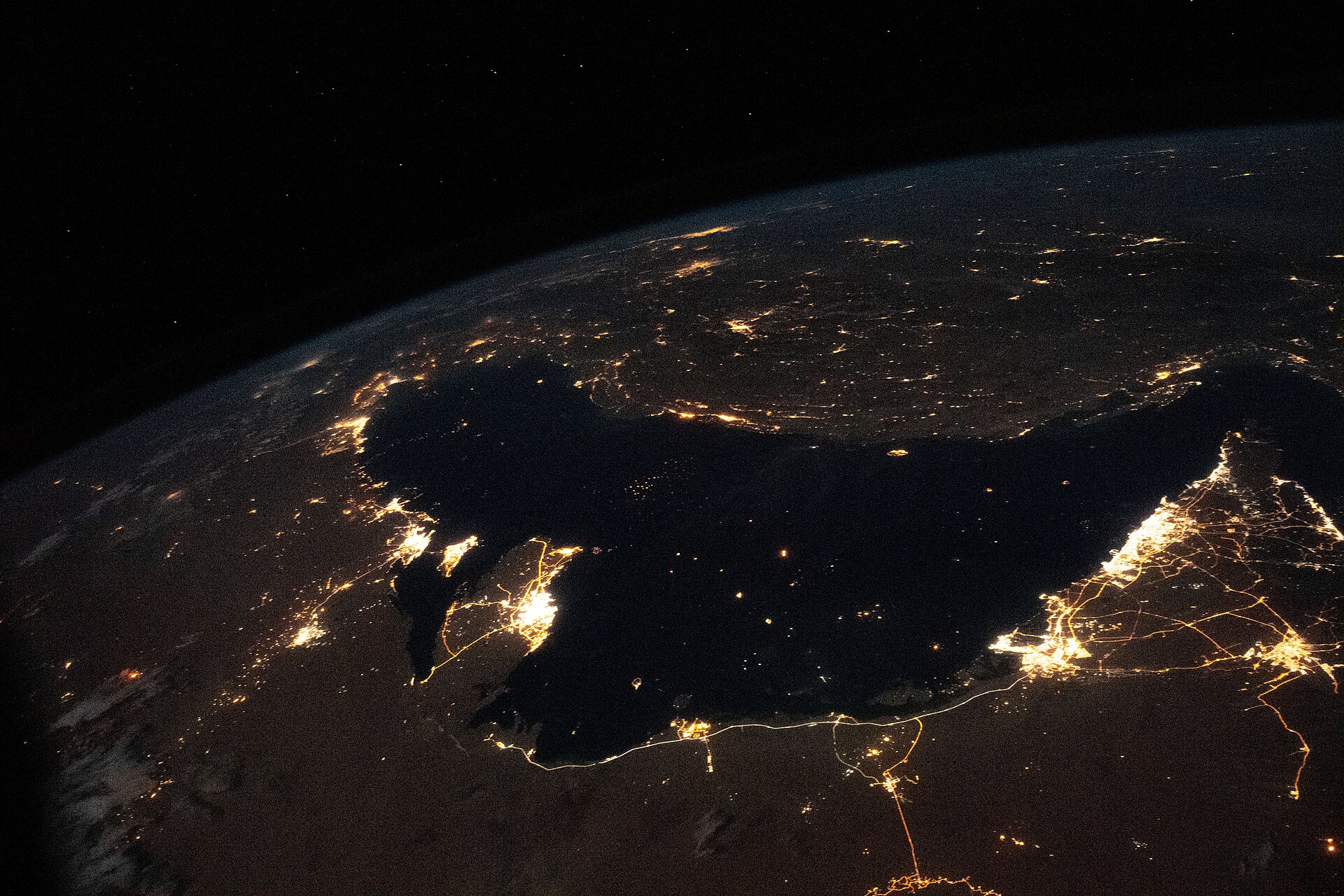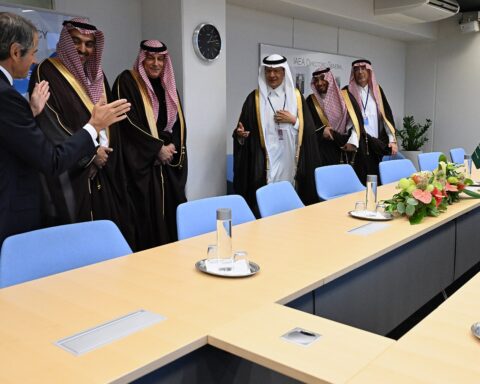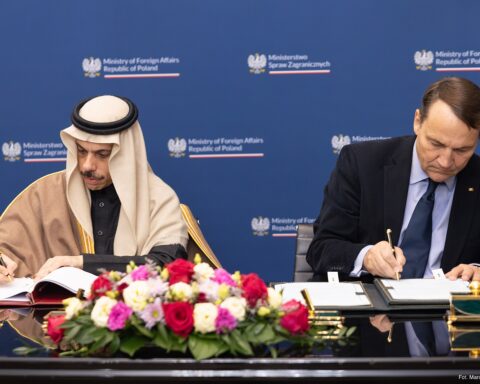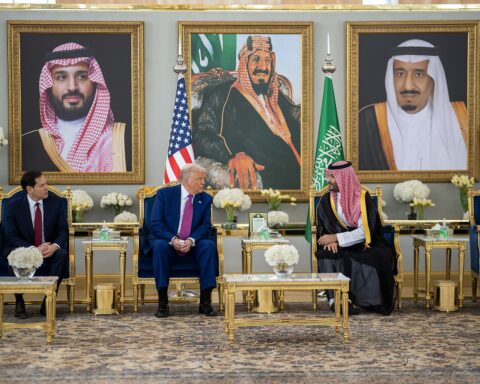

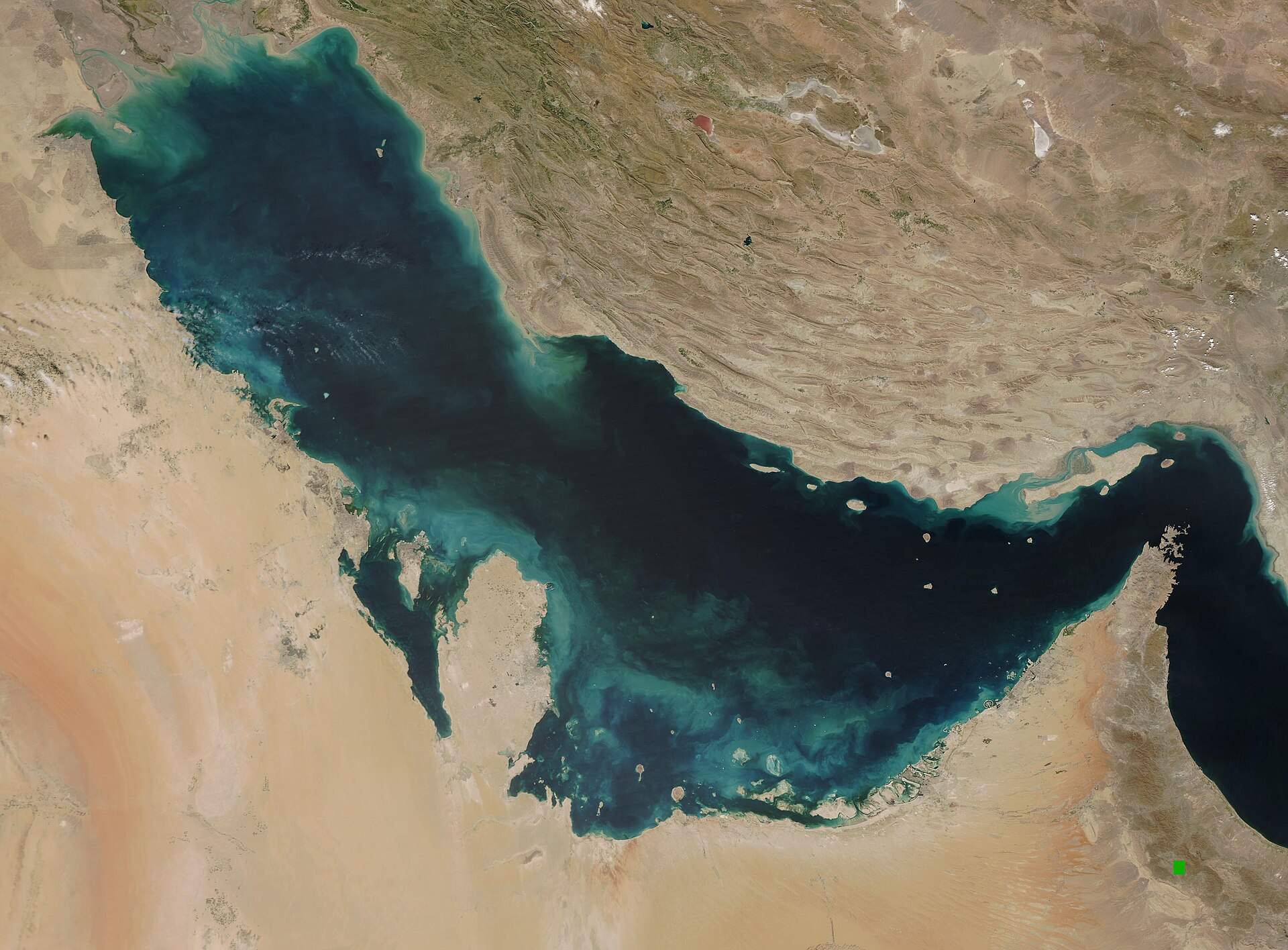
MANAMA — Saudi Foreign Minister Prince Faisal bin Farhan sat across from Canada’s Anita Anand on Thursday and signed a joint communique calling for “ramping up international efforts to protect maritime lanes and ensure freedom of international navigation” at the 3rd GCC-Canada Joint Ministerial Meeting. On the same day, Iran’s Khatam al-Anbiya Central Headquarters — the country’s top joint military command — declared the Strait of Hormuz closed to all vessels, oil tankers included, and warned that “any traffic will be targeted.”
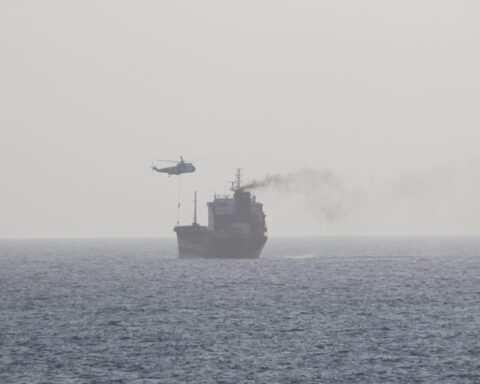
The IRGC Navy backed the declaration with force, striking two vessels attempting passage through the strait and issuing a separate warning that any approach would be “regarded as cooperation with the enemy,” according to the Tribune India. Prince Faisal’s communique asks the international community to act on a waterway that Iran is now treating as a firing range — but Saudi Arabia has no bilateral channel to Tehran, no seat in any active mediation track, and no membership in the naval coalition that could translate the request into escort coverage. The UAE, by contrast, held its first face-to-face meeting with Iranian security officials since the war began — the kind of direct bilateral engagement that turns diplomatic language into operational outcomes.
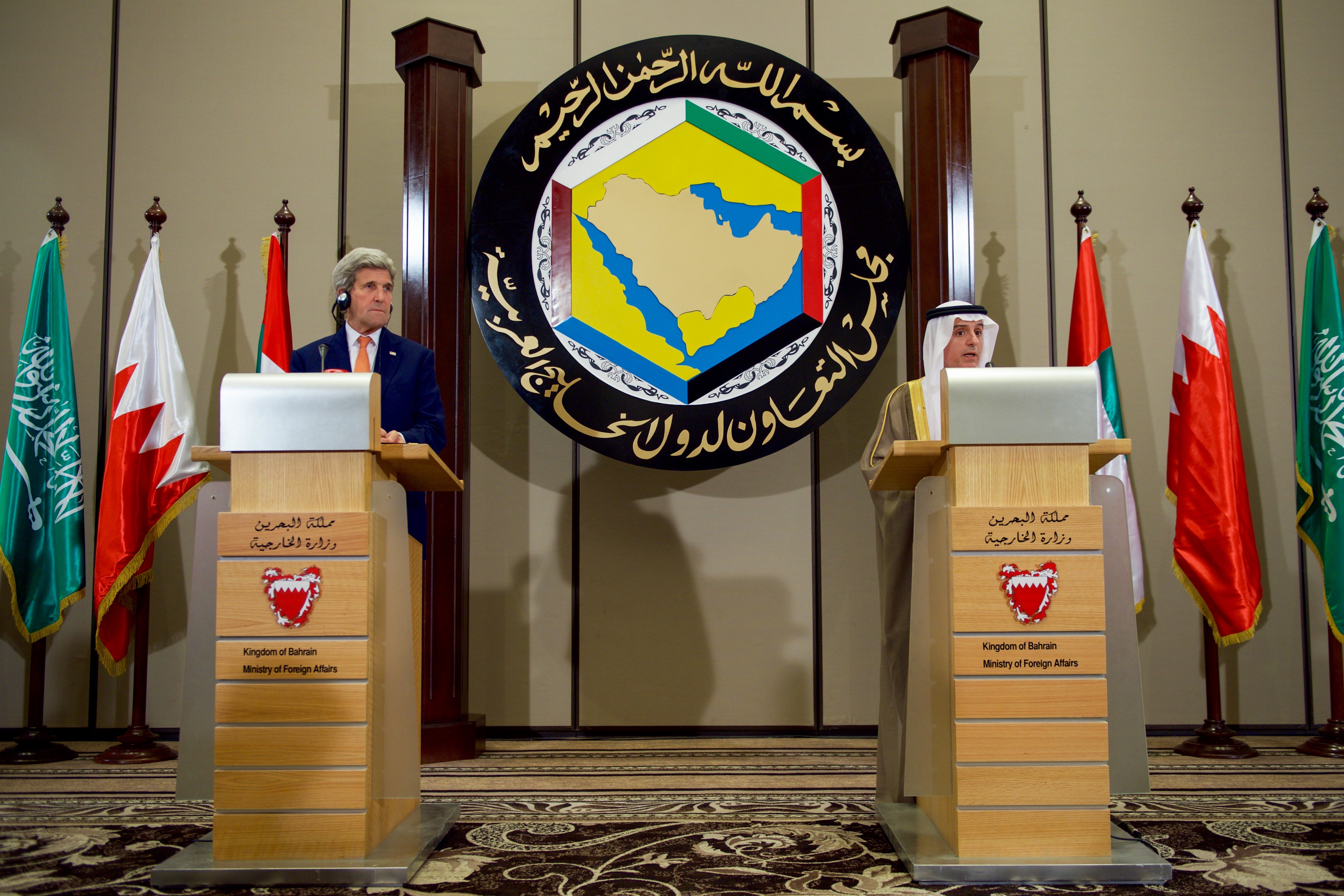
Table of Contents
What the Communique Actually Said
The 3rd GCC-Canada Joint Ministerial Meeting for Strategic Dialogue convened in Manama on June 11 alongside the 167th GCC Ministerial Council session, chaired by Bahraini Foreign Minister Dr. Abdullatif bin Rashid Al Zayani. All six GCC foreign ministers attended: Prince Faisal bin Farhan for Saudi Arabia, Sultan bin Saad Al Muraikhi for Qatar, Sayyid Badr bin Hamad Al Busaidi for Oman, and their counterparts from the UAE and Kuwait, with GCC Secretary-General Jassim Al Budaiwi also present, according to the Times of Oman and Saudi Gazette.
The communique’s operative language on Hormuz reads in full: “The importance of ramping up international efforts to protect maritime lanes and ensure freedom of international navigation, in pursuit of safeguarding shared interests and strengthening regional and global stability,” as reported by the Qatar Tribune and Arab News. The phrasing calls for international efforts without committing any GCC state to a specific enforcement mechanism — no joint patrols, no escort framework, no rules of engagement. Al Budaiwi characterized the meeting as “an important platform for expanding cooperation” that “carried particular importance in light of these challenges,” according to Emirates 24/7.
Anand, described by Canada’s foreign affairs ministry as the first G7 foreign minister to attend a GCC session since the current Middle East escalation began, committed Ottawa to “readiness to work closely with the GCC” and to supporting “efforts to reduce tensions and enhance stability through dialogue, confidence-building measures, and the protection of critical infrastructure and international shipping.” She also condemned attacks on GCC states — a reference to the IRGC’s escalating strikes on Gulf shipping and GCC military installations over the past three months.
Iran Removes the Last Qualifier
The Khatam al-Anbiya declaration issued on June 11 marks a significant escalation from Iran’s prior Hormuz posture. The March 27 IRGC declaration banned vessels traveling “to and from” ports of the United States, Israel, and their allies — a broad restriction that still left neutral-flagged commercial traffic with theoretical passage rights. The June 11 order strips every qualifier: “From this moment, due to insecurity in the region, the Strait of Hormuz is declared closed to the passage of all vessels, including oil tankers and commercial ships, and any traffic will be targeted,” PressTV reported.
The Middle East briefing 3,000+ readers start their day with.
One email. Every weekday morning. Free.
The IRGC Navy followed with a separate statement warning that “no vessel should depart from its anchorage in the Persian Gulf or the Sea of Oman” and that “any approach to the Strait of Hormuz will be regarded as cooperation with the enemy,” according to the Tribune India. The IRGC confirmed that two vessels were struck attempting passage, though neither vessel’s name has appeared in verified reporting as of June 11, the Manila Times reported. PressTV framed the closure as a “forceful and decisive response” to “US malicious acts” — the June 10 CENTCOM strikes on Jask, Sirik, Qeshm, Hengam Island, and Bandar Abbas that had prompted Tehran’s earlier declaration that Hormuz negotiations were dead.
The distinction between March 27 and June 11 is operational, not rhetorical. Under the March framework, a Greek-flagged tanker carrying Omani crude to India could theoretically transit without IRGC targeting; under June 11, that vessel is a target regardless of flag, cargo, or destination. The MT Settebello, a Palau-flagged tanker struck in the Gulf of Oman off Sohar on June 10 with 24 Indian crew members aboard, already demonstrated the cost of that shift — three crew remain missing, and India summoned a senior US diplomat in response, Gulf News reported.
Can Canada Enforce Anything at Hormuz?
Canada co-signed the March 19 G7 leaders’ statement pledging readiness to help secure Hormuz and joined the UK-France Hormuz security coalition established at the Paris Leaders Summit on April 17, which drew 51 delegations. But Canada has no naval assets deployed in the Persian Gulf, and its commitment at Manama amounted to diplomatic solidarity — a willingness to work “closely” on a Joint Action Plan covering 2025–2029, not a deployment order, according to Canada’s foreign affairs ministry. The plan covers trade cooperation across a GCC-Canada relationship worth US$7.7 billion in 2025, according to Al Budaiwi.
Saudi Arabia’s own enforcement deficit runs deeper. The kingdom was absent from the Paris Leaders Summit that produced the UK-France coalition, which now includes 18 or more countries coordinating naval operations from Northwood, the UK’s joint forces command center. Saudi Arabia has no operational channel in Iran’s Persian Gulf Security Administration, no seat at the Northwood coordination table, and — critically — no Status of Forces Agreement with the United States, which blocks emergency arms transfers under Section 36(b) of the Arms Export Control Act. Every other major GCC state with US forces on its soil operates under a formal basing agreement; Saudi Arabia’s arrangement at Prince Sultan Air Base rests on a 1977 memorandum of understanding.
The communique’s freedom-of-navigation language gives Prince Faisal a multilateral venue to request protection without making a bilateral demand of any single country that could deliver it. Saudi Arabia is absent from all three active Iran-US mediation channels — Pakistan’s dual-letter track, Qatar’s Tehran shuttle that Crown Prince Mohammed bin Salman was not consulted on, and Oman’s suspended diplomatic corridor. Prince Faisal’s last bilateral with Secretary of State Marco Rubio was in January 2026; his last call with Iranian Foreign Minister Abbas Araghchi was May 6.
The Pipeline That Cannot Close the Gap
Saudi Arabia’s East-West Pipeline — the Petroline system connecting Abqaiq to the Red Sea terminal at Yanbu — carries a nominal capacity of 7 million barrels per day, restored to full throughput on April 12 after an April 9 drone attack, according to Argus Media. That capacity is the kingdom’s only physical bypass of Hormuz, and it is already bottlenecked at the export terminal. Yanbu’s actual tanker-loading throughput runs approximately 4.3 to 4.5 million bpd, according to Fortune and Egypt Oil & Gas, leaving roughly 2.5 million bpd of Saudi production stranded on the wrong side of the closure.
At prevailing Brent prices of $89.61 to $94.43 per barrel on June 11, according to Trading Economics, that stranded volume represents approximately $224 million to $236 million per day in export revenue that cannot reach market. Saudi Arabia is producing 7.76 million bpd against an OPEC+ quota ceiling of 10.291 million bpd — a gap of 2.53 million bpd driven by the Hormuz disruption, not voluntary restraint. The kingdom’s fiscal breakeven sits at roughly $108 to $111 per barrel, according to IMF estimates, meaning Saudi Arabia is running approximately $14 to $21 per barrel below the price it needs to balance its budget.
The Yanbu bypass also carries its own vulnerability. Approximately 70 to 75 percent of crude loaded at Yanbu and destined for Asian buyers must transit the Bab el-Mandeb strait, where Houthi forces declared a “complete and total ban” on Israeli-linked maritime navigation on June 8, Bloomberg reported. Saudi Arabia’s MOFA has issued no public statement on Houthi operations throughout the war, and a de facto Saudi-Houthi truce has held since the groups’ last acknowledged contact in September 2023.
Four Days to the Sadara Cliff
The Khatam al-Anbiya declaration lands four days before the most consequential debt deadline of the war. Sadara Chemical Company, the Saudi Aramco–Dow Chemical joint venture at Jubail, has kept all 26 manufacturing units offline since late March 2026, and the grace period on its $3.7 billion restructured debt expires June 15. Aramco guarantees $2.405 billion of that principal — 65 percent — while Dow Chemical holds the remaining $1.295 billion, with the US Export-Import Bank carrying $4.975 billion in total exposure, according to Sadara’s April 2026 regulatory disclosure. Neither Aramco nor Dow has communicated with creditors about what happens when the grace period lapses.
Sadara’s regulatory disclosure stated that the company “cannot provide, at the present time, an estimate for the return to production” and that any restart “is contingent on domestic and international factors” — language that acknowledges the Jubail complex’s location on the Persian Gulf coast, directly within IRGC targeting range. The June 11 Khatam al-Anbiya order, which designates all Gulf waters as a fire zone, makes any near-term restart functionally impossible. The IRGC has already applied its mirror doctrine to Jubail, striking it on April 7 after Israel hit Iran’s Mahshahr petrochemical facility on April 4, and Jubail holds 7 percent of global petrochemical capacity.
Aramco paid its $21.89 billion dividend on June 9, two days before the GCC-Canada meeting, drawing post-dividend cash reserves to $53.3 billion from $75.2 billion. Free cash flow of $18.6 billion covers the dividend at 0.85 times — below parity for the first time since the war began. The Sadara guarantee sits on top of that strained balance sheet, and the June 15 deadline has drawn no coverage from Reuters, Bloomberg, or the Financial Times. The broader structural question — why the Hormuz closure has no diplomatic off-ramp for Riyadh even after Trump declared a ceasefire framework collapsed — is examined in Hormuz Has No Ceasefire to Collapse.
Saudi Arabia Co-Wrote the Rule Iran Just Broke
On March 11, 2026, Saudi Arabia co-sponsored UNSC Resolution 2817 alongside 135 other countries. Bahrain drafted the text on behalf of the GCC and Jordan, and the operative clause affirmed that “any attempt to impede lawful transit passage or freedom of navigation in international waterways constitutes a serious threat to international peace and security,” according to Security Council Report. Iran’s June 11 declaration — closing Hormuz to all vessels and threatening to fire on any that approach — places Tehran in explicit violation of the resolution Saudi Arabia helped write.
Saudi UN envoy Abdulaziz al-Wasil reinforced the point at the Security Council in May 2026, calling freedom of navigation in the Strait of Hormuz “a humanitarian necessity” and describing the waterway as “a vital vein for global trade,” Al Arabiya reported on May 7. The language mirrors the GCC-Canada communique almost verbatim, suggesting a coordinated Saudi diplomatic line that has been consistent across the United Nations, the GCC ministerial format, and bilateral channels for at least two months. The messaging is uniform; the enforcement gap beneath it is equally consistent.
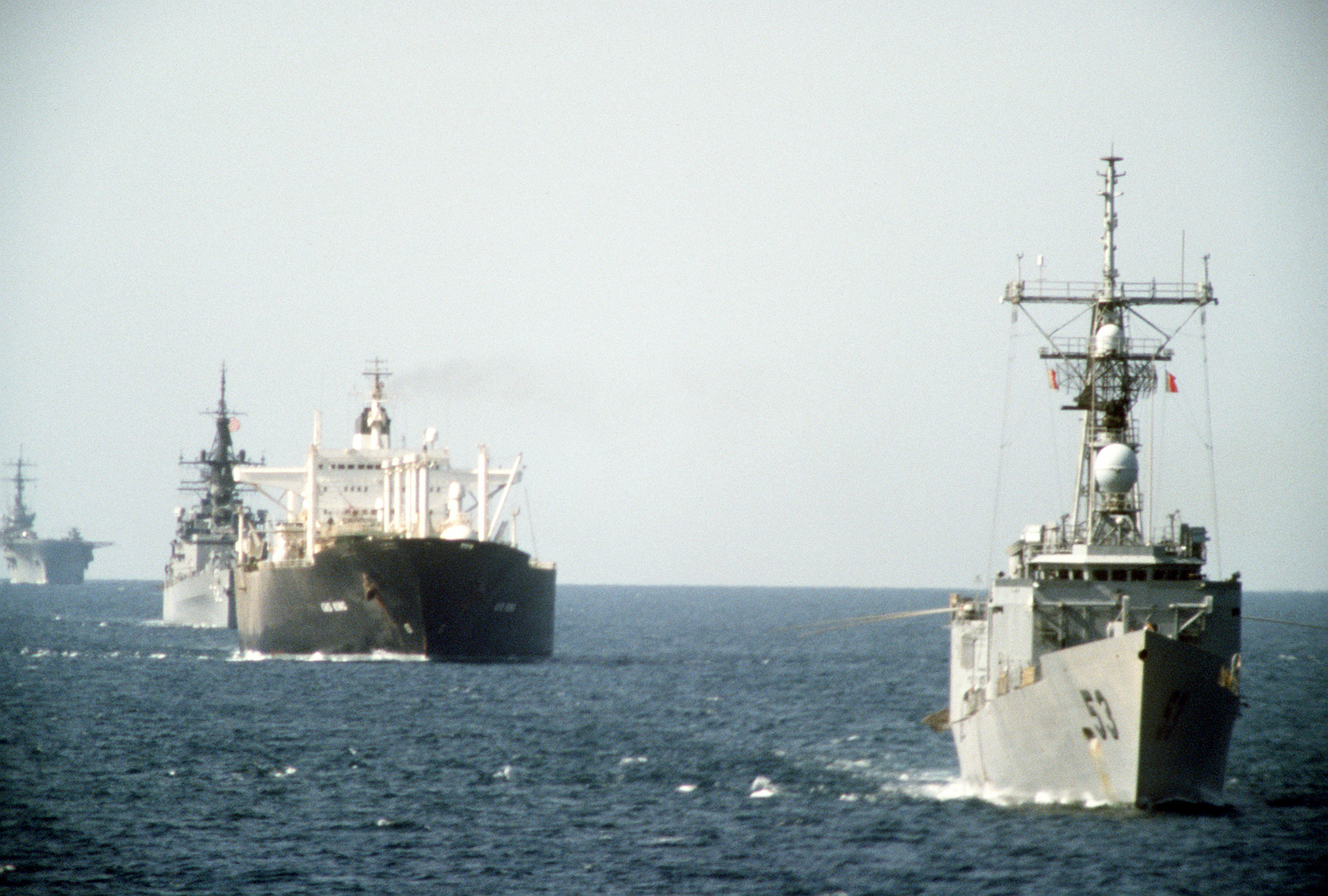
The pattern is not new. During the Iran-Iraq War, the United States launched Operation Earnest Will in 1987 to escort Kuwaiti tankers through Iranian minefields in the Persian Gulf, and Saudi Arabia — then as now the Gulf’s largest oil exporter — was absent from that operation. On June 11, 2026, 39 years later, the same structural dynamic played out in Manama: Saudi Arabia called for freedom of navigation from a diplomatic conference room while Iran’s military command declared the strait a kill zone and the IRGC struck two vessels to demonstrate it was not bluffing.
Background
Iran’s Hormuz posture has escalated in three phases since the conflict began on February 28, 2026. The initial phase involved selective targeting of US- and Israeli-linked vessels. The March 27 IRGC declaration banned traffic to and from US, Israeli, and allied ports while preserving theoretical passage rights for neutral-flagged ships. The June 11 Khatam al-Anbiya order removes every remaining qualifier — all vessels, all flags, all cargoes. Each escalation followed CENTCOM strikes on Iranian territory.
[conflict_pulse_manual]
[hormuz_tracker_manual]
Frequently Asked Questions
Has Canada deployed any naval forces to the Persian Gulf?
No. Canada joined the UK-France Hormuz security coalition and co-signed the March 19 G7 statement on Hormuz security, but as of June 11, 2026, Canada has no warships, maritime patrol aircraft, or other naval assets operating in the Persian Gulf or the Gulf of Oman. Canada’s commitment at the Manama meeting was limited to diplomatic language about “confidence-building measures” and “protection of critical infrastructure and international shipping,” according to Canada’s foreign affairs ministry. The Royal Canadian Navy’s nearest operational deployment consists of frigates participating in NATO Standing Maritime Groups in the Mediterranean, over 3,000 nautical miles from the Strait of Hormuz.
How does Iran’s June 11 declaration differ from a formal blockade under international law?
A formal blockade under international law requires a belligerent state to declare a defined zone, notify neutral states, and enforce the restriction impartially — conditions that Iran’s June 11 order arguably meets in practice. However, Iran has not used the word “blockade,” instead framing the closure as a security measure in response to US aggression, according to PressTV. The distinction matters because a declared blockade triggers specific rights for neutral states under the 1856 Declaration of Paris and the 1909 Declaration of London, including the right to challenge the blockade’s legality at the International Court of Justice. Iran’s framing as a defensive measure attempts to sidestep those legal frameworks while achieving the same operational result.
What happened the last time Iran threatened to close Hormuz?
Iran has threatened Hormuz closure multiple times — in 2008, 2011–2012, and 2018–2019 — without following through operationally. The 2011–2012 threat during the Obama-era sanctions escalation prompted the US to deploy two carrier strike groups to the Gulf and led to the establishment of the International Mine Countermeasures Exercise, which became the largest multinational naval exercise in the Middle East. The June 11, 2026, declaration is qualitatively different from all prior threats: Iran has struck vessels to enforce it, issued a universal no-transit order covering all flags and cargoes, and is operating under active combat conditions with CENTCOM. Previous threats were deterrence postures; the June 11 declaration is an enforcement action backed by live fire.
Could Saudi Arabia unilaterally escort its own tankers through Hormuz?
The Royal Saudi Naval Forces operate approximately seven frigates and four corvettes capable of blue-water escort duty, but the fleet has not conducted contested strait transit operations and lacks the mine countermeasures vessels, airborne surveillance platforms, and submarine detection capabilities required for a Hormuz escort mission under current threat conditions. Saudi Arabia’s PAC-3 Patriot interceptor stocks — approximately 400 rounds remaining, representing 86 percent depletion since the war began — further constrain any operation that would expose naval assets to IRGC anti-ship ballistic missiles. The kingdom’s only comparable operational precedent, its participation in the coalition naval blockade of Yemen from 2015 to 2022, involved uncontested waters against a non-peer adversary.
What is the GCC-Canada Joint Action Plan 2025–2029?
The Joint Action Plan is a five-year framework covering trade, investment, energy cooperation, counterterrorism, cybersecurity, and people-to-people exchanges between Canada and the six GCC states. It was first adopted at the 2nd GCC-Canada Joint Ministerial Meeting and updated at the June 11 session in Manama. The plan does not include military cooperation provisions, mutual defense commitments, or security guarantees of any kind. Its trade component centers on the US$7.7 billion bilateral relationship and Canadian investment in GCC infrastructure, education, and technology sectors, according to the GCC Secretariat.
The GCC collective defense invocation at that same June 11 ministerial session — which covered Kuwait and Bahrain but not Prince Sultan Air Base — is examined in Saudi Arabia Signed the Collective Defense Clause for Kuwait.
Saudi Arabia’s preference for bilateral engagement over multilateral exposure extended to the G7 level four days later. On June 12, Riyadh declined Macron’s G7 Evian invitation while hosting France’s Middle East adviser in a private bilateral the same day — the same calculus the FM applied at the GCC-Canada ministerial.