RIYADH — The Iran-US memorandum of understanding did not sign on June 14. It failed on a precondition Saudi Arabia has no capacity to influence: Lebanon.
Iranian Foreign Minister Abbas Araghchi declared on IRIB that the MOU “will announce the end of the war on all fronts, including Lebanon — we will never leave Lebanon alone.” The same day, Israeli Foreign Minister Israel Katz stated Israel “will not withdraw from the security zones in Lebanon, Syria and Gaza.” Saudi Foreign Minister Prince Faisal bin Farhan had co-welcomed the deal’s “final stage” in a call with Pakistan’s Ishaq Dar on June 13 — hours before Iran’s spokesperson confirmed no signing would occur.
Saudi Arabia holds no seat on the Lebanon monitoring committee, has no diplomatic channel to Hezbollah, and has issued zero independent statements on Lebanon since Israeli strikes resumed after March 2. The 123 Agreement it signed with Washington on May 13 sustains the Israeli defense posture Araghchi demands must end before any MOU ceremony.
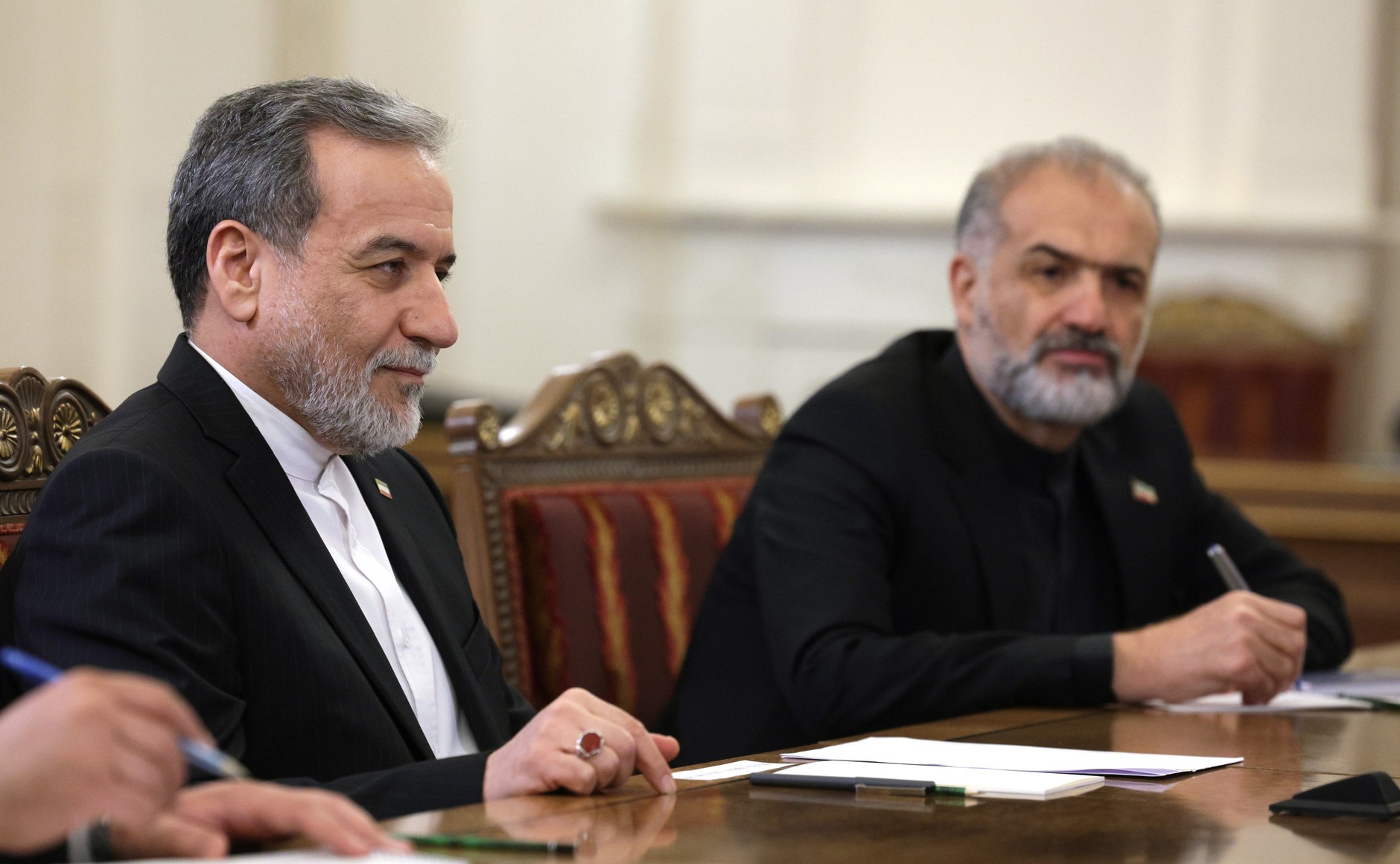
Table of Contents
- What Did Iran Demand on Lebanon Before Signing the MOU?
- The Call That Preceded the Collapse
- What Did Hezbollah Reject on June 4?
- Why Does Israel Refuse to Withdraw From Lebanese Security Zones?
- Who Sits on the Lebanon Monitoring Committee?
- The 123 Agreement and the Framework It Enables
- Does Saudi Arabia Have Any Lever on Lebanon?
- UNIFIL Expires in Six Months
- Frequently Asked Questions
What Did Iran Demand on Lebanon Before Signing the MOU?
Iran demanded that the memorandum of understanding cover “all fronts, including Lebanon” before any signing ceremony. Foreign Minister Abbas Araghchi’s declaration, broadcast on IRIB on June 13–14, made Israeli withdrawal from Lebanese territory a formal precondition for the deal. Israeli Foreign Minister Israel Katz rejected this the same day, stating Israel would not withdraw from security zones in Lebanon, Syria, or Gaza.
Araghchi’s position was not improvised. On June 1, he declared that Israeli attacks on Lebanon “violate” the April 8 ceasefire — establishing the framework that any Israeli military operation in Lebanon constituted a breach of the agreement Tehran was negotiating. The escalation was methodical: June 1, violation claims; June 5, a public exchange with Lebanon’s president over Iran’s right to speak for Lebanon; June 13, an explicit precondition. By the time the MOU was scheduled to sign, Tehran had made Lebanon inseparable from the deal.
The precondition is self-reinforcing. Iran’s Lebanon clause requires Israeli withdrawal from “occupied areas” — a standard Israel has explicitly and publicly refused. The clause gives Tehran an indefinite basis to delay: as long as Israel maintains security zones in Lebanon, Iran has grounds to defer. The precondition does not require Iran to do anything. It requires Israel to do something Israel has said it will not do.
The Middle East briefing 3,000+ readers start their day with.
One email. Every weekday morning. Free.
The MoU will announce the end of the war on all fronts, including Lebanon. We will never leave Lebanon alone.
Abbas Araghchi, Iranian Foreign Minister, IRIB, June 13–14, 2026
Lebanon’s own president made the accusation before Araghchi made the demand. Joseph Aoun told CNN’s Christiane Amanpour on June 5 that Iran was using Lebanon as “a bargaining chip.” His message to the IRGC was blunt: “It’s not your country, it’s our country.” Araghchi responded on social media within hours: “Save Lebanon from your real foe, Mr. President.”
The exchange captured a structural reality the MOU’s language could not resolve. Aoun described Iran’s Lebanon clause as hostage-taking; Araghchi framed it as solidarity. Both descriptions pointed to the same operational fact: Iran had made Israeli withdrawal from Lebanon a precondition for a deal Israel has no reason to accept.
The Call That Preceded the Collapse
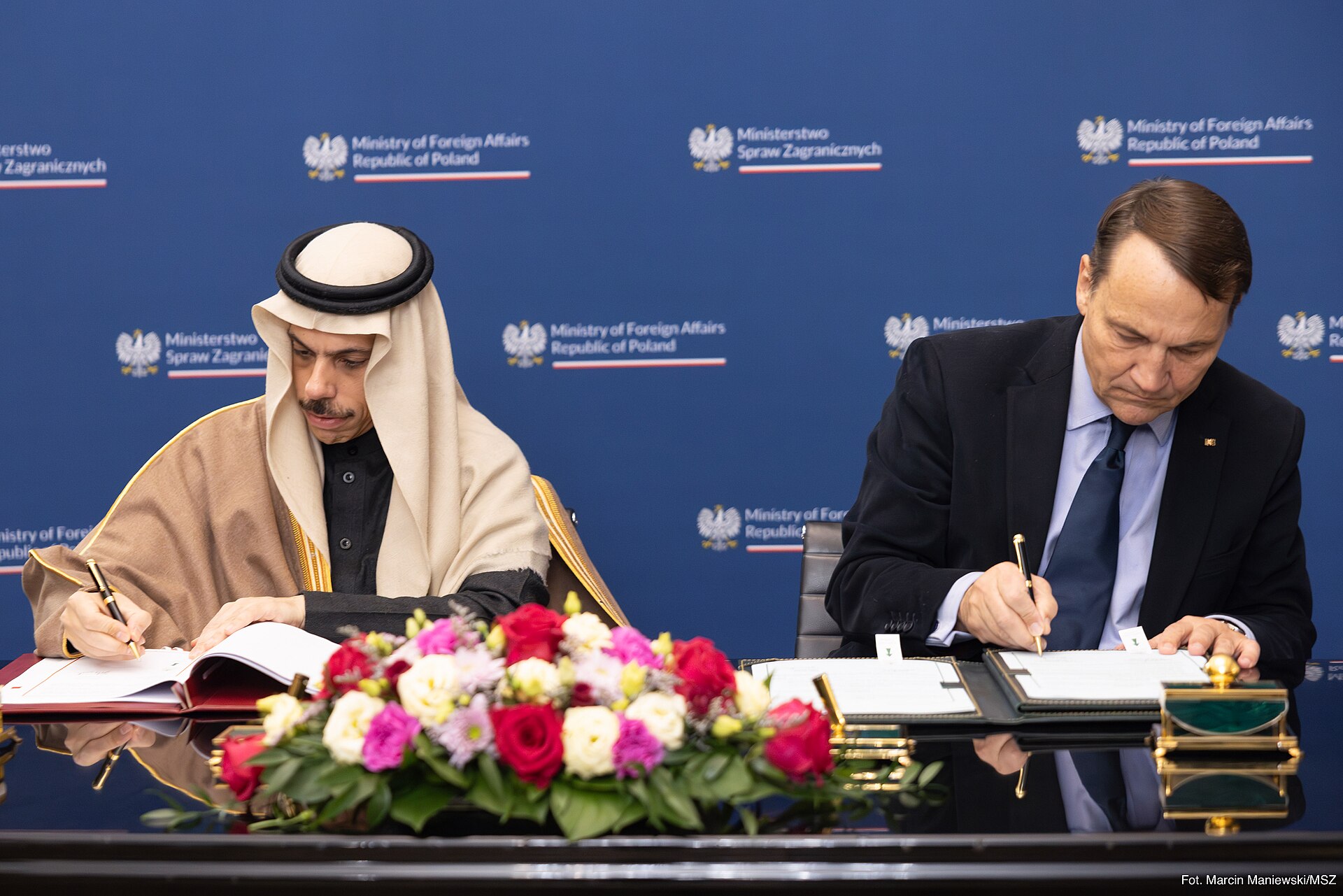
Prince Faisal bin Farhan and Pakistan’s Foreign Minister Ishaq Dar spoke by phone on June 13. Both “welcomed” the deal’s “final stage, with an electronic signing ceremony expected the following day,” according to Arab News. Saudi Arabia “appreciated Pakistan’s consistent efforts in support of mediation.”
The statement was process-level endorsement. Riyadh acknowledged a stage, not a substance. It named no terms, referenced no Lebanon clause, and specified no nuclear provisions. It was the diplomatic language a party uses when briefed on a timeline but not consulted on the text.
Within hours, Baghaei confirmed the MOU would not be signed on June 14. He attributed the delay to US “hesitation” and “instability,” did not set a replacement date, and noted only that “coming days” were not ruled out. The statement came from Tehran. No statement came from Riyadh.
The sequence matters. Saudi Arabia’s last public moment on the MOU was a co-endorsement of a deal that, by dawn on June 14, no longer had a signing date. The kingdom’s last confirmed independent statement on the broader Iran crisis was May 20, at the Gymnich meeting in Cyprus, where it called for Hormuz to be restored to its state “prior to February 28, 2026.” That statement addressed maritime navigation. It did not mention Lebanon.
The Faisal-Dar call was the latest instance of Riyadh engaging the MOU through Islamabad rather than directly. Pakistan’s mediation role — which Saudi Arabia publicly “appreciated” in the same call — has functioned as the primary channel through which Riyadh communicates positions on an agreement it cannot negotiate itself. When the signing collapsed, no Saudi official issued a follow-up statement. The appreciation of Pakistan’s efforts remained the last recorded Saudi diplomatic act on the MOU.
What Did Hezbollah Reject on June 4?
Hezbollah Secretary-General Naim Qassem rejected the US-brokered Lebanon-Israel ceasefire framework negotiated in Washington on June 3–4 as “absurd, humiliating and shameful.” He called the proposal “a surrender, defeat and achieving the enemy’s goals” and described direct negotiations with Israel as “a farce and insult.”
This is absurd, humiliating and shameful. It is a surrender, defeat and achieving the enemy’s goals.
Naim Qassem, Hezbollah Secretary-General, on the Washington ceasefire framework, June 4, 2026
The Washington framework, negotiated June 3–4, proposed a phased approach. Lebanese Armed Forces would deploy in “pilot zones” as a “first phase,” while Israel retained its presence in designated “security zones.” The framework did not require immediate Israeli withdrawal — it explicitly permitted Israeli forces to remain in areas where the war’s deadliest single day occurred on April 8. Lebanese Prime Minister Nawaf Salam framed acceptance carefully: the arrangement “does not prejudice our right to a full [Israeli] withdrawal, but brings us closer to it.”
Qassem’s rejection was not conditional. He did not object to specific provisions or propose amendments. He rejected the framework’s premise — that any agreement brokered by Washington and requiring Israeli consent could serve Lebanese interests. On June 14, the morning of the planned MOU ceremony, Israel struck Beirut’s Dahiyeh, prompting Iran’s designated signatory Ghalibaf to declare the negotiations had “no point” — the precondition Iran was demanding had become irresolvable.
Salam accepted the framework as a step toward withdrawal. Qassem called it surrender. The same proposal, in the same week, produced a Lebanese government willing to implement it and an armed group that denied its legitimacy.
Nine thousand LAF troops had deployed south of the Litani by June 4. The framework would have expanded their mandate. Qassem’s rejection denied the agreement any political cover from the armed group it was designed to constrain.
The MOU’s “all fronts” condition now requires resolution of a ceasefire that its intended party has rejected. Saudi Arabia had no role in designing the Washington framework, no seat in the negotiations that produced it, and no relationship with the party whose acceptance it requires.
Why Does Israel Refuse to Withdraw From Lebanese Security Zones?
Israeli Foreign Minister Israel Katz declared on June 14 that “Israel will not withdraw from the security zones in Lebanon, Syria and Gaza.” The statement was issued the same day the MOU failed to sign, directly contradicting Iran’s “all fronts including Lebanon” precondition. Israel frames its continued presence as a security requirement against Hezbollah’s armed posture south of the Litani.
The military situation on the ground reinforced the refusal. The most recent confirmed Israeli airstrike on Dahiyeh — Beirut’s southern suburbs — struck the Al-Mreijeh neighborhood on June 7, killing two and wounding eleven with three missiles. On June 14, as the MOU failed to materialize, Hezbollah fired three drones at northern Israel; none caused casualties. Two far-right Israeli cabinet ministers demanded retaliatory strikes on Dahiyeh the same day. No confirmed Israeli strike on Dahiyeh occurred on June 14, but the cycle of provocation and demand continued independently of the diplomatic timetable in Geneva.
Three hundred fifty-seven people were killed across Lebanon on April 8, 2026 — the deadliest single day since the war began on March 2. Iran declared a ceasefire with the United States the same day. The simultaneous events — a ceasefire declaration and the war’s bloodiest day occurring in the same twenty-four-hour period — gave Araghchi the material he needed. By June 1, he was citing continued Israeli strikes in Lebanon as ceasefire violations. By June 13, the violation claims had become a precondition: no signing without Lebanon.
Katz’s June 14 statement was not new policy. Israel had maintained security zones in southern Lebanon since the post-March escalation began. The June 3–4 Washington ceasefire framework accommodated this — it proposed “pilot zones” for the LAF without requiring Israeli departure. Katz on June 14 formalized what the framework had already conceded.
Araghchi’s precondition and Katz’s refusal are addressed to each other. Neither statement mentions Saudi Arabia. Neither creates a role for it.
Who Sits on the Lebanon Monitoring Committee?
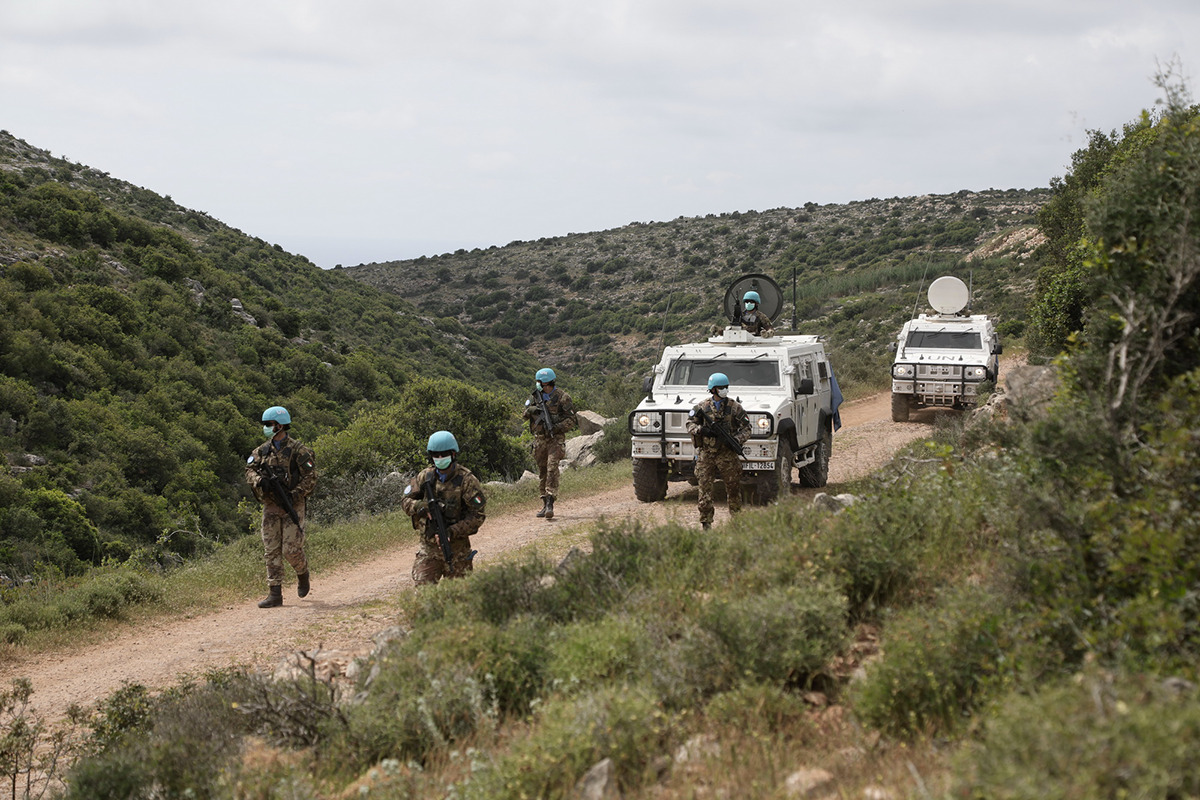
The Lebanon ceasefire monitoring committee — formally the International Monitoring and Implementation Mechanism — is chaired by a US general. Its members are the United States, Israel, Lebanon, France, and UNIFIL. Saudi Arabia holds no seat. Hezbollah, whose forces are the committee’s primary subject, is also unrepresented.
The committee’s mandate centers on Hezbollah disarmament and Lebanese Armed Forces deployment south of the Litani River. Its agenda is set by the chairing power — the United States — in coordination with Israel and France. Lebanon participates but does not chair.
Saudi Arabia was named among twelve countries that “approved” the MOU framework, according to a Trump Truth Social post on June 11. Approval, in this context, carried no institutional standing. The kingdom has no party status in the mechanism that would implement the Lebanon component of the agreement it co-welcomed.
| Entity | Seat on Committee | Lever on Israeli Withdrawal | Lebanon Statement Since March 2 |
|---|---|---|---|
| United States | Chair | Military aid, diplomacy | Multiple |
| France | Yes | UNIFIL contributor | Multiple |
| Israel | Yes | Party to withdrawal | N/A |
| Lebanon | Yes | LAF deployment (9,000 troops) | Multiple |
| UNIFIL | Yes | Monitoring mandate | Operational reports |
| Saudi Arabia | No | None | Zero |
| Iran | No | Hezbollah influence | Multiple |
| Hezbollah | No | Armed presence south of Litani | Multiple |
The committee has no mechanism for external observer states and no consultation procedure for parties outside the original ceasefire framework. There is no provision for Gulf state input on Hezbollah disarmament timelines or LAF deployment verification. Saudi Arabia’s co-welcoming of the MOU does not confer any role in the body that administers its Lebanon component.
The committee’s composition reflects the ceasefire’s origin: it was brokered by Washington, enforced through UNIFIL, and negotiated between Israel and Lebanon with French mediation. It does not include any Gulf state. It does not include Iran. And it does not include the party — Hezbollah — whose disarmament the committee exists to verify. The body designed to resolve the Lebanon question excludes every actor whose consent the MOU’s Lebanon precondition requires.
The 123 Agreement and the Framework It Enables
The US-Saudi 123 Agreement, signed on May 13, 2026, as part of a $142 billion defense package, permits Saudi Arabia to pursue civilian nuclear energy cooperation with the United States. It omits all three Gold Standard pillars that Washington applied to the UAE in 2009: no enrichment ban, no reprocessing ban, no Additional Protocol precondition. The UAE agreement’s most-favored-nation clause — designed to ensure no regional competitor received more permissive terms — was structurally voided.
Sharon Squassoni, a nonproliferation scholar at George Washington University, called the 123 Agreement “a gilded sweetheart deal” that “abandons every nonproliferation standard Washington spent seventeen years building.” The Arms Control Association warned in February 2026 that an enrichment-permissive Saudi nuclear deal would weaken Washington’s negotiating position on Iran — the same negotiations whose MOU now includes a Lebanon precondition.
The 123 Agreement was signed thirty-one days before the proposed MOU signing date. The MOU’s nuclear terms remain entirely deferred — pushed to a sixty-day second phase with no confirmed start date. The first phase, which collapsed on June 14, contains no nuclear provisions at all. It contains the Lebanon clause.
Saudi Arabia formalized nuclear cooperation with the United States in May. In June, it co-welcomed an MOU whose precondition requires an end to Israeli military operations the United States has not demanded Israel halt. The deal that permits Saudi nuclear ambitions and the deal that was supposed to limit Iran’s are both active and neither is complete.
Does Saudi Arabia Have Any Lever on Lebanon?
The kingdom’s most recent Lebanon-directed action was economic. On June 11, MBS lifted a five-year ban on Lebanese exports via a call between FM Faisal and Lebanese Prime Minister Nawaf Salam — restoring an estimated $230–240 million per year in trade. The ban had been imposed in 2021 over Captagon trafficking and a Lebanese minister’s criticism of the Saudi-led coalition in Yemen. SPA framed the lift as recognition of “positive steps.”
Trade restoration is not a security lever. The $230 million in annual Lebanese exports represents a commercial relationship — roughly 5.6 percent of Lebanon’s total export revenue and 85 percent of its GCC trade. It does not give Riyadh a voice in ceasefire negotiations, a seat on the monitoring committee, or influence over Hezbollah’s armed posture south of the Litani. The ban had been in place since April 2021. Its removal on June 11 was Saudi Arabia’s only autonomous diplomatic act directed at Lebanon that week — and it addressed customs, not the war.
Saudi Arabia pledged a $3 billion grant to the Lebanese Armed Forces in 2013 — the only Saudi security commitment to Lebanon at that scale. It cancelled the pledge in 2016 after Beirut failed to condemn Iranian-backed attacks on Saudi diplomatic missions. The cancellation ended Riyadh’s last institutional defense relationship with the LAF. President Aoun requested reactivation during his visit to Riyadh in March 2025 — his first foreign trip after taking office. As of June 14, 2026, no confirmation of reactivation has been issued. The LAF deploys south of the Litani without Saudi funding, Saudi equipment, or Saudi political support for its mandate.
Riyadh has consistently declined multilateral formats that would require co-signing an Iran-as-aggressor posture. MBS sent written regrets to Macron for the G7 Evian summit on June 16 — his third consecutive G7 refusal. The Evian session falls one day after the MOU was scheduled to sign. Saudi Arabia’s preferred diplomatic format remains the Quartet — Saudi Arabia, Pakistan, Turkey, and Egypt — a grouping with no Lebanon mandate, no Western members, and no Israeli participation.
UNIFIL Expires in Six Months
UNIFIL’s mandate under Security Council Resolution 2790, adopted in August 2025, expires on December 31, 2026. The resolution designated this the “final extension.” Full withdrawal of UNIFIL personnel is projected to continue through 2027.
The Security Council tasked the United Nations with proposing a post-UNIFIL framework by mid-2026. No proposal has been made public. The mechanism that would replace international monitoring of southern Lebanon — where LAF troops operate alongside Hezbollah’s armed presence — does not yet exist.
The UNIFIL expiry operates independently of the MOU. Even if the agreement had signed on June 14, UNIFIL’s mandate would still end on December 31. The monitoring committee draws its authority from the ceasefire framework, not the MOU. Araghchi’s “all fronts” demand addresses Israeli military operations, not the peacekeeping mandate. These are parallel clocks running on separate frameworks, and the expiry of one does not extend the other.
| Metric | Figure | Source |
|---|---|---|
| Killed since March 2 | 3,756 | Lebanon Ministry of Health, mid-June 2026 |
| Injured | 11,632 | Lebanon Ministry of Health |
| Affected population | 1.4 million | OCHA |
| In collective shelters | 135,300 (35,500 families, 636 shelters) | OCHA Flash Update #32, June 4 |
| Revised Flash Appeal | $639.9 million | UN / Lebanon, June 5 |
| Funding received | $185 million | Original appeal |
| UNIFIL mandate expiry | December 31, 2026 | Resolution 2790 |
The revised Flash Appeal, issued June 5, targets 1.4 million people through August 2026. It has received $185 million — less than a third of the $639.9 million requested. The funding gap of $454.9 million exceeds the total value of the Saudi-Lebanese trade relationship Riyadh restored four days earlier.
Saudi Arabia has no vote on the Security Council resolution governing UNIFIL’s future and no formal role in the agreement that collapsed or the mandate that is expiring. The MOU’s Lebanon precondition requires a ceasefire Hezbollah rejected on June 4, an Israeli withdrawal Israel refused on June 14, and a monitoring mechanism whose mandate expires on December 31.
Frequently Asked Questions
What was the $3 billion Saudi LAF grant and why was it cancelled?
Saudi Arabia pledged $3 billion to the Lebanese Armed Forces in 2013, intended for military equipment procurement. The grant was cancelled in 2016 after the Lebanese government failed to condemn Iranian-backed attacks on Saudi diplomatic missions — a demand that Lebanon’s coalition politics, with Hezbollah holding cabinet seats, made structurally impossible to fulfill. President Joseph Aoun requested reactivation during his March 2025 Riyadh visit. No confirmation has been issued, leaving the LAF without the only bilateral security commitment Saudi Arabia has ever made at that scale.
Could Saudi Arabia join the Lebanon monitoring committee?
The International Monitoring and Implementation Mechanism’s membership — the United States, Israel, Lebanon, France, and UNIFIL — was defined by the ceasefire parties. Saudi Arabia was not a party to the ceasefire, did not participate in the June 3–4 Washington negotiations, and would require the consent of existing members — including Israel — to join. No public request for Saudi inclusion has been reported. The committee’s mandate covers Hezbollah disarmament verification and LAF deployment monitoring, operational areas where Saudi Arabia maintains no presence, no intelligence infrastructure, and no historical role in southern Lebanon.
What happens to southern Lebanon when UNIFIL’s mandate expires?
Resolution 2790 designated the current extension as UNIFIL’s last. The Security Council directed the UN Secretary-General to propose an alternative security framework by mid-2026; no public proposal has emerged. After December 31, 2026, LAF troops in the south would operate without international monitoring, without the legal mandate that currently authorizes cross-border observation, and without the institutional reporting channel that communicates violations to the Security Council. UNIFIL withdrawal is projected through 2027 — meaning the legal authority underpinning the mission ends on the calendar date regardless of how many personnel remain on the ground.
Why did Saudi Arabia decline the G7 Evian summit?
MBS sent written regrets to French President Emmanuel Macron for the G7 Evian summit on June 16, citing “prior commitments” — his third consecutive G7 refusal. The Evian session included a segment for Arab heads of state that would have required co-signing a posture framing Iran as an aggressor, a characterization Saudi Arabia has consistently avoided. Riyadh’s preferred format is the Quartet — Saudi Arabia, Pakistan, Turkey, Egypt — which addresses Iran through mediation rather than confrontation. Attending Evian would have placed MBS in a room where the MOU’s collapse and Iran’s Lebanon demand were the dominant subject, with no Quartet members present to share or dilute the posture.