
TEHRAN — The memorandum of understanding that the United States and Iran were scheduled to sign in Geneva on June 14 prohibits “tolls” on the Strait of Hormuz and says nothing about “service fees,” which is what Iran has been collecting since May through the Persian Gulf Strait Authority, an enforcement body the US Treasury sanctioned on May 27 and the MOU does not mention. Three weeks before signing day, Secretary of State Marco Rubio told reporters that any tolling system would make a deal “unfeasible”; one day before the ceremony, Iranian Foreign Minister Abbas Araghchi told IRIB that service fee collection is a precondition for Iran’s signature.
Iran’s parliament codified the fee architecture on March 30–31, weeks before the MOU draft existed, converting what might have been a negotiable concession into a legislative fact no foreign minister can constitutionally surrender. What Iranian Foreign Ministry spokesman Esmaeil Baghaei described on June 13 as the “hesitancy of the other side” — his explanation for why the signing would not proceed on June 14 — was a diplomatic euphemism for a contradiction the text was designed to leave unresolved, one that no ceremony in Geneva could have papered over even if both delegations had shown up.
Table of Contents
- What Does the MOU Text Say About Hormuz?
- Rubio’s Red Line Went Further Than the Text
- What Did Araghchi Declare the Day Before the Ceremony?
- How Did Iran’s Parliament Foreclose the Negotiation Before It Started?
- Three Positions on the Same Waterway
- The PGSA on Signing Day: Sanctioned, Operational, Unmentioned
- Does International Law Distinguish Tolls From Service Fees?
- What Would Saudi Arabia Owe Under a Fee System the MOU Never Prohibited?
- The Lebanon Condition Runs on the Same Architecture
- Frequently Asked Questions
What Does the MOU Text Say About Hormuz?
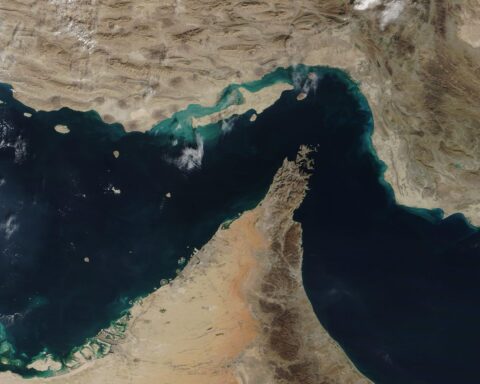
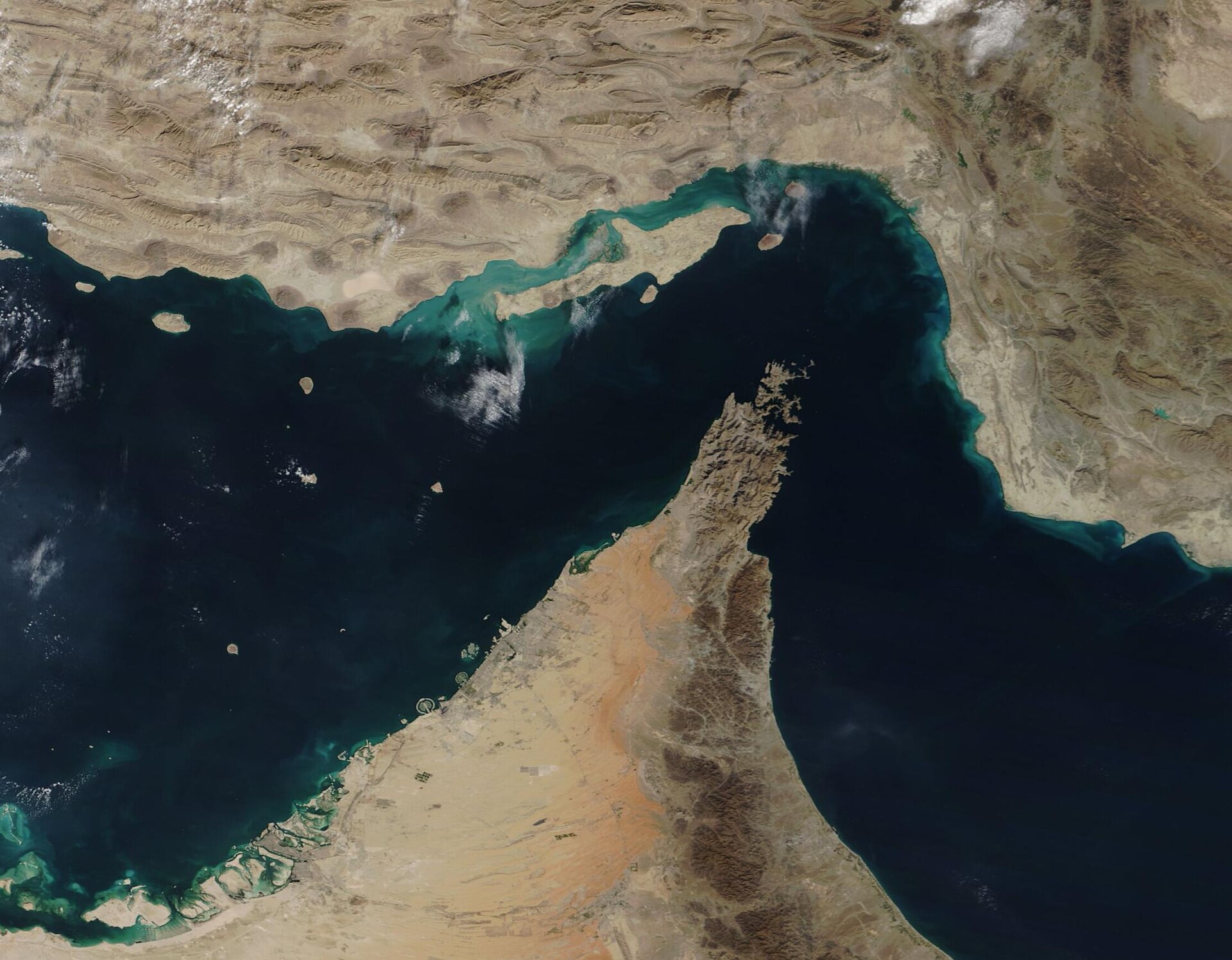
The MOU draft, as reported by Axios on June 12, calls for the Strait of Hormuz to reopen “immediately without tolls,” with a return to pre-war shipping volumes within 30 days of signing. The language is specific on prohibition — tolls are named and forbidden — and entirely silent on every other form of transit charge that exists or could exist in the strait. The word “fees” does not appear in the reported text, nor does “service charges,” “navigational fees,” “environmental levies,” or any other term that might capture what Iran’s Persian Gulf Strait Authority has been collecting from vessels transiting the five-nautical-mile Qeshm-Larak corridor since May.
Conspicuously absent from the MOU is the PGSA itself — established on May 5, sanctioned by OFAC on May 27, operating under direct IRGC coordination according to the US Treasury Department — along with the Iran-Oman bilateral management framework that Tehran has used to claim regional legitimacy for its control of the strait, and the Strait of Hormuz Management Plan that Iran’s parliament approved on March 30–31, which is the domestic legislative authorization for the entire fee apparatus. The text prohibits one specific word and says nothing about the institutional architecture Iran has built around a different word that means the same thing in practice but occupies a different legal category in Iran’s formulation.
No mechanism in the draft bridges the distinction. There is no arbitration clause specific to Hormuz interpretation, no joint commission tasked with defining transit charges, no reference to UNCLOS or any other international maritime framework that might supply the missing definitions. The text operates as though the only possible charge on Hormuz shipping is a “toll,” and as though prohibiting that single word resolves the problem — a premise that Araghchi’s own public statements, delivered one day before the ceremony, explicitly rejected. The toll-fee semantic gap is not a footnote in the MOU; it is the space through which the entire deal’s Hormuz provision collapses, and both sides appear to have constructed it deliberately, because closing it would have required one of them to abandon a position neither was prepared to give up.
Rubio’s Red Line Went Further Than the Text
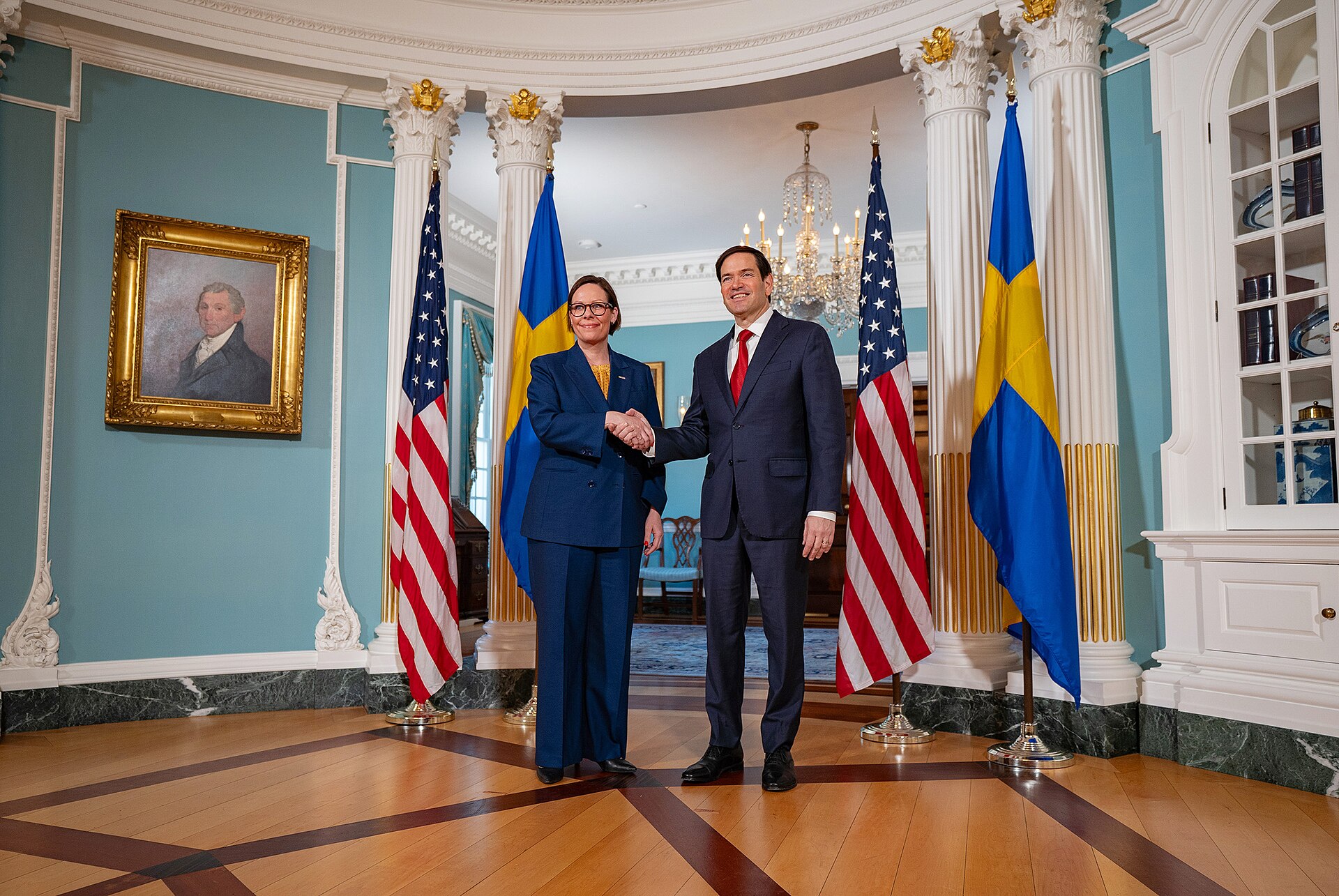
On May 21, departing for Sweden, Secretary of State Marco Rubio told reporters that “a tolling system in the strait would be unacceptable” and that it would make “a diplomatic deal unfeasible,” adding that Iran’s attempt to charge for Hormuz transit was “completely illegal” and “a threat to the world.” The language was categorical — Rubio said “tolling system,” not “tolls,” encompassing any institutional mechanism for extracting revenue from ships passing through the strait, regardless of what Iran chose to call the charges. The same day, five Gulf states — Bahrain, Kuwait, Qatar, Saudi Arabia, and the UAE — submitted a joint letter to the International Maritime Organization warning that vessels should not comply with PGSA requirements, a coordinated public rejection of the fee architecture that Rubio was simultaneously describing as a deal-breaker.
The Middle East briefing 3,000+ readers start their day with.
One email. Every weekday morning. Free.
But the MOU text that Rubio’s State Department was working toward did not match his public position. The draft, as confirmed by Axios, prohibits “tolls” — a single word, not a system. It does not prohibit “fees,” “charges,” “service levies,” or any other term that might describe what the PGSA collects from vessels at the point of interception in the Qeshm-Larak corridor. Rubio declared a “tolling system” unfeasible; the text he was negotiating toward prohibited only the word “toll” and left the system untouched. Had the deal been signed on June 14, the Secretary of State would have been defending a document that fell measurably short of his own stated red line — a red line he had drawn publicly, on the record, to reporters covering his departure, twenty-four days before the ceremony.
The disconnect reveals who was expected to absorb the contradiction. If the US position is that any transit charge constitutes a toll by another name, the MOU needed language broad enough to capture the PGSA’s fee structure, the Iran-Oman bilateral management framework, and any future rebranding Iran might attempt. It contained none of this, and the absence was not an oversight, because including such language would have meant asking Araghchi to sign away a revenue stream his own parliament had codified into law before the MOU draft existed. The text chose silence over confrontation, and Rubio’s public statements occupied a separate rhetorical universe from the document his negotiators were preparing to celebrate.
What Did Araghchi Declare the Day Before the Ceremony?
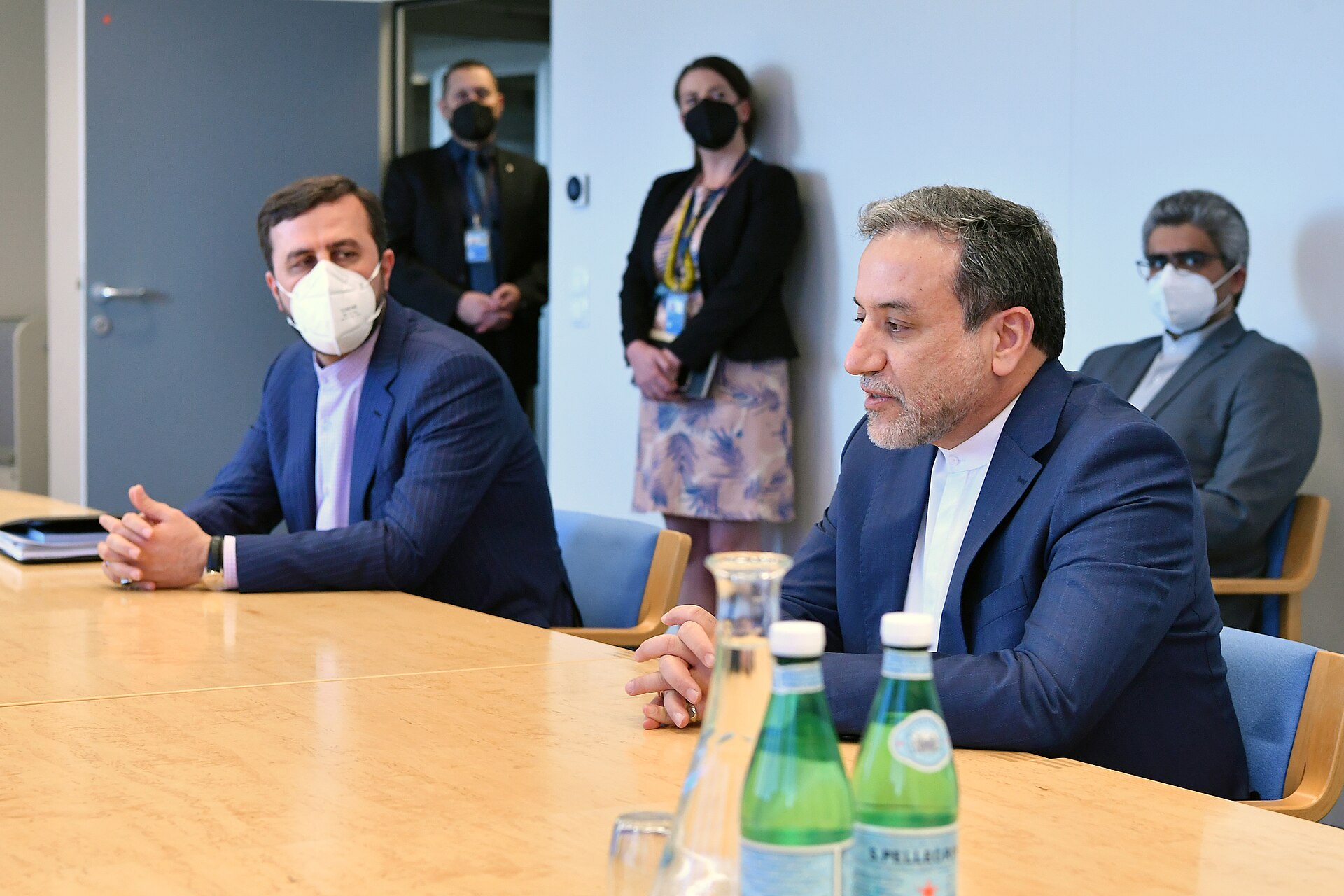
On June 13, speaking to IRIB in what functioned as Iran’s pre-signing public position, Araghchi stated that “according to international law, not possible to collect tolls from the Strait of Hormuz, but service fees will be collected,” adding that “paying compensation to Iran is in plan.” He then delivered the statement that made the MOU’s silence dispositive: “If the provisions of the memorandum of understanding are not met, the final agreement will not be signed.” Fee collection was not an aspiration or a negotiating stance that might soften by morning — it was, in Araghchi’s explicit formulation, a provision whose satisfaction was a precondition for Iran’s signature on any final agreement flowing from the MOU framework.
The statement was constructed to appear MOU-compliant while demanding something the MOU does not address. Araghchi agreed with the text that tolls are impermissible — he volunteered that international law prohibits them — and then immediately recharacterized Iran’s existing charges as something other than tolls, a category the MOU’s prohibition does not reach. For Araghchi, the text’s silence on fees was not a gap but a grant: what the document does not prohibit, Iran may do. For Rubio, whose “tolling system” language was designed to cover exactly this scenario, the silence was supposed to be temporary — a drafting placeholder that implementation negotiations would fill. These two readings of the same document could not coexist the morning after signing, and on June 13, both men stated their readings publicly, on the record, within the same news cycle.
On the same broadcast, Araghchi declared that the MOU must encompass a ceasefire “across all fronts, including Lebanon” — a condition that Hezbollah’s Naim Qassem had already rejected on June 4 as “absurd and humiliating.” Baghaei’s announcement that the signing would not proceed on June 14, delivered hours after Araghchi’s interview, attributed the delay to “hesitancy of the other side” — framing as American reluctance what was, in operational terms, the consequence of Iran’s own foreign minister having publicly declared two conditions the MOU’s text could not satisfy. The deal that Tehran itself pulled from the table was presented as the deal Washington was too uncertain to close.
How Did Iran’s Parliament Foreclose the Negotiation Before It Started?
On March 30–31, 2026, Iran’s parliament approved the Strait of Hormuz Management Plan, a legislative authorization for the establishment of a government body to manage transit through Iran’s claimed territorial waters in the strait and to collect fees for services rendered to passing vessels. The timing is the structural fact that makes the MOU’s toll prohibition irrelevant: the legislative framework that would become the PGSA’s legal foundation was codified into Iranian law before any negotiating text had been written, let alone circulated — meaning the fee architecture Iran would later insist on as a precondition was not a position adopted at the table but a domestic legal reality established before anyone sat down.
The PGSA was formally established on May 5 as the implementation body of the parliamentary mandate, and by the time OFAC sanctioned it on May 27 under Executive Order 13224 — with the Treasury Department citing direct coordination with the IRGC and IRGC Navy — it was already collecting per-barrel charges from vessels transiting the Qeshm-Larak corridor. The sequential escalation (legislation in late March, institutional establishment in early May, operational collection by mid-May, American sanctions in late May, continued operations after sanctions) built a layered fait accompli in which each step made reversal more constitutionally and politically costly than the step before it, and by June 14, the day the MOU was scheduled for signing, the fee system had survived every external attempt to stop it including direct American sanctions on the collection body.
Under Iran’s constitutional structure, legislation approved by the Majlis cannot be unilaterally suspended by the executive branch’s foreign policy apparatus. Araghchi, as foreign minister, does not have the constitutional authority to sign away what parliament has legislated — he can negotiate around it, defer it, reinterpret it, but he cannot void it at a ceremony in Geneva. Repealing the Hormuz Management Plan would require either a new parliamentary vote or a Supreme Leader directive overriding the Majlis, either of which would create a constitutional confrontation no faction in Tehran has an incentive to trigger on behalf of a deal with Washington. The MOU’s drafters, on both sides, appear to have understood this constraint, which explains why the text prohibits “tolls” (a word Iran does not use for its charges) rather than “fees” (a word Iran uses openly, and that parliament has specifically authorized).
Three Positions on the Same Waterway
The table below maps the three simultaneous positions that existed on the Strait of Hormuz as of June 14, 2026 — the American position stated by Rubio on May 21, the MOU text as reported by Axios on June 12, and the Iranian position stated by Araghchi on June 13. The three columns agree on one point (tolls are prohibited) and diverge on everything that follows from it.
| Issue | US Position (Rubio, May 21) | MOU Text (Axios, June 12) | Iran Position (Araghchi, June 13) |
|---|---|---|---|
| Tolls | “Unacceptable,” “unfeasible,” “completely illegal” | Prohibited (“without tolls”) | Agrees prohibited under international law |
| Service fees | Not distinguished from tolls (“tolling system”) | Not mentioned — text entirely silent | Precondition for signing; “will be collected” |
| PGSA | Sanctioned under EO 13224 (May 27) | Not mentioned | Operational; sovereign management body |
| Fee legal basis | “Threat to the world” | No legal framework cited | UNCLOS Art. 26(2) “services rendered” |
| Iran-Oman co-administration | Not addressed in public statements | Not addressed in text | “Under sovereignty of Iran and Oman” |
| Hormuz reopening | Required immediately | “Immediately without tolls” / 30 days to pre-war volume | “Open, but with new conditions” (Jalali, June 9) |
The pattern is consistent across every row: the US position and the Iran position contradict each other, and the MOU text resolves the contradiction by not addressing it. Every cell in the center column that reads “not mentioned” or “not addressed” is a space where the deal would have failed during implementation, because both sides would have pointed to the same document and extracted opposite obligations from its silence.
The PGSA on Signing Day: Sanctioned, Operational, Unmentioned
The Persian Gulf Strait Authority was, on June 14, simultaneously three things that cannot coexist under ordinary diplomatic logic: sanctioned by the government that was supposed to sign the MOU, operational in the waterway the MOU was supposed to reopen, and entirely absent from the text of the agreement. OFAC designated the PGSA on May 27 under Executive Order 13224, the counterterrorism authority, with the Treasury Department stating explicitly that the body was “coordinating directly with the IRGC and IRGC Navy to force vessels to follow Iranian-designated routes near Iran’s coastline while charging illegitimate fees for passage through the strait.” The word Treasury used — “fees” — was the same word the MOU did not use, and the same word Araghchi insisted was a precondition, creating a three-way collision of American legal designations, American diplomatic drafting, and Iranian demands that the text itself was constructed to avoid.
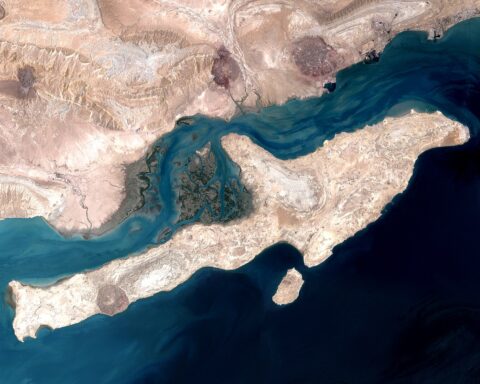
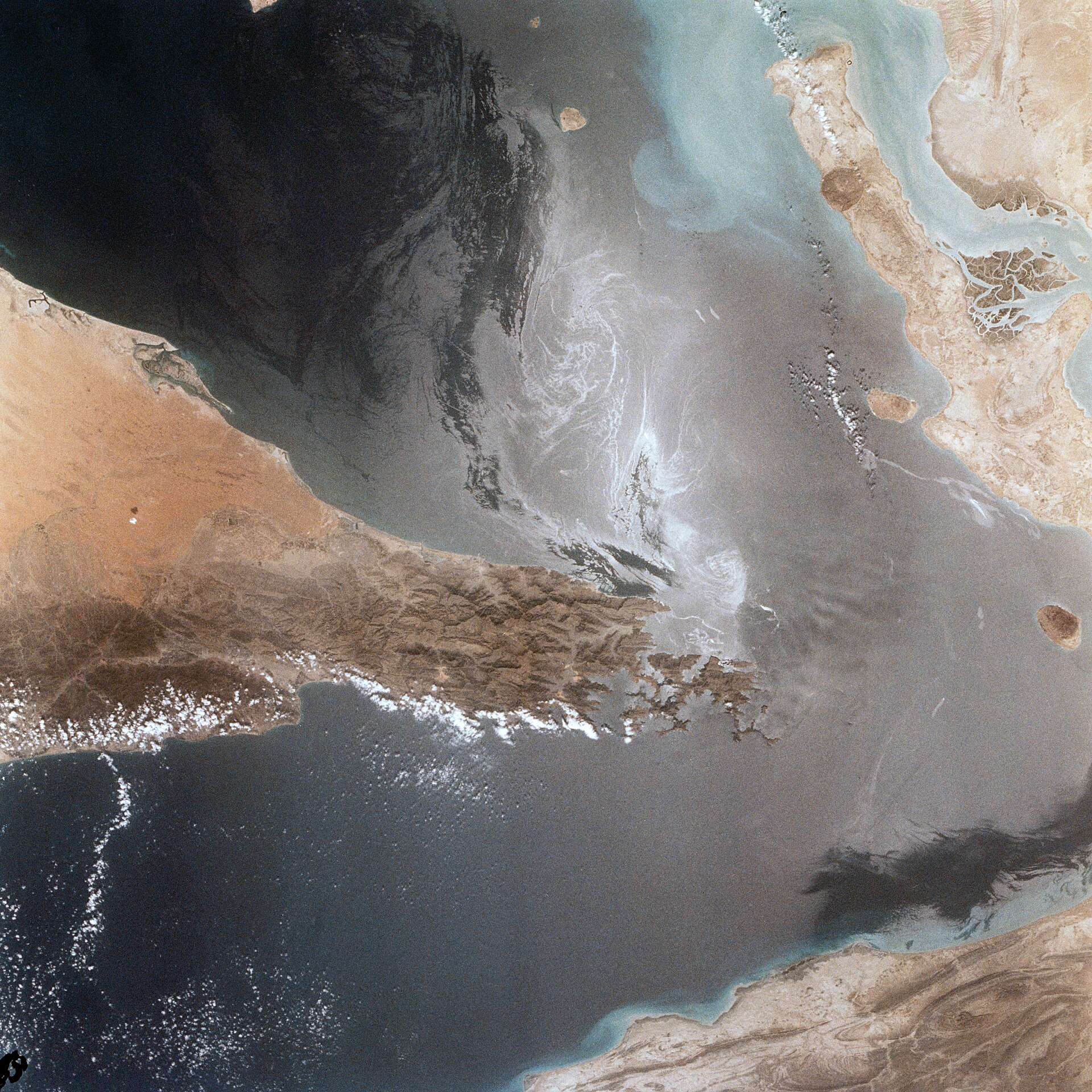
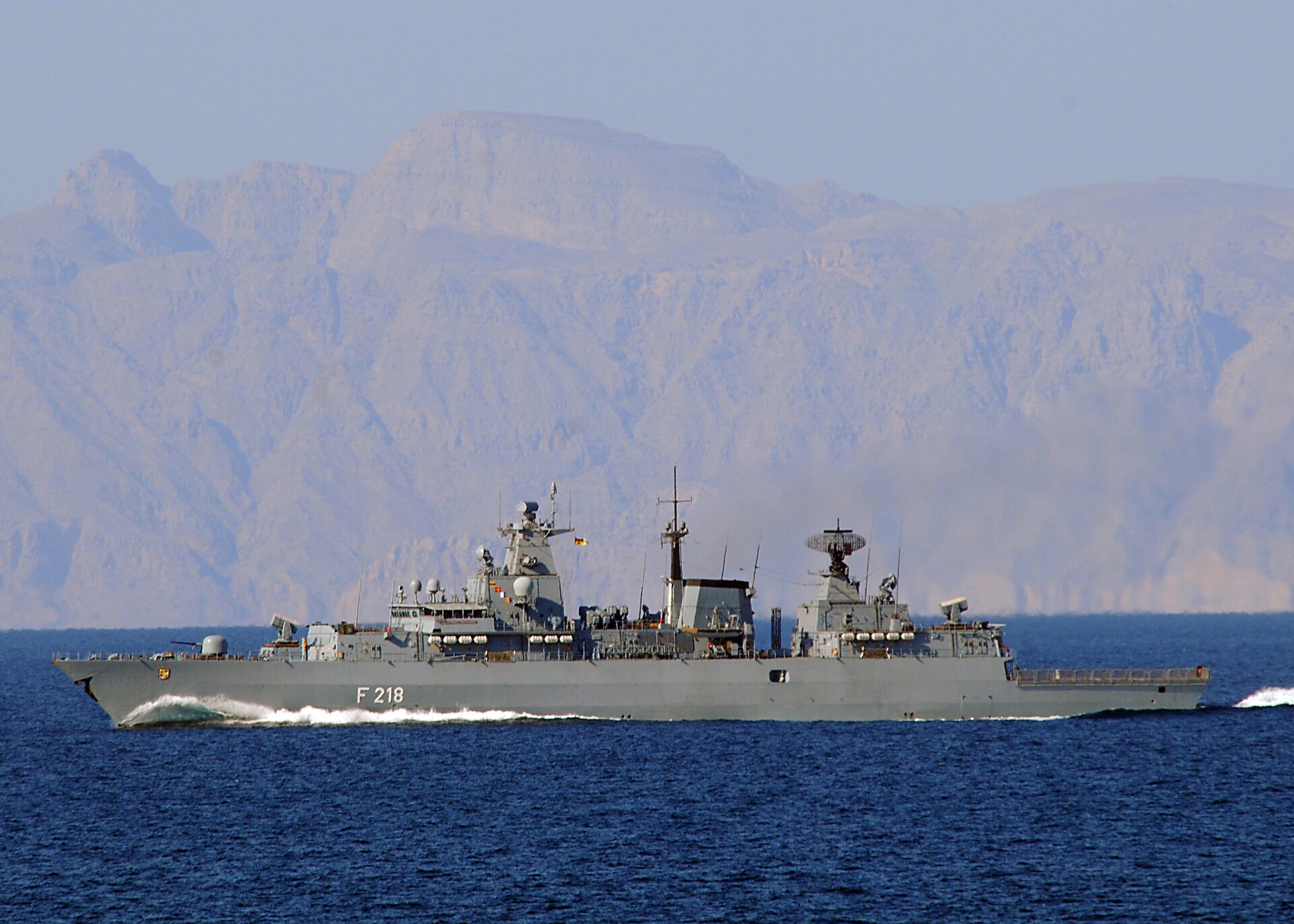
Operationally, the PGSA’s footprint was narrow but coercive: a five-nautical-mile corridor between Qeshm and Larak islands, in waters Iran claims as territorial, where vessels were directed by the IRGC Navy to follow designated routes and to pay approximately one dollar per barrel of cargo — or, for larger carriers, lump sums reported at up to two million dollars per transit. Forty-six IMO-confirmed shipping incidents in and around the Hormuz region as of June 11, with 14 confirmed seafarer fatalities, supplied the coercive backdrop against which the “services rendered” framing operated: the navigational hazard that Iran charged vessels to navigate was, in substantial part, a hazard Iran’s own forces had created and sustained.
On the day the MOU was supposed to be signed, none of this appeared in the text. The PGSA was not named, its fee structure was not addressed, its OFAC designation was not reconciled with the agreement’s Hormuz provisions, and the Iran-Oman bilateral management framework that Tehran has invoked to provide regional cover for its strait operations existed in a diplomatic void that the phrase “without tolls” was never designed to fill. The American government had sanctioned the PGSA as an IRGC-coordinated extortion body and was simultaneously preparing to sign an agreement that did not acknowledge its existence.
Does International Law Distinguish Tolls From Service Fees?
The legal literature on transit charges in international straits is unambiguous on principle and deeply contested on application — which is precisely the space Iran has chosen to occupy. UNCLOS Article 26(2) permits coastal states to levy charges on foreign vessels only for “specific services rendered to the ship,” language Iran’s representatives have deliberately echoed in every public statement since May. Baghaei told Euronews on May 25 that Iran was collecting fees for “navigational services in addition to the measures necessary to protect the environment of the Strait of Hormuz, the Persian Gulf and the Sea of Oman,” a formulation that mirrors the Article 26(2) exception almost verbatim and is unmistakably designed to survive legal challenge by fitting within the treaty’s own carve-out for legitimate service charges.
Whether it actually fits is the question every legal analysis published in 2026 has answered in the negative. Safia K. Southey, writing in EJIL:Talk! (the blog of the European Journal of International Law) on April 20, argued that the Article 26(2) exception is “most naturally read to cover identifiable operational services actually rendered to a vessel, rather than compulsory protection from a danger manufactured by the charging state itself.” Her conclusion applied directly to the PGSA’s corridor operations:
“A state that creates the navigational peril and then monetizes safe passage through it is turning control over access into a revenue mechanism.”Safia K. Southey, EJIL:Talk!, April 20, 2026
The PGSA’s per-barrel fee — imposed in a corridor where the navigational hazards are substantially the product of IRGC enforcement actions, not natural maritime conditions — fails this test by design, because the service Iran claims to render is protection from a threat Iran controls. Daphné Richemond-Barak of Reichman University and Jacob Stoil of the US Army Strategic Studies Institute reinforced this reading in a May 6 Just Security analysis, arguing that functional substance rather than nomenclature determines legality under international maritime law: “Institutional arrangements institutionalizing coastal state control contradict UNCLOS’s ‘purpose’ regardless of framing as ‘facilitative or cooperative.’” The International Maritime Organization weighed in on April 9, stating that “there is no international agreement where tolls can be introduced for transiting international straits” — using the word “tolls” without separately addressing “service fees,” treating any transit charge as functionally equivalent, a position that undermines Iran’s semantic distinction at the institutional level.
Iran’s counter-argument rests on a foundation the legal scholars have acknowledged but not overcome: Iran did not ratify UNCLOS in 1982 and issued an interpretative declaration specifically on straits, arguing that only parties to the convention are bound by its transit passage regime. The Article 26(2) test that Southey invokes may not bind Tehran as a matter of treaty law, even if it describes the customary international law norm accurately — a distinction that matters in any tribunal but matters more inside a MOU that cites no legal framework whatsoever and leaves the toll-fee determination to the parties’ competing self-interpretations. The deal did not resolve the legal question; it structured itself to avoid asking it.
What Would Saudi Arabia Owe Under a Fee System the MOU Never Prohibited?
Saudi Arabia moved approximately 5.5 million barrels per day through the Strait of Hormuz before the war — 38 percent of pre-war Hormuz crude volume — making it by far the largest single payer under any per-barrel fee system Iran imposes. At the PGSA’s approximate rate of one dollar per barrel, that exposure amounts to roughly $5.5 million per day, or approximately $2 billion per year, a figure absorbed entirely by Saudi state oil revenues at a moment when those revenues are under pressure from every direction. Brent crude stood at approximately $86.50 per barrel as of June 12–14, against a Saudi fiscal breakeven that Goldman Sachs and other analysts have estimated at $108–111 per barrel — a gap exceeding twenty dollars per barrel that the kingdom’s record first-quarter deficit of 125.7 billion riyals ($33.5 billion) has already made concrete in public accounts.
Riyadh joined four other Gulf states in writing the IMO on May 21 to warn that vessels should not comply with PGSA requirements, a coordinated rejection that shared the same calendar date as Rubio’s “unfeasible” statement and the same diplomatic posture of opposition without unilateral action. But Saudi MOFA issued no standalone statement on the PGSA fees, no public position on the toll-fee distinction in the MOU text, and no direct comment on the implication that the kingdom was named among twelve “approvers” of a deal that did not address its largest financial exposure at Hormuz. The Sadara Chemical Company’s $3.7 billion in guaranteed senior debt — backed by Aramco at 65 percent and Dow at 35 percent, with all 26 Jubail units offline since late March — was set to exit its grace period on June 15, the morning after the Geneva ceremony, adding a corporate cliff to the same 48-hour window in which Saudi Arabia’s Hormuz fee liability was being determined without Saudi Arabia at the negotiating table.
The silence is consistent with Saudi Arabia’s posture throughout the MOU process: designated as an approver, absent as a participant, and exposed as the largest payer. Iranian Ambassador to Moscow Kazem Jalali told Reuters on June 9 that the strait would be “open, but with new conditions that Iranian and Omani authorities will determine” — conditions in which Saudi Arabia, the country that would write the largest checks, has no stated role and no known seat. The kingdom that would bear more than a third of the per-barrel cost under the fee arrangement Iran insists on has contributed the least public language to the debate about whether that arrangement is compatible with the deal Riyadh is said to have endorsed.
The Lebanon Condition Runs on the Same Architecture
Araghchi’s June 13 IRIB interview did not limit itself to Hormuz fees. On the same broadcast, he declared that “we will never leave Hezbollah in Lebanon alone, and the end of the war in Lebanon will include all fronts” — appending a second condition to the MOU that the MOU’s text does not address. The Lebanon ceasefire condition and the Hormuz fee condition share the same structural logic: both are requirements Iran stated publicly as preconditions for implementation, both are absent from the MOU text, and both depend on the cooperation of a party that has already rejected the terms Iran would need it to accept — Hezbollah in one case, Iran’s own parliament in the other.
Hezbollah’s Naim Qassem dismissed a Lebanon ceasefire on June 4 as “absurd and humiliating.” Iran’s parliament codified the Hormuz fee system on March 30–31 and has shown no movement toward repeal. In both instances the MOU’s text contains a gap where a resolution mechanism should exist — no provision for incorporating Lebanon into the ceasefire architecture, no provision for defining or addressing Iran’s fee collection — and Araghchi’s statements on June 13 converted both gaps from textual oversights into stated preconditions, ensuring that any post-signing negotiation would have to resolve not just the nuclear terms deferred entirely to Phase 2 but also the fee architecture and the Lebanon conditions that the MOU was never constructed to carry.
The MOU’s framers appear to have adopted a strategy of deliberate deferral, writing text that prohibited what was easy to prohibit — “tolls,” which Iran agrees are illegal under international law — and leaving unaddressed what was hard to confront — “fees,” which Iran considers sovereign revenue backed by parliamentary authorization. The strategy assumed that signing would create momentum toward implementation, that ambiguity could be resolved after the ceremony rather than before it. Araghchi destroyed that assumption on June 13 by converting the textual ambiguity into public preconditions on two fronts simultaneously, and by doing so on state television the day before the ceremony was scheduled, ensuring that the contradictions would be entered into the public record before anyone arrived in Geneva. The deal that failed to sign on June 14 would have failed to implement even if it had signed, because the space between “tolls” and “fees” was not a gap to be negotiated — it was the territory where both sides had planted flags they could not remove. Israel’s June 14 strike on Dahiyeh and Ghalibaf’s “no point” declaration confirmed the collapse before the Geneva delegation tables could be set.
Frequently Asked Questions
Did Iran ever publish an official PGSA fee schedule?
No official tariff has been published by the PGSA or any Iranian government body. The approximately one-dollar-per-barrel figure cited across Western reporting originates from vessel operators who transited the Qeshm-Larak corridor and reported the charges to maritime industry groups, while some VLCCs (very large crude carriers) reportedly paid flat sums of up to two million dollars per passage. The absence of a published schedule compounds the liability: without a known rate structure, shipping companies and their insurers cannot calculate costs in advance, which drives up war-risk premiums independently of the fees themselves. Payments were settled in Chinese yuan, placing the entire collection mechanism outside the US dollar settlement system and complicating OFAC enforcement beyond the sanctions already imposed — a design choice that aligns with Iran’s broader de-dollarization posture and with China’s role as Iran’s largest remaining crude buyer under sanctions.
Has any international tribunal ruled on Iran’s Hormuz fee claims?
No tribunal has adjudicated Iran’s specific fee framework or the broader question of whether a non-ratifying UNCLOS state can impose transit charges on an international strait. The International Tribunal for the Law of the Sea (ITLOS) requires consent of both parties under UNCLOS Article 287, which Iran — as a non-ratifying party — has not given and has no obligation to give. The International Court of Justice could theoretically hear a case under general jurisdiction, but Iran withdrew from the ICJ’s compulsory jurisdiction mechanism in the 1980s following the Nicaragua ruling, and any special agreement to submit would require Iranian consent that Tehran has shown no inclination to provide. The practical result is that Iran’s fee framework operates in a zone of legal contestation with no available forum for resolution — a structural advantage for the party in physical control of the waterway, which on June 14 was Iran.
What happened to the nuclear terms between the Axios 14-point version and the June draft?
The MOU text underwent at least three documented iterations. Axios reported a 14-point framework on May 6 that included a 12-to-15-year enrichment moratorium alongside the Hormuz “without tolls” reopening provision. Al Arabiya published an 8-point version on May 22 that omitted all nuclear terms entirely. By June 12, the circulating text retained the “without tolls” Hormuz language but carried zero nuclear provisions in Phase 1 — all nuclear terms had been deferred to a 60-day Phase 2 that had no agreed text, no timeline for drafting, and no Iranian commitment to participate beyond Araghchi’s conditional statement that “if the provisions of the memorandum of understanding are not met, the final agreement will not be signed.” The enrichment moratorium that was the centerpiece of the May framework had been removed from the signing document within six weeks.
Could Iran’s foreign minister unilaterally suspend PGSA fee collection as a signing concession?
Almost certainly not without triggering a domestic constitutional conflict. The Strait of Hormuz Management Plan was approved by parliament on March 30–31, 2026, giving it the force of legislation under Iran’s constitutional framework governing Majlis authority. The PGSA is the implementation body of that parliamentary authorization, not a discretionary executive initiative the Foreign Ministry can suspend by decree. A foreign minister seeking to halt fee collection would need either a new parliamentary vote to repeal the Management Plan or a Supreme Leader directive overriding the Majlis — and the person Iran designated to sign the MOU in Geneva, Parliament Speaker Mohammad Bagher Qalibaf, is the same official who would need to advance any repeal through the body he leads. Separately, Iranian hardliner media affiliated with the IRGC (Tasnim) attacked the fee arrangement from the opposite direction, asking whether Iran should “settle for collecting service fees from passing ships” — creating a domestic political floor below which no official can publicly concede without being accused of surrendering sovereign revenue for nothing.
Has the IMO separately addressed whether “service fees” are distinct from “tolls” in international straits?
The IMO’s April 9, 2026, statement — that “there is no international agreement where tolls can be introduced for transiting international straits” — used the word “tolls” without issuing a separate determination on whether “service fees” constitute a legally distinct category. The organization’s institutional position treats any compulsory transit charge on an international strait as equivalent regardless of label, which in practice means the IMO does not recognize Iran’s semantic distinction between the two terms. Iran, however, has separately challenged the premise that Hormuz qualifies as an “international strait” in the UNCLOS sense, arguing that its non-ratification of the convention means the transit passage regime established in UNCLOS Part III does not apply to its claimed territorial waters in the five-nautical-mile corridor. If that argument were accepted — and no tribunal has ruled on it — the IMO’s position on international strait tolls would be jurisdictionally inapplicable to the waters where the PGSA operates, which is the doctrinal gambit underlying Iran’s entire fee architecture.