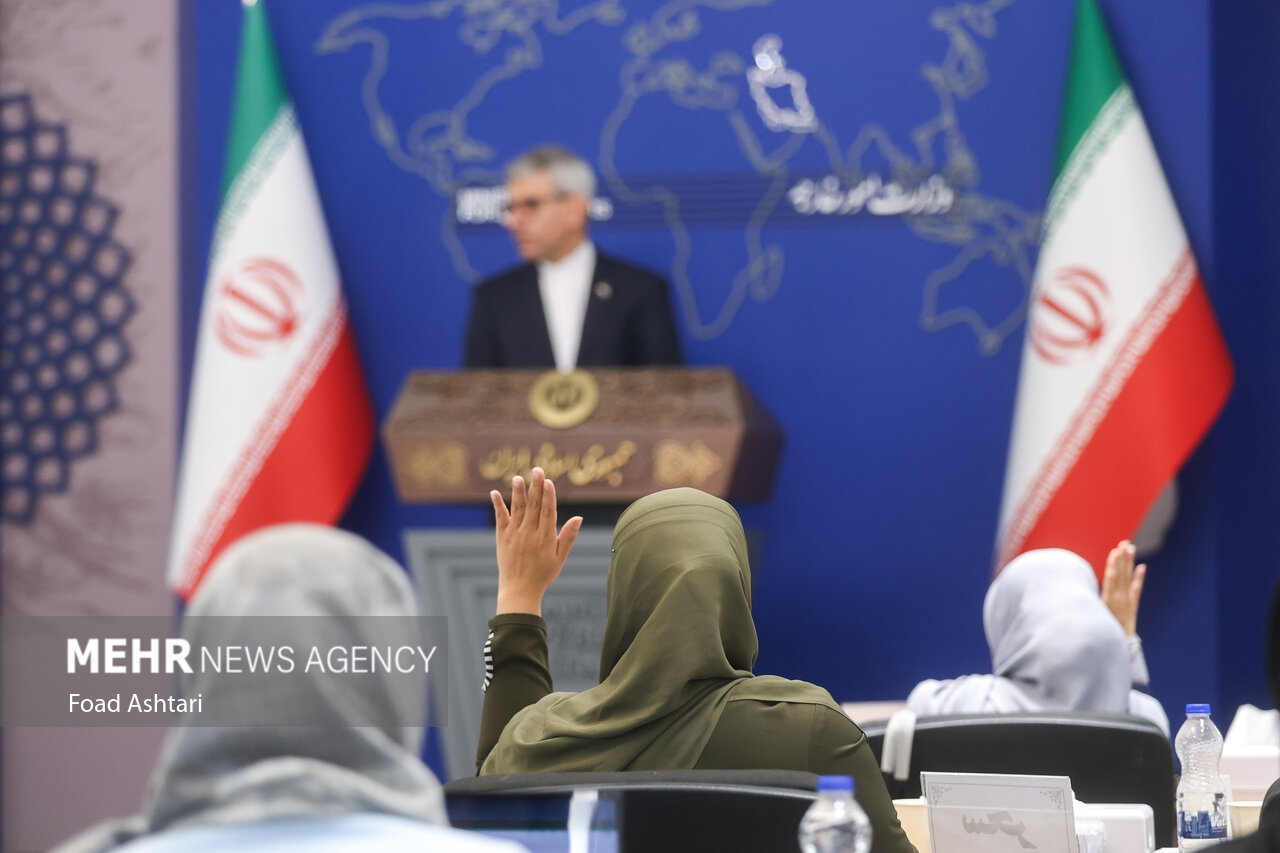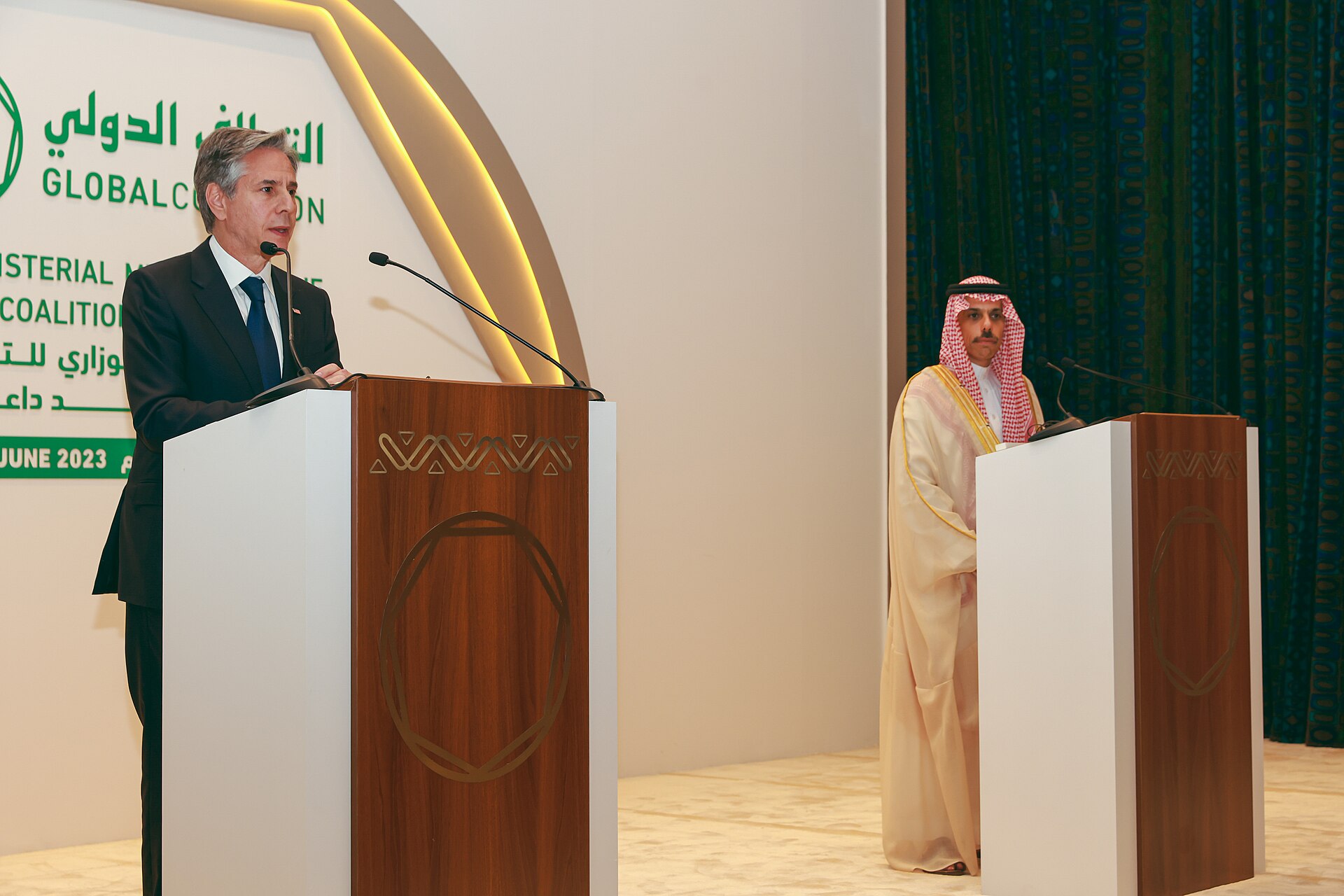

RIYADH — Saudi Arabia ended twenty-four days of public silence on the Iran framework on June 13, 2026, not through a State Department call, not through a SPA bulletin, and not through any direct conversation with Tehran, but through a telephone exchange between Foreign Minister Prince Faisal bin Farhan and Pakistani Foreign Minister Muhammad Ishaq Dar in which both men “welcomed” a process Riyadh has been excluded from the first day. Within hours of Faisal calling the deal’s “final stage” through the Islamabad mediator, Iran’s MOFA spokesperson Esmail Baghaei told reporters the memorandum would not be signed on Sunday, leaving Saudi Arabia in the position of having endorsed a timeline its chosen intermediary’s counterpart had already invalidated. Araghchi’s June 13 IRIB statement — that the MOU must cover “all fronts, including Lebanon” — added a further dimension to Saudi Arabia’s exclusion: Iran had conditioned the MOU on a Lebanon ceasefire that Hezbollah had rejected nine days earlier, through a track in which Riyadh holds no seat.
The instrument matters more than the endorsement. Riyadh did not authenticate the framework — it praised Pakistan for mediating it, a process-level blessing that travels through a relationship Saudi Arabia underwrites financially, militarily, and demographically, and that Pakistan in turn brokers in Tehran through two simultaneously running channels neither of which Saudi Arabia sits inside.
Table of Contents
- The Call Saudi Arabia Made When It Could No Longer Stay Silent
- Why Pakistan, and Why Through Pakistan
- What Did Faisal Actually Endorse?
- Two Letters, One Trip: Pakistan’s Dual-Track Architecture
- How Did Iran Respond to the Saudi Endorsement?
- The Quartet as Saudi Arabia’s Preferred Vehicle
- Thirteen Thousand Troops and What They Cannot Do
- Where the Money Flows, and Why It Matters
- What Comes Next for the Saudi Position?
- Frequently Asked Questions
The Call Saudi Arabia Made When It Could No Longer Stay Silent
The Faisal-Dar exchange came on the morning of June 13, 2026, a Friday, twenty-four days after the last confirmed Saudi MOFA public signal on the Iran framework — a bilateral on the margins of the EU Gymnich foreign ministers’ meeting on May 20. In that intervening period the kingdom had been named by Donald Trump on Truth Social, on June 11, as one of twelve “approvers” of a framework whose contents Riyadh had no role in drafting, and had watched Iran, the United States, and Pakistan trade incompatible versions of what the agreement was supposed to do.
The call was carried by Arab News and Radio Pakistan; no separate SPA press release accompanied it, and no MOFA statement was issued in parallel. That mechanical detail is the architecture of the endorsement — Saudi Arabia chose to speak about the deal by speaking to a mediator about a mediator, and to let that conversation be reported by a Saudi outlet quoting a Pakistani readout. Earlier reporting on the structural silence after Trump’s approver list traced the twenty-four-day gap in real time; the June 13 call closes it without filling it.
Faisal, according to the Pakistan-side readout that Arab News reproduced, “appreciated Pakistan’s consistent and sustained efforts in support of mediation and dialogue throughout the process.” Dar’s own X post described the talks as having “entered their final stage, with an electronic signing ceremony scheduled for tomorrow.” Two statements, one call, and zero direct Saudi engagement with either Washington or Tehran on the framework itself.
Why Pakistan, and Why Through Pakistan
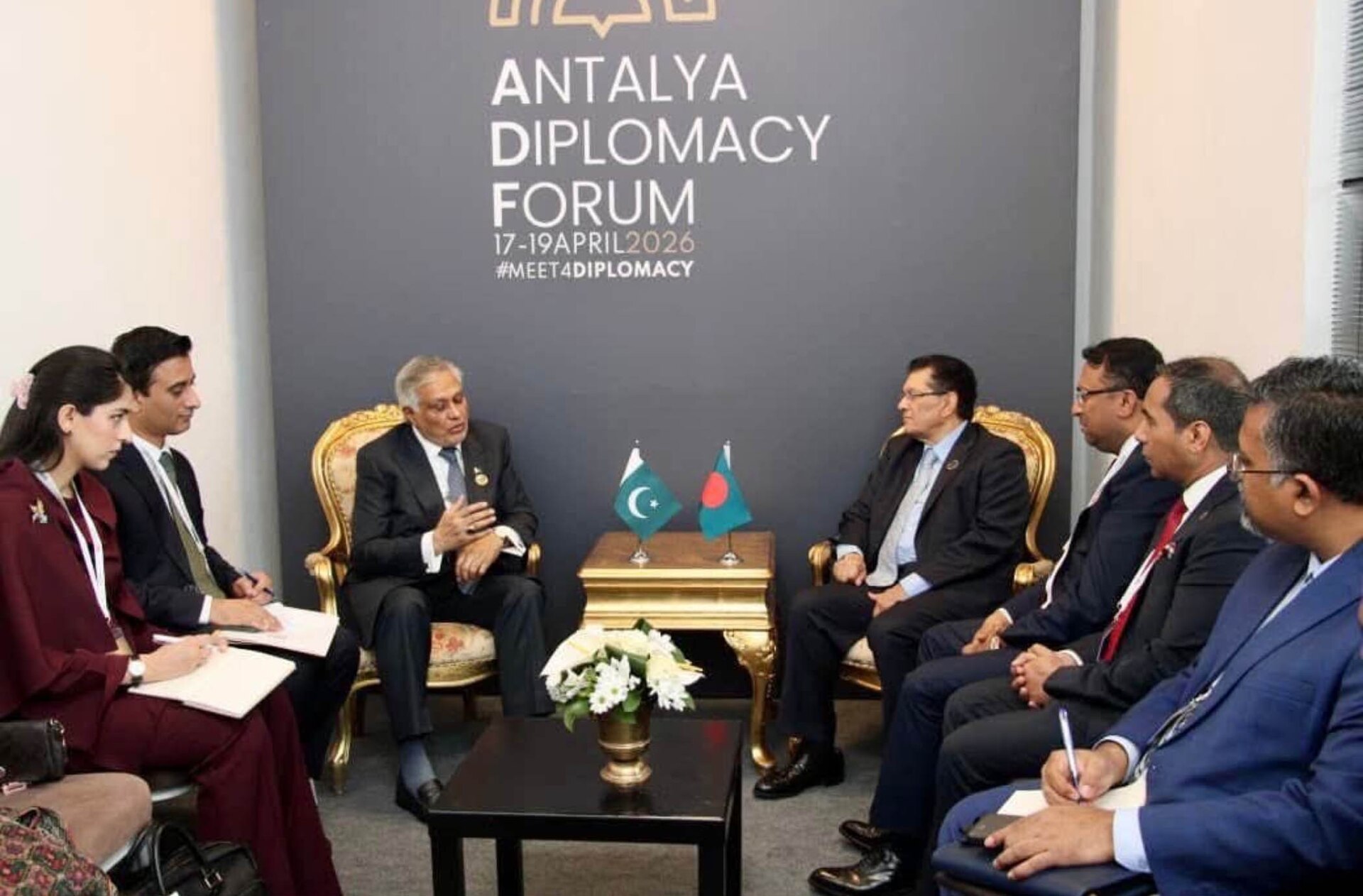
Saudi Arabia did not choose Pakistan because Pakistan is the most credible mediator on Iran — the Stimson Center has explicitly cast doubt on that — but because Pakistan is the mediator Riyadh has the most purchase over and the most reasons to use. The Oman channel, Saudi Arabia’s historically most reliable indirect path to Tehran, came under direct pressure from Trump’s May 2026 threats against Muscat over Hormuz transit. The Qatar channel runs through Doha’s $6 billion credit line to Iran and a Qatari delegation that consulted Washington rather than Riyadh before flying to Tehran on June 10. That leaves Islamabad as the only mediator architecture Riyadh sits structurally close to without being party to.
The Middle East briefing 3,000+ readers start their day with.
One email. Every weekday morning. Free.
The Stimson Center’s institutional assessment on Pakistan as peacemaker is unsparing on this point, naming Pakistan’s “ongoing military campaign against Afghanistan, its historically uneasy relations with Iran, and the ambiguous terms of its yet-to-be-ratified mutual defence agreement with Saudi Arabia” as factors that “cast a shadow over its credibility as a peacemaker and neutral host.” Riyadh chose this mediator anyway, because the alternative was speaking through a channel it has even less control of, or not speaking at all.
The International Crisis Group framed Pakistan’s position more generously, describing it as “a country that had the necessary connections within Washington, Tehran, and Riyadh to act as an intermediary,” with Pakistani intermediaries who “closely coordinated with Cairo and Ankara and consulted with key Gulf partners, particularly Riyadh.” The phrase to underline in that passage is “consulted with” — not “represented.” Pakistan represents Pakistan. When it speaks on Iran with Saudi Arabia’s blessing, it speaks within constraints that Riyadh has paid to install, but it does not speak Saudi Arabia’s words.
What Did Faisal Actually Endorse?
Faisal’s appreciation was directed at Pakistan’s mediation, not at the deal’s terms. This is the distinction the Arab News readout preserves and that Pakistan Today’s framing partially elides. The Saudi foreign minister praised an effort, not a text — and no text exists in any form Saudi Arabia has been allowed to read, given that all three mediation tracks (Pakistan civilian, Pakistan military, Qatar) have excluded Saudi from the room where draft language is exchanged. Earlier analysis of the authentication problem facing Riyadh set out the structural reasons why Saudi endorsement cannot be substantive even when it is offered.
The phrase Saudi watchers will turn over for weeks is “consistent and sustained efforts.” It is the language of a host thanking a guest for trying, not of a principal blessing a settlement. Compare it with the Iranian formulation — Baghaei’s reference to American “instability” delaying the signing — and the difference between a party to the negotiation and a sponsor of the mediator becomes the entire content of the June 13 readout.
| Element | What Was Done | What Was Not Done |
|---|---|---|
| Vehicle | Bilateral phone call with Pakistan FM | SPA press release; MOFA statement |
| Target of praise | Pakistan’s mediation process | Deal text or terms |
| Counterparties contacted | Islamabad | Washington; Tehran |
| Public channel | Arab News / Radio Pakistan readout | Direct Saudi government release |
| Signing format welcomed | “Electronic signing ceremony” (per Dar) | Geneva attendance — Saudi was not on the venue list |
| Days of silence broken | 24 (since May 20 Gymnich) | Substantive engagement with deal text |
Two Letters, One Trip: Pakistan’s Dual-Track Architecture
The mediator Saudi Arabia just thanked runs two simultaneous channels to Tehran, and the fact that Saudi praise covers both of them without distinguishing between them is itself a structural concession. Interior Minister Mohsin Naqvi flew to Tehran on June 7, 2026, carrying two communications — one from Prime Minister Shehbaz Sharif addressed to Mojtaba Khamenei through civilian channels, and a second, separately sealed, from Army Chief Asim Munir directed through IRGC-adjacent military liaison. The two letters traveled in the same diplomatic bag and were delivered in the same trip, but they did not say the same thing, and they were not meant to.
This is the dual-track architecture multiple sourced analyses have described as giving Tehran the ability to “activate whichever channel suits its negotiating posture on any given day.” If the Khamenei circle wants to engage civilian-to-civilian, Sharif’s letter is the live document. If the IRGC wants to communicate in its own register, the Munir letter is the live document. The Pakistani state has constructed a mediation tool in which the message can be optimised to the audience by the recipient rather than the sender, and Saudi Arabia just thanked the architects.
The instability this creates was on display the same week. The Sharif “final agreed text” claim contradicted by Vance’s “still TBD” within hours documented the civilian-side overreach. The Munir back-channel, communicating through IRGC interlocutors, has not produced an equivalent public claim — but the absence of a synchronised line from Islamabad is itself the evidence that two lines are being run.
“The September 2025 Strategic Mutual Defense Agreement with Pakistan has proven largely symbolic, as Islamabad offered no tangible military support when Saudi civilian infrastructure was targeted by Iran.”
Stimson Center institutional assessment, 2026
How Did Iran Respond to the Saudi Endorsement?
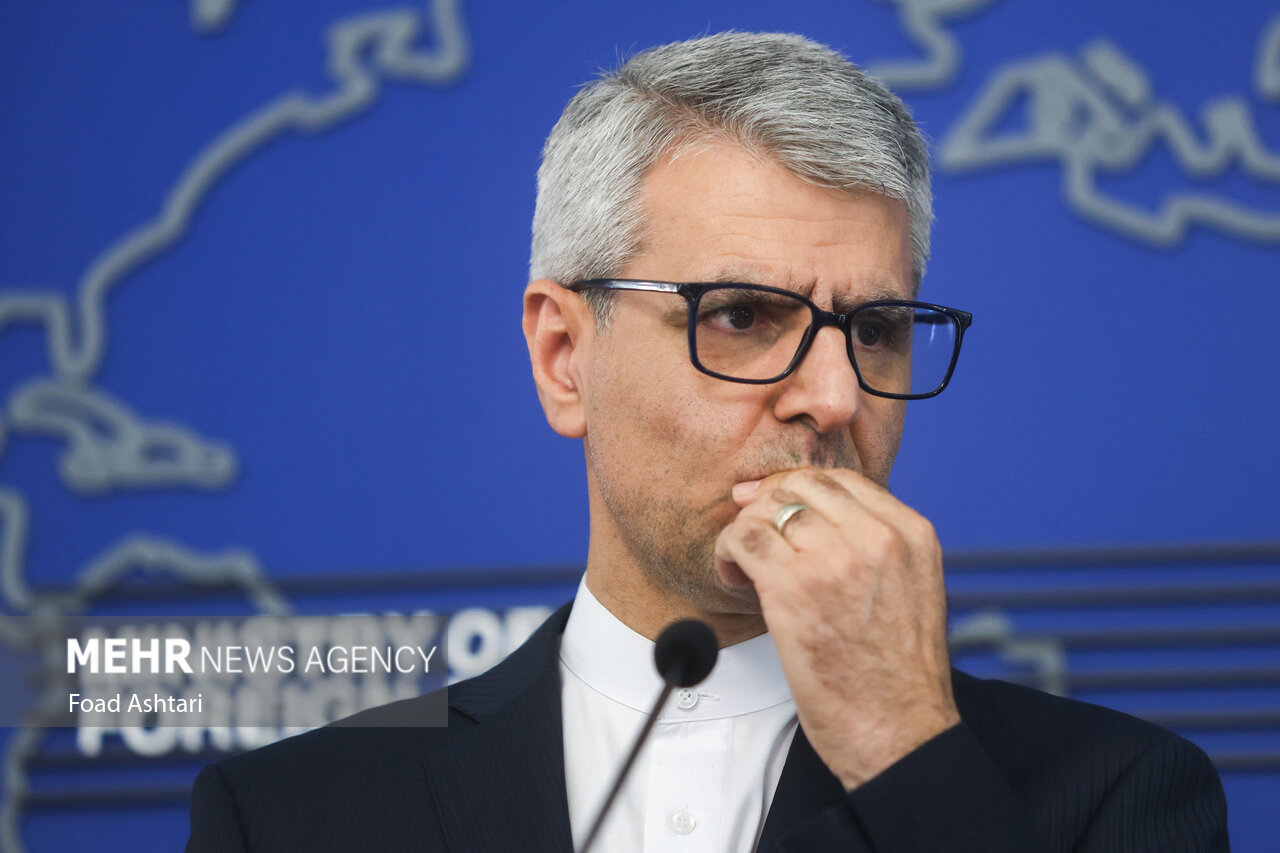
Iran did not respond to the Saudi endorsement at all. IRNA, Tasnim, and PressTV ran no commentary referencing Faisal’s call with Dar; Baghaei’s June 13 statement on the canceled Sunday signing made no reference to Riyadh. The most striking adversary-side data point about Saudi Arabia’s first public deal signal in three and a half weeks is that Tehran appeared to find it unworthy of acknowledgment.
Baghaei’s exact formulation in the same news cycle was that the memorandum “will not be signed by tomorrow,” that “the possibility that it will happen in the coming days is not ruled out,” and that the obstacle was “instability” from the other party — meaning the United States. The Sunday cancellation and Monday non-deadline coverage walked through how the Iranian foreign ministry framed the delay; nothing in Baghaei’s language gave Saudi Arabia, or the Saudi-endorsed Pakistani mediation, operational standing to alter the timeline either way.
What that absence reveals is the asymmetry of the channel Saudi just used. Pakistan is a vehicle through which Riyadh can be seen to bless a process, but the process responds to Washington and Tehran on its own clock. The “final stage” Dar described on the morning of June 13 had collapsed into a “coming days” caveat by the same afternoon, with Saudi Arabia having attached its name to the earlier formulation through the only channel it had access to.
The Quartet as Saudi Arabia’s Preferred Vehicle
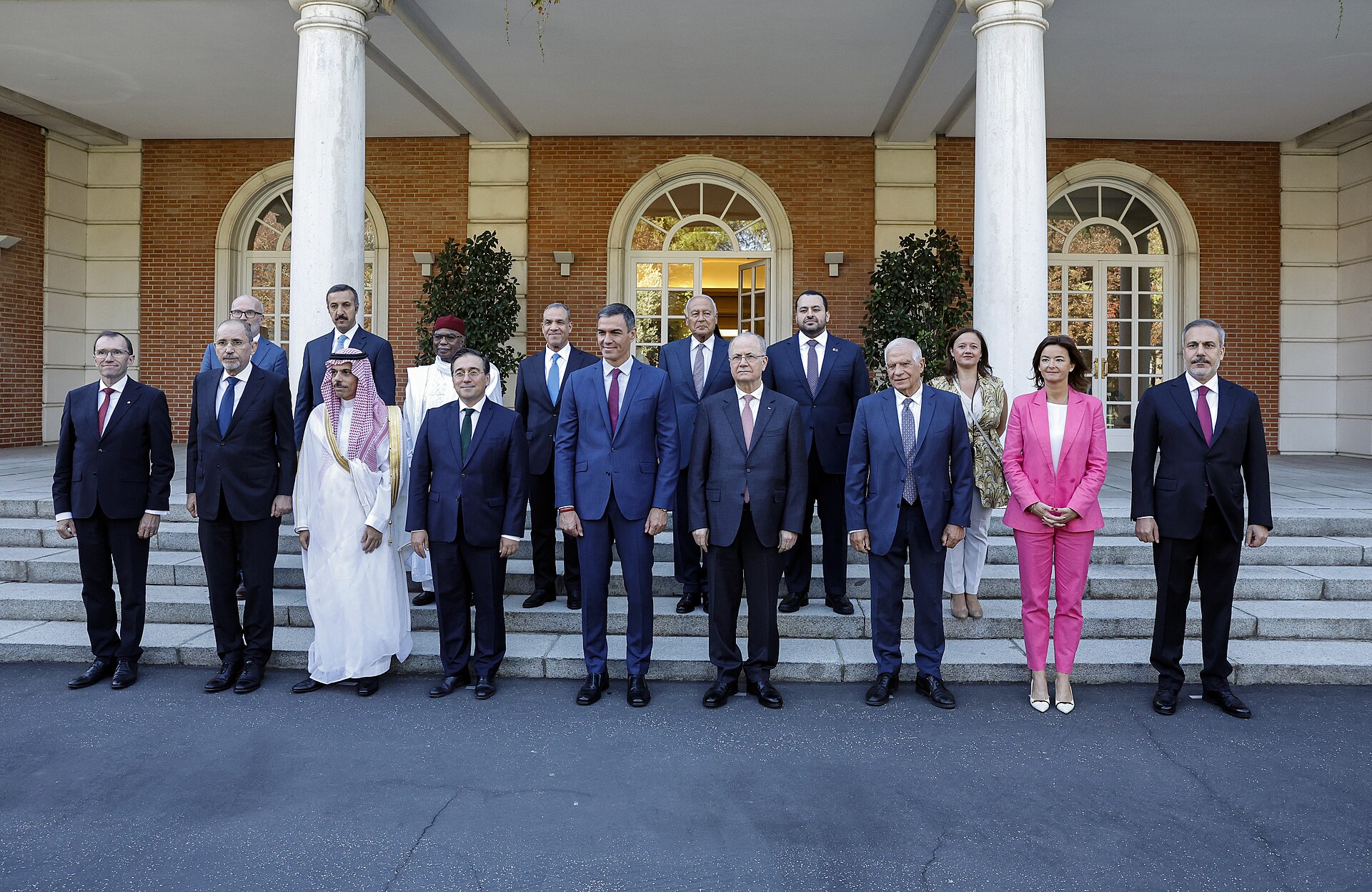
Buried in the June 13 readout is a second item that helps explain why Saudi Arabia chose this moment and this counterpart to break its silence. The Faisal-Dar call also covered “the forthcoming Regional Four Foreign Ministers (R-4) meeting, scheduled to be held in Egypt later this month” — the Quartet of Saudi Arabia, Pakistan, Turkey, and Egypt that has held three foreign ministers’ meetings in thirty-one days between March and April 2026. The IISS described that pace as a shift “from reactive coordination to institutionalised consultation.”
The Quartet is Saudi Arabia’s preferred multilateral format on the Iran file because it is the only one in which Riyadh hosts and sets the agenda. The first meeting was held in Riyadh on March 19, 2026; the next is in Egypt later in June. Pakistan sits inside the Quartet as a structural member, which means that when Riyadh thanks Islamabad for mediation it is also seasoning the ground for the next Quartet session, where Pakistan can be expected to report on its Tehran trips in a setting Saudi Arabia controls.
That format is the inverse of Geneva, where Saudi Arabia was not invited, and the inverse of the Vance-Qalibaf bilateral signing architecture that Tehran has now floated and then pulled. The Iranian decision to send Parliament Speaker Qalibaf rather than the foreign minister to Geneva is evidence of how thin the formal signing architecture has become; the Quartet, by contrast, is institutionalised and Saudi-led, and the June 13 call was partly a scheduling conversation about it.
The Quartet’s three-meetings-in-thirty-one-days tempo is also the answer to the question of why Saudi Arabia did not lean on a wider GCC convening to break its silence. The Gulf Cooperation Council’s own collective defence clause was invoked for the first time on June 11 in response to IRGC strikes on Kuwait and Bahrain — not on Saudi soil — and the Council’s structural exclusion of Saudi Arabia from the named victims of that invocation made the GCC a politically awkward venue for the kingdom to use as a megaphone on the deal. The Quartet does not carry that baggage; its agenda is whatever its four foreign ministers say it is, and one of them is the man Faisal called on June 13.
Thirteen Thousand Troops and What They Cannot Do
The substrate beneath the Faisal-Dar call is the physical Pakistani military presence inside Saudi Arabia. Thirteen thousand Pakistani troops have been deployed to the kingdom’s Eastern Province at King Abdulaziz Air Base since April 11, 2026, in the first formal invocation of the Saudi-Pakistan Mutual Defense Agreement signed on September 17, 2025. The South Asia Index has reported that the deployment “could exceed 50,000” if the SMDA’s “ambiguous” terms are activated more fully — language the Stimson Center has used as well.
The SMDA stipulates that “both countries will treat any act of aggression against one as an act against both.” That clause has not been tested in the way its drafters envisaged. When Iran targeted Saudi civilian infrastructure earlier in the cycle — and the Stimson Center has used precisely that language — Islamabad “offered no tangible military support.” The defence pact, in other words, is operationally untested in exactly the scenario it was written for, and the deployment that does exist is positioned for force protection and signaling rather than counter-strike.
That gap between the SMDA’s language and its enforcement matters for the Faisal-Dar call because the mediator Saudi Arabia just thanked is also the security partner Saudi Arabia has bound itself to without yet receiving the reciprocity the agreement promised. The endorsement and the defence pact are the two sides of the same Riyadh-Islamabad relationship; using Pakistan as the public voice on Iran is the diplomatic complement to using Pakistani troops as the visible deterrent in the Eastern Province.
“[We] expressed hope that this important development will contribute to lasting peace and stability in the region.”
Pakistani FM Muhammad Ishaq Dar, X post, June 13, 2026
Where the Money Flows, and Why It Matters
The financial architecture connecting Riyadh and Islamabad is the part of the Faisal-Dar relationship that gives Saudi Arabia pull it can use without ever needing to articulate. Saudi Arabia, together with Qatar, has provided roughly $5 billion in combined balance-of-payments support to Pakistan through deposits and currency swaps, covering external obligations Islamabad could not meet on its own. Separately, on April 17, 2026, the kingdom extended a fresh $3 billion tranche and rolled over an additional $5 billion facility — a single-day commitment from Riyadh alone, larger than the entire annual GDP of several smaller Gulf states.
Layered on top of that are thirty-four bilateral agreements totalling more than $2.8 billion in commitments and a population of over 2.5 million Pakistani expatriates inside Saudi Arabia whose remittances are vital to Pakistan’s external account. The relationship is genuinely structural in both directions: the remittance flow is non-substitutable for Islamabad, and the labour supply is non-substitutable for Riyadh. Each side has hostages it cannot release.
| Channel | Magnitude | Date / Status |
|---|---|---|
| Saudi + Qatar combined support to Pakistan | ~$5 billion | Cumulative, 2024–2026 |
| Saudi additional tranche | $3 billion | April 17, 2026 |
| Saudi roll-over facility | $5 billion | April 17, 2026 |
| Bilateral agreements (count / value) | 34 agreements / $2.8 billion+ | Since 2024 |
| Pakistani expatriates in Saudi Arabia | 2.5 million+ | Standing population |
| SMDA-deployed Pakistani troops at KAAB | 13,000 | April 11, 2026 onward |
| SMDA signing date | — | September 17, 2025 |
That balance is why Riyadh’s endorsement through Islamabad reads, to the experienced ear, as a low-cost gesture that draws on accumulated relational capital without spending fresh political coin. Saudi Arabia did not have to convene a press conference, brief Reuters, or summon a Western ambassador; it had to call a foreign minister whose government’s solvency is part-underwritten by the kingdom’s central bank, and let his readout carry the day.
It also explains why the readout was permitted to lead with Dar’s name in some Pakistani outlets. Pakistan Today’s June 13 framing placed the Pakistani minister ahead of the Saudi one in the headline structure, presenting the call as Islamabad bringing Riyadh on board rather than Riyadh speaking through Islamabad. That ordering is a small piece of editorial latitude Saudi communications managers can absorb because the underlying relationship is one in which Riyadh holds the more durable cards; Pakistan can frame the call as it likes, and the substance — Faisal thanking the mediator, the mediator thanking the patron — remains intact.
The asymmetry is also visible in what was not on the call’s published agenda. There was no reference, in either Pakistani or Saudi readouts, to the Sadara $3.7 billion grace-period cliff scheduled to expire on June 15 — a fiscal exposure that touches Saudi Aramco’s downstream balance sheet but has no direct Pakistani angle. Saudi Arabia chose to use this Pakistani channel for the political endorsement only, keeping the genuinely Saudi-specific economic vulnerabilities outside the readout’s frame.
What Comes Next for the Saudi Position?
The next data point will come from the Quartet ministerial in Egypt later this month, where Faisal will sit with Dar, with Turkey’s Hakan Fidan, and with Egypt’s Badr Abdelatty in a format Saudi Arabia helped institutionalise. Whatever the Iran framework looks like by then — whether it has been signed electronically, deferred to “the coming days” Baghaei flagged, or collapsed under the weight of incompatible American and Iranian readings of its text — that meeting will be the venue at which Saudi Arabia issues its next on-the-record signal.
The signing format itself is now contested. Dar described an “electronic signing ceremony” as imminent on June 13; Baghaei contradicted the timeline within hours; Iran has reportedly designated Parliament Speaker Mohammad Baqer Qalibaf rather than Foreign Minister Abbas Araghchi as its signatory, a constitutional ambiguity our reporting addressed in the Qalibaf designation analysis. None of these moving parts requires Saudi participation, and none of them was altered by the Saudi endorsement, but each will shape what Faisal can next say through Dar.
The fiscal pressure on Riyadh has not eased. Brent traded around $86.50 a barrel on June 13 against a Saudi breakeven of $108–111, a structural gap of $21–25 per barrel that is grinding through the kingdom’s reserves while the framework that might lift oil prices remains undrafted. When Pakistan’s Sharif declared a ceasefire on June 14 and credited Saudi Arabia with “immense contributions,” the kingdom received gratitude without gaining a signatory, mediator, or guarantor role — an outcome Saudi Arabia Was Thanked for a Deal It Cannot Enforce examines as the formal gap between credit and structural protection under international law. For the precise announcement sequence — how Pakistan named the June 19 signing date minutes before Trump, while Saudi Arabia issued no statement — see the companion piece. The endorsement-by-proxy strategy is what fiscal pressure looks like when it cannot be answered directly: Saudi Arabia spoke because not speaking had become more costly than speaking through someone else, and the someone else it chose was the one it owns the most of without controlling.
Frequently Asked Questions
Did Saudi Arabia issue any direct statement on the Iran deal on June 13, 2026?
No direct statement was issued by the Saudi Press Agency or by the Ministry of Foreign Affairs as a stand-alone release. The Faisal-Dar call was reported by Arab News and Radio Pakistan citing the Pakistani side’s readout. No transcript of Faisal’s portion has been independently published by Saudi government channels, and no MOFA press conference accompanied the call — a formatting choice that distinguishes this endorsement from the substantive briefings the kingdom has issued on previous regional inflection points.
What is the Strategic Mutual Defense Agreement, and is it ratified?
The SMDA was signed by Saudi Arabia and Pakistan on September 17, 2025, committing each country to treat “any act of aggression against one as an act against both.” The Stimson Center has flagged the agreement as “yet-to-be-ratified” through Pakistan’s parliamentary process and has noted that the language of mutual obligation has not been operationally enforced. Specifically, Pakistan did not provide direct military support when Saudi civilian infrastructure was targeted by Iran during the active phase of hostilities — an omission that has shaped how analysts read the deployment’s deterrent value.
Why didn’t Saudi Arabia speak directly to Washington or Tehran instead?
Saudi Arabia has no seat in any of the three active Iran deal mediation tracks: the Pakistan civilian channel run by PM Sharif, the Pakistan military back-channel run by Army Chief Munir through IRGC liaison, and the Qatar channel underwritten by Doha’s $6 billion credit line to Iran. Riyadh’s historical Oman back-channel came under US pressure after Trump’s May 2026 threats against Muscat over Hormuz transit, narrowing Saudi indirect options. Direct engagement with Washington has been complicated by Trump naming Saudi Arabia as an “approver” on Truth Social without consultation, leaving Riyadh to choose between contradicting the US president publicly or accepting the framing through a mediator. The substantive cost of that exclusion is clearest on Hormuz: on June 14, Araghchi confirmed that the semantic gap between “tolls” and “service fees” in the draft text is written into the deal itself — and Saudi Arabia was not in the room when that language was set.
What is the R-4 or Quartet, and what role does it play?
The Regional Four (R-4) is the consultative grouping of Saudi Arabia, Pakistan, Turkey, and Egypt that held three foreign ministers’ meetings between March 19 and April 18, 2026 — a pace IISS characterised as institutionalisation rather than ad hoc crisis response. The first session was hosted in Riyadh on March 19, establishing the kingdom as the format’s convener. The next ministerial is scheduled for Egypt later in June 2026, and was on the agenda of the June 13 Faisal-Dar call. The Quartet is the only multilateral Iran-adjacent vehicle in which Saudi Arabia sets the agenda rather than receiving it.
What did Iran’s foreign ministry say about the framework on June 13?
MOFA spokesperson Esmail Baghaei told reporters the memorandum would not be signed on Sunday, June 14, attributing the delay to “instability” from the American side and stating that “the possibility that it will happen in the coming days is not ruled out.” Baghaei did not reference Saudi Arabia, the Faisal-Dar call, or any Gulf endorsement. Iran’s state media outlets — IRNA, Tasnim, and PressTV — published no follow-up commentary on the Saudi-Pakistani readout, indicating that Tehran treats the Saudi endorsement-through-Islamabad as having no operational bearing on its negotiating timeline.