REPLACEMENT MADE
RIYADH — Pakistan declared on June 14, 2026, that a US-Iran peace deal had been “reached” and thanked Saudi Arabia for “immense contributions” — but Saudi Arabia is not a signatory, not a mediator, not a guarantor, and holds no seat in the enforcement architecture. Prime Minister Shehbaz Sharif’s statement placed Riyadh in a category that international law does not recognize: credited but unprotected. The ceasefire framework contains no clause dissolving the Persian Gulf Strait Authority, no Saudi representation in the post-deal meetings Sharif announced for “this week,” and no mechanism addressing the $18-23 per barrel gap between Brent and Saudi Arabia’s $108-111 fiscal breakeven. Sharif thanked Riyadh. He did not assign it a role. Under international law, the distinction determines whether gratitude translates into structural protection — and on June 14, it did not. The announcement sequence is examined in full in Pakistan Named the Date Saudi Arabia Was Not Asked For, which tracks how Pakistan’s post on X preceded Trump’s Truth Social confirmation by minutes, with no corresponding Saudi statement.
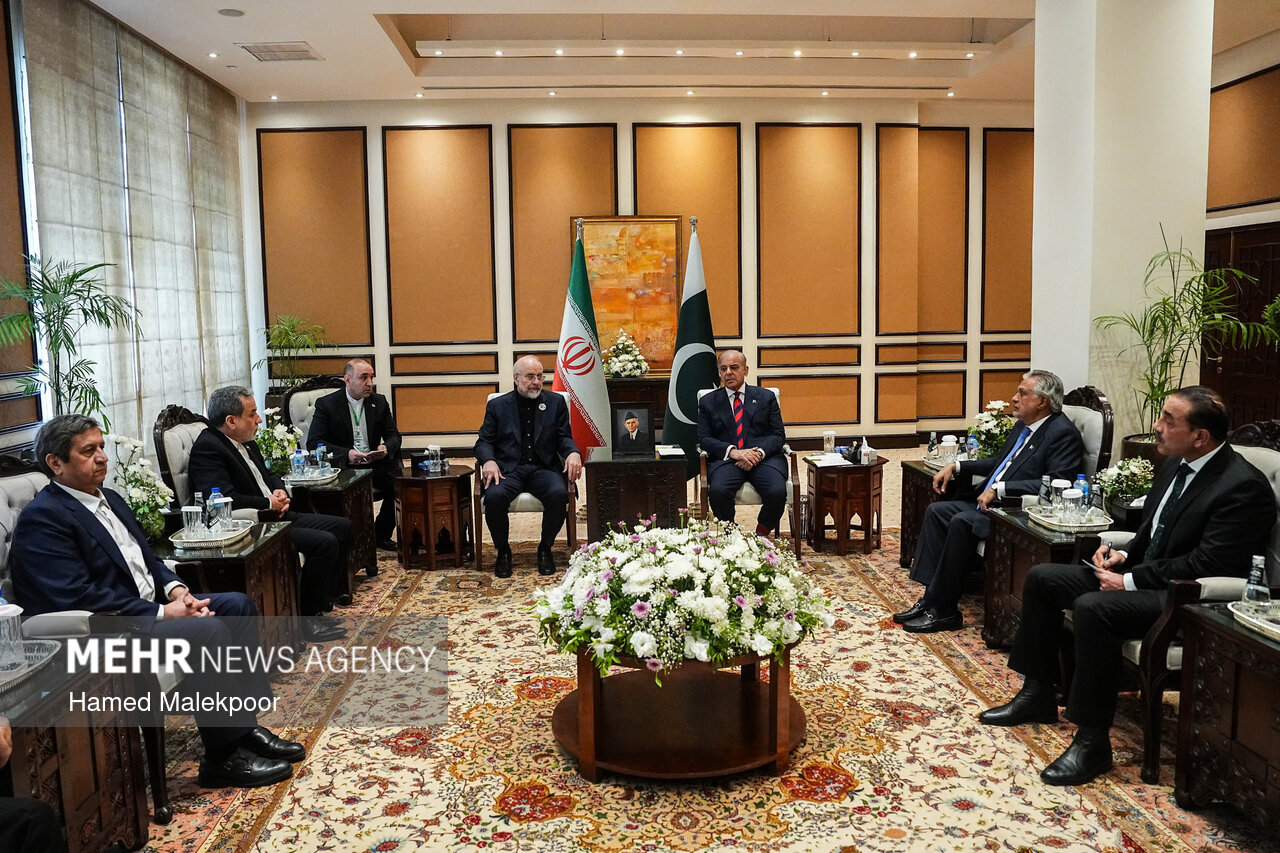
Table of Contents
- What Did Pakistan’s Ceasefire Declaration Say About Saudi Arabia?
- The Legal Gap Between Gratitude and Guarantee
- Can Acknowledgment Language Bind a Non-Signatory?
- Does the Ceasefire Dissolve the Strait Authority?
- Why Has Brent Not Moved Toward Saudi Arabia’s Breakeven?
- The April 8 Ceasefire Already Answered This Question
- Lebanon Was Declared Covered. Hezbollah Disagrees.
- What Does Khamenei’s Silence Mean for the June 19 Ceremony?
- Sadara’s $3.7 Billion Expires the Morning After
- Frequently Asked Questions
What Did Pakistan’s Ceasefire Declaration Say About Saudi Arabia?
Sharif’s June 14 announcement contained three distinct categories of credit, each carrying different weight under diplomatic convention. Pakistan and Qatar received facilitator status — Sharif designated them to “facilitate a series of meetings this week” following the deal, according to NewsNation and CBS News. Saudi Arabia and Turkey received acknowledgment — “sincere gratitude” for “immense contributions,” per Fox News and the Times of Israel liveblog. The United States and Iran were named as the bilateral parties whose “military operations on all fronts, including in Lebanon” would cease.
Saudi Arabia appeared in the second category. Not the first. Not the third. Sharif’s language for Pakistan and Qatar was forward-looking and operational: mediators will facilitate meetings. His language for Saudi Arabia was backward-looking and honorific: gratitude for contributions already made. One sentence assigns a continuing function. The other closes an account.
When Pakistan announced the deal’s “final stage” on June 13, Saudi FM Faisal’s only prior comment had been a phone call with Pakistani FM Dar “welcoming” the outcome — language that positioned Riyadh as a well-wisher, not a co-architect. Within hours of that June 13 call, Iran’s Baghaei confirmed the scheduled June 14 signing would not proceed.
Pakistan’s dual-channel architecture explains its centrality. PM Sharif maintained a civilian diplomatic line to Tehran while Army Chief Munir operated a parallel military back-channel to the IRGC, according to Al Jazeera reporting from April 2026. The International Crisis Group described Pakistan as holding a “unique position” as intermediary — a position Saudi Arabia did not occupy despite deploying 13,000 Pakistani troops in its Eastern Province under the September 2025 Saudi-Pakistan Military Defense Agreement. The Stimson Center assessed the SMDA as “largely symbolic.” Pakistan’s troops protect Saudi territory; Pakistan’s diplomats exclude Saudi Arabia from the architecture those troops ostensibly serve.
The Middle East briefing 3,000+ readers start their day with.
One email. Every weekday morning. Free.
Turkey’s placement alongside Saudi Arabia in Sharif’s acknowledgment is equally revealing. Ankara received identical “immense contributions” language — no facilitator role, no forward assignment. The operational future of the deal belongs to Pakistan and Qatar.
The Legal Gap Between Gratitude and Guarantee
International law draws a sharp line between mediation credit and treaty-assigned protection. A mediator’s acknowledgment does not bind the parties or confer standing on the acknowledged party. Cambridge University Press’s study on peace settlements states that “the suggestions and proposals of a mediator are never binding on the parties.” Oxford Public International Law adds that “the mere designation of witness or guarantor leads to few consequences” — and that specific rights and obligations require explicit treaty assignment.
Sharif’s language placed Saudi Arabia below even witness status. A witness is named in the treaty text. A guarantor is assigned enforcement rights. A contributor who receives “sincere gratitude” in a press statement holds no treaty-defined role at all. The June 14 declaration was a unilateral Pakistani statement, not a signed instrument. Saudi Arabia’s “immense contributions” exist in Sharif’s gratitude, not in any article, annex, or protocol of the framework itself.
The Rio Protocol of 1942 offers a precedent for the distance between a named role and an operative one. Argentina, Brazil, Chile, and the United States served as named guarantors of the Ecuador-Peru border settlement. When Peru violated the agreement in 1995, triggering the Cenepa War, the guarantors had no enforcement mechanism despite holding explicit treaty-assigned roles. The 1998 Brasilia Presidential Act required their active involvement only because the original treaty text had formally designated them. Even named guarantors with treaty-assigned powers could not prevent a war.
The Chatham House assessment from April 9 that “a real risk” existed that “regional considerations are sidelined” materialized not as a sidelining, but as something more precise: a thanking. Contributors thanked in a press statement have no standing to demand compliance, certify events, or invoke any clause of the framework.
Can Acknowledgment Language Bind a Non-Signatory?
The asymmetric association Sharif created on June 14 operates in one direction. Saudi Arabia is now publicly linked to a deal it did not negotiate, cannot enforce, and whose terms have not been published. Any failure of the ceasefire — an IRGC provocation at Hormuz, a Hezbollah rejection of the Lebanon component, a collapse of the June 19 ceremony — will be assessed against a regional backdrop that includes Saudi Arabia among its “contributors.” Any success will flow to the bilateral parties and their named mediators.
The mechanism is reputational, not legal. Sharif’s statement was broadcast by Fox News, CBS News, NBC News, the Times of Israel, and NewsNation — all outlets that recorded Saudi Arabia’s name alongside the deal’s announcement. Riyadh did not issue a statement confirming, denying, or qualifying its role. The Saudi Press Agency carried no response. The MOFA issued no clarification. Silence, in the hours after a public association, functions as acquiescence in diplomatic convention.
Saudi Arabia’s MOFA had not issued a direct public statement on US-Iran deal substance in over 24 days as of June 14. FM Faisal’s last relevant communication was the June 13 phone call with Pakistani FM Dar, relayed by Arab News rather than the Saudi Press Agency, in which both “welcomed” the deal’s “final stage.” The MOFA’s last autonomous foreign policy statement was the May 20 Gymnich meeting participation. In contrast, Pakistan issued multiple public declarations, Qatar conducted shuttle diplomacy, and Turkey received acknowledgment — each country with documented, attributed public statements. Saudi Arabia’s documented diplomatic output on the deal consists entirely of phone calls reported by other countries’ media.
The absence of Saudi voice in the deal’s public record is itself a structural feature. A country that does not speak cannot be quoted. A country that cannot be quoted cannot set conditions. A country that cannot set conditions accepts whatever conditions are set by those who do speak. Sharif spoke. Araghchi spoke. Vance spoke. Baghaei spoke. Saudi Arabia’s MOFA did not.
Does the Ceasefire Dissolve the Strait Authority?
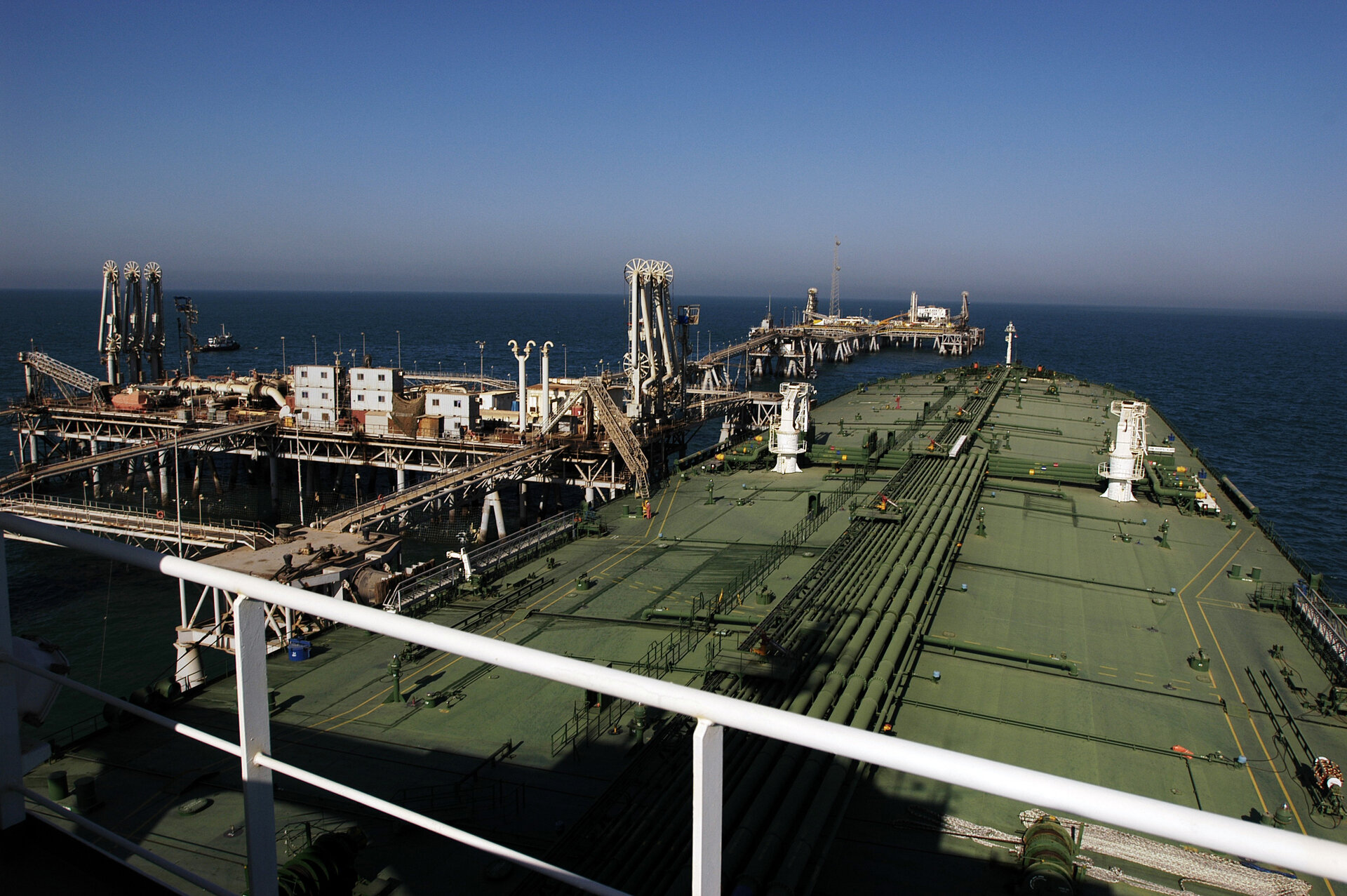
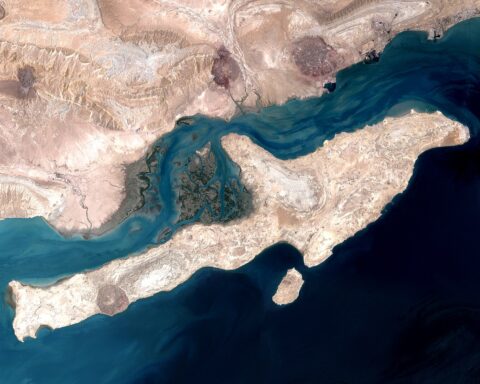
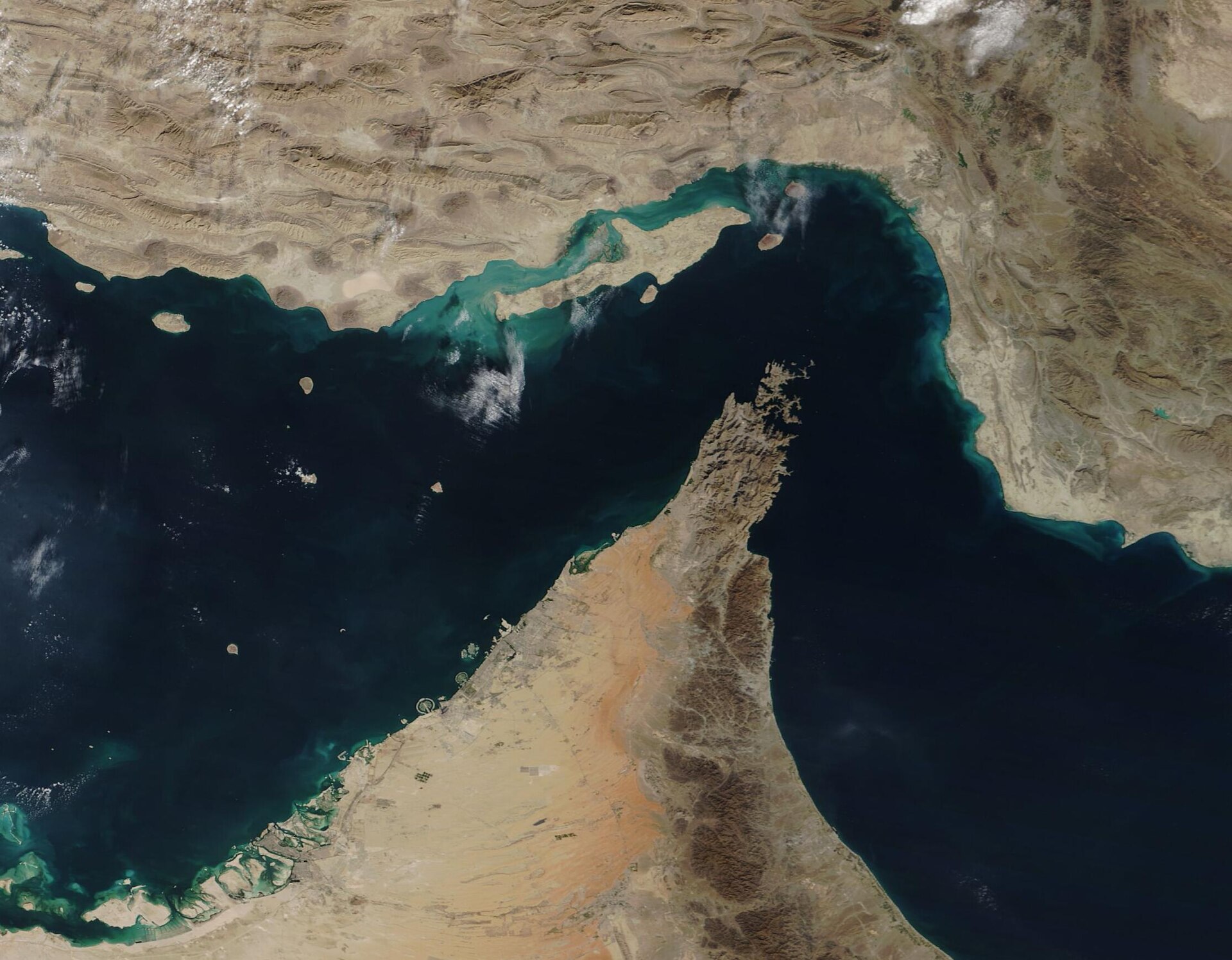
The Persian Gulf Strait Authority, established May 5, 2026, charges approximately $2 million per vessel — roughly $1 per barrel for VLCCs — to transit the five-nautical-mile Qeshm-Larak corridor. The PGSA has continued to operate despite OFAC sanctions imposed May 27, 2026, according to UPI. More than 800 vessels remained stranded inside the Gulf as of mid-June 2026, according to S&P Global Commodity Insights. Iranian authorities require transit to be “coordinated with Iranian forces for security reasons” — a formulation that maintains operational control regardless of whether formal fees are collected.
The ceasefire framework, as described by Sharif, addresses “military operations on all fronts.” It does not address maritime toll collection, service fee architectures, or the institutional continuity of an authority that pre-dated the ceasefire negotiations. The MOU draft, as previously reported by IRNA, prohibits “tolls” but not “service fees” — a distinction Iran’s negotiators have explicitly exploited by rebranding charges as fees for “services rendered.”
PGSA dissolution requires an affirmative institutional act. A ceasefire — even a permanent one — addresses hostilities, not commercial regulatory bodies. Iran’s parliament codified the fee structure in legislation passed March 30-31, 2026, before the MOU draft existed. Removing PGSA would require a parliamentary reversal, a separate bilateral or multilateral agreement on Hormuz governance, or Iranian executive action overriding legislative authority. None of these mechanisms appear in Sharif’s declaration or in any published summary of the deal terms.
Saudi Arabia’s exposure is direct. At 5.5 million barrels per day through Hormuz — 38% of pre-war crude volume — the PGSA fee structure implies approximately $5.5 million per day, or roughly $2 billion per year, in Saudi transit costs. The PGSA’s exemption list covers Russia, China, India, Iraq, and Pakistan. Saudi Arabia is not exempt. Shipping associations have described Iran’s transit fee as “a departure from long-standing international maritime norms,” according to Windward AI. The fee architecture existed before the war, preceded the ceasefire, and requires its own negotiated dissolution — a negotiation in which Saudi Arabia holds no seat.
A detailed accounting of Brent’s collapse below Saudi Arabia’s breakeven and what the PGSA fee exposure means for Aramco’s dividend coverage and Vision 2030’s fiscal runway is available here.
Why Has Brent Not Moved Toward Saudi Arabia’s Breakeven?
Brent crude traded in the $86-95 range on June 14, well below Saudi Arabia’s fiscal breakeven of $108-111 per barrel according to IMF and Goldman Sachs estimates. The gap — $18-25 per barrel — translates to approximately $152-176 million per day in lost fiscal revenue at current production volumes. Oil had already dropped approximately 20% from 2026 highs by late May on ceasefire optimism, according to CNBC. The market front-ran the diplomatic outcome by months. The ceasefire declaration on June 14 did not produce a price spike because the market had already priced in the probability of a deal — and discounted the probability that the deal would restore full Hormuz transit.
Jim Burkhard, VP and Head of Research at S&P Global Energy, noted that a “$5-$10 risk fear premium” remained embedded in oil prices — intact until demonstrated shipping normalization. The ceasefire declaration addresses military operations. It does not address the war risk insurance premiums that surged 340% according to the WTO, or the BIMCO CONWARTIME clauses triggered across the global tanker fleet. Insurance underwriters reprice on demonstrated transit safety, not on diplomatic announcements. The IMO logged 46 incidents and 14 fatalities at Hormuz during the conflict period. Premiums will not fall until vessels transit without incident — a process that takes weeks to demonstrate and months to stabilize.
OPEC+ announced its fourth consecutive 188,000 barrels per day production increase on June 7, one week before the ceasefire declaration. The combination of rising OPEC+ supply and declining war premium had already compressed Saudi revenue. Saudi Arabia’s Q1 2026 fiscal deficit reached SAR 125.7 billion ($33.5 billion) — its largest quarterly deficit on record, according to Saudi Ministry of Finance data, representing 76% of Goldman Sachs’s full-year estimate of SAR 300-330 billion. Non-oil exports fell 27% in Q1, according to the General Authority for Statistics. Subsidies rose 170% and military spending rose 26% year-over-year.
Aramco’s Q1 free cash flow of $18.6 billion fell below its $21.89 billion quarterly dividend obligation — a 0.85x coverage ratio, the first sub-1.0x reading since the pandemic. The Public Investment Fund’s cash reserves dropped to $15 billion, a six-year low, against a $16 billion NEOM exit bill. A deal declaration eases geopolitical anxiety; it does not close a breakeven gap that requires Brent above $108. The market’s verdict on June 14 was that a deal had been declared, not that a recovery had begun.
The April 8 Ceasefire Already Answered This Question
The June 14 declaration is not the first ceasefire announcement in this conflict. On April 8, 2026, a ceasefire was declared with the Strait “partially operational.” Markets responded with an initial pricing adjustment, then re-rallied as Hormuz remained contested and the 20% drop from 2026 highs proved to be front-running rather than a structural shift. The absence of operational follow-through on Hormuz transit returned risk premiums within weeks.
The structural differences between April 8 and June 14 do not favor the second attempt. In April, the PGSA did not yet exist — it was established May 5 — and the fee structure had not been codified in parliamentary legislation. By June 14, PGSA fees had been legislatively embedded for 75 days. OFAC sanctions imposed May 27 had been in place for 18 days without disrupting PGSA operations — demonstrating the authority’s resilience to American financial pressure. The IRGC broadcast on June 14 ordering all vessels in the Persian Gulf and Gulf of Oman to “refrain from any movement” was issued on the same day Pakistan declared the ceasefire.
Each layer of institutional hardening — legislative codification, sanctions resilience, IRGC broadcast orders — makes the PGSA more difficult to dissolve. The June 14 declaration uses stronger language (“permanent termination”) than April’s formulation, but it addresses the same structural deficit: a ceasefire governs combatants, not commercial authorities embedded in domestic law.
“We are concerned only with a comprehensive cessation of aggression, a cease-fire, and the withdrawal of Israel.” — Naim Qassem, Hezbollah Secretary-General, NPR, June 4, 2026
Lebanon Was Declared Covered. Hezbollah Disagrees.
Sharif’s announcement declared “the immediate and permanent termination of military operations on all fronts, including in Lebanon.” Hezbollah Secretary-General Naim Qassem had formally rejected the Lebanon ceasefire on June 4 — ten days before Sharif’s statement. “We are concerned only with a comprehensive cessation of aggression, a cease-fire, and the withdrawal of Israel,” Qassem told NPR. He called the framework “a roadmap to annihilate part of the Lebanese people,” according to Axios and Time.
The gap between the June 14 declaration and Hezbollah’s June 4 rejection is not a negotiating position. It is a structural incompatibility. Iran had conditioned the MOU on coverage of “all fronts, including Lebanon” — a condition Foreign Minister Araghchi stated to IRIB on June 13. The June 14 announcement claims that condition has been met. Hezbollah, the party whose consent would operationalize the Lebanon component, says it has not.
The Lebanon monitoring committee — composed of the US, France, Israel, Lebanon, and UNIFIL — has no Saudi seat. Saudi Arabia lifted its five-year ban on Lebanese exports on June 11 via a call between FM Faisal and Lebanese PM Salam, per the Saudi Press Agency. The ban had dual origins — the April 2021 Captagon seizures and the October 2021 Kordahi diplomatic crisis. The trade restoration covers $230-240 million per year in Lebanese exports, representing 5.6% of Lebanon’s total exports and 85% of its GCC-bound trade. It was Riyadh’s only autonomous diplomatic act that week.
UNIFIL’s mandate expires December 31, 2026. No renewal framework has been agreed. The Lebanese Armed Forces have deployed 9,000 troops south of the Litani. Lebanese President Aoun made Riyadh his first foreign trip in March 2025. None of these bilateral Saudi-Lebanese gestures gives Saudi Arabia a seat in the “all fronts” architecture that Sharif declared operative on June 14.
What Does Khamenei’s Silence Mean for the June 19 Ceremony?
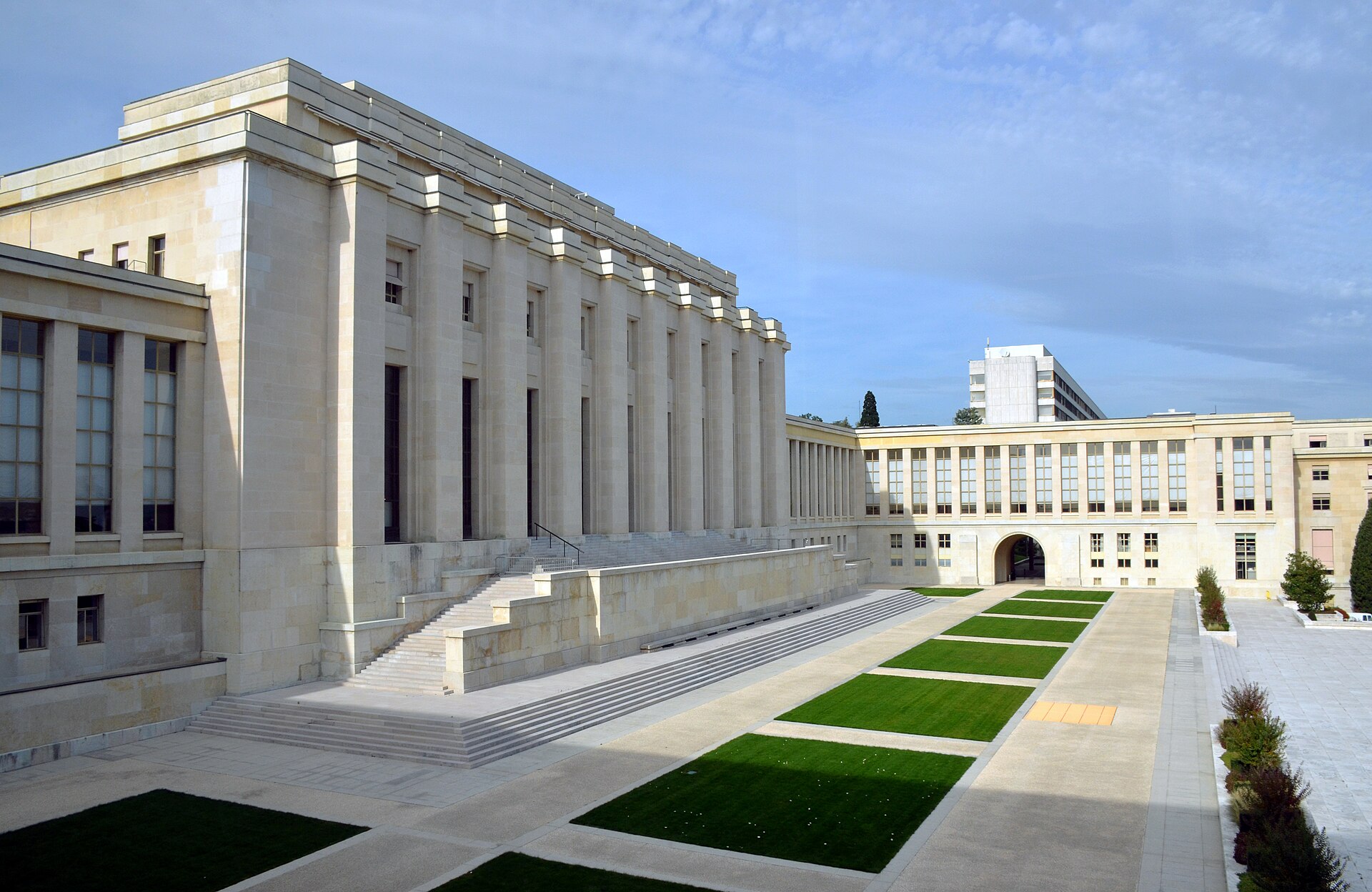
The June 19 signing ceremony in Switzerland was announced alongside the ceasefire declaration, according to NBC News. Five days separate the declaration from the ceremony — and in those five days, the ratification gap widened before the ink was dry.
Iranian hardliners protested in Tehran and Mashhad against the deal on June 14, accusing Foreign Minister Araghchi of “compromising with Washington” and branding him “an infiltrator,” according to i24News and Reuters. Supreme Leader Khamenei issued no statement confirming the ceasefire. His silence is constitutionally operative: under Iran’s Articles 110 and 113, the Supreme Leader holds final authority over defense and foreign policy. Araghchi’s mandate to negotiate does not extend to authority to bind.
Tasnim, the IRGC-aligned news agency, stated that any agreement “still requires review and finalization by relevant institutions,” according to Al Jazeera. Fars News, also IRGC-affiliated, maintained that “no text approved” had been reached. Araghchi told Iran International to “interpret my silence” — a formulation that conveys neither consent nor rejection.
IRNA had previously published a 7-point MOU text on June 12 asserting that Iran “assumes no new nuclear obligations” and retains enrichment rights with material staying in Iran — directly contradicting the US version, in which material was to be “taken out of the country.” The White House called the IRNA document “a complete fabrication.” Vance told RFE/RL that circulating terms were “fake information.” Two governments simultaneously claimed the other’s published version was false. No authoritative text has been released by either side.
The IAEA Board voted 21-10-3 for non-compliance on June 12. Fordow remains 70% intact. ISIS estimates 440.9 kilograms of HEU at 60% enrichment remain unverified for 97-plus days. The nuclear terms deferred to a 60-day phase two have not been written. The June 14 declaration and the June 19 ceremony are separated by a constitutional gap that only Khamenei can close. Iran’s institutional structure separates negotiation authority from ratification authority. The ceremony is scheduled. The conditions for the ceremony to mean what it says have not been met.
Sadara’s $3.7 Billion Expires the Morning After
Sadara Chemical Company’s $3.7 billion in guaranteed senior debt — Aramco $2.405 billion (65%) and Dow $1.295 billion (35%) — exits its grace period on June 15, the morning after the ceasefire declaration. All 26 of Sadara’s Jubail units have been offline since March 31. Revenue has been zero for 11 weeks. Neither Aramco nor Dow has filed an SEC 8-K material event notice.
The ceasefire’s timing — June 14 for declaration, June 15 for the Sadara cliff, June 19 for the signing — creates a sequence in which the diplomatic announcement precedes the financial deadline by hours. Jubail accounts for approximately 7% of Saudi GDP. The 28-bank syndicate holding Sadara’s debt has political incentives to avoid declaring a formal default during what is nominally a peace process. The ceasefire provides cover for forbearance without requiring the underlying revenue conditions — operating plants, flowing product, Hormuz transit — to have changed.
The AGSI projected Q2 2026 GDP contraction of potentially 10% year-over-year, driven partly by Jubail’s shutdown. Dow suspended equity-method loss recognition for Sadara under GAAP in Q1 2026, absorbing a $292 million EBIT impact. The ceasefire declaration does not restart Jubail’s cracking units. It provides a date — June 19 — that banks can point to as a reason to wait.
Frequently Asked Questions
What would happen to the PGSA if the June 19 signing proceeds?
The PGSA was established by Iranian legislation and a bilateral Iran-Oman administrative agreement, not by executive order. Even if the June 19 text explicitly names the PGSA, dissolving it would require a separate act of Iran’s parliament reversing the March 30-31, 2026 legislation — a process that typically takes 60-90 days through the Majlis and Guardian Council. Until parliamentary reversal, the PGSA retains legal standing to collect fees under Iranian domestic law, regardless of what the international framework stipulates. UNCLOS Article 26(2) permits charges for “specific services rendered to the ship” — giving Iran a legal argument that survives even a formal toll prohibition.
What does Khamenei’s silence constitutionally mean under Iranian law?
Under Iran’s Constitution, Article 110 grants the Supreme Leader authority over “general policies of the Islamic Republic” and “the resolution of problems which cannot be solved by conventional methods.” Article 113 designates the president as responsible for implementing the constitution “except in matters directly related to the Supreme Leader.” Araghchi negotiates under presidential authority, but any agreement touching defense, nuclear policy, or territorial sovereignty requires Article 110 approval. Khamenei’s son Mojtaba, reported to be communicating via courier since February 28, introduces multi-day delays into any approval chain — a structural bottleneck that is separate from, and may compound, any political objection.
What does Saudi Arabia’s legal position resemble in analogous peace frameworks?
The closest analogue is a “contributing state” in UN-mediated settlements — a category that confers reputational credit and no legal standing. Contributing states are thanked in the preamble; they do not appear in operative articles. The Dayton Accords (1995) illustrate the boundary: countries involved in the process received enforcement roles only when explicitly named in the agreement’s annexes. NATO’s Implementation Force mandate derived from Annex 1-A, not from diplomatic acknowledgment. Saudi Arabia’s June 14 position — named in a Pakistani press statement, absent from any published annex — places it in the preamble category.
How does Saudi Arabia’s 123 Agreement with the US complicate its position on the Iran deal?
The US-Saudi 123 Agreement, signed May 13, 2026 as part of a $142 billion defense package, omits all three Gold Standard pillars: an enrichment ban, a reprocessing ban, and an Additional Protocol precondition. This was signed 31 days before the Iran MOU. Saudi Arabia is simultaneously an “approver” of a framework that constrains Iranian enrichment and a beneficiary of an agreement that permits Saudi enrichment without equivalent constraints. The UAE’s 2009 Gold Standard agreement included a most-favored-nation clause that the Saudi deal structurally voided. The Arms Control Association warned in February 2026 that an enrichment-permissive Saudi deal would “undermine” Iran negotiations.
Has any country in the “acknowledgment” category of a peace deal later received enforcement powers?
Not through acknowledgment alone. The Oslo Accords (1993) distinguished between Norway’s mediation role — formally recognized in the text — and countries that facilitated through back-channels but were not named. In each case, enforcement authority required explicit textual assignment. The post-WWII diplomatic record contains no instance in which gratitude expressed in a unilateral press statement was subsequently converted into a treaty-assigned enforcement role without a separate formal instrument giving the acknowledged party specific rights and obligations.