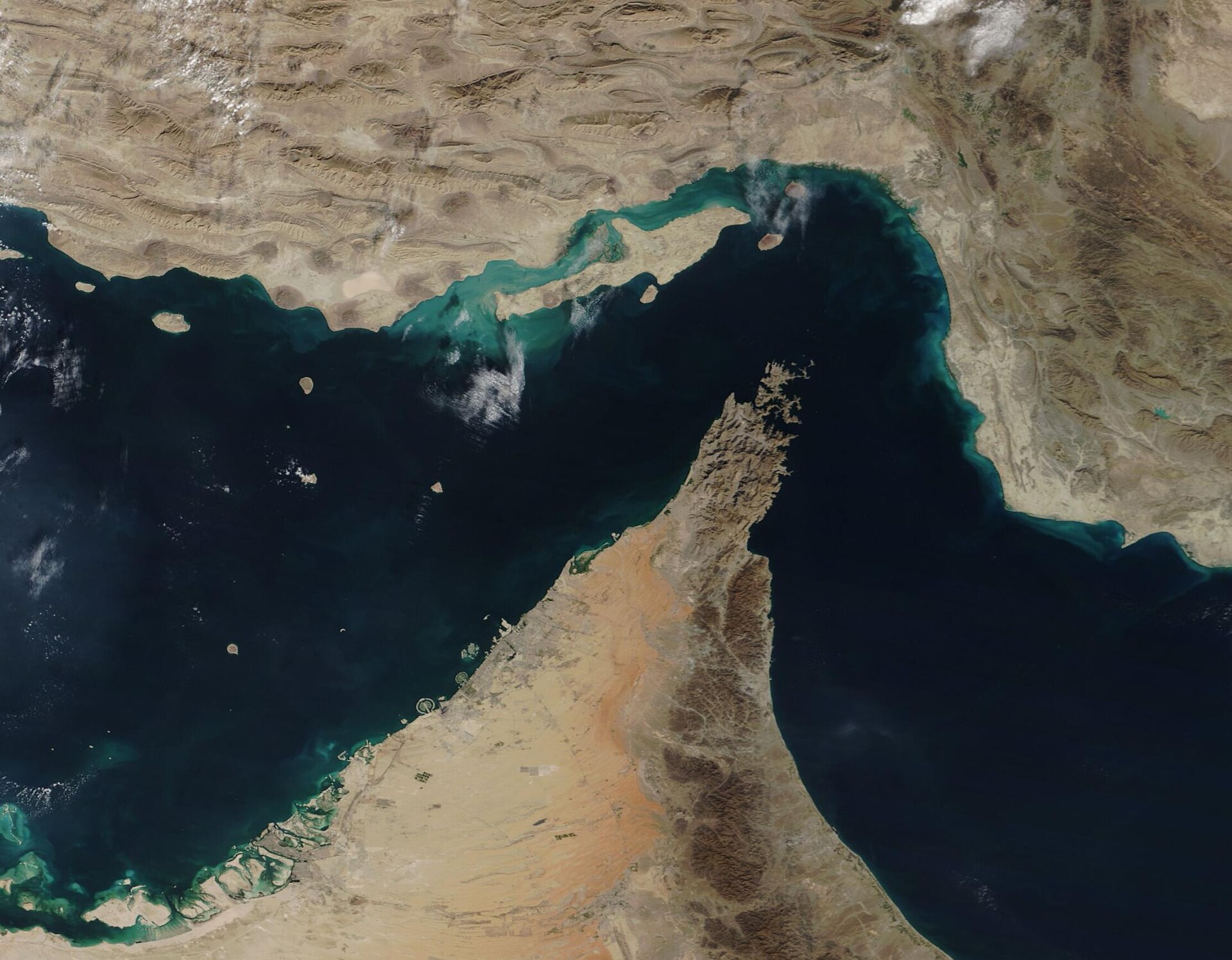
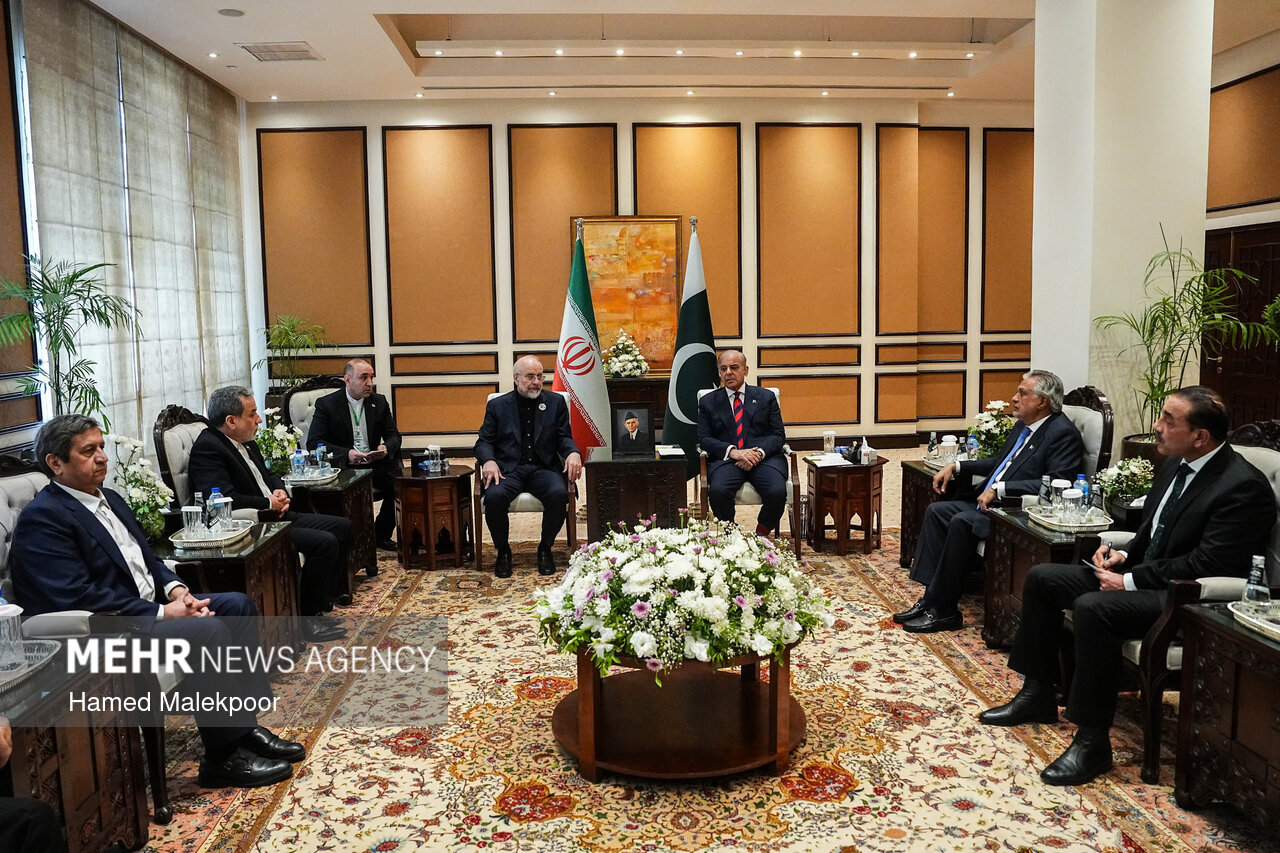
REPLACEMENT MADE
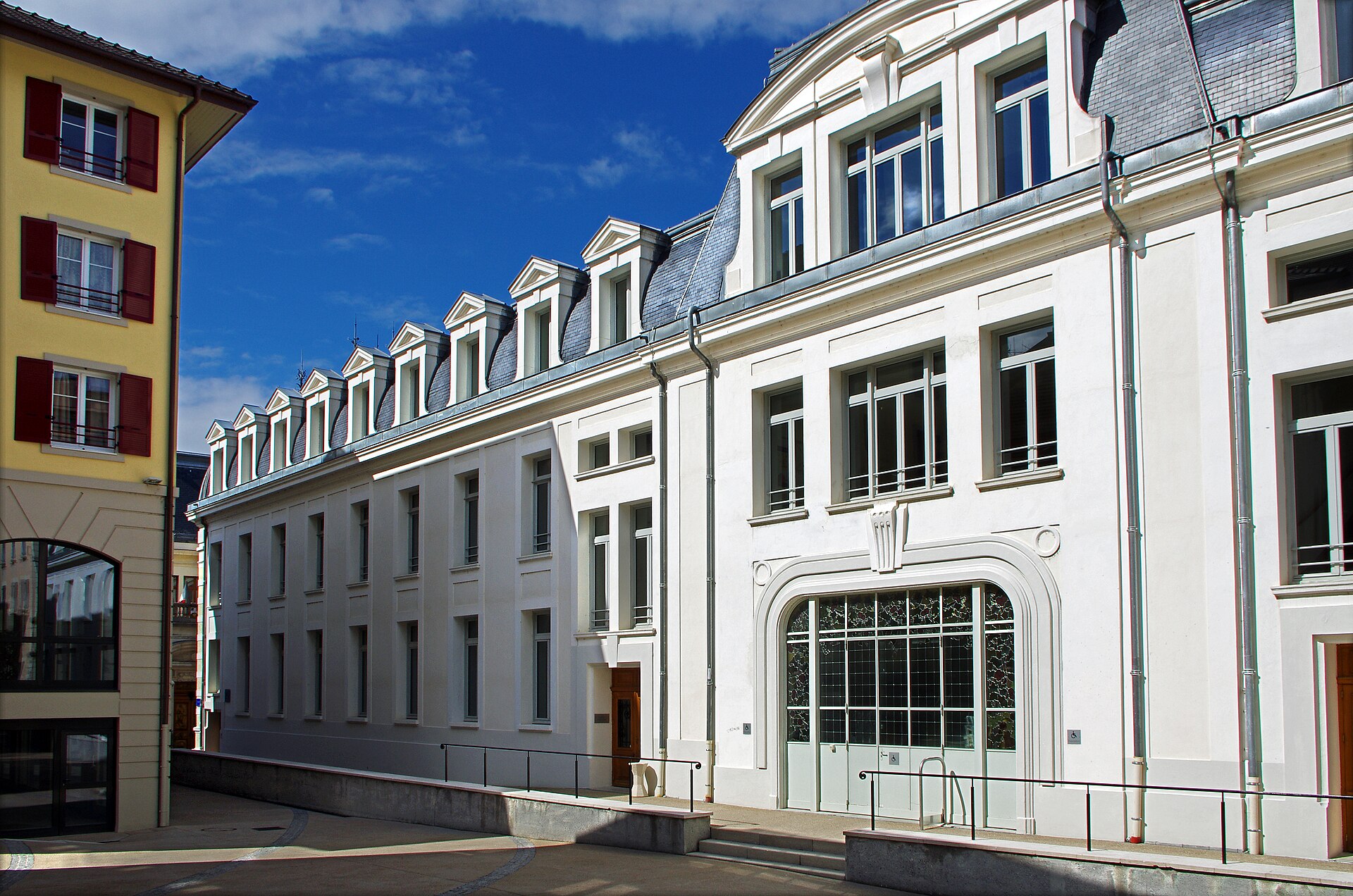
RIYADH — On June 15, 2026, the G7 summit opens at Evian-les-Bains with the Strait of Hormuz and Iran atop the agenda, the leaders of Egypt, Qatar, and the UAE confirmed for Emmanuel Macron’s dedicated Arab-leader session on the strait’s reopening. Saudi Arabia — the country whose $3.7 billion Sadara guaranteed debt grace period expires the same morning and whose estimated $5.5 million daily Hormuz toll liability under Iran’s Persian Gulf Security Authority exceeds that of any other invited state — is the only one of the four invited Arab governments that will not attend.
This is not a scheduling conflict, nor an exclusion — Macron invited Mohammed bin Salman personally. What converges on June 15 is the accumulated cost of a strategic preference for bilateral diplomacy, exercised over three consecutive G7 summits when Jubail’s twenty-six manufacturing units were still producing and Iran’s toll regime at the strait did not yet exist, compounding into a single calendar date that closes the industrial and geopolitical ledger at once. The morning is for Sadara’s creditors, the afternoon for the G7’s Hormuz enforcement session, the one Arab seat left unfilled the one facing the largest exposure to both.
Table of Contents
- What Expires on June 15?
- Three Invitations, Three Refusals
- Why Did Macron Convene an Arab Session on Hormuz?
- The Bilateral Substitute France Accepted
- Who Speaks for Saudi Arabia on Hormuz?
- How Does the Sadara Cliff Connect to Hormuz?
- The Exemption Coalition Is Already Fracturing
- What Happens at Evian Without Saudi Arabia?
- Frequently Asked Questions
What Expires on June 15?
Aramco and Dow’s five-year grace period on $3.7 billion in Sadara Chemical Company guaranteed senior debt expires on June 15, 2026. All twenty-six of Sadara’s Jubail manufacturing units have been offline since late March, generating zero revenue for eleven consecutive weeks, and neither guarantor has filed a U.S. Securities and Exchange Commission 8-K material event notification disclosing the approaching deadline to investors.
The guaranteed principal splits between Aramco ($2.405 billion, 65 percent) and Dow ($1.295 billion, 35 percent), distributed across a 28-bank lending syndicate assembled under a 2021 restructuring that extended the original 2029 maturity to 2038 and deferred principal repayment to this date. The restructuring was designed for a world in which Jubail was producing, the strait was open, and Saudi Arabia’s fiscal position could absorb a subsidiary’s debt service without strain. None of those conditions holds on June 15.
Aramco’s own quarterly numbers frame the exposure. Q1 2026 free cash flow came in at $18.6 billion against a quarterly dividend obligation of $21.89 billion — a 0.85x coverage ratio, the first time that figure has fallen below 1.0x since the pandemic — while gearing stood at 4.8 percent at March 31 and the revenue line from Sadara, the company’s largest downstream joint venture, read zero for the entire quarter. Dow suspended Sadara equity-method loss recognition under GAAP in Q1, recording a $292 million EBIT impact, and disclosed nothing further about the approaching grace expiry.
The Middle East briefing 3,000+ readers start their day with.
One email. Every weekday morning. Free.
Three Invitations, Three Refusals
Mohammed bin Salman has now declined three consecutive G7 summit invitations: Puglia in 2024, Kananaskis in 2025, and Evian in 2026. The first refusal carried a concrete scheduling rationale — the 2024 Hajj season overlapped with the Puglia dates — and the diplomatic cost was minimal, a footnote in wire-service coverage of a summit whose headline was Ukraine. The second and third arrived wrapped in the same vague formula, “prior commitments,” and no further explanation. The pattern is now structural, not incidental, and the question is no longer why MBS declined but what the declining costs.
What changed between Puglia and Evian is not the G7’s interest in engaging Saudi Arabia but the stakes of the engagement itself. In 2024, Saudi Arabia was a peripheral invitee to a summit centered on Ukraine and AI governance — a forum where Riyadh’s absence was noted in diplomatic cables but not in energy markets. By 2026, Saudi Arabia had become one of four Arab states specifically invited by Macron to a dedicated session on the strait through which 38 percent of Saudi crude exports once transited, convened around the single issue where Saudi financial exposure exceeds that of every other non-G7 country on earth. The invitation was not a courtesy; it was a recognition of structural interest, and the refusal was a declaration that bilateral channels remain preferred even when the cost of that preference has multiplied by orders of magnitude.
The bilateral preference is not arbitrary. A March 2025 Chatham House assessment found that Saudi Arabia’s strategic goals “rest on managing multipolarity” and that the kingdom is “strategically cultivating a portfolio of diverse international relationships.” The Saudi Quartet — a format Riyadh architected and controls, convened in Riyadh on March 19, Islamabad on March 29, and Antalya on April 18 — is the multilateral channel MBS chooses. G7 summits, where the agenda is set by a rotating Western presidency, the seating reflects an institutional hierarchy Saudi Arabia has long resisted, and invited non-members participate as guests rather than architects, are the channel he does not.
That distinction was affordable when Jubail was online, when the PGSA did not exist, and when the kingdom’s fiscal position was strong enough that diplomatic absence from a Western-led summit carried reputational cost but no material consequence. On June 15, with the PGSA collecting tolls, Jubail dark, the kingdom’s largest quarterly deficit on record, and the G7 convening specifically on the mechanism that caused all three, the line between reputational cost and material cost has disappeared.
Why Did Macron Convene an Arab Session on Hormuz?
Macron personally invited the leaders of Egypt, Saudi Arabia, Qatar, and the UAE to a dedicated session on June 16, 2026, convened to discuss what the French president described as “the closure of the Strait of Hormuz, which has a real impact on our economies” and “negotiations on Iran.” Three of the four confirmed attendance. Saudi Arabia — the only invitee operating under Iran’s PGSA toll regime without an exemption — declined.
The session format is itself a departure from G7 tradition. Previous summits offered non-member states “outreach” slots — brief, protocol-driven audiences where invited leaders delivered prepared remarks and the working discussions happened in rooms they were not in. Macron’s June 16 session breaks from that template by convening heads of government from four Arab states whose economic interests in Hormuz reopening are direct and immediate, seating them alongside G7 leaders for a working discussion rather than a ceremonial address, and placing Hormuz enforcement — not abstract “regional security” language — at the center of the agenda. Beyond the G7 members and the EU, Evian’s broader invitation list includes Brazil, India, Kenya, South Korea, and Syria; the four-country Arab leaders’ session is a dedicated sub-format with a single subject, and that subject is the strait Saudi Arabia needs reopened more than any other state in attendance.
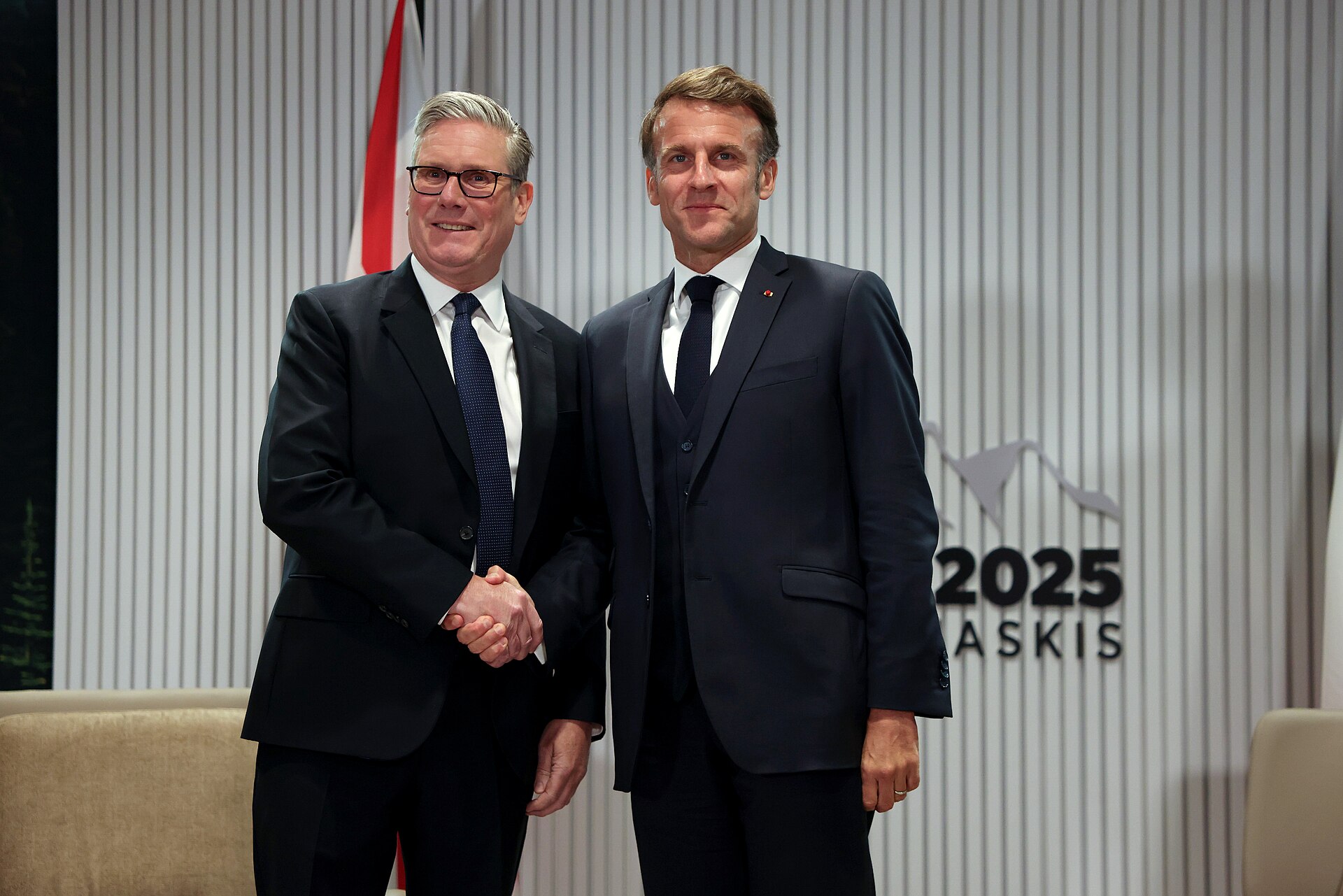
Egypt, whose Suez Canal revenues have been affected by shipping rerouting since the Hormuz escalation, confirmed through its foreign ministry. Qatar, the world’s largest LNG exporter with shipping corridors adjacent to the PGSA’s enforcement zone, confirmed through its Amiri Diwan. The UAE, which has conducted direct security engagement with Tehran and secured the release of an estimated $10-20 billion in frozen Iranian assets, confirmed through diplomatic channels. Each of the three attending states has a distinct Hormuz interest, but none carries Saudi Arabia’s combination of active toll liability, industrial shutdown, fiscal deficit, and dependence on strait access for its entire non-oil export corridor.
| Country | Invited | Status | Primary Hormuz Exposure |
|---|---|---|---|
| Egypt | Yes | Confirmed | Suez Canal revenue affected by rerouting |
| Qatar | Yes | Confirmed | LNG exporter, corridors adjacent to PGSA zone |
| UAE | Yes | Confirmed | Direct Tehran engagement, $10-20B asset release |
| Saudi Arabia | Yes | Declined | $5.5M/day toll liability, Jubail offline, 38% crude transit, largest fiscal deficit on record |
The Bilateral Substitute France Accepted
On June 14, the day before Evian opened and the same day Mohammed bin Salman’s absence was confirmed, France sent its foreign minister to Riyadh for a bilateral meeting, as reported by Arab News. The pattern is consistent with the Saudi playbook across all three G7 cycles: decline the multilateral invitation, offer a bilateral channel as substitute, count on the inviting state to accept the trade rather than escalate the refusal into a public dispute. France, which needs Saudi cooperation on Iran enforcement, Saudi crude to backstop European energy security during the extended Russian oil sanctions regime, and Saudi sovereign wealth investment in defense and infrastructure projects Macron has personally championed, accepted.
The bilateral-for-multilateral swap has a logic that Riyadh’s interlocutors have been willing to accommodate as long as the multilateral forum it replaces produces nothing requiring Saudi co-authorship. At the G7 Foreign Ministers’ session on March 26, where Saudi FM Prince Faisal bin Farhan co-signed a statement positioning the kingdom as a “victim-state” of Hormuz closure, the bilateral approach was nearly costless — Saudi Arabia gained recognition as an injured party without committing to enforcement policy and without appearing at the leaders’ level where enforcement terms are set. The Evian leaders’ session operates under a different dynamic: it convenes after the Geneva MOU signing collapsed, after IDF strikes on Dahiyeh disrupted the signing-day timeline, and with the explicit mandate to produce a framework for Hormuz reopening that Saudi Arabia will be asked to implement without having shaped it.
When Saudi Arabia lifted its five-year ban on Lebanese exports on June 11 — its only autonomous diplomatic action on a day when IRGC forces struck eighteen targets across Kuwait, Bahrain, and Jordan — it demonstrated that bilateral action remains Riyadh’s operating mode even during acute regional crises. The June 14 bilateral in Riyadh is the same instinct applied to a different counterpart, with a different price tag. The G7’s Hormuz session will produce a framework, binding or not, with or without a communique, and that framework will have implementation clauses, timelines, and compliance mechanisms that Saudi Arabia will face whether or not a Saudi diplomat helped draft them.
Who Speaks for Saudi Arabia on Hormuz?
Saudi Arabia’s Ministry of Foreign Affairs has not issued an independent, substantive statement on the Iran MOU since May 20, 2026 — a silence spanning twenty-six days, the failed Geneva signing ceremony, the IRGC’s June 11 formal Hormuz closure order, the killing of three Indian seafarers by U.S. forces on June 10, and the G7 summit invitation itself. Mohammed bin Salman’s last confirmed meeting with a foreign head of government was with Pakistani Prime Minister Shehbaz Sharif on April 16 in Jeddah, sixty days before the Evian summit opens. On June 14 — the day before Evian opened — Pakistan Named the Date Saudi Arabia Was Not Asked For: Sharif announced the June 19 signing date and thanked Riyadh for its contributions before Trump posted his own confirmation.
The gap between Saudi silence and Saudi exposure is the structural peculiarity at the center of the Evian absence. Saudi Arabia was named among twelve “approvers” of the Iran MOU framework — a designation that carries diplomatic weight on paper but required no public statement, no enforcement commitment, and no articulated position on the deal’s nuclear provisions, Hormuz access terms, or toll regime. Every public Saudi position on the Iran deal in the past month has reached international audiences through intermediaries — through Pakistan, through unnamed “senior sources” briefing Gulf media outlets, through Al Arabiya’s PIF-owned editorial apparatus — never through a direct MOFA statement attributable to the Saudi government on the substance of the agreement Riyadh was named as having approved.
The G7 is convening on the mechanism that shuttered Jubail, collapsed Saudi non-oil exports by twenty-seven percent, and generated a $33.5 billion fiscal deficit in a single quarter — and the country on the receiving end of those numbers will not be in the room.
How Does the Sadara Cliff Connect to Hormuz?
The Sadara shutdown was not a market event or a demand-side contraction — it was triggered directly by the closure of the Strait of Hormuz, which severed both the ethane feedstock import routes that supply Jubail’s crackers and the polyethylene and ethylene glycol export corridors through which Sadara’s output reaches Asian and European buyers. When the strait closed to Saudi-flagged commercial traffic, Jubail lost both its inputs and its outputs simultaneously, a supply-chain severance with no parallel in the history of Saudi industrialization and no workaround short of strait reopening.
The GDP implications are direct and large. Jubail Industrial City accounts for approximately seven percent of Saudi GDP, and Jubail and Yanbu together supply roughly eighty-five percent of Saudi Arabia’s non-oil exports. Saudi non-oil exports fell twenty-seven percent year-over-year in Q1 2026, a decline driven overwhelmingly by the shutdown of the Eastern Province’s petrochemical corridor, which is entirely dependent on strait access that Iran now controls and monetizes through the PGSA’s per-barrel transit charge. OPEC+ approved a fourth consecutive 188,000 barrel-per-day production hike on June 7, deepening the crude revenue pressure at the same moment industrial revenue has gone to zero. The Vision 2030 diversification program, whose economic logic rests on reducing hydrocarbon revenue dependence by building industrial capacity in places like Jubail, assumed that the facilities generating alternative revenue would remain operational. That assumption expired before the grace period did.
| Metric | Figure | Context |
|---|---|---|
| Brent crude (current) | ~$86-87/bbl | $22-24/bbl below fiscal breakeven |
| Saudi fiscal breakeven | $108-111/bbl | Goldman Sachs / IMF estimate |
| Q1 fiscal deficit | SAR 125.7B ($33.5B) | Largest quarterly deficit on record |
| Non-oil exports Q1 YoY | -27% | Jubail/Yanbu shutdown primary driver |
| Aramco Q1 FCF / dividend | 0.85x | Sub-1.0x for first time since pandemic |
| PIF cash reserves | $15B | Six-year low vs. $16B NEOM exit obligation |
| Sadara guaranteed debt | $3.7B | Aramco $2.405B (65%) + Dow $1.295B (35%) |
| Sadara units offline | 26 of 26 | Zero revenue since late March 2026 |
| Subsidies Q1 YoY | +170% | Military spending +26% YoY |
The practical question for the 28-bank syndicate is whether the G7 session produces a credible Hormuz reopening framework the same weekend the grace period lapses. If it does, the banks have a commercial reason to extend — Jubail’s production could restart within weeks of strait access being restored, and the underlying industrial asset retains its value. If the G7 fractures, produces no communique for the second consecutive year, and the strait remains under the PGSA’s operational control, the syndicate faces guaranteed obligations backed by an asset generating no revenue, underwritten by guarantors whose own balance sheets are under strain, with no clear timeline for recovery.
The Exemption Coalition Is Already Fracturing
On June 10, 2026, a U.S. military strike on a commercial vessel in the Gulf of Oman killed three Indian seafarers. Indian External Affairs Minister Subrahmanyam Jaishankar, in a call with Secretary of State Marco Rubio on June 14, stated: “Such lethal actions against commercial shipping are not justified.” Rubio responded: “Violations of the U.S. blockade in Hormuz will not be tolerated.” The State Department’s official readout of the call made no mention of the Indian deaths.
The exchange matters for the Evian session because it exposes a fracture inside the coalition of states nominally aligned on Hormuz enforcement. India is exempt from Iran’s PGSA toll regime — along with Pakistan, China, Iraq, and Russia — and has positioned itself as a beneficiary of the bifurcated strait, maintaining commercial shipping access that Saudi Arabia has lost entirely. India’s public break with the U.S. enforcement posture, issued four days after Indian nationals were killed by American forces enforcing a blockade from which India itself is exempt, signals that the exemption framework is generating political costs its designers did not anticipate. Shashi Tharoor, a member of India’s parliament from the opposition Congress party, described the U.S. response as “deeply shocking” and questioned the necessity of lethal force against non-compliant commercial vessels carrying Indian crew.
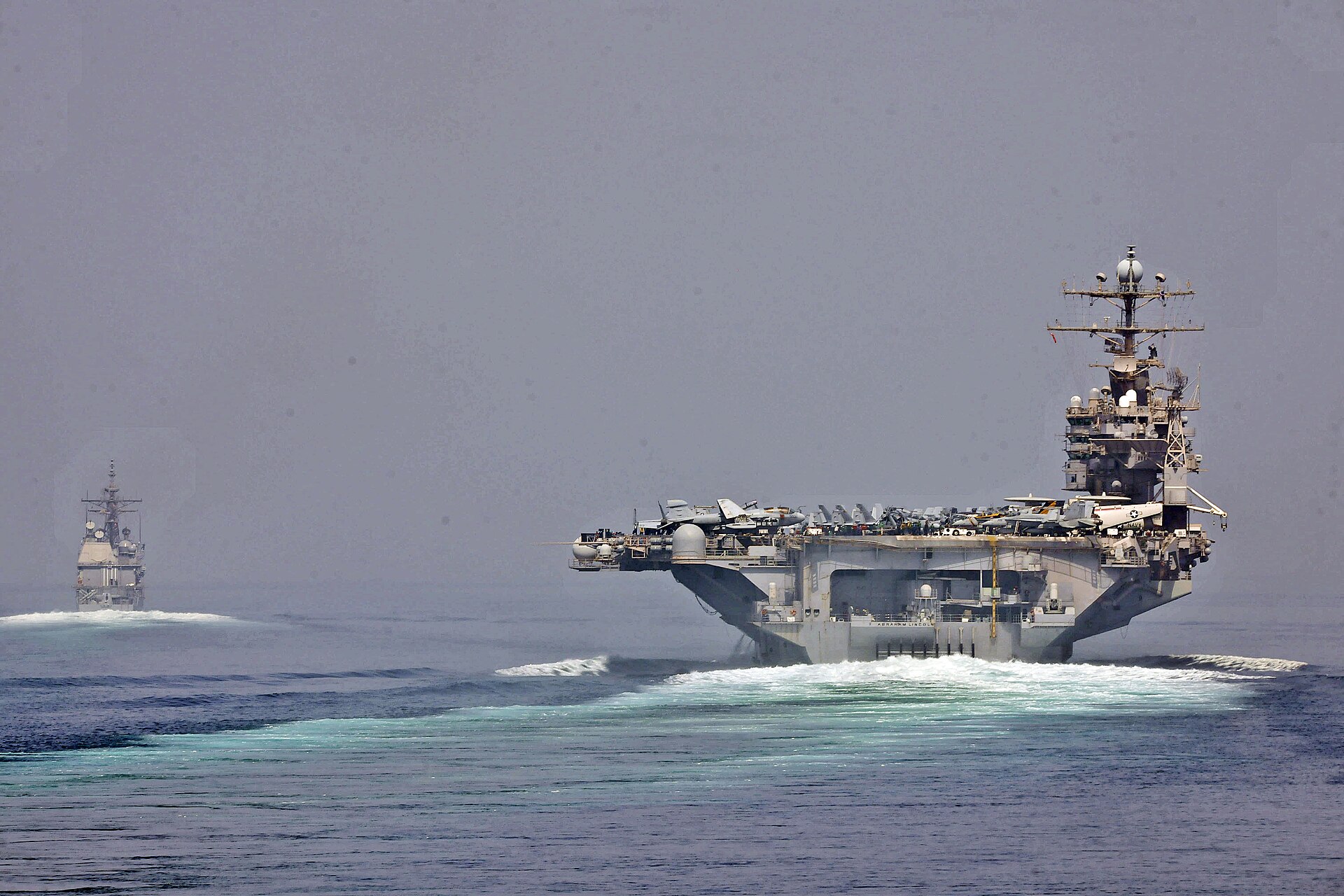
The G7 session will convene without a unified enforcement posture among its own members and without reliable cooperation from the exemption coalition’s largest democracy. Saudi Arabia, which is not exempt from the PGSA and pays a daily toll that India does not, will have no representative at the Evian session where the exemption framework’s future will be discussed — the country bearing the highest cost of the current regime absent from the table where that regime’s terms are being revisited.
“Such lethal actions against commercial shipping are not justified.” — Subrahmanyam Jaishankar, Indian External Affairs Minister, June 14, 2026, after three Indian seafarers were killed in a U.S. military strike on a commercial vessel in the Gulf of Oman
What Happens at Evian Without Saudi Arabia?
The G7 is expected to forgo a joint communique for the second consecutive year, with member states divided on Iran deal enforcement in ways that the Evian format is designed to manage rather than resolve. The United States supports the existing MOU framework; Canada and the United Kingdom remain cautious on implementation terms; the European Union is internally split between member states favoring accelerated engagement and those demanding tighter nuclear verification before any enforcement relaxation. Asharq Al-Awsat’s analysis captured the structural shift: Evian’s “stripped-down format marks the G7’s quiet transition from a consensus-building institution into a venue where transatlantic divergence is managed rather than resolved.”
Saudi Arabia’s absence removes from that divided room the one Arab voice whose financial interests encompass all three dimensions of the Hormuz crisis simultaneously — the largest crude shipper affected by the closure, the largest industrial economy damaged by it, and the state carrying the highest PGSA toll liability. Egypt’s interest is indirect, routed through Suez Canal revenue effects. Qatar’s is adjacent, a function of LNG corridor proximity to the enforcement zone. The UAE’s is actively managed through its bilateral Tehran channel and the asset-release negotiations that have already yielded $10-20 billion. Saudi Arabia’s interest is existential, measured in billions of dollars of offline industrial capacity, the kingdom’s largest-ever fiscal deficit, and a toll liability that accrues whether or not Riyadh has a delegate in the room where its future is debated. The same pattern extends beyond Evian: even as Doha sessions finalize MOU implementation terms and Geneva prepares the June 19 signing ceremony, Saudi Arabia holds no seat in any of those tracks either.
China and Russia, both exempt from the PGSA toll regime, benefit from a G7 Hormuz session that produces a framework — binding or not — without the co-signature of the most financially exposed regional state. Iran’s state media has already framed the Evian session as a Western enforcement exercise that carries no binding authority over Tehran, and Ghalibaf, the parliament speaker Iran designated to sign the collapsed MOU, has stated there is “no point” in peace talks with the United States. A session without Saudi Arabia at the table is a session whose regional enforcement legitimacy is structurally incomplete, a dynamic that serves Tehran’s interests more effectively than any Iranian delegate at Evian could.
The collapsed Geneva signing ceremony on June 14 — the day before Evian opens — adds a procedural dimension that compounds the Saudi absence. The G7 leaders will convene knowing that the MOU framework under discussion has already failed its first implementation test, that Iran conditioned the agreement on terms the other signatories rejected, and that the Arab state named as an “approver” of the framework has neither endorsed its substance publicly nor sent a delegation to the summit where its enforcement will be debated. Trump will hold bilateral sideline meetings at Evian with the leaders of Egypt, Qatar, and the UAE — three of the four invited Arab states. There will be no Saudi bilateral at Evian, because there is no Saudi delegation present to hold one.
Hajj 2026 ended on June 9, seven days before the Evian Arab leaders’ session convenes. In 2024, the Hajj calendar gave Mohammed bin Salman a scheduling rationale for declining the Puglia G7 summit — the dates overlapped, the obligation was real, the cost of refusal was low. In 2026, the Hajj has concluded, Jubail is dark, the grace period has lapsed, the fiscal deficit is the largest in Saudi history, the G7 is meeting on the strait whose closure caused all of it — and the invitation from Macron is where the crown prince left it.
Frequently Asked Questions
Has Saudi Arabia attended any G7-level diplomacy in 2026?
Saudi FM Prince Faisal bin Farhan co-signed the G7 Foreign Ministers’ communique on March 26 at the Abbaye des Vaux-de-Cernay, where the kingdom appeared under a “victim-state” framing — acknowledging the economic impact of Hormuz closure without committing to enforcement terms. Foreign minister-level participation at a working session is structurally different from leaders-level attendance at a heads-of-government summit: the Evian June 16 session convenes heads of state in a post-Geneva-collapse context where the agenda has shifted from harm acknowledgment to enforcement response. The step from FM co-signature to leaders’ absence represents an escalation of disengagement at precisely the moment the G7 format escalated from discussion to action.
Which countries are exempt from Iran’s PGSA Hormuz toll regime?
India, Pakistan, China, Iraq, and Russia are exempt from the Persian Gulf Security Authority’s approximately $1-per-barrel transit charge, established May 5, 2026. Saudi Arabia is not exempt and faces an estimated $5.5 million daily liability at pre-conflict volumes of 5.5 million barrels per day, translating to roughly $2 billion per year. The exemption structure creates a two-tier strait in which the five largest non-Western economies transit without charge while Saudi Arabia — the largest single crude shipper through Hormuz before the closure — pays the full rate. India’s exemption did not shield three Indian seafarers from a June 10 U.S. enforcement strike, and Jaishankar’s public objection suggests the political costs of the bifurcated system are accruing even for states the PGSA chose not to target.
The mechanics of PGSA fee exposure — and why the deal Trump declared “toll free” still costs Saudi Arabia $2 billion a year — are analyzed in full here.
What is Saudi Arabia’s preferred multilateral format?
The Saudi Quartet — comprising Saudi Arabia, the United States, Pakistan, and a rotating fourth partner — has convened in Riyadh (March 19), Islamabad (March 29), and Antalya (April 18, 2026), with the next session planned for Cairo at a date not yet announced. Saudi Arabia participates consistently in multilateral formats it designed, where it sets the agenda, selects the participants, and determines the cadence of meetings. The G7 does not meet those criteria: agendas are set by rotating Western presidencies (Italy in 2024, Canada in 2025, France in 2026), the seating reflects an institutional hierarchy built around the world’s largest advanced economies, and invited non-members participate as guests rather than co-architects. MBS’s three consecutive G7 refusals paired with consistent Quartet attendance is not anti-multilateralism but selective multilateralism — and Evian is the first occasion where the selection itself has carried a measurable fiscal and geopolitical price.
When did Hajj 2026 end relative to the Evian summit?
Hajj 2026 concluded on June 9, seven days before the June 16 Arab leaders’ session at Evian. When MBS declined the 2024 Puglia G7 invitation, the Hajj calendar provided a concrete scheduling rationale — the Puglia dates overlapped with the Hajj season, and the Custodian of the Two Holy Mosques’ presence in the kingdom during Hajj is a legitimate domestic obligation that foreign counterparts accept without question. The 2026 timeline removes that justification entirely. The seven-day gap between Hajj’s end and the Evian session exceeds the gaps between several G7 leaders’ own domestic commitments and their confirmed Evian attendance, closing the scheduling defense for what is now a strategic choice with no external constraint left to cite.
Has Dow filed an SEC 8-K on the Sadara grace expiry?
Neither Dow nor Aramco has filed an SEC 8-K material event notification disclosing the June 15 principal repayment deadline to shareholders. Dow’s Q1 2026 10-Q filing discussed Sadara’s operational status without flagging the approaching grace expiry as a material event requiring independent disclosure. The 28-bank lending syndicate faces a collective action problem: any individual institution initiating formal default proceedings would crystallize losses across the entire consortium, creating political and commercial incentives to extend forbearance quietly rather than trigger a cross-default cascade that would force all twenty-eight banks to mark down their exposure simultaneously. This dynamic may explain the filing gap — a formal 8-K would pressure the syndicate’s internal consensus by making the expiry a matter of public record and inviting the market scrutiny that forbearance is designed to avoid.
The follow-up on that strategic choice arrived the next day: the Evian Arab-leaders session where Riyadh had no seat proceeded with Egypt, Qatar, and the UAE present for the Hormuz discussion. The absence documented here had a sequel, and it unfolded on the same timetable the article described.