
MANAMA — Secretary of State Marco Rubio co-signed a joint statement with all six GCC foreign ministers on June 25 committing the United States to a final Iran deal that addresses “the full spectrum of Iran’s threats, including its ballistic missiles, drones, and support of proxies in the region.” Four days later, on June 29, the US opened technical talks in Geneva on a nuclear framework that carries no missiles agenda — the same structural exclusion that Gulf states spent a decade calling the fatal flaw of the 2015 JCPOA.
The Manama statement is a co-signed, dated, ministerial-level document. The Geneva talks are an operational process. The two are now moving in opposite directions, and the states that signed Manama — Saudi Arabia chief among them — hold a written US commitment that the negotiating architecture is not designed to honor. The last time Washington signed a nuclear deal that excluded missiles, the restriction expired in October 2023 with no replacement. The arsenal that struck four US bases across the Gulf on June 27 exists in the legal vacuum that expiry created.
Table of Contents
- What Did Rubio Sign in Manama?
- The Geneva Agenda Without the Missiles
- Why Does Iran Call Missiles a ‘Domestic Matter’?
- The Deal That Already Excluded Missiles
- Where Is Saudi Arabia in This Architecture?
- Can a Ministerial Communiqué Constrain a Negotiation?
- The Briefing That Never Happened
- Frequently Asked Questions
What Did Rubio Sign in Manama?
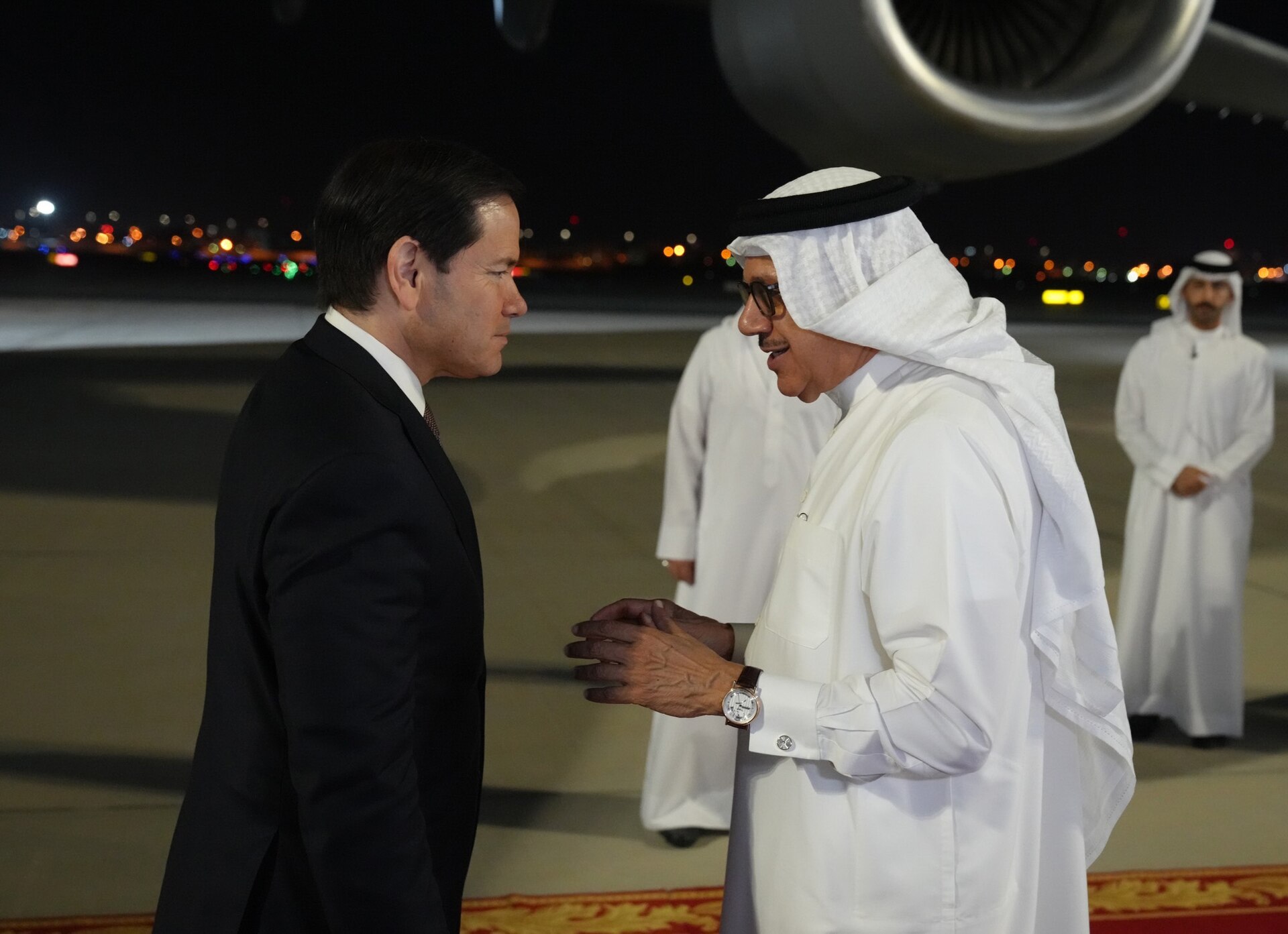
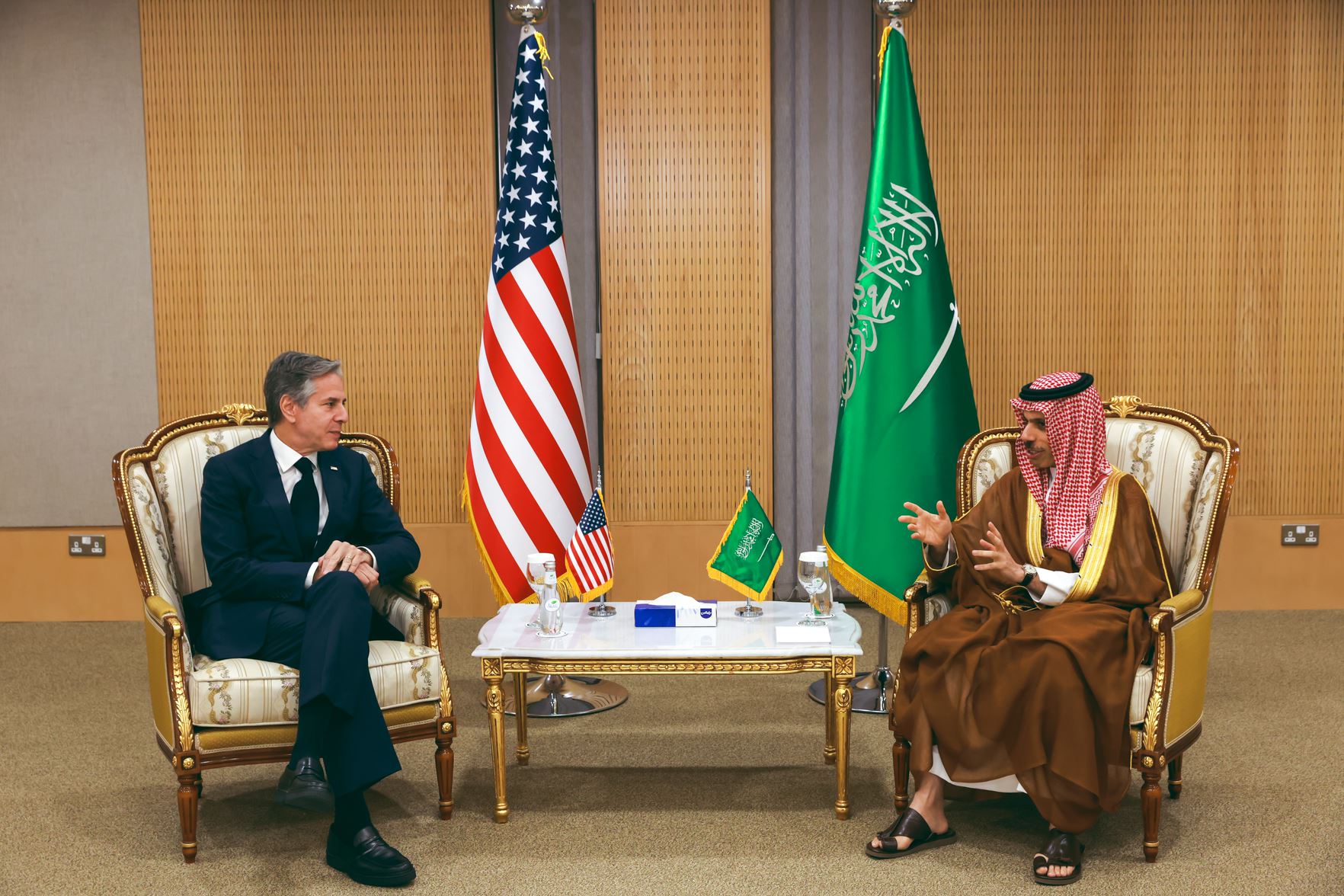
The GCC-US Joint Statement issued from Bahrain on June 25, co-signed by Rubio and all six GCC foreign ministers, commits the United States to addressing “the full spectrum of Iran’s threats, including its ballistic missiles, drones, and support of proxies in the region” in any final deal. It separately conditions all trade and investment with Iran on “cessation of its destabilizing behavior.”
The statement was co-chaired by Rubio and Bahraini Foreign Minister Abdullatif bin Rashid Al Zayani, with the foreign ministers of Saudi Arabia, Kuwait, Qatar, Oman, and the UAE signing alongside.
Its economic conditionality clause declared that “any trade and investment with Iran is conditional and reversible, contingent on Iran’s compliance with the MOU and the final agreement, cessation of its destabilizing behavior, and creation of the conditions necessary for economic engagement.” This language links Iran’s economic access — including the $300 billion reconstruction fund outlined in the MOU — directly to behavior that includes missile restraint. The Manama document treats missiles as a precondition for economic normalization. The MOU treats them as outside its scope entirely.
Rubio reinforced the commitment in his remarks at Manama. “We’re going to be completely aligned with our partners in the Gulf,” he told counterparts, according to Gulf News. He pledged the administration would not do “anything that undermines the security of our allies” and asserted that no element of any deal would “counter the interests of our allies.” He did not condition these assurances on Iran’s agreement to discuss missiles — presenting alignment as a US promise rather than an outcome dependent on Iranian consent.
The Middle East briefing 3,000+ readers start their day with.
One email. Every weekday morning. Free.
The dynamics behind the statement were themselves telling. Saudi Arabia, Qatar, and Oman arrived at the Manama meeting to press Rubio on gaps in the MOU, according to the Eastern Herald’s June 26 reporting — a posture that, if accurately characterized, placed three Gulf states in the position of challenging their own security partner over a deal signed without their input. The joint statement they secured was a corrective, an attempt to graft missile language onto a diplomatic process that had already excluded it.
“We’re going to be completely aligned with our partners in the Gulf.”
— Secretary of State Marco Rubio, Manama, June 25, 2026
The Geneva Agenda Without the Missiles
The June 29-30 Geneva round is a technical-level Phase 2 session under the June 17 Islamabad MOU. On Day 12 of the 60-day window, with 48 days remaining before the default expiry around August 16, the talks address nuclear terms and sanctions architecture. Iran’s missile programme, drone capabilities, and support for regional armed groups have been removed from the negotiating agenda, according to documented reporting on the 2025-2026 Iran-United States negotiations. The exclusion is not a deferred item or a gap that later rounds might fill. It is a structural feature of the MOU itself, which “includes no provisions to address Iran’s support for terrorism, or its missile or drone program.”
The gap between Manama and Geneva is not a gap between rhetoric and reality. It is a gap between two official US positions produced within the same administration four days apart — one telling Gulf allies that missiles must be part of any settlement, the other advancing a process that has no mechanism to introduce them. The Eastern Herald identified this on June 26 as the missile language “Gulf states wanted in the MOU itself but appears only in post-meeting statements.” The operative negotiating instrument contains nothing on missiles. The political document contains a full commitment. The political document has no counterparty in Tehran.
| Issue | Manama Statement (June 25) | MOU (June 17) | Geneva Agenda (June 29) |
|---|---|---|---|
| Ballistic missiles | “Full spectrum” — included | No provision | Removed from agenda |
| Drones | Included | No provision | Removed from agenda |
| Proxies / regional groups | Included | No provision | Removed from agenda |
| Gulf security guarantees | “Completely aligned” | No provision | No Gulf seat at table |
| Reparations | Not mentioned | No provision | Not on agenda |
| Nuclear enrichment | Referenced via MOU compliance | Core subject | Core subject |
The MOU was negotiated under acute time pressure — Pakistan mediated the final text in Islamabad over three days — and its narrow nuclear scope was the price of Iranian agreement to negotiate at all. Iran entered the framework on the condition that missiles, drones, and regional proxies would stay off the table. Washington accepted that condition on June 17. The Manama statement reasserted what Washington had conceded at Islamabad eight days later, but reassertion in a communiqué is not reinsertion into a negotiation.
Pakistan and Qatar serve as co-mediators in the Phase 2 structure. When Qatar’s prime minister arrived in Switzerland for the Phase 2 opening, he came as a co-mediator with an institutional role in the process. Saudi Arabia was not at that table, and the Geneva round that opened on June 29 has not altered that absence.
Why Does Iran Call Missiles a ‘Domestic Matter’?
Iran’s Supreme National Security Council has declared the missile programme “entirely separate from the nuclear” file and “a domestic matter, basically linked to our national security” that “cannot be part of these negotiations.” This position is maintained across the SNSC, Foreign Ministry, IRGC, and parliament with no internal dissent on public record.
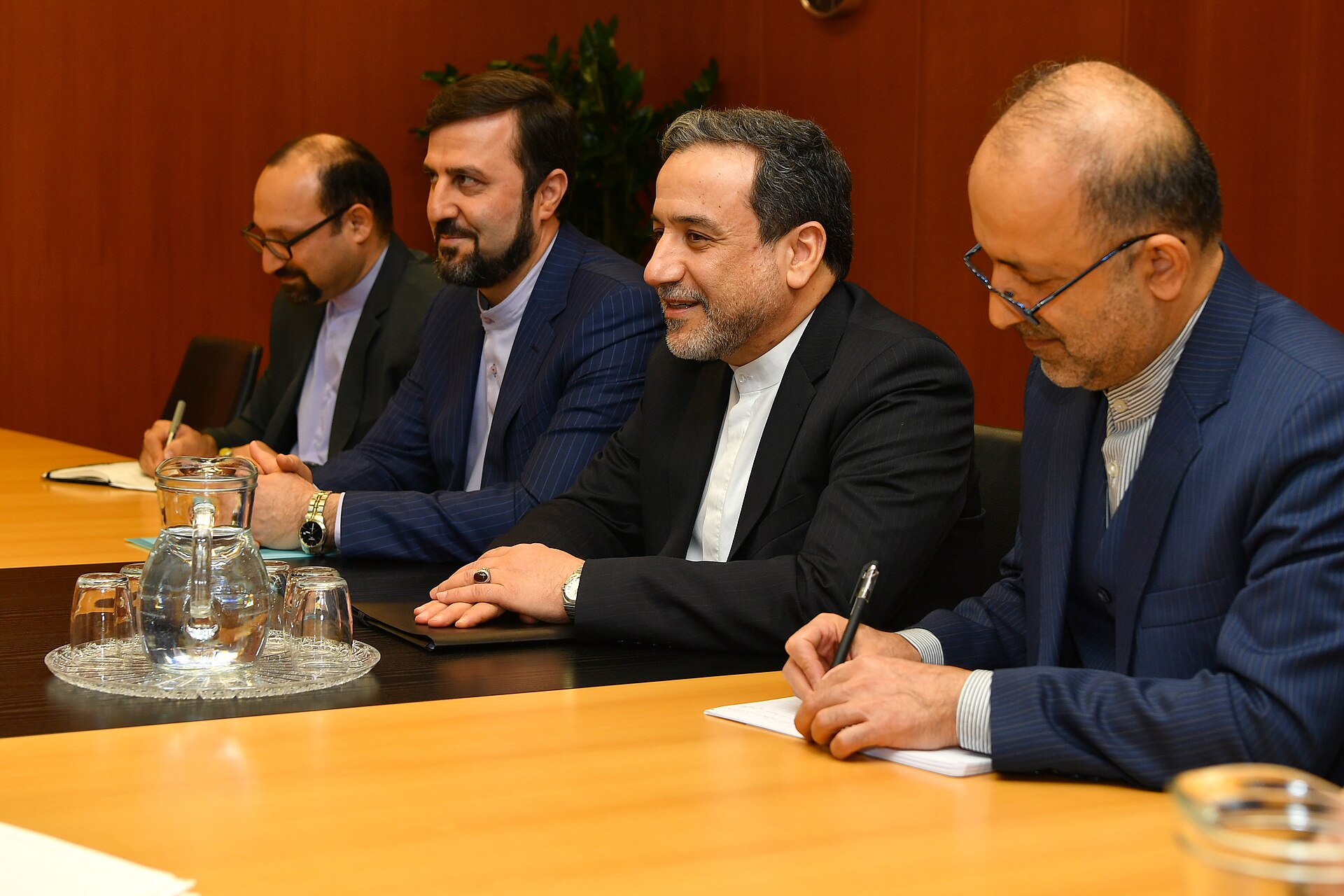
Foreign Minister Abbas Araghchi has been equally categorical. “Iranian missiles were not the subject of the negotiations and should not be targeted by sanctions,” he stated during the MOU period. Deputy Foreign Minister Kazem Gharibabadi went further, invoking the MOU’s own text as a ceiling: “Any credible framework must be based on coordination with Iran and the provisions of paragraph five of the Islamabad Memorandum,” he told Al Jazeera on June 26. Paragraph five covers Hormuz transit arrangements. It says nothing about missiles, drones, or regional armed groups. By citing paragraph five as the basis for “any credible framework,” Gharibabadi was telling Gulf states that the document they endorsed is the maximum they can expect — not the minimum.
The clearest articulation of Iran’s missile doctrine came from Parliament Speaker Mohammad Baqer Qalibaf on May 29, 2026. “We seize concessions not through dialogue, but with missiles,” Qalibaf stated on PressTV. “In negotiations, we merely make them understand.” This is the language of a state that views its missile arsenal as the instrument that makes negotiation productive — a strategic asset whose value depends on retention, not a card to be traded at the table.
Iran’s Foreign Ministry responded to the Manama statement within hours. Spokesman Esmaeil Baghaei called the communiqué “interventionist, irresponsible, and provocative,” stating that “Iran’s national security and dignity are matters that brook no compromise or condition.” The ministry said Manama “distorted regional realities and repeated US and Israeli positions on Iran’s nuclear programme, missile capabilities, regional allies and the Strait of Hormuz,” according to Al Jazeera’s June 26 reporting. Tehran does not treat the Manama statement as a commitment the US will need to honor at Geneva. It treats it as evidence that the GCC-US alignment is adversarial to Iranian interests — and has said so on the record.
The Deal That Already Excluded Missiles
The JCPOA signed in July 2015 contained no missile provisions. The associated UN Security Council Resolution 2231 addressed ballistic missiles through a “calls upon Iran not to” formulation — deliberately weaker than the prior Resolution 1929’s “shall not” language, which carried mandatory compliance requirements under Chapter VII of the UN Charter. The downgrade from “shall not” to “calls upon” was itself a concession to Tehran during the Vienna negotiations. The missile restriction was also time-limited to eight years. It expired in October 2023.
That expiry has already occurred. No replacement mechanism was established before or after it lapsed. Iran cites the JCPOA as proof that nuclear deals do not require missile limitations — and the international community now has no standing instrument of any kind, binding or advisory, addressing Iran’s ballistic missile programme. The arsenal that struck Al Udeid, Ali Al Salem, Al Dhafra, and Juffair on June 27 — the arsenal Qalibaf describes as the instrument through which Iran “seizes concessions” — operates in a regulatory void the JCPOA created and the 2026 MOU has replicated. Gulf states watched the JCPOA’s “calls upon” language fail to constrain Iranian missile tests between 2015 and 2023 — Tehran consistently disputed whether its missiles fell within the resolution’s narrowed “designed to be capable” scope, and no adjudicating body ever ruled otherwise — then watched the language itself expire with no successor. The 2026 framework offers them less than the JCPOA did — not weaker missile language, but no missile language at all.
The International Institute for Strategic Studies assessed that the current MOU “will almost certainly fail to address the Gulf states’ core security concerns over Iran’s offensive military capabilities, notably its missiles, drones, and regional militia networks,” in analysis cited by the Times of Israel. Mona Yacoubian and Will Todman at CSIS wrote that Iran “maintains the ability to disrupt the strait at any time by virtue of retaining its missile and drone capabilities,” and that Gulf states remain “wary that Iran maintains ties to proxies and partners across the Middle East, however weakened some may be.” An unnamed Qatari official, also cited by CSIS, offered the sharpest formulation of what a deal without a missiles component means in practice.
“This could leave us hostage to the Iranians.”
— Unnamed Qatari official, cited by CSIS
CSIS’s own analytical conclusion was that if Washington cannot bridge gaps on enrichment during Phase 2, “the probability that a subsequent negotiation resolves Gulf security, missiles, and proxies is close to zero.” The enrichment question is the prerequisite. If that prerequisite fails, everything the Manama statement demands falls with it. If it succeeds without a missiles component, the Manama commitments are overtaken by a binding agreement that does not contain them — the same outcome Gulf states experienced after the JCPOA, when a signed nuclear deal rendered their missile objections moot for the eight years the restriction lasted, and permanently moot once it expired.
Where Is Saudi Arabia in This Architecture?
Saudi Arabia signed the Manama statement linking regional security to the resolution of Iran’s missiles but has no role in the Geneva process where that resolution would need to be negotiated. The MOU was concluded without Saudi participation. The Phase 2 talks are mediated by Pakistan and Qatar. FM Prince Faisal bin Farhan’s only documented input to the nuclear track remains the phrase “verification is key,” delivered at an ECFR event in Vienna.
Eric Alter, nonresident senior fellow at the Atlantic Council, framed the exclusion in direct terms: “The six countries whose airports, energy infrastructure, and civilian neighborhoods had been struck by Iranian missiles and drones…were not parties to the Islamabad talks.” Current frameworks, Alter wrote, lack “provisions for Gulf security, reparations, or any compliance verification mechanism.” The states that absorbed the damage have no role in defining the terms of the settlement that follows it.
Marwan Muasher at the Carnegie Endowment placed this pattern in a longer arc. Gulf states “have not been protected by the Abraham Accords, economic deals, or the presence of large U.S. bases,” Muasher wrote in March 2026. Saudi leaders had sought US protection “in the form of advanced U.S. weaponry, a peaceful nuclear program, and a defense treaty” — but “the American leadership demurred.” The sixty-day Phase 2 window is a US-Iran timeline that constrains Saudi options without giving Riyadh any mechanism to shape outcomes within it.
The financial exposure runs concurrent with the diplomatic exclusion. On Hormuz transit, PGSA corridor fees of $1 per barrel translate to $5.5 million daily on current Saudi export volumes — approximately $2 billion annually — on crude trading around $72-75 per barrel against a fiscal breakeven of $108-111, a gap that corridor costs widen further. On the nuclear track, 440.9 kilograms of highly enriched uranium at 60 percent U-235 have gone unverified for over eleven months by NPT monitoring standards. The MOU’s enforcement language runs on “best efforts” clauses that name no enforcer and define no consequence for failure. The nuclear verification component of that enforcement gap — specifically, why Point 8 cannot restore the IAEA’s chain-of-custody record for Iran’s 440.9 kg HEU stockpile within the 60-day window — is analyzed in The IAEA Verified Iran’s Uranium — Then Lost Track of It.
The Manama statement was Riyadh’s instrument for articulating what the MOU omitted. But a communiqué addressed to Washington does not bind Tehran. Iran has already demonstrated its approach to the MOU’s own text, citing specific articles to justify strikes that Washington says violated those same articles. A political declaration without enforcement mechanisms and without Iran as a counterparty will not constrain Iranian behavior more effectively than the bilateral MOU has managed in its first twelve days.
Can a Ministerial Communiqué Constrain a Negotiation?
Under ICJ precedent — the 1994 Maritime Delimitation case between Qatar and Bahrain — a joint communiqué binds as a treaty only if the parties intended to create international legal obligations. The Manama statement meets none of the standard indicators: issued at ministerial level, not head-of-state; no ratification pathway; no enforcement clauses; and Iran is not a party.
The statement is, in legal terms, a political declaration — an expression of policy intent by the co-signatories. Its force depends entirely on the willingness of the United States to condition any final nuclear agreement on the missile commitments expressed at Manama. If a deal emerges from Geneva without a missiles component, Gulf states hold a document proving the US committed to their inclusion. That document carries no legal mechanism to prevent the deal, block its implementation, or unwind its terms after the fact.
The precedent is direct. The 2015 IAEA-Iran arrangement on possible military dimensions operated as a “side deal” — a separate bilateral instrument never published in full, running outside the JCPOA treaty structure. Gulf states had no formal role in that mechanism and could not challenge its terms. The current architecture replicates the same design: the MOU is bilateral, Phase 2 is mediated without Gulf participation, and the Manama statement exists in a separate political channel with no procedural connection to what happens at the negotiating table in Geneva.
The question for Riyadh is what the Manama document is worth if Geneva produces an agreement without missile provisions. It cannot be invoked at the ICJ. It cannot be submitted to the US Senate as a competing obligation. It cannot be presented to Iran as a binding condition. What it can do is serve as a political record that Saudi Arabia and its GCC partners extracted a US commitment in writing, creating a cost for Washington if that commitment is abandoned. Whether that cost is sufficient to alter the Geneva outcome is a different question. The Gulf has already tested what happens when Washington concedes positions it previously assured were firm.
The Briefing That Never Happened
GCC Secretary General Jasem Al Budaiwi confirmed that the $300 billion Iran reconstruction fund outlined in the MOU had never been introduced to him or any GCC member state, according to Profilenews.com reporting from the Manama meetings on June 25. The fund was not raised during Rubio’s direct meetings with Gulf ministers — the same meetings that produced the joint statement declaring GCC-US alignment on Iran. A reconstruction commitment that would reshape Iran’s economic trajectory was embedded in a bilateral US-Iran document without informing the six-member bloc most directly affected by Iran’s economic consolidation.
The briefing gap extends beyond the fund. The Manama statement demanded that economic engagement with Iran be “conditional and reversible, contingent on Iran’s compliance with the MOU and the final agreement” — but compliance standards are defined bilaterally by Washington and Tehran, not by the GCC. Iran has demonstrated its interpretation of MOU compliance by launching missiles at US bases on June 28 while citing MOU articles as authorization. The conditionality clause in the Manama statement rests on a definition of compliance that the GCC does not set, cannot modify, and is watching Iran actively contest with military force.
Qatar’s infrastructure damage illustrates what the financial architecture excludes. Iranian strikes disrupted LNG production at Ras Laffan — prompting Qatar’s first-ever force majeure declaration — knocking a facility responsible for roughly one-fifth of global LNG supply offline for weeks. The MOU contains no reparations framework. The Manama statement contains no reparations language. The $300 billion fund is directed at Iran’s reconstruction, not at the reconstruction of the Gulf states Iran struck.
Iraq’s separate invitation to an eight-party summit — six GCC states plus Iran and Iraq, with no US seat — adds a parallel framework that bypasses Saudi bilateral channels entirely. The multiplication of forums in which Riyadh is present but structurally constrained compounds the problem the Manama statement was meant to solve. Saudi Arabia signs documents, attends summits, and issues communiqués. The binding decisions on Iran’s nuclear programme, its missile arsenal, and the economic terms of any settlement are being made elsewhere, by other parties, on a sixty-day timeline that as of June 29 has forty-eight days remaining.
The June 29-30 Geneva session proceeded on its original nuclear track while the diplomatic center of gravity had already shifted to Doha — a venue change whose implications for Saudi Arabia’s structural position are traced in Iran Paused the War — Not the Tollbooth.
Frequently Asked Questions
What is the specific difference between UNSCR 1929 and UNSCR 2231 on Iran’s missiles?
Resolution 1929, adopted in June 2010, stated that Iran “shall not undertake any activity related to ballistic missiles capable of delivering nuclear weapons” — mandatory Chapter VII language carrying the full weight of binding international law. Resolution 2231, adopted alongside the JCPOA in July 2015, replaced this with “calls upon Iran not to undertake any activity related to ballistic missiles designed to be capable of delivering nuclear weapons” — advisory language with no mandatory compliance requirement. The shift from “capable” to “designed to be capable” also narrowed the scope, allowing Iran to argue its missiles were not designed for nuclear delivery. Both formulations have now expired or been superseded, and no current UNSC resolution addresses Iran’s ballistic missile programme in any form.
Has any Iranian official ever publicly offered to negotiate on missiles?
In 2019, French President Emmanuel Macron proposed a broader framework at the G7 that would have included Iran’s missile programme alongside the nuclear file. Foreign Minister Mohammad Javad Zarif rejected the proposal, calling missiles a defensive necessity not subject to negotiation. In 2021, the EU’s JCPOA coordinator Enrique Mora suggested missile discussions could follow a return to the nuclear deal; Iran responded that the JCPOA was “the ceiling, not the floor” of any agreement. No Iranian official at any level has publicly accepted the inclusion of missiles in any nuclear negotiation framework. The 2026 MOU continues that pattern, and Iran’s SNSC has explicitly categorized missiles as a “domestic matter” outside the scope of any international process.
What recourse do GCC states have if a final deal excludes missiles?
GCC states can reject a deal politically — declining to normalize trade with Iran, maintaining independent sanctions, or withholding diplomatic recognition of the agreement. They cannot block a bilateral US-Iran agreement from taking effect. The JCPOA precedent is instructive: Gulf states opposed the deal’s missile exclusion but could not prevent its implementation, and the deal’s eventual collapse was driven by a US presidential decision — Trump’s May 2018 withdrawal — not by GCC pressure. The Manama statement creates a political record but not a legal veto. Former lead JCPOA negotiator Wendy Sherman assessed the 60-day Phase 2 timeline: “I can assure you they will not get all of this done in 60 days.”
How does the PGSA corridor relate to the missiles question?
The Persian Gulf Shipping Authority was founded on May 5, 2026 — forty-three days before the MOU was signed — and operates independently of any nuclear negotiation outcome. Its fee structure, corridor designations near Larak Island, and liability terms exist whether or not Geneva produces a deal. The MOU’s 60-day toll-free waiver expires around August 16; after that date, the PGSA’s $1-per-barrel fee reverts by default. Because the PGSA predates the MOU, its institutional permanence is not contingent on the talks succeeding. Iran retains the economic infrastructure of Hormuz corridor control regardless of what happens at the nuclear table, and regardless of whether the Manama statement’s demand for “cessation of destabilizing behavior” is ever operationalized in a binding instrument.
The Geneva June 29-30 technical session opened with the IAEA inspection access dispute that opened Geneva’s second day unresolved — 121 days into a verification blackout that the MOU’s Point 8 does not resolve on its own.
The stand-down that followed — arranged by phone call twelve hours later without altering a single clause of the MOU — revealed that the agreement could self-reinstate without enforcement, leaving the same void it was designed to fill.