LONDON — The ceremony in Geneva ended on June 19 with signatures on a fourteen-point memorandum of understanding whose fifth provision committed Iran to “make arrangements using its best efforts for the safe passage of commercial vessels” through the Strait of Hormuz. The Lloyd’s of London insurance market had already made its position clear. Eighty-eight per cent of market participants retain appetite to underwrite international hull war risks. War-risk policies for Hormuz transits are available for purchase. The problem is not insurance.
The problem was stated by the Lloyd’s Market Association in March and has not been retracted: “The reason ships are not moving is not through a lack of insurance; it is a question of the risk to crew and vessel safety being assessed by ship masters and owners.” The MOU addressed the political question of whether Iran consents to reopen the strait. The commercial question — whether a ship master will order a two-million-barrel crude carrier into a waterway where between twenty and eighty Iranian mines remain deployed, no mine maps have been provided, no international verification authority exists, and no consequence attaches to non-completion — sits outside the MOU’s jurisdiction.
Between the signed page and a commercially actionable shipping lane lies a sequence of clearance conditions that the ceremony did not shorten: a physical mine sweep that Iran has committed to complete “within 30 days” on a best-efforts basis; a Joint Maritime Information Centre risk downgrade from “substantial” to at least “moderate”; a war-risk premium collapse from current rates — running forty-five to one hundred eighty times pre-conflict levels for Western-linked vessels; and the resumption of bookings by carriers that have refused Hormuz transits since the conflict began. None of these conditions moved on June 19. The diplomatic context deteriorated the same day: Vance Canceled Bürgenstock as Iran Cited Lebanon Strikes, removing both the US and Iranian principals from the Phase 2 table on Day 1 of the 60-day window.
For Saudi Arabia — which exports 5.5 million barrels per day through Hormuz and has no seat on either the demining authority or the insurance clearance chain — the fiscal clock is running toward a specific date: approximately August 18, day 61 of the MOU’s sixty-day no-fee window, when the Persian Gulf Security Authority’s $1-per-barrel transit fee activates. That fee adds $5.5 million per day to the cost of barrels that cannot yet physically move.
Table of Contents
- What Does MOU Point 5 Actually Commit Iran to Do?
- Why Won’t Ships Move If Insurance Is Available?
- The JMIC Ladder and the Two Missing Rungs
- Eighty Mines, No Maps, and a 127-Day Arming Window
- How Long Did Mine Clearance Take the Last Time a Gulf War Ended?
- What Are the Three Commercial Benchmarks for Reopening?
- Saudi Arithmetic at Thirty, Ninety, and One Hundred Eighty Days
- The Day-61 Cliff
- Frequently Asked Questions
What Does MOU Point 5 Actually Commit Iran to Do?
Iran commits to “make arrangements using its best efforts” for safe passage and to demine within 30 days. “Best efforts” is a standard of diligence, not a guarantee of completion. The MOU contains no verification mechanism, no consequence for non-completion, and no international body authorised to inspect Iran’s demining progress. The commitment is real; the enforcement architecture is absent.
The full text of MOU Point 5, as released by the United States and confirmed by Bloomberg energy correspondent Javier Blas from a US official on June 17, reads:
The Middle East briefing 3,000+ readers start their day with.
One email. Every weekday morning. Free.
“Upon the signing of this MOU, the Islamic Republic of Iran will make arrangements using its best efforts for the safe passage of commercial vessels with no charge for 60 days only from the Persian Gulf to the Sea of Oman and vice versa. The traffic of commercial vessels will immediately start, and considering the need for removing the technical and military obstacles and demining by the Islamic Republic of Iran, will be instated within 30 days.”
Three commitments are embedded in that passage. First, a sixty-day suspension of transit fees — “no charge for 60 days only,” with the word “only” establishing an expiration rather than a target. Second, an assertion that “the traffic of commercial vessels will immediately start” — a prediction phrased as a directive, with no mechanism to make it true. Third, a thirty-day timeline for removing “technical and military obstacles and demining,” qualified by “best efforts.”
“Best efforts” is a term with specific legal meaning in international commercial law. It imposes a duty to take all reasonable steps toward an objective. It does not impose a duty to achieve it. If Iran deploys minesweepers, declares the strait partially cleared, and the thirty-day period expires, it will have met its best-efforts obligation regardless of how many mines remain in the water. The MOU assigns no body — not the IAEA, not the United Nations, not any third-party maritime authority — to verify the clearance claim.
Thirty-five words in Point 5 describe Iran’s demining commitment. Zero words create a verification mechanism. Zero words assign a consequence for failure.
During the Phase 1 negotiations that produced the MOU, Iran’s negotiators insisted that the demining provision remain under Iranian sovereign authority — consistent with Tehran’s longstanding position that the Strait of Hormuz lies within Iranian and Omani territorial waters. The MOU’s assignment of post-sixty-day governance to an Iran-Oman bilateral dialogue, conducted “in discussion with other Persian Gulf littoral states,” reinforces this framing. Saudi Arabia — which depends on Hormuz for the majority of its crude exports — enters the post-MOU period as a littoral state to be “discussed with,” not a party with structural standing. The bilateral is Iran and Oman. Everyone else is audience.
Why Won’t Ships Move If Insurance Is Available?
Because insurance availability and physical safety are distinct commercial questions. Lloyd’s will sell the policy; the ship master must decide whether to transit a strait where the JMIC still rates an attack as “a strong possibility” and mines remain a threat. BIMCO’s CONWARTIME 2025 clause gives every vessel operator a contractual right to refuse transit. Cover is available. Clearance to sail is not.
The Lloyd’s Market Association addressed the distinction in a March 23 statement that remains the most concise articulation of the blockade’s mechanism: “The reason ships are not moving is not through a lack of insurance; it is a question of the risk to crew and vessel safety being assessed by ship masters and owners.” Patrick Tiernan, CEO of Lloyd’s of London, reinforced the point separately: the Lloyd’s market will continue to provide war-risk cover, but availability of cover is distinct from the safety assessment that must precede a transit decision. Insurance is a financial product. It prices risk. It does not eliminate it. A war-risk policy pays the owner if a mine sinks the ship. It does not prevent the sinking.
The pricing reflects the distinction. Pre-conflict, war-risk premiums for Hormuz transits ran at 0.05 to 0.2 per cent of hull value — roughly $60,000 to $300,000 for a single seven-day transit by a very large crude carrier valued at $120 to $150 million. Post-conflict, those premiums sit at 1.5 to 3.0 per cent: $1.8 to $4.5 million for the same transit. For US-, UK-, or Israeli-linked vessels, the surcharge runs to triple again — up to 9 per cent of hull value, or $10.8 million for a single trip through the strait. The ratio: forty-five to one hundred eighty times pre-conflict rates.
A shipowner can absorb those premiums. Several have — the thirteen to eighteen vessels transiting Hormuz daily are doing so at these rates, passing the cost into freight charges. But a VLCC owner running Arab Heavy crude from Ras Tanura to Yokohama operates on margins that cannot sustain $4.5 million in incremental war-risk premium per voyage, stacked on top of standard premium, P&I club surcharges, and the crew hazard bonuses that collective bargaining agreements now require for Hormuz transits.
BIMCO’s CONWARTIME 2025 clause adds a contractual layer. The clause — standard in virtually every time charter — gives the vessel operator a legal right to decline transit of any area designated as a war-risk zone, regardless of what any government, insurer, or MOU has stated. BIMCO warned publicly in June that a meaningful reopening “may require weeks of mine-clearance operations” and that the mine threat is of “particular concern.” As long as the clause is in force, a charterer cannot compel a vessel into Hormuz. The MOU cannot override a charterparty.
MOL, one of the world’s largest shipping groups, stated the position plainly: vessels will not resume normal Hormuz transit until safety is “demonstrated in practice on the water, not merely promised in a diplomatic communiqué.”
The JMIC Ladder and the Two Missing Rungs
The Joint Maritime Information Centre downgraded the Hormuz Strait from “severe” to “substantial” on June 17 — two days before the Geneva ceremony and the first downgrade since the conflict escalated in early 2026. The advisory noted that the IRGC “has become less volatile.” It then stated: “an attack is still a strong possibility” and “mines also remain a threat and caution is advised on all approaches.”
The JMIC risk ladder runs five levels: critical, severe, substantial, moderate, low. The June 17 downgrade moved Hormuz from the second-highest rung to the third. Commercial shipping, in practice, resumes normal operations at moderate — the level at which P&I clubs lift Hormuz exclusion endorsements, war-risk rates drop to commercially viable levels, and BIMCO’s advisory language softens from “particular concern” to routine caution. Hormuz is two rungs from that threshold.
A one-rung downgrade is not nothing. It signals that Western intelligence assessments see reduced IRGC offensive intent following the MOU framework — a judgment broadly consistent with the MOU’s requirement for Iran to stand down offensive operations. But intent and capability are separate assessments. The mines in the water are a capability question. A Maham-7 seabed mine does not deactivate because the body that laid it has become “less volatile.” It deactivates when someone physically finds it and removes it, or when its 127-day arming window expires — whichever comes first.
The JMIC does not publish a timeline for further downgrades. Its assessments are intelligence-driven, updated as new evidence arrives. There is no schedule, no checklist, no negotiating table. A downgrade from substantial to moderate will happen when mine-clearance operations have been independently verified, when transit volumes recover sufficiently to generate statistical safety confidence, when the residual threat drops below a threshold the JMIC has not publicly defined. The MOU offers Iran thirty days. The JMIC operates on evidence, not on MOU timelines.
Eighty Mines, No Maps, and a 127-Day Arming Window
US officials told CBS News during negotiations that “at least 20” Iranian mines remain in the Hormuz traffic separation scheme. The Lloyd’s Market Association and independent maritime security assessments place the figure at approximately 80 mines in the designated shipping lanes. Iran has provided no mine maps, no grid coordinates, and no inventory of mine types deployed.
The discrepancy between 20 and 80 reflects different definitions of the problem. The US estimate may refer to mines whose approximate positions are known through surveillance. The LMA estimate includes mines whose presence is inferred but whose positions have not been fixed — the more operationally relevant number for a ship master deciding whether to sail. For insurance purposes, an unfixed mine is more dangerous than a located one.
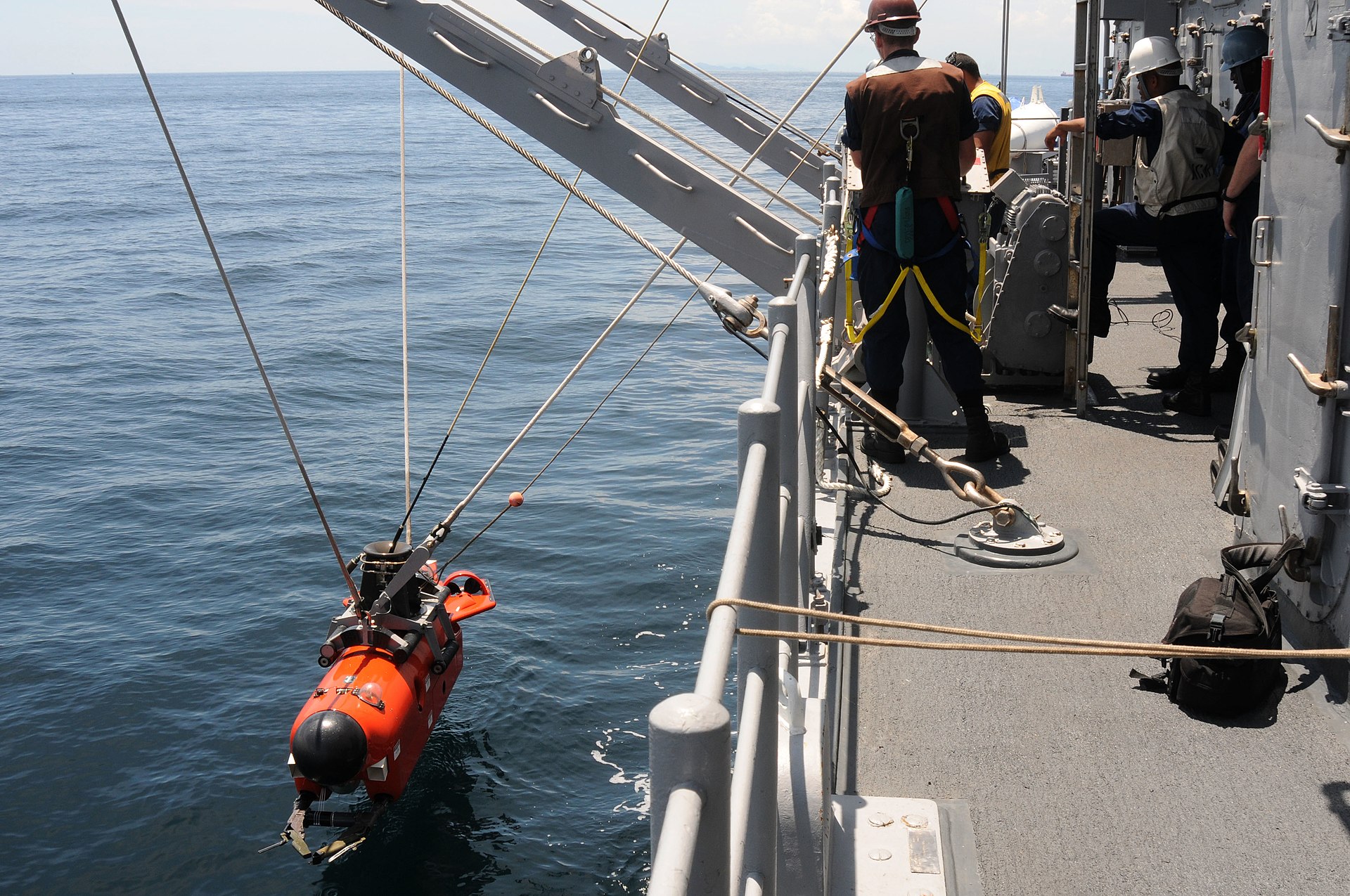
The mine that defines the clearance challenge is the Maham-7, an Iranian-manufactured seabed influence mine. Its specifications are the reason the MOU’s thirty-day timeline does not translate into a thirty-day solution.
The Maham-7 weighs 220 kilograms. Its casing is glass-reinforced plastic composite — a material chosen because it scatters sonar returns, rendering the mine difficult to detect with conventional mine-countermeasure sonar. It operates in water depths of 10 to 300 feet, covering the full depth range of the Hormuz traffic lanes. It is programmable for one to ninety-nine targets — meaning it can allow a predetermined number of vessels to pass safely before arming for the next. Its activation window extends to 127 days, with an operational life of up to one year.
The 127-day arming window makes the MOU’s thirty-day commitment structurally insufficient as a safety guarantee. A mine programmed to arm on day 45 will sit inert throughout a 30-day clearance operation. It will pass sonar sweeps that test for active magnetic or acoustic signatures. It will remain in position after Iran declares the strait cleared. It will arm itself fifteen days after that declaration.
Physical removal of every mine would resolve this. But locating and neutralising up to 80 GRP-cased mines — each designed to defeat the sonar meant to find it — in a shipping lane that handled more than 150 transits per day requires equipment, time, and conditions the MOU does not address. Mine countermeasure vessels are slow, lightly armed, and vulnerable. They cannot operate safely in areas of active naval hostility. The IRGC’s “last warning” to USS Frank E. Petersen Jr. during minesweeping operations before the MOU was signed illustrated the paradox: the party assigned responsibility for clearance was simultaneously threatening the vessels attempting it.
How Long Did Mine Clearance Take the Last Time a Gulf War Ended?
After the 1991 Gulf War, with Iraqi mine maps provided, full Iraqi cooperation, and an international coalition conducting clearance, mine-clearing operations in Kuwaiti waters took four and a half months. Iraq had laid 1,157 mines. Iran’s 2026 Hormuz mines are fewer but technologically more advanced, and Iran has provided no maps, no coordinates, and no cooperation framework.
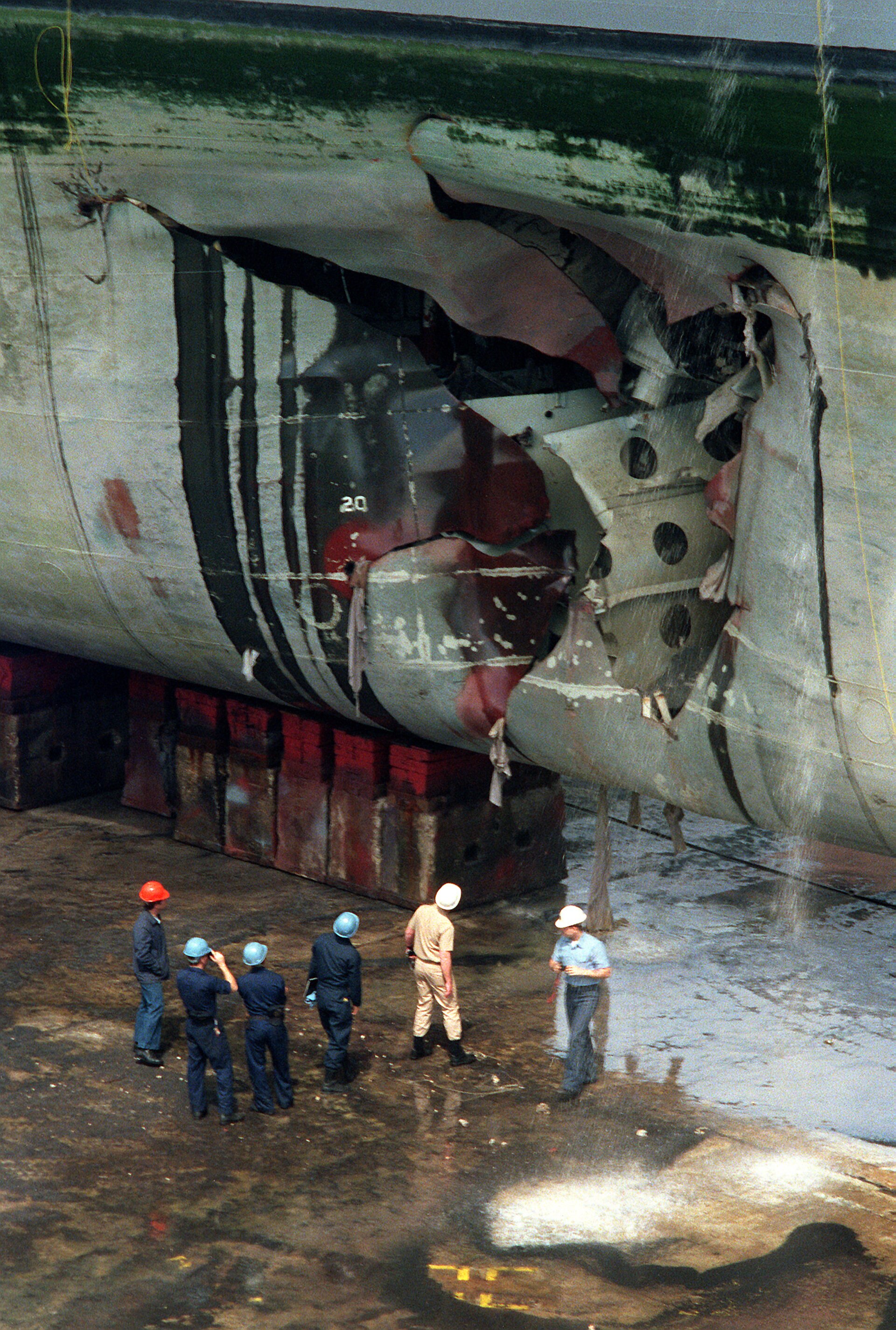
The 1991 comparison is the only empirical precedent for the operation Iran has committed to complete in thirty days. After Operation Desert Storm, the coalition possessed advantages that do not exist in 2026: Iraqi mine maps surrendered under ceasefire terms; Iraqi forces cooperating with clearance teams; conventional contact mines — steel-cased, magnetically detectable, without programmable arming or sonar-scattering capability; continuous air cover and surface protection. With all of those advantages, clearance of Kuwaiti waters took four and a half months.
Iraq laid 1,157 mines across approximately 100 miles of Kuwaiti coastal waters. Iran has laid an estimated 20 to 80 mines across the Hormuz traffic separation scheme. Fewer mines does not mean proportionally faster clearance. The Maham-7’s GRP casing and programmable arming mean that each individual mine requires more time to locate, more operational confidence to declare neutralised, and more post-clearance monitoring to verify than a 1991-era Iraqi contact mine.
The Pentagon’s private estimate — subsequently contested by spokesperson Sean Parnell, who called a six-month closure “an impossibility and completely unacceptable” — placed full clearance at up to six months. The denial was political; the estimate was operational. Western maritime security assessments converge on a more moderate timeline: forty to fifty days for a partially cleared corridor sufficient for commercial transit at reduced volume. Even the most optimistic Western estimate exceeds the MOU’s thirty-day commitment by a third.
This estimate assumed international resources. At the G7 summit in Évian on June 15–17, France and the United Kingdom assembled a coalition of fifteen or more nations willing to contribute mine-countermeasure vessels and naval expertise for Hormuz clearance. Trump rejected the coalition, insisting on a bilateral US-Iran process — a process in which the MOU assigns demining responsibility to Iran alone. The fifteen-nation option no longer exists. The bilateral option places the timeline entirely in Iranian hands. France did not abandon the demining effort; Macron announced a renewed France-Oman coalition on June 29 — and Iran rejected it within hours by quoting Article 5 directly, as Iran’s rejection of the France-Oman demining coalition documents in full.
In July 1987, during Operation Earnest Will, the tanker Bridgeton struck an Iranian mine on the first US-escorted convoy through the Persian Gulf. The United States had diplomatic assurances. It had military escorts. It had the most capable navy in the world screening the convoy route. What it did not have was verified mine clearance. The parallel is not exact — the Bridgeton struck a moored contact mine, not a programmable seabed weapon — but the structural lesson is identical: escort and diplomatic frameworks do not substitute for physical mine removal.
What Are the Three Commercial Benchmarks for Reopening?
Three conditions define a commercially reopened Strait of Hormuz: daily transit volume recovering to 60 or more vessels for two consecutive weeks (current: 13–18 per day); war-risk premiums falling below 1 per cent of hull value (current: 1.5–3.0 per cent); and mainline carriers — Maersk, MSC, CMA CGM — resuming normal booking schedules. As of June 19, none has been met.
The insurance and maritime industry framework for what constitutes a reopened strait does not map to the MOU’s definition. To the MOU, the strait is open when Iran declares its best-efforts demining complete and traffic “will immediately start.” To the commercial market, the strait reopens when observable, sustained evidence demonstrates that vessels are transiting safely at volume — not for one day, not for a week, but consistently enough to generate actuarial confidence.
As of the day of the Geneva ceremony, daily transits run at approximately thirteen to eighteen vessels against a pre-conflict baseline of more than 153. Roughly 850 vessels remain stranded or in holding patterns across the Persian Gulf and the Gulf of Oman. No mainline container carrier — none of the three companies that control more than half of global container shipping capacity — has resumed normal bookings through Hormuz.
The $40 billion US Development Finance Corporation political risk reinsurance facility does not solve Saudi Arabia’s problem. The DFC backstop covers US-directed traffic: government-chartered vessels, military logistics, allied shipments under US coordination. Saudi Aramco crude loaded onto commercial tankers at Ras Tanura is not US government-directed cargo. The facility designed to bridge the insurance gap excludes the country whose exports represent the single largest share of pre-conflict Hormuz volume.
War-risk premiums would need to fall from their current 1.5 to 3.0 per cent to below 1 per cent before the economics of routine crude transit normalise. At $4.5 million per transit, a VLCC carrying two million barrels absorbs $2.25 per barrel in war-risk premium alone — before Arab Light OSP discounts, P&I surcharges, or crew hazard bonuses are counted. The arithmetic does not work for sustained commercial shipping at current rates.
Saudi Arithmetic at Thirty, Ninety, and One Hundred Eighty Days
Saudi Arabia’s breakeven oil price — the price at which government revenue matches government spending — sits at $108 to $111 per barrel, per the IMF’s most recent estimate. Brent crude trades at approximately $75.49. The gap is $32.51 to $35.51 per barrel. Every barrel that Saudi Arabia cannot export through Hormuz costs the kingdom that gap, multiplied by 5.5 million barrels per day.
The daily revenue shortfall against breakeven: approximately $178.8 to $195.3 million. This is the cost of every day the strait remains commercially closed — whether or not a ceremony has been held, whether or not an MOU has been signed.
At thirty days — the MOU’s stated demining target — foregone revenue reaches $5.36 to $5.86 billion. This assumes no PGSA fee (the sixty-day window remains in effect) and no further price deterioration. Brent has already dropped 40 per cent from its conflict peak of $126.41. Goldman Sachs’ Q4 2026 Brent forecast of $80 assumed Hormuz reopening by end of July — an assumption that the MOU’s own thirty-day timeline makes precarious.
At ninety days — the Western maritime security consensus for a partially cleared corridor — foregone revenue reaches $16.1 to $17.6 billion. The PGSA fee has been active since day 61 (approximately August 18), adding $5.5 million per day in new transit liability. Cumulative PGSA exposure by day 90: approximately $159.5 million.
At one hundred eighty days — the Pentagon’s private clearance estimate — foregone revenue reaches $32.2 to $35.2 billion. PGSA cumulative liability: approximately $660 million. Saudi Arabia’s Q1 2026 deficit of SAR 125.7 billion has by this point been compounded by six months of exports at below-breakeven prices and at volumes that remain a fraction of pre-conflict capacity.
These figures exclude the competitive displacement already underway. NITC tankers moved 4.8 to 5 million barrels through Hormuz on June 15–16 under the PGSA corridor exemption — while Saudi, Emirati, and Kuwaiti crude remained blocked. Each Iranian barrel that reaches a refinery while Saudi barrels are stranded represents a customer relationship that may not return when the strait reopens. Sinopec has reduced Saudi crude purchases by 80 per cent. Rongsheng dropped from 7 million to 1 million barrels per month.
Saudi Arabia cannot accelerate any element of this sequence. It has no seat in the demining authority. It has no seat in the Iran-Oman bilateral governance dialogue. It cannot influence the JMIC’s risk assessment. It cannot compel Lloyd’s underwriters to adjust premiums. It cannot override a CONWARTIME clause in a charterparty it is not party to. It cannot redirect the DFC to cover Aramco crude. Aramco’s July OSP for Arab Light to Asia was cut $6 per barrel — the largest reduction since 2022 — for cargoes that may not reach their buyers for months.
The Day-61 Cliff
The MOU’s sixty-day no-fee window begins on June 19, 2026. Day 61 falls on approximately August 18.
On that date, the Persian Gulf Security Authority’s $1-per-barrel fee activates for all non-exempt vessels transiting the Strait of Hormuz. At Saudi Arabia’s pre-conflict Hormuz throughput of 5.5 million barrels per day, the fee generates $5.5 million daily — approximately $2 billion per year. Russia, China, India, Iraq, and Pakistan are exempt under bilateral PGSA arrangements. Saudi Arabia is not.
The fee has statutory backing in Iranian domestic law independent of the MOU. Iran’s parliament codified Hormuz service fees into legislation on March 30–31, 2026 — before the MOU draft existed. The MOU’s “no charge for 60 days” clause suspends collection; it does not repeal the statute that authorises it. If Phase 2 negotiations collapse — and the sixty-day window for resolving enrichment caps, sanctions sequencing, and verification protocols makes structural failure the base-case scenario, as former lead US negotiator Wendy Sherman observed of the far less complex JCPOA: “I can assure you they will not get all of this done in 60 days” — the PGSA fee collection mechanism remains legally intact under Iranian law.
The semantic distinction between “toll” and “service fee” is how the PGSA survived the MOU’s negotiation. The MOU prohibits “tolls.” Iran characterises the PGSA charge as a fee for “services rendered” — environmental monitoring, navigational coordination, hydrographic survey. UNCLOS Article 26(2) permits charges for “specific services rendered to the ship,” a test that a blanket per-barrel charge arguably fails. But no international tribunal has ruled on the characterisation. The “toll free” framing that shaped Western media coverage addressed a word. It did not address the fee.
IRGC-affiliated Fars News stated the position without ambiguity: the final MOU text “explicitly affirms Iranian and Omani sovereignty over the strait” and toll-free passage lasts “only 60 days, after which Iran plans to charge vessels for navigation and environmental services.”
The sixty-day negotiating window is the period in which the fee’s terms, exemptions, enforcement mechanisms, and governance structure will be defined — or not. The Iran-Oman bilateral that will administer post-sixty-day Hormuz transit meets under MOU Point 5’s provision for consultation “with other Persian Gulf littoral states.” Saudi Arabia’s ability to contest the fee regime runs through this bilateral forum, in which it has no formal seat and no structural standing. The next session of the bilateral has not been scheduled. The first day of fee collection, absent a further suspension, falls on August 18, 2026.
Frequently Asked Questions
Can Saudi Arabia bypass Hormuz entirely and ship crude through alternative routes?
Saudi Arabia’s East-West pipeline (Petroline) connects the Abqaiq processing complex to Yanbu on the Red Sea coast with a capacity of approximately 5 million barrels per day. But this capacity is not fully available for crude export: domestic refineries at Yanbu and Rabigh consume a share, and the pipeline competes with Aramco’s own refinery feedstock needs. The Eastern Province fields that produce the majority of Arab Heavy and Arab Medium grades — the backbone of Asian refinery demand — are pipeline-connected to Ras Tanura and Ju’aymah on the Gulf coast. Rerouting these grades to Yanbu would require blend adjustments, logistical reconfiguration, and Red Sea terminal capacity that cannot be stood up within the MOU’s timeline. Even at maximum pipeline utilisation, Saudi Arabia cannot replicate its pre-conflict 5.5 million bpd Hormuz throughput through Red Sea alternatives.
Has Iran ever conducted internationally verified mine clearance of its own minefields?
No. During the 1980–88 Iran-Iraq War, Iran laid mines in the Persian Gulf that damaged the USS Samuel B. Roberts (FFG-58) in April 1988. Post-war clearance of Iranian mines was conducted by Western navies, not by Iran. The Tanker War ended without Iran providing mine maps, conducting clearance operations, or cooperating with international demining efforts. The MOU’s assignment of clearance responsibility to the party that laid the mines is without modern precedent in naval mine warfare. Every prior instance of post-conflict Gulf mine clearance has been conducted by the adversary of the party that laid the mines, not by the mine-laying state itself.
What role does Oman play in the post-MOU Hormuz governance framework?
Oman is Iran’s designated bilateral partner under MOU Point 5 for post-sixty-day Hormuz governance — the framework that will determine fee levels, exemptions, and enforcement for all strait transit after August 18. Oman was the only GCC state not to sign the GCC-IMO letter of May 21, 2026, which protested the PGSA fee regime. Muscat hosted the early back-channel negotiations between Washington and Tehran that produced the MOU’s architecture. The Iran-Oman bilateral provides Tehran with a regional interlocutor that has no structural interest in contesting the fee regime, and it positions the GCC states whose crude exports bear the PGSA’s cost — Saudi Arabia, UAE, Kuwait, Bahrain — as external consultees rather than co-governors.
How do P&I clubs differ from war-risk insurers in the Hormuz context, and why does it matter?
Protection and Indemnity clubs cover third-party liabilities: crew injury, oil spill cleanup, wreck removal, cargo claims, and environmental damage. War-risk insurers cover hull damage and total loss. A vessel needs both categories of cover to transit commercially. P&I clubs have imposed more restrictive conditions than war-risk underwriters because their exposure includes pollution liability from a mine strike — a single VLCC carrying two million barrels of crude in the confined waters of the strait could generate environmental claims exceeding $1 billion. Several P&I clubs have added Hormuz-specific exclusion endorsements to their rules, requiring vessel-by-vessel pre-approval before cover extends. These endorsements operate on the club’s own risk assessment, independently of the war-risk market and independently of any diplomatic agreement.
What would a successful thirty-day clearance operation actually require in mine-countermeasure assets?
Mine countermeasure operations in the Hormuz traffic separation scheme require specialised MCM vessels — typically hunt-class or Avenger-class minesweepers equipped with variable-depth sonar and remotely operated mine disposal vehicles. These vessels operate at 3 to 5 knots during sweeping operations and can clear approximately 2 to 4 square nautical miles per vessel per day under optimal conditions. The Hormuz traffic lanes and approaches cover approximately 1,100 square nautical miles. A fleet of six MCM vessels operating continuously — the approximate Western capability available in the Gulf theatre — would need 45 to 90 operational days for first-pass coverage, assuming no weather delays, no equipment failures, and no interference from hostile forces. Second-pass verification sweeps, standard practice in mine clearance doctrine, add 30 to 50 per cent to that timeline. The MOU does not specify what MCM assets Iran will deploy, how many it possesses in operational condition, or whether “best efforts” requires continuous around-the-clock operations.
The mine count matters to the insurance market in a different way than it matters to the MOU’s best-efforts clause: JMIC has since cut its Hormuz threat level to “Substantial,” but P&I clubs have not followed, leaving premiums 30x above normal and hull coverage withdrawn — the institutional gap between threat classification and commercial insurance clearance is examined here.
The MOU’s best-efforts language has since been tested by Iran’s enforcement logic against the Ever Lovely corridor strike — the IRGC hit the container vessel in the Oman/IMO corridor on June 25, eight days into the 60-day window.