Table of Contents
GENEVA — Technical talks on the Iran nuclear program open in Geneva on June 29 with 440.9 kilograms of highly enriched uranium unverified for 121 consecutive days — four times the IAEA’s one-month detection threshold. The United States and Iran are publicly contradicting each other on whether inspectors can enter the struck enrichment facilities where that material was last documented. Saudi Arabia holds no seat at the table, no role in any working group, and no mechanism to influence the outcome of a dispute that determines whether the one nuclear commitment carrying a direct Saudi cost — $5.5 million per day under the PGSA — can be verified at all.
What Can Geneva’s Nuclear Track Actually Resolve?
Geneva’s Nuclear Affairs working group handles the IAEA inspection dispute, but it cannot resolve the core question. Iran’s deputy foreign minister has conditioned inspections on full sanctions termination — a final-deal deliverable on a separate track. The technical team convening on June 29 has no mandate to override a political sequencing demand set by Tehran.
The Swiss Foreign Minister confirmed Iran-US technical nuclear talks in Geneva for June 29-30 (PBS NewsHour, UN News, Al Jazeera). Secretary of State Marco Rubio said he “believed” they would resume June 29 or 30, though the schedule was not firmly locked as of June 26. Four working groups were established at the June 20-23 Switzerland session: Sanctions Termination, Nuclear Affairs, Reconstruction and Economic Development, and Monitoring and Implementation (IRNA, Al Jazeera, June 22-23).
IAEA access falls under the Nuclear Affairs track, but Iranian Deputy Foreign Minister Kazem Gharibabadi told Xinhua on June 25 that it “will be reviewed and resolved solely within the framework of the final agreement.” His demand conditioned access on “practical action by the other side to end all sanctions” — a sequencing requirement he publicly restated on June 30 as Doha talks opened, confirming that inspections remain blocked until a final deal and all sanctions termination. This places inspections after a deliverable handled on a separate track with its own unresolved disputes, including the missiles question Geneva’s agenda does not address.
Wendy Sherman, the senior US negotiator for the JCPOA, publicly stated that the parties “will not resolve all issues in 60 days.” Laura Rockwood, a former IAEA verification negotiator, described the access negotiation as “really, a heavy slog” (RFE/RL, June 25).
Why Are the US and Iran Contradicting Each Other on Inspections?
Both sides described the June 20-23 Switzerland round as a success, then issued incompatible accounts of what was agreed. Washington claimed an inspection breakthrough, while Tehran denied making any new commitments — and Iran’s state media separately denied any official had confirmed IAEA entry.
The Middle East briefing 3,000+ readers start their day with.
One email. Every weekday morning. Free.
The split emerged within hours of the Switzerland round’s conclusion on June 23. US Vice President JD Vance told CBS News that Iran had “agreed to invite IAEA inspectors back into their country” and called the talks “a productive 36 hours.” President Trump posted on Truth Social that “Iran has fully and completely agreed to highest level Nuclear inspections long into the future” (NBC News, June 23).
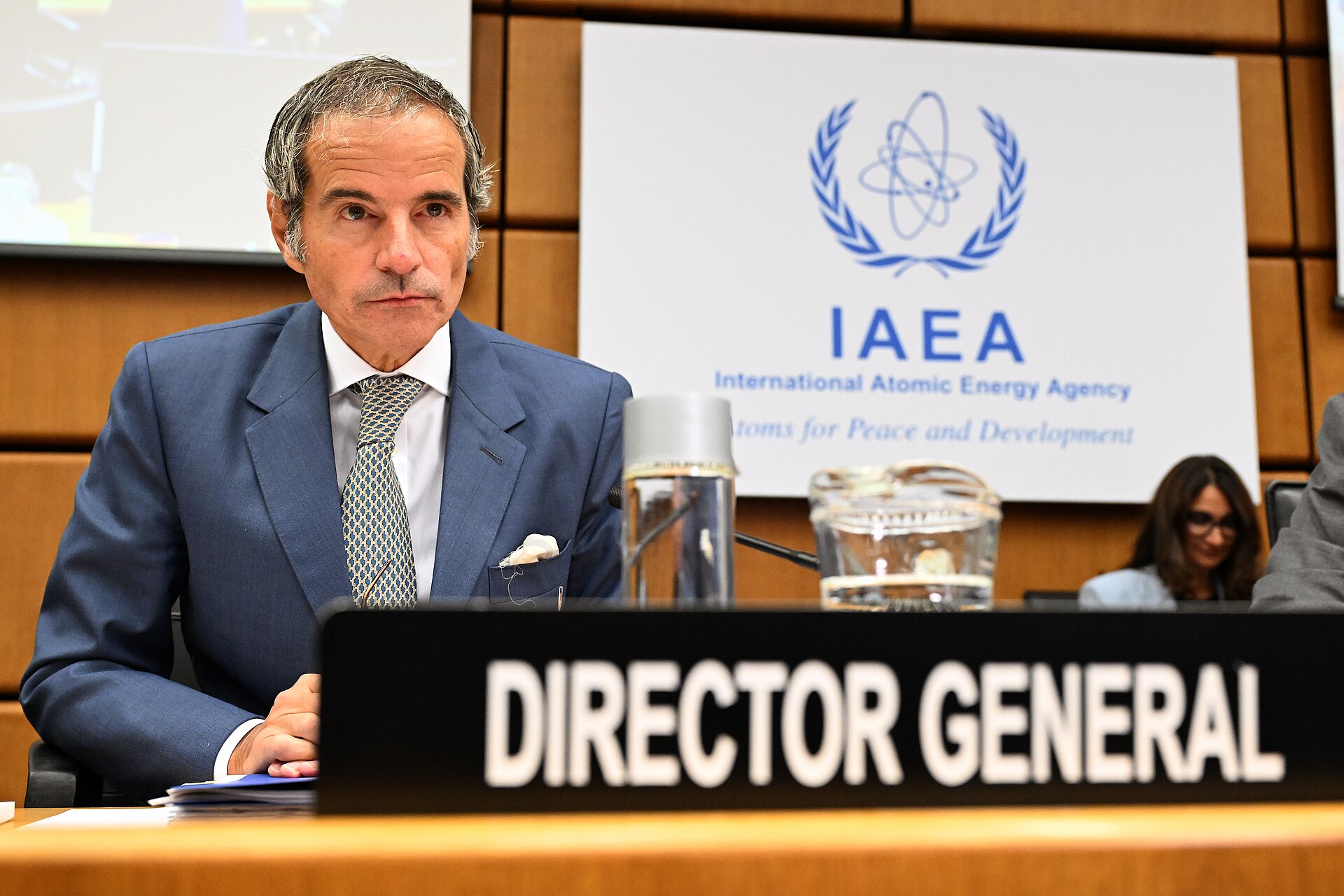
At a Tehran press briefing the same day, Foreign Ministry spokesman Esmail Baghaei said there was “no plan” for IAEA inspectors to visit sites damaged in US and Israeli strikes. Iran, he said, “had neither met with IAEA Director General Rafael Grossi during talks in Switzerland nor agreed to inspections” (Iran International, PBS NewsHour, Times of Israel, June 23). Tasnim News Agency separately denied any Iranian official had confirmed IAEA entry, and Iran’s chief negotiator Mohammad Bagher Ghalibaf, returning from Switzerland, called the deal “America’s declaration of defeat” (Times of Israel, June 22).
IAEA Director General Rafael Grossi attempted to bridge the gap on June 24, telling Al Jazeera and Euronews that access was imminent: “whether this happens the day after tomorrow or in one week or in 10 days, it’s important, but not essential — this is going to happen.” By June 26, Grossi had named the dispute a “war of statements” and demanded “a very strong system of verification as soon as practicable” (Al Jazeera). His language shifted in 48 hours from confident prediction to public frustration — a trajectory suggesting the IAEA’s own back-channel efforts had not resolved the contradiction before Geneva opened.
How Long Has the IAEA Been Locked Out?
Since February 28, 2026 — a total of 121 days as of June 29. Iran terminated all IAEA access one day after the agency’s last board report documented the full HEU stockpile at 60 percent enrichment, disabled every surveillance camera, and removed every seal. The agency’s continuous monitoring capability was eliminated in a single stroke.
Board report GOV/2026/8, published February 27, documented 440.9 kilograms of uranium enriched to 60 percent U-235 — the highest enrichment level Iran has declared, and close enough to weapons-grade that the remaining technical steps are measured in weeks, not months. The IAEA’s timeliness goal for detecting diversion of one significant quantity of HEU is approximately one month (IAEA GOV/2026/8), and the current gap is four times that threshold. Kelsey Davenport, Director of Nonproliferation Policy at the Arms Control Association, told RFE/RL on June 25 that “the level of access, the provision of information to the IAEA, how quickly Iran has to comply — all of that is going to be crucial.”
The material itself moved before the strikes began. Satellite imagery from June 9, 2025 — three days before the first US and Israeli strikes — showed trucks transporting approximately 18 containers of HEU into Isfahan’s underground tunnel complex (Bulletin of the Atomic Scientists, Le Monde, March 2026). Grossi confirmed Iran moved “a bit more than 200 kilograms, maybe a little more than that” of 60-percent-enriched uranium to Isfahan underground before the bombs hit (Bulletin of the Atomic Scientists, March 2026).
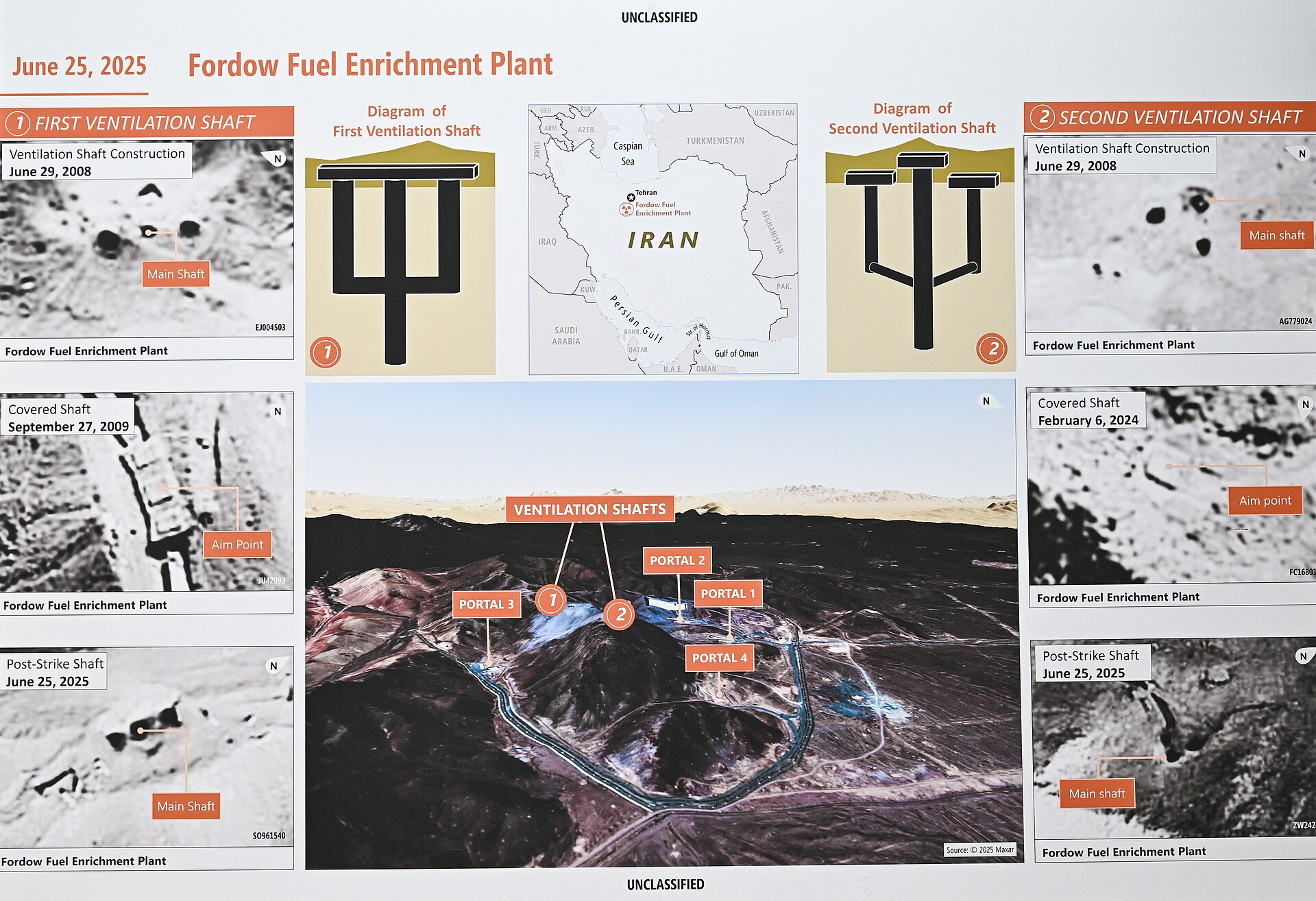
The Institute for Science and International Security assessed in June 2026 that Fordow, one of Iran’s primary enrichment sites, was “heavily damaged or destroyed” with no satellite evidence of rebuilding (ISIS Reports). From December 2024 to June 2025, Iran “almost doubled its stock of 60 percent enriched uranium to 440 kilograms,” according to the same ISIS analysis of IAEA reports — a surge that placed the peak stockpile underground before the facilities were struck. What it means that the IAEA cannot now account for the whereabouts of roughly a third of that stockpile — and why MOU Point 8 contains no mechanism to resolve that — is the subject of The IAEA Verified Iran’s Uranium — Then Lost Track of It.
What Does This Mean for MOU Point 8?
MOU Point 8 commits Iran to downblend its HEU stocks “on site under the supervision of the IAEA.” If Iran’s position — no inspectors at struck sites — holds through Geneva, Point 8 cannot be implemented as written, because inspectors must physically enter the damaged facilities to supervise downblending.
Grossi told Bloomberg and CBS News on June 24 that the MOU states “explicitly” that nuclear activities “will be supervised by the IAEA.” The language is unambiguous on paper, but the facilities where supervision must occur — Fordow, Natanz, and Isfahan — were all struck in June 2025. If Baghaei’s “no plan” formulation remains operative, Point 8 requires supervision inside sites Iran will not let inspectors enter.
Grossi acknowledged the gap on June 26: “Intentions are not enough — in order to have certainty, we need to have a very strong system of verification as soon as practicable” (Al Jazeera). Gharibabadi’s June 25 demand — conditioning access on sanctions termination — mirrors the pattern of invoking MOU provisions to block MOU implementation. Sanctions termination is a final-deal deliverable, but IAEA access under Point 8 is an interim operational requirement, and Geneva’s technical team has no mechanism to override a sequencing demand set by the deputy foreign minister.
Where Is Saudi Arabia?
Saudi Arabia holds zero seats at the Geneva talks, zero seats in any of the four working groups, and no named role in the Nuclear Affairs track where the inspection dispute will be addressed. The exclusion is structural, not incidental — the MOU was negotiated bilaterally, with Pakistan and Qatar as mediators, and Phase 2 carries no mechanism for GCC participation in the nuclear track.
Foreign Minister Prince Faisal bin Farhan’s only public input on nuclear verification has been the phrase “verification is key,” delivered at an ECFR event in Vienna. That phrase carries no institutional foothold in the process it describes, and no working group has been tasked with reporting its outcomes to Riyadh.
The cost of that absence is not abstract. The PGSA imposes an implied cost on Saudi Arabia of approximately $5.5 million per day at pre-war export volumes — $1 per barrel across 5.5 million barrels per day. The fee is waived during the MOU’s 60-day window, but reverts by default on Day 61 if no final agreement is reached.
Point 8 is the only MOU commitment that would provide independent verification that Iran’s enrichment program is being constrained. Without IAEA access, Saudi Arabia is paying for a commitment nobody can confirm.
The broader diplomatic architecture continues to expand without Saudi input. Iraq’s proposed 6+2 regional security framework excludes the US entirely, and the Geneva process excludes Saudi Arabia from the nuclear track that most directly affects its security. Iran has continued to operate under its own interpretation of MOU compliance while these tracks run in parallel, leaving Riyadh absorbing costs defined by agreements it did not negotiate and cannot amend.
Forty-Eight Days Left
The MOU was signed in Islamabad on June 17 with a 60-day Phase 2 window expiring approximately August 16. Geneva’s two-day technical session is the first formal Phase 2 meeting, with 48 days remaining. The JCPOA, which covered narrower ground than the current MOU’s 14 points, required 20 months of expert-level negotiation after the November 2013 JPOA framework.
The clock has no pause mechanism, no extension clause, and no designated body to manage a lapse. If no final agreement is reached by August 16, the PGSA fee of $1 per barrel reverts by default. The dispute Grossi named a “war of statements” is not diplomatic noise — it is the question that determines whether the MOU’s central nuclear commitment can be implemented before the clock runs out. Forty-eight days may pass with the uranium unverified, the struck sites uninspected, and the Saudi cost accumulating for a constraint no one has confirmed exists.
Within hours of this session opening, the diplomatic center of gravity shifted from Geneva to Doha — a venue change driven by the stand-down Qatar brokered, which moved the nuclear agenda to the margins while leaving the PGSA’s pre-clearance requirement untouched.
Frequently Asked Questions
What is the IAEA’s “one significant quantity” standard for HEU?
The IAEA defines one significant quantity of HEU (enriched to 20 percent or above) as 25 kilograms of uranium-235. At 60 percent enrichment, Iran’s documented stockpile contains roughly 264 kg of U-235 — more than ten significant quantities. The one-month timeliness goal means the agency expects to detect diversion of a single bomb’s worth of material within that window, making the 121-day gap a fourfold overshoot of the standard designed to catch exactly this scenario.
Has the IAEA ever faced a verification gap of this length with a state possessing significant HEU quantities?
The closest precedent is North Korea’s expulsion of IAEA inspectors in December 2002, which preceded Pyongyang’s NPT withdrawal in January 2003 and its first nuclear test in October 2006. Iran has not withdrawn from the NPT, making the gap legally distinct — Tehran remains a treaty signatory subject to safeguards obligations it is not fulfilling, giving the IAEA Board of Governors standing to act that it did not have with North Korea after withdrawal.
Can the IAEA verify MOU Point 8 remotely without physical access?
Remote monitoring through environmental sampling, satellite imagery, and open-source intelligence can detect certain activities — construction, ventilation signatures, heavy vehicle traffic — but cannot confirm isotopic composition of material inside underground facilities or verify that downblending is occurring. The IAEA’s safeguards system relies on on-site inspections, including enrichment-level measurement at centrifuge cascades and nuclear material sampling for laboratory analysis at its Seibersdorf facility in Austria.
What role does Pakistan play in the Geneva process?
Pakistan served as the primary mediating country for the June 17 Islamabad MOU signing, with Prime Minister Shehbaz Sharif present at the ceremony. Islamabad holds no formal seat in the Nuclear Affairs working group and no role in defining IAEA verification modalities. Its unique position as the only nuclear-armed state involved in the mediation gives its endorsements diplomatic weight in the Muslim world, but Pakistan’s leverage is facilitative rather than substantive — it can host and broker, but cannot set the terms of inspection access.