
BAGHDAD — Iraqi Foreign Minister Fuad Hussein formally invited all six GCC states, Iran, and Iraq to an eight-party regional security summit on June 28, converting what had been an Iranian diplomatic proposal into a sovereign host-nation invitation with Baghdad as convener. As of June 29, not one GCC state has responded publicly.
The silence is not idle. Saudi Arabia holds no formal seat in the Islamabad MOU’s negotiating structure — Pakistan and Qatar are co-mediators — and the Baghdad summit is the only proposed multilateral forum that would place Riyadh across from Tehran before the MOU’s 60-day window expires around August 16. Iran accepted on record the same afternoon. The GCC’s collective non-response, characterized by anonymous Gulf diplomats only as “premature,” is a diplomatic posture with costs in every direction: accept and legitimize a US-excluded regional table; reject and be seen as blocking the only available seat alongside Iran; stay silent and watch the 48 remaining days of the MOU window run without a forum.
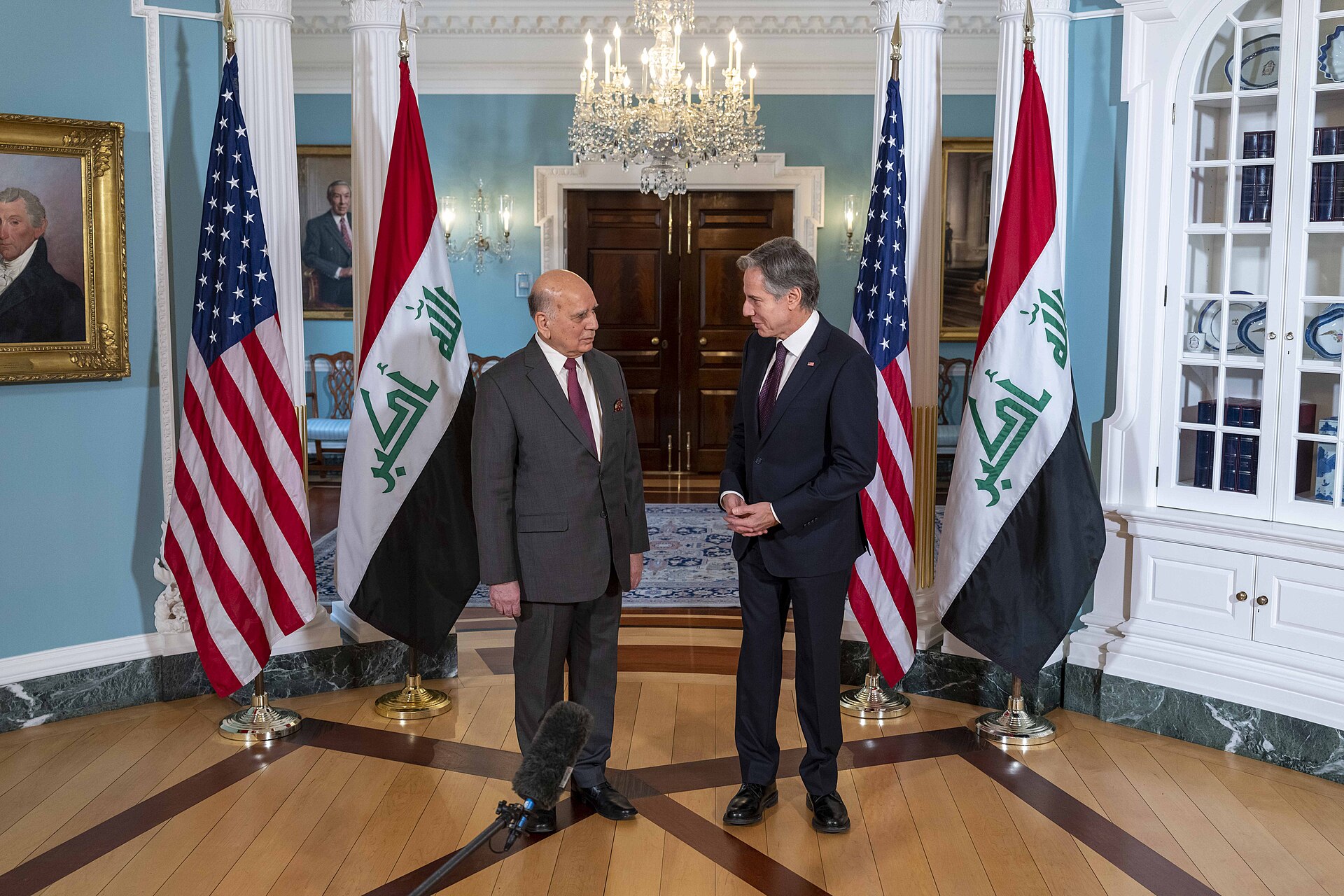
Table of Contents
- From Proposal to Sovereign Invitation
- What Has the GCC Said About the Baghdad Invitation?
- The HOPE Precedent: Three Replied, Three Didn’t
- Peace Offers and Missile Strikes in the Same News Cycle
- Why Does the Baghdad Invitation Carry a Deadline?
- The Manama Statement Meets the Baghdad Framework
- What Are Saudi Arabia’s Available Options?
- How Did Baghdad Conferences I and II End?
- Frequently Asked Questions
From Proposal to Sovereign Invitation
When Abbas Araghchi first floated a “6+2” regional security framework during an earlier Baghdad visit, the proposal carried Tehran’s diplomatic fingerprints. GCC capitals could treat it as an Iranian initiative — familiar, easy to shelve. Hussein’s June 28 invitation changed the diplomatic geometry. Iraq is now the host, the convener, and the sovereign authority behind the table.
“Iraq is ready to host the representatives of these countries to discuss the security of the region, the protection of the region, and to develop the economic relations,” Hussein said at the joint press conference, standing next to Araghchi. The eight-party format — six GCC states plus Iran plus Iraq — is smaller and more concentrated than the 12-country Baghdad Conference of August 2021. It is also, by explicit design, a forum without Washington.
Araghchi supplied the exclusion logic at the same podium: “I believe that the time has come to form a regional framework to ensure the security of the Gulf with the participation of all countries in the region and without the presence or interference of extra-regional powers.” The phrase “extra-regional powers” is diplomatic shorthand. The United States, which maintains the largest military presence in the Persian Gulf through installations in Qatar, Bahrain, Kuwait, and the UAE, is the only power being named without being named.
“Iraq is ready to host the representatives of these countries to discuss the security of the region, the protection of the region, and to develop the economic relations.”
The HOS Daily BriefThe Middle East briefing 3,000+ readers start their day with.
One email. Every weekday morning. Free.
— Fuad Hussein, Iraqi Foreign Minister, Baghdad press conference, June 28, 2026
Iranian state media reinforced the reframing. PressTV covered Araghchi’s Baghdad visit under the headline “Iraqi PM affirms support for diplomacy, regional stability in meeting with Iran’s FM” — centering Iraqi endorsement, not Iranian initiative. The editorial choice is deliberate: a proposal from Tehran is easy for Gulf capitals to file. A formal invitation from Baghdad — Iraq’s sovereign act, with Iraqi institutional weight — requires a diplomatic response in a way Tehran’s unilateral pitches do not.
Araghchi accepted on record: “Iran is fully prepared to co-operate with the Iraqi government to advance this initiative.” The formulation — “the Iraqi government,” “this initiative” — assigns ownership to Baghdad. Iran’s position, at least publicly, is that it is a participant, not the architect. Whether Gulf capitals read the distinction the same way is the first question the invitation poses.
What Has the GCC Said About the Baghdad Invitation?
Nothing. As of June 29, 2026, zero GCC states have issued public responses to Iraq’s eight-party summit invitation. No foreign ministry has released a statement acknowledging, accepting, or rejecting the proposal. Anonymous Gulf diplomats told The National that “talk of such discussions is premature.” The word “premature” is the only documented GCC-side characterization of the Baghdad invitation, and it came from unnamed sources, not official channels.
“Premature” is a carefully chosen term. It implies awareness of the invitation, some level of internal discussion, and a collective decision that the present moment is wrong. What it does not do is close the door. A rejection is a position. “Premature” is the deferral of one.
The GCC’s 167th Ministerial Council on June 25 — three days before Hussein’s invitation — produced the first collective defense language in the council’s 45-year history. Saudi Arabia then deployed no forces when IRGC missiles struck Kuwait and Bahrain on June 27-28. The pattern runs through both military and diplomatic channels: institutional language of unprecedented strength, followed by operational silence when the language would need to become action.
The GCC has a mechanism for responding to external diplomatic proposals. When Rouhani proposed the Hormuz Peace Endeavour in 2019, three member states — Kuwait, Qatar, and Oman — replied within weeks. The absence of even a procedural acknowledgment from any of the six after 24 hours is itself a data point. Either the response is being coordinated, or coordination has failed, or the silence is the coordination.
The HOPE Precedent: Three Replied, Three Didn’t
The Baghdad invitation is not the first Iranian attempt to convene a regional security forum excluding Western powers. In September 2019, Iranian President Hassan Rouhani proposed the Hormuz Peace Endeavour — HOPE — at the UN General Assembly in New York. HOPE formally invited all six GCC states to participate in a regional maritime security arrangement. The concept was broad: a cooperative framework for the strait, with Iran as conceptual anchor and no role for the United States or European naval coalitions.
The result split the GCC cleanly. Kuwait, Qatar, and Oman replied positively. Saudi Arabia, the UAE, and Bahrain did not respond. The three-to-three division mapped onto a pre-existing fault line within the council — the same states that maintained warmer bilateral channels with Tehran engaged; the same states that maintained closer alignment with Washington went silent.
Iranian FM Javad Zarif acknowledged the structural obstacle: implementing HOPE “needs collective measure, consensus.” Without Saudi participation, there was no consensus. HOPE produced zero binding commitments and disappeared from diplomatic calendars within months.
The Middle East Institute’s post-mortem on HOPE — “Iran, the GCC, and the failure of HOPE” — identified the core problem: the proposal required GCC states to enter a security framework that implicitly substituted Iranian assurances for American military presence, without any mechanism to verify those assurances. The ask was structural, not procedural.
The 2026 Baghdad version differs from HOPE in three dimensions that make the 2019 playbook harder to rerun. First, the host is Iraq, not Iran. An Iraqi sovereign invitation carries a different category of diplomatic weight than an Iranian speech at the UN General Assembly. Second, the invitation arrives while the MOU’s 60-day clock is ticking — HOPE operated without any external deadline. Third, the region is at war. HOPE was proposed during a period of elevated tension in the Gulf but no active interstate conflict. The Baghdad invitation was issued the same day IRGC missiles struck military facilities in two GCC member states. The cost of non-response is measured differently when the alternative to talking is already being demonstrated.
Peace Offers and Missile Strikes in the Same News Cycle
On June 28, 2026, the following occurred within the same 24-hour window: Iraqi FM Hussein issued the eight-party summit invitation at a Baghdad press conference. Araghchi accepted on record at the same press conference. Araghchi declared that “the Strait of Hormuz will return to its pre-war operating conditions within 30 days under a management framework implemented by Iran.” IRGC forces struck Ali Al Salem Air Base in Kuwait and the Juffair naval facility in Bahrain. An Aramco helicopter crashed at Ras Tanura, killing all 14 people aboard — all Saudi nationals. Iranian state media did not report the helicopter crash.
The diplomatic offer and the military escalation were not separated by a news cycle. They occupied the same one. Araghchi stood at a podium in Baghdad proposing a regional security summit for the six countries whose territory the IRGC was simultaneously striking, or had struck hours before.
The Hormuz dimension extended the coercion further. At the same press conference where he endorsed the eight-party format, Araghchi claimed Iran held “total oversight and management” of the Strait of Hormuz and set a 30-day timeline for the strait to “return to pre-war operating conditions” — roughly July 28. The timeline overlaps with but does not match the MOU’s 60-day window, which expires around August 16. Two clocks are now running simultaneously, neither controlled by the GCC.
“Any attempt to adopt new or separate arrangements compared to what is underway by the Islamic Republic of Iran, will only lead to more complicated situations and delays in the reopening of the Strait of Hormuz, and will increase the tensions, as we witnessed in the past two nights.”
— Abbas Araghchi, Iranian Foreign Minister, Baghdad, June 28, 2026 (BSS News)
Araghchi’s warning — that “any attempt to adopt new or separate arrangements” would “increase the tensions, as we witnessed in the past two nights” — used the IRGC strikes as its own supporting evidence. The argument, stated plainly: pursuing alternative security frameworks will produce more of what the IRGC delivered on June 27-28. The diplomatic invitation and the military threat were not delivered by different factions at cross purposes. They were delivered by the same foreign minister, at the same press conference, in sequential sentences.
For the GCC states evaluating the Baghdad invitation, the June 28 simultaneity is the context in which the word “premature” was chosen. The invitation’s formal content — eight parties, regional security, no external powers — is the kind of proposal that can be assessed on procedural merits. The invitation’s accompaniments — missile strikes on GCC territory, a Hormuz management claim, and an explicit threat against alternative arrangements — are not procedural.
Why Does the Baghdad Invitation Carry a Deadline?
The Baghdad invitation carries a deadline because the Islamabad MOU’s 60-day Phase 2 window expires around August 16, 2026. On Day 61, the PGSA’s $1-per-barrel Hormuz transit fee waiver lapses and Iran’s March 2026 parliamentary fee act becomes operative by default. As of June 29, 48 days remain. The Baghdad summit is the only proposed format that would give Saudi Arabia a multilateral seat across from Iran before that window closes.
The MOU, signed June 17, names Pakistan as primary co-mediator and Qatar as secondary. No post-Day 60 fee rate has been committed. Saudi Arabia holds no seat in the Phase 2 nuclear talks, no co-mediator designation, and no institutional mechanism for input. FM Faisal bin Farhan’s sole documented contribution to the nuclear track is a single phrase delivered at an ECFR conference in Vienna: “verification is key.” On June 30, as the Baghdad countdown continued, Prince Faisal was in Beijing for a two-day official visit with Chinese FM Wang Yi — a parallel diplomatic channel that runs outside every active table where the conflict’s terms are being set. The Baghdad eight-party summit, whatever its structural problems, would place Saudi Arabia in a multilateral room with Iran for the first time since the MOU was signed.
No other current diplomatic instrument offers this. The Phase 2 talks at Bürgenstock excluded Saudi Arabia entirely — Qatar’s prime minister was physically present as co-mediator while Riyadh watched from the outside. The GCC-US Manama joint statement of June 25 was a US-GCC document, not a GCC-Iran one. The bilateral Faisal-Araghchi phone calls — six documented since the conflict began — are ad hoc exchanges that produce no institutional architecture. Baghdad’s eight-party format is the only proposed forum where Saudi Arabia would hold a formal seat across from Iran, under multilateral structure, before Day 61.
Araghchi’s own 30-day Hormuz timeline — expiring around July 28 — adds a second deadline that falls before the MOU’s. If Iran’s claimed management of the strait concludes on that date without a regional framework in place, the status of Hormuz transits on Day 31 is undefined. The Baghdad invitation sits at the intersection of two countdowns, neither of which Saudi Arabia controls and neither of which pauses for diplomatic silence.
The Manama Statement Meets the Baghdad Framework
Three days before Araghchi’s Baghdad press conference, the GCC and the United States issued a joint statement from Manama that explicitly rejected “any tolls, fees, or attempts to assert control” over the Strait of Hormuz. The statement was the product of the GCC-US consultative mechanism and represented the alliance architecture that the Baghdad invitation is designed to replace.
The Manama statement also contained a collective GCC-US demand that Iran’s ballistic missiles be addressed in Phase 2 of the nuclear talks — a demand directed at a diplomatic architecture with no working group assigned to receive it. The gap between the Manama missiles commitment and Geneva’s actual agenda is the subject of a separate analysis.
Araghchi’s June 28 Hormuz declaration — claiming Iranian oversight of the strait “for 30 days” — directly contradicted the Manama language. His warning against “new or separate arrangements” was, read against the three-day-old Manama communiqué, a specific statement about that document. The GCC-US statement proposed rejection of Iranian control. Araghchi proposed that rejection of his framework would produce escalation.
The GCC states are now holding two documents that cannot coexist. The Manama statement commits them to opposing Iranian control of Hormuz. The Baghdad invitation asks them to enter a room where the co-proponent — Iran — has already declared that control, and where the guarantor of the Manama statement — the United States — is explicitly barred from attending. The Gulf asked for commitments Washington had already conceded; the Baghdad framework asks the Gulf to attend a table where Washington’s commitments are excluded by design.
A GCC state accepting the Baghdad invitation would not automatically void the Manama statement. But it would sit in a format whose operating premise — regional security without extra-regional powers — is the inverse of the Manama framework’s premise, which is regional security through the American alliance. The Manama statement was issued on June 25. The Baghdad invitation was issued on June 28. Three days separated the commitment from the contradiction.
What Are Saudi Arabia’s Available Options?
Saudi Arabia has three responses to the Baghdad invitation — acceptance, rejection, or continued silence — each with documented costs. Acceptance legitimizes a US-excluded forum hosted by a government the GCC condemned in February 2026. Rejection hands Iran the narrative that the GCC prefers American military architecture over regional dialogue. Silence avoids both but runs against the MOU’s 48-day countdown.
Acceptance would place Saudi Arabia at a table with Iran, hosted by Iraq, without US presence. It would be the first time Riyadh participated in a formally US-excluded regional security forum of this scope. Acceptance would also require Saudi Arabia to sit across from an Iraqi government whose February 2026 submission of updated maritime coordinates to the United Nations — encroaching on Kuwaiti-claimed territory — drew “immediate joint condemnation from all six GCC states,” according to the Gulf International Forum. The GIF’s analysis notes that Iraqi diplomacy in the Gulf “has yet to recover” from the February episode.
Attending a summit hosted by a government the GCC collectively condemned four months ago is a concession that has no obvious diplomatic return — particularly when the format’s co-proponent, Iran, was striking GCC territory on the same day the invitation was issued.
Rejection would produce a different set of costs. A formal Saudi refusal would be the first explicit Riyadh statement on the only available regional forum that includes Iran before the MOU expires. Iran’s state media apparatus — which has already framed the Baghdad invitation as Iraqi-led, not Iranian — would present a Saudi rejection as evidence that the GCC prefers American military architecture over regional dialogue. The framing is pre-built: Araghchi’s “extra-regional powers” language at the Baghdad press conference was constructed to make this interpretation available.
A formal rejection also forecloses the option of joining later if conditions change — revoking a public “no” is diplomatically harder than ending a silence.
Silence — the current posture — avoids both sets of costs but operates on a finite timeline. “Premature” functions as a characterization for days. It does not function for 48 days. If Saudi Arabia remains silent when the MOU’s 60-day window closes in mid-August, the non-response will have been interpreted by every party with a seat at the table — and by every party denied one.
Saudi Arabia condemned Iran’s strikes on Bahrain but issued no defense pledge. The Baghdad invitation extends the same structural dynamic from the military domain to the diplomatic one: acknowledging the event without committing to a response. The difference is that military silence can be sustained indefinitely, while diplomatic silence on a time-bound invitation cannot. The MOU clock does not stop because Riyadh has not answered Baghdad’s letter.
How Did Baghdad Conferences I and II End?
Baghdad Conference I (August 2021) drew 12 participants and produced no binding security architecture. Baghdad Conference II (December 2022) relocated to Amman and produced only a communiqué. Saudi Arabia attended both at FM level only — never head of state. The 2026 eight-party proposal is smaller (eight vs. twelve), more concentrated, and the first to explicitly exclude Western participants by design rather than circumstance.
Baghdad Conference I, in August 2021, was hosted by Iraqi Prime Minister Mustafa al-Kadhimi. Egypt’s president attended. Qatar’s emir attended. The UAE sent its prime minister. Iran and Turkey sent their foreign ministers. Saudi Arabia sent FM Faisal bin Farhan — not Crown Prince Mohammed bin Salman, not King Salman. The format was expansive. The communiqué language was cooperative. The follow-through was absent.
Baghdad Conference II, in December 2022, relocated to Amman — an implicit acknowledgment that Baghdad itself carried enough political complexity to affect attendance decisions. Twelve countries participated again. Saudi Arabia again dispatched FM Faisal, not a head of state. The final communiqué stressed “security and sovereignty of Iraq” but generated no GCC-Iran security commitments, no enforcement mechanisms, and no calendar for a third session.
| Format | Year | Host / Venue | Participants | US Included | Saudi Level | Binding Outcome |
|---|---|---|---|---|---|---|
| HOPE | 2019 | Iran (UNGA proposal) | 6 GCC + Iran | No | No response | None |
| Baghdad Conference I | 2021 | Baghdad | 12 countries | No | FM only | None |
| Baghdad Conference II | 2022 | Amman, Jordan | 12 countries | No | FM only | Communiqué only |
| 8-Party Summit | 2026 | Baghdad (proposed) | 8 (6 GCC + Iran + Iraq) | Explicitly excluded | No response | Pending |
The trajectory runs from 12 to 12 to eight — a contracting format that has produced zero binding mechanisms across two completed iterations. The 2026 proposal adds two structural elements the prior conferences lacked. The first is the explicit exclusion of “extra-regional powers” — Washington was absent from Baghdad I and II as well, but the exclusion was circumstantial, not definitional. The second is a deadline imposed by an external instrument: the MOU’s 48 remaining days create a window that the summit’s conveners did not set and cannot extend.
Saudi Arabia attended both prior Baghdad Conferences at FM level only — the minimum credible delegation for a sovereign state invited to a regional summit. If the pattern holds and Riyadh eventually accepts the 2026 invitation, it would likely send Faisal bin Farhan rather than a head of state. But the pattern may not hold, because the prior conferences included Western and non-Gulf participants (France at Baghdad II, Egypt and Turkey at Baghdad I) who provided diplomatic cover. The eight-party format has no buffer delegations. A Saudi FM would sit at a table with seven other parties, six of which have a direct stake in whether and how Hormuz reopens, in a room where the United States has been excluded by the founding terms.
Frequently Asked Questions
What is the PGSA and what does it cost Saudi Arabia?
The Persian Gulf Shipping Authority is an Iranian-established entity founded on May 5, 2026 — 43 days before the MOU was signed. The PGSA administers a transit fee framework for vessels passing through the Strait of Hormuz, waived at $1 per barrel for 60 days under the MOU but operative by default on Day 61. Saudi Arabia’s financial exposure to the PGSA runs approximately $5.5 million per day, or roughly $2 billion per year, based on pre-war transit volumes. The PGSA requires a 40-category pre-clearance form for all transiting vessels and designates the Larak corridor as the authorized passage. Before IRGC strikes on June 27-28, the PGSA pre-published a liability disclaimer on social media — positioning legal distance from military action before the action occurred.
What published analysis exists on GCC post-war security architecture?
Three institutional studies address the structural question the Baghdad invitation raises. The Carnegie Endowment’s April 2026 report, “Three Scenarios for the Gulf States After the Iran War,” examines GCC options across cooperative, competitive, and fragmented post-war configurations. CSIS’s “Pillar IV: Building a Regional Security Architecture” identifies the Baghdad conference format as one of several “mini-lateral” models available to the region. The Gulf International Forum’s “Iraq’s Gulf Pivot and the Cost of Inaction” provides the most specific analysis of Iraq’s credibility constraints as a regional convener, particularly after the February 2026 maritime boundary incident with Kuwait. None of the three studies anticipated the specific June 28 eight-party format, but all three identify the structural gap the invitation attempts to fill: the absence of a GCC-Iran institutional mechanism.
Has Saudi FM Faisal spoken directly with Araghchi about the Baghdad proposal?
Not on the Baghdad proposal specifically, as far as public reporting indicates. Faisal bin Farhan and Abbas Araghchi have conducted six documented phone calls since the conflict began. The most recent was on June 25 — three days before Hussein’s invitation — and covered MOU-related matters, not the Baghdad regional framework. The calls are bilateral and ad hoc, producing no joint statements, no institutional mechanism, and no public readouts beyond the fact that they occurred. Saudi Arabia’s only documented input on the nuclear dimension of Iran’s diplomatic track remains Faisal’s “verification is key” statement at an ECFR event in Vienna. The Baghdad eight-party format would be the first multilateral — as opposed to bilateral — Saudi-Iranian diplomatic engagement since the MOU was signed.
What unresolved nuclear verification issues exist alongside the Baghdad proposal?
Some 440.9 kilograms of highly enriched uranium at 60 percent U-235 have remained unverified by the IAEA since June 10, 2025 — over 12 months without inspector access at the standard 30-day NPT verification cycle. IAEA Director General Rafael Grossi described the dispute between the US and Iran over inspection access as a “war of statements” at a Tokyo press conference on June 26, two days before the Baghdad invitation. Iran’s Deputy FM Gharibabadi stated that inspection access “will be reviewed only within the framework of a final agreement” after sanctions termination. The MOU’s Point No. 8 is the only clause that explicitly mandates IAEA involvement, limited to HEU downblending. The Baghdad eight-party format does not include nuclear verification in its stated scope — it addresses “security of the region” and “economic relations” but does not name the IAEA, HEU, or inspection access.
When a Qatar-brokered phone call restored the MOU twelve hours after both sides violated it — without a written document, without an enforcement mechanism, and without a Saudi seat in any part of the process — the pattern Baghdad exposed was confirmed: Saudi Arabia absorbs the costs of agreements it cannot shape, and the stand-down changed nothing about that.