RIYADH — The four-year silence between Riyadh and Sanaa ended on Sunday when Houthi ballistic missiles and drones struck Abha International Airport in Asir, hours after Yahya Saree read the sentence Saudi planners had spent the morning trying to write around: “The targeting of Sanaa Airport ends the de-escalation phase.” The airport Saudi Arabia bombed on Sunday to block one Iranian charter flight is now the airport a Houthi foreign ministry statement cited as the moment “Saudi Arabia has announced the start of the war and bears full responsibility for it and for any consequences of this step.”
The runway strike that opened the southern front was intended as limited coercion, calibrated to keep Mahan Air out of Yemeni airspace on the return leg from Ayatollah Khamenei’s funeral without collapsing the July 2024 economic agreement that had restored Sanaa’s civilian access as its central quid pro quo. It landed instead as the casus belli Ansar Allah had been waiting for since the Muscat prisoner exchange in December 2025 exhausted the last cooperative gesture available to either side. Riyadh now holds a two-front problem — Iran and the IRGC from the north, the Houthis from the south — with roughly 400 PAC-3 MSE interceptors in inventory, no ratified US security guarantee, and the widest quarterly deficit in the Kingdom’s recorded fiscal history.
Table of Contents
- The casus belli Riyadh handed over
- What actually hit Abha on Sunday
- Why did the Houthis end the truce now?
- Can Saudi air defence absorb a two-front war?
- The fiscal window is closing faster than the missile line
- Why is the UN Security Council briefing empty of consequence?
- The “no peace, no war” endgame the Houthis have already priced in
- FAQ
The casus belli Riyadh handed over
Saudi Arabia has spent four years describing the truce with Ansar Allah as durable, and every serious observer of the file has spent four years describing it as a piece of paper held in place by mutual exhaustion, Chinese matchmaking, and the July 23, 2024 economic de-escalation agreement that restored Sanaa Airport’s civilian access as the deal’s operative term. The Sunday runway strike targeted the exact taxiway architecture that agreement was written to protect, which is why Saree’s line — “The targeting of Sanaa Airport ends the de-escalation phase” — was met inside Yemen not as rhetoric but as the formal invocation of the truce’s collapse clause. The strike killed the terms; the missiles at Abha killed the ambiguity.
The Yemeni internationally recognized government, which sits in Aden and depends on Saudi cover for its own survival, tried on Sunday morning to inhabit the space between: its Ministry of Defence justified the runway strike on the grounds that the Houthis “insisted that the Iranian aircraft violate Yemeni airspace outside the legal and sovereign frameworks governing civil aviation.” That framing did nothing to slow the Houthi foreign ministry, which within hours put out the sentence that will now define the diplomatic terrain: “Saudi Arabia has announced the start of the war.” Iran’s Press TV called the runway strike “a breach of law and Yemen sovereignty,” delivering the rhetorical assist Tehran has been waiting to file against Riyadh since the March-July conflict began.
The strike was designed to signal resolve to Tehran without triggering escalation with Sanaa, which is a distinction that made sense only inside the Saudi Ministry of Defence briefing room and nowhere else. Ansar Allah has spent a decade weaponising exactly this class of Saudi miscalculation — the too-clever punitive strike, the technically limited use of force meant to communicate rather than destroy — and Sunday delivered the highest-value version of that pattern since the 2019 Abqaiq attack. What Riyadh treated as a Mahan Air interdiction, Sanaa treated as the deed transferring liability for the war back to the Kingdom, and that is now the version of events the UN Security Council briefing on Sunday, requested by Yemeni PM al-Zindani through UK penholder support, will spend its afternoon trying and failing to complicate.
“The targeting of Sanaa Airport ends the de-escalation phase.”
The HOS Daily BriefThe Middle East briefing 3,000+ readers start their day with.
One email. Every weekday morning. Free.
— Yahya Saree, Houthi military spokesman, The National, July 13, 2026
What actually hit Abha on Sunday
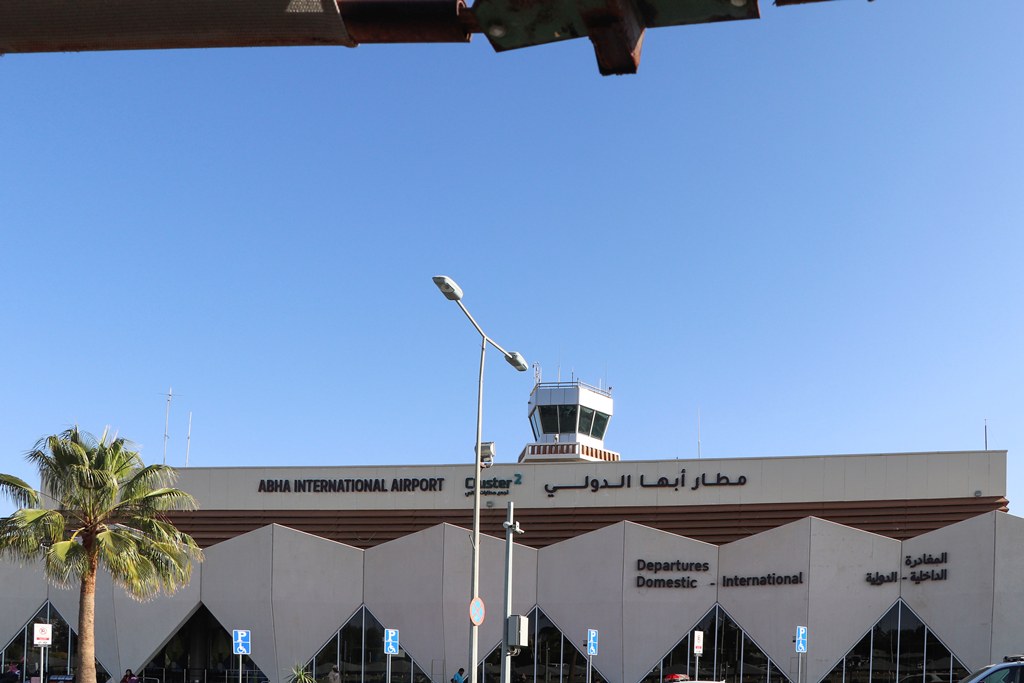
The Houthi military operation, described by Saree in Sanaa within hours of the strike, combined “a number of ballistic missiles and unmanned aerial vehicles” against Abha International Airport at 6,858 feet in the Asir highlands, with a parallel strike package directed at King Khalid Air Base at Khamis Mushait — the same airbase that houses much of the Royal Saudi Air Force’s forward strike capacity within a twenty-kilometre driving radius of the civilian terminal. Maj. Gen. Turki al-Malki, the Saudi coalition spokesman whose language has been the leading indicator of Riyadh’s confidence throughout the current cycle, said only that air defences “dealt with ballistic missiles launched by the Houthis toward the southern region,” a formulation that in every previous iteration of this war has meant partial intercept, partial damage, and undisclosed inventory expenditure.
The capability step is what the intercept-count silence is meant to obscure. Houthi attacks on Abha in the 2019-2021 window relied on cruise missiles and small-payload UAVs — the June 2019 arrivals-hall strike that killed one Syrian national and wounded 47 was a cruise weapon, and the February 2021 Flyadeal Airbus A320 fire was a drone. Ballistic missiles into Asir airspace, paired with UAVs on a coordinated timeline, represent a threshold the Sanaa arsenal did not visibly cross in the last shooting phase of this war, and they arrive precisely as the pool of interceptors that could have absorbed them is exhausted.
The Abha-Khamis Mushait target set is one target from a defensive perspective and two from an offensive one. Any saturation attack that arrives on the civilian terminal drops on the airbase because the geography does not allow for separate engagement zones, which means every Patriot round expended defending the passenger apron is a round unavailable for the F-15SAs sitting five kilometres away. Saree’s follow-on warning to international carriers — “All airlines should avoid overflying the airspace of the Kingdom of Saudi Arabia… these warnings should be taken seriously until the blockade on Sanaa International Airport is lifted” — extends the target box from Asir to the whole domestic aviation network, a threat model that Saudi authorities have not had to price since 2019 and cannot easily insure against.
The economic reach of that warning is what makes it more consequential than the physical strike. Every international insurance underwriter that touches Middle East hull war-risk cover reads Saree’s language as a category shift, and the audit trail from the runway strike to the Abha package to the aviation warning gives them the compliance cover to reprice premiums on any carrier landing at Riyadh, Jeddah or Dammam without needing a follow-on attack to justify the move. The 2019 Abqaiq attacks moved war-risk hull cover on Gulf tankers overnight; the Sunday statement targets a much broader class of assets, and the market response will show up in insurance renewals long before any second strike occurs.
| Date | Weapon | Effect |
|---|---|---|
| June 12, 2019 | Cruise missile | Arrivals hall strike; 47 wounded |
| June 23, 2019 | UAV / cruise missile | 1 Syrian national killed |
| February 10, 2021 | Drone | Flyadeal Airbus A320 set on fire |
| July 13, 2026 | Ballistic missiles + UAVs | Intercept partial; al-Malki “dealt with” |
Why did the Houthis end the truce now?
Ansar Allah ended the truce on July 13 because Riyadh created the legal predicate they had been unwilling to manufacture themselves, because the Saudi coercion menu against Sanaa has visibly collapsed over the past ten days, and because the strategic environment offers the Houthis their best window since 2019 to trade risk for concessions. The Saudi runway strike converted the truce’s operative clause into a Saudi violation, and Sanaa moved before that framing could be relitigated.
The internal logic was already in place. Saudi coalition spokesman al-Malki spent July 4 naming Hodeidah, Ras Isa, as-Salif and Sanaa Airport as targets under a promised “unprecedented force” response after the Magic Seas and Eternity C sinkings, then failed to deliver any airstrike at all for the following nine days as two vessels sank in the Red Sea and 15 government troops died in a Houthi ground assault at Jabal Dabbas that went uncontested from the air. Sanaa read the sequence correctly: the coalition names targets it cannot hit, then hits a runway it did not intend to hit, then finds itself with no interceptor inventory to absorb what comes back.
Saree’s second line on Sunday — the runway strike “will not pass without retribution” — is not the sentence of a movement that expected the truce to survive July, and it is not the sentence of a movement that has not been drilling for this exact scenario since the July 2024 economic deal was signed. The retribution was Abha within hours, and the escalation ladder from Abha runs directly into the aviation warning against overflight of Saudi airspace, which is the sanctions-adjacent instrument that reaches every insurer and every carrier that touches King Khalid International in Riyadh.
Ansar Allah’s strategic reading of Riyadh has been consistent since the 2019 Abqaiq attacks: the Kingdom escalates when it feels covered by a US security guarantee, de-escalates when that guarantee weakens, and miscalculates most badly when it tries to use punitive strikes to substitute for the guarantee it does not have. The March-July 2026 Iran phase demonstrated in real time that Washington was unwilling to spend PAC-3 inventory on Saudi defence at the rate the Kingdom needed it spent, that the SOFA framework covering Prince Sultan Air Base had voided, and that Saudi coercion instruments in Yemen were being deployed rhetorically rather than kinetically. The Sunday runway strike was the exact class of substitution behaviour Sanaa has been priced against for seven years.
Can Saudi air defence absorb a two-front war?
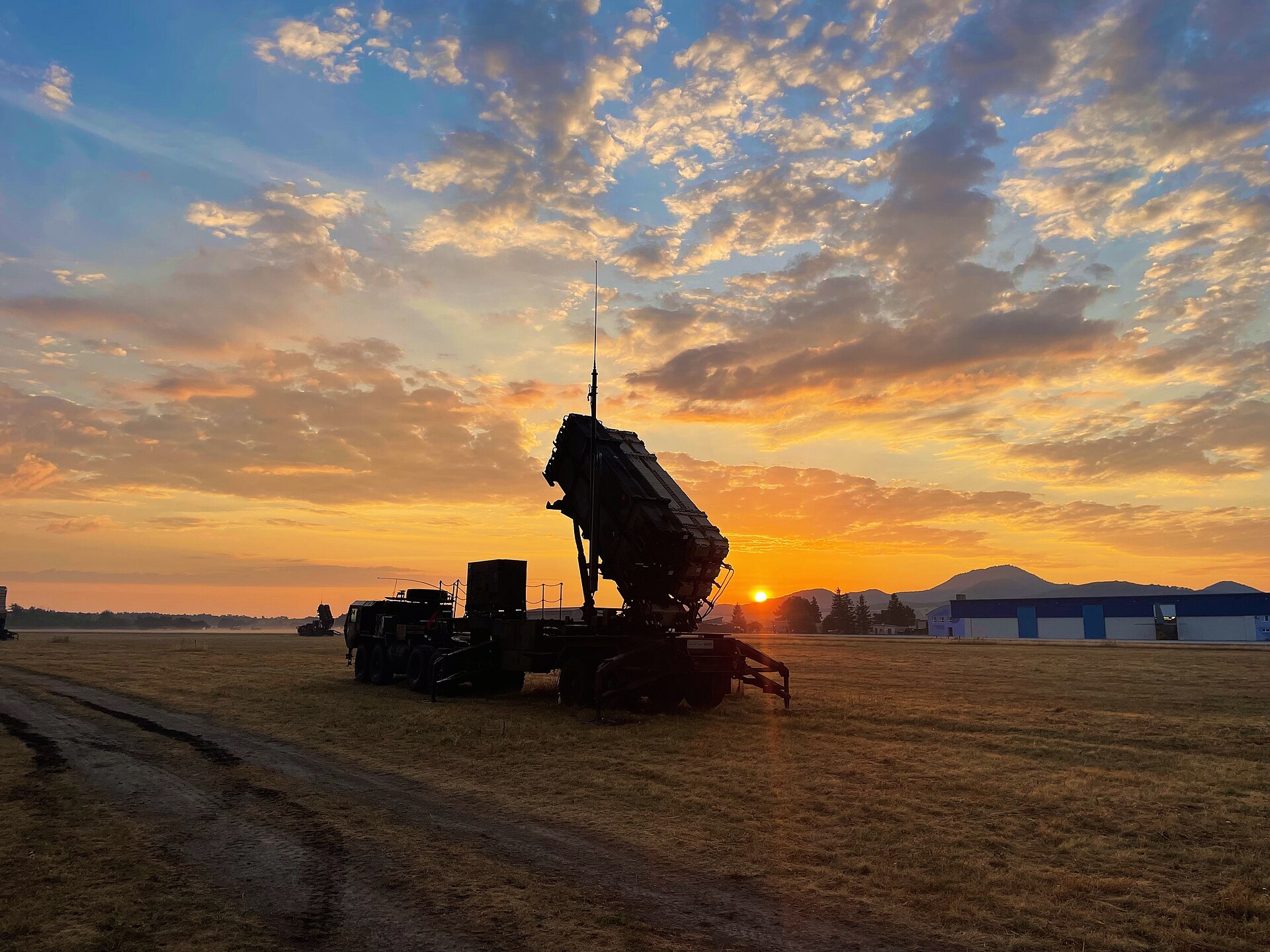
Saudi air defence cannot absorb a sustained two-front war because the PAC-3 MSE interceptor pool has been drawn down from a pre-war stock of approximately 2,800 rounds to roughly 400 rounds — a depletion of 86 percent across the March-July 2026 Iran phase — and the replacement pipeline does not close before mid-2027 at the earliest. The $9 billion FMS package for 730 rounds approved in January 2026 lands into a Lockheed Martin Camden, Arkansas production line that yields only 620 interceptors per year for all global customers combined.
Lockheed’s Camden facility is the single global source, its 620-round annual ceiling has to serve US CENTCOM stockpile replenishment, Ukraine, Poland, Japan, South Korea, Israel and Saudi Arabia simultaneously, and the January FMS approval does not reserve production slots — it enters a queue. Saudi Arabia’s own order arrives against a wartime consumption rate that in the Iran phase alone burned through more than three times the annual global production line, which is a survivable ratio if the war ends and a systemic ratio if a second front opens.
The southern front changes the geometry in a way the northern front did not. Iranian ballistic threats against Prince Sultan Air Base concentrate the defensive problem on a small number of high-value nodes with prepared engagement zones; Houthi ballistic-plus-UAV packages against Asir and, if Saree’s aviation warning is credited, against any airport in Saudi airspace, distribute the defensive problem across a network of civilian and military sites that were never engineered as a single air defence sector. Every interceptor pulled south is an interceptor unavailable if the IRGC’s phased escalation returns to the Gulf, and the reverse is equally true.
Saudi planners have a set of second-tier options — THAAD, M-SAM-II from the Korean line, the residual Hawk batteries still in service in the south — but each carries a constraint that limits its ability to substitute for PAC-3 MSE in the specific threat class Sunday introduced. THAAD is exo-atmospheric and does not engage low-altitude UAVs or terminal-phase Houthi ballistic weapons at Asir’s compressed engagement geometry; M-SAM-II covers a mid-altitude gap but does not close the terminal-phase envelope against the Zolfaghar-class trajectory that ground the IRGC campaign to date; the Hawk batteries lack the discrimination for saturation packages. Layered defence works on paper and fails on Sunday afternoons.
| Metric | Value |
|---|---|
| Pre-war inventory | ~2,800 |
| Remaining inventory | ~400 |
| Depletion rate | 86% |
| January 2026 FMS order | 730 rounds / $9B |
| Lockheed Camden annual output (global) | 620 |
| Earliest first delivery | Mid-2027 |
The fiscal window is closing faster than the missile line
The fiscal side of the equation is what makes the Sunday miscalculation so much more expensive than a normal Saudi coercion misstep. Q1 2026 closed with a budget deficit of SAR 126 billion — $34 billion, the largest quarterly deficit ever recorded in the Kingdom’s fiscal history — which represents 76 percent of the full-year deficit projection consumed in the first three months, before the Iran war entered its most expensive phase and before the southern front opened. Military spending in the quarter was up 26 percent year-on-year, and that number was already climbing before Abha was on any target list.
Aramco’s cash generation is not filling the hole. Production has fallen from the roughly 10 million bpd baseline maintained before the March conflict to 6.879 million bpd by April 2026, and free cash flow now covers the $21.9 billion base dividend at only 0.85x — the first sub-parity coverage since the IPO. The Kingdom is running a war in the north, opening a war in the south, and simultaneously drawing on reserves to pay a dividend the balance sheet no longer supports, which is a configuration that in any previous cycle would have triggered a policy retreat and in this cycle has instead delivered a runway strike.
The comparable $253 million PGSA exposure now running at $5.5 million per day until August 18 sits on top of this, not beside it. Saudi coercion instruments are being deployed in every theatre simultaneously — Yemen, Iran, the Hormuz fee regime — at a rate that the fiscal machine cannot sustain past the third quarter without either a settlement in one theatre or a structural drawdown in the reserves that back Vision 2030 domestic spending. Sunday’s strike shortened that window rather than lengthening it.
The Vision 2030 domestic spending programme is the invisible variable in every fiscal calculation of the current phase, because the political economy of MBS’s rule was built on the premise that oil receipts would fund giga-project construction, subsidy retention, and defence spending simultaneously, and the current configuration allows for two of those three at most. Foreign direct investment inflows have been the leading indicator of investor confidence in that model, and Q1 2026 GASTAT data recorded net FDI at $6.1 billion, down 2.4 percent year-on-year, against a MISA target of $46 billion for the year. A southern front reopening on top of an active northern front is precisely the risk factor that FDI models penalise most heavily, and it will show up in Q3 numbers as a compounding shock.
Why is the UN Security Council briefing empty of consequence?
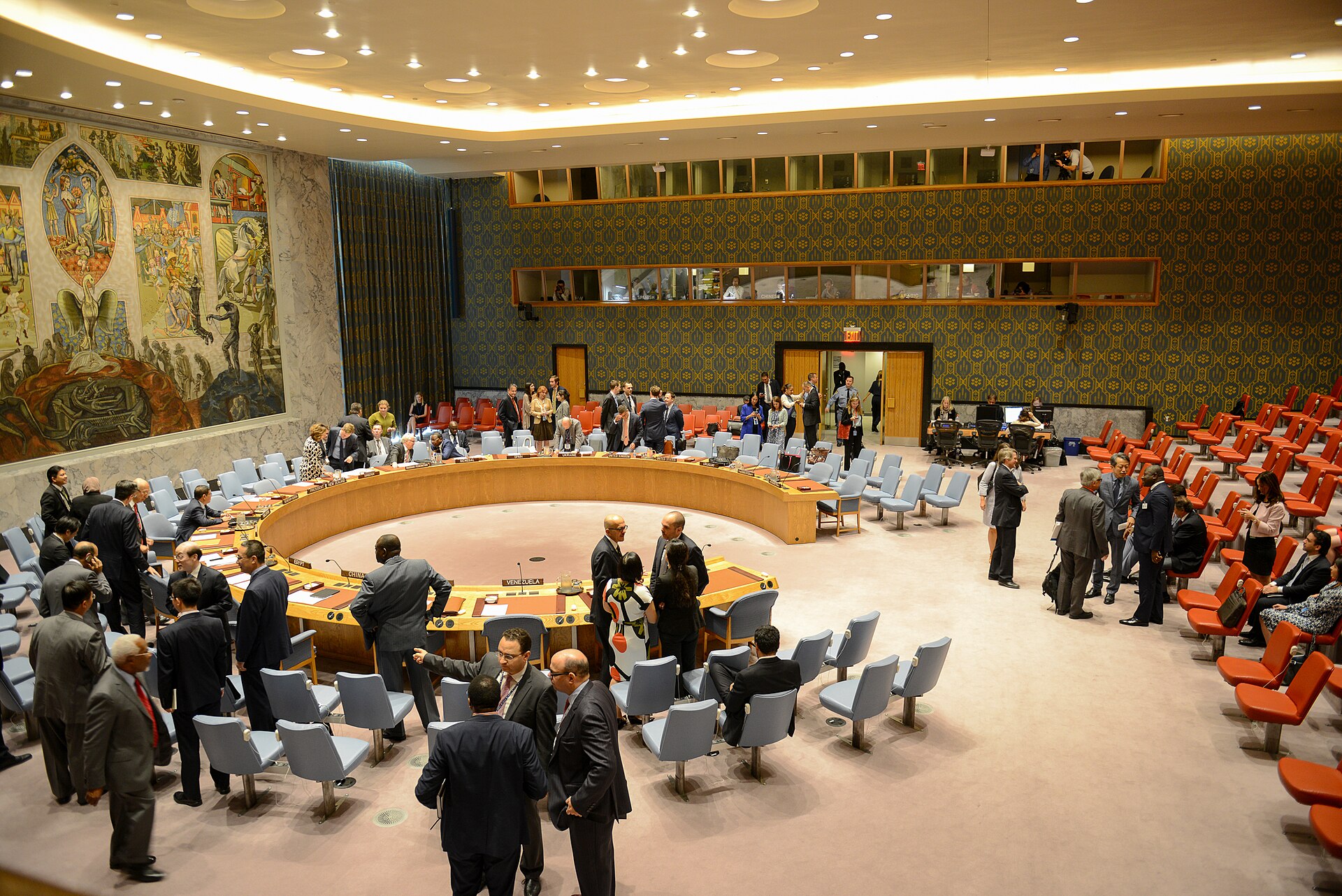
The UN Security Council emergency briefing on Yemen convened Sunday at the request of PM al-Zindani with UK, Bahrain, France and US support, and it will produce no binding new resolution because none of the requesting parties has drafted one and because Resolution 2216 — the April 2015 arms embargo on the Houthis that all parties will cite — already contains the enforcement architecture the coalition has been unable to operationalise for the past three years. The briefing is a diplomatic marker, not a coercion instrument.
Hans Grundberg, the UN Special Envoy for Yemen, told reporters he was in contact with all sides “to convince them to step back from the brink,” which is the same envoy language deployed at every escalation point since 2022 and has never in that window produced a de-escalation the parties had not already decided to enact for their own reasons. Grundberg does not have a mediation opening because the Houthis have just formally repudiated the framework he was mandated to preserve; Riyadh does not have a face-saving off-ramp because the runway strike is on record and cannot be undone; and the Council penholder architecture — UK on the Yemen file — has no appetite for a new resolution that would either sanction Saudi coalition operations or fail to sanction Houthi ballistic missile use against civilian airports.
Danny Citrinowicz at the Atlantic Council summarised the day in the sentence that will be quoted by everyone who needs a wire-friendly framing without committing to a prediction: “We’re in a dramatic day in terms of the Houthis.” What the Council will not say, and what the sentence points at without naming, is that the Yemen file has moved outside the range in which the Council’s existing tools can operate, and that the diplomatic architecture that held the truce together for four years has just been converted into a diplomatic architecture designed to manage its aftermath.
The “no peace, no war” endgame the Houthis have already priced in
Responsible Statecraft’s analysis of the collapse offers the least dramatic and therefore most accurate forecast on the wire this weekend: “The likeliest outcome is a continuation of Yemen’s ‘no peace, no war’ situation, albeit at a heightened level of tension, in which the Houthis are well positioned to exploit Saudi risk aversion.” The forecast contains its own diagnosis. Saudi risk aversion is the operative variable, and it has just been amplified by every input that matters — interceptor scarcity, fiscal drawdown, absence of a US security guarantee, and the Iran two-front risk that Sunday’s Abha strike has now proven can be activated at Houthi discretion.
The Houthis do not need to conquer Saudi Arabia to win the phase they have just opened, and Saree’s aviation warning is the instrument that clarifies how the win condition is scored. If insurers price southern Saudi airspace as a war-risk environment for civilian carriers, and if the Kingdom’s air defence inventory forces Riyadh to choose between defending Asir and defending the Gulf, the movement extracts economic and diplomatic concessions at every turn without needing to hold ground it does not want. The truce collapse was worth more to Ansar Allah than the truce, once Riyadh handed them the runway strike as the trigger they needed.
What Sunday closes is the four-year window in which Saudi Arabia could treat Yemen as a managed file. The airport Saudi Arabia agreed to reopen and then bombed, the deterrent architecture the coalition could not stabilise at Prince Sultan Air Base, and the coercion campaign against Hodeidah that substituted for a response against Iran have now converged into a single strategic problem the Kingdom does not have the interceptors, the dollars, or the American guarantee to solve. The runway strike intended to end a Mahan Air flight ended the truce instead.
FAQ
Was the July 2024 Saudi-Houthi economic agreement formally rescinded before the Sunday strike? No formal rescission was issued by either party ahead of the Sunday runway strike. The July 23, 2024 arrangement was politically bound rather than treaty-based, and the Sanaa Airport access clause was its operational spine. Its collapse was signalled by the strike itself and confirmed by Yahya Saree’s statement, not by any prior notification. That absence of a formal exit ramp is what makes Saudi liability under the Houthi framing so difficult to contest diplomatically.
What happened to GAMI Governor Ahmad Al-Ohali two days before the strike? King Salman relieved Al-Ohali from his post at the General Authority for Military Industries on July 11, 2026, forty-eight hours before the Sanaa runway strike. The reshuffle was not publicly linked to Yemen operations, but it removes the head of the acquisition body responsible for interceptor procurement pipelines at the exact moment the interceptor inventory question moves to the centre of Saudi strategic planning. No successor has been named at the time of writing.
How does the December 2025 Muscat prisoner exchange affect the current picture? The Muscat exchange on December 23, 2025 — approximately 1,700 Houthi detainees for 1,200 government prisoners including 7 Saudi nationals, supervised by Saudi Arabia, the UN and the ICRC — was the last cooperative signal between Riyadh and Sanaa before the July 2026 collapse. Its completion under Saudi supervision means Riyadh cannot now argue that the Houthis were operating outside a framework at the moment the runway strike occurred, which strengthens the Houthi liability-transfer argument in every subsequent forum.
Does Resolution 2216 offer the coalition any new enforcement tools after Sunday? No new tools, because Resolution 2216 already imposes an arms embargo on Houthi forces and has done so since April 14, 2015 without producing the enforcement outcomes the coalition has sought over the past decade. The resolution’s language covers exactly the class of ballistic missile and UAV imports that enabled Sunday’s Abha strike; the gap has always been enforcement capacity, not authorising language, and no new Council resolution is currently being drafted to close that gap.
How high is Abha above sea level, and why does that matter operationally? Abha International Airport sits at 6,858 feet (2,090 metres) in the Asir highlands, making it the highest major commercial airport in Saudi Arabia. The elevation compresses the engagement envelope for terminal-phase interceptors and complicates radar horizons against low-flying UAV threats coming across the Yemeni border to the south, which is a defensive geography that favours the attacker in a saturation package of the type Saree described on Sunday.