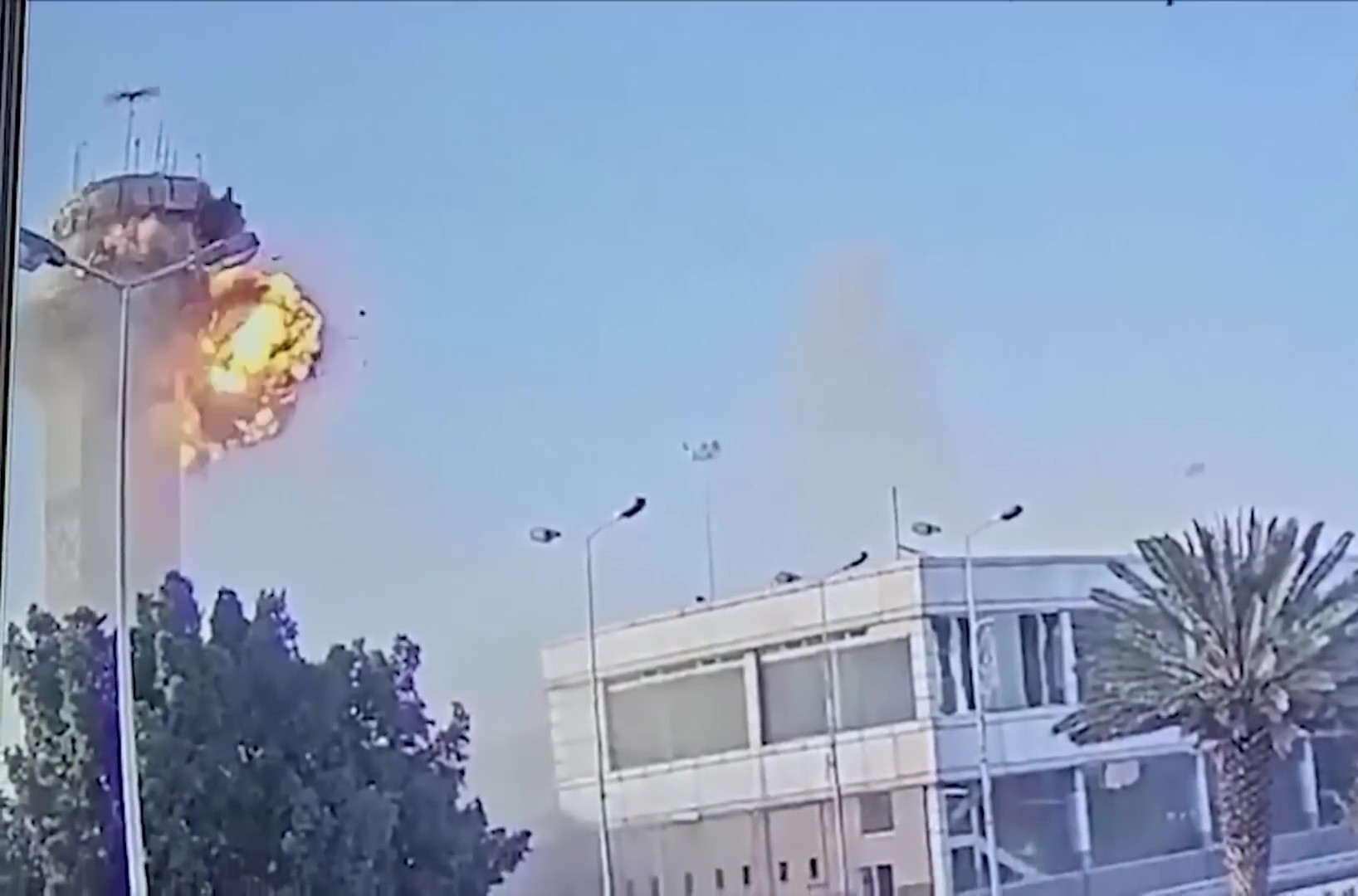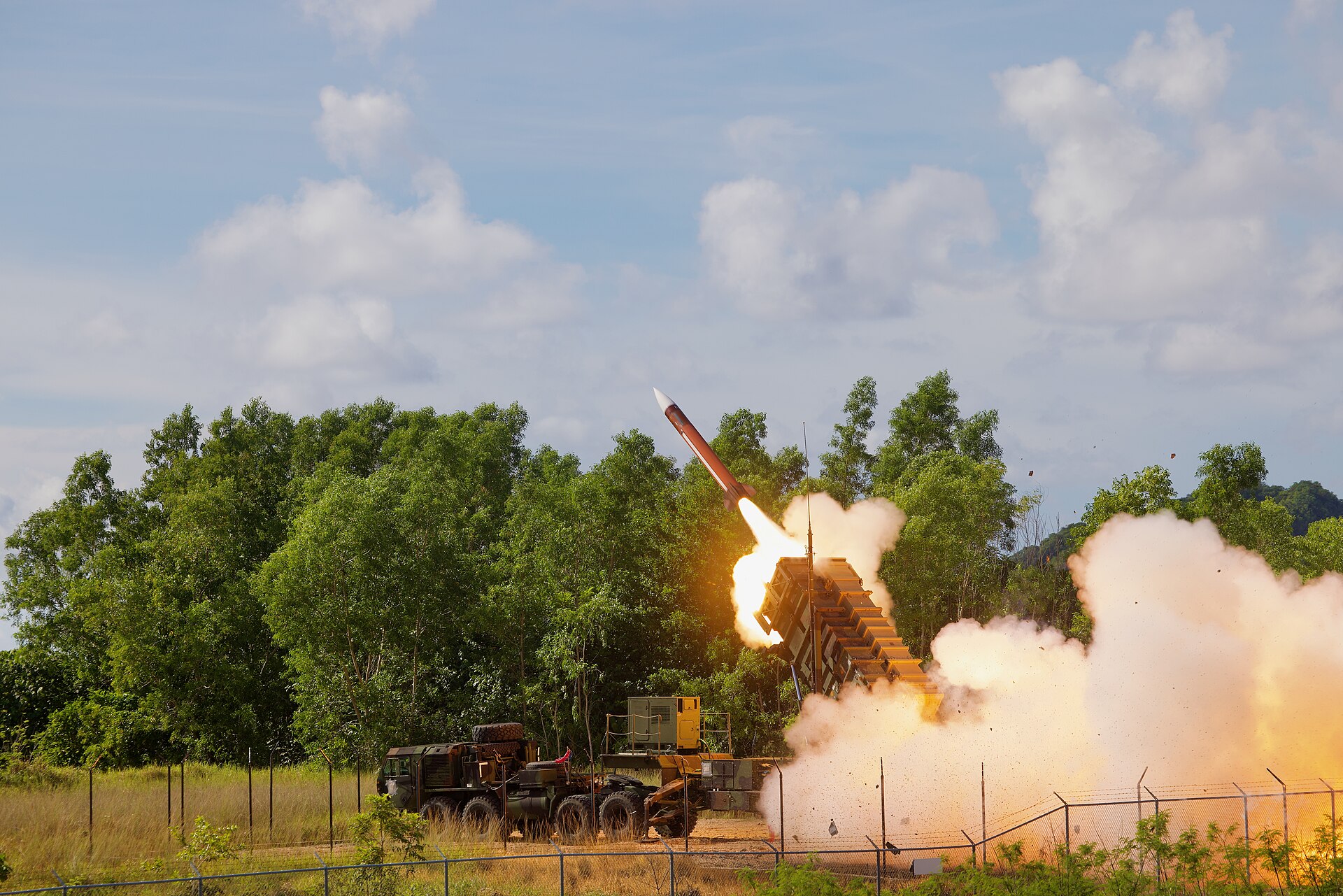

KUWAIT CITY — Iran’s Islamic Revolutionary Guard Corps claimed the “complete destruction” of a Patriot air defense battery at Ali Al-Salem Air Base and an AN/FPS-117 strategic radar at Ahmad Al-Jaber Air Base on July 13, 2026 — two targets roughly thirty miles apart, struck simultaneously. The Patriot at Ali Al-Salem had intercepted ninety-seven projectiles since the war began, more than any other battery in the Gulf Cooperation Council, and the IRGC destroyed the system that was doing the intercepting.
CNN could not independently verify the IRGC’s claims, and Kuwait’s military confirmed only that it had responded to “hostile aerial targets” with sirens activated across the country. But the operational significance does not hinge on a single battery. The AN/FPS-117 at Ahmad Al-Jaber provided long-range detection — 470 kilometers — extending deep into Saudi Arabia’s Eastern Province, covering the northern approach corridors toward Dhahran and the Aramco facilities at Ras Tanura. Iran did not fire a single projectile at Saudi territory in Phase 3, or in any of the three phases before it.
It did not need to. It destroyed the sensors and interceptors that would defend Saudi territory if it chose to, and the replacement timeline for both exceeds the likely duration of this war. Saudi Arabia’s own PAC-3 stockpile — roughly 400 rounds, 86 percent depleted from a pre-war inventory of 2,800 — means Riyadh has nothing left to lend Kuwait and barely enough to defend itself. The IRGC is not attacking Saudi Arabia; it is burning down the regional air defense margin that Saudi Arabia was borrowing. Iran’s July 16 declaration by Khatam al-Anbiya Central Headquarters — threatening “all infrastructure in the region” conditional on US civilian infrastructure strikes — maps directly onto this depleted margin: Abqaiq sits inside a threat Saudi Arabia cannot answer with 400 interceptors standing between it and a missile force designed to overwhelm any defense.
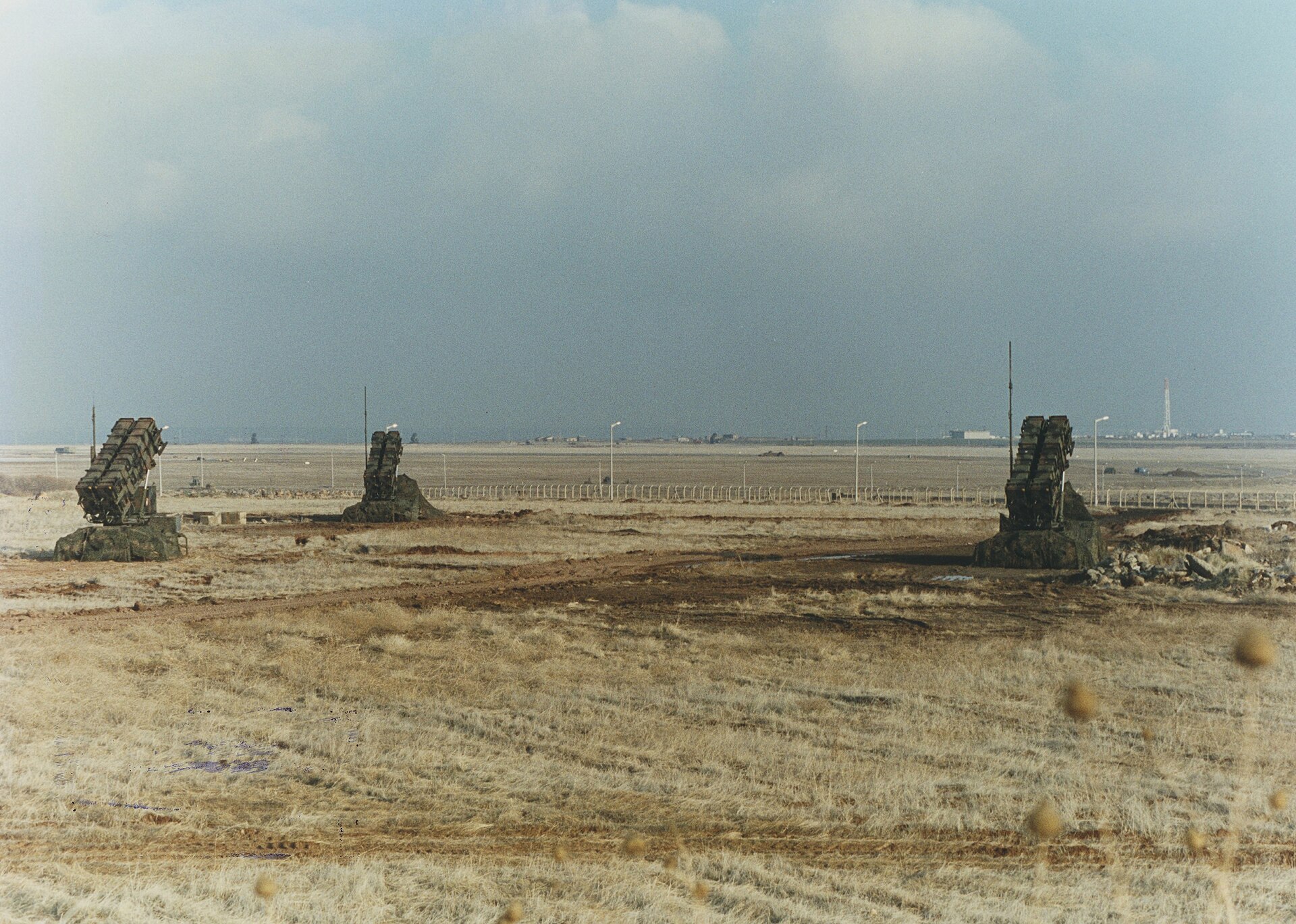
Table of Contents
- What Did the IRGC Destroy at Ali Al-Salem and Ahmad Al-Jaber?
- Why Does One Radar Kill an Entire Battery?
- The Three-Phase IADS Campaign
- How Many Interceptors Does the Gulf Have Left?
- Saudi Arabia’s Borrowed Shield
- The Forty-Month Gap
- BeiDou Against GPS
- Can the GCC Defend Itself Without the Sakhir Declaration?
- Frequently Asked Questions
What Did the IRGC Destroy at Ali Al-Salem and Ahmad Al-Jaber?
The IRGC claimed destruction of a Patriot air defense battery at Ali Al-Salem — Kuwait’s most active intercept system, with ninety-seven confirmed kills since the war began — and an AN/FPS-117 long-range radar at Ahmad Al-Jaber Air Base, thirty miles away, on July 13, 2026. The two strikes together eliminated both the engagement layer and the 470-kilometer sensor layer that covered northern Saudi Arabia’s approach corridors.
The IRGC’s July 13 statement, carried by PressTV and Xinhua, claimed “complete destruction” of two distinct systems at two distinct installations. At Ali Al-Salem Air Base, the target was a Patriot air defense battery — the engagement layer, the system that tracks and kills incoming missiles. At Ahmad Al-Jaber Air Base, approximately thirty miles to the south, the target was an AN/FPS-117 L-band air defense radar — the sensor layer, the system that detects threats at ranges of up to 470 kilometers before handing tracking data to the engagement systems.
Ali Al-Salem is not a minor outpost. The 386th Air Expeditionary Wing operates from the base, and it handles the transshipment of roughly 90 percent of US forces’ supplies bound for Iraq and Kuwait, according to GlobalSecurity.org and CENTCOM logistics disclosures. Satellite imagery from January 2026 showed both Patriot and THAAD systems deployed at the base. The Patriot battery had been the most active in the GCC — more rounds fired in defense than any other battery in the theater — across Phases 1 through 3 of the IRGC campaign.
The Middle East briefing 3,000+ readers start their day with.
One email. Every weekday morning. Free.
The AN/FPS-117 at Ahmad Al-Jaber was a different kind of asset. Manufactured by Lockheed Martin, the FPS-117 is a long-range, three-dimensional air surveillance radar covering the same 470-kilometer radius described above. Positioned at latitude 29.3°N in southern Kuwait, its detection envelope extended across the border into Saudi Arabia’s Northern Corridor, providing early warning for Dhahran, Jubail, and the industrial complexes along the Eastern Province coast. Its loss, if confirmed, does not merely reduce Kuwait’s awareness; it removes a detection node that Saudi Arabia depended on without operating.
The IRGC struck both simultaneously, and that simultaneity is the operational point. Destroying the engagement system alone would still leave the sensor network intact, allowing remaining batteries to receive targeting data and reposition. Destroying the sensor alone would leave the battery operational against threats it could detect with its own organic radar. Destroying both in a single coordinated package removes an entire layer — sensor and shooter — from the integrated air defense architecture in one strike.
Why Does One Radar Kill an Entire Battery?
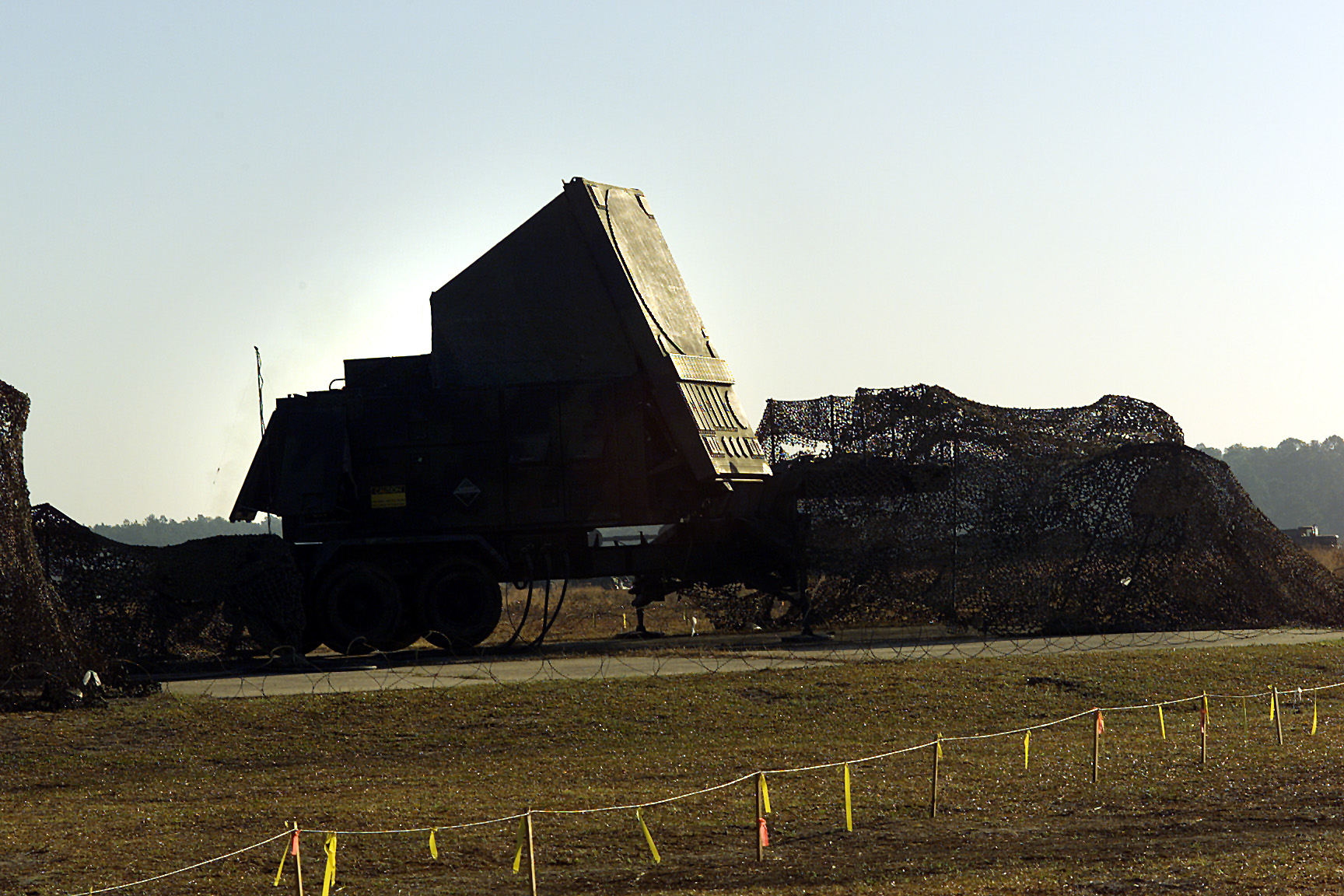
A Patriot battery’s AN/MPQ-65 fire control radar is its single point of failure. Without it, all six to eight missile launchers in the battery are inert — they cannot acquire targets, compute intercept solutions, or guide PAC-3 missiles to their mark. Destroying the radar alone mission-kills the entire battery, even if every interceptor and launcher survives the strike.
The AN/MPQ-65 tracks up to one hundred targets simultaneously, discriminates between threats and non-threats, computes intercept solutions, and commands the PAC-3 missiles to their targets. Its C-band and G-band phased arrays cover a three-to-170-kilometer engagement envelope — wide enough to manage the terminal phase of an incoming ballistic missile, precise enough to guide a PAC-3 round to a direct hit. Without it, the six to eight launchers are inert tubes with nowhere to fire.
This is why the IRGC’s claimed strike on the Patriot at Ali Al-Salem would constitute a battery kill rather than a degradation. The distinction between damaging a launcher (reducing capacity) and destroying the fire control radar (eliminating capacity) is the difference between a wound and an amputation. Radartutorial.eu and the Missile Defense Advocacy Alliance both describe the AN/MPQ-65 as the system’s nervous system — the single component whose loss renders the entire battery non-functional regardless of the state of the other elements.
The engagement control station, the power plant, and the communications relay are all replaceable field components. The AN/MPQ-65 is not. Its successor, the Lower Tier Air and Missile Defense Sensor (LTAMDS), is the next-generation radar designed to replace it in Patriot batteries across the US Army and allied forces, but its actual delivery timeline — as detailed in the replacement arithmetic below — runs to roughly forty months from order to operational capability. A fire control radar destroyed on July 13, 2026, would not be replaced before late 2029 at the earliest.
The Three-Phase IADS Campaign
Phase 3 did not emerge from a vacuum. The IRGC has systematically targeted air defense infrastructure across the Gulf Cooperation Council since July 8, following a pattern that is visible in the target selection even though Iran does not publicly acknowledge IADS degradation as the operational theory. PressTV framed the July 13 strikes as retaliatory — “‘You failed to learn your lessons’: IRGC hits US military targets in Bahrain, Kuwait, Oman” — presenting Phase 3 as an eye-for-an-eye response to the approximately 140 US strikes on Iranian military targets on July 12. The targeting pattern tells a different story.
Phase 1, on July 8, struck US installations in Kuwait and Bahrain — two countries hosting Patriot batteries that had been actively intercepting Iranian projectiles. The strikes forced those batteries to expend interceptors defending themselves, depleting magazines that were already running low. Phase 2, on July 9, expanded the target set to four countries in twenty-four hours — Bahrain, Kuwait, Jordan, and Qatar — and introduced a new element. The Iranian regular army (Artesh) launched a separate drone wave one day after the IRGC’s ballistic salvo, striking a Patriot battery in Kuwait, an early-warning antenna at Al Udeid Air Base in Qatar, and a fuel storage facility at NSA Bahrain in Juffair. Phase 2 confirmed the dual-arm sequencing: IRGC depletes interceptors on Day 1 with ballistic missiles, Artesh degrades sensors and support infrastructure on Day 2 with low-cost drones.
Phase 3, on July 13, compressed what Phases 1 and 2 had done across two days into a single package. The engagement system (Patriot) and the sensor system (FPS-117) were struck simultaneously, not sequentially. The target set expanded again: Bahrain, Kuwait, Jordan, and Oman — four countries, with the addition of Oman’s Duqm Port, an Indian Ocean facility that had hosted roughly eighty US Navy port calls per year. Saudi Arabia was absent from every phase.
| Phase | Date | Countries Struck | Key IADS Targets | Doctrinal Function |
|---|---|---|---|---|
| Phase 1 | July 8 | Kuwait, Bahrain | 85 targets at US bases; Patriot batteries forced to intercept | Magazine depletion — force defenders to expend PAC-3 rounds |
| Phase 2 | July 9 | Kuwait, Bahrain, Jordan, Qatar | Patriot battery (Kuwait), early-warning antenna (Al Udeid, Qatar), fuel storage (NSA Bahrain) | Sensor degradation — Artesh drones target IADS nodes after IRGC depletes interceptors |
| Phase 3 | July 13 | Kuwait, Bahrain, Jordan, Oman | Patriot battery destroyed (Ali Al-Salem, Kuwait), FPS-117 radar destroyed (Ahmad Al-Jaber, Kuwait), Duqm Port (Oman) | System kill — engagement and sensor layers destroyed simultaneously |
Sources: PressTV, Xinhua, CNN, Al Jazeera, HOS reporting. Phase 3 claims unverified by CNN; Kuwait confirmed “hostile aerial targets.”
The progression from magazine depletion (Phase 1) to sensor degradation (Phase 2) to system kill (Phase 3) follows the logic of Suppression of Enemy Air Defenses — the doctrine NATO calls SEAD and the US Air Force calls DEAD (Destruction of Enemy Air Defenses). In the 1991 Gulf War, the US-led coalition neutralized Iraq’s integrated air defense system in approximately three days. In Serbia in 1999, NATO ran a seventy-eight-day SEAD campaign without fully eliminating Serbian SAM batteries, in part because Serbian operators survived by “radiating little and moving much,” according to War on the Rocks. The IRGC’s approach inverts both models: rather than jamming radars and using anti-radiation missiles against mobile launchers, it waits for air defense batteries to reveal their positions by engaging incoming fire, then targets them when they are stationary and their magazines are depleted.
How Many Interceptors Does the Gulf Have Left?
Saudi Arabia holds approximately 400 PAC-3 rounds, 86 percent depleted from a pre-war inventory of 2,800, with no resupply arriving before 2028. Bahrain has an estimated four to five rounds remaining. Kuwait’s Patriot battery is now claimed destroyed. US THAAD inventory in the Gulf is 40 to 80 percent expended, with the next delivery nine months away. The Gulf’s collective ballistic missile defense has never been thinner.
The International Institute for Strategic Studies assessed in March 2026 that “Arab Gulf states have already consumed a significant portion of their stockpiles of long-range interceptors,” adding that “drones continue to enter the skies of the GCC states by the dozen.” That assessment preceded Phase 3 by four months. The Arab Gulf States Institute in Washington was more explicit: “Over roughly 40 days of sustained attacks combining ballistic missiles, cruise missiles, and large volumes of one-way attack drones, Saudi Arabia, the UAE, and Qatar were pushed into a high-tempo defensive posture that exposed structural limits of their existing architectures.” The binding constraint, as AGSI put it, is that “Gulf air defense systems are not configured for prolonged, high-volume, cost-asymmetric engagements.”
Saudi Arabia entered the war with an estimated 2,800 PAC-3 interceptors and has approximately 400 remaining — an 86 percent depletion rate. A $9 billion Foreign Military Sales case for 730 additional rounds was notified to Congress on January 30, 2026, but no delivery is expected before 2028. Global production of the PAC-3 MSE is capped at roughly 620 rounds per year from Lockheed Martin’s sole manufacturing facility in Camden, Arkansas. Saudi Arabia’s 730-round order represents more than one full year of global production from that single factory.
| Country / System | Pre-War Capacity | Current Status | Resupply Timeline |
|---|---|---|---|
| Saudi Arabia — PAC-3 | ~2,800 rounds | ~400 rounds (86% depleted) | $9B FMS for 730 rounds; delivery 2028 at earliest |
| Kuwait — Patriot (Ali Al-Salem) | Operational; 97 intercepts | Claimed destroyed (Jul 13) | LTAMDS replacement: ~40 months (~Nov 2029); $1.1B per battery |
| Kuwait — FPS-117 (Ahmad Al-Jaber) | Operational; 470 km detection | Claimed destroyed (Jul 13) | Production line status unclear; no announced replacement |
| Bahrain — Patriot (NSA Bahrain) | Operational | ~4–5 PAC-3 rounds remaining | Excluded from Rubio $8.6B emergency arms package |
| Qatar — Early-warning antenna (Al Udeid) | Operational; MEAD-CDOC node | Struck by Artesh drone (Jul 9) | Damage assessment not public |
| US Gulf — THAAD | 534 rounds | 40–80% expended | Next delivery: April 2027 |
Sources: CSIS, HOS, Breaking Defense, IISS. THAAD depletion range per CSIS “Depleting Missile Defense Interceptor Inventory.” Bahrain status per HOS. Kuwait claims per IRGC via PressTV/Xinhua (unverified by CNN).
Bahrain’s situation is the most acute. After IRGC strikes on NSA Bahrain in Juffair during Phase 3, approximately four to five PAC-3 rounds remain in Bahraini inventory. Bahrain was excluded from Secretary Rubio’s $8.6 billion emergency arms package announced on May 2, leaving it with no announced resupply path.
THAAD has fared no better. The US Gulf inventory has been 40 to 80 percent expended, according to CSIS analysis, with the next scheduled delivery nine months away. The RUSI assessment concluded that “years” would be needed to rebuild interceptor stocks across the Gulf, with the binding constraint being a single Boeing factory in Huntsville, Alabama, that manufactures the PAC-3 seeker head.
Saudi Arabia’s Borrowed Shield
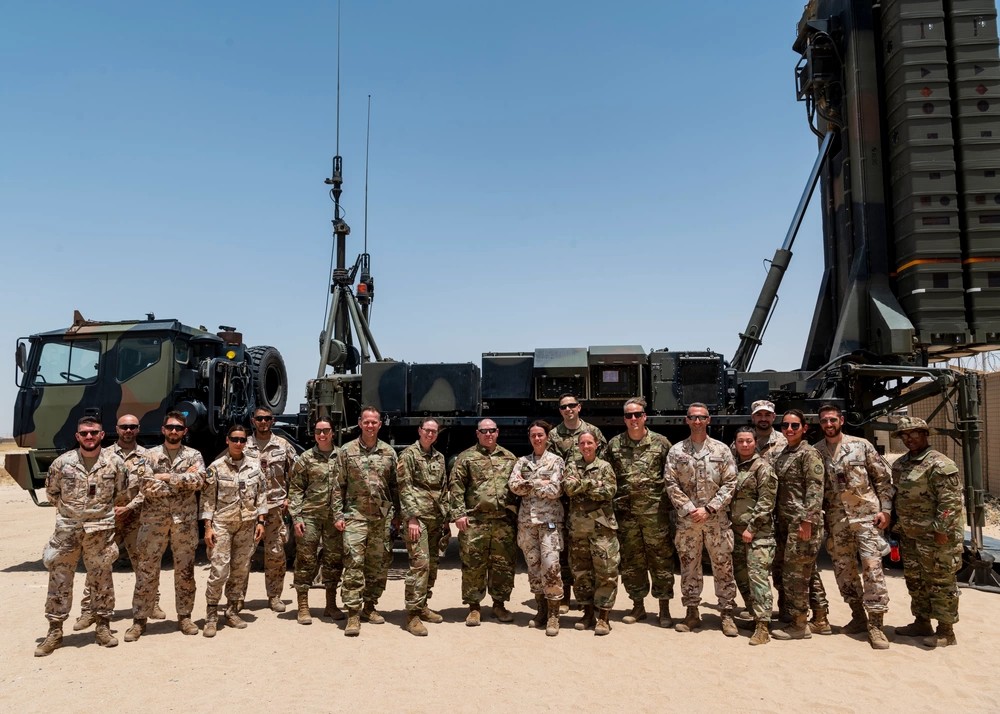
Saudi Arabia has not been struck by Iranian projectiles in any of the three phases. Not one missile, not one drone, not one cruise missile has been fired at Saudi territory since the war escalated. This appears, on its face, to be a reprieve. It is not. Every Patriot battery, every detection radar, every THAAD emplacement that Iran destroys in Kuwait, Bahrain, Qatar, and Oman is a layer of defense that Saudi Arabia was relying on — a layer that Riyadh did not own, did not operate, and cannot replace.
The AN/FPS-117 at Ahmad Al-Jaber illustrates the geometry of this dependency. That radar’s reach — 470 kilometers from a position in southern Kuwait — meant that any Iranian ballistic missile or cruise missile approaching Dhahran, Jubail, or the Ras Tanura petroleum complex from the northeast would have been detected by the FPS-117 before entering Saudi airspace, giving warning time that Saudi Arabia’s own organic sensors, positioned further south, could not match. That early warning is gone. The sensor did not belong to Saudi Arabia, but Saudi Arabia was a beneficiary of every sweep its antenna made.
Kuwait’s Patriot battery performed the same function from a different angle. The ninety-seven intercepts it achieved were not protecting only Kuwait; they were reducing the volume of threats passing through Kuwaiti airspace that might otherwise have continued south. Each intercept consumed a PAC-3 round from Kuwait’s magazine, not Saudi Arabia’s. Saudi Arabia’s 400 remaining rounds sat untouched while Kuwait’s battery absorbed the cost of defending the northern approaches. Now that battery is — per the IRGC’s claim — gone, and the threats that would have been intercepted over Kuwait will instead arrive at whatever Saudi system sits in their path, expending Saudi rounds from an inventory that is already 86 percent depleted.
The structural problem is not that Saudi Arabia lost an ally’s battery. It is that Saudi Arabia’s entire defensive posture in the Eastern Province depended on a layered system in which other countries’ sensors and interceptors formed the outer rings. The destruction of deterrent capacity at Prince Sultan Air Base, the depletion of Bahrain’s Patriot to four or five rounds, the strike on Qatar’s early-warning antenna at Al Udeid, and now the claimed destruction of Kuwait’s Patriot and FPS-117 — each event removes another ring. What remains is Saudi Arabia’s own inventory: 400 PAC-3 rounds and a South Korean M-SAM-II system that will not arrive before 2028 and, even when it does, cannot intercept Zolfaghar ballistic missiles in their terminal phase below its engagement altitude of roughly 40 kilometers.
Washington’s bifurcated arms strategy has made this depletion structural rather than incidental: a separate analysis documents how the standard FMS channel kept flowing through the crisis while emergency PAC-3 resupply was withheld as a coercive instrument, leaving the 400-round inventory to absorb threats that the withheld interceptors were designed to stop. The same pipeline approved 20,000 APKWS-II guidance sections for RSAF aircraft that cannot yet fire them — a counter-drone sale whose delivery timeline and platform qualification gap compound the shield problem rather than solving it.
The Forty-Month Gap
The replacement arithmetic is the cruelest dimension of the July 13 strike. A complete Patriot battery — launchers, fire control radar, engagement control station, power units, and a full war-reserve supply of PAC-3 MSE interceptors — costs approximately $1.1 billion, according to estimates compiled by Norskluftvern as of March 2026. Roughly $400 million of that is hardware; the balance covers the missile inventory required to sustain combat operations rather than just the organic magazine.
The cost is secondary to the time. The AN/MPQ-65 fire control radar that the IRGC claims to have destroyed is no longer in production; it has been superseded by LTAMDS, which Raytheon is manufacturing under a contract with a target delivery timeline of thirty-six months and an actual observed timeline of forty months from order to operational deployment, according to Breaking Defense reporting from December 2025. If Kuwait ordered an LTAMDS replacement on July 14, 2026 — the day after the strike — the radar would arrive in approximately November 2029. The FPS-117 presents a similar or worse timeline; Lockheed Martin’s L-band production has shifted to newer variants, and no announced replacement order for the destroyed unit has been made public.
The PAC-3 MSE interceptor pipeline is equally constrained. Saudi Arabia’s $9 billion FMS order for 730 rounds — more than a full year of output from that sole production line — has not begun delivery and is not expected to arrive before 2028. Every round fired in defense of any Gulf state, by any GCC member or by US forces, draws from a finite pool that is shrinking faster than it can be refilled. The IISS assessed in May 2026 that “much of the equipment in the ‘signed’ category will begin to be delivered in 2027–28,” placing the earliest meaningful resupply well beyond the current operational tempo of the war.
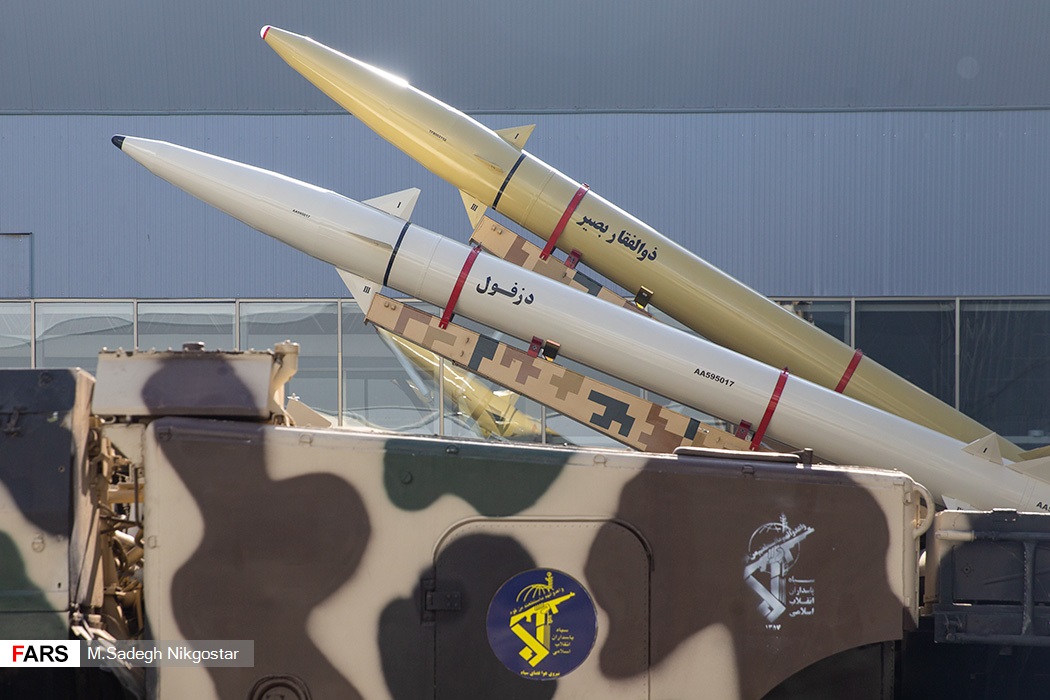
Iran, by contrast, operates on a different production calendar. The Zolfaghar short-range ballistic missile is a domestically produced, solid-fuel weapon with an estimated range of 700 kilometers. The IRGC has fired dozens of Zolfaghars across three phases without any visible supply constraint. The cost asymmetry is structural: each PAC-3 MSE interceptor expended in defense costs roughly $3.9 million, while the Zolfaghar’s unit cost — though not publicly confirmed — is estimated by Western defense analysts at a fraction of that figure. Iran can produce missiles faster than Lockheed Martin can produce the interceptors to stop them.
BeiDou Against GPS
The Zolfaghar’s precision under combat conditions is not an accident of Iranian engineering alone. TechTimes reported on July 12, 2026, that the Zolfaghar uses China’s BeiDou-3 B3A military-grade satellite navigation signal rather than GPS or GLONASS. The B3A signal uses frequency-hopping encoding and encryption that is designed to resist the sustained GPS jamming that US electronic warfare assets deploy across the Gulf theater. The Missile Defense Advocacy Alliance’s May 2026 datasheet on the Zolfaghar credited the system with maintaining 98 percent navigation accuracy under active US GPS denial — a figure that, if accurate, means American electronic warfare is not meaningfully degrading the precision of the weapon Iran is using to destroy American air defense systems.
The BeiDou dependency introduces a dimension that extends beyond Iranian weapons engineering. China operates thirty BeiDou-3 medium-Earth-orbit satellites with dedicated coverage over the Middle East, and the B3A military signal is not available to commercial users. Iran’s access to the encrypted military band implies a level of Chinese cooperation — whether through formal agreement or informal provision — that gives Beijing indirect influence over the accuracy of Iranian strikes. This is the same China that Wang Yi described as committed to freedom of navigation in the Strait of Hormuz, a commitment that sits awkwardly alongside providing the satellite navigation infrastructure for missiles aimed at the military installations of Wang Yi’s other interlocutors.
The terminal phase of the Zolfaghar adds another layer of difficulty for defenders. The missile maneuvers during its final descent, complicating the intercept geometry for PAC-3 systems that are designed to hit incoming warheads on a predicted trajectory. The M-SAM-II system that Saudi Arabia purchased from South Korea for $3.2 billion engages targets at a maximum altitude of approximately 40 kilometers, according to TheDefenseWatch.com and AGSI analysis. The Zolfaghar arrives in its terminal phase below that ceiling, threading the gap between M-SAM-II’s engagement envelope and the ground. Even when the M-SAM-II arrives — not before 2028 — it will not resolve the terminal-phase intercept problem that the Zolfaghar presents.
Can the GCC Defend Itself Without the Sakhir Declaration?
No. The Sakhir Declaration’s collective defense pledge has not been invoked after any of the three IRGC strike phases, leaving each GCC state to defend itself from its own depleted inventory. Kuwait filed a solo Article 51 self-defense notification to the UN without Saudi backing — the clearest evidence that the GCC’s collective security architecture has not activated during this war.
The Sakhir Declaration, the GCC’s foundational collective security commitment, states that “any infringement upon the sovereignty of a member state constitutes a direct threat to their collective security.” Iran struck GCC member states Kuwait and Bahrain on July 8 — the first external attack on GCC territory since Iraq invaded Kuwait in 1990. Saudi Arabia did not invoke the Sakhir Declaration — not after Phase 1, not after Phase 2, not after Phase 3. In five days of Iranian strikes across four GCC member states — with three confirmed civilian casualties in Qatar including a child, making them the first GCC civilian casualties of Iranian strikes in this war — the collective security commitment that underpins the GCC’s military rationale has remained a document rather than a decision.
The consequence is visible in Kuwait’s response. Kuwait filed a solo Article 51 self-defense notification to the United Nations Security Council without Saudi backing and without a coordinated GCC position. Article 51 of the UN Charter preserves the “inherent right of individual or collective self-defence” — but Kuwait invoked only the individual right, because the collective framework that should have activated alongside it did not. A GCC member state whose Patriot battery was destroyed and whose strategic radar was eliminated filed its own self-defense claim, alone, while the largest and wealthiest member of the alliance whose territory the destroyed radar was covering issued no corresponding declaration.
The military implications of this silence are more immediate than the diplomatic ones. A collective defense invocation would, in theory, trigger coordinated air defense operations — shared interceptor allocations, repositioned batteries, integrated fire control under a common operating picture. Without it, each GCC state defends itself from its own inventory, with its own sensors, against a threat that is designed to overwhelm individual national defenses. The IRGC’s phased campaign exploits precisely this gap: it strikes countries one at a time, or two at a time, knowing that the collective response mechanism will not activate and that each target must defend itself from its own depleted stocks.
The fiscal cost is compounding alongside the military depletion: the IMF cut Saudi Arabia’s 2026 growth forecast to 1.7 percent on Hormuz disruption, and the Q1 deficit reached SAR 125.7 billion — 76 percent of the full-year target in a single quarter. Replacing the air defense capacity Iran is methodically destroying would require spending Riyadh can no longer afford, on equipment that will not arrive before this war ends. As the US struck Iranian targets on July 12 and the IRGC struck Gulf IADS on July 13, the coalition that should defend the Gulf’s airspace remained a coalition only in name. Kuwait’s destroyed Patriot battery had intercepted ninety-seven projectiles for a collective that never collectively agreed to defend it.
Frequently Asked Questions
Has a Patriot battery ever been destroyed in combat before?
No state adversary has destroyed a deployed Patriot fire control radar in the system’s forty-two-year operational history. Iraq’s Scuds hit near Patriot positions in 1991 — killing twenty-eight US soldiers at Al Khobar — but none destroyed the AN/MPQ-65. In 2019, Iranian-backed drones bypassed Saudi Patriot batteries to hit Abqaiq, targeting oil infrastructure rather than the air defense systems. If the IRGC’s Ali Al-Salem claim holds, it is the first confirmed battery kill of its kind.
Can THAAD fill the gap left by the destroyed Patriot?
No. THAAD intercepts ballistic missiles above 40 kilometers; it cannot engage cruise missiles, drones, or low-altitude aircraft. Ali Al-Salem had both systems deployed as of January 2026 satellite imagery, but the IRGC claimed only the Patriot destroyed. Without Patriot’s AN/MPQ-65 fire control radar, Kuwait has no lower-tier defense — and THAAD provides no coverage against the Shahed-series and Hadid-110 drones the Artesh used in Phase 2.
Could the US reposition a Patriot battery from another Gulf base to Kuwait?
Repositioning is zero-sum within a finite theater inventory. CENTCOM maintained roughly six Patriot batteries across the Gulf before the war; at least two have sustained damage or critical depletion. Moving one to Ali Al-Salem means removing it from Al Udeid, NSA Bahrain, or Prince Sultan Air Base — redistributing risk without adding any net defensive capacity, and exposing the donor installation to precisely the kind of strike that destroyed Kuwait’s battery.
Why does Iran use BeiDou instead of Russia’s GLONASS?
BeiDou-3’s B3A military signal uses frequency-hopping spread-spectrum encoding substantially harder to jam than GLONASS’s open L1OF band. Russia’s GLONASS constellation has operated at reduced capacity since 2022, as Western sanctions have limited replacement satellite launches. China’s willingness to extend the encrypted B3A signal to Iran — a non-treaty partner — constitutes a form of military support that appears on no arms-export ledger and shows up only in strike accuracy data.
What air defense does Kuwait have left if the Patriot is confirmed destroyed?
Kuwait’s $1.02 billion NASAMS contract with Raytheon provides an AIM-120 AMRAAM-based system effective against aircraft, cruise missiles, and drones at up to 25 kilometers — but NASAMS cannot intercept ballistic missiles. With Patriot gone, Kuwait retains a lower-tier air defense against the drone and cruise missile threat but no defense at all against the Zolfaghar SRBMs the IRGC has used in every phase. Ballistic missile defense capability is measured in years to replace, not months.
The same constraint applies to the economic calculus surrounding US offensive options. Trump’s July 16 advisers’ discussion of seizing Kharg Island — Iran’s primary crude terminal — would generate the oil price spike Saudi Arabia’s fiscal position nominally needs, but the Kharg Island seizure is the oil shock Saudi Arabia cannot endorse: the PGSA enforcement mechanism and the Gulf infrastructure precedent it sets create costs that outlast any price recovery.
That interceptor arithmetic reached its visible limit on July 13, when Saudi aviation authorities closed all four southern civilian airports simultaneously under a single NOTAM sequence — a triage posture that reflects a kingdom choosing to accept airspace denial rather than draw down the PAC-3 rounds still covering Abqaiq and the Eastern Province.