post_content
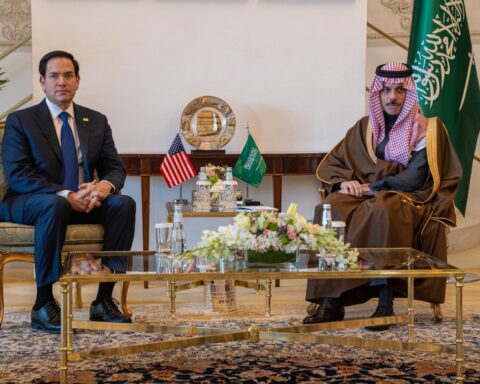
RIYADH — Saudi Arabia’s coalition named Hodeidah port, the Ras Isa oil terminal, as-Salif port, and Sanaa International Airport as potential strike targets on July 4 — the most explicit targeting declaration of the eleven-year Yemen conflict, delivered during the five-day diplomatic pause for Ayatollah Khamenei’s funeral. The target list is not primarily about Yemen: it is Saudi Arabia’s only available coercive instrument while Iran remains diplomatically untouchable, Doha talks sit frozen at Day 17 of a sixty-day memorandum of understanding, and roughly four hundred PAC-3 interceptor rounds are all that stand between the Kingdom’s critical infrastructure and a Houthi response that history says will come.
n
The timing exposes the purpose. Riyadh cannot pressure Tehran during a funeral that has drawn more than thirty nations to the Iranian capital, cannot advance the Doha negotiations during a formal pause, and cannot sustain a protracted exchange with a militia that struck Abqaiq in 2019 and has only expanded its arsenal since. Maj. Gen. Turki Al-Maliki’s four named targets are a signal calibrated to deter Houthi escalation without requiring execution — a warning whose strategic value depends entirely on never being tested.
n
n
The Middle East briefing 3,000+ readers start their day with.
One email. Every weekday morning. Free.
Table of Contents
n
- n
- What Did the Coalition Statement Actually Say?
- Saudi Warplanes Over Sanaa: The July 3 Trigger
- Why Issue the Warning During the Funeral Pause?
- March 31 Changed the Rules: The UNMHA Expiry
- What Would Strikes on the Four Named Targets Destroy?
- Four Hundred Rounds and No Room for Retaliation
- How Would the Houthis Respond?
- A Warning Built for a Five-Day Window
- Frequently Asked Questions
- n
n
n
n
n
n
n
n
n
n
n
n
n
What Did the Coalition Statement Actually Say?
n
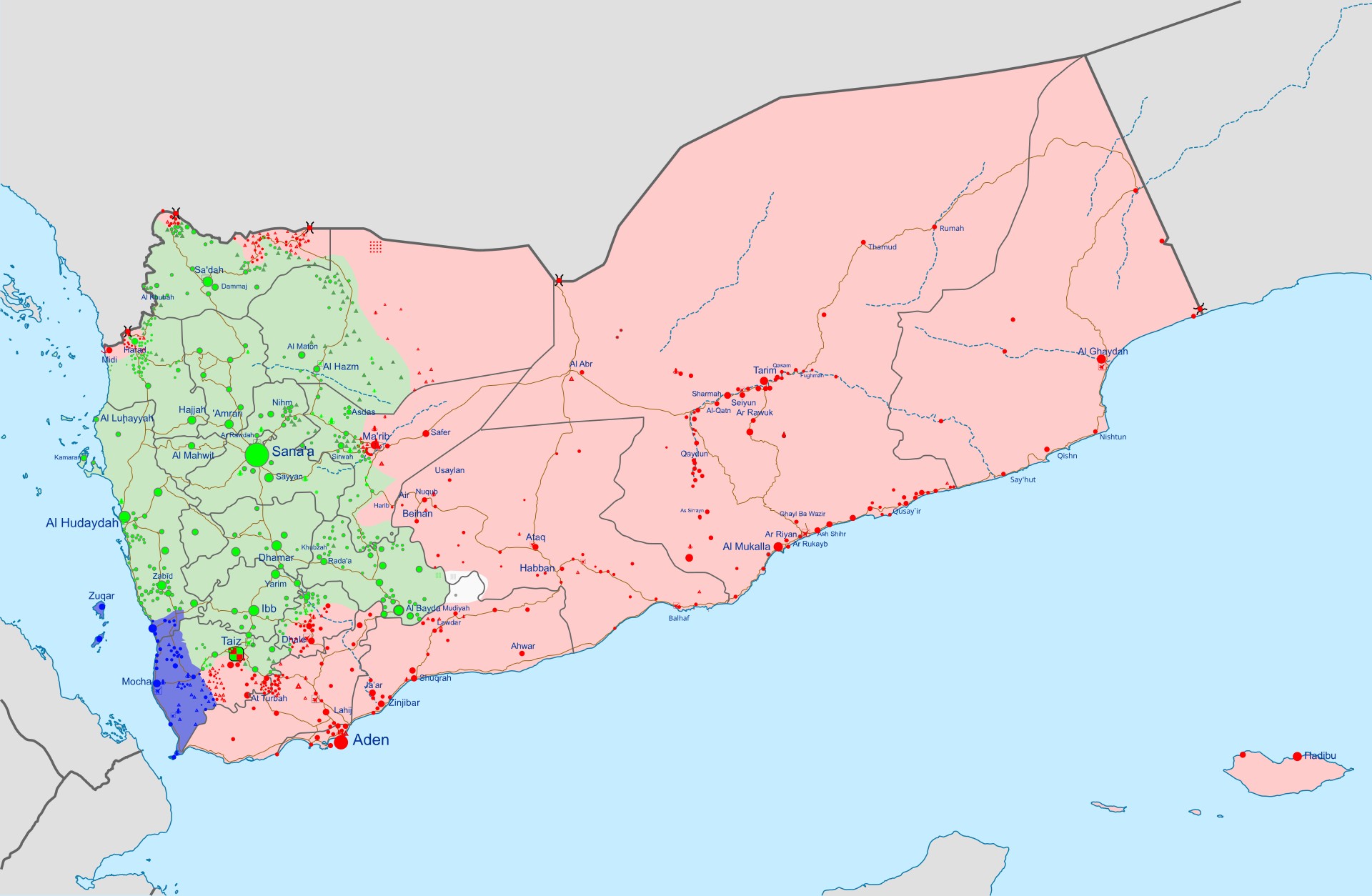
Maj. Gen. Turki Al-Maliki’s July 4 statement crossed a line the coalition has rarely approached: naming specific infrastructure targets. The coalition identified Hodeidah port, the Ras Isa oil terminal, as-Salif port, Sanaa International Airport, power stations, and industrial facilities as subject to retaliation if Houthi provocations continued. Previous coalition escalation warnings used generalized language about “all necessary measures” — the July 4 statement attached specific names to specific consequences, shifting from calculated ambiguity to declared intent.
n
n
“The coalition will respond with unprecedented determination and force to any and all attempts to target the Kingdom, its citizens and residents and national assets, or any attempt to violate the sovereignty of the brotherly Republic of Yemen.”
n
Maj. Gen. Turki Al-Maliki, Coalition Spokesperson — Saudi Press Agency, July 4, 2026n
n
n
The language Al-Maliki chose carries its own message. He framed the targeting warning as a consequence of Houthi “military posture” — a reactive formulation that preserves diplomatic cover. He dismissed Houthi counter-threats as “an extension of escalations and hostile behaviour demonstrated by the Houthi Militia and their attempts to undermine regional and international security,” and described Houthi statements as an attempt to “mask facts” and divert attention from actions against the Yemeni people.
n
But naming targets is a departure from eleven years of ambiguity, and it narrows the coalition’s own flexibility. By publicly identifying Hodeidah, Ras Isa, as-Salif, and Sanaa Airport, Al-Maliki created a record. If the stated conditions are met and the coalition does not act, the declaration becomes documented evidence of a bluff — a credibility cost that vaguer warnings never carried. The specificity binds Riyadh to a course of action that the Kingdom may not be able to sustain.
n
Saudi Warplanes Over Sanaa: The July 3 Trigger
n
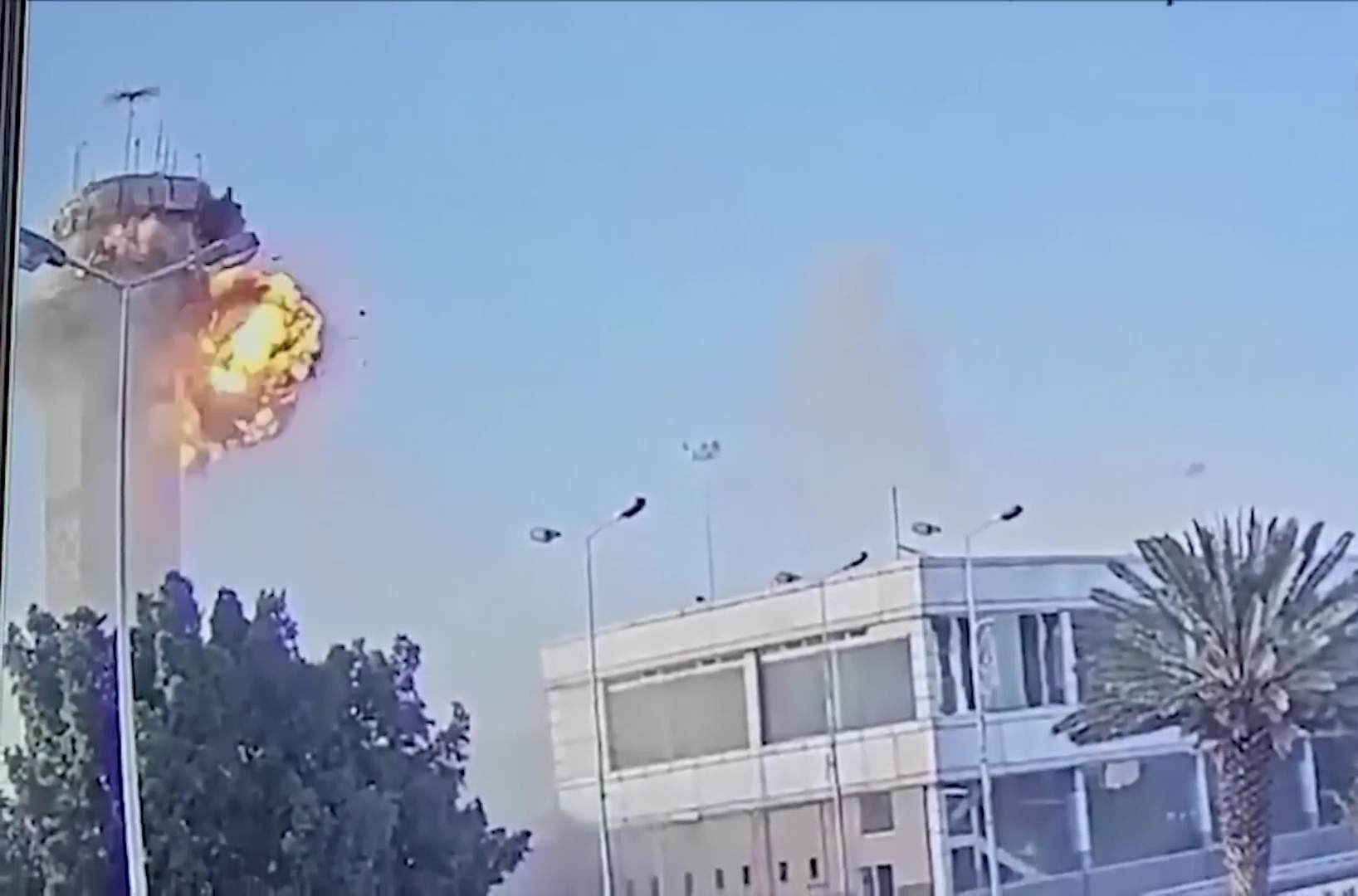
The proximate cause arrived at 5:20 AM on July 3, when Saudi warplanes attempted to intercept an Iranian civilian aircraft approaching Sanaa International Airport. The aircraft carried more than two hundred passengers — including wounded and sick civilians alongside a Houthi delegation bound for Khamenei’s funeral in Tehran. The intercept failed. Houthi military spokesman Yahya Saree stated that air defense missiles repelled the Saudi jets from Houthi-controlled airspace, and the aircraft landed, collected the delegation, and departed for Tehran without further interference.
n
Saudi Arabia has not publicly acknowledged the intercept attempt. Saree’s response, however, was immediate and unambiguous: “We warn the criminal Saudi enemy against repeating any attempt to violate our airspace or any aggression targeting our country. Such actions will be met with a comprehensive response targeting its airports and vital interests on land and sea.” He added that flights between Houthi-controlled Sanaa and Tehran would continue “despite any possible consequences” — a deliberate provocation daring Riyadh to repeat the attempt.
n
The threat was not empty rhetoric. Between 2018 and March 2022, forty-three percent of all Houthi attacks on Saudi Arabia targeted civilian airports and energy infrastructure, according to CSIS analysis. The September 2019 Abqaiq-Khurais attack — using roughly twenty drones and cruise missiles — temporarily eliminated more than half of Saudi oil output and approximately five percent of global supply. When Saree names airports and vital interests, the operational history makes the warning concrete.
n
The July 3 incident gave Al-Maliki the tactical pretext the July 4 statement required. A recent provocation transforms what is fundamentally a strategic positioning statement into what appears to be an operational response — the difference between declaring a new threat and retaliating against an existing one. The airspace confrontation over Sanaa provided the narrative foundation for a declaration that had been shaped by far larger forces.
n
n
Why Issue the Warning During the Funeral Pause?
n
The coalition issued its most explicit targeting threat during a five-day window — July 4 to 9 — when Iran is hosting more than thirty nations for Khamenei’s funeral and Doha negotiations sit formally paused at Day 17 of the sixty-day MOU. Saudi Arabia’s primary adversary is Iran, not the Houthis. But Iran is diplomatically untouchable during the funeral period, and threatening Tehran or advancing pressure through the Doha channel is functionally impossible until July 9.
n
The Houthis exist outside the funeral’s protective aura while remaining operationally connected to Tehran. Threatening Houthi infrastructure during the pause accomplishes three things simultaneously: it signals Saudi Arabia’s willingness to use force when the principal adversary is unavailable, it deters Houthi opportunistic escalation during a window when Iran’s hardliners might encourage provocation, and it positions Riyadh as an active security actor at a moment when the diplomatic track has shut down entirely.
n
The Doha diplomatic channel — already limited by Saudi Arabia’s exclusion from the US-Iran negotiating table — is completely dark. The MOU’s sixty-day clock continues ticking, with the Persian Gulf Shipping Agreement fee suspension expiring on August 18 at a cost of $5.5 million per day if the agreement lapses. Meanwhile, Ghalibaf warned on July 3 that Iran would “resume proportionate actions” if commitments went unfulfilled — language that hangs over the funeral pause as an unresolved condition.
n
The funeral creates a vacuum in Saudi Arabia’s coercive toolkit. Every lever the Kingdom might pull against Iran — diplomatic isolation, economic pressure through the Doha track, the threat of broader US-backed escalation — is either frozen or absent. Al-Maliki’s target list fills that vacuum with the only instrument available: the credible threat of military action against a proxy that Tehran cannot shield from the far side of a state funeral.
n
March 31 Changed the Rules: The UNMHA Expiry
n
Until March 31, 2026, coalition strikes on Hodeidah, as-Salif, and Ras Isa carried an institutional cost that Al-Maliki’s statement no longer faces. The United Nations Mission to Support the Hodeidah Agreement had monitored the ceasefire established by the Stockholm Agreement of December 13, 2018, placing a UN presence between the coalition’s targeting capability and Yemen’s most critical port infrastructure. The Security Council passed Resolution 2813 by a vote of 13 to 0, with China and Russia abstaining — a result that left UNMHA without a political champion and ended its mandate without renewal.
n
The institutional tripwire mattered because it shaped outcomes during previous escalation cycles. In June 2018, the coalition launched Operation Golden Victory — the largest offensive of the Yemen war — to seize Hodeidah and cut Houthi revenue supply lines. The Stockholm Agreement halted the advance before the port fell, and UNMHA’s subsequent deployment made resumption politically untenable.
n
In March 2022, coalition airstrikes hit oil facilities in Hodeidah and infrastructure at as-Salif following Houthi attacks on Saudi energy sites — the first time the coalition explicitly breached the Stockholm ceasefire. UNMHA’s physical presence limited the scope and duration of those strikes, because the monitoring body documented civilian impact and reported through institutional channels that carried weight with the US Congress, which has repeatedly conditioned Saudi weapons sales on civilian protection.
n
Those constraints no longer exist. There is no UN monitoring mission to document civilian casualties at Hodeidah, no ceasefire framework to violate, no Security Council mandate providing political cover for restraint. The Stockholm Agreement — whose three-component structure encompassed the Hodeidah ceasefire, a prisoner exchange mechanism, and access arrangements for Taiz — has no enforcement body, no monitoring personnel, and no political patron. Al-Maliki’s July 4 statement names targets that, for the first time since December 2018, sit outside any international protective framework.
n
What Would Strikes on the Four Named Targets Destroy?
n
The four named targets represent the Houthi movement’s economic infrastructure — the ports through which revenue, food, and fuel enter Houthi-controlled territory, and the airport that connects the movement’s leadership to Tehran. Destroying them would impose severe costs on the Houthis, but those costs would fall disproportionately on a civilian population already enduring famine.
n
| Target | Pre-War Capacity | Current Status | Strategic Significance |
|---|---|---|---|
| Hodeidah Port | 5.7 million tons/year; 1 million tons petroleum | ~30% of pre-war capacity (70% reduction across Red Sea ports, March 2025) | 90%+ of Yemen’s imports (WFP) |
| Ras Isa Oil Terminal | 3 million barrels storage; 200,000 bpd via 440 km Marib pipeline | Rebuilt and expanded for general cargo after US April 2025 strikes | Primary Houthi fuel revenue source |
| As-Salif Port | 182,403 MT throughput (Q1 2018); 2 deepwater berths | Specialist grain terminal operational | Secondary food import channel; Hodeidah redundancy |
| Sanaa International Airport | 5,000 passengers/day; 1.8 million annually | $500 million in estimated damages from Israeli strikes (May 2025) | Houthi air corridor to Tehran; delegation transit hub |
n
n
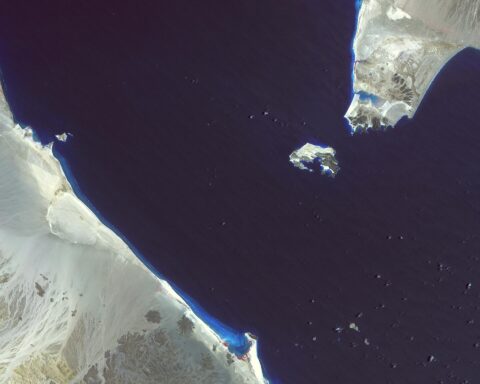
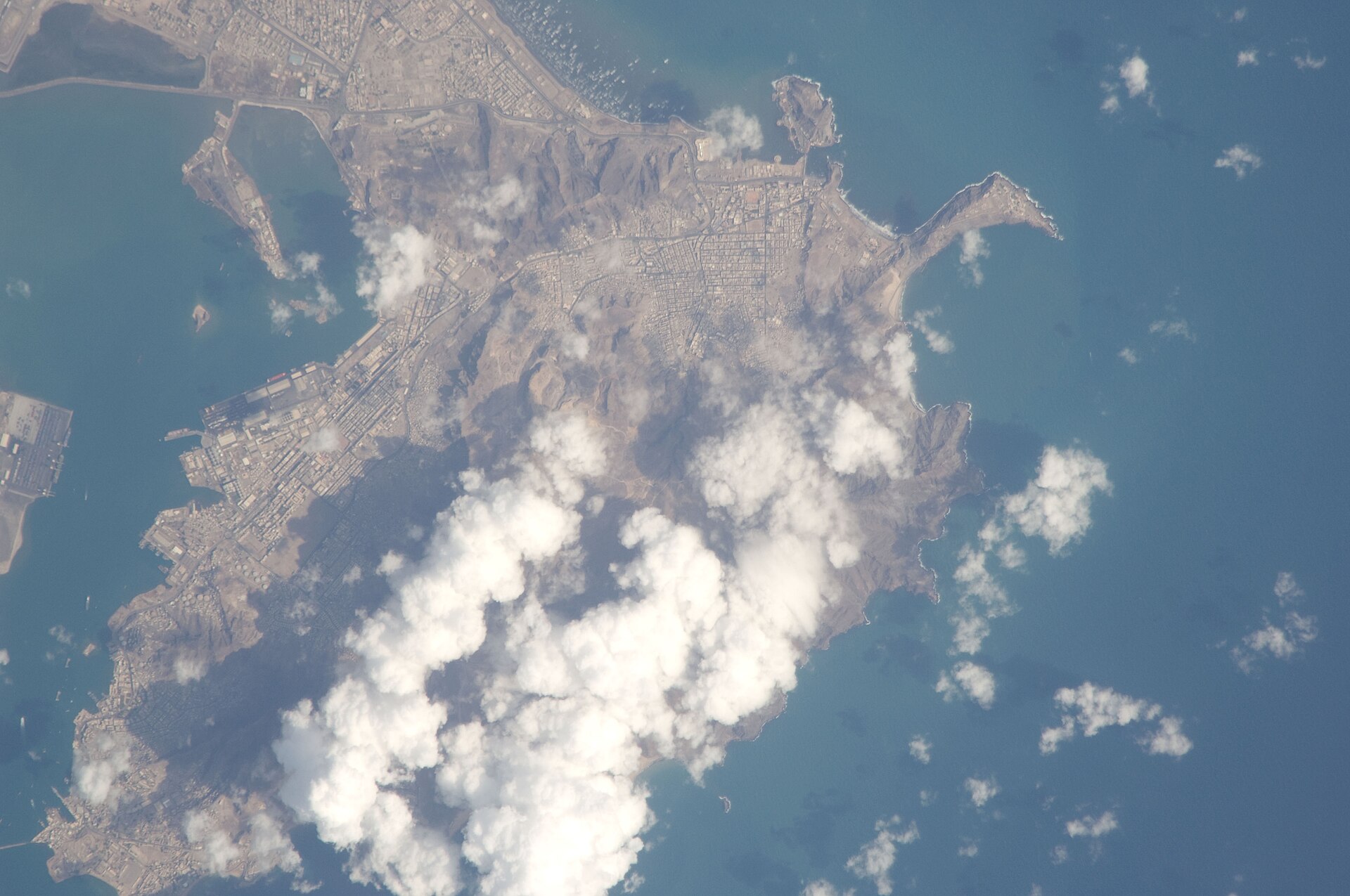
Hodeidah is the most consequential target on Al-Maliki’s list. More than ninety percent of Yemen’s imports flow through Hodeidah and the Red Sea ports collectively, according to the World Food Programme. Even at thirty percent of pre-war capacity, the port remains the single most important entry point for food, medicine, and fuel into Houthi-controlled territory. Coalition strikes in March and April 2015 already destroyed food storage facilities and a dairy factory in Hodeidah — the humanitarian cost of targeting the port is not theoretical.
n
Ras Isa presents a different kind of calculation. The United States established the kinetic precedent on April 17, 2025, when CENTCOM airstrikes destroyed the fuel port and killed seventy-four people according to Houthi authorities. The Houthis rebuilt and expanded the facility for general cargo by November 2025 — a pattern of destruction and reconstruction that suggests the infrastructure is considered essential enough to restore and expendable enough to lose. A second round of destruction, this time by the coalition, would test whether the rebuild cycle can absorb repeated strikes without permanent degradation.
n
Striking both as-Salif and Hodeidah simultaneously would close Yemen’s two primary food-import channels — a step the coalition has never taken and one that would draw immediate international condemnation. The operational logic suggests graduated escalation rather than simultaneous strikes: Ras Isa first, where the American precedent normalizes the targeting; Sanaa Airport second, a political-military target with lower humanitarian visibility; and the food ports only as a last resort, when the costs of restraint exceed the costs of action.
n
n
Four Hundred Rounds and No Room for Retaliation
n
The coalition’s targeting threat carries a structural contradiction that shapes everything about its credibility. Saudi Arabia can strike the four named targets — it retains the offensive capability to reach all of them. But it cannot credibly absorb the retaliation that strikes would provoke, and this asymmetry defines the boundary between deterrence and bluff.
n
| Metric | Figure | Source |
|---|---|---|
| Pre-war PAC-3 MSE inventory | ~2,800 rounds | HouseofSaud.com / Defence Security Asia |
| Current PAC-3 MSE inventory | ~400 rounds | HouseofSaud.com / Defence Security Asia |
| Stockpile depletion | 86% | HouseofSaud.com / Defence Security Asia |
| New PAC-3 MSE sale (approved Jan 30, 2026) | 730 missiles / $9 billion | DSCA |
| First delivery expected | Mid-2027 at earliest | DSCA / Janes |
| Greek Patriot deployment (ELDYSA) | 120–130 Hellenic Air Force personnel | Extended through November 2026 |
| Polish Patriot transfer request | Rejected | Prior reporting |
n
n
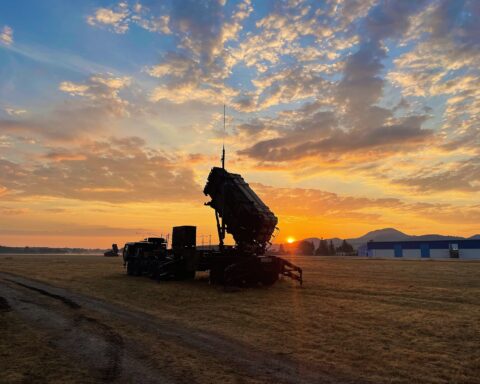
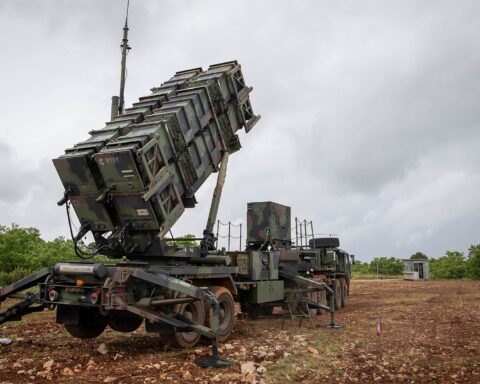
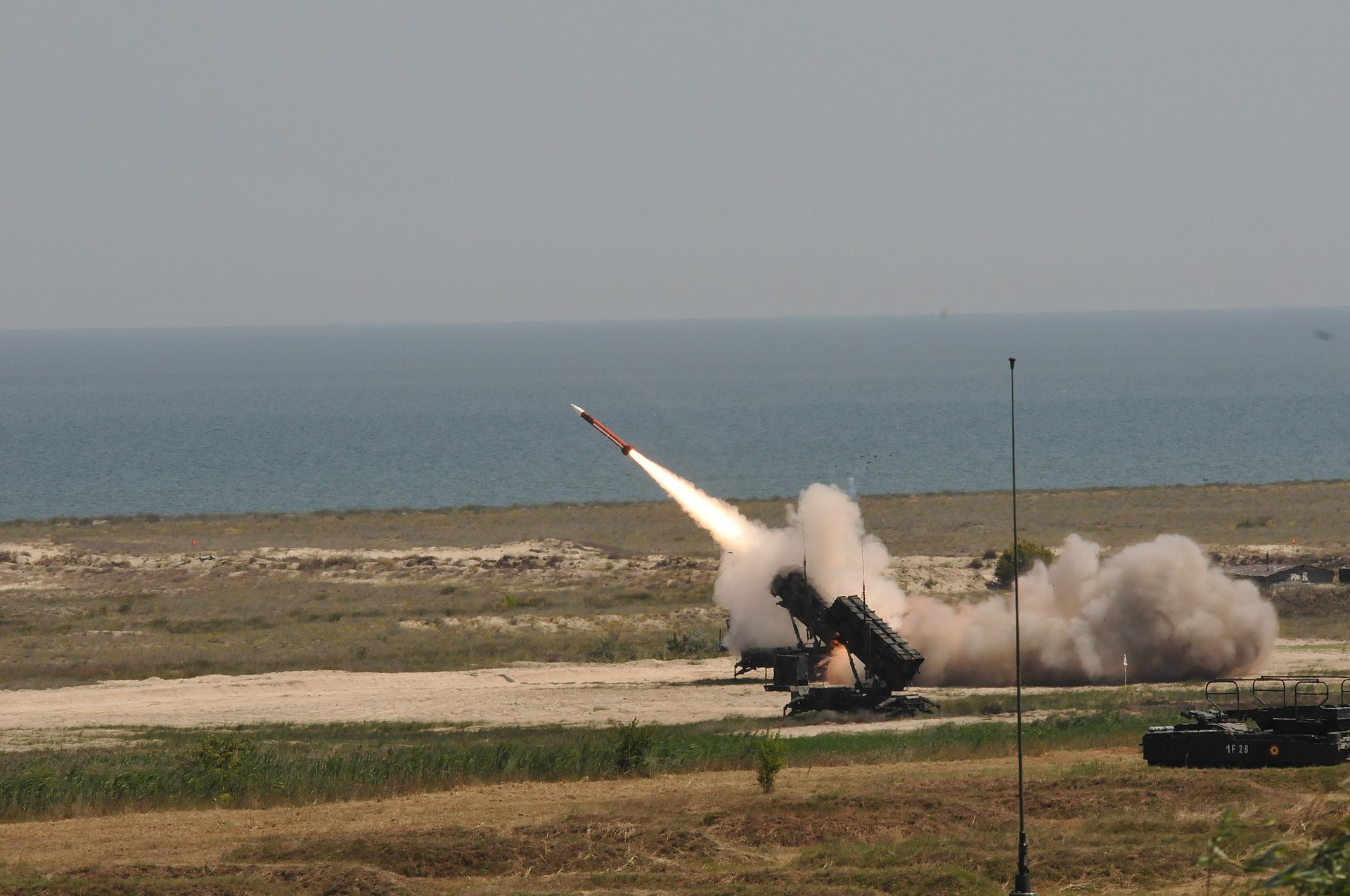
Those four hundred rounds must defend Aramco’s network of oil facilities, major airports in Riyadh, Jeddah, and Dammam, military installations, and critical infrastructure across a territory larger than Western Europe. The 2019 Abqaiq attack demonstrated that a single coordinated strike can penetrate Saudi airspace and reach the Kingdom’s most valued facilities. A sustained Houthi retaliation campaign — which Saree has explicitly threatened — would burn through the interceptor inventory at a rate that makes prolonged defense unsustainable, and the $9 billion DSCA-approved resupply of 730 missiles will not arrive before mid-2027 at the earliest.
n
The US troop drawdown compounds the problem. The 2,300 American troops pending withdrawal include IESP maintenance contractors whose departure degrades the operational readiness of existing Patriot batteries. Greece’s ELDYSA unit provides supplementary capability — 120 to 130 Hellenic Air Force personnel extended through November 2026 — but Poland rejected a US request to transfer additional batteries outright. The interregnum between current depletion and future resupply is absolute: what Saudi Arabia has now is what it will have for at least eighteen months.
n
Saudi Arabia occupies a position of offense-only coercion. It can threaten to destroy Houthi revenue infrastructure from the air, but the four hundred rounds standing behind that threat must also serve as the Kingdom’s entire missile defense shield. Every interceptor fired in defense is one fewer round available for the next engagement — and the Houthis have every reason to believe the inventory is finite, because it is.
n
How Would the Houthis Respond?
n
The Houthi escalation doctrine has been publicly articulated in a three-step sequence by Muhammad Al-Bukhaiti, a member of the Houthi Political Bureau. In statements carried by MEMRI in May 2026, Al-Bukhaiti declared: “Our patience has run out.” He warned that Saudi “airspace is in danger of being fully closed” and stated unambiguously: “We will not hesitate to attack Aramco facilities.” He described the message as “a final opportunity that cannot be delayed” — language that frames the next Saudi escalation as the trigger for a retaliatory campaign, not a single response.
n
n
“We warn the criminal Saudi enemy against repeating any attempt to violate our airspace or any aggression targeting our country. Such actions will be met with a comprehensive response targeting its airports and vital interests on land and sea.”
n
Yahya Saree, Houthi Military Spokesman — Al Jazeera, July 3, 2026n
n
n
The July 3 airspace incident partially activated the first step of Al-Bukhaiti’s ladder: Saudi warplanes entered Houthi-claimed airspace and Houthi air defenses engaged. Saree’s subsequent warning — threatening airports and vital interests on land and sea — signals readiness to advance to steps two and three if the coalition acts on Al-Maliki’s named targets. The Houthi response framework is already public: Aramco facilities, Saudi airports, and maritime assets in the Red Sea and the Arabian Gulf.
n
The response matrix is asymmetric in the Houthis’ favour. Saudi Arabia’s named targets — ports, a terminal, an airport — are fixed infrastructure that satellite imagery can verify and precision munitions can reach without difficulty. Houthi launch sites, drone storage, and missile positions are mobile, dispersed across mountainous terrain, and have survived eight years of sustained coalition air campaigns. The coalition has been unable to suppress Houthi launch capability through airpower alone — a structural reality that eleven years of war have demonstrated and no targeting declaration changes.
n
The Houthis also achieved their operational objective on July 3: the delegation reached Tehran despite the intercept attempt. That success, combined with Saree’s defiant declaration that flights between Sanaa and Tehran will continue regardless of consequences, strengthens the Houthi narrative that Saudi coercion has practical limits. Each failed enforcement attempt reinforces the conclusion that Riyadh can threaten but cannot control.
n
n
A Warning Built for a Five-Day Window
n
Al-Maliki’s statement is calibrated for a specific window that opens on July 4 and closes on July 9. When the funeral pause lifts, every other instrument in Saudi Arabia’s toolkit comes back online — the Doha channel resumes, the nuclear track continues, and the bilateral pressure Riyadh prefers to apply against Tehran rather than Sanaa becomes available again. The target list fills a five-day vacuum, and the vacuum is what gives it purpose.
n
The pattern is consistent across three escalation cycles spanning eight years. In 2018, the coalition threatened Hodeidah through military positioning — ground forces at the port’s outskirts — and the result was the Stockholm Agreement. In 2022, the coalition crossed from threat to limited strikes on Hodeidah oil infrastructure, constrained in scope by UNMHA’s monitoring presence. In July 2026, the threat is expressed through publicly named targets and declared intent, with no institutional framework imposing restraint. Each iteration has been more explicit than the last, even as Saudi Arabia’s defensive capacity has deteriorated with every PAC-3 round expended.
n
Executing strikes on Hodeidah would trigger the Houthi retaliation that the depleted interceptor inventory cannot sustainably absorb. It would create a humanitarian crisis at the port through which the vast majority of Yemen’s food imports arrive. And it would confirm to Tehran that Riyadh’s coercive capacity is limited to hitting proxies — a revelation that weakens Saudi Arabia’s strategic position at precisely the moment when it needs leverage for the post-funeral resumption of negotiations. Al-Maliki’s target list works only if the Houthis believe the threat is real and choose not to test it.
n
The funeral pause ends on July 9, and when it lifts, the diplomatic instruments Saudi Arabia prefers to bombing Hodeidah come back online. The last time the coalition threatened these ports without following through, in 2018, the result was the Stockholm Agreement — a framework that shielded Hodeidah for seven years.
n
Frequently Asked Questions
n
What specific targets did the Saudi coalition name in its July 4 statement?
n
Coalition spokesman Maj. Gen. Turki Al-Maliki identified six categories of Houthi-held infrastructure: Hodeidah port, the Ras Isa oil terminal, as-Salif port, Sanaa International Airport, power stations, and industrial facilities. This marks the first coalition statement to name specific infrastructure by site rather than using generalized threat language referencing “all necessary measures.” The six categories divide into two functional tracks — revenue infrastructure (the ports and terminal that fund the Houthi war effort) and connectivity infrastructure (the airport, power, and industrial assets that sustain Houthi governing capacity). The specificity constrains the coalition’s future diplomatic maneuverability: having named targets publicly, a failure to act if conditions are met would create a documented credibility gap that previous, vaguer warnings never risked.
n
Has the coalition or any other party struck these specific targets before?
n
Three of the four named targets have been struck previously. Coalition airstrikes destroyed food storage facilities and a dairy factory in Hodeidah in March and April 2015 — the earliest significant strikes on the port. In March 2022, coalition strikes targeted oil facilities at Hodeidah and infrastructure at as-Salif, the first direct breach of the Stockholm Agreement’s ceasefire provisions. The United States independently struck the Ras Isa fuel port on April 17, 2025, in a CENTCOM operation that killed seventy-four people according to Houthi authorities. Israel struck Sanaa International Airport in May 2025, causing an estimated five hundred million dollars in damage according to airport director Khaled al-Shaief. The Houthis rebuilt Ras Isa by November 2025, expanding it for general cargo — a pattern of destruction and reconstruction that suggests the infrastructure is treated as expendable in the short term but operationally essential in the medium term.
n
What is the Stockholm Agreement and why does its collapse matter now?
n
The Stockholm Agreement, signed on December 13, 2018, was a three-component accord brokered by the United Nations following the Battle of Hodeidah. It established a ceasefire covering Hodeidah, as-Salif, and Ras Isa ports, a prisoner exchange mechanism, and access arrangements for Taiz. The UN Hodeidah Agreement Support Mission was created to monitor compliance, though the agreement was never fully implemented by either side. UNMHA’s mandate expired on March 31, 2026, after the Security Council passed Resolution 2813 by a vote of 13 to 0, with China and Russia abstaining — a vote that ended the mission without political opposition but also without any state championing its continuation. No replacement monitoring mechanism has been proposed at any level of the UN system, leaving the coalition’s targeting options unconstrained by institutional oversight for the first time since December 2018.
n
How does Saudi Arabia’s air defense capacity affect the credibility of the strike threat?
n
Saudi Arabia’s PAC-3 MSE interceptor stockpile stands at approximately four hundred rounds — eighty-six percent depleted from a pre-war inventory of roughly 2,800. The resupply pipeline is closed until mid-2027, when the first deliveries from a $9 billion, 730-missile DSCA-approved sale are expected. International supplementary support has been minimal: Greece extended a 120-to-130-person Patriot detachment through November 2026, while Poland rejected a US request to transfer additional batteries — a refusal that signals allied scepticism about Saudi Arabia’s defensive posture. The depletion creates what amounts to offense-only coercion: the Kingdom can credibly threaten strikes on fixed Houthi targets, but cannot credibly promise to absorb a sustained retaliatory campaign across multiple defended sites simultaneously. The gap between offensive capability and defensive vulnerability is the structural fact that makes Al-Maliki’s targeting declaration a deterrent signal rather than an operational order. The gap between declaration and action was then confirmed on the ground: Houthi forces killed 15 government troops in Jabal Dabbas, Hodeidah on July 5 — one day after al-Maliki named the district’s port complex as a strike target, with no airstrike following.
n
Israel then struck the same ports Al-Maliki named. Operation Black Flag targeted Hodeidah, Ras Isa, and As-Salif with 56 guided munitions — the same four-facility list the coalition spokesman put on record July 4. The convergence between Saudi rhetoric and Israeli kinetics creates an associative-liability problem that Al-Maliki’s denial template cannot resolve.
n
The coercion gap Al-Maliki’s declaration exposed was confirmed at sea within 48 hours: the Houthis sank two vessels and seized eleven hostages during the funeral pause, with no coalition airstrike following.
n
The condolence channel Riyadh chose for Khamenei’s death — Deputy FM El-Khereiji rather than FM Faisal — reflects the same ceiling that constrains its coercive options in Yemen: El-Khereiji Carried the Condolences Faisal Did Not Deliver.
nn
The coercion gap that drives Riyadh toward Yemen and away from Iran was exposed in full on July 8, when IRGC missiles struck GCC sovereign territory in Bahrain and Kuwait and the GCC’s collective defense pact faced its first live test — producing condemnation statements and no military movement, exactly as Saudi Arabia’s threat posture in Yemen had foreshadowed.
nnn
The coercion gap widened further in the days that followed: two ships were sunk between July 6 and July 9, four crew members killed, and eleven taken hostage — with Hodeidah, Ras Isa, As-Salif, and Sanaa Airport all remaining unstruck through July 10.
On July 13, Riyadh acted — striking not Hodeidah but the runway at Sanaa International Airport, targeting a Mahan Air flight carrying a Houthi delegation and confirming that the coercive threat had finally been exercised, though at a different target than the one Al-Maliki named. Within hours, the Houthis formally ended the truce and struck Abha with ballistic missiles and drones: the southern front opened on the same day Riyadh struck the runway.
The coercion loop closed when the Houthis responded to the Sanaa runway strike by forcing the closure of four southern Saudi civilian airports in a single four-minute NOTAM window — a mirrored siege that imposed on Saudi commercial aviation the same airspace denial Riyadh had attempted to impose on Sanaa, and did so without the coalition retaliating against any of the port targets Al-Maliki had named on July 4.