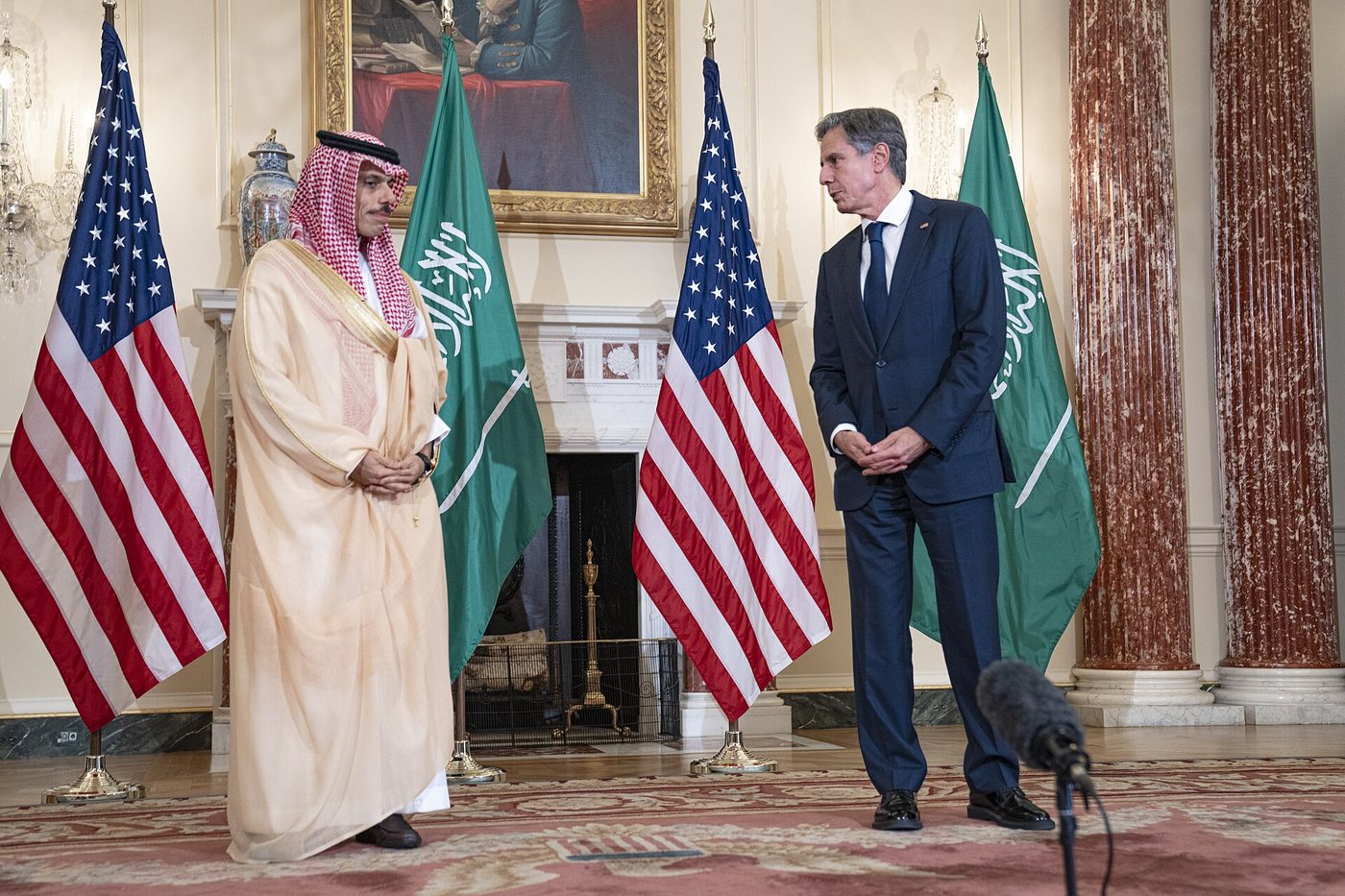

RIYADH — Saudi Foreign Minister Prince Faisal bin Farhan called Egyptian counterpart Badr Abdelatty on July 14 to stress “the critical need for an immediate halt to all escalatory actions” — twenty-four hours after the Saudi air force bombed Sanaa International Airport on direct orders from Crown Prince Mohammed bin Salman. The two-channel system is not new, but the interval between the military strike and the diplomatic call has compressed to the point where Arab partners can watch both channels operate in real time and draw the obvious conclusion: the foreign minister’s words carry no predictive value about what the crown prince’s air force will do next.
MBS called President Trump on Friday July 11 and secured backing for the Sanaa operation. Rubio had spoken to Faisal the same day. Forty-eight hours later, Saudi jets hit the airport. Twenty-four hours after that, Faisal was on the phone to Cairo calling for restraint. The sequence — lobby, strike, de-escalate — is now the standard Saudi operating rhythm, and every capital in the region can read the sheet music.
Table of Contents
- The Seventy-Two-Hour Sequence
- Does Faisal Still Function as a Diplomatic Instrument?
- Muscat, Five Days Before the Strike
- Why Did Egypt Endorse the De-Escalation Call?
- The Houthi Response and the Irrelevance of the Diplomatic Channel
- What Is the Gulf Partners’ Discount Rate on Saudi Diplomacy?
- The Tajani Call and the European Layer
- A Foreign Minister Without a Negotiating Table
- Can a Two-Channel Strategy Survive When Both Channels Are Visible?
- Frequently Asked Questions
The Seventy-Two-Hour Sequence
The operational timeline runs as follows. On Friday July 11, MBS placed a phone call to Trump and asked for backing for a military operation against the Houthis. He received it, according to Axios. The Saudi ambassador to Washington, Princess Reema bint Bandar, had met Secretary of State Marco Rubio the day before. Rubio then spoke to Faisal on Friday — the foreign minister’s only documented contact with Washington before the strike.
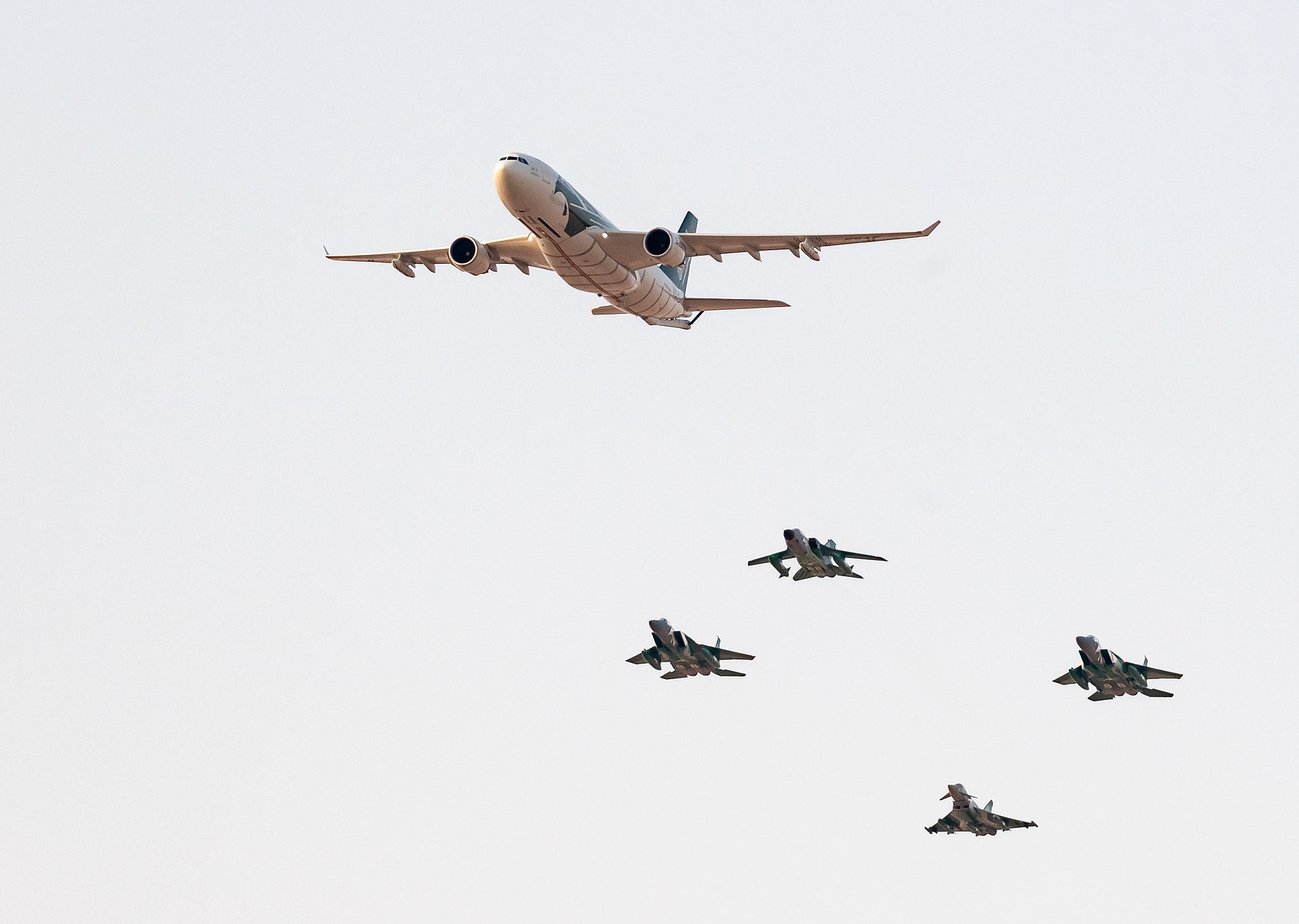
On Sunday July 13, Saudi warplanes struck Sanaa International Airport. A Houthi delegation was returning from Tehran aboard an Iranian aircraft at the time — the strike was timed, at minimum, to signal against the Tehran-Sanaa air link. The Houthis retaliated the same day with ballistic missiles and drones targeting Abha International Airport. Saudi air defenses intercepted the ballistic missiles; no casualties were reported at Abha.
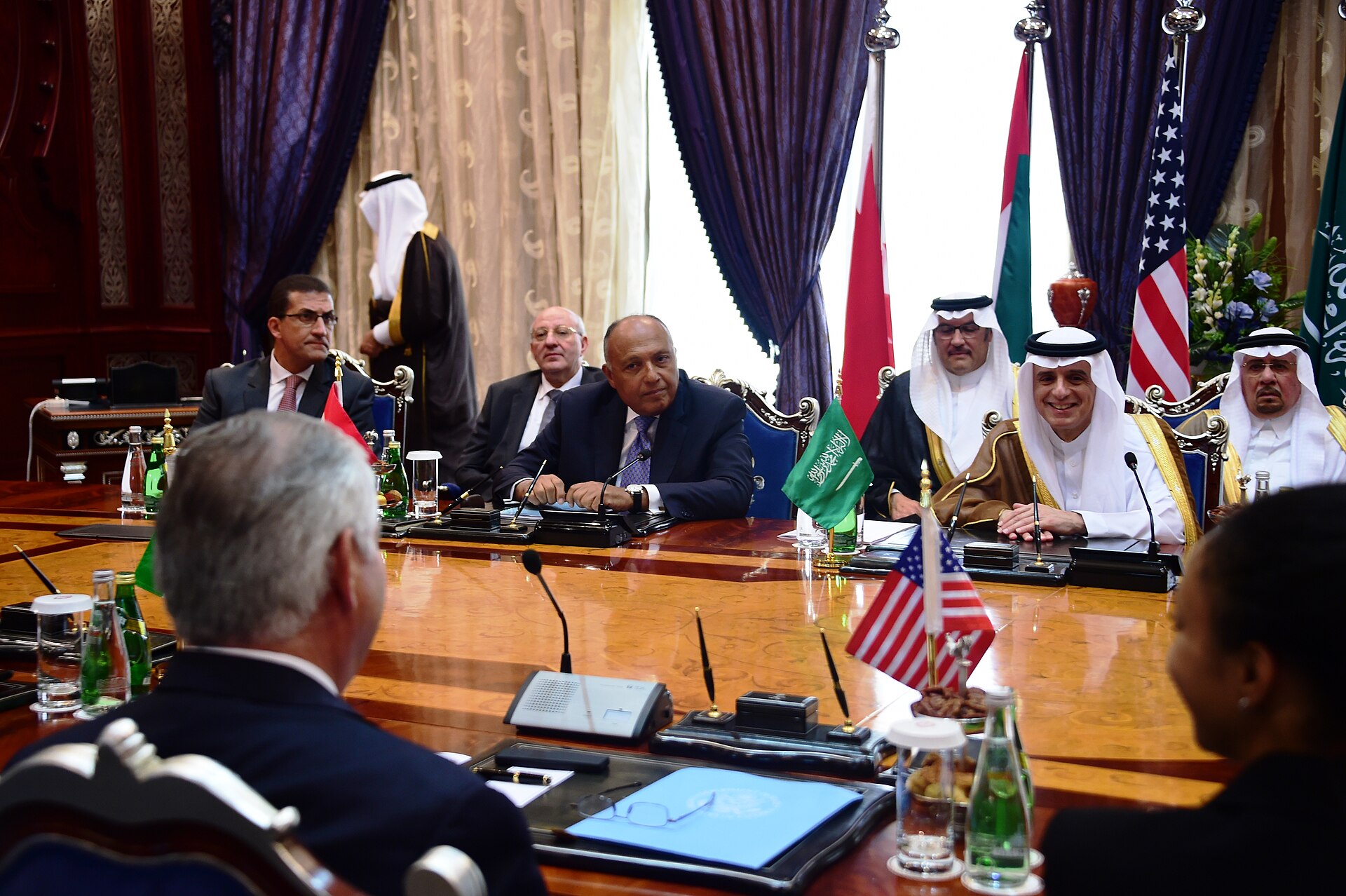
On Monday July 14, Faisal called Abdelatty. The Egyptian Foreign Ministry released a statement saying both ministers “stressed the critical need for an immediate halt to all escalatory actions that could widen the circle of conflict” and “agreed on the necessity of safeguarding freedom of navigation in the Strait of Hormuz in accordance with international law.” The same day, Faisal received a call from Italian Deputy Prime Minister and Foreign Minister Antonio Tajani, covering “regional developments, the importance of maritime security and freedom of navigation.”
The calendar speaks for itself. The crown prince’s military channel operates on a Friday-to-Sunday cycle. The foreign minister’s diplomatic channel operates on a Monday cycle. The gap between them — seventy-two hours at most — is now short enough that the strike and the de-escalation call fall within the same news cycle.
The Middle East briefing 3,000+ readers start their day with.
One email. Every weekday morning. Free.
Does Faisal Still Function as a Diplomatic Instrument?
Faisal bin Farhan’s utility as a diplomatic instrument has degraded to the point where both Washington and adversaries treat his statements as post-hoc messaging rather than actionable signals. The United States downgraded its Saudi contact to ambassador level in July 2026. Neither Tehran nor the Houthis responded to his July 14 de-escalation call. His credibility depends on a premise his own government has falsified: that his words carry predictive value about Saudi state behavior.
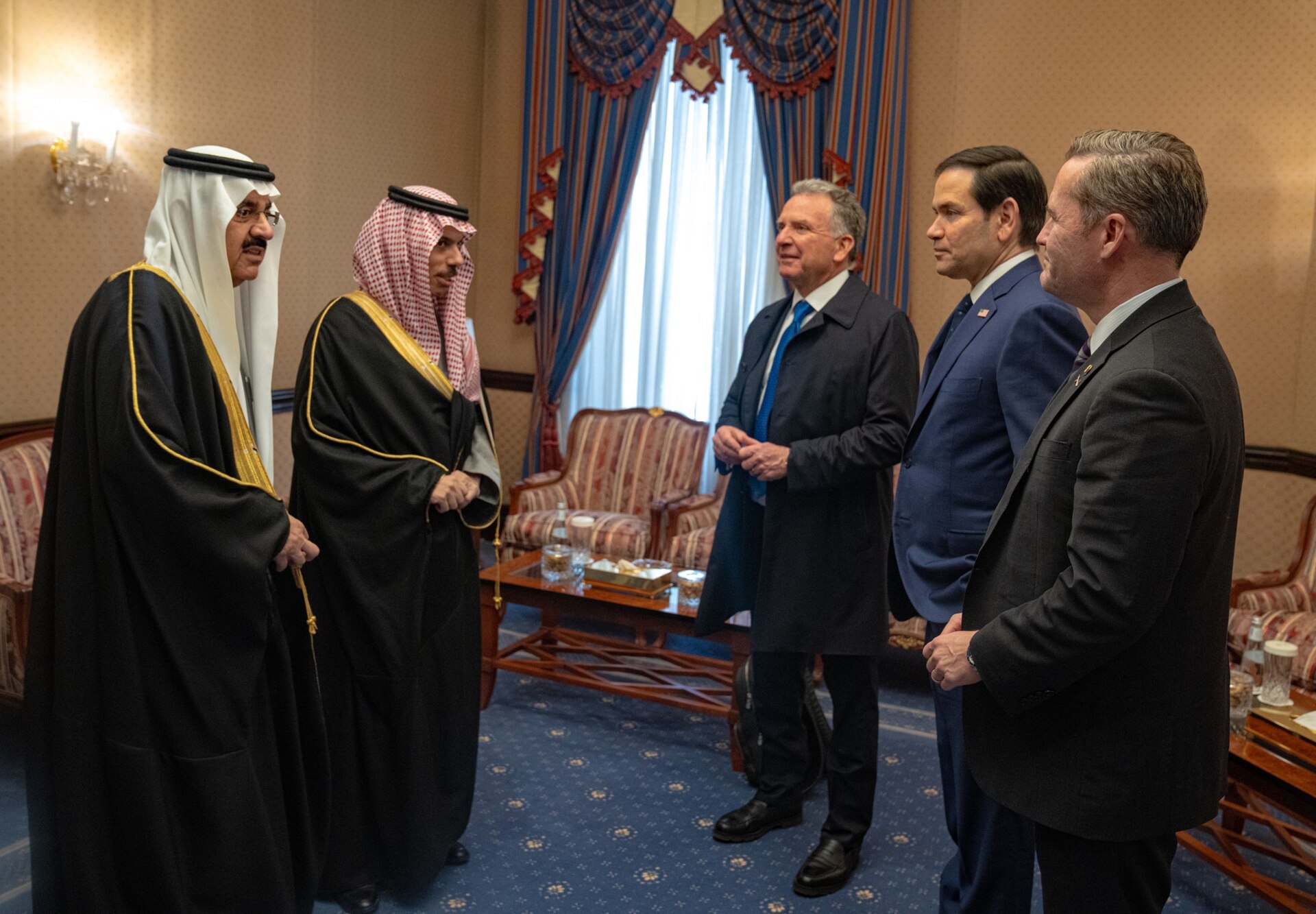
The evidence from 2026 suggests reclassification is well advanced. When Princess Reema — not Faisal — met Rubio in early July, the contact was framed as containment, not coordination. Rubio’s June 23-25 Gulf tour visited the UAE, Kuwait, and Bahrain — skipping the kingdom’s largest capital entirely.
This downgrade did not happen because Washington lost interest in Saudi Arabia. It happened because the US government concluded that the foreign minister does not control the information his counterparts need — namely, what MBS will do next. Michael Ratney, former US Ambassador to Saudi Arabia and senior adviser at CSIS, captured the structural problem: “Just as the United States launched this war without asking Saudi Arabia or other Gulf partners, President Trump is likely to declare it over without telling them.”
Faisal’s Beijing visit on June 30 and July 1 illustrates the same dynamic from the Chinese side. He met Vice President Han Zheng and Foreign Minister Wang Yi. Al-Monitor characterized the trip as Saudi Arabia “sending clear signals that it is hedging its geopolitical alignment between Washington and Beijing.” Saudi-China bilateral trade surpassed $107 billion in 2024. But hedging requires that both sides believe the hedger’s diplomatic signals are binding commitments, not atmospherics. If Beijing concludes that Faisal’s visit carries no more operational weight than the July 14 call to Cairo, the hedge collapses into performance.
Muscat, Five Days Before the Strike
On July 8, Faisal arrived in Muscat for talks with Omani Foreign Minister Sayyid Badr bin Hamad. They discussed Hormuz navigation, regional stability, and bilateral cooperation. Oman is the principal Houthi back-channel — the state that has, since 2018, maintained the most continuous diplomatic contact with Sanaa’s Ansar Allah leadership.
Five days later, Saudi jets struck Sanaa airport.
There are two possible readings of this sequence, and neither is favorable. If Faisal knew about the planned Sanaa operation when he sat across from Badr bin Hamad, he used the Muscat meeting as diplomatic cover — keeping the Omani channel warm while his government prepared a strike that would render any Omani-mediated de-escalation moot. If Faisal did not know, then the crown prince excluded his own foreign minister from advance knowledge of a military operation that would redefine the Yemen conflict.
Either reading damages Faisal’s utility as a diplomatic instrument in Muscat. The Omanis maintain back-channels precisely because they assess their interlocutors’ words as carrying operational meaning. A Saudi foreign minister who either deceives or is uninformed cannot serve that function. The five-day gap between the Muscat visit and the Sanaa strike is, for Omani purposes, a credibility event.
Why Did Egypt Endorse the De-Escalation Call?
Egypt endorsed Faisal’s de-escalation framing because Saudi Arabia is Egypt’s largest source of remittances — roughly $8 billion per year from 1.5 million Egyptian workers — and holds approximately $26 billion in Egyptian investments across more than 8,000 companies. Abdelatty’s endorsement was structurally compelled, not independently reasoned.
Egyptian total remittances hit approximately $43 billion in the first eleven months of fiscal year 2025-26, a record, according to the Arab Gulf Business Index. Saudi-Egypt bilateral trade reached $4.8 billion in the first half of 2025, a 77 percent year-on-year increase. The asymmetric dependency runs in one direction: Saudi capital sustains Egyptian employment, investment, and commerce, not the reverse.
This is the structural problem with the two-channel strategy viewed from the receiving end. When MBS strikes and Faisal calls for calm, the partners who publicly endorse the calm are doing so under economic compulsion. The endorsement signals nothing about whether those partners believe the de-escalation framing. It signals only that they cannot afford to contradict it publicly.
Leaders in both Israel and Iran view the Gulf states’ positive-sum logic not as a pragmatic virtue but as naive vulnerability, with every attempt at accommodation met with adventurism.
— Chatham House, June 2026
The quartet of Egypt, Saudi Arabia, Turkey, and Pakistan held its first foreign ministers meeting in Riyadh on March 19, with follow-up sessions in Islamabad on March 29 and Antalya on April 18. Foreign Policy described a broader Saudi-led axis of Saudi Arabia, Qatar, Turkey, Pakistan, and Egypt — explicitly without the UAE. But axis formation requires that the axis leader’s diplomatic signals carry weight. If the quartet’s other members conclude that Faisal’s de-escalation calls are chronologically disconnected from MBS’s military decisions, the quartet becomes a messaging platform, not a coordination mechanism.
The Houthi Response and the Irrelevance of the Diplomatic Channel
The Houthis did not wait for Faisal’s de-escalation call before responding. They retaliated against Abha on July 13 — the same day as the Sanaa strike, before any diplomatic messaging from Riyadh’s foreign ministry. Houthi military spokesman Yahya Saree stated: “The targeting of Sanaa Airport ends the de-escalation phase.” He added: “This aggression will not go unanswered and unpunished.” The Houthi Foreign Ministry was more direct: “Saudi Arabia has announced the start of the war and bears full responsibility for it and for any consequences of this step.”
Mohamed Abdel Salam, the Houthis’ political spokesperson, called the strikes “a grave breach” of the 2022 ceasefire — the informal truce that had kept Saudi territory free from direct Houthi strikes for over four years and four months. That truce is now formally dead, and it was Riyadh that killed it.
The Houthis also stated that flights between Sanaa and Tehran would continue “despite any possible consequences.” This is a direct challenge to the military logic of the Sanaa airport strike: if the strike was intended to sever the Tehran-Sanaa air link, and the Houthis declare the link will continue, then the strike accomplished its retaliatory purpose but failed its strategic one.
No specific Iranian or Houthi commentary on Faisal’s July 14 call to Cairo has surfaced. Tehran and Sanaa appear to regard his diplomatic signaling as irrelevant to their operational equation. This is the clearest measure of the diplomatic channel’s degradation: the adversary does not consider it worth responding to.
What Is the Gulf Partners’ Discount Rate on Saudi Diplomacy?
Gulf partners have watched MBS’s military channel contradict Faisal’s diplomatic channel at least twice in 2026 — the March Iran-strike lobbying denial and the July Sanaa-to-Cairo sequence. Officials from two Gulf countries told PBS NewsHour they were “frustrated and even angry” at receiving zero hours of advance notice before US-Israel strikes on Iran in late February. The Saudi two-channel pattern now operates within a regional environment where military-first behavior has become the norm, not the exception.
Saudi Arabia’s own behavior in early March 2026 established the template. MBS privately lobbied Trump in multiple calls to strike Iran, according to the Washington Post. Simultaneously, he sent private messages to Bahrain, Kuwait, Qatar, and UAE leaders telling them to avoid direct action that could elicit Iranian retaliation (Middle East Eye, March 2026). Saudi Embassy spokesperson Fahad Nazer publicly denied the lobbying: “Saudi Arabia has been consistent in supporting diplomatic efforts to reach a credible deal with Iran.”
The denial was issued on the same timeline as the private lobbying. This is not a case of a government changing its position over time. It is a case of two channels — a private military advocacy channel to Washington and a public diplomatic restraint channel to Gulf capitals — operating simultaneously with contradictory content. The Gulf partners who received MBS’s private “avoid inflaming Iran” messages now know, from the Washington Post reporting, that he was lobbying for exactly the opposite in his parallel calls to Trump.
| Date | Military Channel (MBS) | Diplomatic Channel (Faisal / MFA) |
|---|---|---|
| Feb-Mar 2026 | Private lobbying to Trump for Iran strikes (Washington Post) | Public denial: “consistent in supporting diplomatic efforts” (Nazer, Saudi Embassy) |
| Mar 2026 | Private messages to Gulf allies: avoid inflaming Iran (Middle East Eye) | Quartet FM meeting in Riyadh, Mar 19 |
| Jun 30-Jul 1 | — | Faisal Beijing visit: hedging signals to Han Zheng, Wang Yi (Al-Monitor) |
| Jul 8 | — | Faisal Muscat visit: Hormuz, regional stability (SPA) |
| Jul 11 (Fri) | MBS calls Trump, secures strike backing (Axios) | Rubio speaks to Faisal (Axios) |
| Jul 13 (Sun) | Saudi jets bomb Sanaa airport | — |
| Jul 14 (Mon) | — | Faisal calls Abdelatty: “immediate halt to all escalatory actions” |
The 2017 Qatar blockade established an earlier version of this pattern. The blockade was launched without advance notice to Doha and without coordinated diplomatic preparation. Faisal was not yet foreign minister in 2017 — he was appointed in 2019 — but the institutional behavior was established then. Qatar is now a partner in the Saudi-led quintet, a measure of how severely the 2017 credibility damage required years to repair. The question is whether the 2026 pattern is doing equivalent damage to Saudi diplomatic credibility across a wider set of partners.
The Carnegie Endowment framed the structural reality in March 2026: “The Iran war has made weakness and exposure of the Gulf states very apparent, as they have not been protected by the Abraham Accords, economic deals, or the presence of large U.S. bases.”
The Tajani Call and the European Layer
Faisal’s July 14 call with Antonio Tajani ran in parallel with the Abdelatty call. They “discussed regional developments, the importance of maritime security and freedom of navigation, and international efforts to implement the two-state solution,” according to Asharq Al-Awsat and the Saudi embassy in Italy.
The Tajani call serves a different function than the Egyptian one. Italy is not economically dependent on Saudi Arabia in the way Egypt is. The European diplomatic layer provides Faisal with an interlocutor who can endorse the de-escalation framing without the coercion dynamic that underlies the Egyptian endorsement. Tajani’s participation allows Riyadh to present the de-escalation messaging as multilateral rather than bilateral — a European voice alongside an Arab one.
But the European layer carries its own limitation. European foreign ministers deal with Faisal because he holds the title. They do not operate under the illusion that his de-escalation calls constrain MBS’s military decisions. The utility of the Tajani call is atmospheric: it produces a readout, it demonstrates diplomatic activity, it populates the “international efforts” category. It does not alter the operational reality that the crown prince struck Sanaa twenty-four hours before the call took place.
A Foreign Minister Without a Negotiating Table
The two-channel problem is compounded by Faisal’s exclusion from every active negotiating mechanism that could give his de-escalation calls operational content. Saudi Arabia has no seat at the Doha Phase 2 talks. It has no role in the Geneva nuclear track. It is absent from the IRGC-CENTCOM deconfliction cell. Faisal received the call, but Riyadh did not receive the seat.
A foreign minister who calls for de-escalation is making an implicit promise: that his government will participate in the mechanisms required to achieve it. Faisal cannot make that promise because no one has offered him the chair. The Doha and Geneva tracks are structured around US, Iranian, and selected intermediary participation. Saudi Arabia is treated as an affected party, not a negotiating one.
Riyadh’s own actions accelerated this exclusion. The May 2026 Operation Project Freedom — in which Saudi Arabia grounded 43 US warplanes at Prince Sultan Air Base for four days — demonstrated that MBS was willing to use coercive instruments against Washington itself. The PAC-3 interceptor inventory stands at roughly 400 of an original 2,800, approximately 86 percent depleted, with no resupply expected before mid-2027. The military dependency that once gave Washington a reason to consult Riyadh in advance has been partially severed by MBS’s own actions.
Rubio’s decision to skip Saudi Arabia on that June tour reflected this recalibration. The diplomatic channel was not consulted because the diplomatic channel is not where the decisions are made.
Can a Two-Channel Strategy Survive When Both Channels Are Visible?
A two-channel strategy fails when the military channel’s tempo outpaces the diplomatic channel’s absorptive capacity, converting diplomatic signals from leading indicators into trailing ones. In most two-channel systems, the military channel operates covertly or with sufficient deniability that the diplomatic channel retains surface credibility. MBS’s military decisions in 2026 are not covert. The Axios report on the Friday phone call was published before Faisal made the Monday call to Cairo — Arab capitals did not need intelligence services to read the sequence. A news feed was sufficient.
The failure mode is not that partners discover the two channels exist — every government assumes its counterparts maintain parallel military and diplomatic tracks. The failure mode is temporal. No counterpart will adjust their military posture based on Faisal’s call if they expect MBS to override it within seventy-two hours.
The March 2026 precedent — MBS privately lobbying for Iran strikes while publicly denying it, while simultaneously telling Gulf allies to avoid provocation — demonstrated this failure mode at the strategic level. The July 2026 Sanaa-to-Cairo sequence demonstrates it at the operational level. The interval has compressed from weeks to days.
MBS called Trump as the Islamabad talks started without Riyadh — another instance of the military channel and the diplomatic calendar operating on incompatible timelines. Pakistan holds a role in the negotiating architecture that Saudi Arabia cannot purchase, and Faisal’s exclusion from the Islamabad track means his de-escalation calls are addressed to capitals that have access he does not.
The Soufan Center observed in May 2026 that the Iran war had widened Gulf state fissures, with Saudi Arabia favoring accommodation and the UAE favoring confrontation. But “accommodation” describes the diplomatic channel’s output, not the military channel’s. When al-Maliki threatened the ports in early July, the Houthis sank the ships. When Faisal called Cairo on July 14, MBS had already bombed Sanaa the day before. The accommodation posture and the military posture are held by different officials in the same government, and the military officials are moving faster.
The question is whether Arab partners will continue to treat Faisal’s calls as a channel worth maintaining or begin routing their concerns directly to the crown prince’s office — bypassing the foreign ministry entirely. If the latter, the Sanaa airport strike will mark not just the end of the Yemen truce but the effective demotion of Saudi Arabia’s foreign minister from diplomatic actor to spokesman.
The GCC Secretary General’s July 14 statement stands as the institutional counterpoint. Jasem Albudaiwi declared: “The security of Saudi Arabia is an integral part of the security of the GCC member states, and the Council stands as one with the Kingdom in all measures it takes to protect its security, stability, and the safety of its citizens and residents.” The statement endorsed the military channel. It said nothing about the diplomatic one.
Frequently Asked Questions
Has Saudi Arabia formally declared war on the Houthis?
No. Saudi Arabia has not issued a formal declaration of war. The July 13 Sanaa airport strike was presented as a military operation, not the opening of a declared conflict. However, the Houthi Foreign Ministry’s statement — “Saudi Arabia has announced the start of the war” — effectively treats the strike as a de facto declaration, and the Houthi retaliatory strike on Abha was the first direct attack on Saudi territory since the March 2022 informal truce, crossing a threshold that had held for more than four years.
Could China or Turkey serve as an alternative diplomatic channel for Saudi Arabia?
Faisal’s Beijing visit on June 30 and July 1 was framed by Al-Monitor as a hedging signal, but China’s “friendly nation” Hormuz fee exemption — announced by Rahmani Fazli — places Beijing structurally closer to Iran on the navigation dispute. Turkey participated in the quartet FM sessions but has maintained independent Houthi contacts through the OIC. Neither capital has offered Riyadh a seat at the negotiating table on the Yemen or nuclear tracks where Saudi exclusion is most costly.
What does Saudi Arabia’s exclusion from Doha Phase 2 talks mean in practice?
Saudi Arabia is excluded from the Doha Phase 2 talks, the Geneva nuclear track, and the IRGC-CENTCOM deconfliction cell — the three live negotiating mechanisms that could produce the de-escalation Faisal is publicly calling for. This means Riyadh cannot veto an outcome, amend draft language, or credibly threaten to walk out. It learns of progress through intermediaries, the same way an affected third party does. Any agreement that emerges from these tracks will bind Saudi Arabia’s security environment without Saudi signature.
How did Pakistan respond to the Sanaa strike and the Houthi retaliation?
Pakistan condemned the Houthi missile attack on Saudi Arabia while simultaneously calling for “dialogue and regional de-escalation,” making it the first quartet member to endorse both the military and diplomatic channels in a single statement. This dual framing illustrates the bind facing Saudi partners: they cannot endorse the strike without acknowledging the retaliation it provoked, and they cannot call for de-escalation without implicitly questioning the strike that preceded it. Pakistan’s position is further complicated by its role hosting the July 11 Islamabad MOU talks — a negotiating track from which Saudi Arabia is excluded.
What did Yahya Saree warn about future Houthi targets beyond Abha?
Saree warned that Houthi forces would target “Saudi airports and vital interests on land and sea.” This language extends the threat envelope beyond military installations to civilian infrastructure and maritime commerce — a scope that did not exist during the 2015-2022 war’s later phase, when Houthi attacks focused primarily on military targets and Aramco facilities. The Houthis also declared that flights between Sanaa and Tehran would continue “despite any possible consequences,” directly challenging the operational logic of the Sanaa airport strike and daring Riyadh to repeat it against an Iranian aircraft in transit.