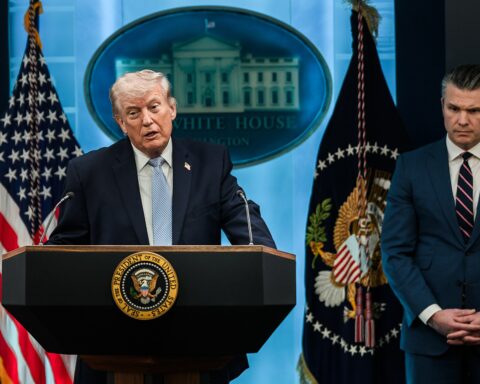

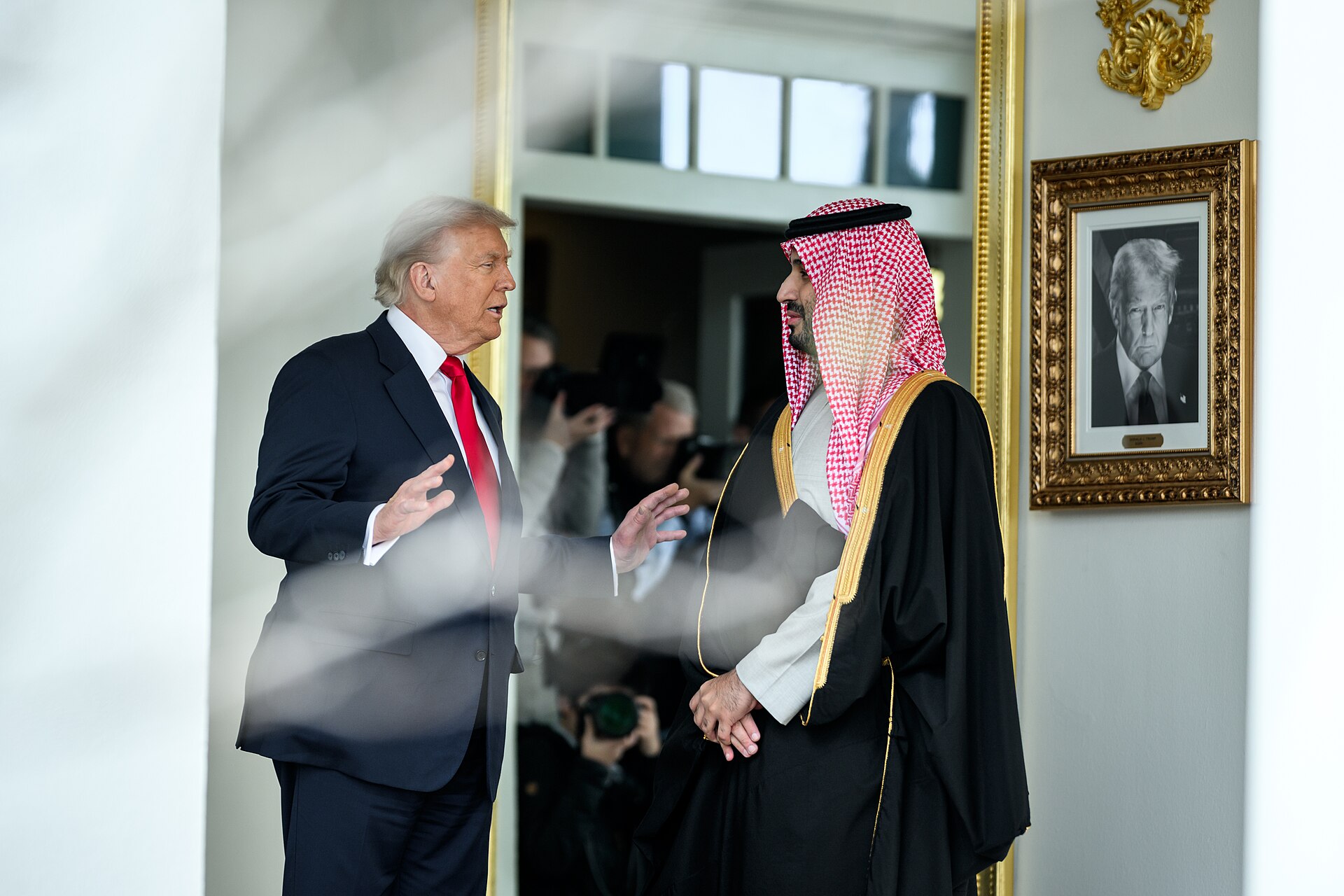
RIYADH — Saudi Crown Prince Mohammed bin Salman called President Donald Trump on Saturday, upgrading the US-Saudi diplomatic channel from ambassador level to head of state within twenty-four hours. The Saudi Press Agency confirmed the call covered bilateral cooperation and maritime security in the Strait of Hormuz — a readout released on the same day that US-Iran talks were scheduled to open in Islamabad without a single Saudi representative in the building.
The previous day, the only functioning diplomatic line between Riyadh and Washington ran through Princess Reema bint Bandar and Rubio — an ambassador-level exchange that marked the lowest tier of US-Saudi contact since the air campaign began. MBS’s decision to call Trump directly, while simultaneously dispatching Foreign Minister Faisal bin Farhan to call Rubio in a parallel channel, represents a coordinated effort to re-insert Riyadh into a decision-making process that has been advancing without Saudi input for weeks.
Table of Contents
What Did the SPA Readout Say?
The SPA readout followed the agency’s standard formula, but its inclusions and omissions are worth reading closely. The two leaders “reviewed cooperation relations between the Kingdom of Saudi Arabia and the United States of America and ways to enhance them in several fields,” the agency stated, and “stressed the importance of safeguarding maritime security, protecting vital shipping routes and supporting efforts to enhance regional stability,” per the SPA text relayed by Middle East Eye and Arab News on July 11.
The word “Iran” does not appear in the readout. Neither does any reference to the Islamabad talks, the sixty-day memorandum of understanding signed on June 17, or the $253 million in outstanding Persian Gulf Shipping Assessment fees that Saudi-flagged vessels face by the August 18 enforcement deadline — a liability growing at $5.5 million per day. The phrase “vital shipping routes” is the closest the SPA came to naming the Hormuz crisis, where daily vessel transits have collapsed from a pre-war baseline of 88 to approximately 34, according to IMF PortWatch data — a 61 percent drop that has reduced the world’s most important oil chokepoint to barely a third of its capacity.
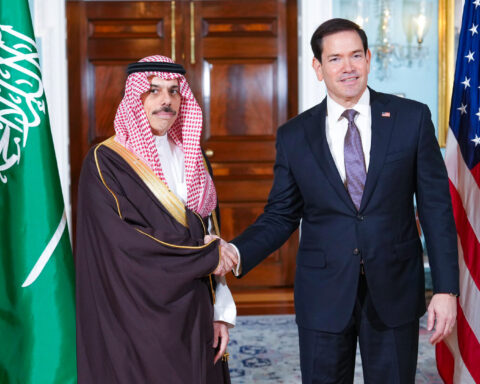
Faisal’s parallel call with Rubio produced an even thinner readout. The two “reaffirmed the importance of continued coordination,” the SPA said via Gulf News, without specifying what was being coordinated or toward what end. The structural point was the channel architecture itself: Riyadh activated two diplomatic tracks simultaneously — crown prince to president, foreign minister to secretary of state — after weeks in which neither was operating.
From Ambassador to Crown Prince in Twenty-Four Hours
The speed of the upgrade matters more than the readout. On Thursday, July 10, Princess Reema met Rubio at the ambassador level — the first direct US-Saudi contact since the Wall Street Journal reported a fracture in the relationship. That meeting was defined by who was absent: Faisal bin Farhan, who had held foreign-minister-level talks with Rubio as recently as January 2026, was not part of the exchange.
The Middle East briefing 3,000+ readers start their day with.
One email. Every weekday morning. Free.
Within a single day, MBS was speaking to Trump himself. In diplomatic terms, this amounts to a skip-level intervention — a leader deciding the ambassador channel was insufficient for what he needed to communicate, and that the foreign minister’s absence from the previous day’s contact would not define the relationship going forward. The Reema-Rubio exchange may have served as a proof of concept: a test of whether Washington would pick up before Riyadh put the crown prince on the line.
The trajectory since January traces a diplomatic decline followed by a sudden escalation. In January 2026, the US-Saudi channel operated at the foreign-minister level — the standard tier for allied nations coordinating on a live conflict. By July 10, it had degraded to ambassador level, a drop that reflected accumulated grievances from the grounding of US warplanes at Prince Sultan Air Base to Washington’s exclusion of Riyadh from the Islamabad framework. By July 11, MBS had leapfrogged the chain to head of state — a move suggesting Riyadh concluded the normal escalation ladder was too slow for the moment.
The parallel Faisal-Rubio call amplified the signal. By activating both tracks at once, Riyadh demonstrated restored bandwidth, not merely restored contact. As of publication, the State Department had not issued an independent readout of either exchange, and the White House had not commented on the substance — a contrast with the SPA’s decision to publicise both calls within hours.
Why Did MBS Call on the Day He Lost Islamabad?
The timing was not accidental. On the same Saturday that MBS dialled Trump, a fresh round of US-Iran talks was scheduled for Islamabad under the sixty-day MOU framework — Day 24 of a process that began June 17 — with nuclear issues, sanctions relief, and frozen Iranian funds on the agenda. Saudi Arabia had no seat at the table, not because it declined an invitation, but because it was never offered one.
The exclusion is not a procedural footnote. The Islamabad talks are shaping the terms under which the war might end — the future of Iran’s nuclear programme, the status of IRGC assets, and the framework for post-conflict security architecture across the Gulf. Saudi Arabia has absorbed Iranian missile strikes on its territory, lost effective control of the airspace above its largest US air base, and watched its OPEC+ production strategy buckle under a Hormuz blockade, yet it possesses no formal mechanism to influence any of these outcomes from inside the negotiating room.
MBS’s response was to go around the room entirely. The New York Times reported in March 2026 that the crown prince had been “speaking regularly with Trump, urging harsh action against Iran,” and had described the US-Israeli air campaign as “a historic opportunity for the Middle East.” The July 11 call, placed on the day Riyadh was most visibly absent from the peace process, was an attempt to ensure that whatever emerged from Islamabad would still fall within the parameters MBS had communicated to Trump — even without a Saudi diplomat in the building to defend them.
The Unverified Hundred Billion
Within hours of the SPA readout, social media accounts circulated a claim that MBS had offered Trump a $100 billion war-financing package during the call, bundled with Israeli normalisation, a $1 trillion US investment pledge, and $500 billion in weapons purchases. The claim originated from a single tweet by the account @ImtiazMadmood citing unnamed “White House sources,” and has not been confirmed by Reuters, the Associated Press, Bloomberg, the Wall Street Journal, the New York Times, the Washington Post, or any other tier-1 outlet as of publication.
Key elements of the claim repackage pre-existing commitments as though they were new offers. The $1 trillion investment pledge traces to MBS’s November 2025 White House visit, reported by CBS News, Fortune, and CNBC as an aspirational target with no binding timeline or enforcement mechanism. The $142 billion arms package — described as the “largest in history” — was signed during Trump’s May 2025 state visit to Riyadh, more than a year before the first US airstrike on Iranian soil. Conflating pre-war frameworks with an alleged wartime financing offer is a pattern common to social media aggregation of Gulf policy, and multiple outlets have already republished the claim without noting its single-source basis.
The confirmed facts support a narrower account: a crown prince calling a president to discuss maritime security and bilateral cooperation, in the language of relationship repair rather than chequebook diplomacy. MBS has demonstrated willingness to spend — Saudi defence expenditure reached $78 billion annually in 2025, according to The Nation — and has consistently pushed for an aggressive US posture on Iran, including privately urging regime change and ground troops, per the New York Times. But a direct war-financing commitment on the scale claimed remains, as of this writing, an unverified social media report.
Can Riyadh Afford What MBS Is Offering?
Even the confirmed scale of Saudi financial exposure raises questions about fiscal capacity. The kingdom ran a deficit of SAR 125.7 billion — roughly $33.5 billion — in the first quarter of 2026 alone. Aramco’s free cash flow has fallen to 0.85 times its dividend obligation, meaning Saudi Arabia’s primary revenue engine is paying out more to shareholders than it generates from operations. Brent crude sits at approximately $76.56 per barrel, more than $10 below the $86.60 fiscal breakeven the IMF estimates Saudi Arabia needs to balance its books.
Those numbers translate into visible austerity. NEOM, the $500 billion flagship of Vision 2030, absorbed a $16 billion termination this year. The PGSA deadline on August 18 adds a separate layer of shipping-cost exposure, while the Hormuz crisis has driven war-risk insurance to 2 percent of hull value — eight times the pre-crisis rate — effectively taxing every Saudi-chartered barrel that reaches open water. Each new financial commitment Riyadh signals competes with obligations already straining the treasury.
“There is no future in which Saudi Arabia puts boots on the ground.”
— Andrew Leber, political scientist, Tulane University, to The Nation
Stacey Philbrick Yadav, a Yemen specialist, told The Nation that Saudi Arabia prefers to let the United States absorb the military cost of weakening Iran while Riyadh maintains focus on Yemen, where past Saudi military spending proved “relatively irrelevant” to battlefield outcomes. Leber warned separately that direct intervention would create “visibility alongside Israel, threatening regime legitimacy across the Arab world” — a constraint that applies whether Riyadh contributes troops or dollars. The financial offer, whatever its actual scale, may be the mechanism through which Riyadh tries to purchase influence over a war it cannot fight and a peace process it cannot enter.
Iran’s state media has constructed a different narrative. PressTV reported on July 2 that MBS had “lost confidence” in Trump after Iran demonstrated its ability to strike US bases across four countries, claiming Riyadh shifted from pressing for escalation to “urging a ceasefire” once the war reached Saudi Arabia’s doorstep — a characterisation CNN partially corroborated on July 10. Iranian Foreign Minister Abbas Araghchi denied that Tehran had requested negotiations, describing the Qatar mediator channel as the only authorised diplomatic track.
Background
The MBS-Trump relationship during the crisis has moved through distinct phases, each defined by a different balance of Saudi bargaining power and dependence. In May 2026, the two spoke during Operation Project Freedom — the four-day episode in which Saudi Arabia grounded 43 US warplanes at Prince Sultan Air Base, an action Trump failed to reverse through direct appeal and that Washington ended only by threatening to withhold PAC-3 interceptor resupply. The Washington Post reported in February 2026 that a “push from Saudis” and Israel “helped move Trump to attack Iran,” while the New York Times followed in March with details of MBS’s private argument that the US should “consider putting troops in Iran to seize energy infrastructure.”
The military architecture underpinning the alliance is as strained as the diplomatic channel. Approximately 2,300 US personnel remain at Prince Sultan Air Base, where the grounded warplanes have not resumed operations under ongoing Saudi restrictions. The kingdom’s PAC-3 interceptor inventory — the air-defence missiles designed to stop incoming Iranian ballistics — stands at roughly 400 of an original 2,800, an 86 percent depletion rate that constrains Riyadh’s ability to defend against the strikes it has already absorbed. The GCC’s collective call for “lasting regional peace” addressing “the full spectrum of Iran’s threats” reflects Saudi Arabia’s negotiating position, but the Islamabad framework is not structured to deliver it.
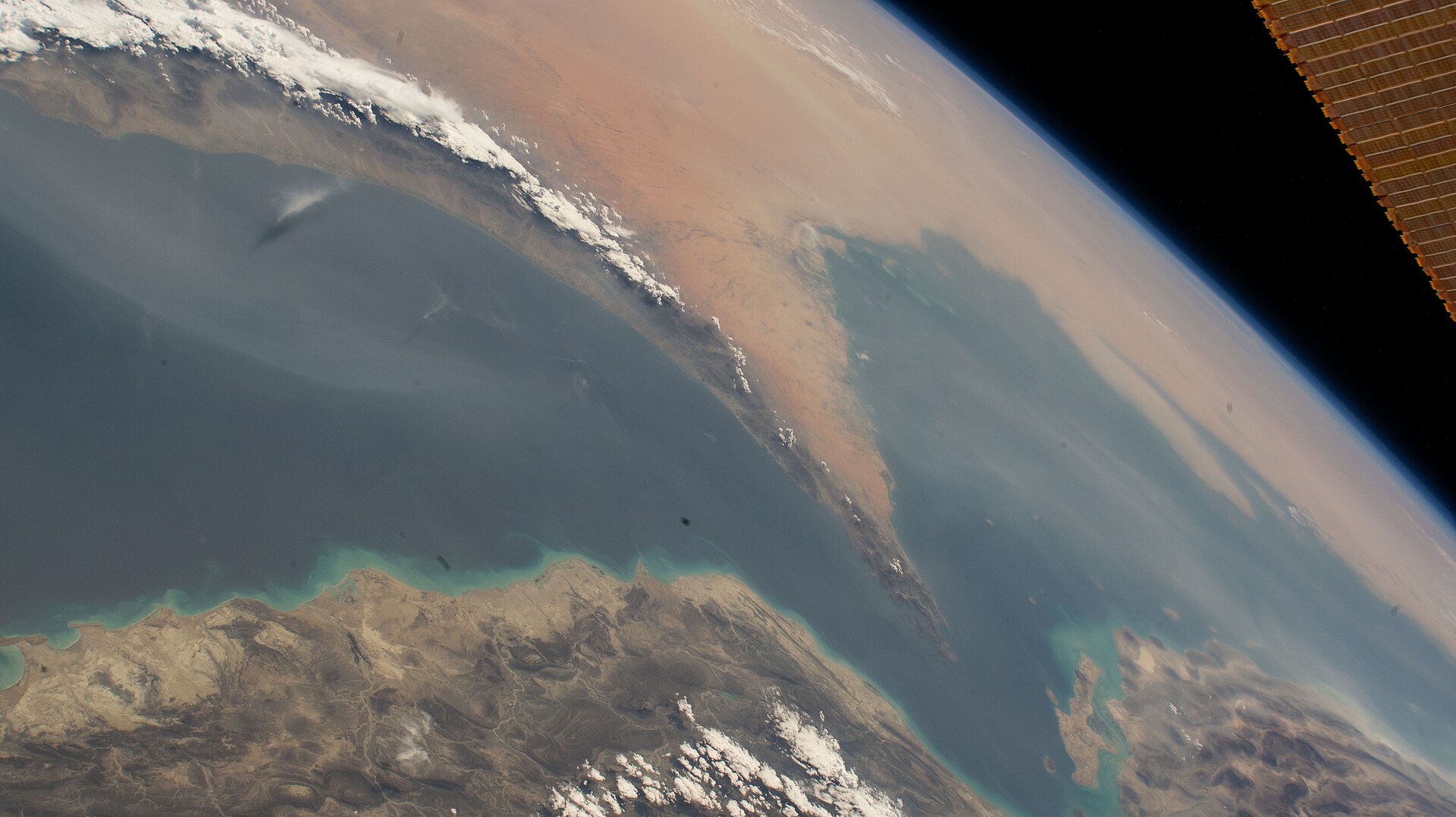
With thirty-eight days remaining before the PGSA enforcement deadline on August 18 and the MOU entering its most consequential phase, Saudi Arabia remains outside the room where the post-war terms are being written. The channel MBS opened on Saturday may be the most direct instrument Riyadh has left to shape an outcome it cannot control from the inside.
Frequently Asked Questions
Has Saudi Arabia offered to normalise relations with Israel as part of this call?
The SPA readout made no reference to Israel, and no confirmed reporting links the July 11 call to a normalisation offer. The pre-existing Saudi-Israeli normalisation track — contingent on a credible Palestinian statehood pathway — has been effectively frozen since the Gaza war. Separately, the Public Investment Fund invested $2 billion in Jared Kushner’s Affinity Partners in 2021, generating an estimated $137 million in management fees by August 2026 according to Popular Information — a financial entanglement that some analysts argue creates informal influence distinct from any formal diplomatic offer.
What is the Persian Gulf Shipping Assessment and why does it matter for Saudi Arabia?
The PGSA is a fee structure Iran imposed on commercial vessels transiting the Strait of Hormuz, announced in conjunction with the maritime blockade earlier this year. Saudi-linked shipping faces a cumulative exposure of $253 million by the August 18 enforcement deadline, accumulating at approximately $5.5 million per day. Vessels that fail to pay face the threat of interdiction, seizure, or denial of passage — a mechanism that effectively converts the strait from an international waterway into a toll route administered by Tehran.
How many direct MBS-Trump calls have occurred during the conflict?
At least three confirmed rounds of direct contact: the May 4-6 exchanges during Operation Project Freedom, regular calls in June referenced in New York Times reporting, and the July 11 call confirmed by the SPA. The last confirmed in-person meeting between the two leaders was MBS’s November 2025 White House visit, where the $1 trillion investment pledge was announced — a pre-war commitment that has since been conflated with alleged wartime financing offers in social media reporting.
What role does Pakistan play in the Islamabad talks?
Pakistan hosts the MOU talks as a co-facilitator alongside Qatar, with Pakistani diplomat Ali Munir serving in a dual capacity as MOU co-signatory and facilitation lead. Munir holds a complex profile: his links to the IRGC date to 2016-17, and he attended the Khamenei state funeral — credentials that give him access across both sides of the negotiating table. Pakistan also holds a non-permanent UN Security Council seat, giving Islamabad a separate channel to shape Iran-related resolutions — a forum where Saudi Arabia’s absence compounds its exclusion from the bilateral track. Pakistan’s formal role as MOU guarantor — and how that role structurally displaced Saudi Arabia from the Islamabad negotiating track — is examined in Pakistan Holds the Guarantee Saudi Arabia Cannot Buy.
The MBS-Trump call on July 11 was preceded by an FM-level Rubio-Faisal call on July 10 — a triple-channel sprint that restored diplomatic access while leaving Saudi Arabia’s Islamabad exclusion structurally unchanged. The full sequence of how each channel was activated, and what it failed to secure, is in Faisal Got the Call — Riyadh Did Not Get the Seat.