
RIYADH — More than twenty-four hours after Houthi missiles set the Jizan refinery ablaze and ballistic warheads reached Yanbu — the terminal through which ninety-two per cent of Saudi crude now exits the kingdom — neither Mohammed bin Salman nor King Salman has spoken publicly. Aramco has issued no damage assessment, no casualty count, and no acknowledgment that a 400,000-barrel-per-day facility has been burning since 01:17 UTC on July 25, visible on NASA satellite imagery and claimed by the Houthi military spokesman on international television.
The silence covers three simultaneous crises that cannot be separated: confirmed infrastructure damage at a refinery Aramco has disclosure obligations to report, a demonstrated threat to Saudi Arabia’s only remaining export corridor after the Hormuz closure, and a seventy-two-hour-old American ultimatum tying the just-signed 123 nuclear deal to Israeli normalization — a condition MBS cannot accept without his ninety-year-old father’s signature and cannot reject without losing the deal. This is not strategic ambiguity. It is the absence of a position that survives contact with any of the three.
Table of Contents
- Jizan Started Burning at 01:17 and Aramco Has Not Said a Word
- Why Is Yanbu the Most Dangerous Target in the Saudi Export Chain?
- What Triggered the Houthi Retaliation?
- How Does This Silence Compare to Abqaiq?
- The Greek Battery at the End of the Petroline
- Who Answers Trump’s Normalization Condition?
- What Does Aramco Owe the Market?
- Three Silences, One Clock
- Frequently Asked Questions
Jizan Started Burning at 01:17 and Aramco Has Not Said a Word
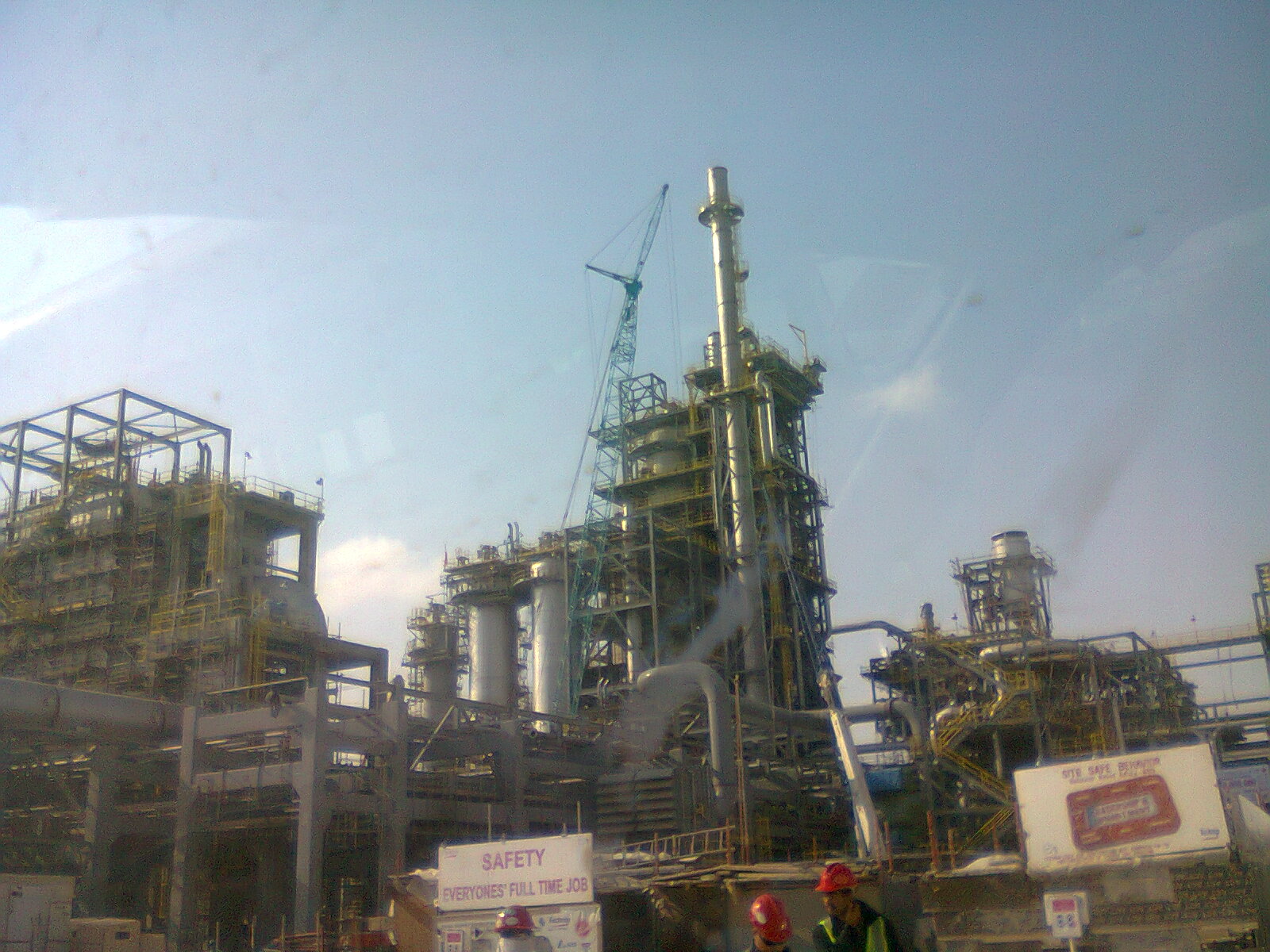
The Jizan refinery — 400,000 barrels per day, roughly four per cent of Aramco’s total production, commissioned in 2021 and brought to full throughput barely two years later — began burning in the early hours of July 25 after what Houthi military spokesman Yahya Saree described as “dozens of ballistic missiles and drones” targeting “sensitive Aramco-affiliated facilities.” NASA’s FIRMS satellite monitoring system registered an abnormal thermal signature at the site around 04:17 local time, consistent with a large-scale hydrocarbon fire. Saudi Civil Defense activated the National Early Warning Platform in Jizan at approximately 06:10 local time, then lifted the alert without public explanation.
Saree was explicit about the outcome: “Both operations successfully achieved their objectives.” He was referring to Jizan and Yanbu simultaneously, framing them as a coordinated pair — retaliation, he said, for “this blatant and criminal aggression,” meaning the Saudi-led coalition’s strikes on Hodeida port infrastructure and Kamaran Island telecommunications facilities the previous day. The Houthi spokesman’s willingness to claim the attack publicly, naming Aramco facilities by association, stands in direct contrast to Aramco’s response, which has been to say nothing.
No spokesperson has confirmed or denied the fire. No damage estimate has been released, no casualty count provided, no timeline for restoration offered. Media requests have gone unanswered. Aramco’s own subsidiary SABIC filed a continuous-disclosure notice with the Tadawul exchange within hours of a missile strike on its Jubail complex in April; the parent company, twenty-four hours into a fire visible from space, has not followed the standard its subsidiary set.
Why Is Yanbu the Most Dangerous Target in the Saudi Export Chain?
Yanbu handles ninety-two per cent of Saudi Arabia’s seaborne crude exports after the Hormuz closure forced virtually all outbound volume through the East-West Petroline and its Red Sea terminus. The terminal complex has no functioning backup — Hormuz is under IRGC naval control, and no other pipeline reaches an alternative coast — making it the single most concentrated point of failure in the global oil supply chain.
The Middle East briefing 3,000+ readers start their day with.
One email. Every weekday morning. Free.
The concentration happened fast. When Hormuz closed, Saudi Arabia executed the contingency its infrastructure planners had spent four decades preparing: push crude west through the Petroline to the Red Sea. In March 2026, the pipeline hit an all-time throughput record of seven million barrels per day, with roughly two million feeding domestic refineries and the rest loading at Yanbu’s North and South terminals for export. The system worked exactly as designed — and in working, it created a dependency that nobody planned for, because the Petroline was built as an alternative route, not the only one.
The Petroline itself adds a layer of exposure that the export numbers do not capture. The pipeline runs approximately 1,200 kilometers across open terrain from Abqaiq to Yanbu, passing through pump stations and valve complexes that are difficult to defend comprehensively against precision-guided munitions. If the Houthis can reach Yanbu — roughly 1,100 kilometers from the nearest launching point in northern Yemen — they can reach sections of the pipeline. Saudi Arabia has not discussed pipeline protection measures publicly since the Hormuz closure, and the kingdom’s air-defense assets are concentrated around high-value fixed sites rather than distributed along linear infrastructure.
The Houthi strikes on July 25 did not destroy Yanbu. Greek-operated Patriot batteries intercepted at least two ballistic missiles and two drones above the terminal complex, and physical damage appears limited. But the fact that warheads reached the intercept envelope above Yanbu matters more to the downstream market than the fact that Greek batteries stopped them. Every insurance underwriter, shipping company, and refinery procurement desk watching the Red Sea now knows Yanbu is reachable, that its active defenses depend on foreign military personnel, and that Saudi Arabia has no alternative corridor if those defenses are overwhelmed. War-risk premiums — already at two per cent of hull value, eight times the pre-crisis baseline — will absorb that knowledge within days.
| Export corridor | Status (July 26, 2026) | Capacity | Share of seaborne exports (June 2026) |
|---|---|---|---|
| Hormuz (Ras Tanura, Ju’aymah) | Closed — IRGC naval control | ~7M bpd | 0% |
| East-West Petroline to Yanbu | Operational; targeted July 25 | 7M bpd (all-time record) | 92% (Kpler/AFP) |
| Jizan refinery | Burning since 01:17 UTC July 25 | 400,000 bpd | Domestic processing |
What Triggered the Houthi Retaliation?
Saudi Arabia struck first. On July 24, the Saudi-led coalition hit Hodeida port infrastructure and telecommunications facilities on Kamaran Island. Coalition spokesman Turki al-Maliki insisted the port itself was “not the target” and that Hodeida, Ras Isa, and Salif “remain open to commercial vessels.” Reuters witnesses reported explosions at the port, and a woman was injured on Kamaran Island.
Within hours, the Houthis launched what Saree described as coordinated operations against Jizan and Yanbu — “dozens of ballistic missiles and drones” aimed at “sensitive Aramco-affiliated facilities” on two coasts simultaneously. The framing was unambiguous: this was retaliation for “this blatant and criminal aggression,” referring specifically to the coalition’s July 24 strikes. The timeline leaves no room for alternative sequencing — Riyadh hit Hodeida, a port that carries humanitarian cargo and whose targeting the kingdom had previously gone to considerable lengths to avoid, and absorbed the most damaging counter-strike on Saudi oil infrastructure since September 2019.
Hodeida is not an ordinary military target for the coalition, and the decision to strike its infrastructure — whether or not the port itself was “the target” in al-Maliki’s formulation — reverses years of deliberate restraint. During the 2018 Hodeida offensive, international pressure forced the coalition to halt short of the port precisely because of its role as the primary entry point for humanitarian aid to northern Yemen. The 2022 UN-brokered truce was built partly on the understanding that Hodeida’s port facilities would remain functional. By striking port-adjacent infrastructure on July 24, the coalition crossed a threshold it had previously acknowledged as too costly — and the cost materialized within hours, in the form of Houthi warheads reaching Aramco facilities on two coasts.
Al-Maliki’s insistence that the port was “not the target” deploys a construction the coalition has used repeatedly: precise language designed to survive a press briefing while obscuring what witnesses observed. Whatever operational purpose the July 24 strikes served, the cost-benefit ledger closed within hours — telecommunications equipment on Kamaran Island against 400,000 barrels per day of refining capacity, burning.
How Does This Silence Compare to Abqaiq?
After Abqaiq in September 2019, Saudi Arabia attributed the attack to Iran within hours, produced a CEO statement within twenty-four, and held a ministerial press conference within three days declaring production restored. After Jizan, more than twenty-four hours have passed with no attribution, no damage estimate, no restoration timeline, and no public statement from any Saudi official at any level. The contrast measures what the kingdom can credibly claim, not what it chooses to say.
The Abqaiq attack knocked 5.7 million barrels per day offline, the largest single supply disruption in modern oil market history. Aramco CEO Amin Nasser publicly promised full restoration within days; Prince Abdulaziz bin Salman held a press conference on September 17 declaring production back to pre-attack levels. The ten fires that broke out at the facility were extinguished within seven hours, and the message was unmistakable: Saudi Arabia had taken a catastrophic hit and demonstrated the capacity to recover rapidly.
Markets responded accordingly — Brent spiked roughly fifteen per cent at Monday’s open and retreated within two weeks as production came back on schedule. The reason Saudi Arabia could project that resilience was structural, not rhetorical. In 2019, Hormuz was open, Yanbu was a lightly-loaded backup, and the Petroline ran well below maximum capacity, which meant a single-site catastrophe could be absorbed and recovery demonstrated to the market.
In July 2026, Hormuz is closed under IRGC control, Yanbu is the sole functioning export terminus, the Petroline is running at its all-time maximum, and the same force that struck Jizan has demonstrated it can reach Yanbu. There is no spare capacity to reroute through, no alternative terminal to load from, and no way to tell the market “we are resilient” without inviting the follow-up that no Saudi official can answer: resilient through what?
The silence, in this reading, is not caution or communications discipline. It is the recognition that the 2019 playbook requires a system position the kingdom no longer holds. When the backup has become the only route, and the only route has just been proven reachable by the adversary, saying nothing becomes the least damaging option — at least until the market, the exchange regulator, or the American president forces a response that the kingdom’s current position cannot support.
The Greek Battery at the End of the Petroline
One of the more revealing details from July 25 is who defended Yanbu when the missiles arrived. The ballistic warheads and drones that reached the terminal complex were intercepted by a Greek-operated Patriot battery, staffed by Greek military personnel under a bilateral defense agreement signed in 2021. A NATO ally’s soldiers, operating an American-manufactured system, defended Saudi Arabia’s last crude export terminal while the kingdom’s own integrated air and missile defense network — assembled at a cost of tens of billions of dollars — was apparently not the decisive factor at the point of maximum consequence.
Riyadh has no interest in amplifying this. Acknowledging that Greek personnel saved Yanbu would raise immediate questions about the status of Saudi Arabia’s own interceptor stocks — approximately four hundred PAC-3 missiles remain from a pre-war inventory of 2,800, roughly fourteen per cent — and about what happens when the Greek battery’s supply of interceptors runs low. It would also spotlight a contradiction that the kingdom has managed to keep below the surface: MBS expelled forty-three American warplanes from Prince Sultan Air Base in May 2026 under Operation Project Freedom, asserting sovereign control over the kingdom’s security posture, while a Greek Patriot crew quietly keeps the oil moving at Yanbu.
The Greek deployment was never designed to bear this weight. When the agreement was signed, Yanbu was one of several export outlets and Houthi missile threats were manageable with Saudi-operated systems backed by the American military presence at PSAB. Five years later, the Greek battery is not supplementing Saudi defenses — in practical terms, it is the last intercept layer at the single point on which the kingdom’s export economy depends. That is a fact nobody in Riyadh, Athens, or Washington has an incentive to state publicly, and a fact the July 25 intercepts have made impossible to ignore in private.
Who Answers Trump’s Normalization Condition?
As of July 26, nobody with the authority to accept or reject Trump’s condition has responded. The normalization demand requires a treaty-level commitment under Saudi Basic Law Article 70, which means King Salman’s signature — and the ninety-year-old king has never publicly departed from the position that Saudi-Israeli diplomatic relations require Palestinian statehood with East Jerusalem as its capital. MBS, who holds effective executive power over virtually everything else in the kingdom, cannot sign this on his own.
The 123 nuclear cooperation agreement was signed on July 22 by US Energy Secretary Chris Wright and Saudi Energy Minister Prince Abdulaziz bin Salman — deliberately structured below the treaty-ratification threshold, using ministerial rather than head-of-state signatories. The deal text made no mention of Israel. One day later, Trump posted on Truth Social that the agreement “is totally subject to Saudi Arabia joining the very respected and successful Abraham Accords.” A Saudi source told the Washington Post: “Tweets don’t overturn signed deals.”
MBS at the Shura Council in September 2024 was categorical: “The kingdom will not establish diplomatic relations with Israel without” a Palestinian state with East Jerusalem as its capital. MBS privately, according to evangelical leader Mike Evans — who claims a two-hour meeting with the crown prince in May 2026 — would recognize Israel “today” but considers his father the main obstacle. The gap between the public position and the reported private one is not new. What is new is that Trump’s condition forces it into the open by elevating a ministerial energy deal to the level at which Article 70 applies and King Salman’s pen becomes the only one that counts.
The anonymous Saudi source’s rejoinder — “tweets don’t overturn signed deals” — is technically defensible and practically meaningless. Trump’s social media pronouncements have overturned international agreements before; the Iran nuclear deal survived two years of hostile posts and then did not survive. The difference between a Truth Social statement and a formal executive action is real in legal terms and functionally irrelevant in terms of whether the 123 deal holds long enough to reach implementation.
Pakistan’s PM Shehbaz Sharif called MBS on July 23, condemning Houthi attacks on Saudi oil tankers — specifically the strike on the tanker Encelia — and pledging “full support.” It was the most substantive foreign endorsement Riyadh received in the seventy-two hours since the normalization ultimatum landed. Sharif addressed tankers, not the Abraham Accords; Islamabad has its own reasons for avoiding the normalization question entirely. That this call was the strongest public backing the kingdom could produce says more about Riyadh’s diplomatic isolation than any silence from the palace.
What Does Aramco Owe the Market?
SABIC — seventy per cent owned by Aramco, listed on Tadawul — set the standard on April 8, 2026, after a missile struck its Jubail petrochemical complex. The filing was prompt and direct: SABIC informed shareholders it “cannot provide, at the present time, an estimate for the return to production, as this is contingent on domestic and international factors,” and warned of “material impact to 2026 financial results.” The disclosure required no damage certainty, no restoration timeline — only acknowledgment that a material event had occurred and that financial consequences could not yet be quantified. SABIC met that standard within hours.
Aramco has not matched it. The Jizan refinery has been burning for more than twenty-four hours, confirmed independently by NASA satellite data, claimed by Yahya Saree on international broadcasts, and reported by Bloomberg, Reuters, AFP, and every major wire service covering the Gulf. Aramco — which raised $29.4 billion in the largest IPO in history, partly on commitments to international-grade corporate governance — has filed nothing with Tadawul, released no media statement, and offered no acknowledgment to shareholders that the event took place.
CMA listing rules are unambiguous: issuers must disclose any event that could materially affect the price of listed securities “immediately upon becoming aware of it.” Aramco’s own IPO prospectus classified “terrorist attacks, armed conflict, and acts of sabotage against our facilities” among the risk factors requiring disclosure. A 400,000-barrel-per-day refinery fire sits squarely within that classification. The company is aware of the fire; the market is aware of the fire; the only entity that has not acknowledged the event is the one with the regulatory obligation to confirm it.
The non-filing creates a self-compounding problem. Every hour without a disclosure widens the gap between what the market knows through journalism and what Aramco has officially confirmed. Institutional investors, index funds holding Aramco within MSCI Emerging Markets, and sovereign wealth funds that calibrated their Saudi exposure against Aramco’s governance promises are watching a company in apparent non-compliance with its own exchange’s rules. The governance premium that justified the IPO valuation erodes not when damage is reported but when damage is visibly withheld.
| Incident | Entity | Tadawul disclosure | Public statement | Response time |
|---|---|---|---|---|
| Jubail missile strike, April 8, 2026 | SABIC (70% Aramco-owned) | Filed within hours | Yes | Same day |
| Abqaiq attack, September 14, 2019 | Aramco (pre-IPO listing) | N/A | CEO + Energy Minister | 24-72 hours |
| Jizan refinery fire, July 25, 2026 | Aramco | None (24+ hours) | None | Ongoing silence |
Three Silences, One Clock
The three silences are structurally linked even if Riyadh would prefer them treated as unrelated problems: the Jizan silence is a corporate governance gap; the Yanbu silence is an infrastructure vulnerability that cannot be acknowledged without accelerating the insurance and shipping costs it would confirm; the normalization silence is a diplomatic impasse between a father and son who hold irreconcilable public positions on a question an American president has forced into the open. Each is difficult enough alone; together, they create a constraint in which MBS cannot address any one without making the others harder to manage.
Acknowledging Jizan means admitting infrastructure damage the market will price, insurers will compound, and the Houthis will cite as vindication of their retaliatory strikes. It also means acknowledging that the July 24 Hodeida operation — which Riyadh initiated — produced a counter-strike Saudi defenses could not fully prevent. Acknowledging Yanbu’s vulnerability means admitting the kingdom’s entire export economy runs through a single corridor defended in part by Greek military personnel, at a moment when the American security relationship is deteriorating and interceptor stocks sit at fourteen per cent of their pre-war level. Responding to Trump’s normalization condition means either accepting a demand King Salman will not sign or rejecting one that kills a nuclear deal MBS has pursued at enormous cost.
Prior Saudi silences followed different structures. After the Khashoggi killing in October 2018, MBS maintained denial for seventeen days before Saudi Arabia admitted to a “fistfight” explanation — a reputational crisis, survivable at diplomatic cost if not at moral cost. After Operation Project Freedom in May 2026, the silence preceded a decisive action: forty-three warplanes grounded within hours, sovereignty asserted through deeds rather than words. What distinguishes this silence is that no decisive action appears to exist — there is no single move that simultaneously resolves an Aramco disclosure gap, a demonstrated Yanbu vulnerability, and a normalization demand requiring the king’s signature.
Iranian Foreign Minister Araghchi, speaking on July 26, called for “diplomacy and dialogue” to resolve the Yemen conflict “without military confrontations.” On the same day, the IRGC Navy stopped four ships attempting to transit Hormuz and fired warning shots — the strait that Saudi Arabia’s entire export system was built to bypass remains under Iranian operational control. Tehran can afford concurrent signals: conciliation from the foreign ministry, coercion from the navy. The IRGC Navy enforced those controls on the same day the Pentagon confirmed a second consecutive night without Iran strikes — a pause that Araghchi declined to acknowledge as diplomatic concession. Brent crossed $100 after the July 25 strikes, having risen roughly forty per cent over the course of July, with UBS strategist Giovanni Staunovo noting a “tightening of the oil market” and prices climbing approximately $28 per barrel in the three weeks preceding the attacks alone.
Across all three crises — the refinery fire, the Yanbu targeting, the normalization ultimatum — the most substantive foreign response Riyadh has received is the Sharif call: tankers, not treaty obligations. No other foreign leader has publicly addressed any of the three.
Frequently Asked Questions
What enforcement mechanisms does the CMA have if Aramco does not file a disclosure?
The Capital Market Authority can impose fines under Article 59 of the Capital Market Law, suspend trading in a company’s shares, or refer violations to the Committee for the Resolution of Securities Disputes. Penalties can include fines of up to SAR one million per violation and, in principle, personal liability for board members who knowingly withheld material information. In practice, no enforcement action has been taken against a majority-state-owned Tadawul issuer. The CMA board chair is a royal appointee, and the Public Investment Fund — chaired by MBS — holds 82.2 per cent of Aramco’s shares, creating a structural tension between the regulator’s independence and the sovereign’s ownership interest that has not been tested publicly.
When was the East-West Petroline built and what was it designed for?
The Petroline was commissioned in 1981 during the Iran-Iraq War, when the possibility of a Hormuz closure first became a concrete planning scenario for Saudi Arabia. It runs approximately 1,200 kilometers from Abqaiq in the Eastern Province to Yanbu on the Red Sea coast. Originally designed with a nameplate capacity of roughly five million barrels per day, the system was expanded between 2011 and 2013 and pushed to an all-time record of seven million barrels per day in March 2026 after Hormuz became effectively impassable. The pipeline’s designers assumed Yemen — then two separate states, neither possessing ballistic missile technology — posed no threat to the Red Sea terminus, an assumption that held for forty-four years and ceased to hold on July 25, 2026.
How do current strategic petroleum reserves compare to the levels that buffered the 2019 Abqaiq shock?
When Abqaiq was struck in September 2019, OECD countries collectively held approximately 1.55 billion barrels in strategic petroleum reserves, according to the International Energy Agency — enough to provide a credible price ceiling that helped contain the Brent spike within two weeks. Coordinated IEA emergency releases since the Hormuz closure have drawn those stocks substantially lower. The US Strategic Petroleum Reserve has fallen below 400 million barrels from a 2009 peak of 727 million. The reduced buffer means a comparable disruption at Yanbu — which now handles a far larger share of Saudi exports than Abqaiq did in 2019 — would produce a more severe and longer-lasting price response, with less reserve capacity available to temper it.
Has MBS used prolonged public silence as a deliberate tactic before?
At least twice before this week, and in both cases the silence preceded a prepared action. The June 2017 Qatar blockade began on June 5; Saudi Arabia did not publish its list of thirteen demands until June 23 — eighteen days of diplomatic pressure during which Riyadh declined to state its terms publicly, moving only when the move was ready. The March 2020 OPEC+ collapse saw a similar period of restraint before the oil-price-war production surge was announced. In both instances, the silence served as controlled escalation, not indecision. The current silence has lasted more than twenty-four hours across three separate crises without producing any equivalent decisive step, which suggests the delay reflects the absence of a prepared position rather than a controlled build-up toward one.