
RIYADH — The IRGC numbered its retaliatory strikes in sequence. Phase 1, announced July 8, hit four US military installations across Kuwait and Bahrain. Phase 2, announced July 9, struck Al-Azraq Air Base in Jordan and destroyed a satellite communications dish at Al Udeid Air Base in Qatar. The IRGC then issued an open-ended warning: “other U.S. bases in the region will not be spared from our heavy fire.” Prince Sultan Air Base — approximately 90 kilometres southeast of Riyadh, housing the US tanker and AWACS fleet that sustains air operations over the Gulf — is the only major US installation in the region not struck in the July sequence. It sits at the end of a ladder the IRGC has publicly labelled and is visibly ascending. But the question of why PSAB remains unstruck is not primarily a question about Iranian restraint or capability. It is a question about what Saudi Arabia communicated when it shut the base down itself. In May, Riyadh grounded every US warplane at PSAB for four days during Operation Project Freedom. Since then, no public US-Saudi statement has reaffirmed a mutual defence obligation for the installation.
n
Table of Contents
n
- n
- The Phases Iran Has Named
- Why Has the IRGC Skipped Prince Sultan Air Base?
- What Operation Project Freedom Revealed
- The Deterrence That Saudi Arabia Dismantled
- What Can Reach Prince Sultan Air Base?
- Four Hundred Interceptors and a Damaged Radar
- What Legal Framework Governs Prince Sultan Air Base?
- Did Saudi Arabia Invoke Collective Defence?
- Frequently Asked Questions
n
The Middle East briefing 3,000+ readers start their day with.
One email. Every weekday morning. Free.
n
n
n
n
n
n
n
n
n
n
The Phases Iran Has Named
n
The IRGC’s retaliatory campaign against US bases has followed a numbered sequence, each phase expanding the geographic scope and the categories of targets. Phase 1 came on July 8. The IRGC struck four US installations across two GCC member states: Ali Al Salem Air Base and Camp Arifjan in Kuwait, and Naval Support Activity Bahrain at Juffair and Sheikh Isa Air Base in Bahrain. The IRGC described the attacks as “the first phase of its punitive response” — language that explicitly presupposed further phases.
n
Phase 2 followed within 24 hours. On July 9, the IRGC fired ten ballistic missiles at Muwaffaq al-Salti Air Base near Al-Azraq, Jordan, which it called a “command and control centre in West Asia.” Eight were intercepted by Jordanian MIM-23 Hawk batteries. The IRGC claimed four targets were destroyed; Jordan has not confirmed that figure. Simultaneously, Iran’s regular army — operating on a separate chain of command from the IRGC — destroyed an AN/GSC-52B(V5) MET satellite communications dish at Al Udeid Air Base in Qatar, a $15 million L3Harris-built system and the first of its type destroyed outside the continental United States.
n
| Phase | Date | Targets Struck | Countries |
|---|---|---|---|
| Phase 1 | July 8 | Ali Al Salem AB, Camp Arifjan, NSA Bahrain (Juffair), Sheikh Isa AB | Kuwait, Bahrain |
| Phase 2 | July 9 | Muwaffaq al-Salti AB (Al-Azraq), Al Udeid AB (satellite dish) | Jordan, Qatar |
| Unstruck | — | Prince Sultan Air Base (Al Kharj) | Saudi Arabia |
n
n
The post-Phase 2 statement expanded the threat envelope beyond the named targets. The IRGC Aerospace Force released the following warning through state-affiliated channels on July 9.
n
n
If the aggression of the U.S. terrorist army is repeated, other U.S. bases in the region will not be spared from our heavy fire.
nIRGC Aerospace Force statement, July 9, 2026n
n
The language is conditional — tied to future US military action — but the targeting sequence is cumulative. Phase 1 covered two countries. Phase 2 added two more. The IRGC did not announce a Phase 3 or name specific targets. Prince Sultan Air Base, approximately 600 kilometres from the Iranian coast and housing 2,300 US personnel, is the only major US installation in the GCC states not struck in either phase.
n
 n
nn
Why Has the IRGC Skipped Prince Sultan Air Base?
n
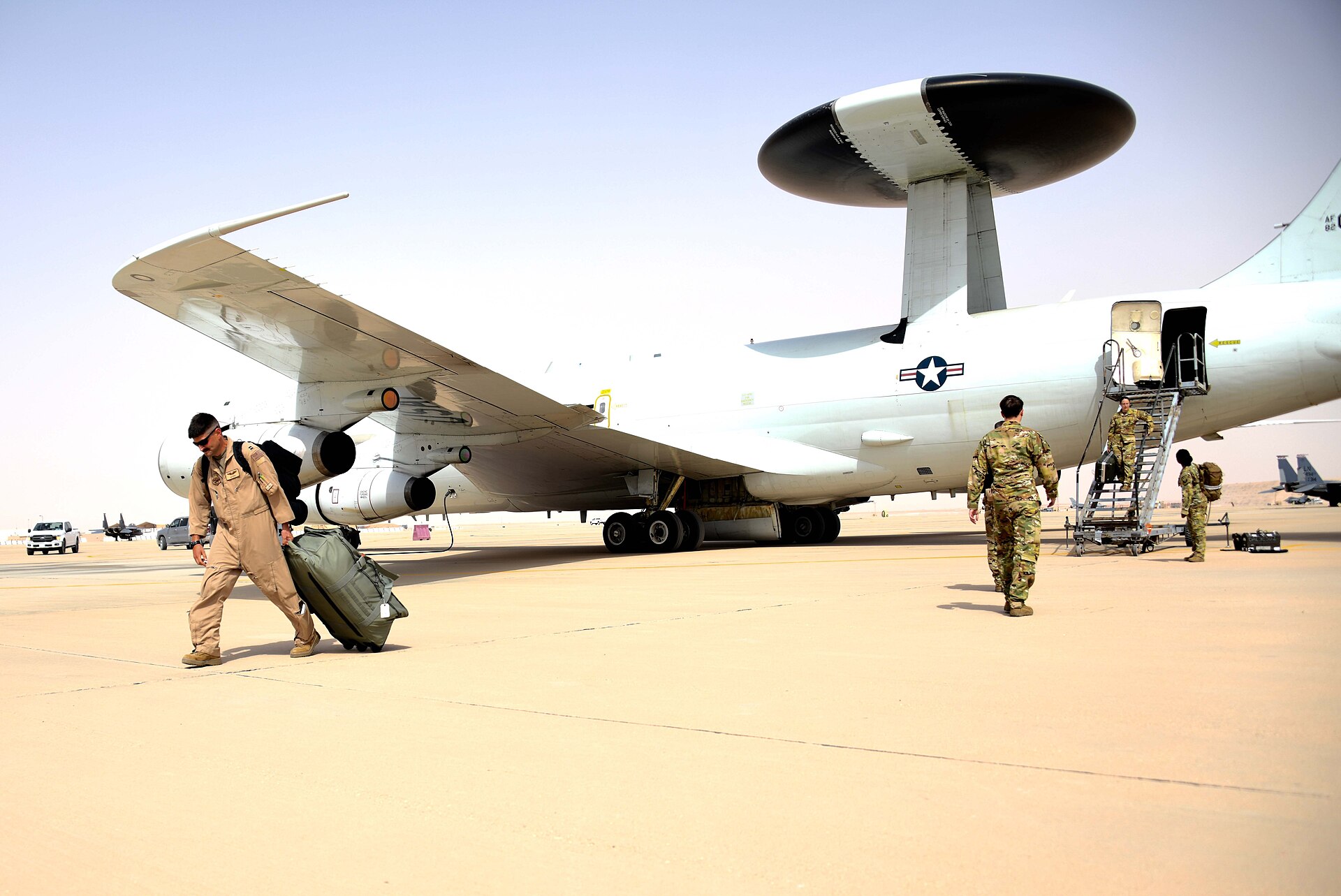
The IRGC has not avoided PSAB due to technical limitations or unfamiliarity with the target. Iran struck the base twice earlier in the war — on March 14, when five KC-135 Stratotankers were damaged, and on March 27, when an E-3G Sentry AWACS aircraft valued at approximately $270 million was destroyed with no replacement airframe available. Boeing’s E-3 production line closed in 1992. Both strikes demonstrated precision targeting at ranges exceeding 800 kilometres using Fattah-2 ballistic missiles.
n
The July omission appears to reflect a different calculation. Defence Security Asia argued that striking a facility already denied to US combat operations would risk drawing Saudi Arabia into direct military confrontation without corresponding operational benefit — that the base’s operational output had already been degraded by its host nation’s actions, and expending ordnance against it carried a political cost disproportionate to the military gain. The argument rested on one assumption: that the IRGC still regarded the US-Saudi alliance at PSAB as a unified deterrent posture worth preserving.
n
The IRGC’s escalation framework is structured as conditional response, not a predetermined target list. Each retaliatory phase has followed a specific US or Israeli military action within the preceding 48 to 72 hours. The numbering is a communications framing — it allows Tehran to calibrate scope to provocation while maintaining the appearance of a systematic campaign. The open-ended threat (“other bases will not be spared”) names no target and sets no timeline, leaving the IRGC flexibility to escalate, pause, or redirect depending on what the US does next.
n
Operation Project Freedom, two months before the July strikes, provided IRGC planners with direct, public evidence about how Saudi Arabia views the military relationship at that specific location. The four-day shutdown was not classified, not concealed, and covered in real time by international media.
n
What Operation Project Freedom Revealed
n
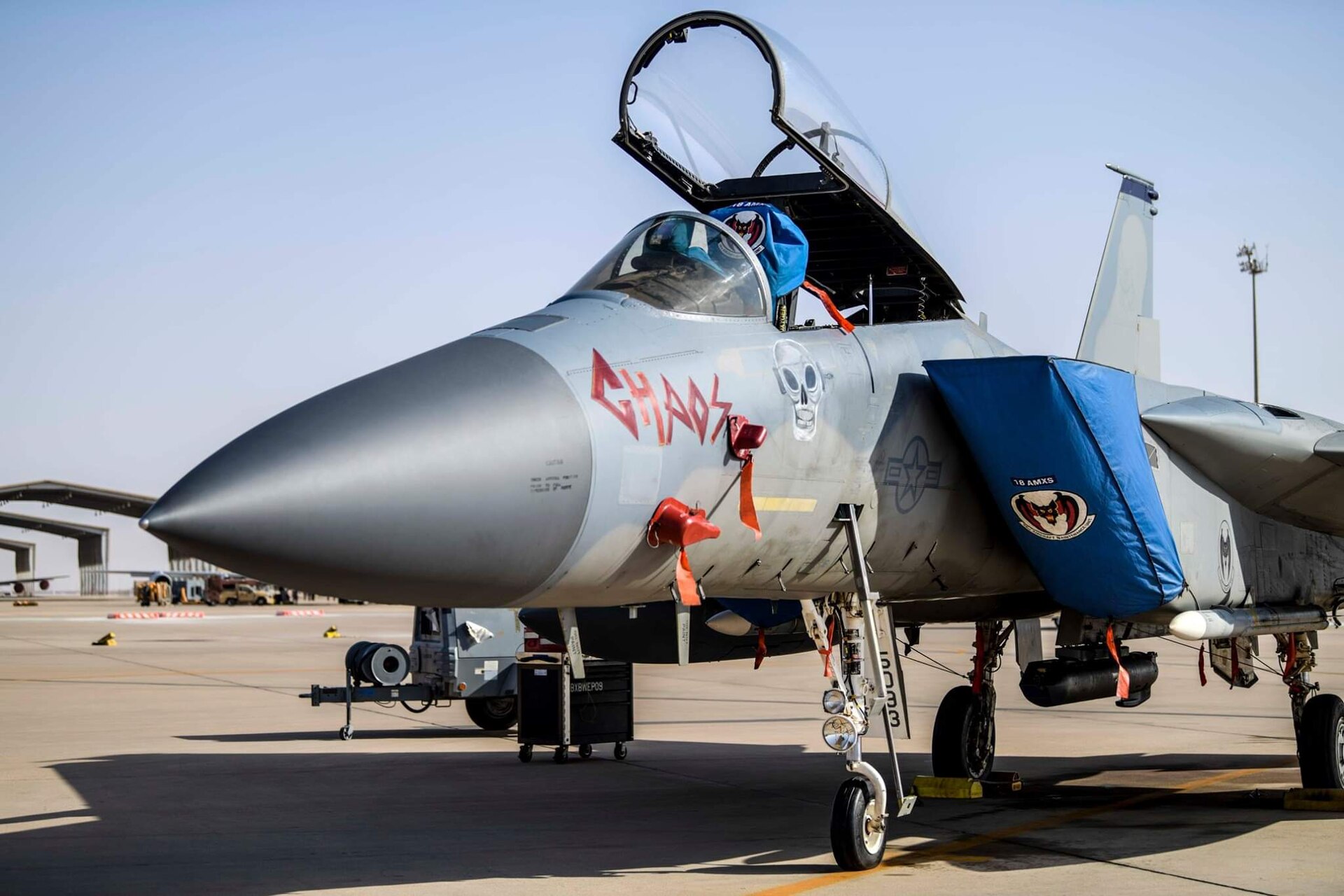
On May 3, 2026, Trump announced Operation Project Freedom — a US naval escort mission for commercial shipping in the Gulf — on Truth Social without consulting Gulf partners. The next day, Saudi Arabia grounded all 43 US warplanes at Prince Sultan Air Base, closed 2.15 million square kilometres of Saudi airspace to US military flights, and suspended all US military operating authority from the base.
n
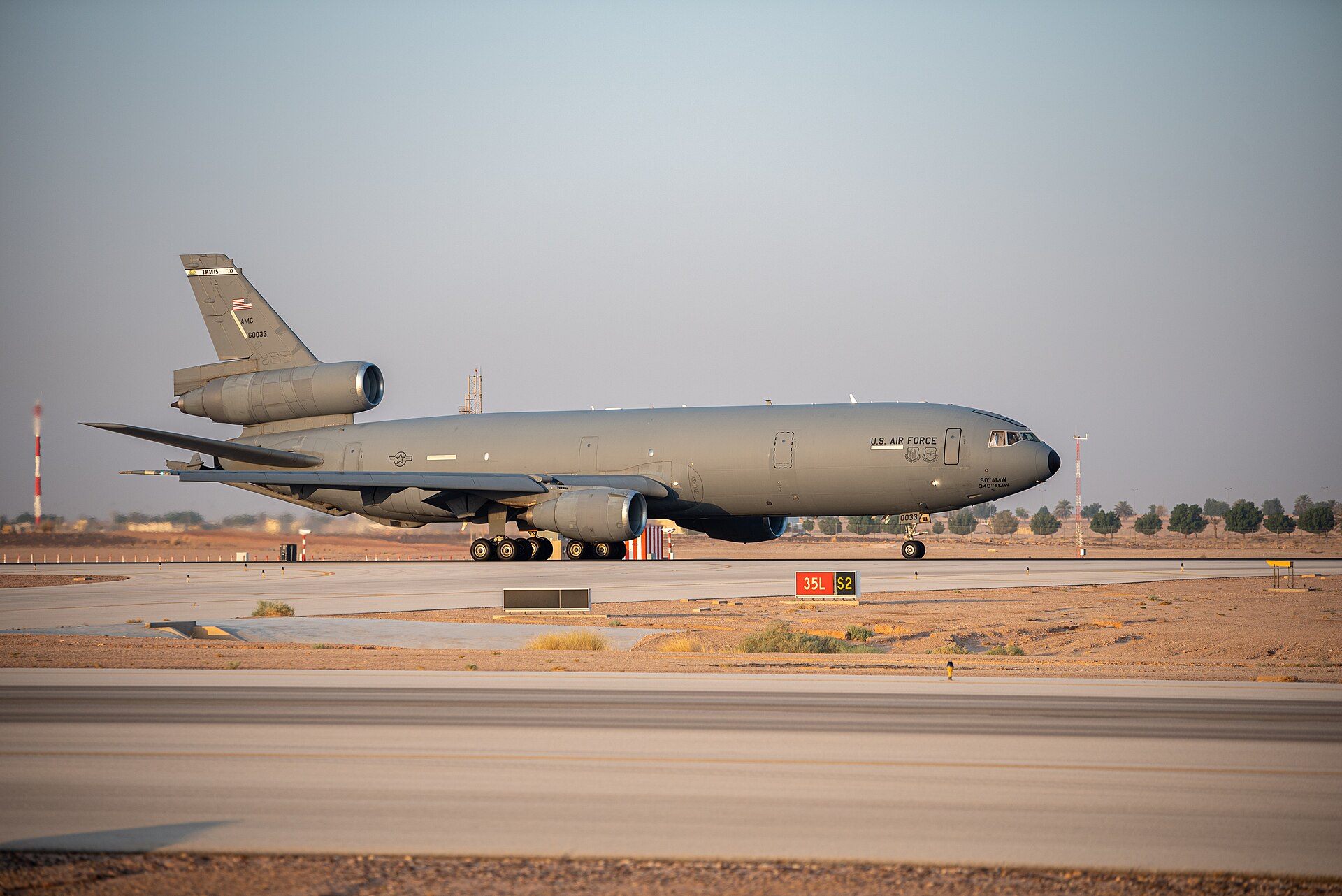
The grounded fleet included 13 KC-135 Stratotankers — the aerial refuelling backbone for US strike aircraft operating over the Gulf — and six E-3G AWACS surveillance planes that provided radar coverage across the Strait of Hormuz and the lower Gulf. Without PSAB’s tankers, carrier-based strike aircraft cannot maintain station time over the Strait. Without Saudi airspace, there is no viable overflight corridor from Arabian Sea carrier groups to targets in the Gulf theatre.
n
Trump called MBS directly. The call failed to reverse the decision. A second call, days later, restored access around May 8. No NATO ally has exercised a real-time operational veto over US military operations during an active conflict. Saudi Arabia did, and the United States accepted it rather than invoking legal authority to override the order — authority Washington does not possess, because no Status of Forces Agreement governs PSAB.
n
Nine days after the shutdown ended, on May 13, the two countries signed a $142 billion arms deal covering weapons sales, nuclear cooperation, and artificial intelligence partnerships. The deal did not include a Status of Forces Agreement, a mutual defence clause for PSAB, or any public recommitment to the bilateral military relationship at the base. Saudi Arabia received Major Non-NATO Ally designation on January 13 and F-35 sale authorisation (48 aircraft) on March 28-30. Neither instrument addressed the legal void at PSAB.
n
On May 21, Trump told CBS News he had been “an hour away” from fresh strikes on Iran and that MBS personally called to stop him. The disclosure made Saudi Arabia an explicit co-decision-maker in US strike-restraint decisions — the exact framing Riyadh had spent the war avoiding. Within hours, the IRGC issued a warning of strikes “from places you cannot imagine” against US interests.
n
 n
nn
The Deterrence That Saudi Arabia Dismantled
n
Since PSAB’s reactivation in October 2019, Riyadh maintained three conditions simultaneously: host US forces for their deterrent value against Iranian attack, prohibit their offensive use from Saudi soil to maintain distance from a US-Iran war, and rely on Tehran recognising the distinction between hosting and participating. The logic assumed all three would hold under sustained military pressure.
n
The hosting condition assumed the US presence was continuous and non-revocable. On May 4, Saudi Arabia grounded every warplane at the base for four days during an active conflict. IRGC planners tracking the shutdown in real time observed a period in which the most operationally capable US air base on the Arabian Peninsula produced zero sorties, at Saudi initiative, while Iranian missiles were in flight elsewhere in the theatre. The deterrent value of forces that the host nation can switch off is categorically different from the deterrent value of forces whose presence is guaranteed by treaty.
n
The distance condition assumed the distinction between hosting and co-deciding was visible from Tehran. Trump’s May 21 disclosure that MBS called to stop strikes removed that visibility. Riyadh had vetoed a strike, not authorised one. But once the US president attributed the restraint to a Saudi phone call on American television, the line between base-hosting and war-participation became indistinguishable from the Iranian side of the border. The IRGC’s “beyond the region” warning came the same day.
n
The recognition condition — that Iran would observe the hosting-versus-participating distinction and refrain from striking a reluctant host — assumed Tehran had an interest in preserving it. On July 8, the IRGC struck US bases in Kuwait and Bahrain without distinguishing between willing and reluctant participants in the conflict. Neither Kuwait nor Bahrain had conducted offensive operations against Iran. Both hosted US forces under the same implicit bargain Saudi Arabia relied on: that hosting alone would not make them targets. The IRGC’s Phase 1 struck them anyway.
n
Each condition was breached by a specific, documented event between May and July 2026. None has been restored. No US-Saudi public statement has reaffirmed joint defence of PSAB. The framework that was supposed to deter an attack on the base no longer has a single functioning element.
n
What Can Reach Prince Sultan Air Base?
n
PSAB sits approximately 800 to 850 kilometres from Iranian launch sites along the Gulf coast. That distance acts as a filter on Iran’s ballistic missile inventory. The Zolfaghar, with a range of approximately 700 kilometres, cannot reach PSAB — a constraint that shaped earlier Iranian targeting decisions against installations within its envelope. The Zolfaghar was used against closer targets in Bahrain, Kuwait, and southern Gulf positions. PSAB falls outside its range.
n
The Fattah-2 faces no such limitation. With a reported range of 1,400 to 1,500 kilometres and a terminal velocity estimated at Mach 13 to 15, the Fattah-2 can reach PSAB with margin to spare. It is the weapon Iran used on March 27 to destroy the E-3G Sentry on the PSAB ramp, and the weapon class used on March 14 to damage five KC-135 tankers. Iran has demonstrated the ability to strike specific infrastructure on the PSAB complex from over 800 kilometres.
n
Ukrainian President Zelenskyy claimed that Ukrainian intelligence tracked Russian reconnaissance satellites imaging PSAB on March 20, 23, and 25 — two days before the March 27 strike. If accurate, the claim suggests an external ISR contribution to Iranian targeting, which would mean PSAB’s vulnerability extends beyond the bilateral Iranian intelligence picture.
n
n
Iran is the first adversary to execute a sustained asymmetric counterair campaign against U.S. forces, but it is unlikely to be the last.
nMaximilian K. Bremer and Kelly A. Grieco, War on the Rocks, April 10, 2026n
n
Bremer and Grieco cited Giulio Douhet’s foundational principle — that it is “easier and more effective to destroy the enemy’s aerial power by destroying his nests and eggs on the ground than to hunt his flying birds in the air.” Iran’s campaign has consistently followed that logic. The March 14 strike targeted tankers. The March 27 strike targeted the AWACS and additional tankers. The July 9 strike at Al Udeid destroyed a satellite communications system. The pattern targets the support architecture — refuelling, surveillance, communications — rather than fighter aircraft. PSAB houses the largest remaining concentration of those support assets in the Gulf theatre.
n
 n
nn
Four Hundred Interceptors and a Damaged Radar
n
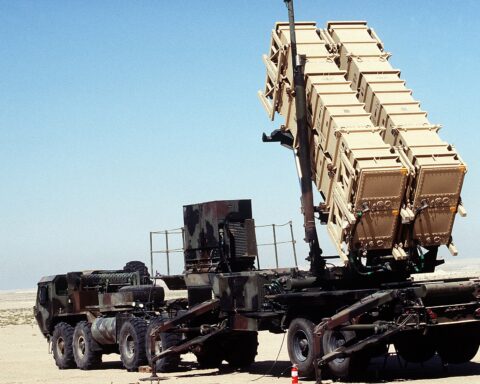
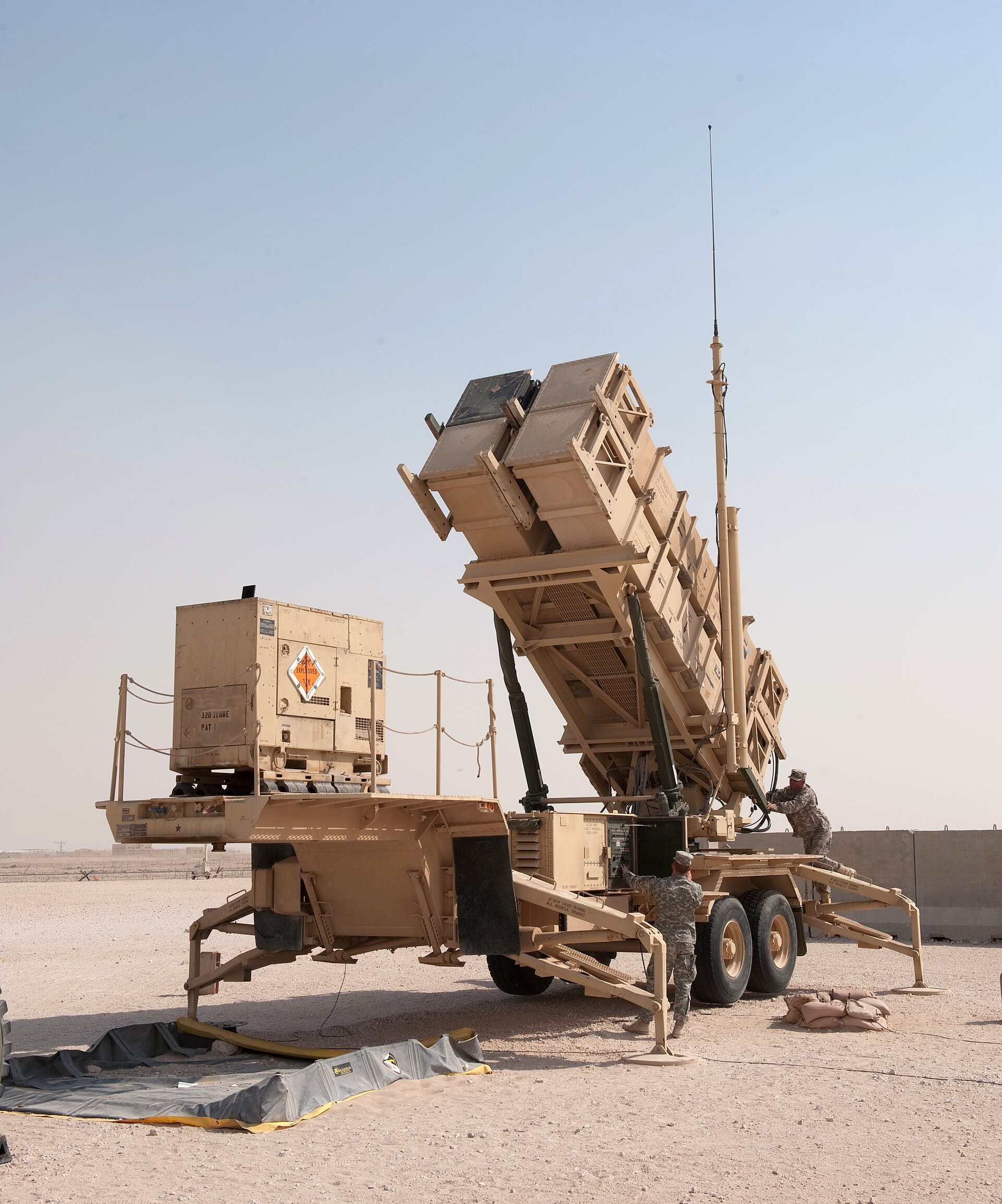
PSAB’s air defence posture has degraded across every tier. Saudi Arabia entered the war with approximately 2,800 PAC-3 interceptor rounds across all batteries in the Kingdom. Between March 3 and April 7, Saudi forces expended approximately 2,400 rounds against 894 aerial threats — a rate consistent with standard salvo doctrine, which fires two interceptors per incoming missile to increase probability of kill. Approximately 400 rounds remain nationwide, not all of them allocated to PSAB. At the expenditure rate observed during March and April — roughly 2.7 rounds per incoming threat — that inventory covers approximately 148 engagements before reaching zero.
n
The resupply timeline offers no near-term relief. Lockheed Martin’s Camden, Arkansas plant produced 620 PAC-3 MSE rounds in 2025 for all global customers combined — not just Saudi Arabia. A $4.76 billion production contract signed on April 10, 2026 sets a target of 2,000 rounds per year, but that rate is not expected before 2030. Saudi Arabia’s Foreign Military Sales approval for 730 rounds, valued at $9 billion, was issued on January 30, 2026. No delivery date has been confirmed. At the current production rate, Saudi Arabia is competing with every other PAC-3 customer worldwide — including the United States itself — for interceptors manufactured one at a time on a single production line.
The depletion is compounded by a deliberate policy gap on the US side: while the standard Foreign Military Sales channel kept operating through the crisis, emergency PAC-3 resupply was withheld as a coercive instrument during Operation Project Freedom. Washington’s approval of a $1.96 billion APKWS sale in the same period documents the bifurcated approach that left PSAB’s 400 remaining interceptors absorbing a threat the withheld rounds were designed to stop. That sale carries a second structural problem: neither the RSAF’s Typhoon fleet nor its F-15SA fleet has publicly completed the weapon system qualification required to fire a single APKWS round, meaning the 20,000 guidance sections cannot be loaded even if they arrive. Iran’s July 16 declaration by Khatam al-Anbiya — threatening all regional infrastructure conditional on US civilian infrastructure strikes — is the threat those 400 remaining interceptors must now answer: Abqaiq sits inside that threat envelope with no resupply and no upper-tier defense.
n
The AN/TPY-2 THAAD radar at PSAB — the system designed to detect and track ballistic missiles at ranges exceeding 1,000 kilometres — was damaged in an Iranian strike. Defence Express valued the radar at up to $1 billion. The AN/TPY-2 provides the cueing data that THAAD interceptors require to engage targets during boost and midcourse phases. With the radar degraded, the full engagement burden has shifted to the depleted PAC-3 system, which operates at shorter range and lower altitude.
n
The southern front that opened on July 13 confirmed this geometry in practice: Houthi ballistic missiles and drones struck Abha International Airport and King Khalid Air Base at Khamis Mushait, distributing the defensive problem across civilian and military sites that were never engineered as a single air-defence sector — exactly the scenario that makes the two-front PAC-3 math unsustainable.
A gap exists between the two tiers. The M-SAM-II — South Korea’s Cheongung-II system, which intercepts at 30 to 40 kilometres altitude — is not deployed at PSAB. A steep-trajectory reentry vehicle arriving in the terminal phase between PAC-3’s engagement ceiling and the THAAD intercept envelope faces a diminished defensive response, particularly with the AN/TPY-2 not fully operational.
n
The sole external reinforcement has come from Greece. Approximately 120 to 130 Hellenic Air Force personnel operate one PAC-3 battery near Yanbu on the Red Sea coast — the ELDYSA contribution, now on its fourth extension at Saudi Arabia’s formal request, with a mandate through November 2026. The battery made its combat debut on March 19, intercepting two Iranian ballistic missiles targeting the SAMREF refinery. It covers Yanbu’s refinery corridor, approximately 900 kilometres west of PSAB. Britain has since added a second thin external layer: one RAF Voyager tanker refuelling Saudi jets on defensive missions — a commitment whose scale says as much about the American gap as about London’s reach.
n
CENTCOM has begun assessing alternatives. The Jerusalem Post reported on July 4 that approximately 13 US bases across the Gulf region had been assessed as “nearly uninhabitable” following cumulative Iranian strikes. Damage to the US Fifth Fleet headquarters in Bahrain alone exceeded $400 million. The Negev desert in southern Israel has been discussed as a potential relocation site for Gulf-based US air assets — a move that would remove PSAB from the US force-posture equation entirely.
n
What Legal Framework Governs Prince Sultan Air Base?
n
There is not one. Prince Sultan Air Base operates under a 1977 training memo — a document written when the US military presence in Saudi Arabia consisted of a small advisory mission, not a major operational hub with 2,300 personnel, tanker fleets, AWACS aircraft, and Patriot air defence batteries. Every other major US base in the Gulf region operates under a Status of Forces Agreement or a formal defence cooperation agreement.
n
A SOFA defines criminal jurisdiction over US personnel, sets notification requirements for force drawdowns, provides legal immunities for military equipment, and establishes obligations during evacuation or withdrawal. None of these provisions exist at PSAB. When Saudi Arabia grounded the 43 warplanes on May 4, the United States had no legal instrument to contest the decision, no treaty clause to invoke, and no defined process for resolving the dispute. The 1977 memo does not address operational authority during wartime, force protection obligations, or the conditions under which either party can unilaterally suspend military cooperation. On July 17, Khalid bin Salman flew to Washington for the first defense-principal engagement between Riyadh and Washington since that legal vacuum was exposed by Operation Project Freedom — and returned without an announcement of a SOFA negotiation.
n
The Major Non-NATO Ally designation (January 13, 2026), the F-35 sale authorisation (48 aircraft, March 28-30), and the $142 billion arms deal (May 13) all expanded the bilateral relationship’s commercial and political scope. None of them created a legal instrument governing the day-to-day operation of Prince Sultan Air Base or the obligations of either party if the base comes under attack.
n
The precedent for what happens when the legal gap becomes operative is 23 years old. In 2003, Saudi Arabia refused to allow the United States to launch offensive air operations from Saudi soil during the Iraq War. The US relocated its primary Gulf air operations from PSAB to Al Udeid Air Base in Qatar. PSAB was effectively closed to US forces from mid-2003 until its reactivation in October 2019, when approximately 2,000 troops, B-1B bombers, F-22 fighters, and Patriot batteries arrived following the September 2019 Abqaiq-Khurais drone and missile attacks on Saudi oil infrastructure. The base reopened under the same 1977 training memo that had governed it before.
n
 n
nn
Did Saudi Arabia Invoke Collective Defence?
n
When the IRGC struck US bases in Kuwait and Bahrain on July 8, Iranian ordnance hit sovereign GCC territory for the first time in the July escalation cycle. The Sakhir Declaration — the GCC’s mutual defence framework, adopted at the December 2000 Bahrain summit, which treats an attack on one member state as an attack on all — was not invoked. Saudi Arabia, the GCC’s dominant military power, did not call for its activation. Peninsula Shield Force, the GCC’s joint military command, was not mobilised.
n
The July 8 silence was not an exception. Saudi Arabia had already declined to invoke the Sakhir Declaration after Iranian strikes landed on Saudi soil earlier in the war — including the March attacks on PSAB itself. GCC collective defence has never been activated against an external attack in the alliance’s 45-year history. The mechanism exists on paper. It has been tested by events and found dormant.
n
For PSAB’s exposure, the non-invocation carries a specific cost. The IRGC struck US installations on GCC territory and the collective defence clause was not triggered. A future Iranian strike on Prince Sultan Air Base would arrive into the same precedent. The framework that Riyadh theoretically relies upon to deter such an attack — the prospect that striking one GCC state would mobilise all of them — has been demonstrated, twice in 2026, to be non-operational.
n
Washington has separately weighed a punitive drawdown from PSAB — not a withdrawal driven by Iranian threat but by Saudi Arabia’s own conduct during Operation Project Freedom. If the US reduces its presence at the base as a consequence of the May shutdown, and the GCC’s mutual defence clause remains dormant, PSAB would face a diminished US garrison with no collective regional defence commitment backing it. Its personnel, 400 remaining PAC-3 rounds, and damaged THAAD radar would stand behind a 1977 training memo and a mutual defence declaration that has never been used.
n
Update, July 19: Iran struck Prince Sultan Air Base with a ballistic missile on July 19, simultaneously targeting the SAMREF refinery at Yanbu — the first attack to hit both Saudi export corridors on the same morning and the first direct Iranian strike on Saudi soil since March. Full coverage of the three-vector package — including the second BM at Yanbu port and the interceptor cost — is in the July 19 three-vector package.
Frequently Asked Questions
n
What legal agreements govern other US bases in the Gulf?
n
Bahrain hosts the US Fifth Fleet under a Defence Cooperation Agreement first signed in 1991 and renewed in 2011. Kuwait operates under a 10-year Defence Cooperation Agreement signed in 2013 with renewal provisions. Qatar hosts Al Udeid Air Base — the largest US air installation in the Middle East — under a Defence Cooperation Agreement signed in 1992 and expanded in 2003 after the US departed Saudi Arabia. Each of these agreements defines legal jurisdiction, force protection obligations, and operational authority. Prince Sultan Air Base in Saudi Arabia operates under a 1977 training memo that predates the current conflict, the current base configuration, and the current US force posture by nearly five decades.
n
What is Iran’s mosaic defence doctrine?
n
The Soufan Center assessed in March 2026 that Iran’s military strategy emphasises targeting the logistics and support infrastructure that enables US air power — tankers, surveillance aircraft, radar systems, satellite communications — rather than engaging fighter jets or combat aircraft directly. The doctrine aims to degrade “the ability to generate and sustain air power” rather than air power itself. PSAB’s role as the primary host for KC-135 Stratotankers and E-3G AWACS makes it a high-value target within this framework, because disabling the base’s support fleet affects US air operations across the entire Gulf theatre regardless of where combat aircraft are stationed.
n
How long did it take the US to leave PSAB in 2003?
n
The US completed the relocation of primary Gulf air operations from Prince Sultan Air Base to Al Udeid Air Base in Qatar by mid-2003, following Saudi Arabia’s refusal to allow offensive operations during the Iraq War. The base remained in a reduced-operations state for 16 years. When the US returned in October 2019 — deploying approximately 2,000 troops, B-1B Lancer bombers, F-22 Raptors, and Patriot batteries after the Abqaiq-Khurais attacks — it found infrastructure that had degraded during the dormancy period and required reconstruction and modernisation before reaching operational capacity.
n
Has Russia provided targeting intelligence for Iranian strikes on PSAB?
n
Ukrainian President Zelenskyy stated that Ukrainian intelligence tracked Russian reconnaissance satellites conducting imaging passes over Prince Sultan Air Base on March 20, 23, and 25, 2026 — two days before the March 27 IRGC strike that destroyed the E-3G Sentry AWACS on the base. The claim has not been independently verified by US or Saudi officials. If accurate, it would indicate that Iran’s precision targeting of PSAB benefits from Russian ISR architecture, expanding the threat model beyond Iran’s own surveillance capabilities. Iran has not publicly acknowledged any external intelligence contribution to its strikes.
The fiscal dimension of continued US operations in the Gulf crystallised on July 16, when Trump’s advisers publicly discussed seizing Kharg Island — Iran’s primary crude export terminal. For Prince Sultan Air Base, the option matters because the Kharg Island seizure paradox would generate an oil price spike above Saudi Arabia’s fiscal breakeven while simultaneously destroying the PGSA enforcement mechanism that underpins the US basing relationship Riyadh cannot legally formalise.
Iran’s decision to spare PSAB across ten Nasr-2 waves — while striking every other US installation in the Gulf — is tracked in Ten Waves In, Prince Sultan Air Base Remains Unstruck.
When Iran struck six countries on July 17 — Syria, Kuwait, Jordan, Oman, Qatar, and Bahrain — without touching Prince Sultan Air Base, the exemption pattern Operation Project Freedom signalled gained a new data point. Why Prince Sultan Air Base remained unstruck as Iran hit six countries on July 17 examines the Helsinki bilateral framework that may explain the consistent Saudi exemption across every Nasr-2 wave. That exemption ended on July 18: Iranian ballistic missiles struck PSAB, wounding twelve US service members and hitting KC-135s on the flight line — and none of the three governments involved issued a statement. Iran Struck Prince Sultan and No One Was Required to Say So examines the managed ambiguity that replaced the silence Saudi Arabia could once explain.
The deterrent gap Operation Project Freedom exposed did not close with the July strikes. Turkey’s offer to fill Saudi Arabia’s defence hardware gaps — KAAN jets and Akinci drones under the Mecca pact — is a direct consequence of the base’s lost deterrent role. France moved faster: the first NATO-member deployment to Saudi soil committed ground troops and SAMP/T air defence to Yanbu in September, without waiting for a pact trigger.
On July 20, Nasr-2 Waves 21 and 22 extended the campaign from the airfield infrastructure mapped in this article to the broader sensor degradation campaign now targeting airborne ISR at forward bases — striking the P-8A Poseidon at Aqaba and the early-warning radar at Ali al-Salem in Kuwait. What Watches the Gulf for Saudi Arabia Now? traces what remains of the detection layer warning Saudi Arabia of threats to Abqaiq.