
RIYADH — Mohammed bin Salman privately urged Donald Trump to send American ground forces into Iran to seize the country’s energy infrastructure and topple its government, according to people briefed by American officials cited by the New York Times in May 2026 — and then, weeks later, grounded forty-three US warplanes at Prince Sultan Air Base when the war he had encouraged arrived at his doorstep. The prince who described the US-Israeli air campaign as “a historic opportunity for the Middle East” is now presiding over a kingdom whose PAC-3 interceptor stockpile has been depleted by eighty-six per cent, whose supertanker Wedyan was struck by the IRGC in Hormuz on July 7, and whose diplomatic exclusion from every active US-Iran negotiating track is total.
This is not a hypocrisy story — every government maintains a gap between its public rhetoric and private ambition, and Saudi Arabia is hardly unique in that regard. It is a strategy-failure story, one in which the kingdom bet that the United States would dismantle the Iranian regime and leave Riyadh as the primary beneficiary, absorbing none of the military risk while collecting all of the geopolitical reward. That bet has not paid off, and Saudi Arabia is now left holding a war it lobbied for but cannot fight, cannot negotiate its way out of, and cannot afford.
Table of Contents
- The Private War MBS Wanted
- What Did Regime Change Look Like in Riyadh’s Telling?
- The Pivot That Broke the Strategy
- Why Can’t Saudi Arabia Fight Its Own War?
- Who Speaks for Riyadh at the Negotiating Table?
- The Fiscal Cost of a War Without a Strategy
- What Does Tehran See When It Looks at Riyadh?
- The Alliance MBS Built Instead
- A Strategy With No Act Two
- Frequently Asked Questions
The Private War MBS Wanted
The private lobbying campaign began before the first bomb fell. On January 31, 2026, Saudi Defense Minister Prince Khalid bin Salman met with Washington think-tank leaders and representatives of Jewish organisations to deliver a message that Axios reported the same day: if the United States did not strike Iran, “it will only embolden the regime.” KBS was not freelancing — he was laying the political groundwork for an air campaign that Saudi Arabia wanted to happen but needed America and Israel to execute.
By the time Operation Burning Sword launched on February 28, the Washington Post reported that “the push from Saudis, Israel helped move Trump to attack Iran.” The air campaign was a coordinated decision, but Saudi Arabia’s contribution was diplomatic rather than military — political cover in Gulf capitals, private encouragement in Washington, and a posture of public restraint that gave the White House deniability about who had been pushing hardest behind the scenes. US Senator Lindsey Graham met MBS one week before the first strikes to, in his own words, “bring him on board” — though whether Graham was persuading the crown prince or being persuaded by him remains a question the senator has not publicly answered.
What followed was a private escalation that outpaced the public war. MBS described the air campaign to Trump in phone calls as “a historic opportunity for the Middle East,” according to the New York Times, and explicitly urged the president to continue the war until the Iranian regime fell. By March 2026, the New Republic was reporting under the headline “Saudi’s MBS Secretly Pushes Trump to Take Iran War to Next Phase” — consolidating what multiple outlets had by then confirmed: that the crown prince was not merely supporting the war but urging its expansion into a full-scale ground invasion, with American troops doing the invading and Saudi Arabia positioned as the grateful beneficiary.
Saudi officials denied the characterisation. A Saudi Gazette source stated that the crown prince had not urged Trump to send ground troops. The denial was pro forma, and it landed against a backdrop of sourcing that included American officials speaking to the New York Times, the Washington Post, and Axios — not anonymous social-media speculation but the reporting infrastructure that sets the agenda in Washington and shapes the intelligence briefings that land on every foreign minister’s desk in the Gulf.
The Middle East briefing 3,000+ readers start their day with.
One email. Every weekday morning. Free.
What Did Regime Change Look Like in Riyadh’s Telling?
The New York Times reported in May 2026 that the United States and Israel had plans to install Mahmoud Ahmadinejad — the former Iranian president who left office in 2013 — as Iran’s leader after assassinating Ali Khamenei, with MBS’s push for American ground troops providing the operational component. The soldiers would seize Iran’s energy infrastructure, the regime would collapse under combined military and economic pressure, and a former president the West believed it could manage would be installed in Tehran as the successor.
By early 2026, with Iran’s allies in the Levant battered or collapsed in the preceding two years, Saudi Arabia appears to have calculated that the moment was opportune for more decisive US action against the Islamic Republic that could reshape the regional balance for a generation.
Arab Center DC, “Saudi Arabia’s Strategic Dilemma in the Iran War”
That assessment — measured, academic, stripped of emotion — describes what is in practice the largest strategic gamble of MBS’s tenure: a bet that the collapse of Hezbollah, Assad, and Iran’s broader proxy network had created a once-in-a-generation opening for externally imposed regime change, with American ground forces serving as the instrument and Saudi Arabia positioned to inherit a defanged Iran without having fired a shot or lost a soldier.
The pre-war reality was more complicated than the post-war narrative suggests: MBS’s position was not consistent but opportunistic. Before Operation Burning Sword, MBS had actually counselled Trump against striking Iran’s nuclear facilities, warning of catastrophic consequences for global energy markets — a position entirely consistent with Saudi Arabia’s interest in stable oil prices and uninterrupted Hormuz traffic. The pivot to regime-change advocacy came after the war began and appeared to be going well, when the air campaign seemed to be degrading Iranian military capacity faster than anyone had expected. This was escalation calibrated to perceived American momentum, and it collapsed the moment that momentum stalled.
Princeton’s Bernard Haykel, who has studied MBS’s strategic thinking more closely than most Western academics, identified the deeper anxiety in a Bloomberg interview: MBS’s nightmare is “missiles, chaos” threatening Vision 2030. The regime-change push was not imperial ambition but defensive panic dressed up as strategic opportunity — an attempt to eliminate the Iranian threat permanently because Saudi Arabia has no confidence in its own ability to manage that threat indefinitely, a judgment that the CSIS later confirmed was shared across the Washington policy establishment.
The Pivot That Broke the Strategy
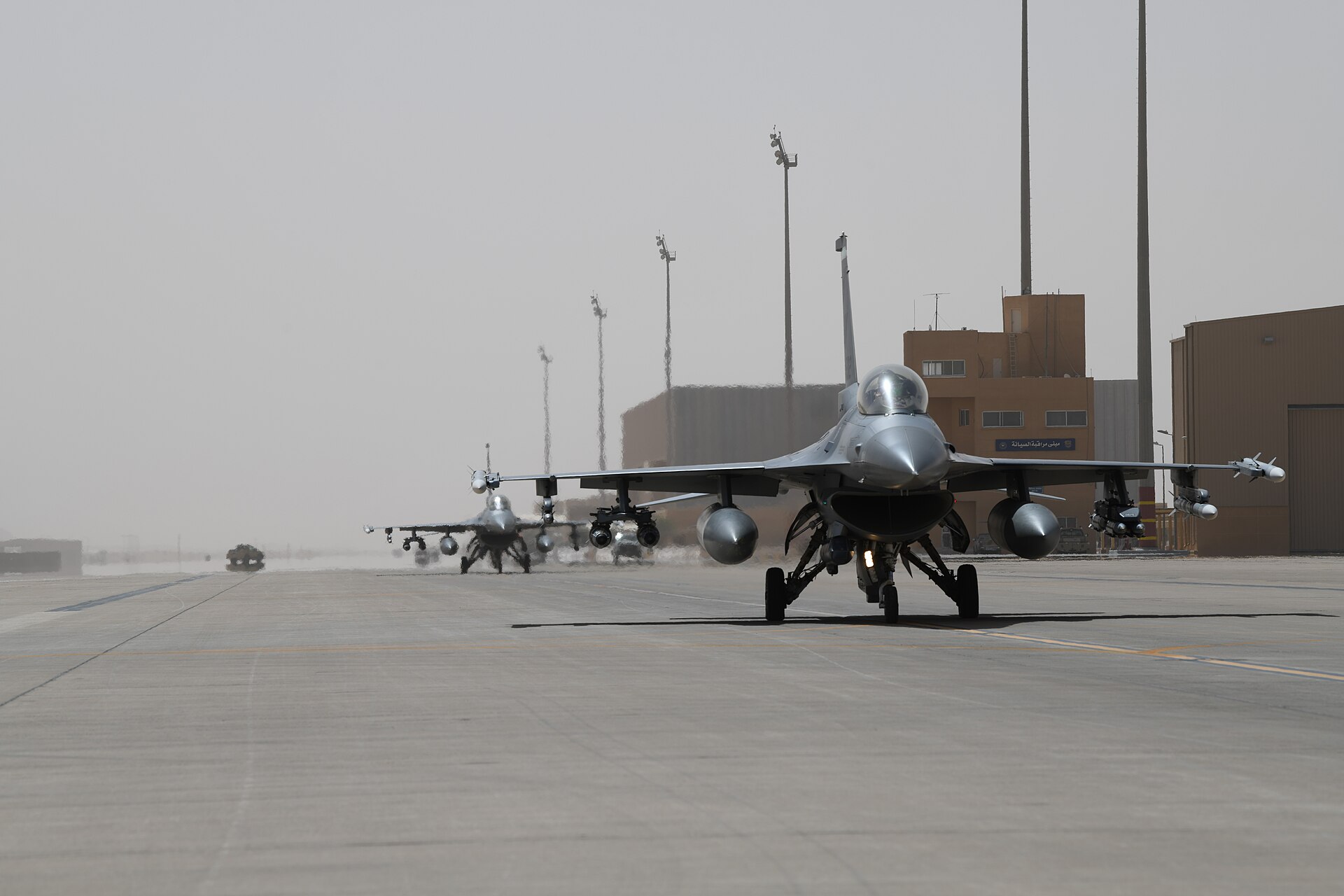
The clearest evidence that Saudi Arabia’s war strategy had no second act arrived not on a battlefield but on a runway. In late April or early May 2026, Saudi Arabia denied the United States access to its territory for Operation Project Freedom — Washington’s attempt to reassert naval dominance in the Strait of Hormuz. MBS went further: he grounded forty-three US warplanes at Prince Sultan Air Base for four days, physically preventing them from flying combat or patrol missions. Trump phoned MBS on May 4 and at least two subsequent days demanding that the planes be released, and MBS held the line until the operation collapsed within forty-eight hours.
The reversal was staggering in its speed and implications. The same prince who had urged Trump to send ground troops into Iran — to commit tens of thousands of American soldiers to seize energy infrastructure and topple a government — was now blocking the US military from using its own aircraft at a Saudi base to conduct a far more limited maritime operation in waters that Saudi Arabia’s own tankers needed to cross. MBS reportedly feared that the Hormuz operation could reignite open war at a moment when Saudi Arabia’s air defences were already critically depleted, and the IRGC had demonstrated its willingness to strike targets across the Gulf without geographic restraint.
But rationality and strategy are not the same thing, and the PSAB lockout exposed a contradiction that no amount of diplomatic messaging can resolve. The regime-change advocacy and the warplane grounding cannot coexist as parts of a coherent plan — they are the before and after of a strategic collapse, the moment when the gap between what Saudi Arabia wanted America to do and what Saudi Arabia was willing to risk on its own soil became too wide to bridge. Press TV, Iran’s English-language state broadcaster, framed the dynamic on July 2 with a precision that Riyadh’s foreign ministry would struggle to rebut: MBS “had previously pressed President Trump to cripple Iran, but as Iran asserted its power, the prince urged a ceasefire, and is now pursuing his security priorities.”
The punitive drawdown from PSAB that Washington began contemplating in the weeks that followed was not a reaction to Saudi hostility but to Saudi unreliability — a distinction that matters enormously, because unreliable allies lose influence faster than hostile ones, and the timeline of MBS’s posture shifts leaves almost no room for charitable interpretation.
| Date | Event | Saudi Posture |
|---|---|---|
| January 31, 2026 | KBS tells Washington: “it will only embolden the regime” | Private escalation advocacy |
| February 28, 2026 | Operation Burning Sword launches; WaPo cites Saudi/Israeli pressure | Supporting role |
| March 24, 2026 | New Republic: MBS urges “next phase” of Iran war | Regime-change advocacy |
| May 2026 | 43 US warplanes grounded at PSAB; Operation Project Freedom blocked | Active blocking of US operations |
| May 19, 2026 | NYT publishes ground-troops/regime-change report | Exposed |
| June 16, 2026 | Saudi Arabia declines G7 Evian Arab-leaders session | Diplomatic withdrawal |
| July 2, 2026 | Press TV: MBS “urging ceasefire” | Reversal to de-escalation |
| July 7, 2026 | Supertanker Wedyan struck by IRGC; MFA invokes UNSC 2817 | Defensive condemnation only |
| July 9, 2026 | Faisal and Qatar FM call for “all parties to commit to dialogue” | Public dialogue posture |
Why Can’t Saudi Arabia Fight Its Own War?
Saudi Arabia’s PAC-3 interceptor stockpile has been depleted by eighty-six per cent — from approximately 2,800 to roughly 400 — and its $3.1 billion M-SAM-II purchase from South Korea intercepts at fifteen to twenty kilometres altitude, above the IRGC’s Zolfaghar terminal phase, which arrives below ten kilometres where only the depleted PAC-3 stock can engage it. Saudi Arabia entered the war with a missile-defence architecture designed to operate under an American umbrella, and five months of conflict have shredded both the missiles and the umbrella simultaneously.
Each PAC-3 round costs approximately $3.9 million, putting the total value of expended interceptors at roughly $9.4 billion — a figure that exceeds the entire $3.1 billion M-SAM-II contract and approaches the $9 billion FMS replacement sale for 730 new PAC-3 missiles that will not arrive until 2028 at the earliest. Saudi Arabia bought a missile that cannot intercept the missile Iran is using, and the missile that can is running out with no resupply for at least eighteen months.
Saudis have little confidence that this war will decisively eliminate the Iranian threat, or that the United States will protect the Saudis from Iranian attacks.
CSIS, “How Does Saudi Arabia See the War with Iran?”
The legal architecture holding the American presence together is equally fragile. The US military at PSAB operates under a 1977 training memorandum — not a formal Status of Forces Agreement — which means there is no withdrawal notification clause and no binding framework governing the approximately 2,300 US personnel still stationed there. The E-3G Sentry airborne early warning aircraft, one of the US Air Force’s most valuable surveillance assets in the Gulf, was destroyed on March 27, 2026, and has not been replaced. IESP contractors, Link-16 battlefield management operators, and THAAD maintenance crews all remain under an arrangement that could be terminated with minimal legal friction from either side.
That CSIS assessment is not a fringe view — it is the consensus position among the Washington think tanks that Saudi Arabia spends millions of dollars annually trying to influence, and it was published while the kingdom was simultaneously telling those same institutions that the war was going well.
Who Speaks for Riyadh at the Negotiating Table?
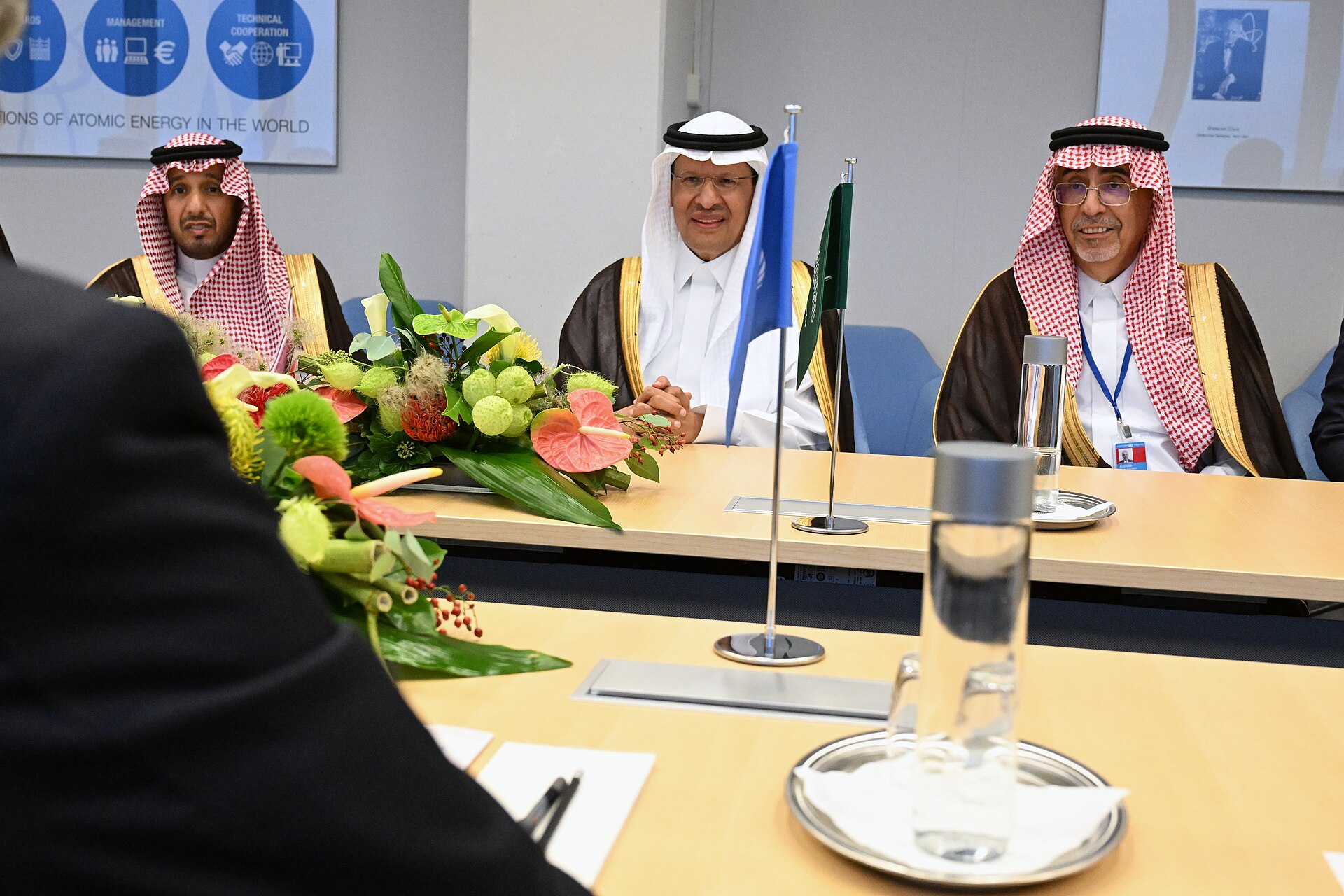
Saudi Arabia holds zero seats across every active US-Iran negotiating track — Doha (Qatar-mediated), the Islamabad MOU process, and the various indirect channels that continue beneath the diplomatic surface — despite having privately urged the war that produced them. The kingdom endorsed the Islamabad Declaration but holds no signatory, mediator, or observer status, and its only real-time visibility into US-Iran diplomacy comes through Pakistani foreign-ministry phone briefings after meetings to which Riyadh was not invited. When Iran split the negotiating tracks and locked Riyadh out of both, the Saudi foreign ministry’s response was silence — because there was no institutional mechanism through which to object. On July 10, the day before Islamabad, Saudi Arabia’s highest-level contact with Washington was Rubio meeting Ambassador Reema — not Foreign Minister Faisal. That channel shift, from FM-level to ambassador-level, is the subject of a separate analysis of what the Reema-Rubio meeting reveals about Saudi diplomatic standing.
The visible evidence of Saudi diplomatic exclusion is granular and, for a kingdom that takes protocol as seriously as policy, humiliating. When Ali Khamenei died, Saudi Arabia sent Deputy Foreign Minister El-Khereiji to the funeral rather than Foreign Minister Prince Faisal bin Farhan — a rank inversion that every delegation in Tehran registered immediately. When Raisi died in 2024, Saudi Arabia had sent Faisal himself. The downgrade — from the second-ranked Iranian leader’s funeral to the first-ranked leader’s funeral — was a calibrated signal of diminished standing that Tehran read as confirmation of what its own state media had been reporting. China sent a diplomat of the same sub-ministerial tier, He Wei, confirming that the friendly-nation hierarchy Iran is constructing does not include Saudi Arabia anywhere near the top table.
Pakistan’s Prime Minister Sharif and Army Chief Munir attended the Khamenei funeral as the highest-ranking Quintet delegation, standing with the Iranian leadership that Saudi Arabia’s crown prince had privately wanted overthrown — a diplomatic alignment that illustrates the limits of proxy relationships when your proxy has its own equities in Tehran. The Stimson Center captured the structural position with diplomatic restraint: Saudi Arabia “neither sought nor engaged in the Iran war, yet it was forced to manage its consequences.” The kingdom that privately urged the war is now managing its aftermath through secondhand phone calls from Islamabad.
When Saudi Arabia was the only invited Arab state to decline the Arab-leaders session at the G7 in Evian on June 16, citing “prior commitments,” the absence registered as neither protest nor strategy but as a kingdom that had run out of rooms where its presence would make a difference.
The Fiscal Cost of a War Without a Strategy
Saudi Arabia registered a first-quarter 2026 budget deficit of SAR 125.7 billion — approximately $33.5 billion — its largest quarterly shortfall in eight years, exceeding the full-year deficit that Riyadh’s own Ministry of Finance had projected just five months earlier. The deficit is not a consequence of reckless spending but of a structural price gap that the war has made persistent: the IMF puts Saudi Arabia’s fiscal breakeven at roughly $86.60 per barrel, and Brent crude closed July 9 at approximately $76.10, a shortfall of more than $10 per barrel that compounds with every tanker that does not transit Hormuz and every day the Strait remains functionally closed to commercial traffic.
The oil price itself tells the strategy-failure story more efficiently than any diplomatic cable. Brent peaked at $126 per barrel in April 2026, when the war premium was real and markets were pricing in genuine supply disruption through the Strait. By July, the war premium had vanished entirely — Brent fell below its pre-war level of $72.48, meaning the market had concluded that the war’s energy-supply disruption was either priced in or irrelevant, while Saudi Arabia continued to absorb every military, diplomatic, and fiscal cost of the conflict. The kingdom is losing the war and the oil market simultaneously, a combination that no amount of OPEC+ quota manipulation can repair when only two tankers crossed Hormuz on the morning of July 9 against a pre-war baseline of 120 to 140 per day.
Aramco’s free cash flow has fallen to 0.85 times its dividend obligation, meaning the state oil company is paying shareholders more than it earns — a position that is sustainable for quarters but not for years, and one that has already forced the cancellation of $16 billion in NEOM contracts. The Persian Gulf Surcharge Assessment adds another layer of exposure: $253 million outstanding with a $5.5-million-per-day penalty commencing August 18 if the waiver expires, a financial liability that exists solely because of a war that Saudi Arabia’s crown prince privately encouraged and now publicly wishes would end.
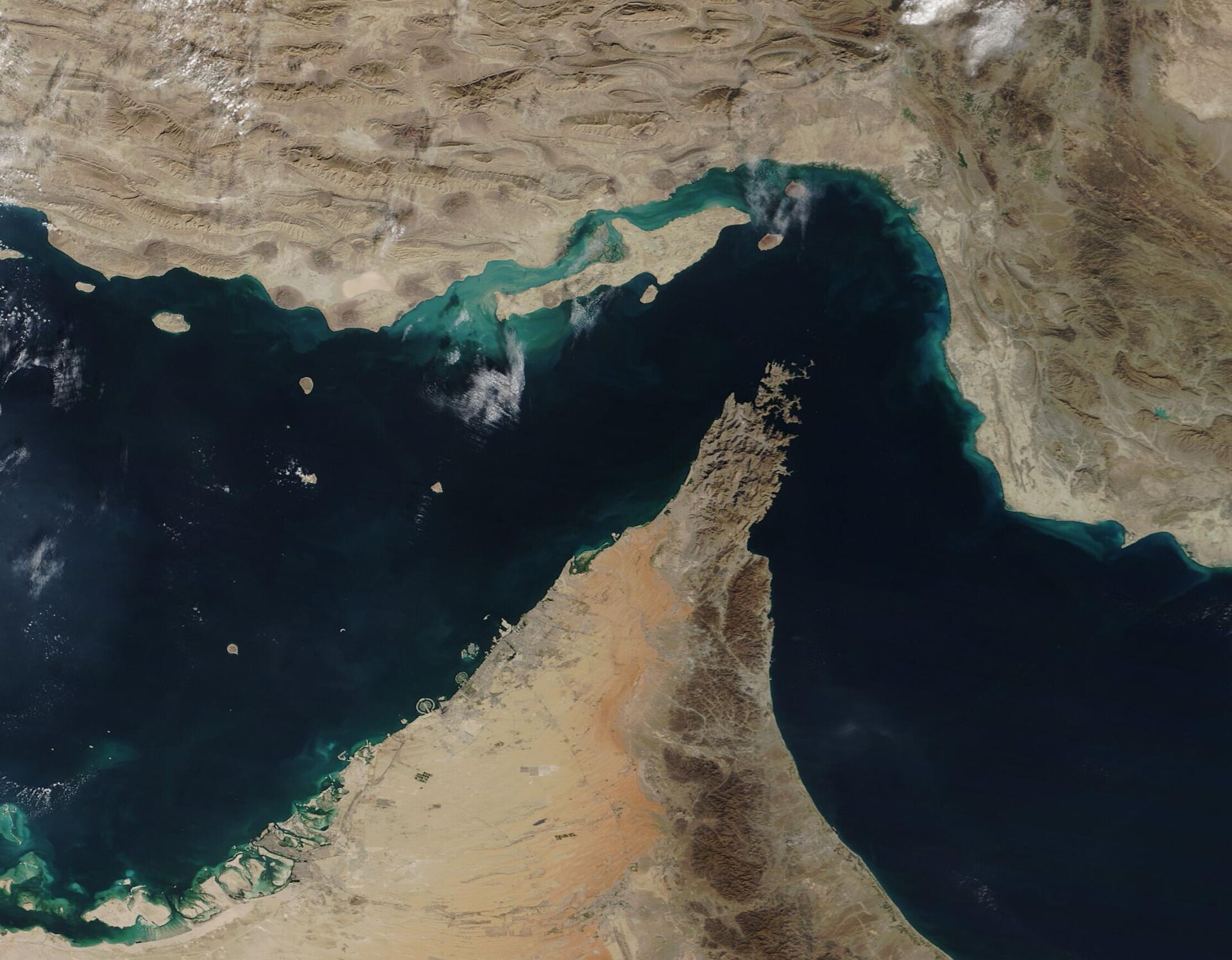
The Wedyan — a Saudi-flagged supertanker owned and managed by Bahri, the kingdom’s national shipping company — was struck by the IRGC in Hormuz on July 7, alongside Qatar’s Al Rekayyat. The Saudi MFA condemned the strike by invoking UNSC Resolution 2817, which is the only institutional instrument available to a kingdom that has no military response proportionate to the provocation, no diplomatic channel through which to demand compensation, and no alliance framework under which to retaliate. The specific mechanism through which this trap operates — the Petroline ceiling, the 2:1 doctrine, and the terminals Iran has already named — is the subject of a separate analysis: why Saudi Arabia cannot afford the windfall Kharg created.
What Does Tehran See When It Looks at Riyadh?
Iran sees a failed instigator — a prince who urged America to invade on his behalf, kept his own soldiers home, and now calls for dialogue from a position of military and diplomatic weakness that Tehran’s own strikes have helped create. Press TV framed MBS on July 2 not as a powerful adversary but as someone who “pressed President Trump to cripple Iran” and then, when Iran demonstrated its retaliatory capacity, “urged a ceasefire and is now pursuing his security priorities.” The framing is state propaganda, but it is propaganda built on reporting from the New York Times and the Washington Post — which makes it far more difficult for Riyadh to dismiss and far more useful to Tehran’s information operations across the region.
The IRGC’s operational posture suggests that Tehran has already concluded Saudi Arabia is not a military threat worth deterring so much as an economic target worth pressuring. The expansion of IRGC strikes to four countries within twenty-four hours — Bahrain, Kuwait, Qatar, and Jordan between July 8 and 9 — included ten ballistic missiles at Muwaffaq Salti Air Base in Azraq, Jordan, approximately 800 kilometres from Riyadh. Eight were intercepted by aging MIM-23 Hawk batteries; two were not. The IRGC’s explicit warning — that “crushing responses will be expanded to include other American bases throughout the region” — encompasses PSAB, which sits within the operational range of both the Zolfaghar and the extended-range Fattah-2, and where Saudi Arabia’s remaining 400 PAC-3 interceptors would face the same terminal-phase gap that the M-SAM-II cannot cover.
The Wedyan strike was not primarily a military action but an economic signal directed at the kingdom’s most visible vulnerability. By hitting a Saudi-flagged supertanker in Hormuz, the IRGC demonstrated that Saudi neutrality claims are irrelevant to its targeting logic — that Riyadh’s public “dialogue” posture offers no protection against an adversary that views MBS as the war’s intellectual author, regardless of whether a single Saudi jet flew a combat sortie. Saudi Arabia did not invoke the Sakhir Declaration when Iran fired, choosing instead to condemn the strikes through the UN Security Council — an institution whose resolutions Iran has ignored consistently for two decades and whose enforcement mechanisms exist only on paper. The July 16 Khatam al-Anbiya declaration — threatening all regional infrastructure conditional on US strikes against Iranian civilian infrastructure — completes the doctrinal frame: Abqaiq sits inside a threat Saudi Arabia cannot answer, and the war MBS encouraged has produced the exposure it was meant to foreclose.
The Alliance MBS Built Instead
With the American alliance fraying and Iran’s strike envelope expanding week by week, MBS has turned to a secondary security architecture built around Turkey, Pakistan, Egypt, and Qatar — partners who share Saudi Arabia’s interest in containing Iranian power but lack the military capacity to substitute for what Washington provides. The Saudi-Pakistan Mutual Defence Agreement functions as a deterrence signal, a diplomatic instrument designed to communicate that “any escalation against Riyadh will have repercussions extending beyond bilateral Saudi-Pakistani relations,” rather than a mutual-defence trigger that obligates Pakistani forces to deploy in Saudi Arabia’s defence. Chatham House assessed in May 2026 that Saudi Arabia “is beginning to reassess its economic geography, reducing its dependence on Hormuz and reorienting policy towards the Red Sea,” but the same report warned that “attacks on Red Sea shipping by the Iran-aligned Houthis show that maritime insecurity will become a central constraint on Saudi Arabia’s westward reorientation, not a secondary concern.”
The National Interest, drawing on Chatham House analysis, concluded that Saudi Arabia will “have to complement [US support] by deepening its regional alliance with Egypt, Pakistan, and Turkey — and pursuing a greater reliance on China, while seeking a new arrangement with Iran to manage the war’s aftermath.” That sentence contains more conditional clauses than a ceasefire agreement, and each one represents a dependency that MBS does not control. Egypt’s military is configured for internal security and the Sinai, not Gulf power projection. Turkey is a NATO member with its own Iranian border to manage and its own Ankara-Tehran relationship to protect. Pakistan is the closest thing to a genuine military partner, but Islamabad’s value as a deterrence signal depends on Tehran believing Pakistan would actually deploy — a proposition the Saudi-Pakistan Mutual Defence Agreement does not obligate, and that Islamabad’s own interest in preserving its Tehran channel actively undermines.
MBS has also signalled interest in a nuclear hedging posture, having stated on multiple occasions — in 2018 and again in 2023 — that Saudi Arabia would pursue nuclear weapons if Iran obtained them. The Stimson Center notes this is primarily signalling behaviour rather than an operational programme, but the war has accelerated Saudi interest in a formal nuclear umbrella through the SMDA framework as a long-term deterrent. The problem with long-term deterrence is that it offers nothing against short-term missiles, and the IRGC’s Zolfaghars are arriving now, not in the decade it would take to build a credible nuclear capability.
A Strategy With No Act Two
On July 8, Trump declared the Islamabad MOU “over” on Day 22 of its sixty-day framework. No ground invasion of Iran followed — the troops MBS had privately requested were never sent, the regime change he had privately advocated never materialised, and the Ahmadinejad restoration plan reported by the New York Times exists only as a footnote in an intelligence assessment that Washington has apparently shelved. Saudi Arabia is left holding a public posture — Foreign Minister Faisal and his Qatari counterpart jointly calling for “all parties to commit to dialogue” — that its crown prince’s own private lobbying record makes impossible for anyone in the region to take at face value.
The war has stripped Riyadh of every instrument it relied on. The American military umbrella is failing — the interceptors are running out, the Sentry is destroyed, the SOFA does not exist, and the drawdown threat is live. The OPEC+ production framework that once gave Saudi Arabia pricing power over global energy markets has become a signalling exercise rendered meaningless by a Strait that only two tankers crossed on the morning of July 9. The diplomatic channels that might offer a path to de-escalation run through Doha and Islamabad, neither of which has offered Riyadh a chair. The regional alliances MBS has assembled as substitutes for American protection depend on partners who are either unwilling to fight Iran directly or unable to do so without the same American support that is currently being withdrawn from Saudi Arabia itself.
Prince Khalid bin Salman warned in January that failing to strike Iran would “embolden the regime.” The strikes came, and Iran has been emboldened anyway — the precise outcome KBS cautioned against, delivered by the precise action he demanded. The kingdom that urged America to do the fighting is now watching missiles land closer to its borders with each passing week, holding a defence architecture that everyone in Washington — including the analysts Saudi Arabia pays to listen to — agrees cannot hold.
Frequently Asked Questions
Did Saudi Arabia contribute any military forces to Operation Burning Sword?
Saudi Arabia provided no combat aircraft, ground forces, or naval assets to the US-Israeli air campaign. The kingdom’s military role was limited to overflight permissions and passive hosting of US assets at Prince Sultan Air Base, Eskan Village, and other facilities under the pre-existing 1977 USMTM framework. The only direct Saudi military actions during the war have been defensive — intercepting incoming IRGC projectiles with its own PAC-3 batteries — and the controversial interception of an Iranian civilian aircraft carrying a Houthi funeral delegation near Sanaa on July 3, 2026, an incident that prompted Houthi spokesman Yahya Saree to issue on-record threats against Aramco installations and Saudi airports.
Why was Mahmoud Ahmadinejad considered for post-regime leadership in Iran?
Ahmadinejad’s appeal to US and Israeli planners was primarily transactional: he had been alienated from the Khamenei establishment since 2013, was viewed as manageable by Western governments who had dealt with him previously, and lacked the ideological network that would allow him to reconstitute IRGC power structures independently. Iran analysts identified the plan’s fundamental flaw immediately after the NYT report: Ahmadinejad was barred from running in both the 2017 and 2021 presidential elections by the Guardian Council, his domestic political infrastructure had collapsed, and his only remaining constituency was a base of economic grievance voters whose loyalty was contingent on patronage that no externally installed government would be positioned to deliver.
What happens to US personnel at PSAB if the drawdown proceeds?
The approximately 2,300 US personnel at Prince Sultan Air Base include not only uniformed military but also IESP (Integrated Equipment Support Program) contractors who maintain Saudi Arabia’s US-origin weapons systems, Link-16 tactical data-link operators who provide the real-time integration between Saudi and US air-defence networks, and THAAD maintenance crews whose departure would leave Saudi Arabia unable to service its most advanced missile-defence system. A full withdrawal would sever Saudi Arabia’s interoperability with US CENTCOM and leave the kingdom unable to maintain several of its most critical defence platforms without finding alternative technical support — a process that defence analysts estimate would take twelve to eighteen months to establish through non-US contractors, assuming any are available and cleared for the work.
How does Saudi Arabia’s interceptor shortage compare to other Gulf states?
The interceptor crisis extends well beyond Saudi Arabia and affects the entire Gulf Cooperation Council. The UAE entered the war with ten THAAD batteries but only two were assessed as fully operational at the time of early IRGC attacks in 2026, with at least one reportedly degraded by sustained operational tempo by late June. Bahrain’s Patriot coverage is entirely dependent on US Forward Deployed Forces and carries no independent Bahraini stockpile that could be drawn on if American crews departed. No GCC state maintains independent interceptor production capability, making all of them dependent on US Foreign Military Sales pipelines with delivery timelines of eighteen to thirty-six months — meaning that the depletion problem is regional rather than bilateral, and no amount of intra-Gulf burden-sharing can compensate for munitions that do not yet exist.
The bypass arithmetic that MBS cannot control became concrete on July 10, when Lloyd’s List recorded zero Hormuz transits on July 9 — and the pipeline and dark fleet routes that cover only 37.5 percent of normal flow held the entire market bet.
A parallel analysis examines how the base’s deterrent had already eroded before the IRGC’s phased strikes began: Prince Sultan Air Base Lost Its Deterrent Before Iran Fired.
On July 11, MBS placed a direct call to Trump as Islamabad talks were scheduled to open without Saudi Arabia — the head-of-state call that followed the ambassador-level meeting Reema had held with Rubio the day before. The timing, channel upgrade, and what Riyadh asked for is examined in MBS Called Trump as Islamabad Talks Started Without Riyadh.
The same week, Trump’s advisers floated a more direct intervention: seizing Kharg Island, which exports 90 percent of Iran’s crude. For MBS — whose regime-change request depended on a US willing to absorb unlimited escalation — the offer created its own trap. The Kharg Island seizure paradox facing Riyadh is that the oil price spike it would generate pushes Brent above the Saudi fiscal breakeven while destroying the PGSA enforcement architecture the kingdom needs to survive a prolonged war.