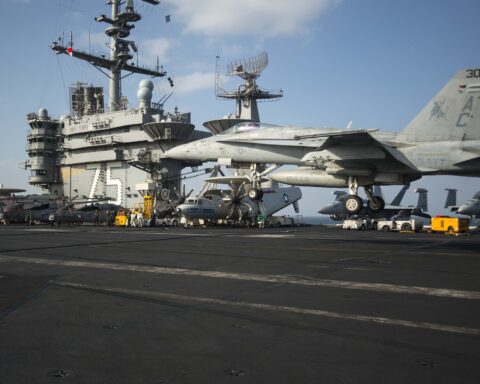
WASHINGTON — The United States military did not conduct strikes on Iran for a second consecutive night on Friday, a Department of Defense source confirmed to CNN, saying “operations on a hold” — the first on-record Pentagon acknowledgment that thirteen consecutive nights of strikes on Iran had ended in a pause.
The halt followed warnings from Vice President JD Vance and Chairman of the Joint Chiefs Gen. Dan Caine about dwindling air defense supplies. It came as Oman pressed forward with Hormuz transit negotiations in Tehran, Saudi Arabia’s foreign minister called three regional counterparts in a single day, and Israeli Prime Minister Benjamin Netanyahu prepared to fly to Washington carrying intelligence that Supreme Leader Mojtaba Khamenei is accelerating Iran’s nuclear program.
Table of Contents
“Operations on a Hold”
CENTCOM did not issue a strike announcement for the night of July 25-26, the second consecutive night without US military action against Iranian targets since the air campaign began on February 28. The command did not comment on the pause. A DoD source, speaking to CNN on July 25, confirmed the status with three words: “operations on a hold.”
The phrasing was unusual. Pentagon officials had not previously acknowledged any interruption to the campaign. For thirteen consecutive nights — from approximately July 12 through July 24 — US forces had struck Iranian military, energy, and infrastructure targets. CENTCOM had released nightly strike summaries throughout that period. The absence of a summary, followed by an on-record confirmation, marked the first departure from five months of operational messaging.
Iran’s health ministry spokesperson Hossein Kermanpour posted on X on July 25 that “Iran had a peaceful night” — the first such statement in thirteen days. The post did not mention the United States or the Pentagon’s confirmation.
Trump, speaking at the White House Correspondents’ Association dinner on Friday, said: “They are talking to us right now. They would love to make a deal. I don’t think they’re ready to. I don’t think it’s time yet, but I’m willing to listen.” Three days earlier, at a rally in Georgia on July 22, he had said: “They’re getting hit so hard, and they want to make a deal. But I say they’re not ready to make a deal because every time they make a deal, they want to change it. They’ll be ready very soon.”
The Middle East briefing 3,000+ readers start their day with.
One email. Every weekday morning. Free.
Steven Cheung, the White House communications director, said on July 26 that “President Trump has always been consistent in saying he prefers a diplomatic solution” while retaining “all options.”
What Talks Are Pressing Forward?
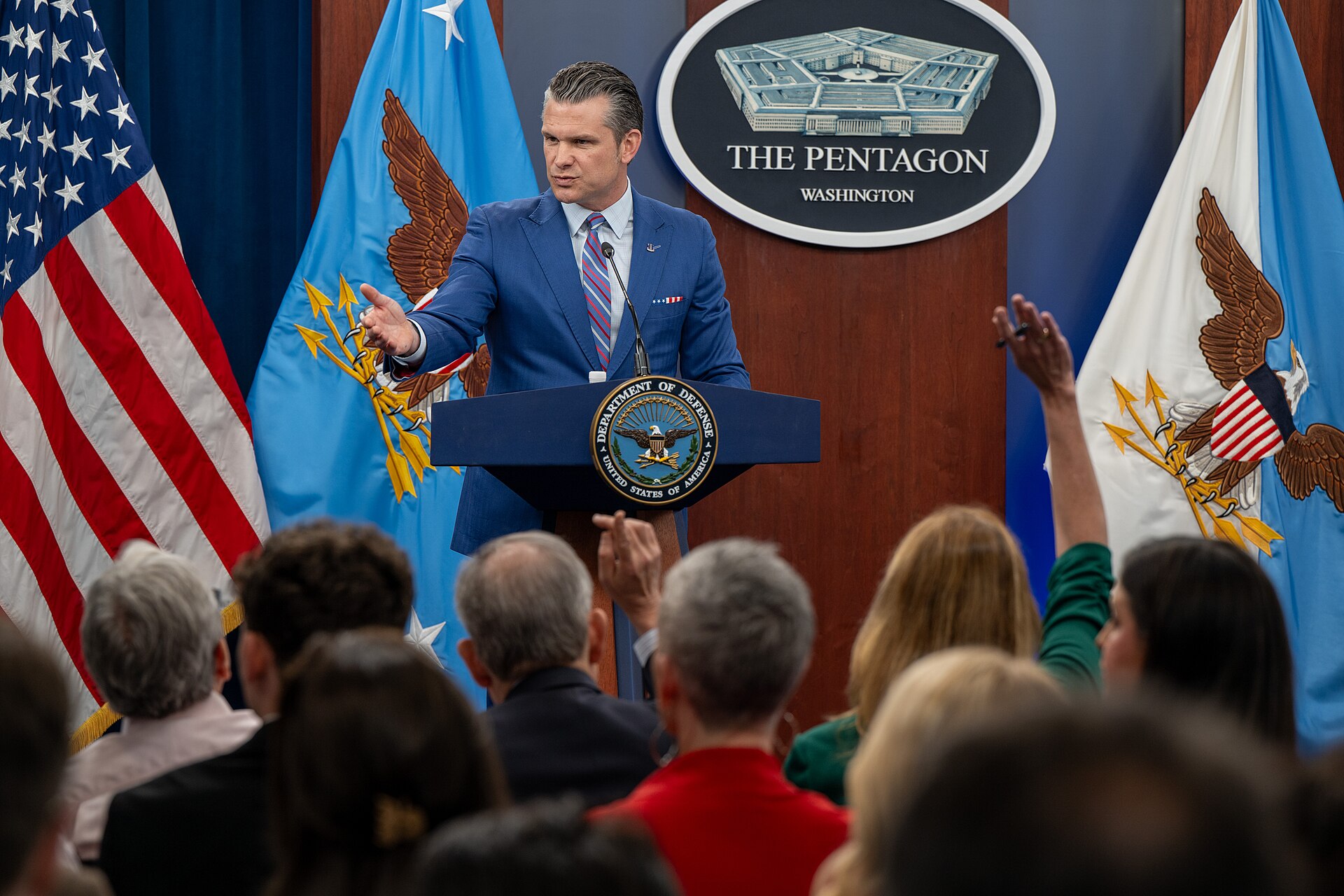
A regional official involved in the mediation confirmed to the AP on July 25 that “concerted diplomacy was underway” and called the strike pause a “positive signal that helps their efforts to de-escalate.” The official said both sides wanted to return to the June interim ceasefire deal — the Islamabad MOU, a sixty-day framework signed in June 2026 that made Iran’s enrichment program its first negotiation item. Iran held approximately 440 kilograms of uranium enriched to 60 percent at the time of signing.
Trump had declared the MOU effectively “over” in early July following tanker attacks. Iran rejected a Pakistan-Qatar ten-day ceasefire proposal on July 22 — a rejection Riyadh received secondhand through the Pakistan channel rather than the US-Iran mediators.
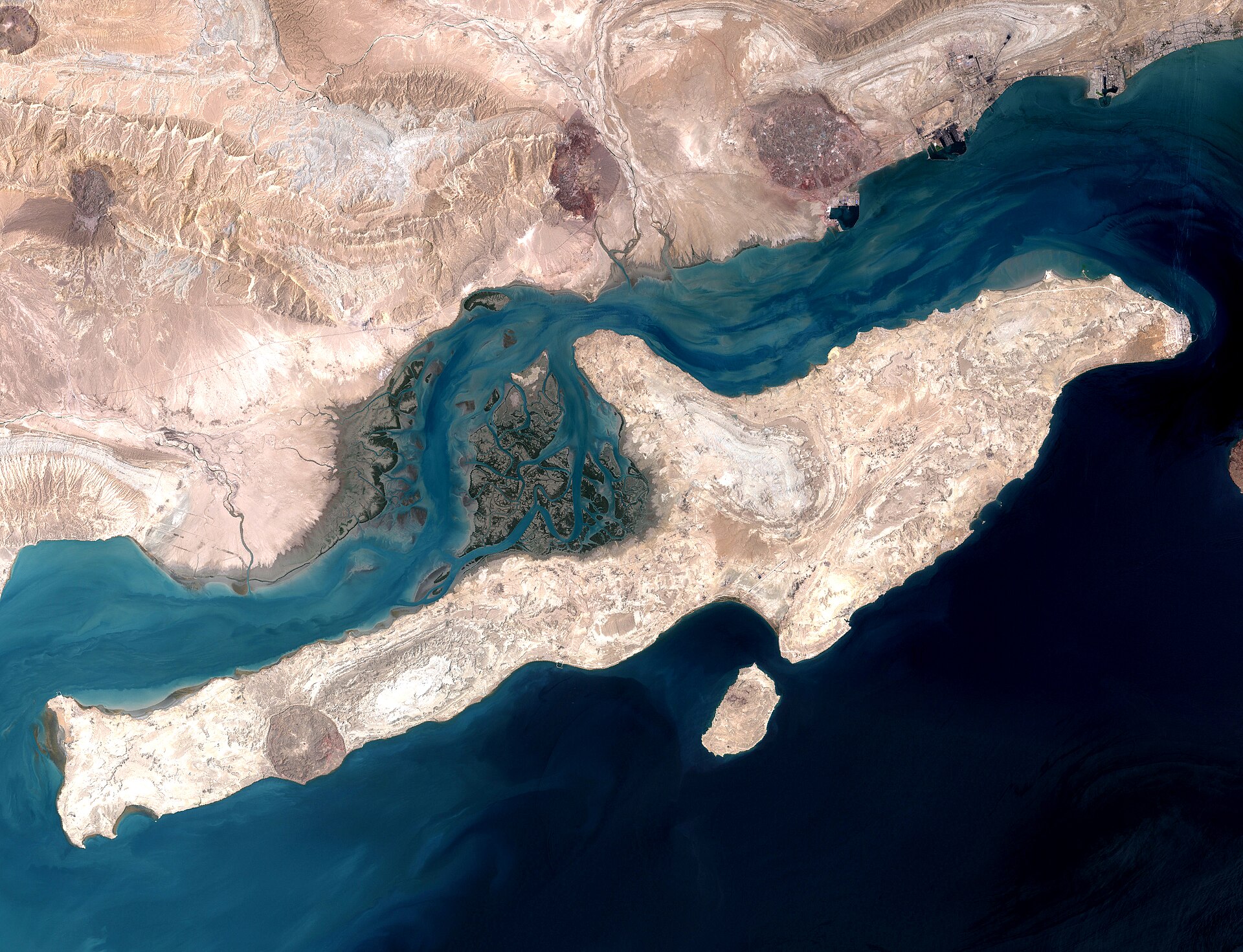
The talks now pressing forward run through Oman. An Omani diplomatic delegation arrived in Tehran late on Thursday July 24, according to Al Jazeera. Foreign Minister Badr Albusaidi held phone discussions with Iranian Foreign Minister Abbas Araghchi on the mechanics of Hormuz transit. Albusaidi said publicly that “vital waterways, including the Strait of Hormuz, must remain open and accessible for navigation, free from any measures that would impede freedom of navigation and international trade flows.”
The compromise at the center of the Oman-brokered channel, reported by CBS News and AP, involves a two-corridor system for vessel transit through the Strait. The northern corridor — running through Iranian territorial waters — would require Tehran’s advance permission for each transit. The southern corridor — through Omani waters — would restore pre-war conditions with unrestricted passage. Two regional sources told CBS News that “things are headed in a positive direction” but that “the diplomacy needs more time in order to reach a deal.”
Araghchi, in an interview with Al Jazeera on July 25, confirmed that Iranian officials were “exchanging messages” with the United States through mediators but cited “fundamental disagreements and deep mistrust” as factors limiting progress. He framed the Hormuz dispute as an MOU violation: the agreement, he said, gave Tehran the right to set transit mechanisms, and Washington had broken it by attempting to open a southern bypass route.
Michael Singh, managing director of the Washington Institute for Near East Policy and a former senior Middle East director on the National Security Council, told the AP that “if it turns into a multiday pause, that’ll be something significant.” He added that Israel’s absence from recent US attacks “may signal to the Iranians that we’re looking to limit the conflict.”
Saudi Arabia Calls Three Capitals in One Day
Saudi Foreign Minister Prince Faisal bin Farhan made three calls on July 26. He spoke with Pakistani Foreign Minister Ishaq Dar, Qatari Prime Minister and Foreign Minister Sheikh Mohammed bin Abdulrahman Al Thani, and Egyptian Foreign Minister Badr Abdelatty. The Saudi readout, reported by Asharq Al-Awsat, described the calls with Qatar and Egypt as focused on “security and safety of waterways in the Arabian Gulf and the Red Sea.”
The Dar call carried the more specific payload. A Pakistani official confirmed to Pakistan Today that a halt in attacks on Gulf states is a prerequisite for the resumption of stalled US-Iran talks. The condition — attacks on Gulf states, not attacks on Iran — addressed Saudi Arabia’s direct exposure rather than the broader military campaign. Houthi strikes had set the Jizan Aramco refinery ablaze the previous day, confirmed by satellite imagery at approximately 01:17 UTC on July 25, and targeted Yanbu — Saudi Arabia’s only remaining crude-export corridor after Hormuz closed. Saudi air defense intercepted two ballistic missiles aimed at Yanbu.
The pre-condition addressed a negotiation from which Riyadh has been formally excluded. Saudi Arabia holds no seat at the Oman-mediated Hormuz talks, was not party to the Islamabad MOU, and does not participate in the Qatar back-channel. Its access to the diplomatic process runs through Dar’s briefings and whatever Qatar’s Al Thani relays.
Araghchi, speaking to Iran Daily on July 25, said: “We believe that there is no military solution to the issue of Yemen, Bab al-Mandab, and other regional issues.” Houthi missiles struck Jizan and Yanbu the same day.
The Munitions Arithmetic Behind the Pause
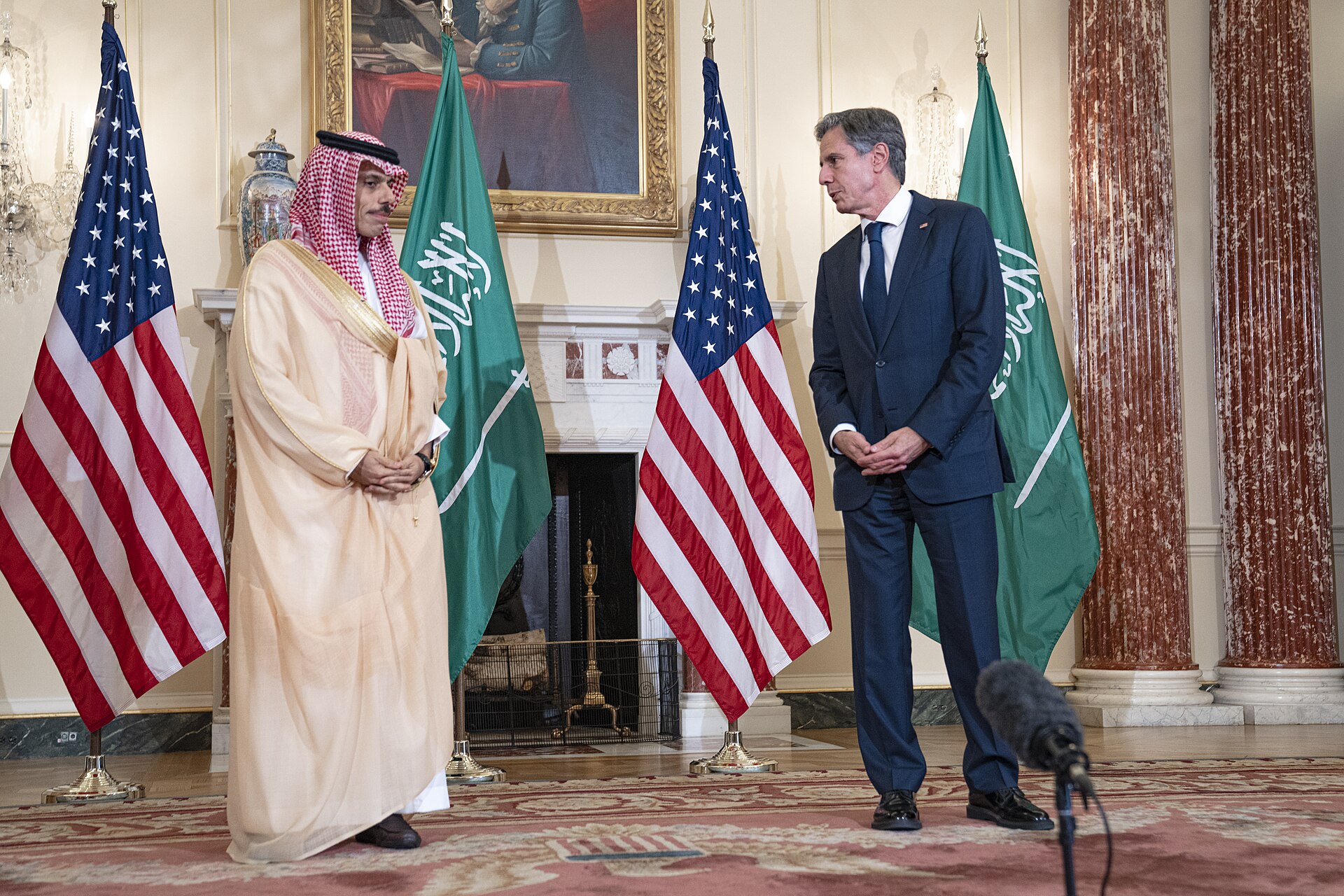
The pause was not only diplomatic. Vance and Caine both raised concerns about escalation during a White House meeting on Friday July 25, CNN Politics reported. Caine warned that expanded operations could “dangerously deplete US air defense supplies,” including Patriot missile interceptors used by CENTCOM forces across the Gulf.
US forces in the region have drawn down their PAC-3 interceptor inventory from approximately 2,800 pre-war to roughly 400 — a depletion that has constrained operational planning since early July. Caine’s warning framed the issue as a tradeoff between offensive tempo and the ability to defend the forces conducting the campaign.
The munitions concern intersected with force posture. At Prince Sultan Air Base — the largest US installation in Saudi Arabia — forty-three warplanes have been grounded since Saudi Arabia’s May 3 Operation Project Freedom, which restricted US combat operations from Saudi soil. Approximately 2,300 US personnel remain at the base.
Trump’s own language suggested the pause was deliberate. “You can just keep doing exactly what we’re doing and take them apart piece by piece,” he told reporters, according to AP. Caine’s briefing indicated that “exactly what we’re doing” was consuming defensive assets at a rate that would leave the remaining interceptor inventory to cover US installations across four Gulf countries.
What Netanyahu Is Bringing to Trump
Netanyahu convened the Israeli security cabinet on Saturday July 26 before departing for Washington on Monday. He is scheduled to meet Trump at the White House on Tuesday July 29 — a date the AP noted falls on the conflict’s five-month mark.
Israeli officials told the Times of Israel that Netanyahu’s delegation plans to present intelligence on Iran’s nuclear and military recovery. The core claim: Mojtaba Khamenei, who assumed the supreme leadership during the war, is “accelerating efforts to advance toward a nuclear weapon.” Iran held 440 kilograms of uranium enriched to 60 percent when the Islamabad MOU was signed in June.
A senior Israeli official offered a blunter assessment. “The chances of reaching an agreement between the United States and Iran are virtually nonexistent,” the official told the Times of Israel on July 25, calling eventual escalation “inevitable.”
The US-Saudi 123 nuclear cooperation agreement signed on July 22 added a parallel variable to the meeting agenda. The agreement permits Saudi Arabia to pursue civilian nuclear energy with American technical support — a framework Israel has publicly opposed.
Hormuz Enforcement Did Not Pause
While the Pentagon confirmed its strikes were on hold, the IRGC Navy continued enforcing Iran’s Hormuz controls. On July 25, IRGC forces stopped four ships attempting to transit the Strait via the southern Omani-waters route, firing warning shots. The vessels altered course, according to the Times of Israel and BSS News.
The interceptions tested the diplomatic framework under active discussion. The southern corridor in Oman’s two-corridor proposal is designed to restore pre-war conditions through Omani territorial waters. The IRGC’s enforcement of a single-corridor regime — requiring Iranian approval for all transits — continued on the same day the Pentagon paused its own operations. Twenty percent of global oil supply transits the waterway.
Brent crude surged above $100 per barrel in early Saturday trading following the Jizan and Yanbu strikes — a rise of approximately 40 percent across July 2026, according to HNGN. Both the Strait of Hormuz and Bab al-Mandeb remain under blockade or active threat, leaving Yanbu as Saudi Arabia’s last functioning crude-export terminal.
Background
The US-Iran conflict began on February 28, 2026, when the United States and Israel launched joint strikes following Tehran’s effective closure of the Strait of Hormuz. As of July 26, the conflict has lasted 148 days. Saudi Arabia holds no formal seat at either the Oman-mediated Hormuz talks or the stalled Islamabad process, and receives diplomatic briefings through Pakistan and Qatar.
Frequently Asked Questions
What is the Oman two-corridor proposal for the Strait of Hormuz?
The proposal, reported by CBS News and AP, divides Hormuz transit into two navigable lanes. The northern corridor passes through Iranian territorial waters and would require Tehran’s advance permission for each vessel transit — effectively maintaining Iranian sovereignty over the approach. The southern corridor passes through Omani territorial waters and would restore pre-war freedom of navigation with no permission required. Araghchi has characterized the southern corridor as a US attempt to bypass the Islamabad MOU “in bad faith,” arguing that the MOU gave Tehran the sole right to set transit mechanisms. Oman’s FM Albusaidi has publicly stated that all waterways must remain “open and accessible.”
Why did Vice President Vance and Gen. Caine oppose expanding the campaign?
Caine, who serves as Chairman of the Joint Chiefs, warned during a July 25 White House meeting that expanded operations could dangerously deplete US air defense supplies. The concern centered on PAC-3 interceptors — the primary missile defense system protecting US installations across the Gulf — whose inventory has fallen from approximately 2,800 pre-war to roughly 400. Vance separately raised broader escalation concerns beyond the munitions question. The New York Times reported, as cited by Iran International, that Trump shelved plans for a wider military campaign against Iran following the combined Vance-Caine intervention on Friday.
What is Saudi Arabia’s stated pre-condition for talks to resume?
A Pakistani official confirmed on July 26 that a halt in attacks on Gulf states is a prerequisite for the resumption of US-Iran negotiations. The condition was communicated during a call between Pakistani FM Ishaq Dar and Saudi FM Prince Faisal bin Farhan. The formulation targets Houthi strikes on Saudi territory — the Jizan refinery fire, confirmed by satellite imagery at approximately 01:17 UTC on July 25, and the two ballistic missiles aimed at Yanbu, the kingdom’s last functioning crude-export terminal — rather than US strikes on Iran. The pre-condition attempts to make Saudi security a necessary component of any ceasefire, despite Riyadh holding no formal seat at either the Oman-mediated Hormuz talks or the stalled Islamabad process.
What intelligence is Netanyahu expected to present to Trump?
Israeli officials told the Times of Israel that Netanyahu’s delegation will present intelligence claiming that Mojtaba Khamenei — who assumed the supreme leadership during wartime — is accelerating Iran’s pursuit of a nuclear weapon. The Tuesday July 29 meeting coincides with the conflict’s five-month mark, a timing the AP noted explicitly. A senior Israeli official separately assessed that “the chances of reaching an agreement between the United States and Iran are virtually nonexistent,” framing the visit as an argument against sustained diplomatic engagement. The AP reported that Iran’s internal leadership remains “fractured” with competing factions — a dynamic that Michael Singh of the Washington Institute described as complicating any potential deal.
Has Iran formally acknowledged the US strike pause?
No. Iran has not characterized the halt as a ceasefire, a truce, or a diplomatic concession. The only official acknowledgment came from health ministry spokesperson Hossein Kermanpour, who posted on X that “Iran had a peaceful night” — language that described the effect without attributing cause or intent. Araghchi confirmed that Iran is “exchanging messages” with the US through mediators but cited “fundamental disagreements and deep mistrust.” The IRGC Navy continued enforcing Hormuz controls on July 25, stopping four vessels with warning shots — indicating that Iran’s military posture did not change in parallel with the American pause.