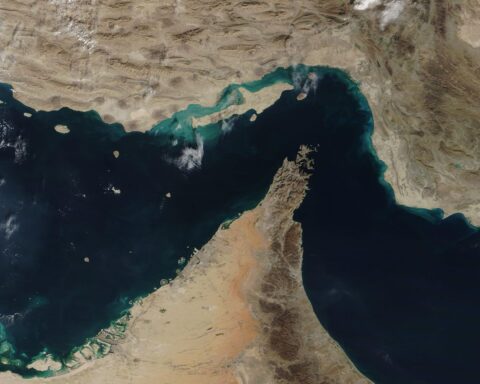
TEHRAN — Iran’s war in the Strait of Hormuz shifted on October 17 when the Islamic Revolutionary Guard Corps claimed a supertanker carrying more than two million barrels of crude oil struck a naval mine and caught fire. No independent source has confirmed the vessel’s identity, its flag state, or even the fire itself. That gap between claim and verification is not a failure of the IRGC’s communications — it is the operational design.
Mining an international shipping lane is a categorically different act from seizing a tanker or firing a cruise missile. Seizures require a boarding party that makes a decision. Missile strikes require a firing chain that answers to a commander. A mine sits on the seabed and does not choose its target, does not verify a flag, does not wait for an order. The legal, strategic, and reinsurance consequences of that distinction now define the cost of every barrel that tries to leave the Persian Gulf — through a strait where traffic has collapsed and war risk premiums have surged toward levels not seen since the 1980s Tanker War.
The sections below trace three IRGC mine claims in seven weeks, the Tanker War precedent that every underwriter remembers, the insurance spiral that is functionally closing the strait before Iran’s navy does, and Saudi Arabia’s narrowing options for moving its crude to market.
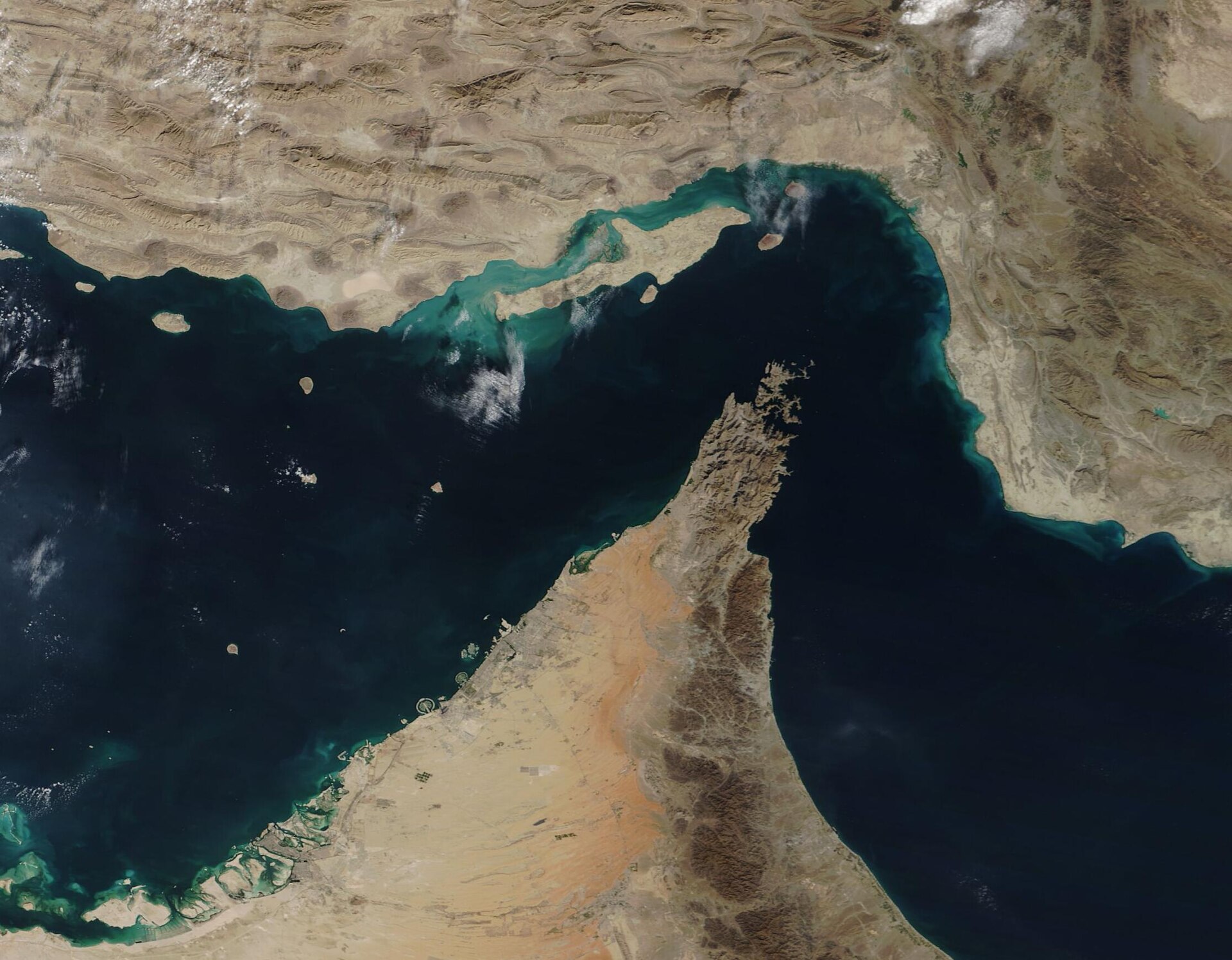
Table of Contents
- What Did the IRGC Claim on October 17?
- Why Is Mining a Different Category of Act?
- Three Mine Claims in Seven Weeks
- How Do Mines Change the Insurance Equation?
- The Tanker War Wrote This Script in 1987
- Can Saudi Arabia Export Oil Without the Strait?
- The Minesweeping Gap Washington Has Not Closed
- What Does CENTCOM’s Non-Denial Mean?
- Frequently Asked Questions
What Did the IRGC Claim on October 17?
The IRGC Navy announced on October 17 that a “huge supertanker” carrying more than two million barrels of crude oil had struck a naval mine in the Strait of Hormuz. The vessel, according to the statement carried by Iran’s Fars Agency and Press TV, had attempted to pass through an “unauthorised route” and had “deactivated its positioning and radar systems.” The result, the IRGC said, was a “massive explosion” and a “fierce fire.”
The IRGC added a new element that was absent from its earlier mine claims: the tanker had crossed “with US military support.” That framing attempts to recast American naval presence in the strait — which exists to protect commercial shipping — as co-belligerency. If insurers accept that framing, it changes who pays and under what policy, because war risk exclusions hinge on the classification of belligerent acts and the parties involved.
The IRGC did not name the vessel, its flag state, its operator, or the condition of its crew. Iran’s state broadcasters aired footage of a vessel ablaze, but no independent maritime source — not the UK Maritime Trade Operations, not the International Maritime Organization — has confirmed the vessel’s identity, its route, or the cause of the explosion. The footage, reported by the Sunday Guardian Live and Daijiworld on October 17, cannot be independently tied to the IRGC’s account.
The Middle East briefing 3,000+ readers start their day with.
One email. Every weekday morning. Free.
What CENTCOM said is revealing for what it omitted. Admiral Brad Cooper, the CENTCOM commander, stated on October 17: “The Strait of Hormuz is controlled by the United States and our regional partners, not Iran.” That is a sovereignty assertion. It is not a factual denial of the mine strike. Compare it with CENTCOM’s response to the IRGC’s first mine claim on August 31, when the command explicitly denied that any vessel had struck a mine. On October 17, no equivalent sentence appeared.
The IRGC capped its announcement with a categorical declaration: “The Strait of Hormuz is closed.” Under the UN Convention on the Law of the Sea, Iran cannot legally close an international strait to transit passage. But that declaration is not aimed at maritime lawyers in The Hague. It is aimed at the charterer in Singapore, the insurer in London, and the ship owner in Athens — each of whom must now decide in real time whether to send a two-million-barrel cargo through a strait that Iran claims is mined.
Why Is Mining a Different Category of Act?
Iran has seized tankers. It has fired missiles at commercial vessels. Both of those acts, however destructive, share one feature: a human being made a decision at the moment of execution. A boarding party chooses which vessel to board. A missile operator selects a target and fires. Accountability, attribution, and proportionality are at least theoretically possible, because someone gave an order and someone carried it out.
A mine eliminates that chain entirely. Once laid, it does not distinguish between a Liberian-flagged VLCC, a Panamanian container ship, and an Indian-crewed chemical tanker. It cannot be recalled. It does not verify whether a vessel is exercising the right of transit passage under international law or violating an Iranian “permit regime” that has no standing under UNCLOS. The weapon’s indiscriminate nature is not a design flaw — it is the strategic logic.
The legal framework is clear, even if enforcement is not. The 1907 Hague Convention on Automatic Submarine Contact Mines is widely regarded as customary international law, binding even on non-parties. A legal analysis published by Lex Portus in May 2026, examining the current crisis, argued that the Convention “explicitly prohibits the use of mines to deny transit passage of international straits.” Iran ratified neither the Convention nor the subsequent protocols, but customary international law does not require ratification to bind a state.
Alexandru Cristian Hudisteanu, a naval and maritime security analyst, told Al Jazeera in April 2026 that mines function differently from every other weapon in Iran’s maritime arsenal: “The mined area does not have to be everywhere to be everywhere in the minds of those who must transit it.” That sentence captures the doctrinal shift. A missile strike is an event — it happens, it is assessed, ships resume. A mine field is a condition. It persists. And it requires the party that wants to keep the strait open, not the party that closed it, to spend the money and risk the divers to prove it is safe.
Three Mine Claims in Seven Weeks
The October 17 claim is the third time in seven weeks that the IRGC has announced a mine strike in the Strait of Hormuz, and the pattern of escalation is deliberate. On August 31, the IRGC claimed a vessel had struck a mine. CENTCOM responded the same day with an unambiguous denial: “No vessel has struck a mine in the Strait of Hormuz.” The denial was categorical, and no independent evidence emerged to contradict it.
On October 10, the IRGC issued a second claim: a supertanker exiting Hormuz via an “unauthorized route” had struck a mine. The language escalated sharply. The IRGC Navy warned: “A massive fire is the fate of any offending tanker.” Iran International reported the statement on October 10. No independent confirmation followed, and CENTCOM did not issue a specific public response to this claim.
On October 17, the claim expanded again. This time the IRGC added that the tanker had been transiting “with US military support,” introducing the accusation that Washington was directly enabling what Tehran frames as illegal passage. The language describing the outcome also escalated — from the October 10 threat of fire to the October 17 assertion of a “massive explosion” and a “fierce fire.” And CENTCOM’s response, unlike August 31, contained no denial that a vessel had been struck.
Read that sequence from an insurer’s desk. The first claim was denied by the one party with the intelligence assets to know. The second was not denied. The third was met with a sovereignty assertion that conspicuously avoided the factual question. Whether or not a supertanker is burning in the Strait of Hormuz right now, the trajectory of official responses creates a risk environment that underwriters must price. The IRGC does not need every claim to be true. It needs the pattern to be credible enough that nobody in London will write the premium at yesterday’s rate.
How Do Mines Change the Insurance Equation?
The insurance market began closing the Strait of Hormuz months before any mine was confirmed. The Joint War Committee — the Lloyd’s Market Association body that designates high-risk maritime zones — listed the entire Persian Gulf, Strait of Hormuz, Gulf of Oman, and northern Arabian Sea as a listed area on March 3, 2026. That designation requires every vessel transiting the zone to purchase per-transit additional war risk cover on top of standard hull and machinery insurance, which itself excludes mines as a covered peril.
The premium trajectory tells the story in numbers. War risk premiums for very large crude carriers transiting Hormuz stood at 0.02 to 0.05 percent of hull value in 2024, before the crisis. By March 2026, they had risen to 0.50 to 1.50 percent of hull value, according to analysis by Dr. John George Hatzadony of Rabdan Academy’s Homeland Security programme. For a VLCC carrying two million barrels at roughly $110 per barrel, the cargo war risk alone now runs between $220,000 and $1.1 million per voyage. A confirmed mine campaign — with independently verified detonations — would push premiums toward two to five percent of hull value, matching the rates that prevailed during the 1984–88 Tanker War.
“Insurance closed the strait before Iran’s Islamic Revolutionary Guard Corps navy did.”
Dr. John George Hatzadony, Rabdan Academy, 2026
Hatzadony’s companion observation cuts deeper: “The weapon is the coupling, not the kinetic action.” A mine does not need to sink a tanker to shut down commerce. It needs to create a risk environment that makes the premium uneconomic for the cargo. Charter rates for VLCCs on the Gulf-to-China route had already surged to $1.2 million per day by October 5, according to LSEG data reported by bdnews24 — compared with roughly $80,000 per day a year earlier. At those rates, the charterer is not paying for the ship. The charterer is paying for the mine that might be there.
The consequences have cascaded through the Gulf’s energy sector. More than twenty-five GCC energy companies have declared force majeure since the crisis began, according to CSIS analysis by Leslie Palti-Guzman. Hormuz crossings have fallen approximately seventy percent compared with the June 7 to July 7 truce period, based on Kpler tracking data cited by CSIS. The IMO reported approximately 20,000 mariners and 2,000 ships stranded in the Persian Gulf as of April 21, well before the mine claims began. The broadening Iranian campaign against commercial shipping has now attacked 103 vessels between March 1 and October 13, according to tracking compiled from the 2026 Hormuz crisis record. CENTCOM reported that 135 ships had been turned around since Iran’s blockade declaration on July 14, CBS News reported on October 10.
The Tanker War Wrote This Script in 1987
The Tanker War of 1984 to 1988 is not an analogy for what is happening in the Strait of Hormuz. It is the precedent — and it favoured the miner, not the minesweeper. Over those four years, more than 400 commercial vessels were struck in the Persian Gulf at a cost that reshaped global energy markets and forced the US Navy into a large-scale maritime convoy escort operation spanning the length of the Persian Gulf.
The definitive moment came on July 24, 1987, when the supertanker Bridgeton — reflagged from Kuwaiti to American registry as part of Operation Earnest Will — struck an Iranian-laid moored mine on its first convoy transit through the strait. The blast damaged the outer hull but the vessel continued to port under its own power. Captain Frank Seitz described the impact: “It felt like a 500-ton hammer hit us.” The US Navy escorts trailing the Bridgeton could not lead the convoy because they lacked adequate minesweeping capability — a gap that forced warships to shelter behind the very tanker they were supposed to protect.
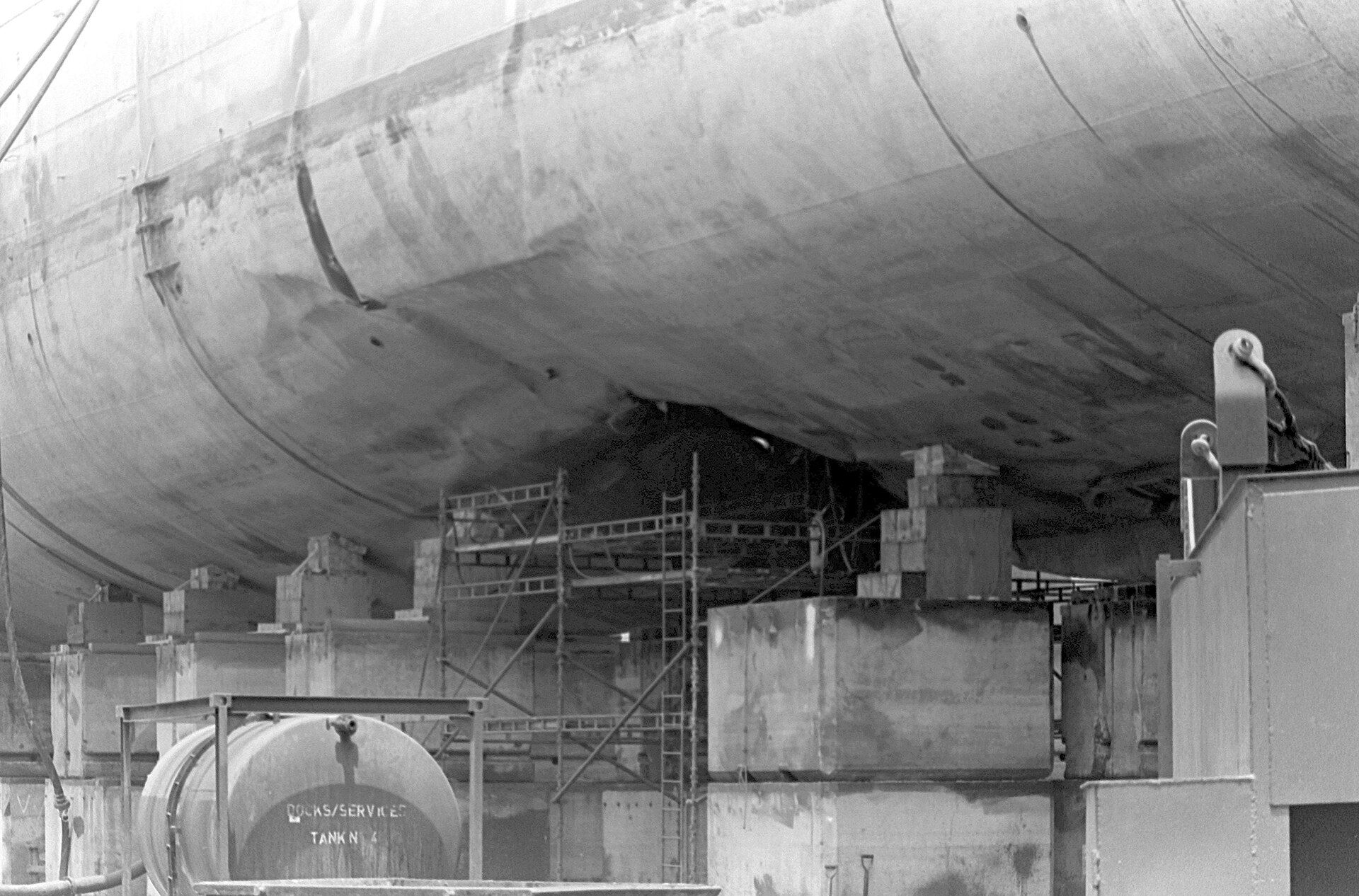
Nine months later, on April 14, 1988, the guided-missile frigate USS Samuel B. Roberts struck a submerged Iranian mine that nearly ripped the warship in half. The Navy’s own assessment described “dramatic inadequacies in mine warfare.” The Roberts incident triggered Operation Praying Mantis — the largest US naval engagement since the Second World War — but the mine that started it had cost Iran a fraction of the frigate’s value and the political capital its loss demanded.
The Tanker War ended when the broader Iran-Iraq War ended. The mines did not stop it. The commercial cost of transiting did not stop it. What stopped it was a political settlement that had nothing to do with the seabed. That precedent matters now because it tells insurers and ship owners exactly what to expect: the mine threat persists until the war ends, not until the mines are cleared.
Can Saudi Arabia Export Oil Without the Strait?
Saudi Arabia’s primary bypass for the Strait of Hormuz is the East-West Pipeline, which runs from the Eastern Province oil fields to the Red Sea terminal at Yanbu. Al Jazeera reported on October 6 that the pipeline was pumping at 5.8 million barrels per day — below its design capacity of 7 million bpd, as reported by Argus Media. That leaves roughly 1.2 million bpd of unused capacity, in theory. In practice, the maths are worse.
Yanbu’s nameplate loading capacity is 3 million bpd, but historical actual loadings have not exceeded 2 million bpd, according to Argus Media. Aramco’s Red Sea refineries consume approximately 2 million bpd from the pipeline for domestic processing and refined product exports. That means the pipeline can move crude to the Red Sea coast, but the terminal infrastructure cannot load it onto tankers at the rate the pipeline delivers. The structural vulnerabilities in Saudi Arabia’s export architecture predate this crisis but are now acute.
The pipeline itself is not invulnerable. Saudi authorities suspended East-West pipeline flows on September 12 after a disruption and restarted them on September 22, according to Saudi Gazette via Zawya. Drone attacks attributed to Iraqi militias struck the pipeline corridor in September, and the infrastructure runs through terrain that is difficult to defend across its full length. Aramco has begun studying alternative oil export routes, Arabian Business reported on October 16 — an acknowledgement that the current bypass is not sufficient.
The Red Sea exit faces its own blockade. The Houthis announced a “naval blockade” of Saudi Arabia on July 20, creating a compound risk: crude that cannot leave through Hormuz because of mines faces a second threat if it reaches the Red Sea through the pipeline. Leslie Palti-Guzman, a senior associate at CSIS, observed that “energy security has again moved ahead of environmental considerations” — a reflection of how thoroughly the Hormuz crisis has reordered Gulf economic priorities.
The production data confirms the squeeze. The International Energy Agency reported that Saudi output fell 2.6 million bpd in August, while crude shipments dropped to 6 million bpd, according to Trend on September 14. Brent crude briefly topped $108 on September 24, Al Jazeera reported, and stood at $102.94 on October 9, according to CNBC. The broader pattern of Iranian strikes against Saudi critical infrastructure has made every link in the export chain a target, from wellhead to loading terminal.
The Minesweeping Gap Washington Has Not Closed
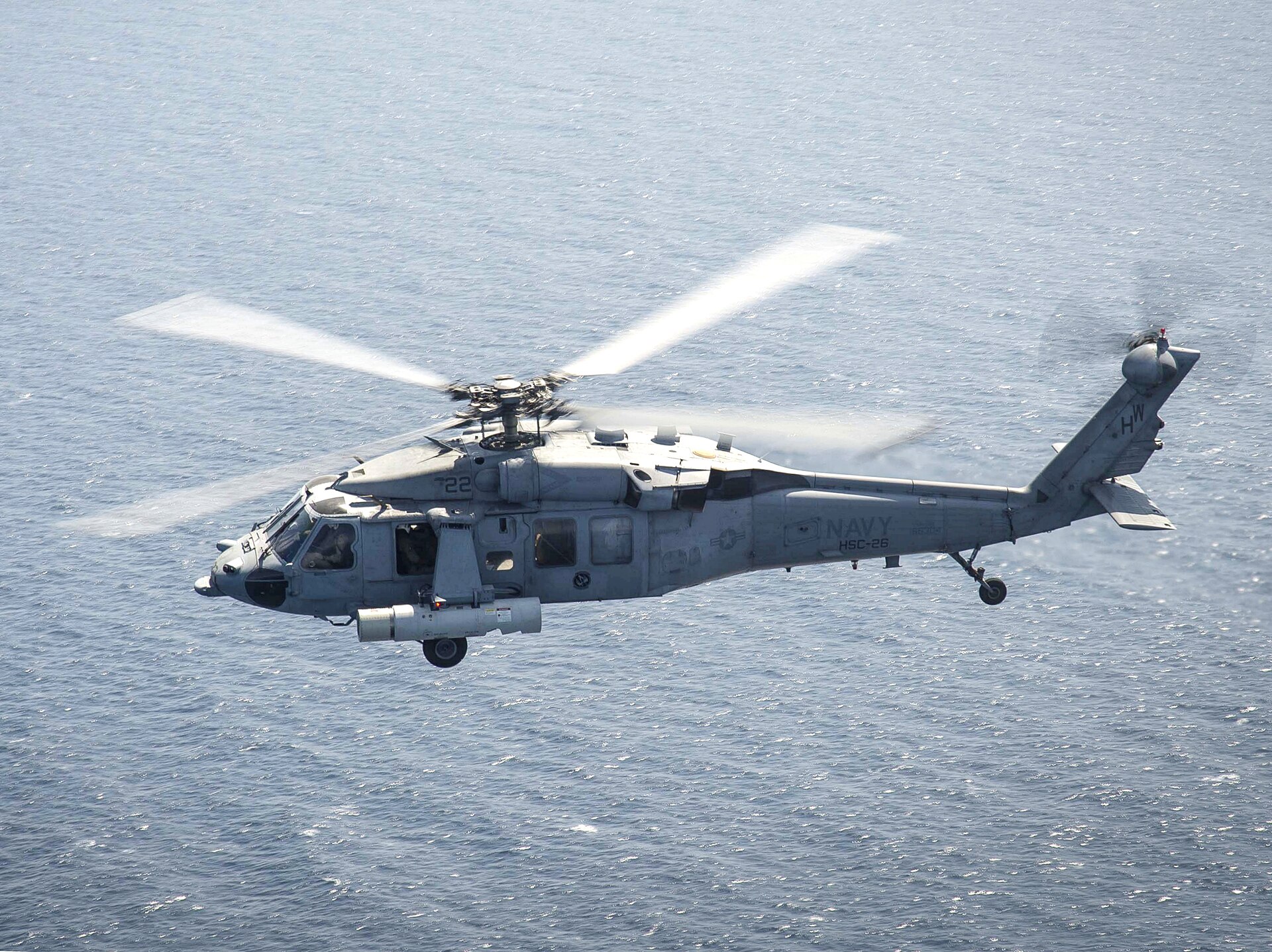
Iran began laying mines in the Strait of Hormuz in March 2026, according to the crisis timeline. The US Navy’s response has been aggressive but structurally constrained. American forces sank sixteen Iranian minelayer vessels, as reported by Al Jazeera in April 2026. By August, CENTCOM confirmed that US Navy divers and SEALs had swept 200 mine-like objects from the Traffic Separation Scheme, of which eleven were confirmed as live mines, according to Task and Purpose and UPI. That ratio — eleven mines in more than 200 suspect objects — captures the fundamental asymmetry of mine warfare: the sweeper must check everything, while the miner needs only a few weapons to succeed.
Iran’s stockpile dwarfs what has been found. Analysts estimate Iran holds between 2,000 and 6,000 mines, many produced domestically, Al Jazeera reported in April 2026. The arsenal includes the M-08 contact mine, which detonates on physical impact; the Maham-2 influence mine, triggered by a vessel’s acoustic, magnetic, or pressure signature without contact; and the EM-52 rocket mine, which sits on the seabed and launches a projectile upward at a passing hull. The variety matters because each type requires different countermeasures, and a mixed field compounds the time and risk required to clear it.
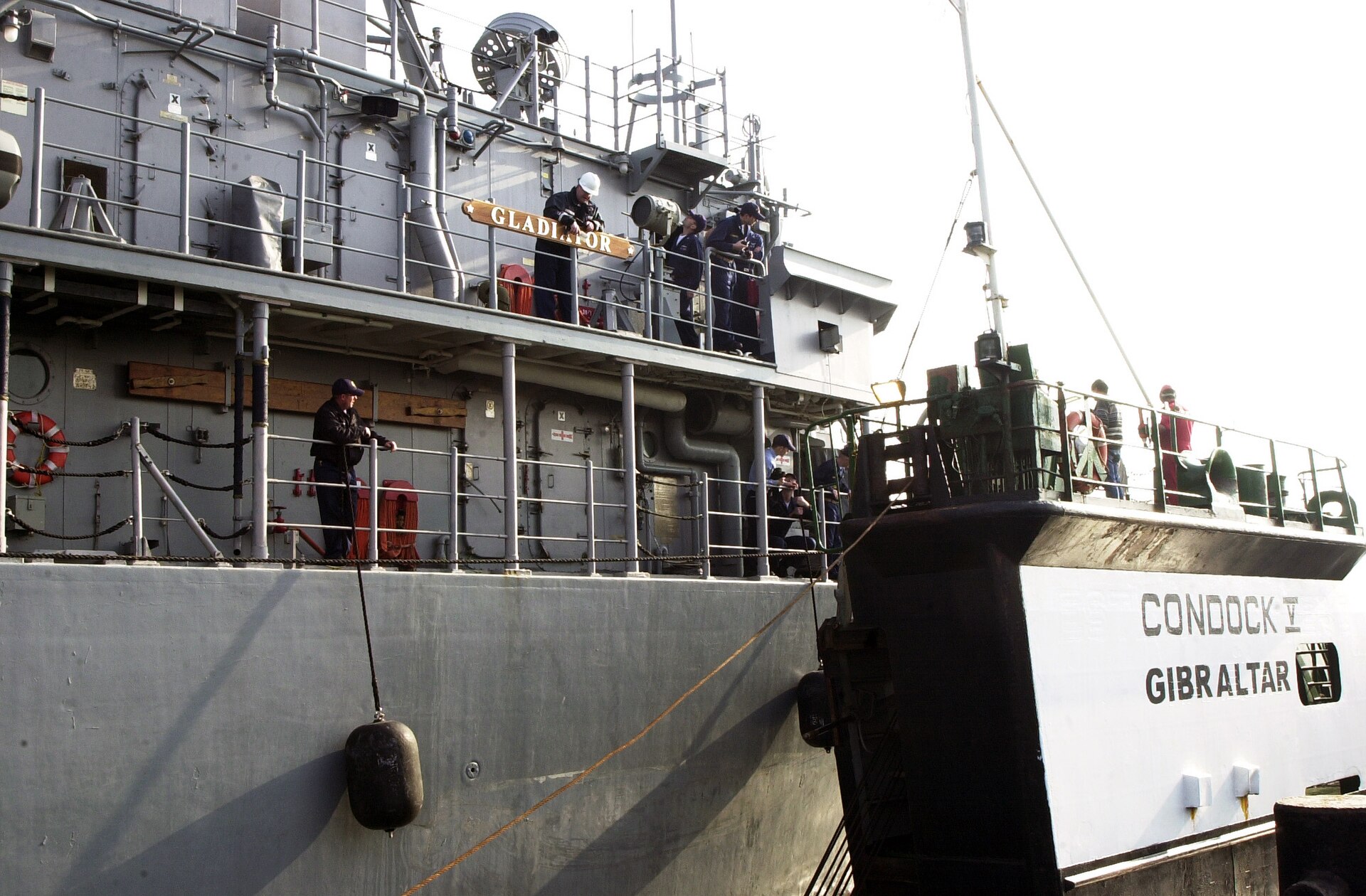
The Foundation for Defense of Democracies has flagged that the US Navy retired its dedicated mine countermeasure ships and helicopters without fielding adequate replacements — a gap that the current crisis has exposed. The International Institute for Strategic Studies, writing in its Survival journal in June 2026, assessed that Iran would “keep up a sporadic nuisance campaign, using mines they can sow surreptitiously from innocent-looking dhows.” That prediction has proved accurate. A dhow does not look like a minelayer. It looks like every other small vessel in the strait, and the volume of traffic makes identification before deployment nearly impossible.
The broader question of whether Washington can guarantee Saudi Arabia’s security architecture now extends from the air domain to the seabed. Sixteen minelayers sunk and eleven mines cleared is an impressive tactical record. But Iran claims to have thousands more mines and the small craft to lay them faster than American divers can find them.
What Does CENTCOM’s Non-Denial Mean?
Admiral Brad Cooper’s October 17 statement — “The Strait of Hormuz is controlled by the United States and our regional partners, not Iran” — does two things simultaneously. It asserts American dominance over the waterway. And it avoids the one sentence that would settle the factual question: whether a supertanker struck a mine. On August 31, when the IRGC made its first mine claim, CENTCOM issued that sentence explicitly. On October 17, it did not.
There are scenarios in which the non-denial is deliberate on both sides. If a vessel was struck and the damage was contained, CENTCOM may prefer not to confirm it — because confirmation would validate the IRGC’s mine campaign and trigger an immediate insurance repricing that would further reduce Hormuz traffic. The IRGC, conversely, benefits from an unverifiable claim because the uncertainty itself is coercive: ship owners cannot dismiss it, but they also cannot assess its severity. The pattern of claim and counter-claim between Tehran and Riyadh has generated its own fog, and the mine threat sits inside it.
The political ceiling on American escalation is also visible. President Trump stated on October 8 that “we will not be attacking Iran at any time prior to the midterm elections on November 3,” as reported by The National. That timeline gives Iran a window in which mine-laying carries kinetic risk — the US has sunk minelayers — but not the risk of a broader American strike. The IRGC’s calculus is not whether a mine claim will provoke retaliation. It is whether the pattern of claims, verified or not, will make the strait commercially unviable before Washington’s political calendar permits a decisive response.
Iran’s Army claimed full control of the Strait of Hormuz on October 16, as reported by the Caspian Post. The IRGC’s mine claims are the enforcement mechanism for that assertion. A missile can be intercepted. A seized tanker can be released. A mine field — real or claimed — rewrites the risk calculus for every transit, every cargo, every premium. The question is no longer whether Iran can physically close the strait. The question is whether the insurance market will keep it open.
Frequently Asked Questions
What types of naval mines does Iran deploy in the Strait of Hormuz?
Iran’s mine arsenal includes three distinct categories that require different countermeasure approaches. The M-08 is a traditional contact mine that detonates on physical impact with a hull. The Maham-2 is an influence mine that uses acoustic, magnetic, and pressure sensors to detect a vessel passing overhead and detonates without contact — making it effective against ships that maintain distance from visible objects. The EM-52 is a rocket-propelled mine that rests on the seabed and launches an explosive charge upward at a passing vessel, effective in deeper water where bottom-laid contact mines cannot reach a hull. The mix of types means no single countermeasure technique can clear a field.
What legal framework governs the mining of international straits?
The primary instrument is the 1907 Hague Convention VIII on Automatic Submarine Contact Mines, which emerged from the Second Hague Peace Conference. The Convention prohibits the laying of unanchored automatic contact mines unless they become harmless within one hour, and it bars the use of mines specifically to interrupt commercial navigation. International legal scholars, including a March 2026 analysis published by bacsich.org and a May 2026 study in Lex Portus, argue the Convention constitutes customary international law — meaning it binds all states regardless of whether they have ratified it, including Iran. Separately, UNCLOS guarantees transit passage through international straits, which mining would obstruct.
How do current Hormuz war risk premiums compare with the 1980s Tanker War?
The 1984–88 Tanker War took years of sustained attacks before war risk premiums reached their ceiling. The 2026 cycle arrived at comparable hull rates within months of the March 3 JWC listing — without a single independently confirmed mine detonation. That speed of escalation is itself a new precedent: threat credibility, not verified kinetic events, is now determining commercial decisions. A single independently confirmed mine strike could close the remaining gap to full Tanker War premium levels overnight.
What is the IMF’s assessment of the Hormuz crisis?
The International Monetary Fund warned of worldwide economic fallout as attacks on Saudi Arabia escalated, Yahoo Finance reported on October 15. The IMF assessment focused on the systemic risk created by the simultaneous disruption of Hormuz transit, Red Sea shipping, and Saudi production capacity — a combination that removes redundancy from global energy supply chains. The fund’s concern is not a single chokepoint closure but the compounding effect of multiple disruptions across the Gulf and Red Sea, which between them handle a significant share of global seaborne crude and LNG trade.