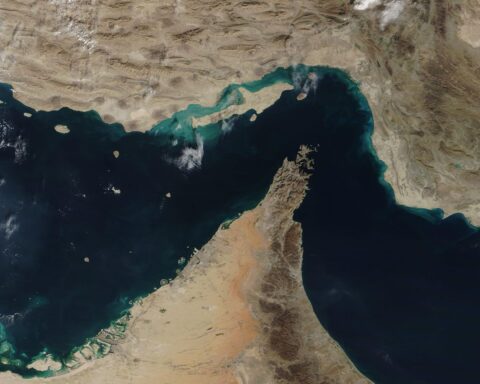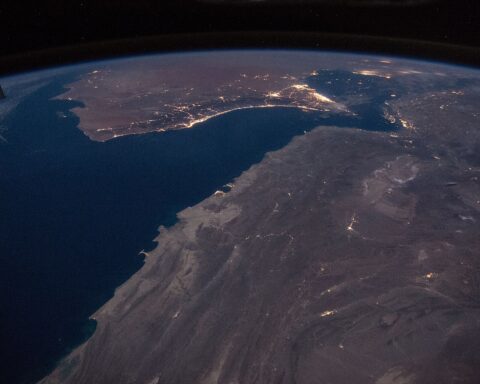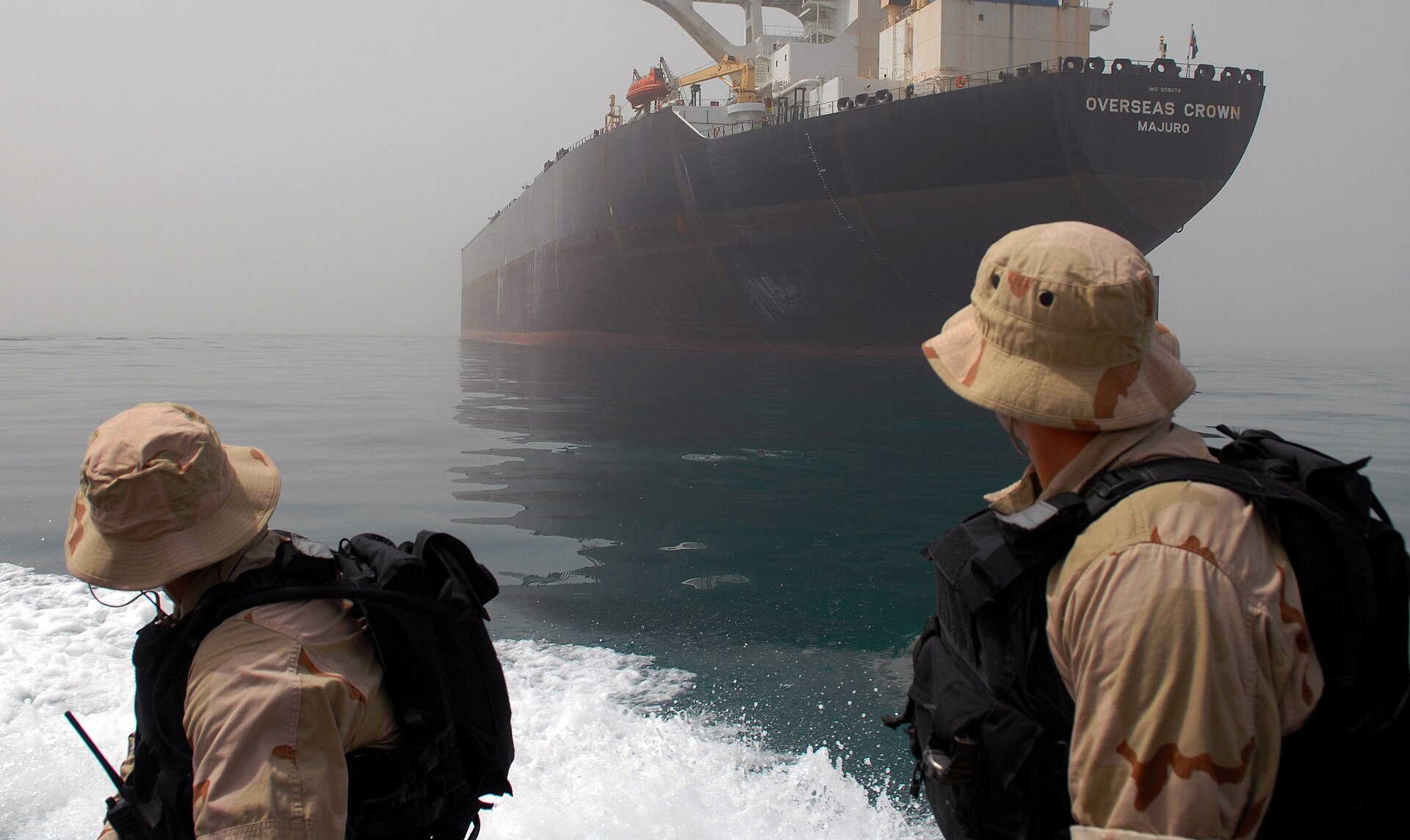

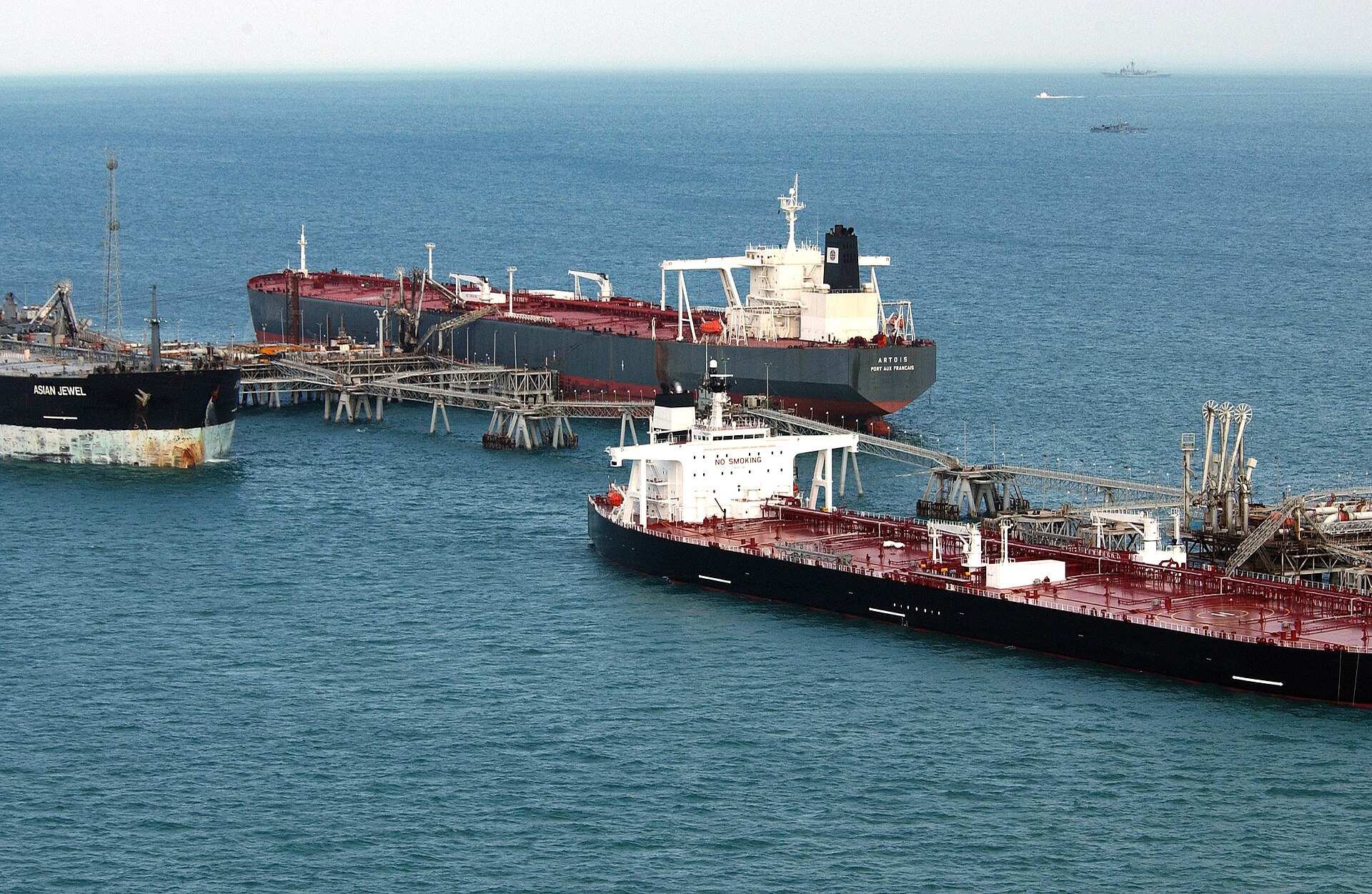
WASHINGTON — Iran has assembled more than 14 oil tankers at Kharg Island and completed the first confirmed ship-to-ship crude transfer since the United States reimposed its naval blockade in mid-July, according to satellite imagery, ship-tracking data and sanctions monitors cited by Bloomberg and Euronews on November 20, 2026. CENTCOM responded by expanding the blockade to cover vessels that receive Iranian cargo at sea, warning they face boarding, diversion or the use of force.
The sanctioned Suezmax Olym transferred approximately 200,000 barrels of crude to the medium-range tanker Hao Fan south of Kharg Island on November 17, with both ships running dark — their Automatic Identification Systems switched off, according to Bloomberg via gCaptain. It was the first observed ship-to-ship Iranian crude transfer since the blockade was reinstated on July 14, said Charlie Brown, an adviser to United Against Nuclear Iran (UANI). The convoy now staged at Kharg — the terminal that handles 85 to 90 percent of Iran’s crude exports and stores roughly 30 million barrels — represents a deliberate stress-test of American enforcement, not an accidental commercial movement. The question for oil markets, for CENTCOM, whose chief met MBS in Riyadh on November 19, and for every Gulf capital watching the tanker tracks is whether Washington will interdict the next attempt — and what happens to Brent and to Saudi Arabia’s strategic calculus if it does not.
Table of Contents
The Olym Transfer: What Happened on November 17
The Olym is a US-sanctioned Suezmax-class tanker. On November 17, it pulled alongside the medium-range tanker Hao Fan in waters south of Kharg Island and offloaded approximately 200,000 barrels of Iranian crude, according to Bloomberg, citing ship-tracking data and UANI monitoring.
The House of Saud Daily Briefing
Saudi Arabia's news in 3 minutes, every morning. Free. See today's issue
The Hao Fan is not on the US sanctions list. UANI detected the vessel spoofing its AIS position to show it near Oman’s Shinas anchorage while it was actually south of Kharg, according to Bloomberg via gCaptain. The technique — running dark to avoid satellite tracking, then broadcasting a false position — is a standard evasion method in sanctioned-oil smuggling networks. What made this transfer different was its timing and visibility.
Brown, the UANI adviser, called the near-simultaneous publication of CENTCOM’s expanded advisory “a happy coincidence,” suggesting the two events were independently triggered. The Iranians, he said, are expected to try “all kinds of ways to get things out,” according to Bloomberg via gCaptain.
What Does CENTCOM’s Expanded Advisory Mean?
CENTCOM’s expanded advisory, issued on November 18, closes the ship-to-ship transfer loophole that made the Olym–Hao Fan exchange possible. The advisory states: “Any ship that receives cargo via a ship-to-ship transfer with a vessel subject to the blockade may be considered to be evading the blockade, even if it has not entered Iranian ports,” according to gCaptain, citing Reuters.
The enforcement clause is blunt. Ships receiving STS cargo from blockaded vessels “may be stopped, boarded, diverted, captured, or directed to proceed to the Iranian port,” including through “the use of force consistent with applicable law,” according to gCaptain, citing Reuters. A separate NAVCENT addendum clarified that “the blockade will not impede neutral transit passage through the Strait of Hormuz to or from non-Iranian destinations,” according to gCaptain.
The distinction matters. Before November 18, an unsanctioned vessel like the Hao Fan could argue it never entered an Iranian port and therefore was not subject to interdiction. The new advisory eliminates that argument. Any tanker caught receiving cargo from a sanctioned or blockaded vessel — anywhere in the Persian Gulf, the Gulf of Oman or the Arabian Sea — now falls within CENTCOM’s declared enforcement zone. The advisory transforms the blockade from a port-focused operation into something closer to a comprehensive maritime exclusion zone for Iranian crude.
Whether CENTCOM intends to enforce the new rules immediately or is using the advisory as a deterrent remains an open question. No ship has yet been interdicted under the expanded terms. The advisory’s real audience may not be Iran at all — it may be the network of unsanctioned middlemen, shell companies and flag-of-convenience operators who handle the actual movement of sanctioned oil to buyers in East Asia.
14 Tankers at Kharg: A Convoy With a Purpose
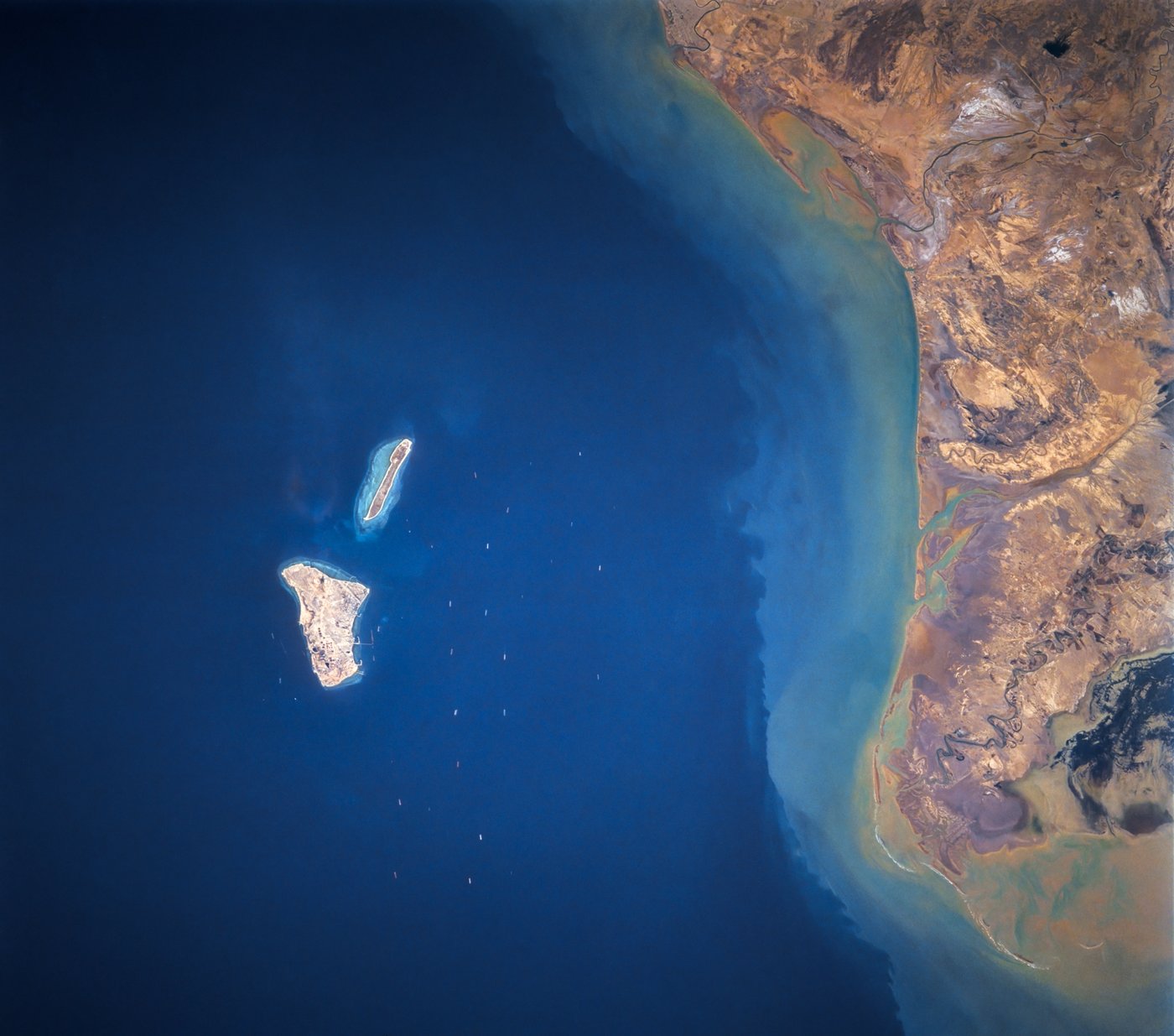
More than 14 oil tankers have been assigned crews and Iranian flags at Kharg Island, based on satellite imagery and ship-tracking data cited by Bloomberg and Euronews on November 20. The convoy may head toward the Sea of Oman “in the coming days,” Euronews reported. As of November 20, no source has confirmed that the convoy is underway.
Kharg Island is Iran’s primary crude export terminal. Iran’s alternative export terminal at Jask, on the Gulf of Oman coast, lacks the infrastructure to replace Kharg at anything approaching the same volume, Euronews reported. If Iran intends to move crude in quantity, Kharg is the only departure point.
The staging of 14 tankers in one location is not a subtle operation. It is visible to every intelligence satellite and commercial tracking service in orbit. That visibility appears to be the point. Fars News Agency, which is semi-official and close to the Islamic Revolutionary Guard Corps, published a commentary proposing that Iran send a tanker convoy through the blockade, using the language: “To break the naval blockade, Iran can move a group of oil tankers to break out of the blockade,” according to Al Jazeera citing Fars.
The convoy, in other words, is at least partly a signalling operation — a test of American resolve designed to be seen. If the US intercepts it, Tehran can frame the confrontation as American aggression against civilian commerce. If CENTCOM lets it pass, the blockade’s credibility collapses in a single news cycle, and every Chinese refinery still taking Iranian crude will have its confidence restored.
How Effective Has the US Blockade Been?
The numbers, until this week, told a story of near-total success. Kpler data show Iranian crude and condensate loadings fell from approximately 2 million barrels per day in March 2026 to zero in September 2026, according to multiple sources citing Kpler. CENTCOM reported that 135 ships had been turned around since the blockade began, as of October 10. UANI tracked at least 58 Iranian oil and petrochemical loadings since July 14, but only 8 were at Kharg, and no crude tanker was confirmed to have breached the blockade zone in the Gulf of Oman, as Iran continued to mount attacks in Hormuz throughout November, according to IranWire citing UANI data.
The blockade was first imposed on April 13, 2026. It was temporarily lifted in June after a draft understanding with Tehran, then reimposed on July 14 after negotiations collapsed, according to Al Jazeera. The reimposition came after Iran had already throttled the Strait of Hormuz to commercial traffic, creating parallel chokepoints — with the IRGC claiming control of waters 500 km beyond Hormuz.
CENTCOM demonstrated its willingness to use force on September 5, 2026, when it struck three IRGC-linked oil tankers: the M/T Downy off Kharg Island, the M/T Stark 1 near Jask and the M/T Kylo in the Gulf of Oman, according to CENTCOM via Al-Monitor and the South China Morning Post. Those strikes followed IRGC ballistic missile attacks on two US Navy warships. The message was direct: tankers carrying Iranian crude under IRGC protection are military targets.
“Things have been consistent so far with regard to the blockade,” Brown told Bloomberg, as reported by gCaptain. The Olym transfer is the first crack — small in volume (200,000 barrels is roughly one-tenth of a single day’s pre-blockade exports), but large in what it signals about Iran’s willingness to escalate.
Tehran’s Calculus: Defiance, Deterrence and Economic Desperation
Iran’s pre-war crude exports ran at approximately 1.5 to 2 million barrels per day, mostly to China, according to Al Jazeera. Oil accounts for roughly 30 percent of Iran’s economy, Rob Geist Pinfold, a lecturer in international security at King’s College London, told Al Jazeera. The blockade has effectively zeroed out that revenue stream since September.
The economic pressure explains the convoy. Tehran is running out of time and money. But the military risks are real. Andreas Krieg, an associate professor in security studies at King’s College London, told Al Jazeera: “This is potentially one of the most dangerous escalation scenarios we have seen in recent weeks.” Krieg added: “Iran can circumvent parts of the blockade, but it cannot break it militarily in any sustainable way.”
The danger, Krieg told Al Jazeera, is that “an operation intended to test American resolve becomes the trigger for another full-scale regional war.” An interdiction of a convoy in international waters — with cameras rolling and casualties possible — would be a qualitatively different event from the September 5 tanker strikes, which hit vessels individually and far from port.
Iran’s official posture mixes defiance with threat. Brigadier General Hossein Mohebbi, an IRGC spokesman, said, according to Al Jazeera citing Fars: “America can never achieve the type of economic blockade it’s after, whichever iteration it takes.” He added: “Naturally, in a war, they might hit one of our vessels. But we’ll hit harder.” Mohammad Enayati Najafabadi, in a post on X reshared by Fars News Agency, went further, warning that disrupting an Iranian tanker’s route “will lead to explosions at the oil facilities of the United Arab Emirates, Saudi Arabia, Qatar, Kuwait, Oman and Bahrain.” He described this as his personal analysis, Euronews reported, citing Fars.
No official Iranian government statement — from IRNA, Tasnim or Press TV — directly addressed either the Kharg convoy or the CENTCOM expanded advisory as of November 20. The absence is itself a signal. Tehran may be preserving deniability: if the convoy departs and is intercepted, it can claim the tankers were engaged in lawful commerce; if they are not intercepted, no official statement was needed.
Brent and the Market Signal
Brent crude was trading at approximately $90.49 on November 20, down $1.49 or 1.6 percent on the day, and down more than 20 percent in November, according to Cornerstone Futures. The price is falling despite the convoy news, not because of it — a reflection of the market’s assessment that the blockade will hold and that Iranian barrels will not reach refineries in meaningful volumes.
That assessment is itself a vulnerability. If even one or two tankers from the Kharg convoy breach the blockade zone without interdiction, the market’s confidence in enforcement will crack. Traders price risk on precedent, and a single successful run would reprice the probability of Iranian supply returning to the market. For Gulf producers who have demanded Hormuz reopen unconditionally, the stakes are asymmetric: a blockade that holds keeps Iranian barrels off the market and supports Saudi pricing power; a blockade that leaks undermines the entire structure of post-crisis supply management.
US Energy Secretary Chris Wright told Fox News on November 20 that Strait of Hormuz energy flows were increasing and that conditions had changed but were “not yet visible to the public,” Euronews reported. The comment is cryptic enough to support multiple readings — it could refer to the resumption of non-Iranian transit traffic, to new enforcement measures, or to diplomatic developments not yet announced.
Washington’s broader Iran decision has been delayed, with Trump having deferred any direct action against Iran. That deferral places the burden entirely on the blockade as the primary instrument of economic coercion. If the blockade cannot survive a stress-test from a 14-tanker convoy and a handful of STS transfers, the administration’s Iran strategy has a hole in it that diplomacy alone cannot fill. Qatar and Oman continue to run a US-Iran channel, but the convoy at Kharg suggests Tehran is not waiting for that channel to produce results.
| Metric | Figure | Source |
|---|---|---|
| Iranian crude loadings, March 2026 | ~2 million bpd | Kpler data, Nov 2026 |
| Iranian crude loadings, September 2026 | Zero | Kpler data, Nov 2026 |
| Ships turned around (as of Oct 10) | 135 | CENTCOM |
| Oil/petrochemical loadings since July 14 | 58 | UANI / IranWire |
| Kharg loadings since July 14 | 8 | UANI / IranWire |
| Tankers staged at Kharg (Nov 20) | 14+ | Bloomberg / Euronews |
| Olym STS transfer (Nov 17) | ~200,000 barrels | Bloomberg / gCaptain |
| CENTCOM tanker strikes (Sept 5) | 3 vessels | CENTCOM / Al-Monitor / SCMP |
| Brent crude (Nov 20) | ~$90.49 | Cornerstone Futures |
| Kharg storage capacity | ~30 million barrels | Euronews |
FAQ
What is the Hao Fan and where is it now?
The Hao Fan is a medium-range tanker that is not on the US sanctions list. It received approximately 200,000 barrels of Iranian crude from the Olym on November 17 south of Kharg Island, according to Bloomberg via gCaptain. UANI detected it spoofing its AIS position to show it near Oman’s Shinas anchorage. As of November 20, no public report has confirmed whether the Hao Fan has reached a destination port or remains under US surveillance.
Has Iran successfully exported crude oil since the blockade was reimposed?
UANI tracked at least 58 Iranian oil and petrochemical loadings since July 14, but most involved condensate or petrochemical products rather than crude, according to IranWire citing UANI data. Only 8 loadings occurred at Kharg Island. The Olym STS transfer on November 17 moved crude, but it has not been confirmed whether the receiving vessel, the Hao Fan, reached a buyer. Earlier STS evasion attempts moved sanctioned cargo to China-bound vessels, according to sanctions monitors.
What happened when CENTCOM struck tankers in September?
On September 5, 2026, CENTCOM permanently disabled the M/T Downy off Kharg Island and the M/T Stark 1 near Jask, and destroyed the M/T Kylo in the Gulf of Oman, according to CENTCOM press releases reported by Al-Monitor and the South China Morning Post. The strikes followed IRGC ballistic missile attacks on two US Navy warships. CENTCOM had earlier boarded oil vessels on separate occasions without seizure, after route verification.
Could Iran retaliate against Gulf oil facilities?
Mohammad Enayati Najafabadi, in a post on X reshared by Fars News Agency, warned that disrupting an Iranian tanker convoy “will lead to explosions at the oil facilities” of the UAE, Saudi Arabia, Qatar, Kuwait, Oman and Bahrain, Euronews reported. He described this as his personal analysis. The IRGC has not issued an official threat to Gulf oil infrastructure in connection with the convoy, though Brigadier General Mohebbi said Iran would “hit harder” if its vessels were struck, according to Al Jazeera. Houthi attacks have already targeted Saudi energy infrastructure throughout the conflict.
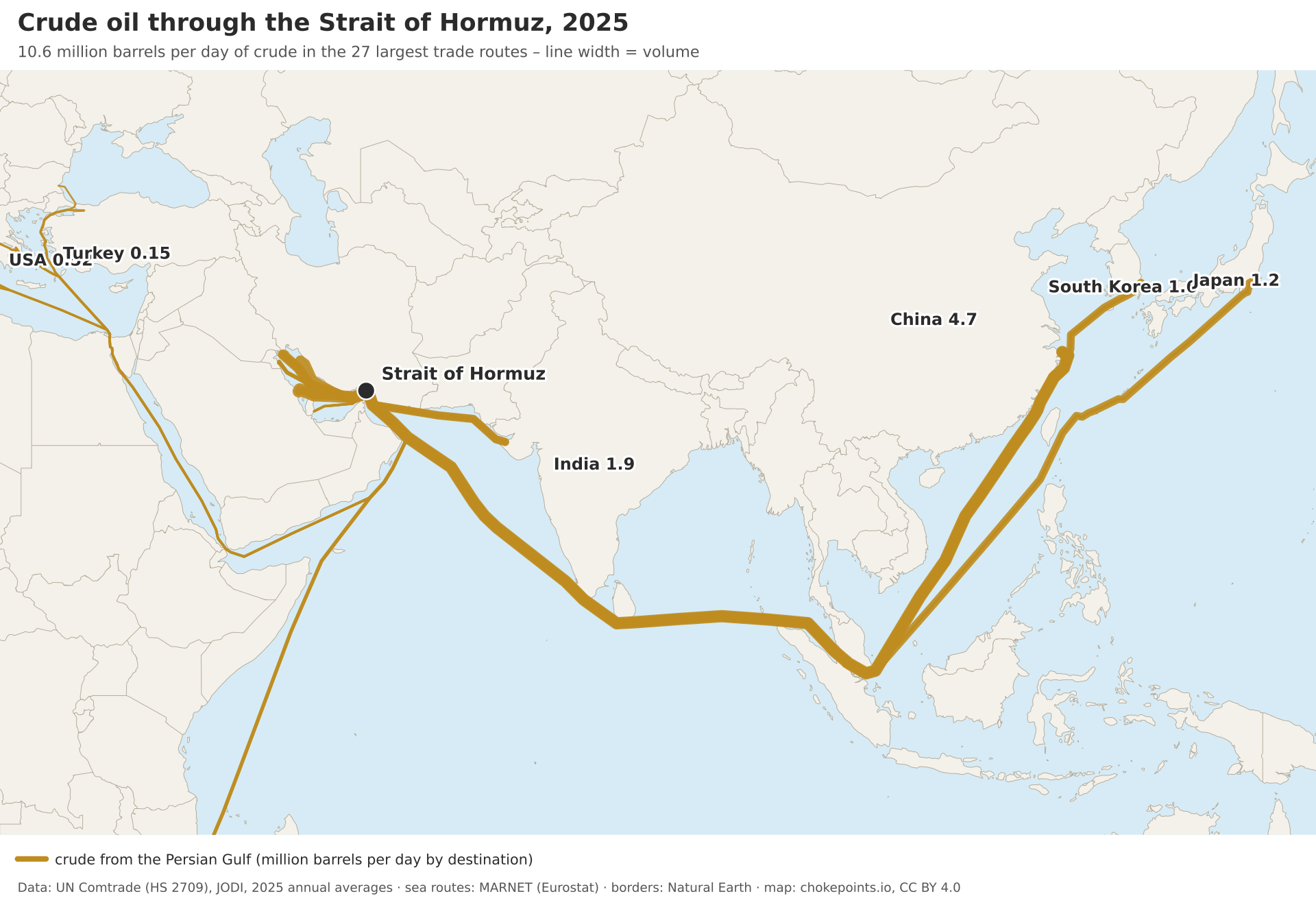
What share of global oil transits the Strait of Hormuz?
Approximately 20 percent of the world’s oil moved through the Strait of Hormuz before the current conflict, according to Al Jazeera. Iran’s pre-war crude exports of 1.5 to 2 million barrels per day, mostly to China, constituted a fraction of that flow. The blockade targets Iranian crude specifically, while NAVCENT has stated it will not impede neutral transit to non-Iranian destinations, according to gCaptain.
The House of Saud Daily Briefing
Saudi Arabia's news in 3 minutes, every morning. Free. See today's issue