
RIYADH — Saudi Arabia reopened King Khalid International Airport to limited commercial traffic on Wednesday, the same morning the Saudi-led coalition announced it had intercepted five drones over the Madinah and Eastern regions, and the same day Riyadh Season — the crown prince’s flagship entertainment programme — was scheduled to begin its seventh edition under the slogan “Big Time.” No Saudi government statement acknowledged the convergence of all three on a single day, and no official explanation for the airport’s reopening was published beyond a NOTAM — the aviation system’s equivalent of a technical bulletin.
The airport is not operating normally. A NOTAM issued by the General Authority of Civil Aviation requires operators to obtain prior permission for every arrival and departure. Saudia and FlyNas were flying on Wednesday, according to FlightAware tracking data. Lufthansa, Air France, British Airways, Delta, Emirates and the rest of the international carrier roster were not. The Future Investment Initiative, scheduled for October 26–29, was postponed to 2027 two days earlier. The EU-GCC summit, set for October 24, was postponed indefinitely on October 15. What remains on Riyadh’s calendar is the domestic entertainment season, and the airport appears to have opened for it — not because the aerial threat ended, but because the cost of staying closed now exceeds, in Saudi Arabia’s calculation, the cost of operating under active interception.
Table of Contents
What Does ‘Open’ Mean Under NOTAM A3650/26?
Under NOTAM A3650/26, “open” means a prior-permission regime in which every arrival and departure requires individual authorisation from Saudi civil aviation authorities. Saudi national carriers were operating under it on October 21. Most international carriers were not. GACA has published no conditions that would trigger a return to normal operations, and no expiry date for the NOTAM.
The document governing Riyadh’s airport tells you more than any government statement has. NOTAM A3650/26, published by GACA on October 17 with no specified expiry date, requires all aircraft operators to obtain prior permission from Saudi civil aviation authorities before arriving at or departing from King Khalid International Airport. A companion notice, A3651/26, prohibits airlines from planning to use Riyadh as a diversion airport — which means any flight over Saudi airspace that runs into trouble has one fewer emergency option on the ground.
This is not a resumption of scheduled commercial service in any recognisable sense. It is a permission-based regime in which each flight requires individual authorisation, and in which Saudi Arabia’s national carriers are operating while most of the world’s aviation industry is not. On October 11 — the day after the strike that killed 13 people and wounded more than 300 at KKIA — Cirium data showed 99.7% of departures from the airport had been cancelled, with a single scheduled flight operating from the entire facility, according to Gulf News. By October 15, the nationwide figure stood at 46.9% of all departures cancelled across Saudi Arabia’s airports, according to Cirium data cited by Khaleej Times.
The closure that preceded this NOTAM regime began on October 10, when a Houthi strike on KKIA killed 13 people and wounded between 308 and 309 others, according to the BBC and Al Jazeera — the deadliest single attack on Saudi civilian infrastructure in the current conflict. Further attacks on October 11, including a strike on Terminal 4 that killed a Pakistani resident and injured 11 more, and a simultaneous attack on Dammam’s airport, led GACA to extend the suspension through October 17. The airport was not struck again in the intervening days, but neither were the Houthis silent: military spokesman Yahya Saree warned that Saudi airports remained “exposed to targeting.”
The Middle East briefing 3,000+ readers start their day with.
One email. Every weekday morning. Free.
Wednesday’s limited operations represent an improvement from that baseline, but the distinction between “open” and “operating” carries consequences that the word alone does not convey. GACA has not announced when the NOTAM restrictions will be lifted. The European Union Aviation Safety Agency’s widened airspace warning over Saudi Arabia, issued on October 9, remains in effect. Neither document has an end date, and neither contains a set of conditions that would trigger a return to normal — which means the current regime is, by default, the new normal until somebody decides otherwise.
Which Airlines Are Flying to Riyadh?
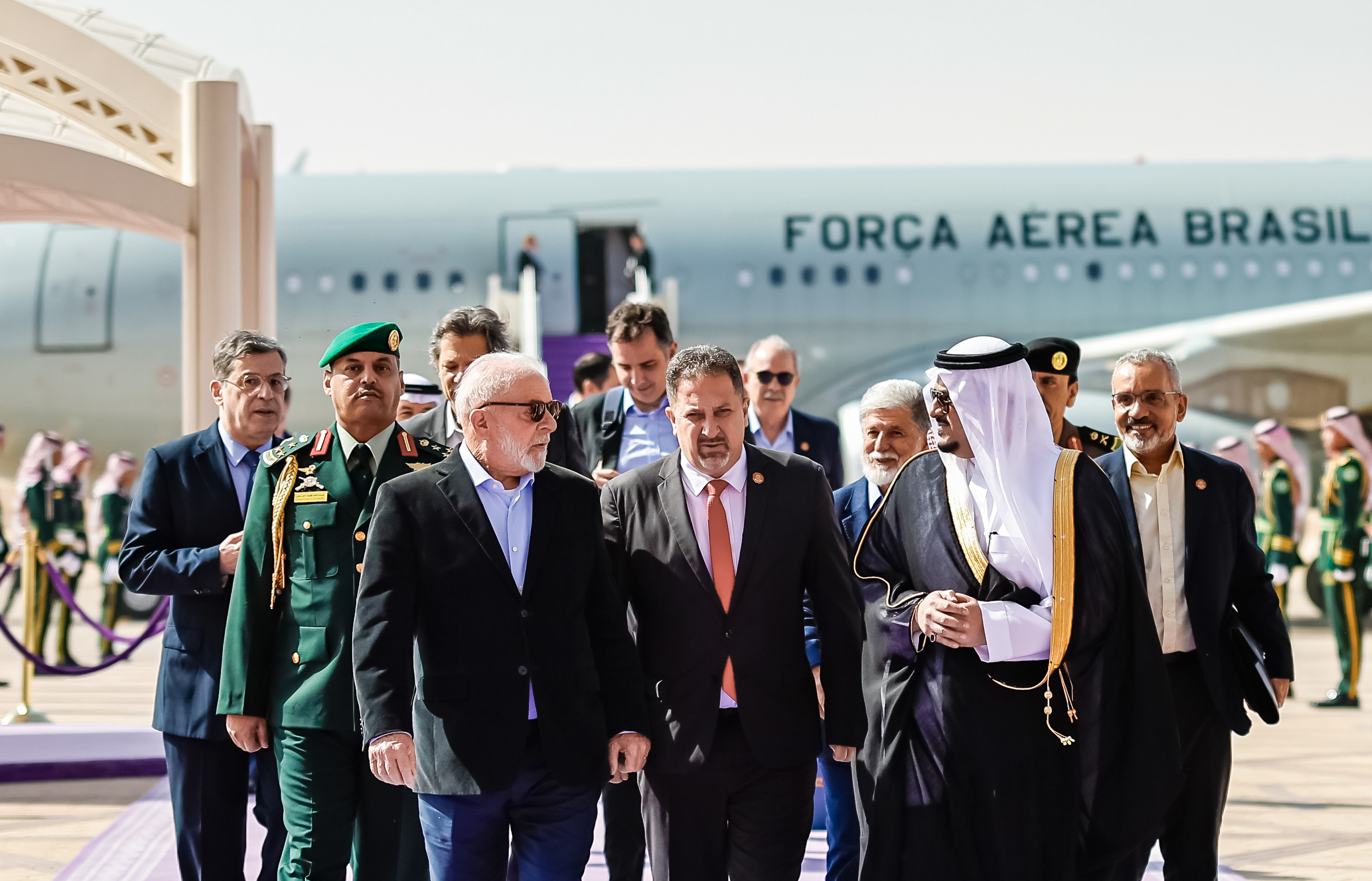
As of October 21, Saudi carriers — Saudia, FlyNas, Riyadh Air and FlyAdeal — are operating at King Khalid International Airport under prior permission, along with Air Cairo and ITA Airways. Lufthansa, Air France, British Airways, Emirates, Etihad and Delta have all suspended service. Return dates range from November 3 for British Airways to March 2027 for Delta; Emirates and Etihad have given no date at all.
The carrier data tells the story more plainly than any government communication has managed. Saudi carriers are flying because they must; international carriers are not because they have calculated that the risk outweighs the revenue. The dates they have chosen for their return are the most honest public document available on the state of Riyadh’s airport.
| Airline | Status | Earliest return | Source |
|---|---|---|---|
| Saudia | Operating (prior permission) | Now | FlightAware / AP, Oct 21 |
| FlyNas | Operating (prior permission) | Now | FlightAware / AP, Oct 21 |
| Lufthansa Group | Suspended | Nov 18 | Reuters, Oct 20 |
| Air France-KLM | Suspended | Nov 7 | Reuters, Oct 20 |
| British Airways | Suspended | Nov 3 | The National, Oct 20 |
| Emirates | Suspended | Not announced | The National, Oct 20 |
| Etihad | Suspended | Not announced | The National, Oct 20 |
| Delta | Route launch postponed | Mar 2027 | Delta statement, Oct 12 |
Delta’s decision is the most revealing entry in that table. The airline was due to inaugurate its Atlanta–Riyadh route on October 23 — a new market entry timed to coincide with the Future Investment Initiative and the entertainment season, the kind of prestige launch that airlines build investor presentations around. It pushed the opening to March 2027, five months away, citing “safety and security priorities.” When a carrier constructs an entire route strategy around a date and then delays it by half a year, the delay is not about logistics or scheduling; it is a risk assessment published in the form of a timetable change, and it is more honest than any NOTAM.
The pattern among European carriers follows the same logic at shorter timescales. Lufthansa’s November 18 return date means the airline plans to avoid Riyadh for nearly four weeks after the reopening. British Airways has set November 3, still almost two weeks out. Emirates and Etihad — Gulf carriers based less than two hours’ flying time from Riyadh — have not announced a return date at all, and their absence is the figure that should concern Riyadh most. Dubai International Airport ran through 111 missile alerts and 17 separate strikes during the Iran conflict earlier this year without suspending long-haul operations, according to its CEO Paul Griffiths, who told Gulf News and Khaleej Times the airport had managed roughly three alerts a day. If the airline that kept flying through its own country’s bombardment will not fly to yours, the reopening is a domestic signal dressed as an international one.
The Events That Did Not Survive
The airport reopened into a city whose international calendar has already been gutted, and the sequence of cancellations matters because it reveals the hierarchy of what Riyadh was willing to sacrifice and what it was not. The Future Investment Initiative — the annual summit that brings Wall Street chief executives to Riyadh, that Mohammed bin Salman uses to signal Saudi Arabia’s relevance to the global financial system, and that went ahead in 2018 even after the murder of Jamal Khashoggi — was postponed to 2027 on October 19 after Jamie Dimon of JPMorgan and David Solomon of Goldman Sachs, both listed as speakers, relayed safety concerns to the organisers, according to Semafor. CNBC reported that the FII Institute’s official statement cited scheduling, not security. The conference that survived a journalist’s killing in a consulate did not survive a drone campaign against the airport its guests would need to arrive through.
The EU-GCC summit, which European Council President Antonio Costa’s October 6 invitation had set for Riyadh on October 24, was postponed on October 15 when GCC Secretary-General Jasem Al Budaiwi cited Houthi attacks and the airport closure — one of the few moments in which any Gulf official has directly connected a cancellation to the security situation, rather than to logistics, scheduling or the vague mechanics of diplomatic coordination. No new date has been announced.
The Six Kings Slam tennis tournament, intended as the sporting centrepiece of Riyadh Season’s opening week on October 21–24 with a Netflix broadcast deal and a field including Novak Djokovic and Carlos Alcaraz, was moved to December 27–30. Organisers said they had “assessed the logistical requirements and their possible effect on the audience experience,” a sentence that avoids the word “security” the way a compass avoids magnetic north. The rescheduled dates fall two days before the 2027 ATP season opens in Australia, forcing any participating player to fly from Riyadh to Melbourne with no recovery margin — a scheduling compromise that reveals how few windows exist in a sporting calendar already bent around a conflict.
What survived this cascade is Riyadh Season itself, the 10-week entertainment programme that GEA Chairman Turki Alalshikh announced on September 27 via the Saudi Press Agency. Its opening date was never moved. The event that assembles global capital was sacrificed. The summit that assembles European heads of state was sacrificed. The tennis exhibition that assembles international sports stars was pushed to the end of the year. The concert season, which needs a domestic audience and Saudi carriers rather than a functioning international hub, was the one thing Riyadh judged it could not afford to lose.
“We have assessed the logistical requirements and their possible effect on the audience experience.”
— Six Kings Slam organisers, on postponing the tournament from October to December (Gulf News, October 14, 2026)
Has Saudi Air Defence Changed Since October 10?
On paper, yes: Britain announced RAF Typhoon deployment on October 20, but the Ministry of Defence declined to say where the jets are based, how many are deploying, or when missions begin. No confirmed RAF intercept has been reported. The investigation into the October 10 KKIA defence failure remains open. The $9 billion PAC-3 interceptor purchase is a multi-year production contract with no deliveries relevant to this year.
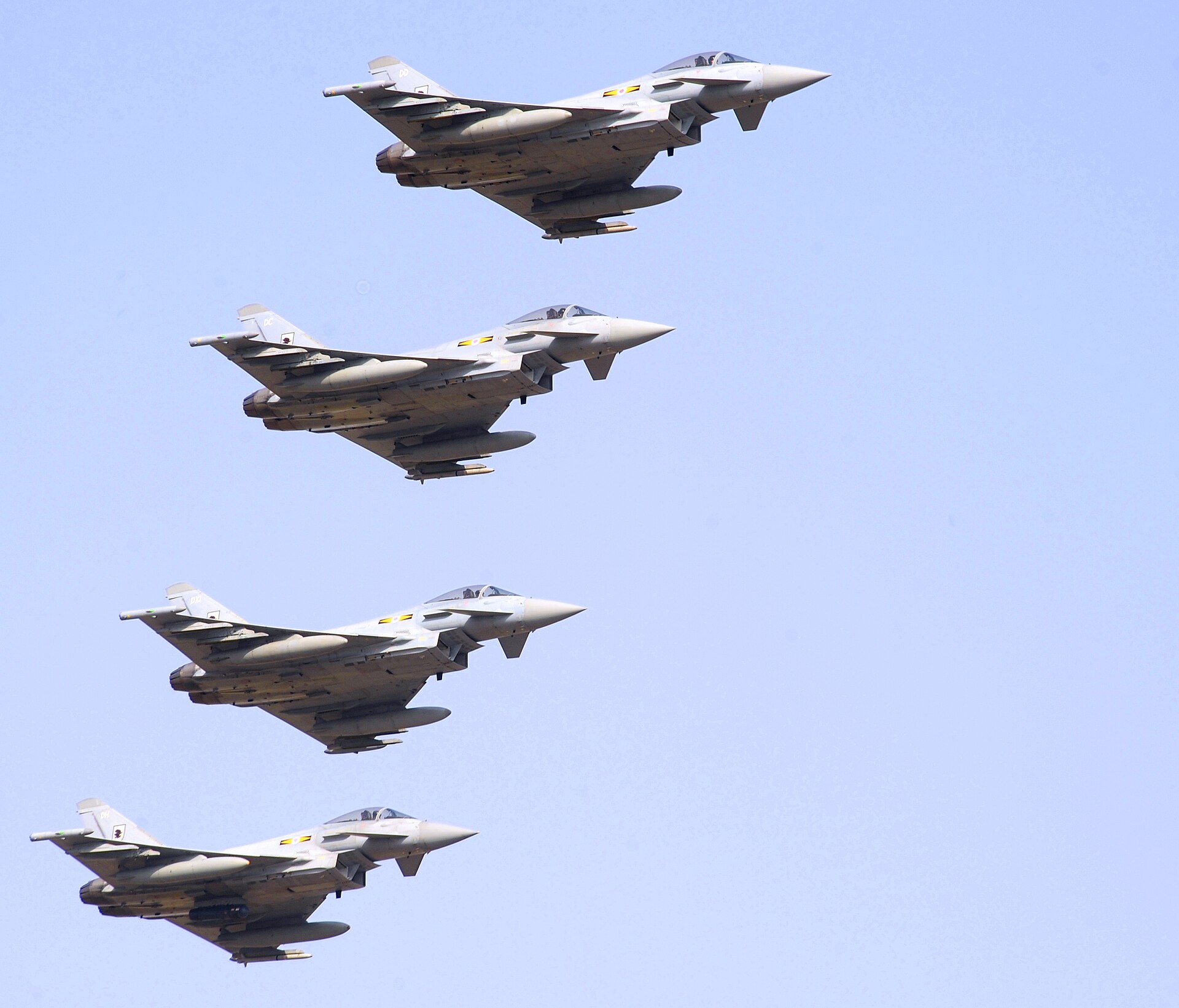
The reopening decision sits against a defence backdrop that has changed on paper, though not yet in any way that can be measured in intercepted hardware. On October 20 — the day before the airport reopened — Britain announced that RAF Typhoon fighters would deploy to Saudi Arabia for defensive counter-air missions over Saudi cities and infrastructure. The Ministry of Defence said the jets would intercept missiles and drones but would not strike inside Yemen. An A400M transport aircraft, additional military advisers and a 90-day extension of the existing air-to-air refuelling mission were bundled into the package, which was committed under royal prerogative without a parliamentary vote.
The timing invites a reading that the Ministry of Defence might not appreciate but that is hard to avoid. Announcing the Typhoon deployment the day before the airport reopened gave Riyadh a defensive development to point to — new fighter cover from a NATO air force — even though the MoD declined to say how many Typhoons were deploying, where they would be based, or when missions would begin. No confirmed intercept by RAF aircraft has been reported as of Wednesday evening. The announcement is, for the moment, a capability on a press release, landing at the precise moment Riyadh needed something to justify the decision to let aircraft back in.
The investigation into how Saudi air defences failed to stop the October 10 strike on KKIA remains open, according to PBS NewsHour. Saudi authorities have not published findings or described any changes to the defensive architecture around the airport. The crown prince made two appeals to President Trump in September for American strikes on the Houthis; both were declined, according to CNN. The $9 billion sale of 730 PAC-3 MSE interceptors, approved in February, is a multi-year production arrangement with Lockheed Martin that will not deliver hardware on any timeline relevant to this month, according to The Defense Post.
What has changed in concrete, observable terms is this: the coalition intercepted five drones on Wednesday morning over the Madinah and Eastern regions, according to coalition spokesman Turki al-Maliki, and the airport operated through it. Whether those interceptions happened because the defence worked as designed, or whether the drones were heading somewhere other than Riyadh, or whether the Houthis were telling the truth when their spokesman Yahya Saree denied launching them, are questions the coalition’s terse announcement did not engage with. The Houthis declared on October 19, through the Saba news agency, that they would exempt Madinah and Makkah from military operations out of respect for Islamic holy sites — a declaration that either held on Wednesday, or was irrelevant to drones that someone else launched, or was part of the same information war that has made every claim and counterclaim in this conflict unreliable by default.
What Happened When Kuwait Reopened Its Airport?
Kuwait International Airport’s Terminal 1 reopened on June 1, 2026. Within 48 hours, drones and missiles struck it, killing an Indian national and wounding 63 people, according to AP and Al Jazeera. Only Kuwait Airways resumed service afterwards, using a different terminal. The IRGC denied targeting the airport. The event is the most recent precedent for what Riyadh’s reopening carries as structural risk.
The precedent that every aviation risk analyst in the Gulf knows, and that nobody in Riyadh’s official communications has mentioned, is Kuwait International Airport. The closure had lasted since late February — more than three months before the June 1 reopening. After the attack, the IRGC denied targeting the airport, claiming instead that a failed American Patriot interceptor caused the damage — a version of events that has not been independently verified.
The parallel to Riyadh is imperfect: Kuwait sat between American and Iranian strikes in a different theatre, while Saudi Arabia faces Houthi drones whose launch points, trajectories and intended targets are different in kind. But the structural lesson is transferable. Reopening an airport sends a signal that the government believes it can defend the facility, and a strike that follows the reopening destroys not just infrastructure but the credibility of the government’s security judgment. Riyadh’s own recent experience reinforces the pattern — on October 19, Saudi Civil Defence issued an all-clear for the Riyadh and Al-Kharj regions, and within 24 hours, explosions were reported in northern Riyadh. Official assurance followed by aerial event has repeated often enough that the assurance itself has become, for residents tracking the pattern, a leading indicator rather than a trailing one. Dammam’s King Fahd International Airport, struck on October 11 according to CNN, continues to operate under its own set of restrictions — KKIA is not the only Saudi airport navigating the space between functioning and safe.
A Season Riyadh Cannot Afford to Cancel
The arithmetic behind opening the airport on the same day as Riyadh Season’s launch is not obscure, and the kingdom has already shown it is willing to do the calculation in public. Saudi Arabia’s revised 2026 budget, published on September 30, projected a deficit of 245 billion riyals — roughly $65 billion — up from the 165 billion riyals originally planned, with real GDP forecast to contract 3.6% on the year, driven by a 21.8% collapse in oil activities, according to Reuters via Zawya. The kingdom is running a wartime economy with peacetime spending commitments, and the entertainment industry is one of the few sectors whose revenue does not depend on shipping lanes staying open or crude prices staying above $100.
Riyadh Season’s 2024–2025 edition attracted more than 20 million visitors and generated an estimated SAR 4.2 billion — roughly $1.1 billion — in direct and indirect economic impact, according to GEA figures that are organiser claims, not independently audited, but that indicate the order of magnitude at stake. The season is not a cultural nicety bolted onto the side of the economy. It is a fiscal instrument, a domestic legitimacy project, and a centrepiece of the Vision 2030 transformation that Mohammed bin Salman has spent a decade constructing. Cancelling it would be read inside the kingdom as an admission that the Houthis had accomplished what no diplomatic setback, oil price crash or pandemic had managed: the suspension of normal life in the Saudi capital.
The entertainment sector is also one of the crown prince’s most personal domestic policy investments. Saudi Arabia’s first public cinema opened in April 2018, and the first Riyadh Season ran in late 2019 — the entire organised entertainment industry is barely seven years old. The social transformation the season represents, in which young Saudis attend concerts, boxing matches and themed entertainment zones in a country that prohibited most forms of public entertainment a decade ago, is inseparable from Mohammed bin Salman’s domestic political identity, and its visible cancellation under fire would carry a cost that no deficit projection can quantify.
That political calculus explains the hierarchy of sacrifice. FII needed Wall Street executives willing to fly to Riyadh, stay in Riyadh hotels and be photographed in Riyadh ballrooms during an active air campaign — and the executives, through quiet lobbying reported by Semafor, made clear they were not willing. The EU-GCC summit needed European heads of state to travel to a city whose airport had been struck multiple times in the space of a week. Both events required an internationally accessible airport and an international audience confident enough to use it. Riyadh Season needs neither. It needs Saudi residents, Saudi carriers, and a functioning domestic entertainment infrastructure — and on those terms, the NOTAM-governed, prior-permission, Saudi-carriers-only version of KKIA is sufficient.
The season’s remaining calendar tells you what Riyadh thinks it can still deliver. UFC and concert programming remain listed. Boulevard World, one of the season’s flagship zones, has added three new themed country pavilions for 2026: the Netherlands, Portugal and Yemen. No Saudi government statement has explicitly linked the airport reopening to the entertainment calendar, and no official explanation for the timing has been published — the reopening was communicated through a NOTAM, the international aviation system’s equivalent of a technical addendum, rather than through a press conference or a GACA statement to media. The absence of a public case for reopening is itself a kind of message: defending the decision would require acknowledging that the decision involves a risk, and acknowledging the risk would undermine the signal the reopening is meant to send.
Boulevard World’s Yemen pavilion will sit inside a Riyadh entertainment zone while, roughly 1,000 kilometres to the south, the armed movement that represents a large part of the country the pavilion depicts continues to launch the projectiles that closed the airport visitors arrived through. GACA’s NOTAM A3650/26, which governs every flight in and out of that airport, carries no expiry date.
Frequently Asked Questions
Is Riyadh airport safe for international travellers?
No independent safety assessment has been published since the reopening. EASA widened its Saudi airspace warning on October 9, and it remains in effect. Dubai International Airport CEO Paul Griffiths told Gulf News and Khaleej Times that his airport handled 111 missile alerts and 17 strikes during the earlier Iran conflict without sustained closure, but Dubai’s air defence architecture and threat profile differ from Riyadh’s. Individual airlines’ return dates — ranging from November 3 for British Airways to March 2027 for Delta — represent the aviation industry’s collective risk judgment, compiled by insurers, security teams and operational planners with access to intelligence that passengers do not have. Those dates are, in practice, more current and more informative than any government travel advisory.
Did the Houthis claim the October 21 drone attacks?
They denied them. Houthi military spokesman Yahya Saree rejected the coalition’s announcement that five drones had been intercepted over the Madinah and Eastern regions. The denial sits alongside an October 19 Houthi declaration, published through the Saba news agency and citing an unnamed military source, that the movement would exempt Madinah and Makkah from military operations out of respect for Islamic holy sites. The coalition did not attribute the October 21 drones to any specific group in its public statement, and Reuters reported that the announcement gave no details on whether there was damage or casualties from the interceptions.
Can Riyadh Season operate without international air access?
The season’s audience is primarily domestic and regional. The 2024–2025 edition’s 20 million visitors were predominantly Saudi nationals and GCC residents, according to GEA figures, and the programming — boxing, UFC, concerts, theatrical productions, themed entertainment zones — does not require an internationally accessible airport in the way that FII or the EU-GCC summit did. Jeddah and Dammam airports remain operational, and Saudi carriers can bring domestic travellers to Riyadh under the current NOTAM regime. The Six Kings Slam, which required international tennis stars, was the first Season event postponed. Whether remaining events proceed on schedule depends on whether individual performers and their management teams accept the security conditions, which is negotiated privately.
What would trigger a second closure of King Khalid Airport?
GACA has not published threshold criteria. The October 10 closure followed a strike that killed 13 people inside the airport terminal. A lesser incident — interception debris, a near-miss, or a hit on airport infrastructure that caused no fatalities — might not trigger a full closure under the current risk tolerance, given the political cost of shutting down again. The Kuwait precedent, in which an airport was struck within 48 hours of reopening, led to a return to near-total shutdown. The threshold for Riyadh appears to be mass casualties rather than proximity or debris, a calculation that would change the moment a second mass-casualty event occurred at KKIA.
Are RAF Typhoons now defending Riyadh’s airspace?
The UK announced the deployment on October 20 but has not confirmed when missions began or whether any aircraft are yet operational over Saudi territory. The Ministry of Defence declined to disclose how many Typhoons were deploying or where they would be based. The coalition’s October 21 statement on the five intercepted drones attributed the interceptions to existing coalition assets without mentioning RAF involvement. The Typhoon FGR4 is a capable fourth-generation fighter with beyond-visual-range and close-combat intercept credentials, but its contribution to Saudi air defence is, as of Wednesday, a political announcement rather than a confirmed operational fact — and the gap between announcement and capability has been a recurring feature of the coalition’s public communications throughout this conflict.