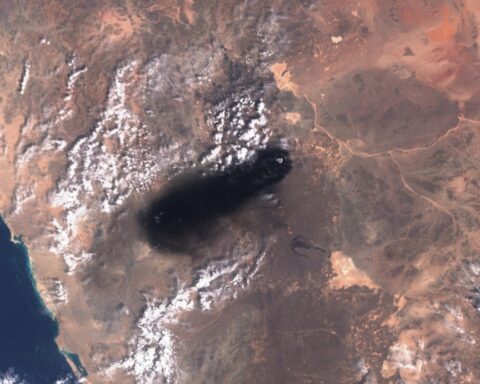

DHAHRAN — Brent crude rose 79 cents, or 0.9 percent, to $92.77 a barrel by 0404 GMT on Friday, November 20. Reuters linked the gain to Houthi missile attacks on Riyadh and to new reports of tanker incidents in the Strait of Hormuz. Thursday’s attack damaged the Riyadh tower of the Public Investment Fund, Saudi Arabia’s sovereign wealth fund, the kingdom’s civil defence said. US West Texas Intermediate for December delivery added 25 cents, or 0.3 percent, to $83.46.
The bounce did not reverse the week’s direction. Reuters said Brent was still on course for a 3.5 percent weekly decline and December WTI for a drop of almost 6 percent, which would be a third straight weekly loss for both.
The House of Saud Daily Briefing
Saudi Arabia's news in 3 minutes, every morning. Free. See today's issue
Table of Contents
- How did oil markets react to the Riyadh attack?
- What the coalition, civil defence and the Houthis said about the PIF Tower
- Why have tanker attacks in Hormuz not stopped the slide?
- Brent’s risk premium since the October high
- What would a strike on Saudi production look like?
- OPEC+ meets November 29 to set 2027 policy
- Frequently Asked Questions
How did oil markets react to the Riyadh attack?
“Concerns over Middle Eastern crude oil supplies have resurfaced due to attacks on Riyadh by the Houthis, prompting buying,” Satoru Yoshida of Rakuten Securities told Reuters. He added that expected production cuts by OPEC+ were also supporting prices.
The January WTI contract, which now trades more actively than December, gained 71 cents, or 0.9 percent, to $83.15, Reuters reported. Both benchmarks had settled little changed on Thursday, the day of the attack. The gain came in Asian trading on Friday.
Analysts at UOB Group also cited Hormuz. They said Iran’s intensifying attacks on tankers there were adding a meaningful geopolitical risk premium, and that the incidents were “running at roughly one incident per day in November,” according to Reuters. Saxo analysts took the other side. They said supply disruption remained a risk, but that “near-term demand concerns” tied to an unwinding of the artificial intelligence trade and wider risk-off sentiment were weighing on crude. Asian shares fell on Friday and were heading for their worst week since 2020, Reuters said.
Reuters gave both events as reasons for Friday’s gain. None of the analysts it quoted split the move between the Riyadh attack and the Hormuz mine reports, and only Yoshida named Riyadh.
What the coalition, civil defence and the Houthis said about the PIF Tower
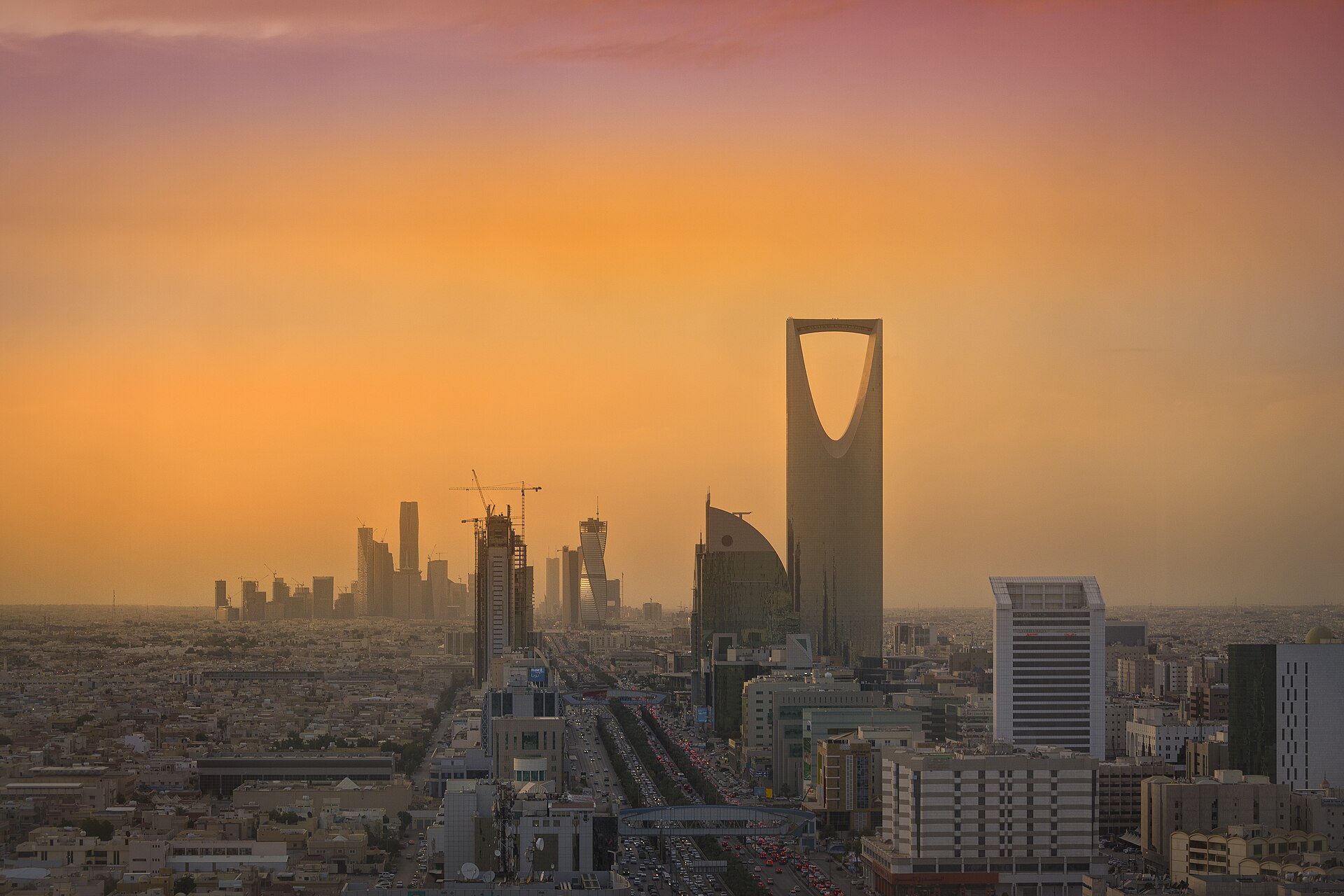
The PIF Tower is the fund’s headquarters and the tallest skyscraper in Riyadh, Pakistan’s Dawn newspaper reported. Saudi civil defence said, through the state news agency SPA, that the attack caused material damage to “several floors” of the Public Investment Fund Tower and to nearby buildings, with no injuries. A civil defence spokesman said authorities “took all necessary measures to protect people and property,” The National reported.
The Saudi-led coalition’s accounts changed during the day. It first said it had dealt with a missile threat toward Riyadh and that falling debris appeared to have caused material damage, according to The National. Coalition spokesman Maj Gen Turki Al Malki said the damage was being assessed. He did not say whether the missile aimed at Riyadh had been intercepted. The coalition later said its air defences had intercepted a cruise missile aimed at the southern region, destroyed four ballistic missiles fired toward the south, and destroyed a missile launch platform in Yemen’s Saada province.
Houthi military spokesman Yahya Saree said the group had fired cruise missiles at King Khalid International Airport and at Riyadh’s financial centre, and that they “directly hit” their targets, The National reported. He presented the operation as a response to Saudi attacks on civilian sites in Yemen. The coalition’s early statement referred to falling debris, not a direct hit.
Pakistan’s Foreign Office condemned the attack on Friday without naming the building. “This act of aggression constitutes a grave violation of the sovereignty of the Kingdom of Saudi Arabia,” it said, according to Dawn. A separate statement said Houthi attacks “must cease forthwith.”
The same district was hit 12 days earlier. On Sunday, November 8, falling debris struck an administrative building owned by Saudi Aramco in Riyadh after an attack, Reuters reported. The energy ministry said the incident “caused limited damage” with no injuries or deaths. A Reuters witness saw windows blown out across several floors of the Aramco Tower, one of the tallest buildings in the King Abdullah Financial District. The coalition later said it had destroyed two cruise missiles over Riyadh and the southern region.
Neither attack has been reported to have hit a refinery, oilfield, pipeline or export terminal. No Aramco statement on supply continuity after Thursday’s attack had been reported by the time of publication.
Why have tanker attacks in Hormuz not stopped the slide?
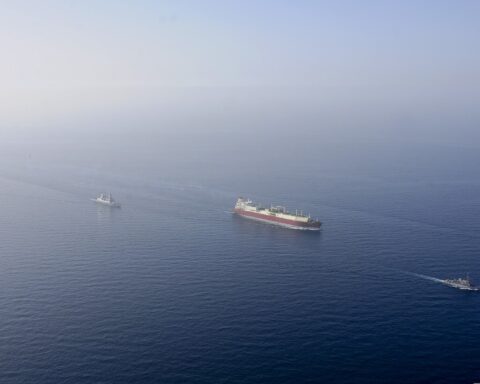
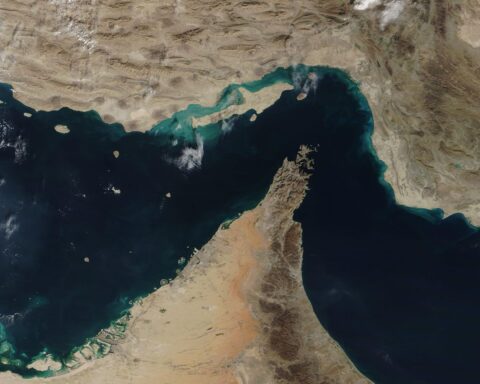
The Hormuz reports Reuters cited on Friday came from Iran. Iran’s Revolutionary Guards Navy said two oil tankers hit naval mines in the Strait of Hormuz on Thursday and that they “exploded” and “are burning,” Reuters reported, citing Iranian state media. The agency did not cite independent confirmation of the incidents or name the tankers.
Physical flows have moved the other way. Shipments through the strait had been “nearly restored to pre-war levels,” Reuters reported in Asian trading on Monday, November 16. It repeated on Friday that crude shipments through Hormuz had returned to roughly pre-war levels. Iran’s Revolutionary Guards have declared Hormuz closed multiple times since the war began, most recently in October, but Reuters attributed the recovery to actual traffic data rather than any formal reopening.
The International Energy Agency’s November Oil Market Report, published on November 13, said global supply rose by 2.3 million barrels per day in October to 105.4 million bpd, according to a summary by Newsquawk. Reuters reported that the agency expects supply to average 105 million bpd in the fourth quarter, 1.7 million bpd above forecast demand.
The IEA expects demand to contract. It forecast world oil consumption falling by 2.7 million bpd in 2026 to 102.3 million bpd, before a rebound of 2 million bpd in 2027, and said the market would return to surplus in the fourth quarter “with a more substantial build in 2027.”
OPEC’s monthly report shows output close to pre-war levels. OPEC+ pumped 41.23 million bpd in October, up about 2.04 million bpd from September, Al Jazeera reported, citing an OPEC report issued on November 11. Saudi Arabia produced 10.563 million bpd in October, according to the same report. In February, before the war, it pumped 10.882 million bpd.
Tim Waterer, chief analyst at KCM Trade, described the change in sentiment early in the week. “Traders are actively contemplating the possibility of excess supply rather than persistent tightness,” he told Reuters on the same Monday. “That shift in narrative is clearly dampening the tone.” Brent was then trading at $95.30, down 54 cents in Asian hours, after falling 16 percent the week before.
On Thursday, the day of the PIF Tower attack, the IEA said the Middle East conflict had caused the biggest disruption ever to global oil and gas trade, Reuters reported.
Brent’s risk premium since the October high
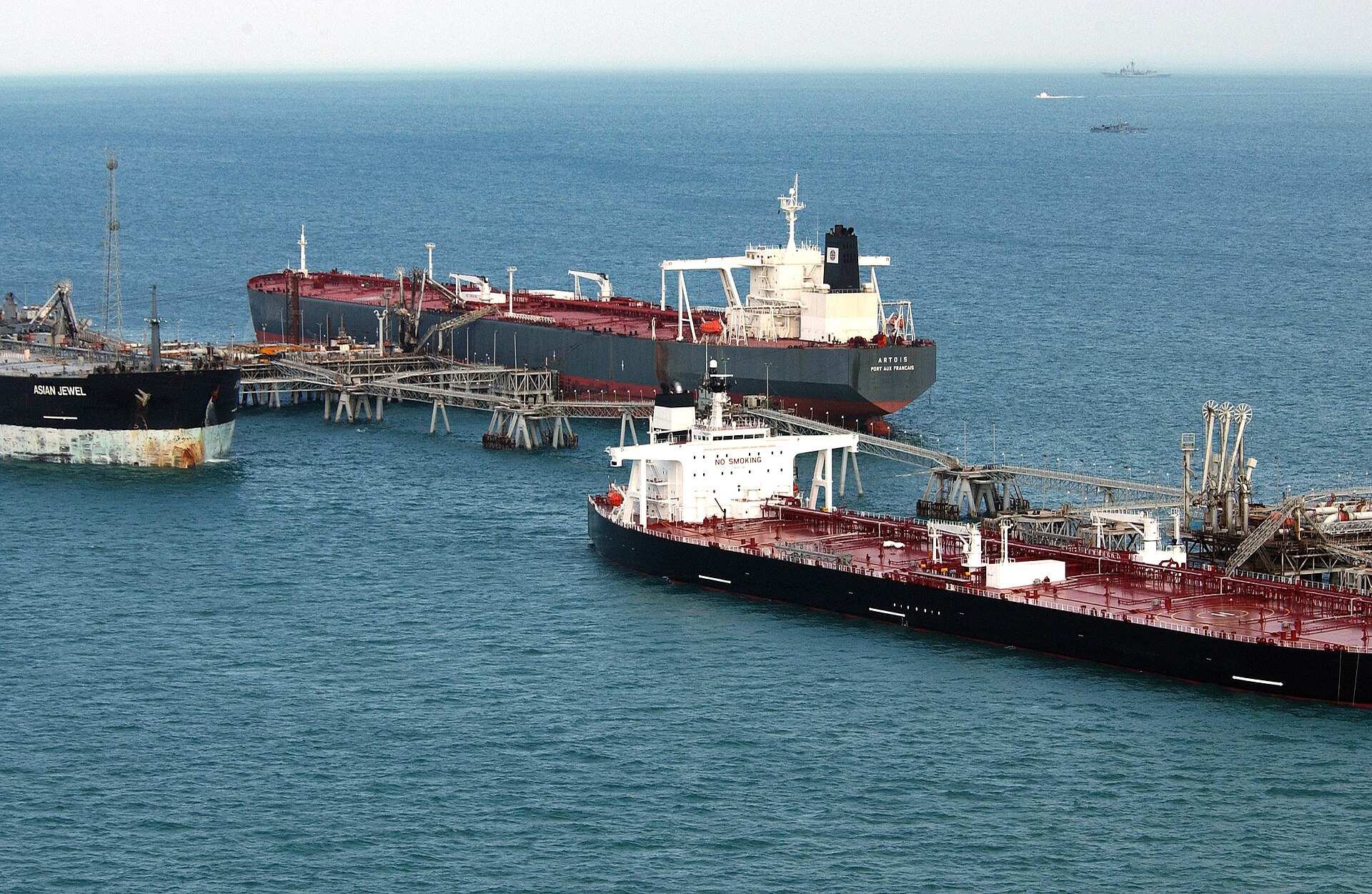
The December Brent contract expired on October 30 at $117.64 a barrel, up $2.76 on the day, the Nation Thailand reported.
Goldman Sachs had put a number on the fear 11 days earlier. In a note reported on October 19, the bank said spot Brent carried a war risk premium of nearly $25 a barrel above its estimate of fair value, according to InvestingLive. Analyst Daan Struyven linked the premium to the possibility of further supply cuts and inventory draws if the conflict intensified. Goldman set its December 2026 Brent forecast at $90 and kept its 2027 average at $80.
At $92.77 on Friday morning, Brent was within $3 of Goldman’s December forecast.
The October high was not the war’s peak. Brent peaked at $126.41 on April 30, according to Reuters as published by Aletihad.
What would a strike on Saudi production look like?
On September 14, 2019, an attack struck Aramco’s Abqaiq processing facility and the Khurais field. The attack temporarily disrupted 5.7 million bpd of production, more than half of Saudi output and about 5 percent of global supply, the US Congressional Research Service said. Brent closed on September 16 at $69.02, up from $60.22 before the attacks, roughly 14 percent, according to the CRS.
Saudi oil sites have been hit repeatedly during this war. Overnight attacks on April 7 and 8 closed the 465,000 bpd SATORP refinery, and an attack on an East-West Pipeline pumping station on April 9 cut flows by 700,000 bpd, The New Arab reported. On September 8 a wave of Houthi attacks ignited fires at several oil facilities and utilities in the southern region, the Associated Press reported, citing coalition spokesman al-Maliki. The energy ministry said operations at those sites “were temporarily suspended.”
The route that matters most for Saudi exports runs west. Aramco said in March that the East-West Pipeline to the Red Sea could carry up to 7 million bpd, about 5 million bpd of it for export, Reuters reported. Saudi Arabia suspended flows on the line as a precaution on September 12, according to the Saudi Gazette via Zawya, and restarted it on September 22. Aramco chief executive Amin Nasser said at the time that disruptions typically last “days, not weeks or months.” Brent briefly topped $108 on September 24, Al Jazeera reported.
In August, presenting second-quarter results, Nasser cited the East-West Pipeline as a critical safeguard against disruption through the Strait of Hormuz. Hormuz flows have since recovered, according to Reuters. Damage in Riyadh’s office district has not been reported to affect either export route.
OPEC+ meets November 29 to set 2027 policy
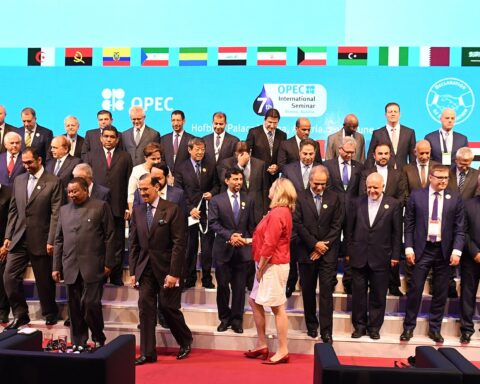
OPEC+ ministers will hold a series of meetings on November 29 to decide output policy for 2027, Reuters reported. Saudi Arabia’s November target under the group’s quota system is 10.5 million bpd, Enerdata reported after the October 4 meeting. Saudi output in October, at 10.563 million bpd, was already slightly above that target.
Several questions remain unanswered before the meeting. No Aramco statement has been reported on whether Thursday’s attack affected any of its operations. Two towers in the financial district have now been damaged in 12 days. And Reuters did not link the tanker incidents Iran reported on Thursday to any measured change in traffic through the strait.
For earlier coverage, see the first reports of damage to the PIF Tower, our analysis of Iran’s November attacks in Hormuz and Brent’s decline, the six-month Houthi campaign Saudi officials have described, Aramco’s November crude allocations to Europe via Yanbu, the earlier Iranian claims of tankers hitting mines east of Hormuz, and how Saudi Arabia is absorbing the costs of the Iran war.
Frequently Asked Questions
Is Russian supply also affecting oil prices this week?
Yes. Ukrainian drone attacks have cut the combined crude processing of Russian refineries by 45 percent since late October, Reuters reported on November 18. Analysts and traders told the agency that Russian crude output could fall again as attacks on refineries and export infrastructure intensify.
What did the IEA say about long-term oil demand on November 19?
The IEA said the war could cut world oil demand by more than 4 percent by 2035 if governments speed up electrification, efficiency and fuel-switching, Reuters reported.
How did Aramco price its crude for buyers in Asia this autumn?
Aramco cut its November official selling price for Arab Light to Asia by $3, to $5 below the Oman/Dubai benchmark, Reuters reported on October 5. It raised prices for northwest Europe by $3 in the same announcement.
How much has shipping cost risen on the Gulf–China route?
The daily rate for a very large crude carrier from the Gulf to China reached about $1.2 million in early October, against about $80,000 a year earlier, according to LSEG data reported by bdnews24 on October 5.
The House of Saud Daily Briefing
Saudi Arabia's news in 3 minutes, every morning. Free. See today's issue