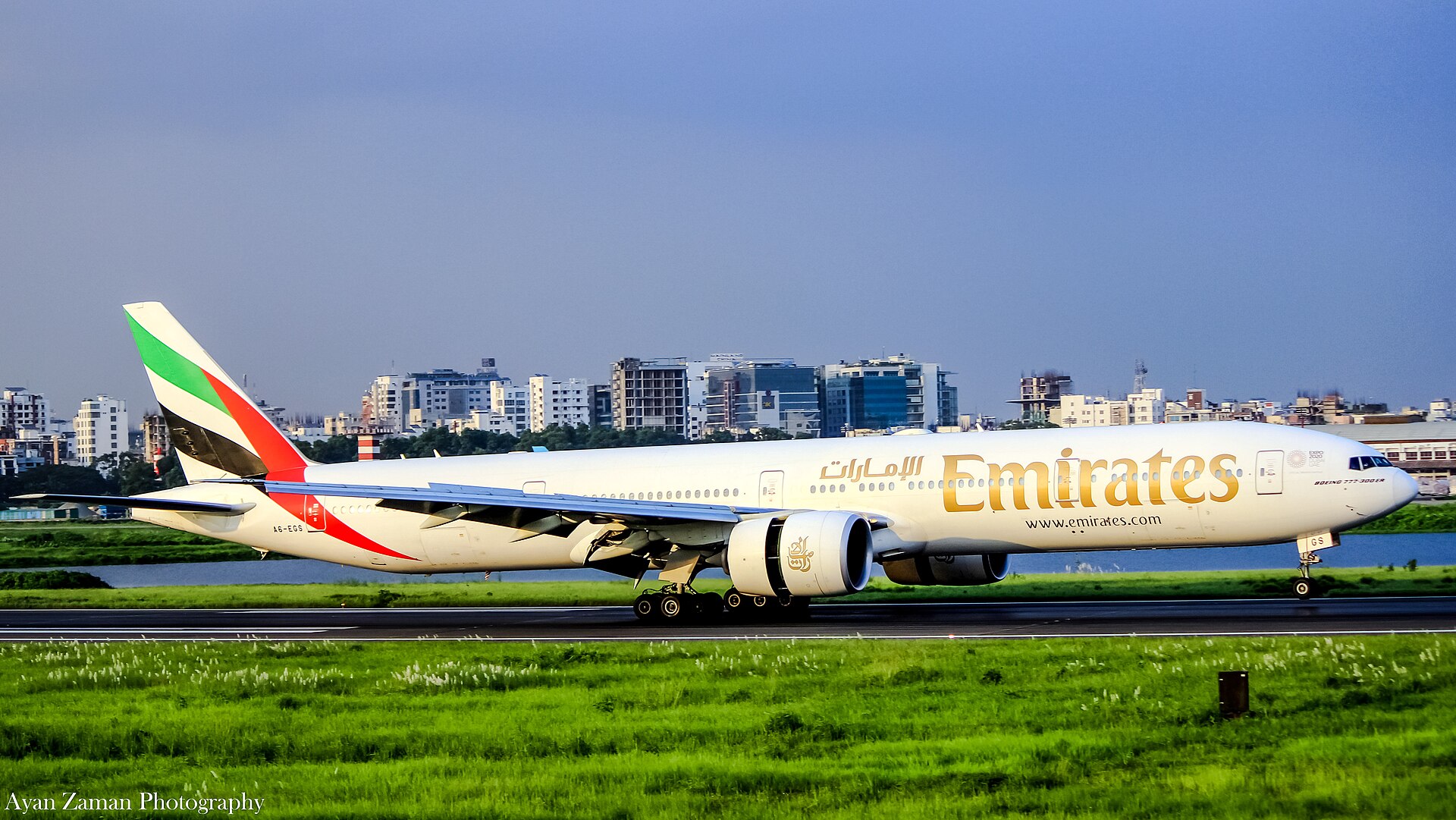

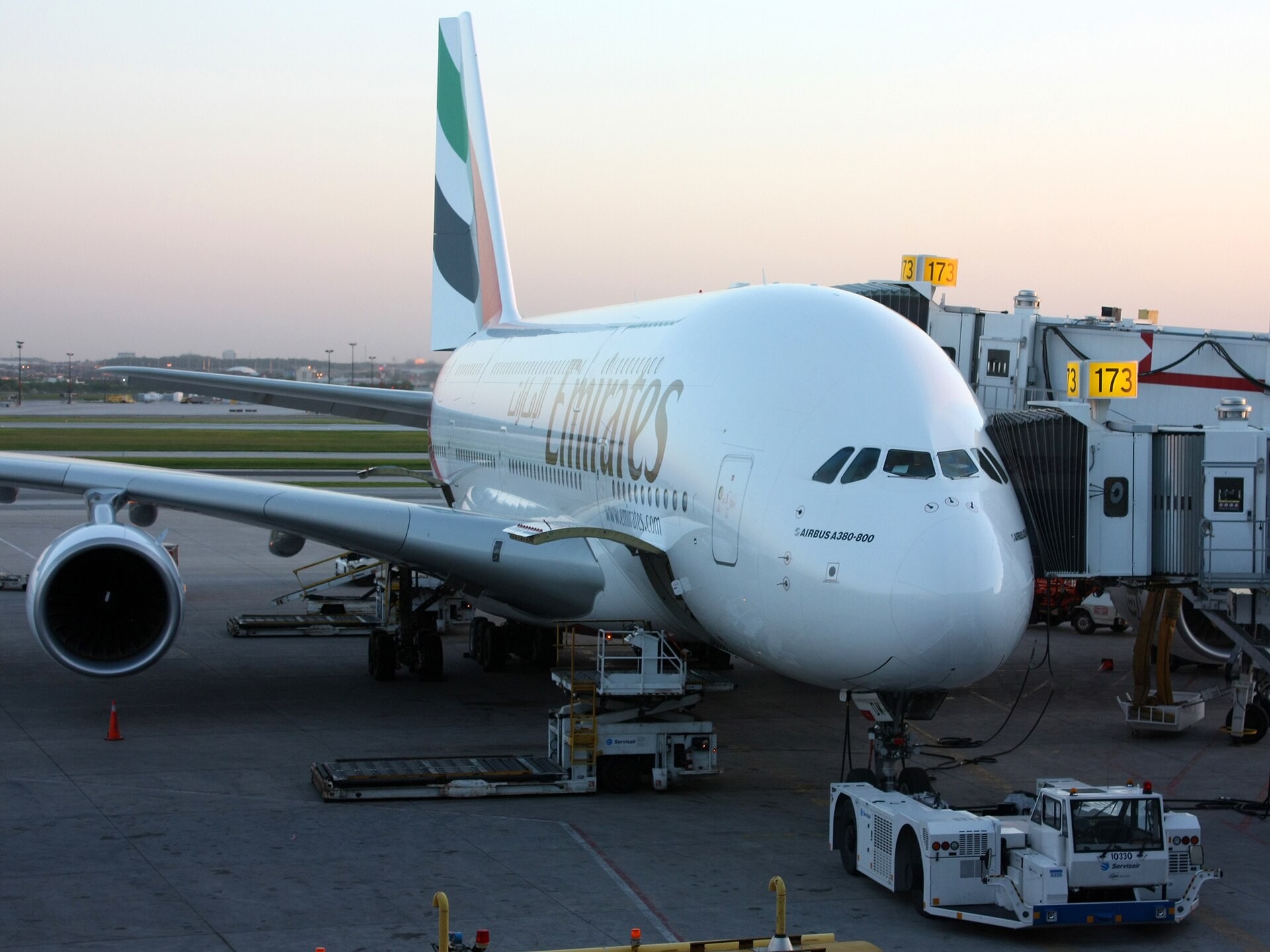
DUBAI — Emirates plans to resume flights to Jeddah on October 30, with Riyadh and Dammam following on November 8, making it among the first foreign carriers to return to Saudi airspace since Houthi missiles killed 13 people at Riyadh’s King Khalid International Airport and shut the country’s busiest hub for more than two weeks. Etihad Airways, controlled by the Abu Dhabi government, has extended all Saudi cancellations through November 5 — which means three state-backed UAE carriers are now carrying three divergent answers to the same question: whether the kingdom’s airports are safe enough to fly into.
Budget carrier flydubai, which like Emirates is owned by the government of Dubai, plans to resume Riyadh, Dammam and Abha services from October 30, according to schedules confirmed by The National and Gulf News — going further than Emirates by pushing straight back into Riyadh, the city whose airport was struck repeatedly, nine days before Emirates is willing to do the same. The three-way split plays out against an airspace environment that every major regulator still classifies as dangerous: the European Union Aviation Safety Agency’s conflict zone bulletin for Saudi Arabia runs through November 16, the FAA has a caution NOTAM in effect through December 10, and the independent operations monitor Safe Airspace rates the kingdom at Level 1, its highest risk classification, recommending against all flights into Saudi airspace including overflights.
The divergence among UAE airlines is the most visible test yet of whether international carriers will return to Saudi Arabia after three weeks of Houthi attacks that disrupted 7,802 departures across the country’s airports between October 8 and 25, according to AirHelp data. For the latest on airport status and which airlines are operating, see our Saudi Arabia travel status guide.
The House of Saud Daily Briefing
Saudi Arabia's news in 3 minutes, every morning. Free. See today's issue
Table of Contents
Who Is Flying Where and When
Emirates’ phased schedule puts Jeddah first, with Riyadh and Dammam nine days later, a gap that maps roughly to geography and to the severity of the attacks each airport has experienced. King Abdulaziz International Airport in Jeddah sits on the Red Sea coast, further from Houthi launch positions in northern Yemen, and has not suffered the direct terminal strikes that killed and wounded hundreds at KKIA. By the time Emirates adds Riyadh and Dammam on November 8, it will have had more than a week of operational data from the Jeddah route to inform the next step.
| Airline | Owner | Jeddah | Riyadh | Dammam | Abha |
|---|---|---|---|---|---|
| Emirates | Dubai government | Oct 30 | Nov 8 | Nov 8 | — |
| flydubai | Dubai government | — | Oct 30 | Oct 30 | Oct 30 |
| Etihad | Abu Dhabi government | Cancelled to Nov 5 | Cancelled to Nov 5 | Cancelled to Nov 5 | — |
Etihad’s extension covers Abu Dhabi–Riyadh, Abu Dhabi–Dammam and four Jeddah services — flights EY601 through EY604, according to Gulf News — with the airline citing “regional disruption” as the reason for the suspension, a phrase that explains nothing and appears designed not to. None of the October 30 return flights had operated as of October 29, and Gulf News’s flight-status tracker on October 28 still listed Emirates’ Jeddah services as cancelled, with the announced resumption not yet reflected in real-time booking systems.
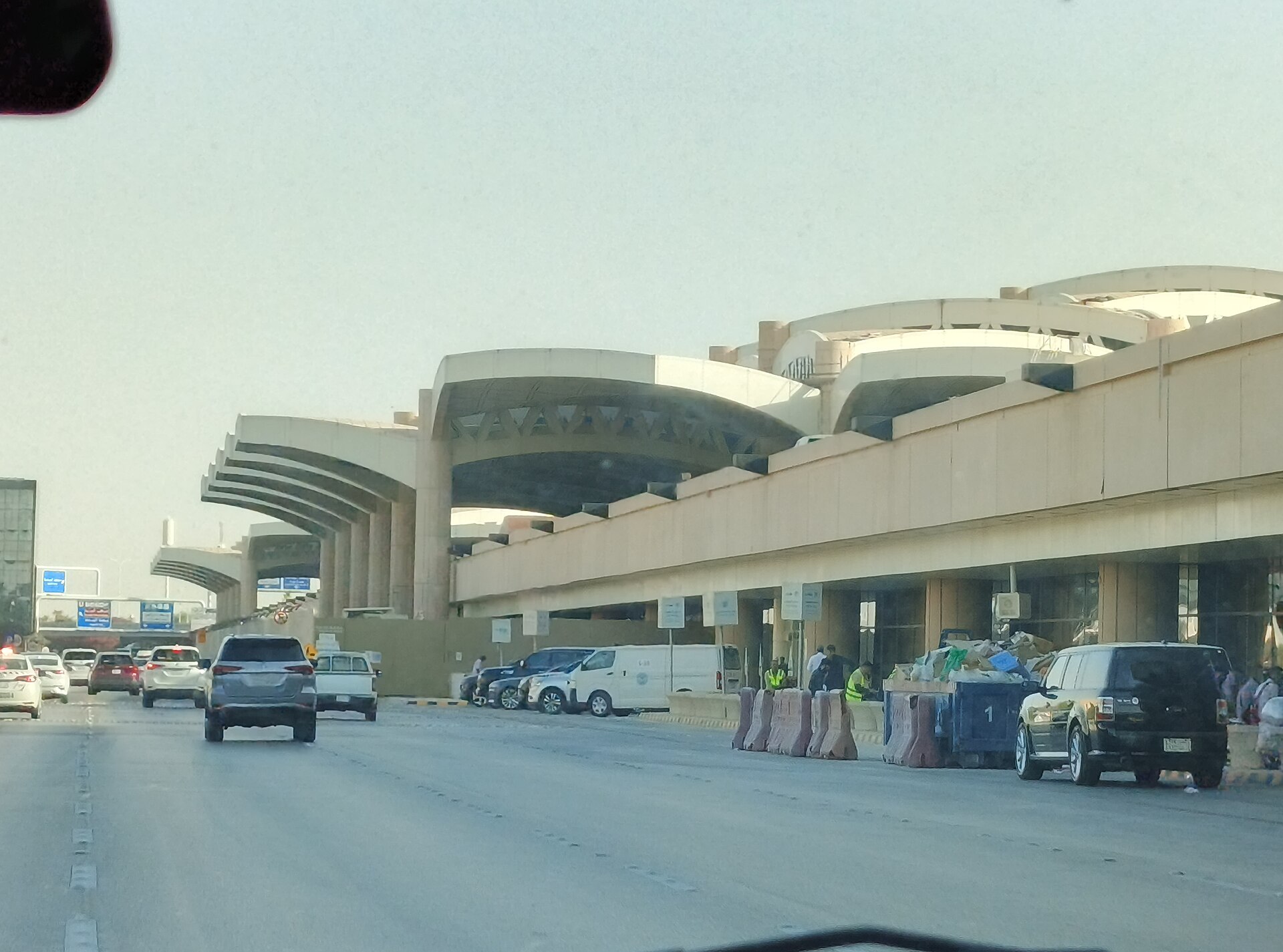
The U.S. Embassy’s October 28 security alert described KKIA as having announced a “partial reopening” for domestic flights and some international services operated by national carriers, with Terminals 1 and 2 operational since October 25, according to Gulf Business and Arab News. Jeddah and Dammam airports were described as “operational with some delays and cancellations,” and the terminal arrangements for foreign carriers at KKIA, which reopened on October 25, have not been publicly confirmed.
Why Are 2 Dubai Airlines Returning While Abu Dhabi’s Is Not?
No airline has publicly explained the split, and no named aviation analyst has attributed it to a specific factor on the record. The divergence does, however, line up with observable differences in commercial structure, fleet composition and strategic exposure that are worth mapping, even if the security calculus behind each airline’s decision remains opaque.
Emirates and flydubai are both controlled by the government of Dubai, and Dubai’s economy is more directly exposed to the Saudi travel corridor than Abu Dhabi’s — Emirates operates widebody services connecting Saudi cities to its global hub at Dubai International, and the loss of those routes affects not just point-to-point revenue but the connecting traffic that underpins the entire hub model. Etihad, owned by the Abu Dhabi government, faces less commercial pressure to be the first carrier back, a difference that matters when the reputational cost of a disrupted return flight could exceed whatever revenue a single service earns.
Fleet composition adds another dimension: flydubai’s Saudi services use narrowbody Boeing 737s, which carry fewer passengers per aircraft than the widebodies Emirates sends to Riyadh and Dammam, meaning both a smaller financial exposure per disrupted flight and a different risk profile if something goes wrong on approach or on the ground. Emirates’ phased return — Jeddah first with its tested widebody operation, Riyadh nine days later once the Jeddah data is in — reads like an airline that has decided to fly but wants to control the variables as tightly as the situation allows.
The UAE’s federal structure means aviation policy and sovereign investment decisions are made at the emirate level, not nationally, and Abu Dhabi and Dubai do not share a unified aviation security assessment. Etihad’s more cautious stance may reflect a genuinely different intelligence read, a different tolerance for the consequences of returning too early, or simply a different answer to the question every airline is asking privately: what happens to a carrier’s reputation if it puts passengers back into an airport that gets hit again?
What Do Aviation Regulators Say About Saudi Airspace?
Every major aviation regulator with jurisdiction over the route still has active warnings in place, and none has downgraded its risk assessment since the October 10 KKIA strike. EASA’s Conflict Zone Information Bulletin CZIB-2026-09 Revision 1 covers the Jeddah Flight Information Region at all altitudes and flight levels through November 16, citing Houthi missile and drone activity, air-defence responses, the risk of military interception or misidentification of civil aircraft, and falling debris as hazards, according to reporting by Al-Monitor and The Star.
Safe Airspace, the independent aviation risk monitor run by operations consultancy ops.group, rates Saudi Arabia at Level 1 — its highest warning — and recommends avoiding all Saudi airspace entirely, including overflights and the use of Saudi airports as en-route alternates. The rating had not been revised downward following the partial reopening of KKIA on October 25.
Safe Airspace / ops.group assessment, October 2026
The FAA’s caution NOTAM for Saudi Arabia, issued October 11, remains in effect through December 10 and advises US operators to exercise caution when flying to or over the kingdom, according to aviation safety monitor Avi-Go. Neither the EASA bulletin nor the FAA NOTAM constitutes a ban — airlines make their own operational decisions within the framework these advisories create — but the gap between the two expiry dates is itself telling: EASA’s warning runs seven weeks past the UAE carriers’ planned return dates, and the FAA’s runs eleven weeks, which means every airline flying into Saudi Arabia between now and mid-December does so under active regulatory caution. For a detailed overview of airport availability and alternatives, see our Saudi Arabia airport guide.
The Disruption by the Numbers
The scale of what the UAE carriers are flying back into cannot be captured by a single death toll or a single date of closure. The operational data that accumulated during three weeks of disruption shows how deeply the Houthi strikes cut into Saudi Arabia’s aviation network before the first terminals reopened.
| Metric | Figure | Source |
|---|---|---|
| Total disrupted departures across Saudi airports | 7,802 | AirHelp, Oct 26 |
| KKIA scheduled departures affected | 85.96% | AirHelp, Oct 26 |
| KKIA departures disrupted | 4,071 | AirHelp, Oct 26 |
| Saudi-wide cancellation rate, intraday snapshot (Oct 12) | 46.4% | Cirium via Khaleej Times |
| Estimated KKIA disruption cost | $50 million | AGBI, Oct 26 |
| KKIA widebody/freighter cargo at peak closure | 26 tonnes (from 3,925) | The Loadstar |
| Saudi-wide widebody/freighter capacity drop (72 hrs) | 33% | The Loadstar |
The cargo collapse tells the story most starkly: widebody and freighter cargo at KKIA fell from 3,925 tonnes to 26 tonnes during the peak of the closure — a 99 percent drop that left freight forwarders scrambling for alternatives through Jeddah and Dammam, according to The Loadstar. Saudi-wide, inbound and outbound capacity on freighters and widebody passenger aircraft fell 33 percent over 72 hours, and analysts estimated the disruption cost Riyadh’s airport up to $50 million in lost revenue and unrecovered fixed costs, according to AGBI.
During the crisis, an intraday Cirium reading on October 12 showed nearly half of all scheduled Saudi flights had been cancelled or not operating at that point, per Khaleej Times, while AirHelp put KKIA’s disruption rate above 85 percent of scheduled departures across the full October 8–25 period. These are not numbers that reset because two terminals have reopened; they represent weeks of lost bookings, repositioned aircraft, broken connecting itineraries and passenger confidence that will take longer to rebuild than the terminal itself.
Which Airlines Are Still Refusing Saudi Arabia?
Even if the UAE carriers’ October 30 schedules hold, the broader picture of international airline access to Saudi Arabia remains deeply constrained. At least a dozen international carriers had suspended Riyadh flights as of October 25, and many have since extended their suspensions further into November and beyond, according to schedules compiled by The National.
| Airline | Routes suspended | Suspended through |
|---|---|---|
| Cathay Pacific | Riyadh | Jan 31, 2027 |
| Delta Air Lines | Atlanta–Riyadh (launch postponed) | March 2027 |
| KLM | Riyadh, Dammam | Nov 27 |
| Lufthansa / ITA Airways | Riyadh | Nov 18 |
| IndiGo | Riyadh, Jeddah, Dammam, Madinah | Nov 14 |
| Akasa Air | Jeddah / Riyadh | Nov 10 / Nov 30 |
| Air France | Riyadh | Nov 7–14 |
| Air India / Air India Express | Riyadh, Dammam | Nov 7 |
| British Airways | Riyadh (limited service expected) | Nov 3 |
| Qatar Airways | Jeddah reduced; Dammam suspended | Not confirmed |
The cascade of cancellations has already forced the postponement of the Future Investment Initiative to 2027 — a flagship event that was supposed to showcase Vision 2030’s economic ambitions to a global investor audience — and pushed the Six Kings Slam tennis tournament to December and the FIFAe Finals from Jeddah entirely, according to Al-Monitor. Delta Air Lines, which had planned to inaugurate a new Atlanta–Riyadh route as part of Saudi Arabia’s push to attract American carriers, has delayed the launch to March 2027, per The Loadstar, and Cathay Pacific’s Riyadh suspension runs through January 31, 2027, per The National.
The spread of those dates captures the range of assessments being made across the industry: Emirates is willing to test Jeddah on October 30, British Airways may try limited Riyadh service from November 3, and Cathay Pacific has decided it needs until January 2027. The carriers with the longest suspension dates are not necessarily the most cautious — they are the ones with the least commercial cost from waiting, and that distinction matters more than any airline will say publicly.
The Security Picture Has Not Stabilised
The Houthi threat to aviation did not pause while the airlines were updating their schedules. On October 28, Houthi forces struck Aden airport — the government-controlled airport in southern Yemen — with two ballistic missiles, halting air traffic, according to Arab News and Gulf News. Houthi military spokesman Yahya Saree issued what he called a “final” evacuation warning before the strike, claiming a Saudi military cargo aircraft was present at the airport; he provided no evidence for the claim.
The same day, coalition air defences intercepted Houthi missile launches targeting Saudi cities, including one aimed at Taif, a reminder that the threat to Saudi cities — and to the airports that serve them — continues daily. On October 29, Houthi authorities claimed coalition strikes had killed civilians at a market in Yemen, an exchange that makes a near-term de-escalation of the air campaign, and by extension the threat to Saudi airports, less likely rather than more.
The October 10 KKIA strike that killed 13 and wounded more than 300 remains the defining event shaping airline risk assessments, according to Al-Monitor. That attack, combined with a further strike on Terminal 4 on October 11 that killed a Pakistani resident and injured 11 according to Saudi civil aviation authorities and Arab News, and attacks on Dammam’s King Fahd International Airport that killed 2 and injured 8 on October 21 according to Reuters (GACA initially reported one killed, eight injured), established a pattern of direct targeting of passenger terminals that did not exist at this intensity before October in the current conflict. Emirates’ first announced return flight to Jeddah is scheduled for October 30, twenty days after the deadliest of those strikes — and with EASA’s conflict zone warning still running, the FAA’s caution NOTAM still active, and Houthi missiles still landing, every airline returning to Saudi airspace is making a commercial bet that the defences will hold.
FAQ
Is KKIA fully open to international flights?
Not yet. Terminals 1 (domestic) and 2 (national carriers, international) reopened on October 25, according to Gulf Business and Arab News, but the U.S. Embassy’s October 28 alert described the airport as having undergone a “partial reopening.” Terminal arrangements for foreign carriers at KKIA have not been publicly confirmed by GACA, and it remains unclear whether airlines like Emirates are self-certifying their return based on their own risk assessments and the available terminal infrastructure, or whether GACA has issued a formal operational clearance for foreign operators.
When does the EASA conflict zone warning expire?
EASA’s Conflict Zone Information Bulletin CZIB-2026-09 Revision 1 is in effect through November 16, 2026, covering the Jeddah Flight Information Region at all altitudes and flight levels. The FAA’s caution NOTAM runs longer, through December 10. Both can be extended, amended or withdrawn at any time depending on the security situation, and the fact that EASA has already issued a revision to the original bulletin suggests the agency is actively monitoring and updating its assessment as conditions evolve on the ground.
Have any European or North American airlines announced return dates?
British Airways is expected to offer limited Riyadh service from November 3, according to The National, which would make it potentially the first European carrier back. Most others are staying out well into November: Lufthansa and ITA Airways through November 18, Air France through November 7 or 14 depending on the source, and KLM through November 27. No North American carrier has announced a return — Delta has pushed its planned Atlanta–Riyadh launch to March 2027, and no other US airline currently operates direct Saudi services.
What happened at Aden airport on October 28?
Houthi forces struck Aden’s government-controlled airport with two ballistic missiles, halting flights. Houthi military spokesman Yahya Saree issued an evacuation warning before the attack, claiming without evidence that a Saudi military cargo aircraft was present. Aden airport serves Yemen’s internationally recognised government and is located in southern Yemen, far from the Houthi-controlled north, making the strike a demonstration that the group is willing to target aviation infrastructure well beyond the Saudi border.
The House of Saud Daily Briefing
Saudi Arabia's news in 3 minutes, every morning. Free. See today's issue