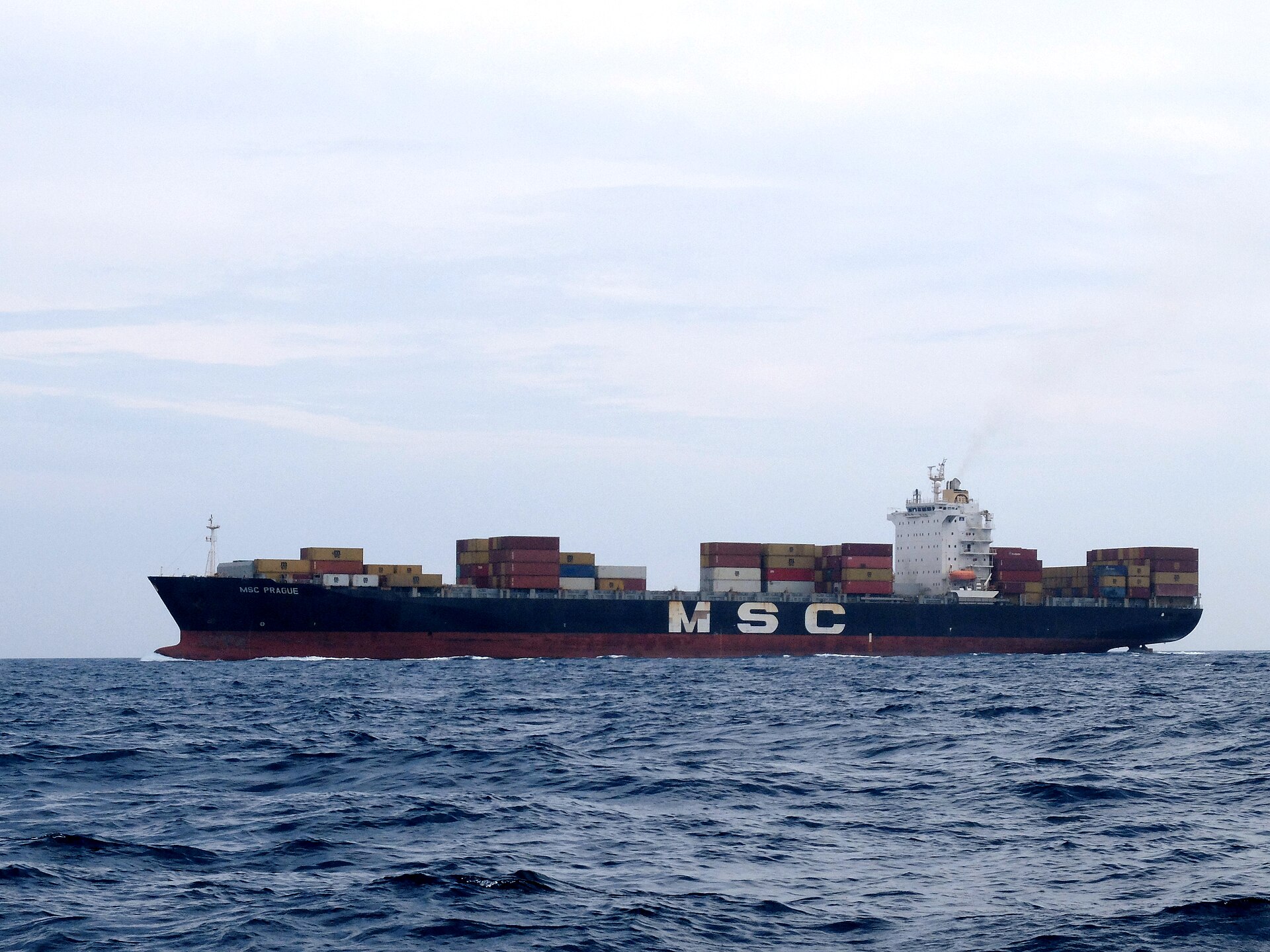
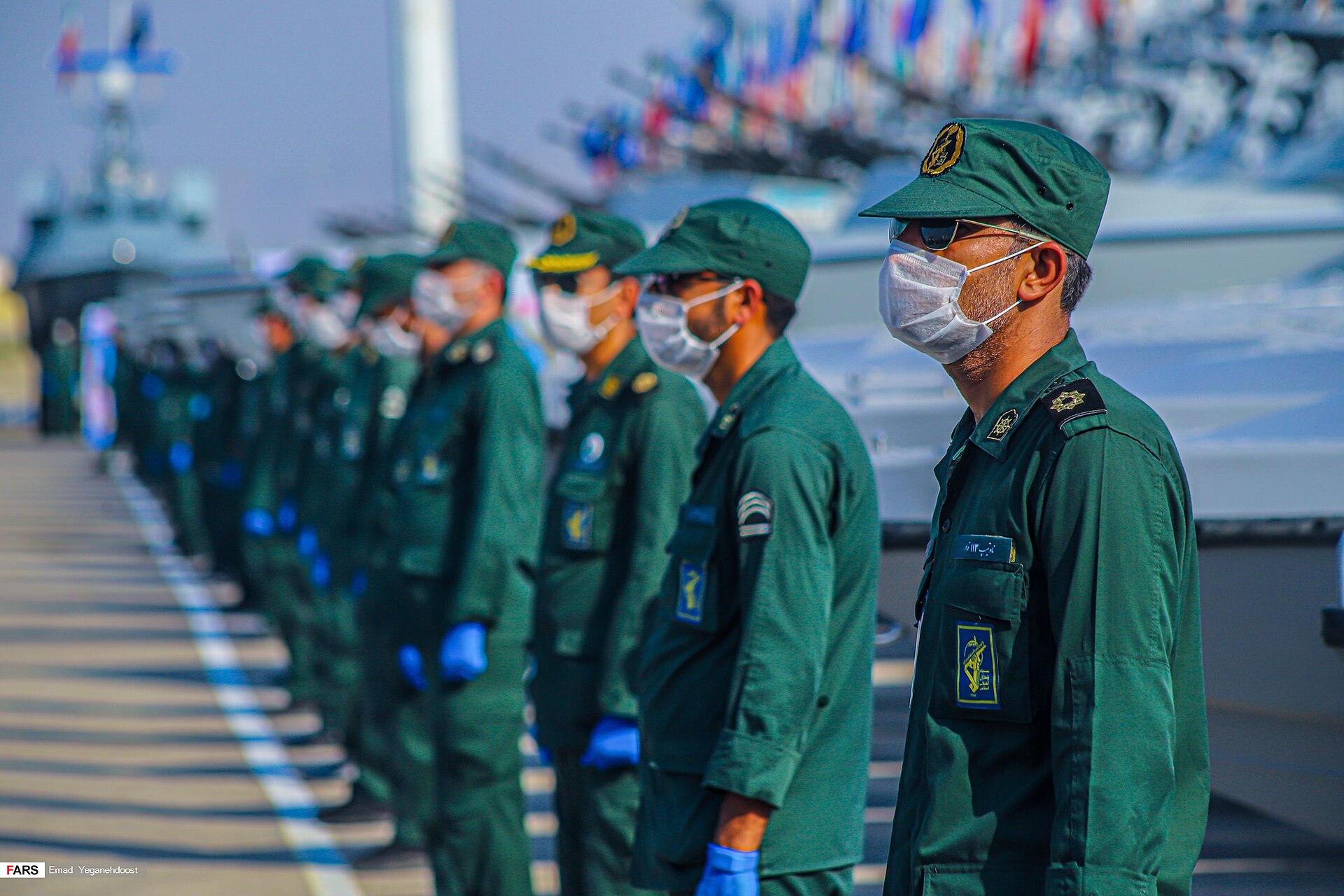
DUBAI — Iran’s Islamic Revolutionary Guard Corps seized two commercial container ships in the Strait of Hormuz on Tuesday morning — the Panama-flagged MSC Francesca and the Liberia-flagged Epaminondas — barely twelve hours after President Donald Trump announced an indefinite extension of the ceasefire, marking the first captures of non-Iranian-owned vessels since the war began on February 28. A third vessel, also Liberia-flagged, was fired on by an IRGC gunboat with RPGs and small arms fifteen nautical miles northeast of Oman without any prior radio contact, sustaining heavy damage to its bridge and shattering the distinction between Iran’s bureaucratic “transit permission” regime and outright naval aggression.
The seizures transform what had been a paper blockade — Iran’s self-declared authority over Hormuz transit, enforced through radio warnings and administrative rejections — into a physical one, executed against vessels linked to European NATO member states at the precise moment Washington is pressuring Brussels to reimpose sanctions on Tehran. MSC, the world’s largest container shipping line, is headquartered in Geneva; the Epaminondas is managed by Maersk but described by Greek maritime sources as a vessel “of Greek interests.” Italy and Greece, the two NATO members with the most direct commercial exposure, have both explicitly rejected military involvement in Hormuz — a posture the IRGC appears to be testing with calculated precision.
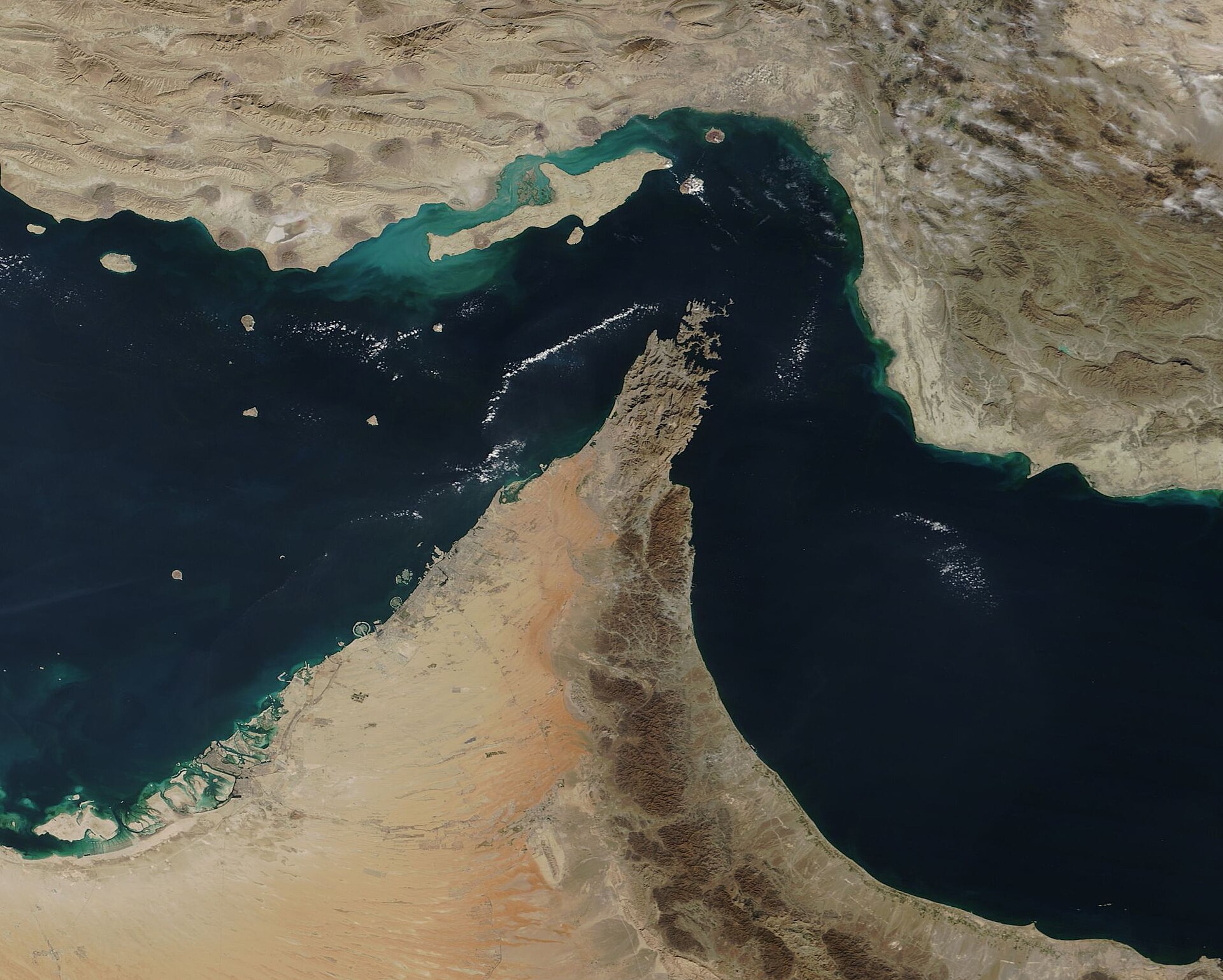
Table of Contents
- The Seizures: What Happened at 7:55 AM
- The Gunboat Attack: No Warning, No Channel 16
- What Did Trump’s Ceasefire Extension Actually Say?
- Who Ordered the Seizures?
- The European Trap: Flag States, Beneficial Owners, and NATO’s Limits
- Hormuz Transit Collapse by the Numbers
- Background: From Selen to MSC Francesca
- FAQ
The Seizures: What Happened at 7:55 AM
The MSC Francesca — a Post-Panamax container ship, 363 meters long, 174,897 deadweight tonnes, carrying an estimated 11,212 TEU of cargo — was intercepted at approximately 7:55 AM local time on April 22 while transiting the Strait of Hormuz. The Epaminondas, a smaller but still substantial vessel at 299.9 meters, built in 1998 and sailing under a Liberian flag, was seized in what appears to have been a coordinated operation conducted within minutes. Both ships were escorted to Iranian territorial waters.
Tasnim News Agency, the IRGC-aligned outlet that has served as the de facto communications arm for Iran’s naval operations throughout the conflict, stated that both vessels were seized for “operating without the required authorisation and for manipulating navigation systems.” The IRGC Navy’s own public statement added that the ships had been “attempting to secretly exit the Strait of Hormuz” — language that frames routine commercial transit as an act of evasion requiring military interdiction. Both vessels were transferred to Iranian waters “in order to examine the cargo and documents,” according to Tasnim.
The AIS manipulation allegation deserves particular scrutiny. Since the IRGC began firing on vessels without VHF challenge on April 18, commercial ships have faced an impossible choice: transmit AIS and be identified for interdiction, or go dark and be accused of “manipulating navigation systems” and seized. The IRGC has constructed an enforcement architecture in which compliance and evasion are both punishable offenses.
The Gunboat Attack: No Warning, No Channel 16
The seizures were not the only IRGC naval action on April 22. The United Kingdom Maritime Trade Operations center reported that a Liberia-flagged container ship sustained “heavy damage to the bridge” after being struck by gunfire and rocket-propelled grenades from a single IRGC gunboat, fifteen nautical miles northeast of Oman. The vessel’s master told UKMTO that “no radio contact was made before the incident” — despite the ship having “been initially informed that it had permission to transit.” The crew was safe and no fire broke out, but the damage to the bridge of a vessel that believed it had clearance represents a threshold the IRGC had not previously crossed.
The Middle East briefing 3,000+ readers start their day with.
One email. Every weekday morning. Free.
Two additional vessels were fired upon the same day. A Panama-flagged container ship and a second Liberia-flagged vessel were both engaged approximately eight nautical miles west of Iran, according to the Irish Times. Neither sustained damage, but the second vessel stopped dead in the water — whether voluntarily or under duress remains unclear. In total, five commercial vessels were either seized or fired upon in a single morning, a concentration of force that dwarfs any previous day’s operations in the 54-day Hormuz crisis.
The Channel 16 silence is the operational detail that matters most. On April 18, after Foreign Minister Araghchi declared Hormuz “completely open,” an IRGC Navy unit broadcast on Channel 16: “The Strait of Hormuz is still closed. We will open it by the order of our leader, Imam Khamenei, not by the tweets of some idiot.” Four days later, the IRGC dispensed with Channel 16 entirely — firing on a vessel that had received transit permission, without so much as a radio call. The progression from broadcast warnings to administrative rejections to unprovoked gunfire has taken less than a month.
What Did Trump’s Ceasefire Extension Actually Say?
Trump’s Truth Social post on April 21 extended the ceasefire indefinitely, but on terms that Iran explicitly rejected before the seizures occurred. “Based on the fact that the Government of Iran is seriously fractured,” Trump wrote, “we have been asked to hold our Attack on the Country of Iran until such time as their leaders and representatives can come up with a unified proposal.” He directed the military “to continue the Blockade and, in all other respects, remain ready and able.” The extension, in other words, maintains the US naval blockade — the same blockade Iran has called “armed robbery at sea” and “piracy” — while framing Iran’s internal power struggle as the reason hostilities have not resumed.
Tehran’s response arrived before the seizures. Iran stated it “had not asked for a ceasefire extension and repeated threats to break the US blockade by force,” according to multiple wire services. The formulation matters: Trump’s post claimed the extension came at someone’s request (“we have been asked”), while Iran denied making any such request, positioning the seizures not as a ceasefire violation but as a sovereign response to an ongoing act of American naval aggression. The IRGC’s April 22 operations can be read as the physical punctuation of that rejection.
“The Strait of Hormuz is still closed. We will open it by the order of our leader, Imam Khamenei, not by the tweets of some idiot.”
— IRGC Navy, Channel 16 broadcast, April 18, 2026
The day before the seizures, IRGC General Mousavi, speaking at a military ceremony according to Iranian state media, delivered what amounted to a public authorization statement: “Today, we have come to you to declare our pledge: If after the ceasefire the enemy oversteps and commits any aggression against this soil, this time our target will be wherever you direct us.” That language — “wherever you direct us” — is directed upward, toward a supreme leader who has been publicly absent for over fifty days and whose last known position was that Iran’s enemies should be “brought to their knees.” The seizures, arriving the following morning, read less like a response to Trump’s post than as a standing order finally executed.
Who Ordered the Seizures?
The authorization ceiling — the analytical framework that has defined Iran’s internal power dynamics throughout this conflict — moved from theory to operational reality on April 22. Rear Admiral Alireza Tangsiri, the IRGC Navy commander who established the transit-permission regime with his March 24 declaration that “all vessels must now coordinate passage with Iran’s maritime authorities,” was killed on March 30. No named successor has been designated in 23 days. The command structure that ordered the seizure of two foreign-flagged commercial vessels is headless at the named-commander level.
This is not an abstraction. When President Pezeshkian publicly accused SNSC Secretary Vahidi and Khatam al-Anbiya commander Abdollahi on April 4 of derailing ceasefire negotiations — naming them as the men who wrecked the Islamabad process — he confirmed what external analysts had argued for weeks: the elected president of Iran has zero authority over IRGC naval operations. Article 110 of the Iranian constitution reserves military command for the Supreme Leader, and Khamenei has been absent from public view for over fifty days. His son Mojtaba has communicated audio-only. The IRGC Navy is operating with effective autonomy, executing a transit regime that Iran’s own foreign minister attempted to dismantle on April 17 and was overruled within hours.
The April 18 Channel 16 broadcast was not an IRGC spokesman on television. It was an operational naval unit, on an international maritime distress and calling frequency, contradicting the foreign minister of its own government in real time. The April 22 seizures are the kinetic extension of that contradiction: the IRGC Navy does not recognize Araghchi’s authority, does not recognize Pezeshkian’s authority, and is now seizing foreign commercial vessels under a regime whose legal basis rests on the orders of a commander who has been dead since March 30.
Araghchi’s response to the seizures completed the convergence: on April 20, he formally labelled the US naval blockade an “act of war,” cancelled Iran’s participation in a second Islamabad round, and adopted the IRGC’s vocabulary as official diplomatic policy — the clearest signal yet that the civilian-military split described above has either been resolved by defection or collapsed under IRGC pressure.
The European Trap: Flag States, Beneficial Owners, and NATO’s Limits
The IRGC’s target selection on April 22 was not random. The MSC Francesca flies a Panamanian flag but is operated by MSC, a company headquartered in Geneva, Switzerland, founded by an Italian family, and run from offices across Europe. The Epaminondas flies a Liberian flag but is described by the Panhellenic Post as a vessel “of Greek interests,” managed by Maersk — a Danish company. The IRGC seized vessels whose flag states (Panama, Liberia) have no NATO obligations and no naval capacity to respond, while the beneficial owners and operators sit in NATO capitals that have explicitly refused to act militarily in the Strait.
The precedents confirm the calculation. When Iran seized two Greek-flagged tankers in May 2022, Themistoklis Demiris, General Secretary of the Greek Foreign Affairs Ministry, called the action “acts equal to piracy” violating “fundamental principles of International Law and International Navigation.” Greece filed a formal demarche, notified the European External Action Service and the IMO, and did nothing else. NATO Article 5 was not invoked. When Iran seized the British-flagged Stena Impero in July 2019, the UK — a nuclear-armed permanent member of the UN Security Council — did not invoke Article 5 either. The vessel was held for two months. No NATO-member-flagged vessel seizure by Iran has ever triggered collective defense provisions.
Italian Foreign Minister Antonio Tajani condemned Iran’s “destabilizing conduct” and “repeated acts of intimidation” against freedom of navigation in the Strait, calling Hormuz “a vital artery for the global economy,” while simultaneously confirming that Italy “was not involved in any naval missions that could be extended to the area.” Greek government spokesman Pavlos Marinakis stated that Greece “would not engage in any military operations in the Strait of Hormuz.” Germany, Spain, Estonia, the UK, and Australia have all rejected Trump’s requests to send warships. The IRGC has seized European-linked vessels at the precise moment when Europe’s refusal to act militarily is on the public record — and when Secretary of State Rubio is pressuring the EU to reimpose sanctions on Iran.
The trap is structural. If Brussels escalates diplomatically — freezing economic cooperation, coordinating state-backed war risk insurance, tightening sanctions enforcement — it aligns with Washington’s pressure campaign and validates the US blockade that European capitals have spent weeks distancing themselves from. If Brussels does nothing, its maritime companies continue to lose vessels, premiums continue to climb, and the commercial case for transiting Hormuz collapses entirely. The IRGC has placed European governments in a position where any response serves Iranian objectives: escalation fractures European-American diplomatic distance, while inaction cedes Hormuz to IRGC control.
Hormuz Transit Collapse by the Numbers
The April 22 seizures land on an industry already in retreat. On April 19, only three vessels transited the Strait of Hormuz — the lowest single-day count since the crisis began, and a figure that would have been unthinkable in February when 138 ships passed through daily. As of April 20, 870 vessels remained in the Persian Gulf, down 49 from the previous day, with masters and operators increasingly choosing to anchor rather than attempt transit. BIMCO, the world’s largest international shipping association, has formally advised members to avoid the Strait, citing mine risk.
| Metric | Pre-War (Feb 2026) | Current (April 20-22) | Change |
|---|---|---|---|
| Daily Hormuz transits | ~138 vessels | 3 vessels (April 19) | -97.8% |
| War risk premium per transit (VLCC) | $200,000-$350,000 | $10-14 million | ~40-70x increase |
| War risk annual rate (% of hull value) | 0.15-0.25% | 2.5-5.0% | ~20x increase |
| IRGC maritime incidents (cumulative) | 0 | 34+ incidents | — |
| Vessels in Gulf | ~1,400+ | 870 (April 20) | -38% estimated |
| Crew killed in IRGC incidents | 0 | 7+ confirmed | — |
The insurance market has responded with a structure that tells the story more clearly than any diplomatic statement. London insurers launched a $1 billion Beazley-led marine war risk consortium in April 2026 — the largest dedicated war risk facility since the Tanker War of the 1980s. For a five-year-old VLCC valued at approximately $138 million, insurers are quoting $10 to $14 million per single transit — a single-voyage additional premium separate from the annual policy rate — a figure that exceeds the entire cargo value of many smaller vessels. The Lloyd’s Market Association stated that “safety concerns, not insurance availability” were “driving reduced vessel traffic” — a formulation that shifts blame from the market to the military reality while quietly confirming that the market has priced Hormuz as a war zone.
The seizure of the MSC Francesca carries particular weight because MSC is the world’s largest container shipping company by capacity, controlling 21.2 percent of global container ship TEU. If MSC — which has the deepest war risk reserves, the largest fleet, and the most sophisticated routing alternatives of any container line — cannot transit Hormuz without one of its flagship vessels seized, the commercial argument for any operator attempting the passage has effectively collapsed. Hapag-Lloyd and Maersk were already avoiding the Strait; the MSC Francesca seizure removes the last major holdout.
“Safety concerns, not insurance availability, driving reduced vessel traffic in the Strait of Hormuz.”
— Lloyd’s Market Association, April 2026
Background: From Selen to MSC Francesca
The IRGC’s enforcement of its self-declared Hormuz authority has followed a clear escalation ladder, and each rung has been tested before the next was climbed. On March 1, the crisis opened with lethal force: two crew members were killed aboard the MT Skylight, one aboard the MKD VYOM, and four more died when a tugboat was sunk near Mussafah on March 6. The early phase established that the IRGC was willing to kill, but the targets were vessels already inside the conflict zone — tankers loading Iranian crude or transiting within Iranian-claimed waters.
The Selen incident on March 24 marked the shift from kinetic to administrative enforcement. The St. Kitts-and-Nevis-flagged container feeder, just 6,850 deadweight tonnes, was turned back at the Strait entrance — no shots fired, no boarding, simply an IRGC radio instruction that the vessel lacked transit authorization. Tangsiri’s accompanying declaration that “all vessels must now coordinate passage with Iran’s maritime authorities” established the legal fiction of a permission-based regime, transforming what had been naval aggression into something Iran could frame as bureaucratic regulation.
The April 22 seizures represent the third phase. The IRGC has moved from shooting at vessels (Phase 1, March), to turning them back (Phase 2, March 24), to physically capturing them and escorting them to Iranian territorial waters (Phase 3, April 22). Each phase has expanded the scope of acceptable targets: from Iranian-linked vessels, to small feeder ships, to two of the largest container vessels in the Gulf operated by the world’s largest shipping company. The 2024 seizure of the MSC Aries — a Portugal-flagged, Israeli-owned vessel taken by helicopter assault — now looks less like an isolated provocation and more like a proof-of-concept for the operational template applied on April 22.
FAQ
What happened to the crews of the MSC Francesca and Epaminondas?
As of the initial reports on April 22, both crews are reported safe. Iran’s stated purpose for the seizures — “to examine the cargo and documents” — suggests a detention framework similar to the MSC Aries in 2024, where the crew was held for approximately twenty days, and the Stena Impero in 2019, where British crew members were detained for over two months. Neither MSC nor Maersk has issued public statements on crew welfare as of this writing, and flag-state consular access (through Panama and Liberia) has not been confirmed.
Can NATO invoke Article 5 over these seizures?
No, and the IRGC’s target selection appears designed to ensure that outcome. Article 5 requires an “armed attack” against the territory or forces of a NATO member. The MSC Francesca is Panama-flagged (not a NATO member); the Epaminondas is Liberia-flagged (not a NATO member). While MSC is Swiss-headquartered and the Epaminondas has Greek beneficial ownership, neither flag-state relationship triggers treaty obligations. In 2019, the UK — an actual NATO member whose flag flew on the Stena Impero — did not invoke Article 5. Greece did not invoke it after Iran seized two Greek-flagged tankers in 2022. The political space for Article 5 invocation over a convenience-flagged vessel is effectively nonexistent.
What is the AIS manipulation allegation?
Iran’s charge likely refers to AIS transponder deactivation — “going dark” — a practice that commercial vessels have increasingly adopted in the Gulf to avoid IRGC targeting. International maritime law under SOLAS Chapter V requires AIS transmission at all times, but the IMO has acknowledged that masters may disable transponders when they believe transmission creates a direct safety risk — a standard the Hormuz war zone plainly meets. The IRGC has weaponised this ambiguity: transmitting AIS invites interception; disabling it invites seizure on regulatory grounds.
How does this affect Saudi oil exports?
Saudi Arabia has already rerouted the majority of its crude exports through the East-West Pipeline to the Red Sea port of Yanbu, but the pipeline’s effective capacity ceiling of 4 to 5.9 million barrels per day leaves a structural gap against pre-war Hormuz throughput of over 7 million bpd. Saudi production in March had already crashed to 7.25 million bpd, down from 10.4 million bpd in February — a 30 percent decline that represents, in the words of the International Energy Agency, “the largest disruption on record.” The April 22 seizures further close the window for any resumption of Gulf-side loading operations.
What legal recourse do the vessel owners have?
Flag states Panama and Liberia can file protests through the IMO and seek arbitration under UNCLOS, but neither country has the diplomatic weight or naval capacity to compel release. MSC’s Swiss headquarters could pursue claims through the International Tribunal for the Law of the Sea, and Greece could file on behalf of the Epaminondas’s beneficial owners — but the 2022 precedent, in which Greek demarches produced no vessel release, suggests diplomatic channels will be slow. The most likely path to release, based on the MSC Aries and Stena Impero precedents, is a negotiated exchange tied to broader diplomatic concessions, a process that took weeks to months in both prior cases.
The pattern of IRGC seizures against European-linked vessels — and how it fits into four documented tit-for-tat cycles with Western naval powers since 2019 — is analysed in depth in IRGC Seizes Two Ships in 72-Hour Retaliation Cycle.