
RIYADH — President Donald Trump called on six nations to send warships to the Strait of Hormuz on March 14, promising a multinational fleet that would break Iran’s blockade and restore the flow of twenty percent of the world’s oil. Two days later, not a single country has publicly committed a vessel. France attached conditions. Germany called the plan impractical. Japan cited constitutional barriers. South Korea stayed silent. India and China bypassed the coalition entirely, negotiating their own passage with Tehran. The fleet that was supposed to save global energy markets exists only in a presidential social media post — and for Saudi Arabia, watching from behind its American-supplied missile shield, the silence carries a message far more consequential than any warship deployment: the security architecture that has protected the Kingdom for half a century may no longer function when it matters most. The irony is acute: Japan and South Korea import 70 percent of their oil through the very strait they refuse to defend, and both are burning through strategic reserves at record rates as a consequence.
Trump escalated the pressure further on March 16, warning NATO of a “very bad future” and signalling he may delay the Xi summit unless allies contribute forces to the Hormuz effort.
Table of Contents
- What Did Trump Ask For at the Strait of Hormuz?
- Why Has No Country Publicly Committed Warships to the Strait?
- France’s Conditional Offer and the Limits of European Power
- Why Germany and Japan Cannot or Will Not Send Ships
- How India, China, and Turkey Are Cutting Their Own Deals With Tehran
- What Did the Pentagon Get Wrong About Hormuz?
- The Coalition Readiness Matrix
- Britain Sent Jets but the Royal Navy Stayed Home
- What Does the Failed Coalition Mean for Saudi Arabia?
- Has Saudi Arabia Already Begun Building a Post-American Security Architecture?
- Why the 1987 Tanker War Coalition Worked and This One Cannot
- Will the Strait of Hormuz Reopen Without a Multinational Fleet?
- Frequently Asked Questions
What Did Trump Ask For at the Strait of Hormuz?
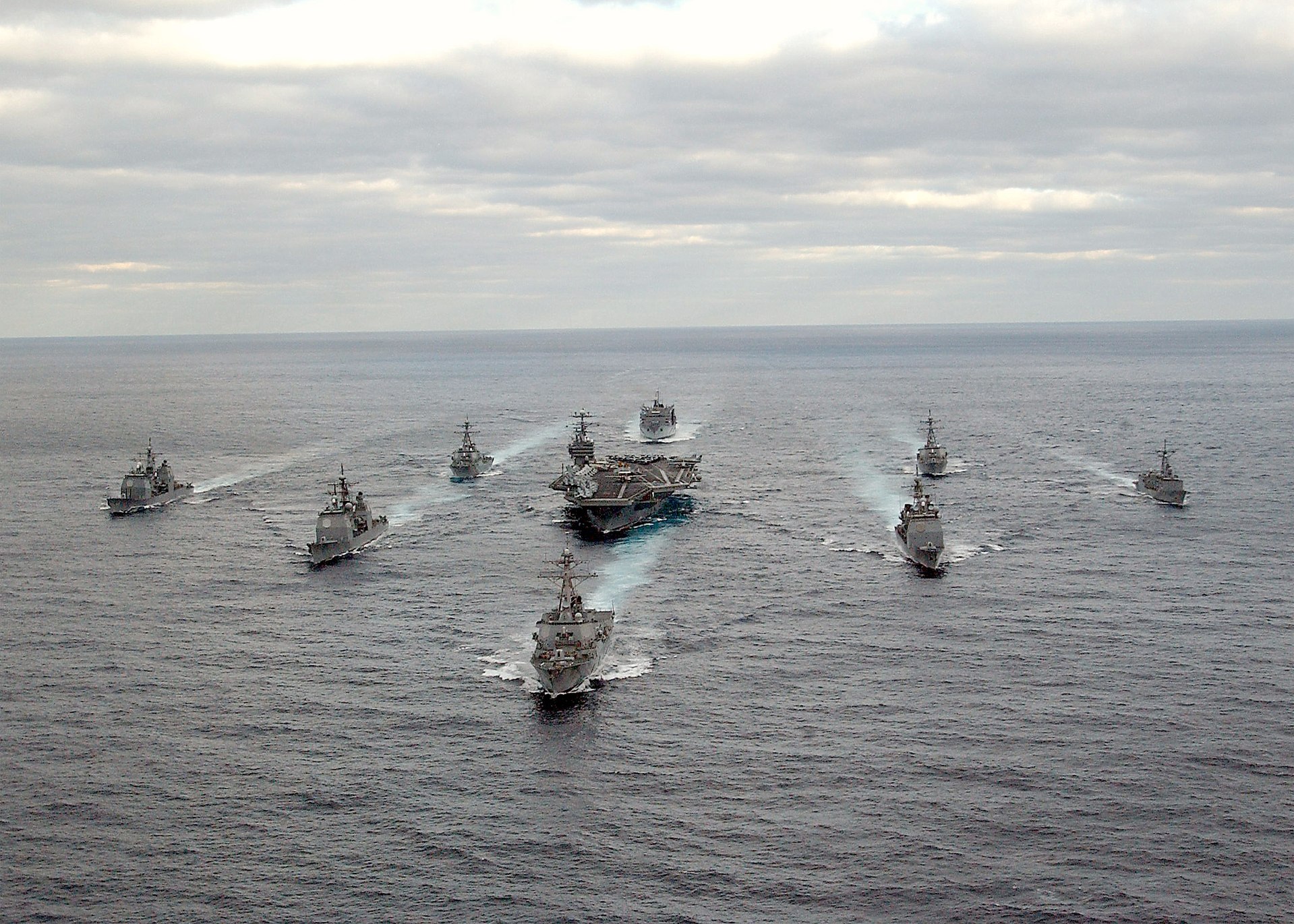
On March 14, 2026, President Trump posted on Truth Social that “many countries” would send warships alongside American naval forces to keep the Strait of Hormuz “open and safe.” He specifically named China, France, Japan, South Korea, and the United Kingdom — nations whose economies depend on uninterrupted Gulf energy flows — and urged them to deploy naval assets to the region immediately. The message marked the first public acknowledgement by the administration that the United States lacks the resources to reopen the strait alone.
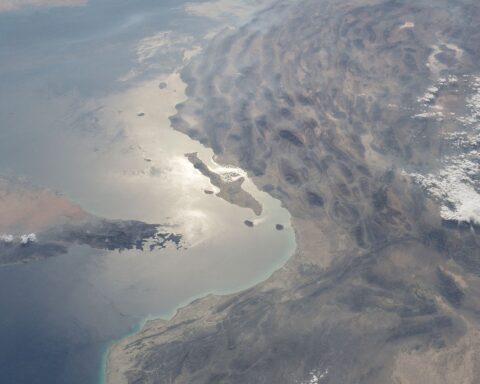
The appeal came on Day 15 of the war that began when the United States and Israel launched Operation Faithful Resolve on February 28, killing Iranian Supreme Leader Ali Khamenei and striking the country’s missile programme, nuclear facilities, and Islamic Revolutionary Guard Corps infrastructure. Iran’s response included sustained missile and drone attacks on American military bases across the Gulf, strikes on Saudi Arabia, the UAE, Bahrain, Kuwait, Qatar, and Oman, and the effective closure of the Strait of Hormuz through a combination of anti-ship missile threats, mine-laying operations, and IRGC Navy patrol boats demanding transit permission.
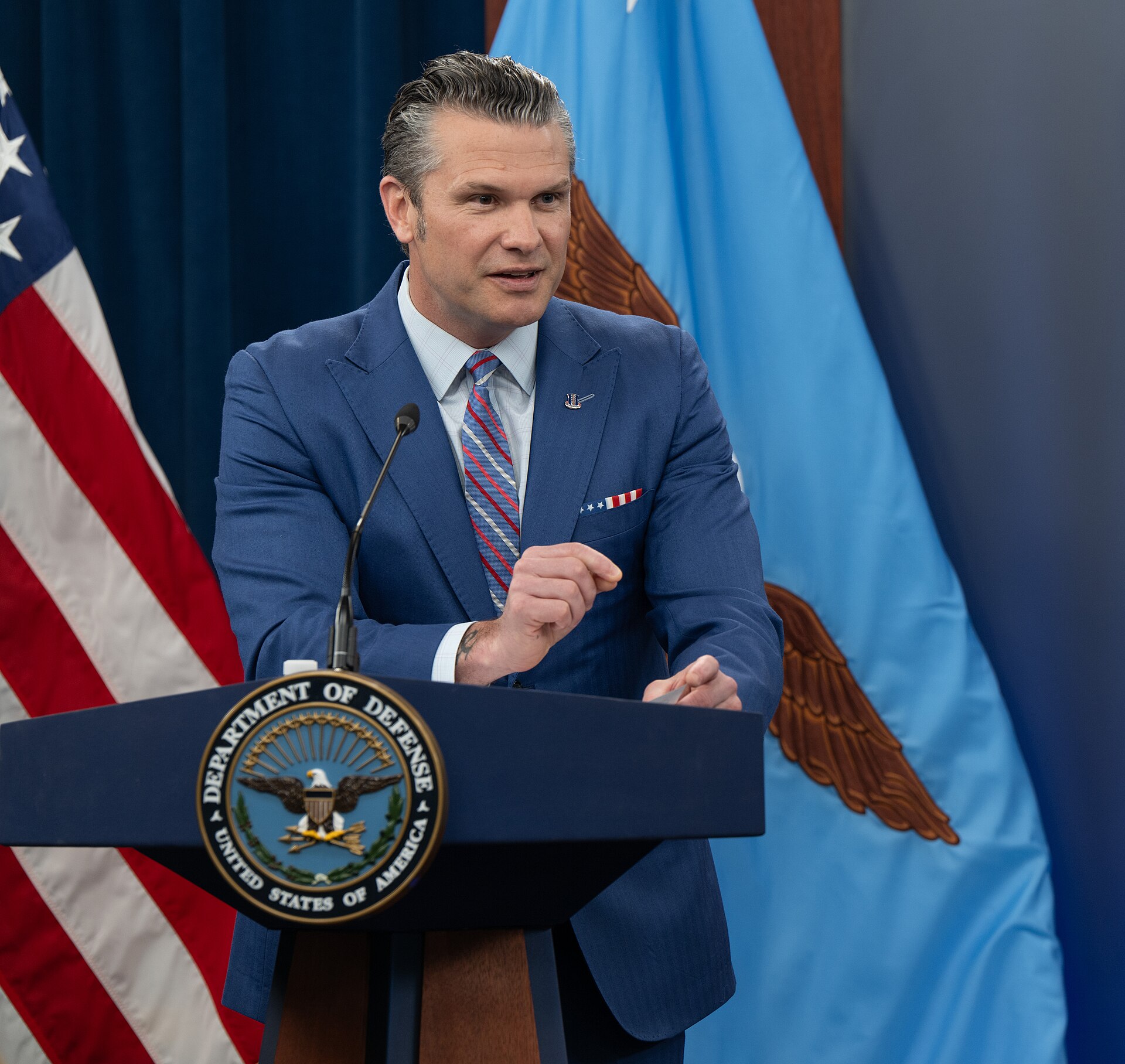
Defense Secretary Pete Hegseth simultaneously announced the deployment of the amphibious assault ship USS Tripoli and its Marine Expeditionary Unit to the Middle East. The Marines would be capable of conducting ground operations if ordered — a significant escalation from the purely naval and air campaign the Pentagon had initially envisioned. Hegseth told reporters at a Pentagon briefing that Iran was “exercising sheer desperation in the Straits of Hormuz” and insisted the situation was under control: “We have been dealing with it, and don’t need to worry about it.”
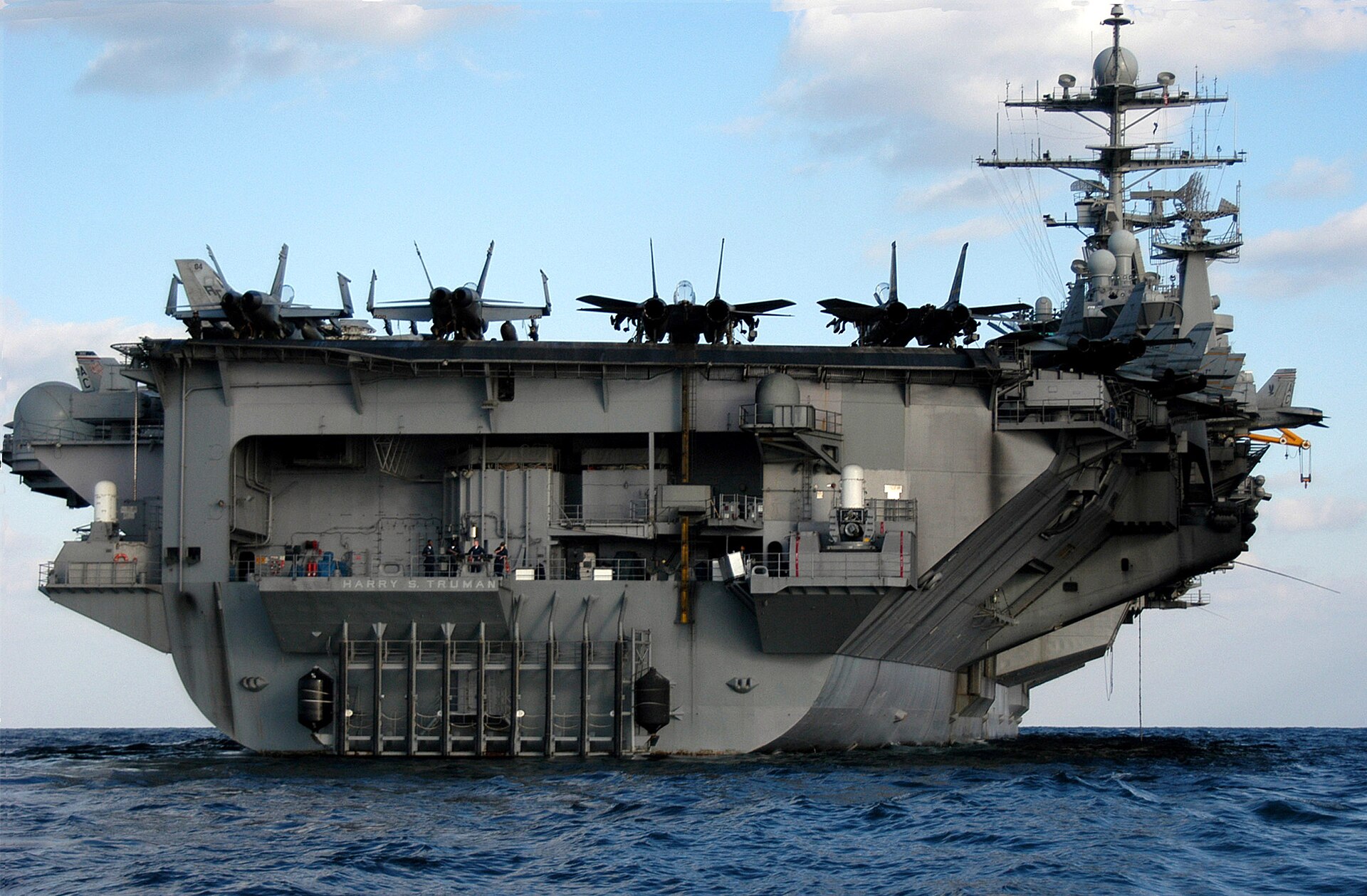
The gap between Hegseth’s dismissal and Trump’s appeal for foreign warships told two contradictory stories. If the situation was under control, why ask six nations for help? If the United States needed a coalition, why had the Pentagon not prepared one before launching a war that experts had warned for decades would trigger exactly this scenario?
The Middle East briefing 3,000+ readers start their day with.
One email. Every weekday morning. Free.
Why Has No Country Publicly Committed Warships to the Strait?
The silence that followed Trump’s coalition call has no precedent in modern Gulf security. For forty years, American requests for maritime cooperation in the Persian Gulf have produced results — sometimes reluctant, sometimes conditional, but always substantive. In 1987, during the Tanker War with Iran, European allies contributed minesweepers. In 2019, when Iranian forces seized a British-flagged tanker, the International Maritime Security Construct attracted commitments from the UK, Australia, Albania, Saudi Arabia, and the UAE. Even during the politically contentious 2003 Iraq War, a coalition of the willing materialised within weeks.
This time, the dynamic has fundamentally shifted. According to Al Jazeera’s reporting on March 15, no country had publicly agreed to Trump’s call as of forty-eight hours after the request. The reasons vary by capital, but a common thread runs through every refusal: the war that created the Hormuz crisis was an American choice, and the nations being asked to help did not make it.
France attached temporal conditions, promising to act only “after the most intense phase of the conflict has ended.” Germany called the entire concept impractical. Japan cited constitutional barriers that have constrained its military deployments since 1947. South Korea simply declined to comment. India and China took a third path entirely, negotiating bilateral passage agreements with Tehran that rendered the coalition unnecessary for their immediate needs.
The political calculus is straightforward. Joining an American-led Hormuz coalition in the middle of a war the United States started would implicate participating nations in a conflict they opposed, or at minimum did not endorse. It would risk Iranian retaliation against their own shipping, citizens, and interests in the Gulf. And it would amount to a post-hoc endorsement of Operation Faithful Resolve — a military action that most of the named countries had privately counselled against.
France’s Conditional Offer and the Limits of European Power
France’s response was the most substantive of any European power — and it still amounted to a carefully worded refusal to act now. President Emmanuel Macron, speaking in Cyprus on March 9, announced that France and its allies were preparing a “purely defensive” mission to escort vessels through the Strait of Hormuz, but only “when the circumstances permit” and after the “most intense phase” of the US-Israeli war on Iran had concluded.
Macron’s language was precise. The mission’s purpose, he said, “is to enable, as soon as possible after the most intense phase of the conflict has ended, the escort of container ships and tankers to gradually reopen the Strait of Hormuz.” He backed the words with a genuine military commitment: the nuclear-powered aircraft carrier Charles de Gaulle, eight warships, two helicopter carriers, and a nuclear-powered attack submarine were deploying to the Eastern Mediterranean. France would also dedicate two frigates to the European Union’s Naval Force Operation Aspides for potential Hormuz escort duty.
The French deployment was not trivial. The carrier strike group included the frigate FS Chevalier Paul, a FREMM-class frigate, a fleet oiler, and contributions from Spain (the frigate ESPS Cristóbal Colón) and the Netherlands (HNLMS Evertsen). Defense News described it as France’s most significant Mediterranean naval deployment in decades, positioning Paris as a credible alternative security partner for Gulf states “as the Middle East may rethink alliances.”
The distinction between what Macron offered and what Trump demanded is critical. Trump wanted warships in the strait now, conducting escort operations under fire and through minefields while Iran continued launching drones and missiles at Gulf states. Macron offered a post-conflict stabilisation force — valuable in theory, irrelevant to the immediate crisis. The subtext was unmistakable: France would help clean up, but it would not fight America’s war.
Why Germany and Japan Cannot or Will Not Send Ships
Germany’s response was blunter than France’s. Federal Minister for Foreign Affairs Johann Wadephul told ARD on March 15 that he was “very skeptical” about extending the EU’s Operation Aspides naval mission to the Strait of Hormuz. “Will we soon be an active part of this conflict? No,” he said, adding that the existing mission, focused on the Red Sea, “had not been effective so far.” The message was unambiguous: Berlin would not risk German sailors in a war zone to solve a problem Washington created.
Japan’s refusal was more anguished. Prime Minister Sanae Takaichi faced an excruciating bind. Japan imports ninety-five percent of its oil from the Middle East, with seventy percent passing through the Strait of Hormuz, according to the Japan Times. The country’s economy was already suffering severe disruption from the blockade, with strategic petroleum reserves being drawn down at an accelerating rate. South Korea and Japan together faced what analysts at Columbia University’s Center on Global Energy Policy described as the most acute energy crisis in the industrialised world since 1973. The crisis deepened on March 16, when EU energy ministers declared an energy supply emergency in Brussels, formally acknowledging that the Hormuz closure had pushed oil past $106 per barrel and required coordinated European crisis measures.
Japan’s policy chief told reporters that the threshold for sending Japanese Self-Defense Force vessels to the region under existing laws was “extremely high.” Takaichi herself stated that Japan was “not yet planning” a Hormuz escort mission, though she carefully avoided closing the door permanently. The Japan Times reported that Takaichi was exploring what could be done “within the legal framework” — a reference to Japan’s war-renouncing 1947 constitution, which constrains overseas military deployments and remains politically sacred in a country where many voters oppose any expansion of the Self-Defense Forces’ mandate.
South Korea’s silence was equally telling. Türkiye Today reported that both Seoul and Tokyo “stopped short of committing warships to Hormuz.” South Korea, like Japan, depends heavily on Gulf oil and gas, but the political cost of joining an American-led military operation in the Middle East — particularly one opposed by China, South Korea’s largest trading partner — outweighed the energy security benefits of contributing to a coalition whose effectiveness remained uncertain.
How India, China, and Turkey Are Cutting Their Own Deals With Tehran
While Washington struggled to build a coalition, three countries pursued a strategy that undermined the very concept of a multinational response. India, China, and Turkey each negotiated bilateral passage agreements with Iran, accepting Tehran’s authority over the strait in exchange for access to it.
India’s approach was the most consequential. External Affairs Minister S. Jaishankar told the Financial Times on March 15 that negotiations between New Delhi and Tehran had allowed two Indian-flagged gas tankers to pass through the strait. India has nine million citizens living and working in Gulf states — the largest expatriate community in the region — and could not afford to be drawn into a confrontation with Iran. By dealing directly with Tehran, Jaishankar effectively acknowledged Iran’s control over the waterway while maintaining India’s formal neutrality.
China went further. On March 15, Fortune reported that an Iranian supertanker pushed through the strait carrying crude destined for Chinese refineries. CNBC had previously reported that Iran was shipping millions of barrels of oil to China through the same waterway it had closed to everyone else. The arrangement served both parties: Iran maintained oil revenue to fund its war effort, and China secured energy supplies without joining any American-led military operation. Beijing’s calculus was transparent — why send warships to fight for passage when you can negotiate it for free?
Turkey’s experience illustrated the granularity of Iran’s approach. On March 13, Turkish Transport Minister Abdulkadir Uraloğlu confirmed that Iran had approved passage for one Turkish-owned vessel, the Rozana, through the strait. Fourteen additional Turkish ships with a total of 171 crew members remained anchored, waiting for clearance. Turkey was receiving access, but on Iran’s terms and on Iran’s timeline — a demonstration that Tehran, not Washington, controlled the most important chokepoint in global energy markets.
Iranian Foreign Minister Abbas Araghchi spelled out the logic on CBS. Tehran, he said, had been “approached by a number of countries” seeking safe passage, “and this is up to our military to decide.” The strait, according to Araghchi, was open to all except the United States and its allies. The formulation was designed to fracture any potential coalition before it formed: join America’s fleet, and you lose passage; stay out, and Iran will let your ships through. That formula has now reached the heart of the US alliance system, with Iran offering Japan — a core US treaty ally — safe passage through Hormuz in what may be the most consequential test of coalition solidarity yet.
What Did the Pentagon Get Wrong About Hormuz?
The most damaging revelation to emerge from the coalition failure was not the allied refusals themselves but the planning assumptions that preceded them. CNN reported on March 12, citing multiple sources familiar with the matter, that the Pentagon and National Security Council “significantly underestimated Iran’s willingness to close the Strait of Hormuz in response to US military strikes.” The administration’s national security team, CNN reported, “failed to fully account for the potential consequences of what some officials have described as a worst-case scenario now facing the administration.”
The failure was remarkable because the scenario was anything but unforeseen. Iran had explicitly threatened to close Hormuz in response to military action for decades. The IRGC Navy conducted regular exercises simulating strait closure. American war games had modelled the scenario extensively. The U.S. Energy Information Administration had published detailed assessments of the economic consequences — approximately 20.9 million barrels per day of oil and petroleum products transiting the strait in the first half of 2025, representing roughly one-fifth of global consumption and one-quarter of seaborne oil trade.
A senior administration official told Al Jazeera on March 12 that the US military was “not ready” to escort oil ships through the strait. The admission prompted the deployment of the USS Tripoli and its Marine Expeditionary Unit, but Marine amphibious capabilities are designed for land operations, not mine-clearing or convoy escort. The Navy’s actual mine countermeasures fleet — a handful of ageing Avenger-class vessels and newer unmanned systems — was insufficient for the scale of the threat Iran posed.
The planning failure extended to coalition preparation. According to the Responsible Statecraft analysis, Trump’s appeal to other nations marked “the first public admission that the United States does not have enough resources to solve this task alone.” Yet no diplomatic groundwork had been laid before the war began. No allied capitals had been consulted about potential escort missions. No burden-sharing agreements had been negotiated. The assumption, it appeared, was that allies would rally automatically — an assumption that ignored the fundamental political reality that the United States had started this war without their consent.
The Coalition Readiness Matrix
The varied responses to Trump’s call reveal a pattern that can be mapped systematically. Each potential coalition partner occupies a position determined by four variables: military capability to contribute, political willingness to deploy, legal constraints on foreign operations, and the availability of bilateral alternatives that bypass the coalition entirely. The resulting matrix exposes why this coalition cannot form in its current configuration.
| Country | Naval Capability | Political Will | Legal Constraints | Bilateral Alternative | Coalition Status |
|---|---|---|---|---|---|
| France | High — carrier group deployed | Conditional — post-conflict only | None | None | Willing but waiting |
| United Kingdom | Medium — Type 45 + mine hunters | Moderate — aligned with US but cautious | None | None | Contributing assets, not committing to escort |
| Germany | Low — limited blue-water navy | None — explicitly refused | Parliamentary approval required | None | Refused |
| Japan | High — capable maritime force | Low — constitutional constraints | Article 9, “extremely high” threshold | Exploring | Cannot participate under current law |
| South Korea | Medium — modern navy | Low — China relationship | Domestic political constraints | Exploring | Silent refusal |
| India | High — blue-water navy | None — pursuing bilateral path | None | Active — 2 tankers granted passage | Self-negotiating |
| China | Very high — global navy | None — strategic competitor | None | Active — oil flowing via Iran deal | Beneficiary of the crisis |
| Turkey | Medium | Low — balancing Iran relationship | None | Active — 1 ship cleared, 14 waiting | Self-negotiating |
| Australia | Medium | Low — distant from crisis | None | None | No public response |
The matrix reveals a structural problem that cannot be solved by diplomatic pressure alone. Countries fall into four distinct categories, and only one of them — the “Willing but Waiting” category occupied solely by France — offers any prospect of eventual participation. The “Self-Negotiating” category (India, China, Turkey) represents an existential threat to the coalition concept: these nations have discovered they can secure their energy supplies through diplomacy with Iran rather than military confrontation alongside America. Every successful bilateral deal reduces the incentive for a multinational response.
The “Capable but Constrained” category (Japan, South Korea) contains countries whose economic interests demand Hormuz reopening but whose political and legal systems prevent military participation. Japan’s constitutional framework was designed precisely to prevent the country from being drawn into foreign conflicts — a seventy-nine-year-old safeguard that Trump’s coalition call has now tested. South Korea’s dependence on Chinese trade makes any military alignment with Washington against a country that China is actively supporting through oil purchases a strategic impossibility.
Britain Sent Jets but the Royal Navy Stayed Home
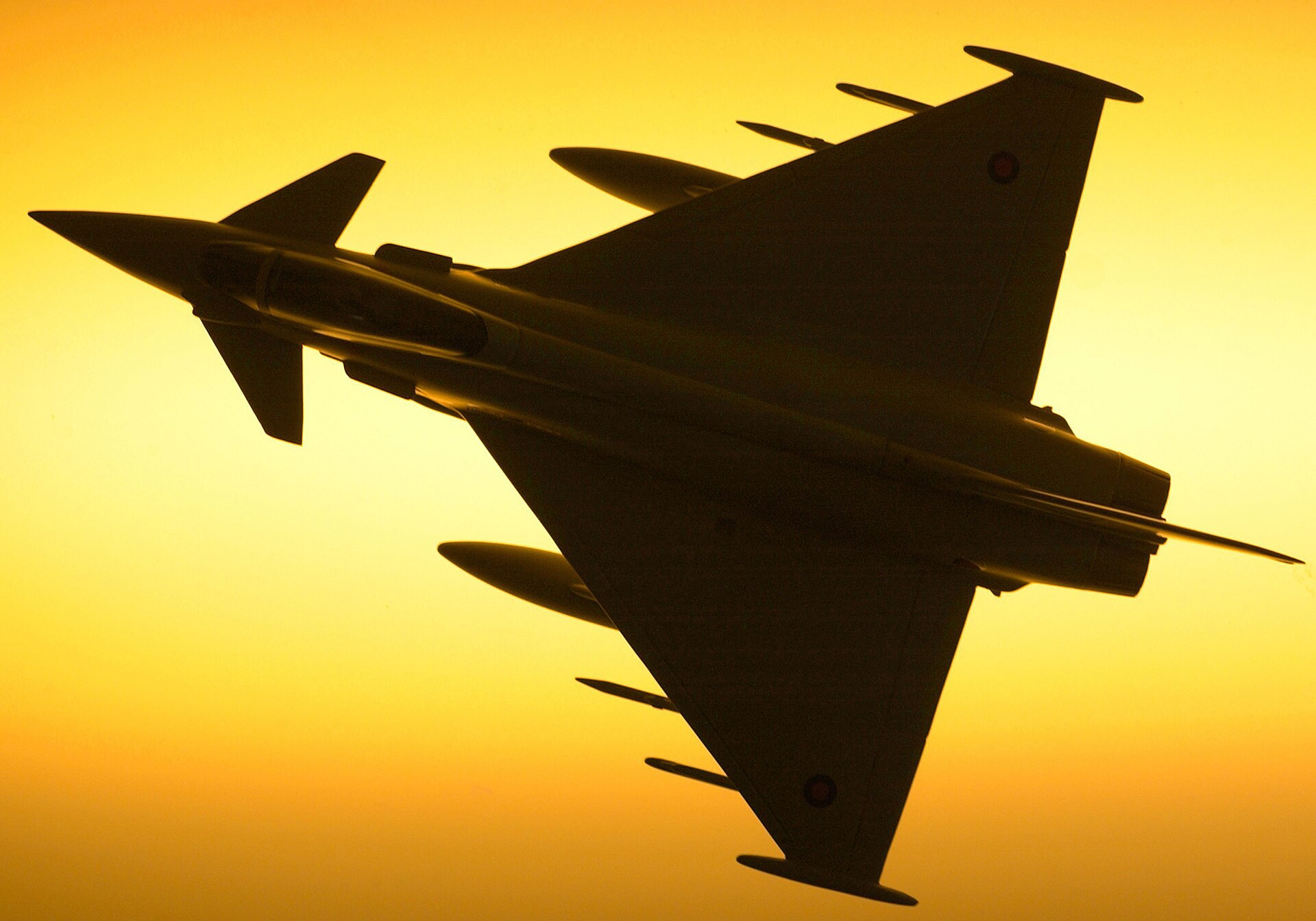
The United Kingdom’s response illustrates the gap between rhetorical solidarity and operational commitment. Britain has been the most active European military participant in the Gulf defence since the war began, deploying RAF Typhoon fighters to Qatar, F-35 jets to Cyprus, sending a Type 45 destroyer (HMS Dragon) from Portsmouth, dispatching anti-drone Wildcat helicopters, and stationing four mine countermeasure vessels at HMS Juffair in Bahrain.
Prime Minister Keir Starmer discussed the “importance of reopening the Strait of Hormuz” with Trump on March 15, and military chiefs were reportedly “mulling use of minehunter drones” to address the Iranian mine threat. The Ministry of Defence said “a range of options” were being considered to secure shipping through the strait.
But the flagship of the Royal Navy — the aircraft carrier HMS Prince of Wales — stayed in port. GB News reported that the Royal Navy was “embarrassed” and “furious” at what it described as No. 10’s “Middle East chaos,” and that a senior naval chief had “dismissed sending” the carrier to the region. The carrier’s absence was not merely symbolic. Without it, the Royal Navy’s contribution amounted to a single destroyer, a handful of mine hunters, and helicopters — assets that could defend British interests in the Gulf but not escort commercial shipping through a contested strait under sustained Iranian fire.
Britain’s position reflected a broader dilemma. London wanted to demonstrate alliance solidarity with Washington and commitment to Gulf security — objectives that mattered enormously for the post-war UK-Saudi defence relationship. But the Royal Navy’s surface fleet has shrunk to its smallest size in modern history, and committing scarce assets to an escort mission whose timeline, rules of engagement, and risk parameters remained undefined was a step too far.
What Does the Failed Coalition Mean for Saudi Arabia?
For Riyadh, the coalition’s failure to materialise carries implications that extend far beyond the current crisis. The Kingdom’s security architecture has rested on three pillars since the 1945 meeting between King Abdulaziz and President Roosevelt aboard the USS Quincy: American military protection, Arab collective security through the Gulf Cooperation Council, and bilateral defence agreements with Pakistan, the UK, and France.
The Iran war has stressed all three pillars simultaneously. The American bases on Saudi soil became targets rather than shields — Iran struck Prince Sultan Air Base, damaging five US tanker aircraft. The GCC fractured over how to respond, with member states pursuing divergent strategies. And the bilateral partners that Riyadh counted on proved either unwilling or unable to project power into the strait that carries the Kingdom’s economic lifeblood.
Gulf analysts have described the implicit bargain as “broken.” According to the Responsible Statecraft analysis, Gulf leaders are “furious” and privately questioning the deal that has underpinned their security for decades: regional stability in exchange for American protection. The war has demonstrated that American protection comes with American choices — and those choices can include launching a military campaign that turns your neighbours’ airspace into a battlefield without your consultation or consent.
Saudi Arabia’s own military response to the war has been deliberately restrained. The Kingdom has absorbed Iranian strikes on its territory, intercepted hundreds of drones, and maintained a posture that an earlier analysis described as “winning the war by refusing to fight it.” Crown Prince Mohammed bin Salman has avoided the kind of retaliatory strikes that would escalate Saudi Arabia’s involvement, betting that restraint preserves both the Kingdom’s diplomatic position and its infrastructure from the kind of damage Iran has inflicted on US military assets.
But restraint becomes harder to sustain when the alliance system that justifies it fails to deliver. If America cannot rally a coalition to reopen Hormuz — the most obvious and predictable consequence of the war it started — what does the alliance actually provide?
Has Saudi Arabia Already Begun Building a Post-American Security Architecture?
The evidence suggests Riyadh started hedging its security bets well before the Hormuz coalition collapsed. In the first two weeks of the war alone, Saudi Arabia signed a $5 billion deal to produce Chinese combat drones in Jeddah, activated its defence pact with Pakistan — which responded by deploying air defence systems and troops — and expanded defence coordination with Ukraine, which sent drone defence teams to the Kingdom.
These moves predated the coalition failure but anticipated it. The pattern they reveal is not a dramatic break with Washington but a systematic diversification of security partnerships. Pakistan provides the manpower and nuclear umbrella that America’s conventional forces cannot always guarantee. China provides the drone technology and industrial base that American export controls have restricted. Ukraine provides battle-tested counter-drone expertise born from three years of fighting Russia’s aerial campaigns. The United Kingdom provides the diplomatic legitimacy and intelligence cooperation that comes with decades of shared interest in Gulf security.
The Iranian demand that Gulf nations expel American forces — delivered by Foreign Minister Araghchi as a condition for de-escalation — adds another dimension. Tehran is offering to stop attacking Gulf states if they distance themselves from Washington. The coalition failure strengthens Iran’s position: if America cannot protect the strait, and if America’s allies will not help protect the strait, then the American military presence in the Gulf becomes a liability rather than an asset.
Riyadh has not taken the bait. Saudi Arabia’s public statements have moved from declared neutrality to an explicitly anti-Iran posture, with the Kingdom defining Tehran as “an existential threat” and reserving “the right to respond with military force,” according to a MEMRI analysis of Saudi media and official statements. But the simultaneous pursuit of Chinese, Pakistani, Ukrainian, and European defence partnerships suggests that Mohammed bin Salman is preparing for a security architecture that does not depend on any single guarantor — least of all one whose strategic choices can drag the Kingdom into conflicts it did not choose.
Why the 1987 Tanker War Coalition Worked and This One Cannot
The comparison to Operation Earnest Will — the 1987-1988 US-led escort of reflagged Kuwaiti tankers through the Persian Gulf during the Iran-Iraq War — has become a standard reference point for advocates of a new Hormuz coalition. The comparison reveals more differences than similarities.
In 1987, the United States entered an existing conflict as a neutral protector of commercial shipping. Iran was already at war with Iraq, and its attacks on tankers were extensions of that conflict. The US role was defensive and limited. European allies contributed minesweepers not because they supported Iraq but because they shared an interest in freedom of navigation. The political cost of participation was low — no country was being asked to endorse a war it opposed.
In 2026, the United States launched the war that created the Hormuz crisis. Operation Faithful Resolve killed Iran’s Supreme Leader, destroyed its nuclear and missile infrastructure, and provoked the retaliatory attacks on Gulf states that led to the strait’s closure. Countries being asked to join the escort coalition are not neutral protectors of shipping; they are being asked to help the belligerent that started the war undo the consequences of its own military action. The political cost is orders of magnitude higher.
| Factor | Operation Earnest Will (1987) | Proposed Hormuz Coalition (2026) |
|---|---|---|
| US role in underlying conflict | Neutral third party | Belligerent — launched the war |
| Mission scope | Escort reflagged tankers | Reopen strait under active fire + mines |
| Iran’s military capability | Limited anti-ship missiles, mines | Ballistic missiles, cruise missiles, drones, mines, fast boats |
| Allied political cost | Low — defending freedom of navigation | High — endorsing a war allies opposed |
| Alternative options for allies | None — no bilateral passage possible | India, China, Turkey negotiating own access |
| Iran’s strategy | Indiscriminate attacks on shipping | Selective access — dividing potential coalition |
| Coalition formation time | Months of preparation | 48-hour social media demand |
| European participation | Multiple nations contributed minesweepers | France conditional; Germany refused |
The 2019 International Maritime Security Construct, created after Iran seized the British-flagged tanker Stena Impero, offers a more recent comparison — and an equally unflattering one. That coalition attracted only a handful of participants: the US, UK, Australia, Albania, Saudi Arabia, UAE, and Bahrain. Major European and Asian economies declined. The 2026 crisis has produced an even thinner response despite stakes that are incomparably higher.
Will the Strait of Hormuz Reopen Without a Multinational Fleet?
The strait will eventually reopen, but the path to reopening is more likely to run through Tehran than through a multinational naval operation. Three scenarios are plausible, and none of them depend on the coalition Trump requested.
In the meantime, India and Pakistan have deployed their own warships to escort nationally flagged tankers through the Gulf of Oman — the first nations to mount independent escort operations while the US Navy remains focused on offensive strikes against Iran.
The first scenario is a ceasefire that includes Hormuz as a negotiating point. Iran’s new Supreme Leader, Mojtaba Khamenei, has vowed to keep the strait closed as long as US and Israeli strikes continue. A ceasefire or cessation of hostilities that addresses Iran’s core demands — an end to strikes, some form of diplomatic recognition, and security guarantees — could include provisions for the gradual reopening of the strait under international monitoring. Oman, which maintains diplomatic back channels to Tehran, is the most likely mediator. This scenario requires weeks or months.
The second scenario is an American-led mine-clearing and escort operation conducted unilaterally, without significant allied participation. The US Navy has some mine countermeasures capability, and the deployment of the USS Tripoli with its Marine Expeditionary Unit suggests the Pentagon is preparing for a more forceful approach. The deployment of 10,000 AI-powered drone interceptors could address the aerial threat. But mine-clearing in contested waters is among the most dangerous naval operations, and doing it without allied minesweepers increases the risk and timeline significantly.
That American-led scenario gained new urgency when reporting emerged that the White House is exploring a direct ground seizure of Kharg Island, with 2,500 Marines from the USS Tripoli potentially serving as the spearhead of an operation backed by the nascent Hormuz Coalition Trump has been demanding.
The third scenario — and the one that should concern Riyadh most — is a prolonged partial reopening in which Iran continues to act as gatekeeper, selectively granting passage to countries that maintain diplomatic relations and refusing it to American allies. This scenario does not require a coalition or a ceasefire. It is already happening. Saudi Arabia, meanwhile, faces its own version of the allocation problem — Yanbu’s pipeline bottleneck limits how much crude Aramco can export, forcing the Kingdom to ration among its largest buyers. India has passage. China has passage. Turkey has partial passage. The Houthi threat to the Red Sea alternative makes the bilateral approach even more attractive for countries that can negotiate it.
For Saudi Arabia, the third scenario is the worst outcome. It means the Kingdom’s oil exports remain hostage to Iranian goodwill while competitors maintain access to global markets. It means the implicit American security guarantee — Washington will always keep the strait open — has been permanently disproven. And it means the post-war security architecture of the Gulf will be built not on the assumption of American hegemony but on the reality of Iranian veto power over the world’s most important waterway.
The coalition failure also carries a financial cost that compounds American isolation. With no allies sharing the burden, the cumulative $16 billion price tag of the Iran war falls entirely on the U.S. Treasury, strengthening MBS’s negotiating position as the one partner Washington cannot afford to lose.
With no coalition willing to force open the Strait, the world’s energy security now rests on finite emergency oil reserves that analysts estimate can cover approximately fifty days of the current supply shortfall before exhaustion forces rationing across the developed world.
Frequently Asked Questions
Which countries did Trump ask to send warships to the Strait of Hormuz?
President Trump specifically named China, France, Japan, South Korea, and the United Kingdom in his March 14, 2026, appeal for a multinational naval force to reopen the Strait of Hormuz. He also referenced other unnamed countries “that are affected by this artificial constraint.” As of March 16, no country has publicly committed warships to the proposed coalition, though France has announced a conditional future mission and the UK has deployed limited naval assets to the Gulf region.
Why did India negotiate passage with Iran instead of joining the coalition?
India has nine million citizens in Gulf states and imports a significant portion of its energy through the Strait of Hormuz. External Affairs Minister S. Jaishankar negotiated directly with Tehran, securing passage for two Indian-flagged gas tankers on March 15. By dealing bilaterally with Iran, India avoided being drawn into a conflict between Washington and Tehran while maintaining its energy supplies and protecting its massive expatriate population from potential retaliation.
How does the 2026 Hormuz crisis compare to the 1987 Tanker War?
The 1987 Operation Earnest Will succeeded as a coalition because the United States entered an existing conflict as a neutral protector of shipping, and European allies could contribute minesweepers without endorsing either side. In 2026, the United States launched the war that caused the crisis, making participation politically toxic for allies. Iran’s military capability is also vastly greater, with ballistic missiles, cruise missiles, and drones complementing traditional mine and anti-ship threats. The presence of bilateral alternatives — India, China, and Turkey negotiating their own passage — further undermines coalition formation.
What are the implications for Saudi Arabia’s security architecture?
The coalition failure challenges the foundational assumption of Saudi security policy since 1945: that American military power will protect the Kingdom’s economic lifeline through the Strait of Hormuz. Saudi Arabia has responded by diversifying its security partnerships, signing defence deals with China, activating its pact with Pakistan, and accepting drone defence teams from Ukraine. The emerging architecture is not anti-American, but it is designed to ensure that no single partner’s strategic choices can leave the Kingdom unprotected.
Will the Strait of Hormuz reopen soon?
Reopening depends on the war’s trajectory rather than any coalition’s formation. Three scenarios are possible: a ceasefire that includes Hormuz provisions (weeks to months), a unilateral American mine-clearing operation (high-risk, uncertain timeline), or a prolonged period of selective Iranian gatekeeping in which countries negotiate individual passage. The last scenario is already underway, with India, China, and Turkey securing varying degrees of access through bilateral diplomacy with Tehran. Meanwhile, Gulf states have escalated their demands on Washington to ensure Iran can never threaten the strait again.