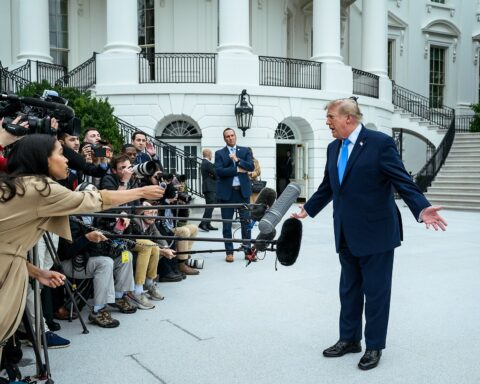
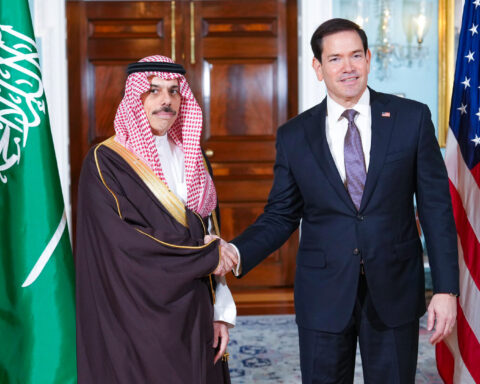
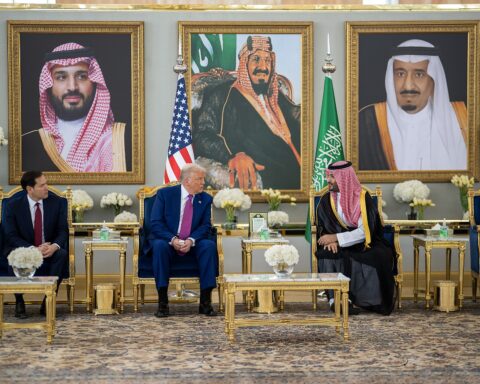
BEIRUT — Lebanon’s president told Iran on live television that it is using his country as a bargaining chip in nuclear negotiations with Washington — and then called the Saudi crown prince the same afternoon. Joseph Aoun’s words, delivered in a sit-down interview with CNN’s Christiane Amanpour at the presidential palace on June 5, 2026, were not a diplomatic accident; they were a deliberate three-axis intervention aimed simultaneously at Tehran, Washington, and the Gulf, and they landed four days before Iran is expected to formally reject Trump’s memorandum of understanding on June 9.
What makes the statement extraordinary is not what Aoun said — every Gulf foreign ministry has privately believed for months that Iran treats Lebanon as a condition of the MOU talks — but who said it. A Maronite Christian head of state can accuse Iran of exploiting Lebanon without triggering the sectarian coding that would neutralise the same accusation from Riyadh, Abu Dhabi, or Manama. Saudi Arabia’s foreign ministry has been publicly silent on the Iran war track for more than sixteen days. It did not need to break that silence on June 5, because Aoun broke it for them — and Riyadh’s state broadcaster, Al-Arabiya, carried the quotes without adding a single word of its own.
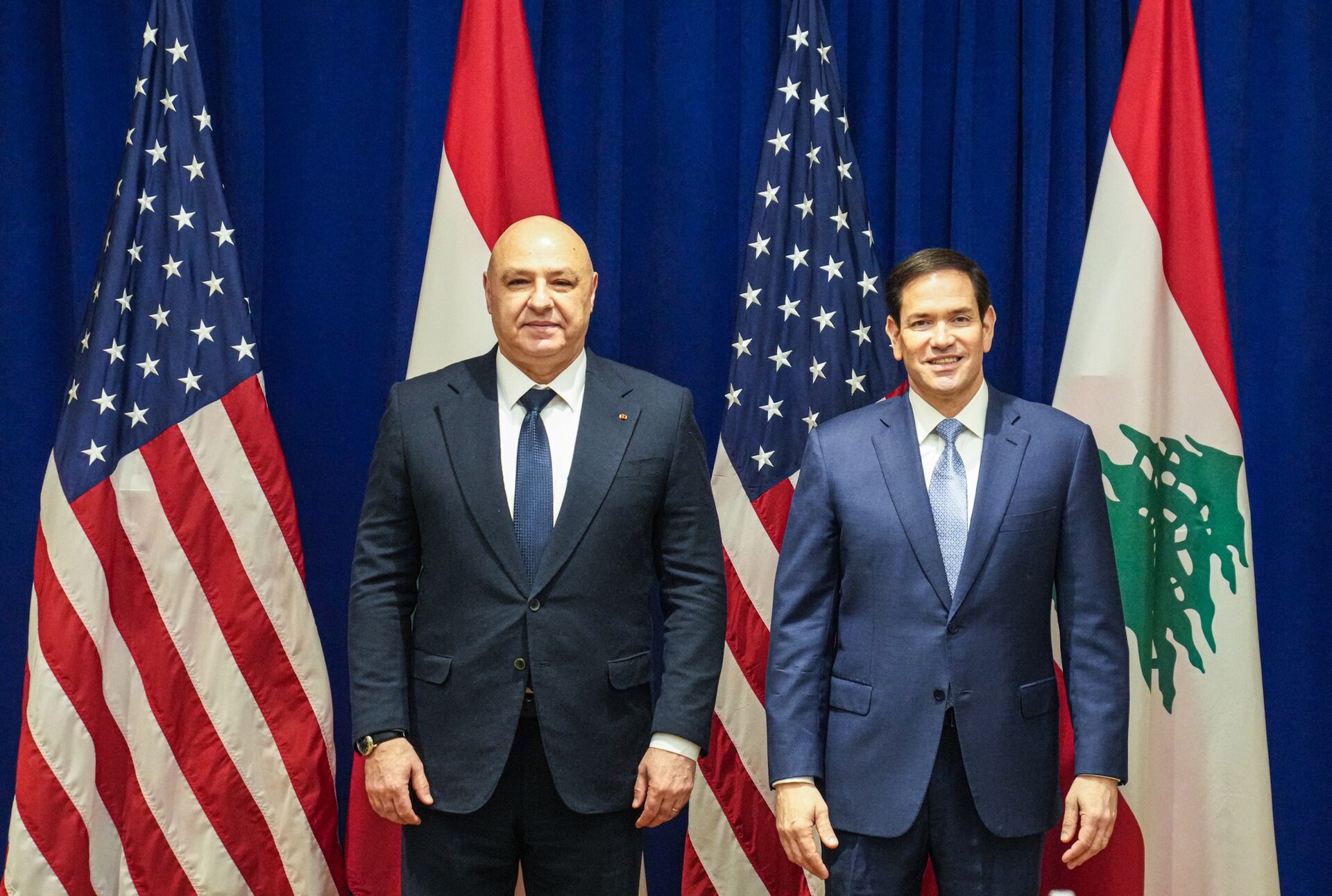
Table of Contents
- What Did Aoun Actually Say?
- Salam Said It Too — and Went Further
- Why Has Saudi Arabia’s Foreign Ministry Been Silent for Sixteen Days?
- The Al-Arabiya Amplification Architecture
- Why Can’t Gulf States Make This Accusation Themselves?
- How Did Iran Validate Aoun’s Accusation?
- Hezbollah Rejected the Ceasefire It Was Never Asked to Sign
- Aoun Has Been Building to This Since August 2025
- What Converges on June 9?
- The Taif Play: Saudi Arabia’s Quiet Return to Lebanon
- Frequently Asked Questions
What Did Aoun Actually Say?
Aoun accused Iran of using Lebanon as a bargaining chip in its nuclear negotiations with Washington, told the IRGC directly that Lebanon is “our country” and not theirs, and said the Lebanese people are paying the price for Iranian interests that do not coincide with their own. He delivered the statement in a sit-down interview with Christiane Amanpour at the presidential palace in Beirut on June 5, 2026 — a format that gave his words the weight of a deliberate head-of-state declaration rather than a reactive soundbite, and a venue — the Baabda Palace, seat of Lebanese sovereignty — that was itself a signal to every diplomat watching that this was constitutional authority speaking, not factional grievance.
The full force of Aoun’s language only registers when you hear it in sequence, because the escalation within the interview is itself the argument. “You are not trying to help us,” he said, addressing Iranian officials and the IRGC. “The people of Lebanon are paying the price … for the sake of your own interest,” and then the line that will travel furthest and last longest in the diplomatic record: “Our interests … do not coincide with your interests.” That is not the language of a president managing a difficult regional partner — it is a public severing of the premise that Iran and Lebanon share any common cause in the current conflict, delivered in English on an American network from the seat of a state Iran claims to be defending.
Aoun added the register that gives the political statement its emotional weight: “We are fed up and we want to live in peace. They deserve to live in peace and in dignity, they deserve not seeing their homes being destroyed every five to 10 years.” The phrase “every five to 10 years” maps precisely onto the cycle of Israeli-Hezbollah wars that have devastated southern Lebanon since 2006, each fought on Lebanese soil while Iran supplied the weapons and Israel supplied the ordnance, each ending with a reconstruction bill paid by the Lebanese state and its international donors rather than by Tehran or Hezbollah. That Aoun chose CNN over Al-Mayadeen or any Arabic-language outlet tells you who the intended primary audience was: Washington, European capitals, and the Gulf states whose foreign ministries have been unable to say what he just said for them.
Salam Said It Too — and Went Further
Lebanese Prime Minister Nawaf Salam — a Sunni Muslim and former president of the International Court of Justice, which gives his words a particular juridical gravity — issued a parallel statement on the same day that used the identical “bargaining chip” formulation and then went a critical step beyond what Aoun had said. “If I may address a word to Iran, it is this,” Salam said, per Naharnet: “have mercy on our south, stop treating it and its people as merely a bargaining chip to improve the terms of your negotiations.” The echo was not accidental — two men occupying the two highest offices in Lebanon’s confessional system used the same phrase on the same day, which means the language was coordinated before it was delivered, and the coordination itself is a political act that Gulf capitals would have noticed immediately.
The Middle East briefing 3,000+ readers start their day with.
One email. Every weekday morning. Free.
Where Aoun focused on the structural complaint — Iran is using Lebanon as a negotiating instrument — Salam named a specific trigger that made the accusation concrete, testable, and politically devastating. “The Lebanese people were surprised to find that Iran was the very first party to reject the ceasefire,” Salam said, per Naharnet, adding the conclusion Aoun had left implied: “this confirms that this war is not ours and it is not being fought for our sake — but rather on our land and at the expense of our people.” The word “surprised” is doing diplomatic work that deserves close attention — it implies that the Lebanese government, which had just signed a ceasefire designed to end the destruction of its own territory, expected Iran to welcome the deal and discovered instead that Tehran had its own reasons for wanting the war to continue, reasons that had nothing to do with Lebanese interests and everything to do with the nuclear negotiations Iran was conducting with Washington.
The confessional dimension of this dual statement is what makes it structurally significant far beyond Lebanon’s borders. Aoun is a Maronite Christian, as Lebanon’s president must be under the Taif Agreement of 1989; Salam is Sunni, as the prime minister must be. When both accuse Iran of using Lebanon as a bargaining chip on the same day — the president on CNN, the prime minister through Naharnet — the accusation cannot be dismissed as sectarian, cannot be framed as Sunni hostility toward Shia Iran, cannot be redirected into the region’s oldest and most weaponised religious divide. It is the Lebanese state speaking across its own internal confessional boundary, and that cross-sectarian unity is precisely the kind of legitimacy that the overwhelmingly Sunni governments of the Gulf cannot generate on their own when confronting a Shia regional power.
Why Has Saudi Arabia’s Foreign Ministry Been Silent for Sixteen Days?
Saudi Arabia’s Ministry of Foreign Affairs has issued no public statement on the Iran war track in more than sixteen days, and the kingdom has been excluded from all three active channels through which Hormuz negotiations are being conducted — the US-Iran channel, the Omani back-channel, and the UK-France maritime coordination centred at Northwood. Riyadh’s only recorded contact with Lebanese leadership on June 5 was a phone call between Crown Prince Mohammed bin Salman and Aoun, in which, per the Saudi Press Agency, the two men discussed “political and field developments as well as efforts aimed at establishing security and stability” and Aoun expressed gratitude for “Saudi Arabia’s positions toward Lebanon.” Iran appeared nowhere in the readout, and no separate Saudi foreign ministry statement addressed Aoun’s CNN remarks.
The silence is not passive — it is the product of a structural position in which Saudi Arabia has no good options for public speech on this particular issue and several catastrophic ones. Riyadh cannot publicly confront Iran’s use of Lebanon as a negotiating condition without inviting the sectarian framing that Tehran is extremely skilled at deploying to delegitimise Arab complaints. It cannot publicly acknowledge its exclusion from the Hormuz negotiating tracks — all three of them — without advertising its own diminished position at the worst possible moment, four days before the June 9 convergence of MOU formal rejection, Aramco’s $21.89 billion dividend payment against just $18.6 billion in free cash flow, and the aftermath of the OPEC+ ministerial.
Aoun’s June 5 statement resolves this problem without requiring Riyadh to act. A Maronite Christian president, speaking from the Baabda Palace, backed by his Sunni prime minister, accusing Iran of treating Lebanon as a negotiating chip — this is the exact formulation Saudi Arabia needed, generated by the exact person Riyadh could not have asked to generate it without compromising the message’s credibility. This is not the first time the kingdom has relied on a third party to deliver a message it could not send itself: when Riyadh needed the Hormuz freedom-of-navigation argument made to an international audience, it was France that carried the message — MBS called Macron on May 31 to discuss “maritime navigation security and freedom” while the Saudi MOFA remained silent. The Aoun interview follows the same architecture: a foreign leader says on the record what Saudi Arabia needs said, Riyadh amplifies through its media ecosystem without generating new diplomatic text, and the kingdom’s fingerprints remain invisible to anyone not tracking the sequence of calls, readouts, and headlines.
The Al-Arabiya Amplification Architecture
Al-Arabiya — Saudi Arabia’s Arabic-language state broadcaster, the outlet that tracks the kingdom’s foreign policy editorial line as reliably as any official communiqué — ran the Aoun story under a headline more aggressive than anything Riyadh itself has said publicly about Iran in months: “Lebanese president slams Iran, Hezbollah, and IRGC: It’s not your country, it’s ours.” The disaggregation in that headline — naming Iran, Hezbollah, and IRGC as three separate entities rather than a single bloc — matches the analytical targeting Saudi intelligence prefers when it wants to isolate Hezbollah as an armed non-state actor distinct from the Iranian state. It signals that Riyadh’s editorial apparatus was not merely relaying the CNN interview but actively sharpening its language for a different audience and a different purpose.
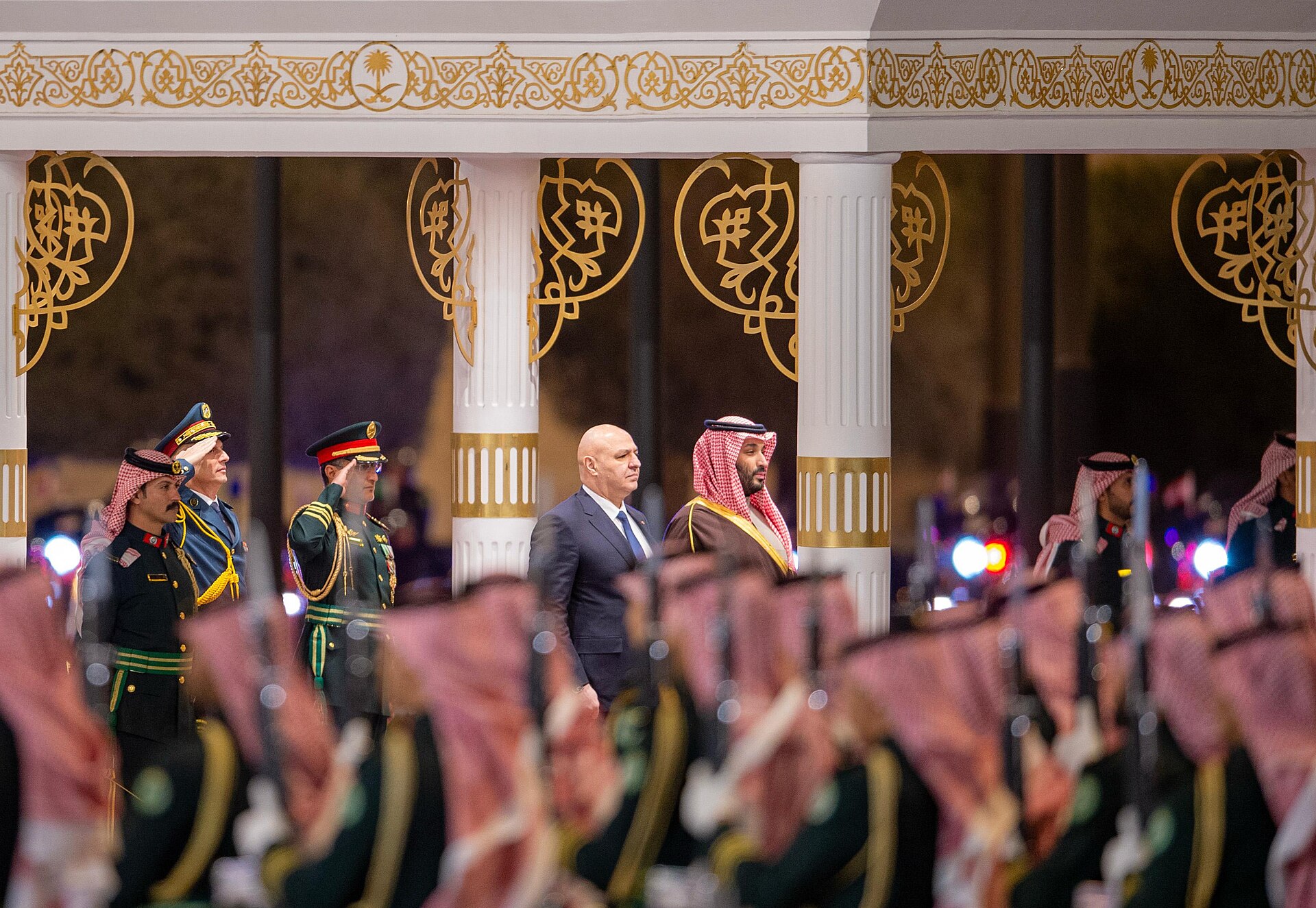
Arab News, the kingdom’s English-language broadsheet, chose a different register: “President Aoun tells Iran ‘not your job to interfere’ in Lebanon.” The phrase “not your job to interfere” extends beyond what Aoun actually said in the CNN interview — he told Iran “it’s not your country, it’s our country,” which is a sovereignty claim, but Arab News reframed it as an anti-interference instruction, adding an assertion that was implicit in Aoun’s language but that the Saudi outlet decided to make explicit. The gap between what Aoun said and how Saudi-owned media headlined it is the gap between a source statement and its editorial amplification, and it tells you that Saudi-owned media was not passively reporting the story but actively constructing framings that served Riyadh’s diplomatic interests without anyone in the Saudi foreign ministry having to commit a single original word to the diplomatic record.
| Outlet | Ownership | Headline Framing | Editorial Register |
|---|---|---|---|
| CNN | US / independent | Primary source — Amanpour exclusive | Neutral interview format |
| Reuters | Independent wire | “Iran Using Lebanon as Bargaining Chip in US Talks, Lebanese President Says” | Quote-led, factual |
| Al Jazeera | Qatar state | “Lebanon’s president criticises Iran amid Israeli attacks” | Softened — contextualised with Israeli attacks |
| Asharq Al-Awsat | Saudi-owned | “Lebanese President, PM Say Iran Using Lebanon as Bargaining Chip in US Talks” | Dual-executive framing — named both leaders |
| Al-Arabiya | Saudi state broadcaster | “Slams Iran, Hezbollah, and IRGC: It’s not your country, it’s ours” | Most aggressive — institutional disaggregation |
| Arab News | Saudi state | “Tells Iran ‘not your job to interfere’ in Lebanon” | Extended sovereignty assertion beyond CNN source |
| bne IntelliNews | Independent | Connected Aoun to broader Saudi Lebanon strategy | Only outlet linking to Saudi diplomatic campaign |
The table makes visible what would otherwise remain inference: the three Saudi-aligned outlets each chose framings more aggressive than the CNN source material, each in a distinct way — Al-Arabiya disaggregated the adversary into three named institutions, Arab News added a sovereignty register the interview itself had not used, and Asharq Al-Awsat elevated the dual-executive dimension by naming both Aoun and Salam in the headline. Al Jazeera, by contrast, softened the confrontation by contextualising it with Israeli attacks — Qatar’s standard editorial approach to any story that might embarrass Tehran. Only bne IntelliNews connected Aoun’s statement to what it identified as a deliberate Saudi campaign in Lebanon, calling it Saudi Arabia’s “most intensive diplomatic engagement with Lebanon in years.”
Why Can’t Gulf States Make This Accusation Themselves?
The structural problem for Saudi Arabia — and for every Sunni-majority Gulf state that has watched Iran embed Hezbollah deeper into Lebanese governance over the past two decades — is that any public accusation that Iran is “using Lebanon” carries an inescapable sectarian charge when it comes from a Sunni Arab government. The accusation reads as Sunni versus Shia, as Arab versus Persian, as a power play dressed in the language of sovereignty, and Iran’s diplomatic apparatus is extremely skilled at redirecting that framing to delegitimise the complaint rather than address its substance. When a Gulf foreign ministry says Iran is exploiting Lebanon, Tehran responds that the Gulf is waging sectarian war against Shia resistance; when a Maronite Christian president of Lebanon says the same thing from the Baabda Palace, wearing the constitutional authority of a confessional system Iran itself has never challenged, there is no sectarian frame available to absorb the blow.
Aoun occupies a structural position that no Gulf leader can replicate, and the position is load-bearing in ways that go beyond symbolism. He is a Maronite Christian, as the Taif Agreement requires Lebanon’s president to be — the same Taif Agreement that Saudi Arabia brokered in 1989, that is named after a Saudi city, and that mandated the disbanding of all armed militias with their weapons surrendered to the Lebanese Armed Forces. Hezbollah refused to disarm under Taif, arguing the accord did not apply to a “resistance” movement, and thirty-seven years later its arsenal dwarfs the Lebanese state’s own military capacity. When Aoun says “it’s not your country, it’s our country,” he is speaking not just as a president but as the former commander of those same armed forces — a man who ran the institution that Taif was supposed to empower and who knows precisely what it means, in operational terms, that Hezbollah has more firepower than the army he once led.
How Did Iran Validate Aoun’s Accusation?
The most damaging response to Aoun’s “bargaining chip” accusation came not from Tehran’s critics but from Tehran itself. On June 5 — the same day Aoun spoke — Iran’s Foreign Minister Abbas Araghchi told Al-Mayadeen that “there is currently no formal process of negotiations between Iran and the United States, but messages are still being exchanged.” His spokesman, Esmaeil Baghaei, explained the stall: “a lack of trust, Washington’s contradictory positions and Israel’s attacks on Lebanon.” That final clause is the validation — by citing “Israel’s attacks on Lebanon” as a reason for the breakdown in nuclear negotiations, Baghaei confirmed on the record that Iran’s nuclear and MOU track is conditionally linked to Lebanon outcomes, which is exactly what Aoun accused Iran of doing.
Araghchi’s standard formulation, maintained since at least June 1, has been “violation on all fronts including Lebanon.” Tasnim, the IRGC-affiliated outlet, reported that Iran had suspended all mediator-routed exchanges with Washington citing the same Lebanon linkage. Iran’s own diplomatic language locks the Hormuz track, the MOU track, and the Lebanon track together in a single conditional chain — and when a Lebanese president says Tehran is “using Lebanon as a bargaining chip,” he is not speculating but paraphrasing Iran’s stated position. The conjunction of Washington’s positions and Israel’s Lebanon operations, presented by Baghaei as equivalent explanations for the same negotiating stall, means Iran is treating Israeli military action in Lebanon as a direct input to its nuclear negotiating timeline, creating one of those rare moments in international diplomacy where the accused validates the charge in the course of denying it.
The institutional routing made the picture worse. It was Tasnim — the IRGC outlet, not the foreign ministry’s IRNA — that carried the suspension of exchanges with the US and that routed IRGC Quds Force commander Esmail Qaani’s June 4 statement rejecting the Lebanon-Israel ceasefire. When the IRGC wants to establish a position distinct from the presidency, it uses Tasnim; when the presidency wants deniability, it lets the military outlet speak first. The result is that Iran’s institutional hardliners, not its diplomatic corps, are setting Lebanon policy — and the US Treasury has assessed that those same hardliners, through the IRGC Quds Force, transferred over $1 billion to Hezbollah in 2026 alone, making Hezbollah’s rejection of the ceasefire structurally inseparable from IRGC direction.
Perhaps the most telling detail is what did not happen: as of June 5, no Iranian state media outlet — neither IRNA, nor Tasnim, nor PressTV — had published a direct response to Aoun’s CNN interview. Tehran declined to engage, consistent with its institutional preference to route all Lebanon-related messaging through Hezbollah rather than respond to the Lebanese government as though it were a counterparty worth acknowledging. The silence is its own kind of statement — Iran does not regard the Baabda Palace as a relevant interlocutor on what happens in Lebanon, which is precisely the denial of sovereignty that Aoun accused Iran of practising and that his interview was designed to make internationally visible.
Hezbollah Rejected the Ceasefire It Was Never Asked to Sign
The Lebanon-Israel ceasefire reached on June 4 — negotiated between the Lebanese government, Israel, and the United States — reproduced the identical structural flaw that made the November 2024 ceasefire collapse after fifteen months: Hezbollah was not a signatory. The armed group that controls the territory the ceasefire is supposed to cover, that commands more firepower than the Lebanese Armed Forces, and that receives over $1 billion a year from the IRGC Quds Force was named in the agreement as a condition rather than a party — meaning the ceasefire depends on Hezbollah’s compliance without having secured Hezbollah’s consent, the same architecture that failed between November 2024 and March 2026 and that both sides chose to replicate rather than repair.
Secretary-General Naim Qassem made Hezbollah’s position unambiguous within hours, calling the ceasefire “absurd, humiliating and insulting” and describing it as “a roadmap to annihilate part of the Lebanese people.” A Hezbollah official told NPR that the organisation “had officially informed the Lebanese president that it would not accept any ceasefire that did not begin with the withdrawal of Israeli forces from south Lebanon” — a precondition Israel has shown no willingness to meet and that the June 4 agreement, with its vague “pilot zones” and total absence of any IDF withdrawal timeline, conspicuously failed to include. As this publication noted when Hezbollah rejected the ceasefire, the IRGC needed Hezbollah’s rejection to keep the MOU track conditioned on Lebanon outcomes — the Lebanon file must remain open for Iran’s nuclear negotiating architecture to function as designed.
Aoun’s June 5 CNN interview, delivered less than twenty-four hours after Qassem’s rejection, reads differently against that backdrop — not as a spontaneous expression of presidential frustration but as a calculated response by the head of state whose government signed a ceasefire only to watch it immediately repudiated by the armed group Iran funds, directs, and has provisioned to the tune of over a billion dollars in 2026 alone. When Aoun said the Lebanese people are “fed up” and “deserve to live in peace and in dignity,” he was speaking as the president who signed the deal Hezbollah refused, and when he accused Iran of using Lebanon as a bargaining chip, he was diagnosing why Hezbollah refused it: because Iran needs the Lebanon file open as a condition of the nuclear talks, and a functioning ceasefire would close it.
Aoun Has Been Building to This Since August 2025
The CNN interview was not an isolated act of defiance — Aoun has been constructing this sovereignty posture methodically since he was elected by parliament in January 2025, ending a two-year presidential vacancy that left Lebanon without a head of state. As a former commander of the Lebanese Armed Forces, he arrived in the presidency with a military officer’s institutional commitment to the state monopoly on the use of force, the principle that Hezbollah’s existence structurally violates. The documented escalation began in August 2025, when Iran’s SNSC Secretary Ali Larijani visited Beirut and Aoun told him directly that “Lebanon is willing to cooperate with Iran within the limits of sovereignty and friendship based on mutual respect” — diplomatic language that sounds accommodating until you note the phrase “within the limits of sovereignty,” which is a polite way of telling Iran that its current relationship with Lebanon exceeds those limits.
Aoun then told Larijani that “the language Lebanon has heard recently from some Iranian officials is unhelpful” — a rebuke delivered in person, to a senior IRGC-aligned official, in the presidential palace — and the International Crisis Group recorded that he also said decisions concerning Hezbollah’s arsenal were “a Lebanese decision and does not concern Iran,” a direct assertion that Tehran has no standing in what it considers its most important regional asset. The Times of Israel headlined the August meeting: “Openly defying Iran, Lebanon’s Aoun says no armed groups allowed in country.” From August 2025’s “within the limits of sovereignty” to June 2026’s “it’s not your country, it’s our country,” the trajectory is a controlled escalation — each statement sharper, each audience larger, each venue more international.
| Date | Counterpart / Venue | Key Language | Audience |
|---|---|---|---|
| August 13, 2025 | Ali Larijani, Baabda Palace | “Within the limits of sovereignty”; “language from some Iranian officials is unhelpful”; Hezbollah’s arsenal “a Lebanese decision” | Tehran / domestic |
| May 2026 | Marco Rubio, phone call | Thanked US for ceasefire efforts | Washington |
| June 5, 2026 | CNN Amanpour, Baabda Palace | “Bargaining chip”; “it’s not your country, it’s our country”; “our interests do not coincide” | International / Gulf / Washington |
| June 5, 2026 | MBS, phone call | Thanked Saudi Arabia for “positions toward Lebanon” | Riyadh |
Aoun’s prior coordination with Rubio during the May ceasefire push, in which he thanked Washington for its efforts, confirms that the CNN interview completed the third axis of a deliberate three-front diplomatic campaign: assert Lebanese sovereignty against Iran, maintain the relationship with Washington, and provide Gulf allies with usable language — all without crossing the line into a direct military confrontation with Hezbollah that the Lebanese Armed Forces cannot sustain. The escalation from private diplomatic rebuke to international television accusation, over ten months, is itself the argument that June 5 was a strategic decision rather than a spontaneous outburst.
What Converges on June 9?
Four days after Aoun’s CNN interview, three tracks converge on the same date in a triple convergence that will force several of the region’s deferred decisions into simultaneous resolution. Iran is expected to formally reject Trump’s MOU proposal — moving beyond the Tasnim-routed “suspension” of June 1 to an outright refusal, likely accompanied by an Omani-brokered counteroffer. Aramco’s $21.89 billion quarterly dividend payment comes due the same day, against free cash flow of just $18.6 billion — a coverage ratio of 0.85x that means Saudi Arabia is paying more to shareholders than the company generates in cash. And the aftermath of the June 7 OPEC+ ministerial will still be reverberating through a crude market where Brent sits roughly $13-16 per barrel below Saudi Arabia’s $108-111 breakeven.
The MOU rejection, if it comes, will confirm what Aoun’s statement already implied: Iran’s negotiating position treats Lebanon as a structural precondition, not a peripheral concern. Araghchi’s “violation on all fronts including Lebanon” formulation means that any formal rejection will cite Lebanon among its justifications, and Aoun will have pre-empted that citation by four days — the Lebanese president will be on record saying Iran is using his country as a bargaining chip before Iran formally deploys Lebanon as one, a sequencing advantage that transforms Aoun from a bystander into a named objector.
For Saudi Arabia, the June 9 convergence compounds the cost of silence. The kingdom’s private de-escalation track with Iran — the only bilateral channel Riyadh maintains outside the three tracks from which it has been excluded — becomes the sole remaining instrument if the MOU dies. Aoun’s public break with Iran gives that private track a new piece of raw material: Riyadh can point to the Lebanese state’s own position as evidence that Iran’s Lebanon precondition is not a legitimate security concern but a negotiating tactic, without having to make the argument in its own voice. That is the operational value of what happened on June 5 — not a change in Saudi Arabia’s negotiating position, but a change in the available vocabulary.
The Taif Play: Saudi Arabia’s Quiet Return to Lebanon
Beneath the headline drama of Aoun’s CNN interview, a slower and potentially more consequential Saudi diplomatic effort is underway. According to bne IntelliNews, Saudi Arabia has been “deploying a royal envoy to Beirut” and invoking the 1989 Taif Agreement as the political framework for eventually disarming Hezbollah — what the outlet described as the kingdom’s “most intensive diplomatic engagement with Lebanon in years.” The Taif Agreement is Saudi Arabia’s original claim to Lebanon: negotiated in the Saudi city of Taif in 1989, it ended the civil war and mandated the disbanding of all armed militias, leaving the Lebanese Armed Forces as the sole legitimate armed force. Hezbollah refused to disarm, arguing it was a resistance movement rather than a militia, and that argument has survived for nearly four decades through a combination of Iranian financing, Syrian political cover until 2005, and the reluctance of successive Lebanese governments to enforce a provision they lacked the military capacity to impose.
By invoking Taif now, Riyadh is doing something structurally different from its previous Lebanon engagements — it is not offering conditional aid packages, threatening economic pressure as it did with the 2017 Hariri affair, or working through Sunni political proxies. It is appealing to an international agreement that Saudi Arabia itself brokered, one that has UN endorsement and that Aoun, as a former army commander, is institutionally committed to enforcing. The Carnegie Endowment captured the trap that makes Taif enforcement so difficult: the Lebanese state is “caught between an adversary, Israel, that denies Lebanon’s sovereignty and an armed domestic actor, Hezbollah, that can only continue to operate effectively in a context in which such sovereignty remains incomplete.” Aoun’s CNN interview functions as a public restatement of the Taif principle — that only the state bears arms, that foreign powers do not dictate Lebanon’s security posture — delivered by the one Lebanese official with both the institutional authority and the personal biography to make it credible.
“The Lebanese people were surprised to find that Iran was the very first party to reject the ceasefire; this confirms that this war is not ours and it is not being fought for our sake — but rather on our land and at the expense of our people.”
— Nawaf Salam, Prime Minister of Lebanon, June 5, 2026 (Naharnet)
When Aoun told Amanpour that Lebanon’s people are “fed up” and “deserve not seeing their homes being destroyed every five to 10 years,” he was using language that no Gulf foreign minister could deploy — not because the observation is false, but because the messenger would discredit the message. Saudi Arabia has spent decades treating Lebanon as a chessboard; Aoun can accuse Iran of the same thing because no one in Tehran can frame a Maronite president who commanded the Lebanese army as Riyadh’s ventriloquist. And because the accusation — that Iran treats Lebanon as a means to an end rather than a country with its own interests — becomes harder to deny every time Araghchi says “including Lebanon” in the same sentence as Hormuz and the MOU.
Four days from now, on June 9, Iran is expected to formally reject the Trump MOU. When it does, Lebanon will be cited among the justifications. A Lebanese president will already be on the record saying: that is not Lebanon’s war, those are not Lebanon’s interests, and Iran does not speak for the people whose homes are being destroyed. Tehran will find that harder to route around than any communiqué Riyadh could have written.
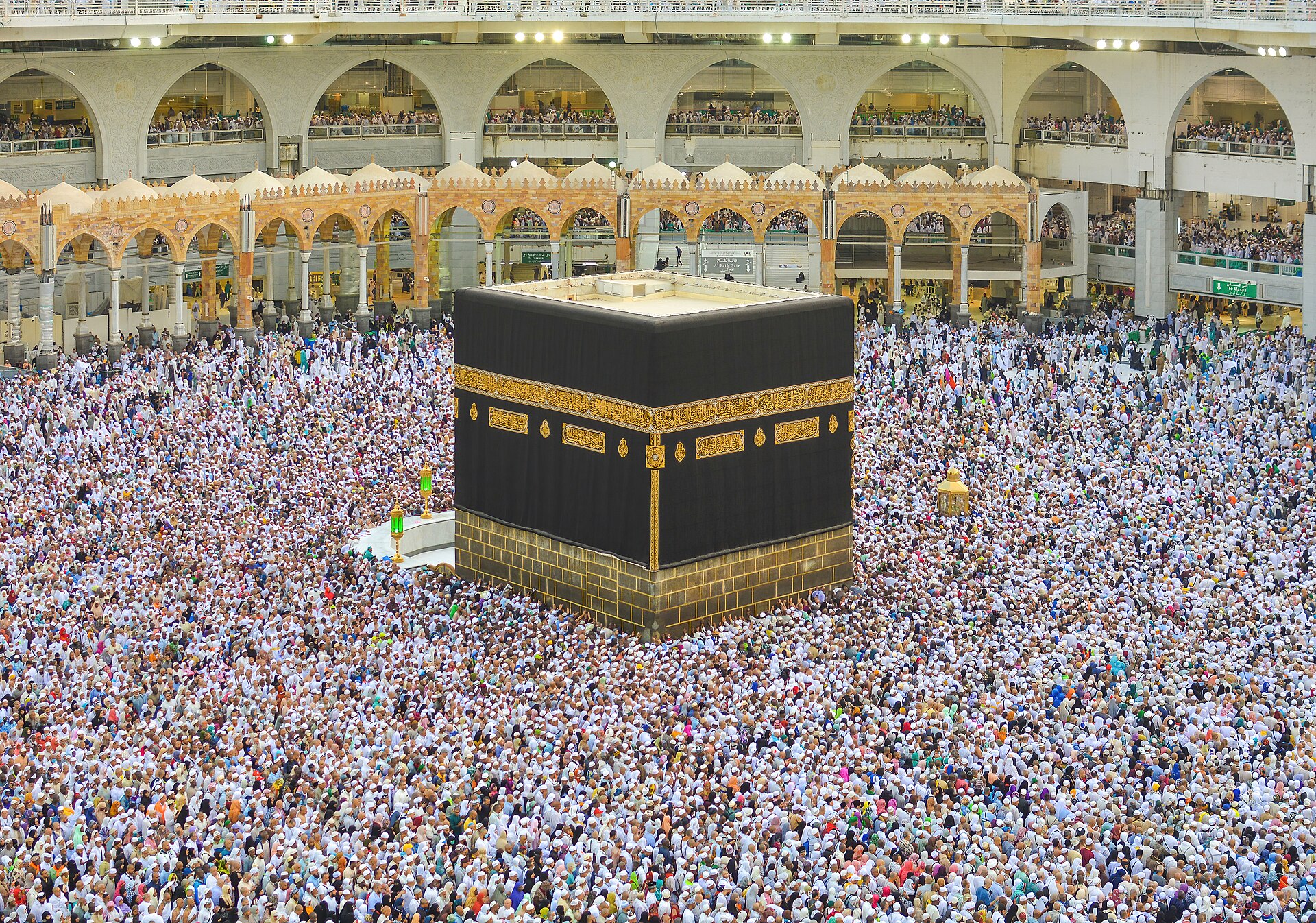
Iran exercised comparable leverage through a separate channel the same week. At Hajj 2026, Iran’s Hajj quota collapse — 30,000 of 87,550 pilgrims — was attributed by IRNA to the “wartime situation”, placing that framing inside the one institution Saudi Arabia administers as custodian of Islam’s holiest sites. Where Aoun’s statement addressed Tehran directly, Iran’s Hajj signal addressed the 1.7 million pilgrims from 165 countries assembled on Saudi sovereign territory. Six days after the Aoun-MBS call, the diplomatic runway it started landed: on June 11, Riyadh lifted the Lebanon trade ban — a $230 million concession delivered on the same day the IRGC struck eighteen GCC targets, and the last confirmed Saudi diplomatic act of the day.
Frequently Asked Questions
Why did Aoun choose CNN’s Amanpour rather than a Lebanese or Arab outlet?
The choice of venue was itself a diplomatic signal. Amanpour’s programme reaches Washington policy audiences, European foreign ministries, and UN decision-makers — demographics that Lebanese or Arab outlets cannot deliver at the same scale. Aoun had already used the domestic register with Larijani in August 2025 and the bilateral channel with Rubio in May 2026; the CNN interview completed the third axis by addressing the international community directly, from a presidential palace setting that gave his words institutional weight a press conference or social media post could not carry.
Has Iran responded to Aoun’s June 5 statement?
As of June 5, no direct Iranian state response appeared on IRNA (the official state news agency), Tasnim (IRGC-affiliated), or PressTV (English-language state media). This silence follows the same pattern as Aoun’s August 2025 confrontation with SNSC Secretary Ali Larijani, when Aoun told Larijani to his face that Iranian officials’ language was “unhelpful” and that only the Lebanese state was permitted to bear arms — a confrontation that also drew no formal Iranian government response despite extensive coverage by Western and Israeli media. Iran’s institutional approach to Lebanese sovereignty claims is to treat them as beneath direct engagement, routing any response through Hezbollah rather than acknowledging the Baabda Palace as a relevant interlocutor — a pattern that itself reinforces Aoun’s accusation, since it treats the Lebanese state as secondary to Iran’s own proxy. Tehran may have calculated that any formal rebuttal would elevate Aoun’s statement to the status of a bilateral dispute, which is precisely the standing Iran prefers to deny Lebanon.
What is the Taif Agreement and why is Saudi Arabia invoking it now?
The Taif Agreement — formally the Document of National Accord — was negotiated in Taif, Saudi Arabia in September 1989 and ratified by the Lebanese parliament that November, ending fifteen years of civil war and establishing the confessional power-sharing system that assigns the presidency to a Maronite Christian, the premiership to a Sunni Muslim, and the speakership to a Shia Muslim. Its most consequential unfulfilled provision mandated the dissolution of all militias with their weapons surrendered to the state — a clause Hezbollah has refused to implement for thirty-seven years, initially claiming exemption as a “resistance” force and later arguing its arsenal served as deterrence against Israel. Saudi Arabia’s decision to invoke Taif explicitly now — deploying a royal envoy and framing Hezbollah disarmament as constitutional implementation — signals that Riyadh regards the push not as a new demand but as the enforcement of an agreement it brokered, giving the effort a constitutional legitimacy that a unilateral Saudi position would lack and creating a framework Aoun, as the Taif-mandated Maronite president, is constitutionally positioned to enforce.
Could Aoun’s statement affect the Iran MOU negotiations?
Directly, no — Aoun has no seat at the MOU table, and Lebanon is not a party to US-Iran negotiations. Indirectly, the statement complicates Iran’s use of Lebanon as a precondition by providing a named, on-the-record objection from the country Iran claims to be defending. When Iran’s formal MOU rejection arrives — expected June 9 — and cites “violation on all fronts including Lebanon,” the US and Gulf states can point to the Lebanese president’s own words as evidence that Lebanon does not endorse being deployed as a precondition in that capacity. This does not change the power dynamics between Washington and Tehran, but it degrades the legitimacy of Iran’s Lebanon conditionality in third-party forums — the UN Security Council, the IAEA Board, and the bilateral channels through which Oman and Pakistan have been brokering — where stated framing carries real weight.
What is Saudi Arabia’s current diplomatic relationship with Lebanon?
Saudi Arabia recalled its ambassador from Beirut in October 2021 after then-Information Minister George Kordahi criticised the Saudi-led coalition in Yemen, and relations remained frozen through the presidential vacancy of 2022-2025. Aoun’s election in January 2025 reopened the channel, and Saudi engagement has escalated markedly in 2026: a royal envoy deployed to Beirut, Taif invoked as a disarmament framework, and MBS personally taking Aoun’s call on June 5 — what bne IntelliNews described as the most active Saudi-Lebanese diplomacy since the 2017 Hariri crisis. The current approach is structurally different: Riyadh is working with rather than against the Lebanese executive, Aoun’s military background gives the relationship an institutional anchor that previous Saudi-Lebanese ties lacked, and the $8.6 billion emergency arms waiver that excluded Saudi Arabia makes this Lebanon channel one of the few diplomatic assets the kingdom is currently gaining rather than losing.