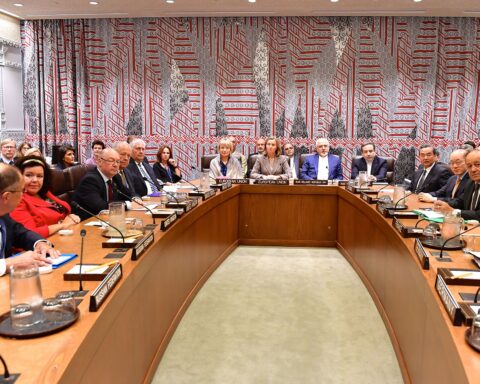
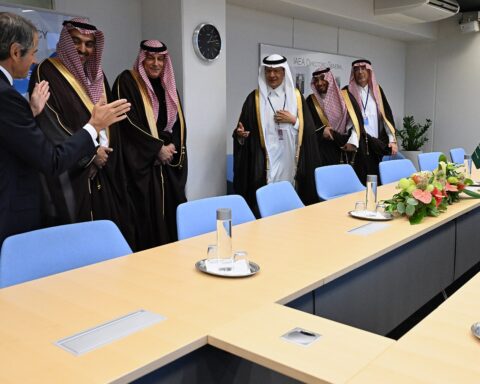
MUSCAT — Iran formally rejected the Trump administration’s memorandum of understanding on June 6, 2026, and simultaneously submitted an alternative proposal through Omani intermediaries, three days ahead of the June 9 convergence date that was expected to yield either a framework agreement or a definitive collapse. Iranian Foreign Ministry spokesperson Esmaeil Baghaei called the American draft “unacceptable and not aligned with ongoing negotiations.”
The counteroffer, filed through Muscat’s proximity-talks framework, inverts the sequencing Washington had demanded. Where the US draft opens with Hormuz — unrestricted passage, no tolls, mine removal within 30 days — Iran’s text begins with release of frozen assets, valued between $12 billion and $24 billion depending on the source. Saudi Arabia, which faces a $13–16 per barrel gap between Brent crude and its $108–111 fiscal breakeven, has no seat at any of the three active negotiation tracks and no confirmed diplomatic contact with either party since early May. When Iran fired its seven-missile dual-capital salvo the same day it filed the counteroffer, Riyadh’s verbal-only response contained zero punitive measures — 77 days after its last diplomatic action.
June 9 had carried three simultaneous events: Aramco’s $21.89 billion quarterly dividend payment, Iran’s expected formal rejection of the MOU, and the anticipated filing of an Omani counteroffer. By moving three days early, Iran collapsed the latter two into June 6 and separated them from the dividend date — leaving Saudi Arabia to pay shareholders on a day when the terms of the negotiation have already changed without its input.
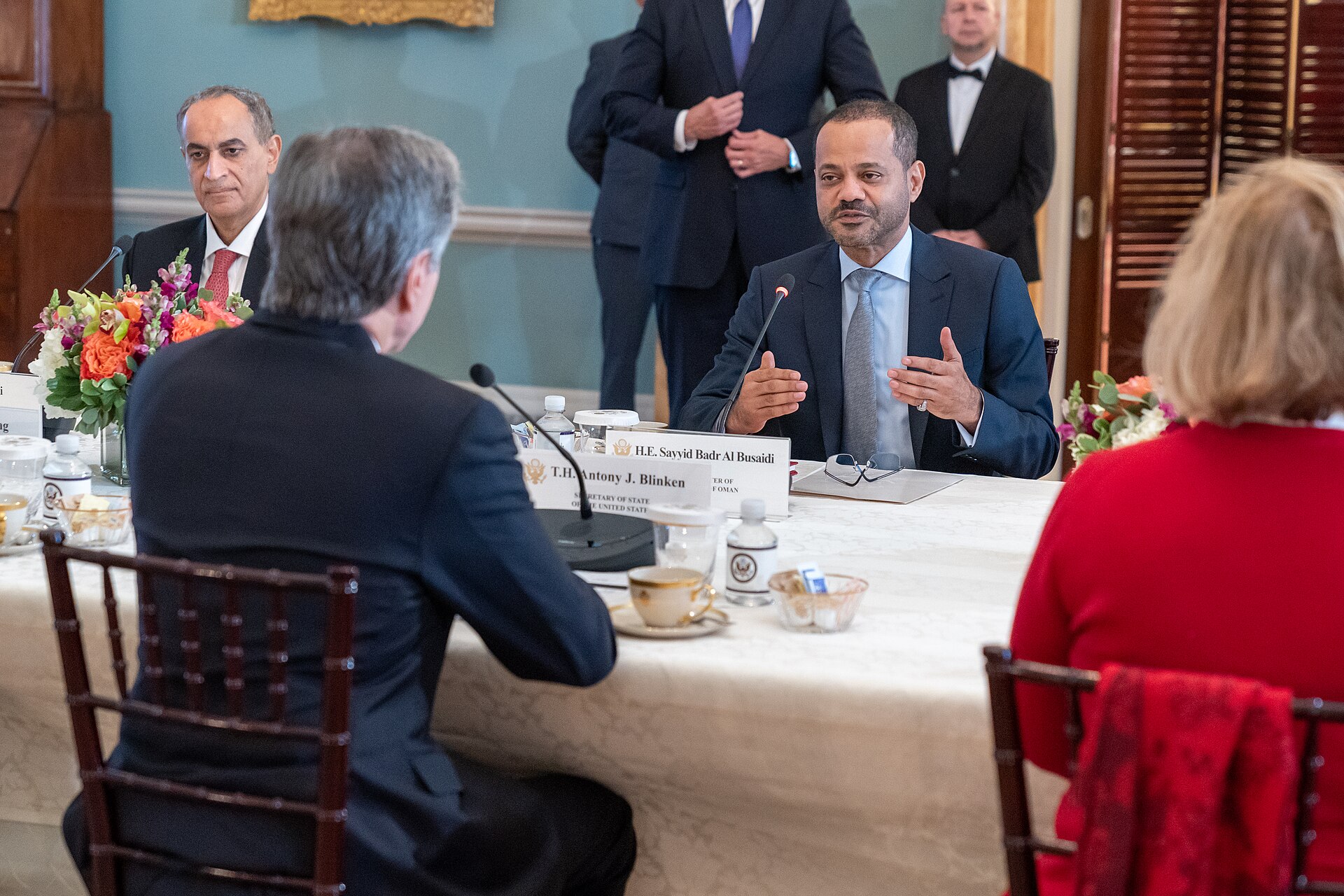
Table of Contents
What the Counteroffer Proposes
Iran’s text, relayed through Omani FM Badr bin Hamad Al Busaidi’s office, proposes a temporary reduction in uranium enrichment toward the JCPOA-era ceiling of 3.67% U-235 — the same threshold Tehran agreed to in 2015 and has since exceeded by enriching to 60%. Iran held approximately 275 kg of near-weapons-grade highly enriched uranium as of the last publicly available IAEA reporting date in early 2025, according to data cited by the Arms Control Association.
The reduction would come in phases, tied to Iran’s access to frozen assets held abroad. Sanctions relief and what Tehran frames as war reparations are deferred to subsequent stages.
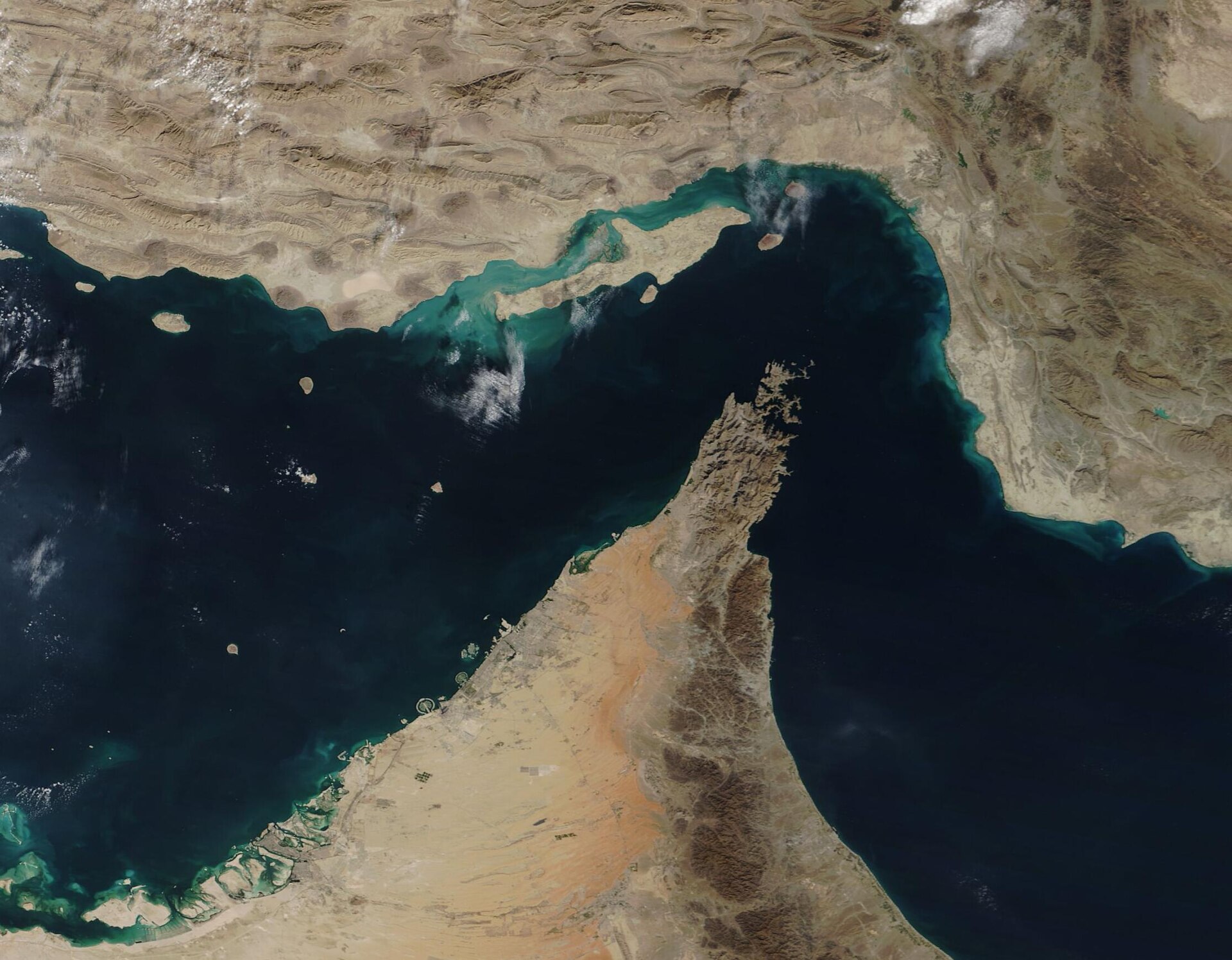
Baghaei has outlined Iran’s priorities in a specific sequence: ending the war, lifting the US naval blockade, releasing frozen assets, ensuring safe passage through the Strait of Hormuz, and restoring regional security. That ordering is the proposal’s architecture.
The Middle East briefing 3,000+ readers start their day with.
One email. Every weekday morning. Free.
“Iran has not reached a final understanding with the United States despite continued exchanges of messages and will wait to see whether Washington actually ends what Tehran calls an illegal naval blockade,” Baghaei said in a statement carried by Reuters. He added that Iran’s response to the US proposal “was not excessive” and that Washington continues to have “unreasonable demands.”
The text does not address the American demand for handover of Iran’s HEU stockpile. Mojtaba Khamenei, who holds final authority over Iran’s negotiating position, has said Iran will “guard” its “advanced technologies” like its own borders. Iran has also rejected full dismantlement of its nuclear facilities and the 20-year enrichment moratorium Washington proposed. Baghaei stated that decisions regarding “the nuclear issue, enriched materials and enrichment itself” would be announced “at the appropriate time.”
A military aide to the Supreme Leader told CNN that any peace deal depends on Washington releasing $24 billion in frozen Iranian assets. Iran International reported the number at $12 billion. The gap between the two figures — which may reflect different accounting for assets held in South Korea, Japan, Iraq, and European banks — has not been addressed by either government.
How Does the Sequencing Differ From Washington’s Framework?
The incompatibility between the two proposals is structural, not linguistic. Secretary of State Marco Rubio outlined the American framework at a Senate Foreign Relations Committee hearing on June 2: Phase 1 covers Hormuz exclusively — unrestricted commercial passage, no Persian Gulf Security Arrangement tolls, mine clearance within 30 days. The US lifts its port blockade and issues sanctions waivers in return. Phase 2, beginning 30 to 60 days after Phase 1 verification, addresses enrichment ceilings and HEU disposal.
Iran’s counteroffer inverts this. Frozen-assets release comes first — before any Hormuz action. The “relief for performance” principle Rubio articulated under oath is directly contradicted: Tehran demands relief before performance, on a timeline it sets. Rubio had also confirmed at the SFRC hearing that Mojtaba Khamenei was “increasingly engaging” through written intermediaries — the first open-session US acknowledgment of the courier architecture — and described a 6-to-8-person mixed IRGC-civilian advisory council around Khamenei, with Araghchi and parliament speaker Ghalibaf serving as messengers rather than decision-makers.
Iran had already reclassified Hormuz from a concession to an invoice in late May, demanding frozen-asset disbursement as an immediate precondition for any passage guarantees. The counteroffer formalizes that position. Rubio’s Phase 1 treats Hormuz as the entry point to a deal. Iran’s Phase 1 treats Hormuz as the reward for one. The US Treasury simultaneously announced plans to redirect those same frozen assets to Gulf reconstruction — reclassifying Iran’s entry fee as war reparations before Pakistan’s courier reached Tehran.
Treasury Plans to Seize Iranian Assets to Pay Gulf Allies for War Damage documents Bessent’s June 6 directive in full — including the legal gap between freezing and seizure, the geographic distribution of Iranian assets across seven jurisdictions, and the structural reason neither side can treat the same asset pool as a tradeable instrument while the other has filed a competing claim on it.
On enrichment, Iran has agreed to a suspension shorter than the 20-year moratorium the US proposed, CNBC reported on May 11. The counteroffer’s enrichment clause — a gradual return toward 3.67% from a current 60% baseline — occupies a space between the American demand for a two-decade halt and Iran’s operational posture. The JCPOA achieved the 3.67% ceiling in 2015. It took 12 years of negotiations, beginning with the Muscat backchannel, to get there.
The Eight Violations That Preceded the Rejection
The distance between the two drafts was quantified before the formal break. Mehdi Khanalizadeh, a state television commentator who traveled with Iran’s negotiating team to the Islamabad round, said on May 29 that the US MOU draft “breaches eight of 10 terms approved by Khamenei” and contradicts the Supreme National Security Council’s ceasefire statement. Which two conditions the US draft satisfied, Khanalizadeh did not say.
Washington amended the text on May 31, tightening language on HEU handover timing and Hormuz passage wording. Trump sent the revisions through a courier system reaching Mojtaba Khamenei in an underground facility. A senior US official described the communication architecture to Axios: Khamenei is “literally in caves, not using email.” The 72-hour courier window for a response elapsed without one.
Tasnim, the IRGC-linked news agency, had submitted its own amendments to the MOU draft on May 31 — one day before announcing on June 1 that Iran was suspending talks entirely. The stated justification was Israeli military operations in Lebanon. Foreign Minister Abbas Araghchi described the situation as “violation on all fronts including Lebanon.” The same day, Tasnim reported that Iran was prepared to “completely” block the Strait of Hormuz if the US did not meet Iranian demands.
Tasnim’s timeline is itself revealing. The agency called the MOU text “not yet finalised or confirmed” on May 28, submitted amendments on May 31, and announced a suspension on June 1. The amendments preceded the suspension. The counteroffer followed it.
The suspension lasted five days. The counteroffer filed June 6 is the resumption, routed through Muscat rather than Islamabad, on terms Tehran had been preparing throughout the pause.
Where Is Saudi Arabia?
Not in the room. The kingdom is excluded from all three active negotiation tracks: the US-Iran direct channel, the Omani mediation framework, and the UK-France maritime coordination operating from Northwood. FM Prince Faisal bin Farhan’s last confirmed contact with Iran’s Araghchi was May 6. His last confirmed conversation with Secretary Rubio was in February 2026. The Saudi MOFA has not issued a public statement on the US-Iran negotiations in over 10 days.
Saudi Arabia had built a private de-escalation track with Iran through Pakistani intermediaries. The counteroffer’s routing through Oman rather than Pakistan determines who controls the text, the pace, and the information flow going forward. Riyadh sees what Muscat chooses to share.
The June 9 date the rejection pre-empts carries direct Saudi fiscal exposure. Aramco’s Q1 2026 dividend of $21.89 billion — against free cash flow of $18.6 billion — is payable that day. Saudi Arabia’s Q1 deficit of SAR 125.7 billion ($33.5 billion) already represents 76% of the full-year target. The IMF conditioned Saudi Arabia’s recovery forecast on Hormuz normalizing in an Article IV consultation published June 3, the first time the Fund has applied chokepoint conditionality to any Gulf state.
If Phase 1 of a Hormuz deal materializes, the war premium embedded in Brent — Goldman Sachs estimates approximately $14 per barrel — evaporates. Brent would fall from its current level near $95 toward the $80–90 range Goldman projects for H2 2026, widening Saudi Arabia’s gap to its fiscal breakeven from $13–16 per barrel to $18–31. The dividend’s 1.18x payout ratio requires either debt or reserve drawdowns to cover. The payment proceeds on June 9 regardless of what Muscat produces.
Al Arabiya, the Saudi state-aligned broadcaster, has not covered the counteroffer. The silence is consistent with a pattern that has held since late May: no Saudi media outlet has engaged with the substance of the US-Iran MOU texts.
The Oman Channel
Oman’s structured backchannel began in 2009 when FM Yusuf bin Alawi offered secure facilities for direct dialogue. Eight rounds of secret negotiations in Muscat between 2012 and 2013 — detailed by then-Deputy Secretary William Burns in his memoirs — evolved into the JCPOA framework signed in Vienna in 2015.
The current format is proximity talks. Iranian and American delegations sit in separate rooms. Omani intermediaries carry proposals and responses between them. FM Al Busaidi told CBS News’ Face the Nation in February that a deal was “within our reach” and described “substantial progress,” adding that Iran had agreed it will “never, ever have nuclear material that will create a bomb.” He called that “a big achievement.” Al Busaidi said he looked forward to “further and decisive progress” in the coming days.
Oman remains the only GCC member maintaining uninterrupted and complete diplomatic representation in Tehran. Kuwait expelled two Iranian diplomats on June 3 after the IRGC struck Kuwait International Airport’s Terminal 1. The UAE shuttered its Tehran embassy on March 1. Bahrain’s diplomatic relations with Iran have been severed since 2016. As the sole remaining complete GCC bridge to Tehran, Muscat’s position as gatekeeper is not a diplomatic courtesy — it is a structural monopoly.
The counteroffer arriving through Muscat rather than through Islamabad — where Saudi Arabia had cultivated its own backchannel with Pakistani ISI facilitation — carries its own message about who Iran trusts with the text. Pakistan served as courier for the Mojtaba Khamenei communication line, physically delivering documents to underground facilities. By filing the counteroffer through Oman, Iran has placed the counter-negotiation on a track with a 17-year institutional history and a gatekeeper with its own equities in the outcome.
The proximity-talks model also shapes the pace. Messages pass through an Omani filter before reaching either side. Drafting ambiguities that might be resolved in seconds across a table take hours when relayed through a corridor. For Iran, which filed a text that proposes phases but no deadlines, this architecture is an advantage. For Washington, which built its MOU around 30-day and 60-day windows, the Omani tempo works against the American timeline. When the IAEA Board voted on June 10 to censure Iran, Tehran responded by terminating the Cairo accord entirely — the same pattern it executed in November 2025. The IAEA Board censure that voided Tehran’s last inspection agreement closed the verification track at precisely the moment the Omani-routed negotiations needed it most.
Frequently Asked Questions
Has Trump responded to Iran’s counteroffer?
Not publicly. His most recent assessment of the broader negotiations, from May 11, described the ceasefire as “on massive life support, where the doctor walks in and says, ‘Sir, your loved one has approximately a 1% chance of living.’” Twelve days later, on May 23, he told CNBC that a deal to reopen the Strait of Hormuz was “largely negotiated” and would be announced soon. Iran’s counteroffer, which rejects the sequencing Trump described as near-complete, has not drawn an on-the-record White House response.
What happened to the Pakistan courier channel?
Pakistan’s ISI facilitated physical message delivery between Washington and Mojtaba Khamenei throughout the Islamabad round. The counteroffer’s routing through Oman suggests that formal negotiating texts now move through Muscat. The courier function for reaching Khamenei — who operates from underground facilities without electronic communication, according to US officials — may still require Pakistani logistical assistance for final delivery even when the diplomatic track runs through Muscat.
Can the US accept Iran’s proposed sequencing?
Rubio’s “relief for performance” principle, outlined at the Senate Foreign Relations Committee on June 2, is a policy commitment rather than a statutory constraint. Releasing frozen assets before Iran takes verifiable Hormuz action would require the administration to reverse the framework its secretary of state presented under oath. Iran’s chief negotiator told Euronews in May that the US must accept Iran’s proposal or face “failure.”
What has Iran’s state media said about the Hormuz provisions?
Iran state television alleged on May 30 that the draft US deal grants Tehran “broad Hormuz powers” — framing any agreement as an Iranian sovereignty gain rather than a concession. The framing is consistent with Iran’s broader public posture, which treats Hormuz access as a sovereign prerogative rather than an international obligation under UNCLOS. IRGC-linked Tasnim described the MOU text on May 28 as “not yet finalised or confirmed,” a characterization that preceded both the May 31 amendments and the June 1 suspension.
How does the counteroffer affect Saudi Arabia’s fiscal position?
The counteroffer extends uncertainty over Hormuz, which paradoxically sustains the Brent war premium currently supporting Saudi revenues above $90. A failed negotiation keeps crude elevated. A successful Phase 1 Hormuz deal would pull Brent toward $80, widening the kingdom’s breakeven gap. Iran’s text proposes phased implementation but specifies no fixed deadlines — a document built to move slowly through a channel Riyadh cannot enter.
Iran’s rejection of the MOU and its Oman counteroffer set the conditions for an escalatory follow-on: on June 7, Khatam al-Anbiya announced Operation True Promise 5 as a conditional strike threat against Israel if Beirut strikes continued, the first named TP operation to be declared as a conditional deterrent rather than executed immediately.
Iran’s asset-first sequencing demand and Washington’s opposing plan to seize those same assets for Gulf reconstruction are analyzed as a zero-sum collision in Twenty-Four Billion Dollars Cannot Move in Two Directions, which maps the legal mechanisms — IEEPA Section 1702(a)(1)(C), the Algiers Accords precedent, and the June 9 convergence — that make the conflict structurally irresolvable on current terms.
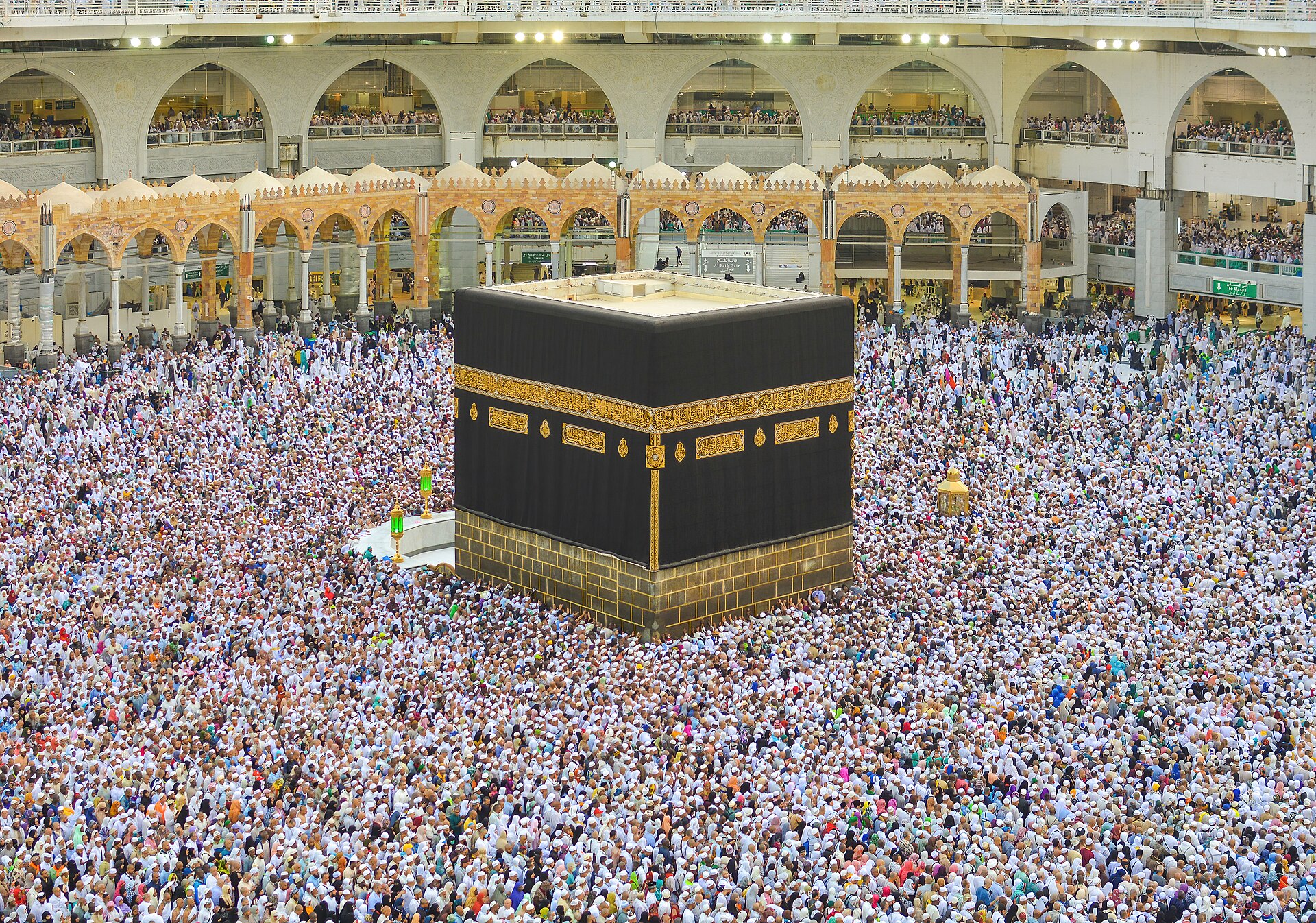
The June 9 convergence date also marked the expiration of the Hajj-based passive deterrent that had constrained both Saudi Arabia and Iran during the six-week pilgrimage season. With 30,000 Iranian pilgrims inside Saudi territory through June 9, neither government could escalate without mutual cost — a constraint that has now fully lapsed, as detailed in Mecca Held 30,000 Iranians for Thirty-Nine Days — Today the Shield Expires.