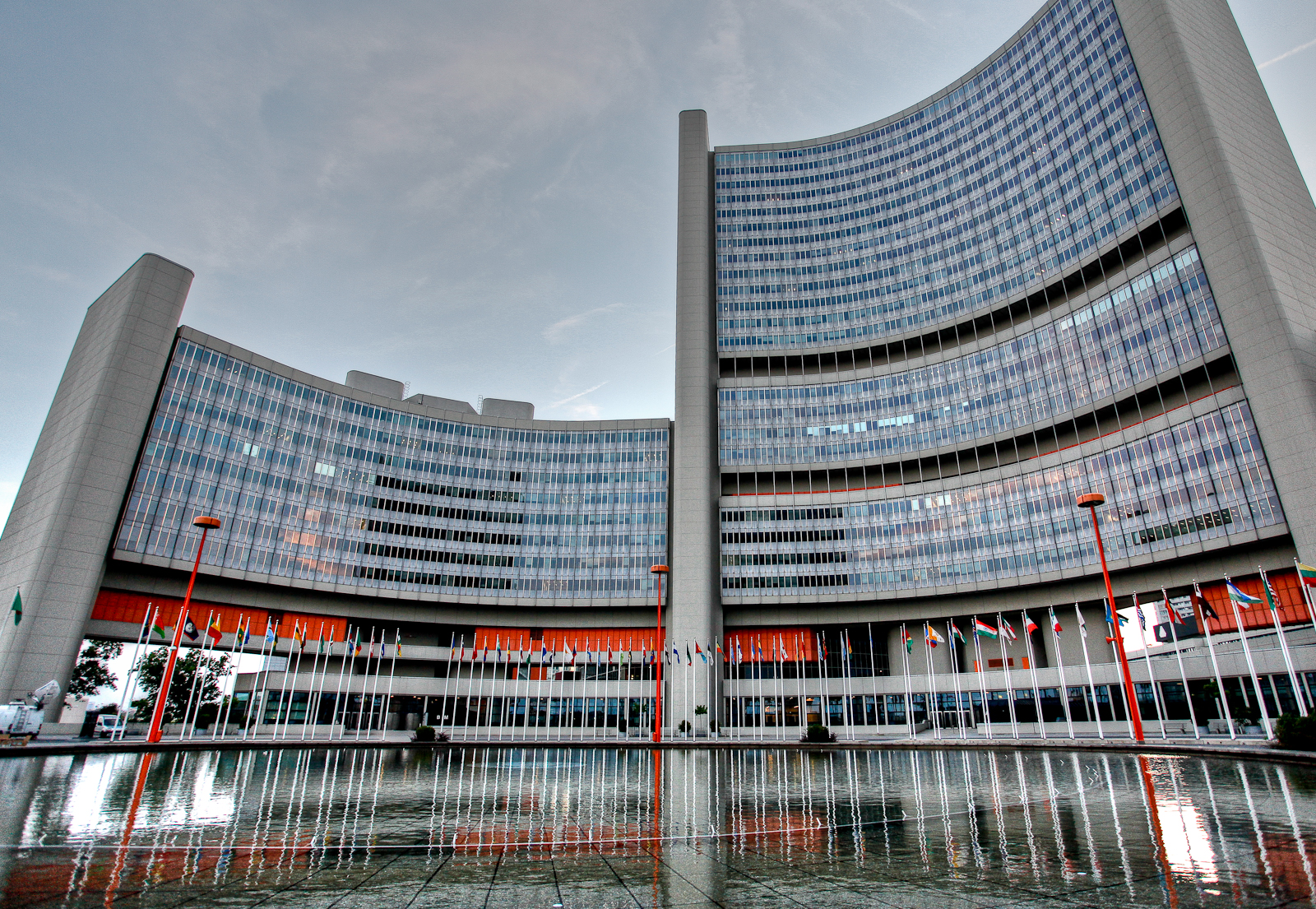
VIENNA — The International Atomic Energy Agency circulated its first assessment of Iran’s nuclear programme since the war began on Thursday, telling Board members that the programme appeared “largely unchanged” according to satellite imagery — and then admitting, across 119 restricted pages, that it cannot verify the current size, composition, or whereabouts of Iran’s stockpile of near-weapons-grade uranium. The report, the first since GOV/2026/8 was issued on February 27, covers a 97-day monitoring blackout during which Iran has granted zero inspector access to any nuclear facility, struck or intact.
The distinction matters because “unchanged” from a verified baseline is reassurance, while “unchanged” from an agency that has not had a person inside a building since February is a null finding. For Saudi Arabia — which has tied its acceptance of any Phase 2 deal on enrichment and HEU to nuclear guarantees the IAEA can no longer provide — the report’s non-answer removes the only institution capable of delivering the verification Riyadh needs, four days before a convergence on June 9 of Iran’s formal MOU rejection, Aramco’s $21.89 billion dividend, and the IAEA Board session that was supposed to deliver clarity.
Table of Contents
What Did the IAEA Actually Find?
The short answer is that it cannot say. The report, circulated to Board members on Thursday and seen by Reuters, states that Iran’s nuclear infrastructure shows “no major changes” since February, based on satellite imagery and open-source analysis — the only tools available to an agency whose inspectors were evacuated 97 days ago. Reuters and US News described the findings as showing “little change despite war,” a framing that dominated initial coverage and obscured what the report actually concedes.
The report’s own language undercuts that headline. “The Agency’s lack of access to verify the previously declared HEU and LEU, for nearly a year — which is long overdue according to standard safeguards practice — is a matter of proliferation concern and of compliance with the NPT Safeguards Agreement,” the document states, according to US News. The phrase “for nearly a year” refers not to the 97-day post-February blackout but to the longer period since the June 2025 US-Israeli strikes on Iran’s nuclear facilities, which triggered the first access restrictions and ended the weekly inspection regime that had monitored Iran’s enriched uranium.
Bloomberg reported that the restricted document states the Agency “can’t draw any conclusion regarding this nuclear material” — the 440.9 kilograms of uranium enriched to up to 60% U-235 that the IAEA last verified in its February 27 report. Iran is the only NPT non-nuclear-weapon state ever to have produced and accumulated uranium at that concentration, and no inspector has laid eyes on the stockpile since the June 2025 strikes destroyed the oversight regime that tracked it.
“The Agency’s loss of continuity of knowledge over all previously declared nuclear material at affected facilities in Iran needs to be addressed with the utmost urgency.”
The Middle East briefing 3,000+ readers start their day with.
One email. Every weekday morning. Free.
— IAEA report to Board of Governors, June 4, 2026
Diplomats in Vienna described that sentence as the sharpest language the IAEA has used since the blackout began. In safeguards terminology, “loss of continuity of knowledge” means the evidentiary chain has been broken — the agency cannot reconstruct what happened to the material during the gap, even if Iran opens every door tomorrow.
Where Is the Uranium?
IAEA Director General Rafael Grossi told Foreign Policy in late April that “much of Iran’s enriched uranium is likely still at Isfahan” — the underground tunnel complex south of the city that satellite imagery, analyzed by the Bulletin of the Atomic Scientists in March, showed receiving a convoy of 18 blue transport casks on flatbed trucks on June 9, 2025, three days before the first Israeli strikes hit Natanz. The Bulletin’s analysis estimated that Iran transferred a large portion — potentially all — of its 60%-enriched stockpile into the Isfahan tunnels before the bombs fell.
At a March Board session, Grossi offered a more cautious figure, describing “a bit more than 200 kilograms, maybe a little bit more” of 60%-enriched uranium at Isfahan, though he acknowledged the number was an estimate rather than a verified inventory. The gap between Grossi’s “a bit more than 200” and the full 440.9 kilograms in the pre-strike ledger raises a question that Thursday’s report conspicuously does not answer: where is the rest? The IAEA Board’s June 8 session addressed that gap directly, with Grossi presenting the full 440.9 kg figure as unverified in the Board record for the first time.
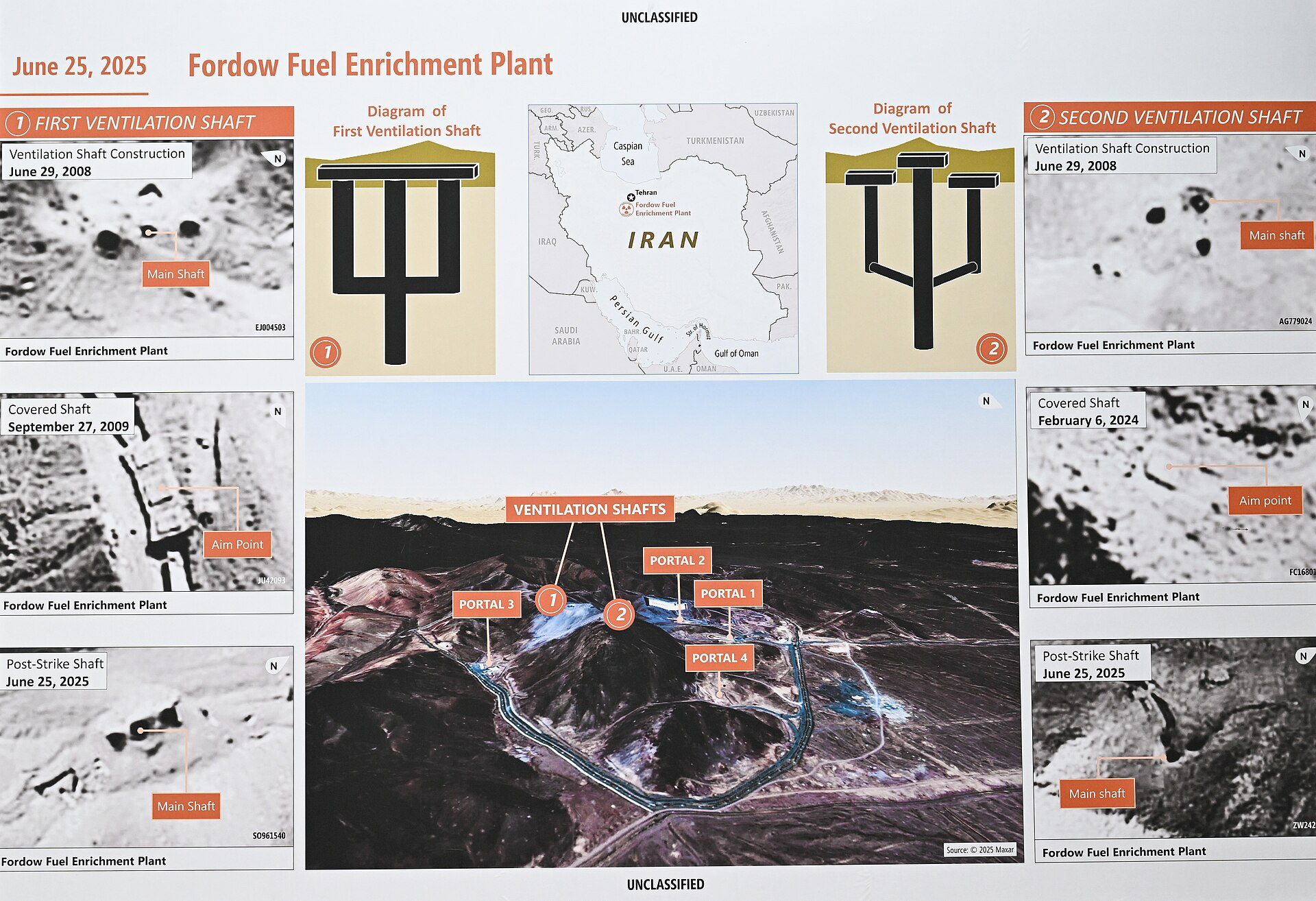
Natanz’s above-ground centrifuge halls suffered an estimated 70–80% destruction, according to post-attack assessments by the Institute for Science and International Security, making it an unlikely storage site. Fordow, carved 80 metres into a mountain, remains “largely intact” by the same assessment, but the IAEA has no means of confirming what it contains. The material’s survival matters because of what comes next: the Bulletin of the Atomic Scientists assessed in July 2025 that Iran could “still build nuclear weapons without further enrichment” if the Isfahan stockpile survived, and calculated that a 200-centrifuge IR-6 cascade could enrich 50 kilograms of 60%-HEU to 90% weapons-grade in approximately ten days.
Can the Board Force Iran to Open the Door?
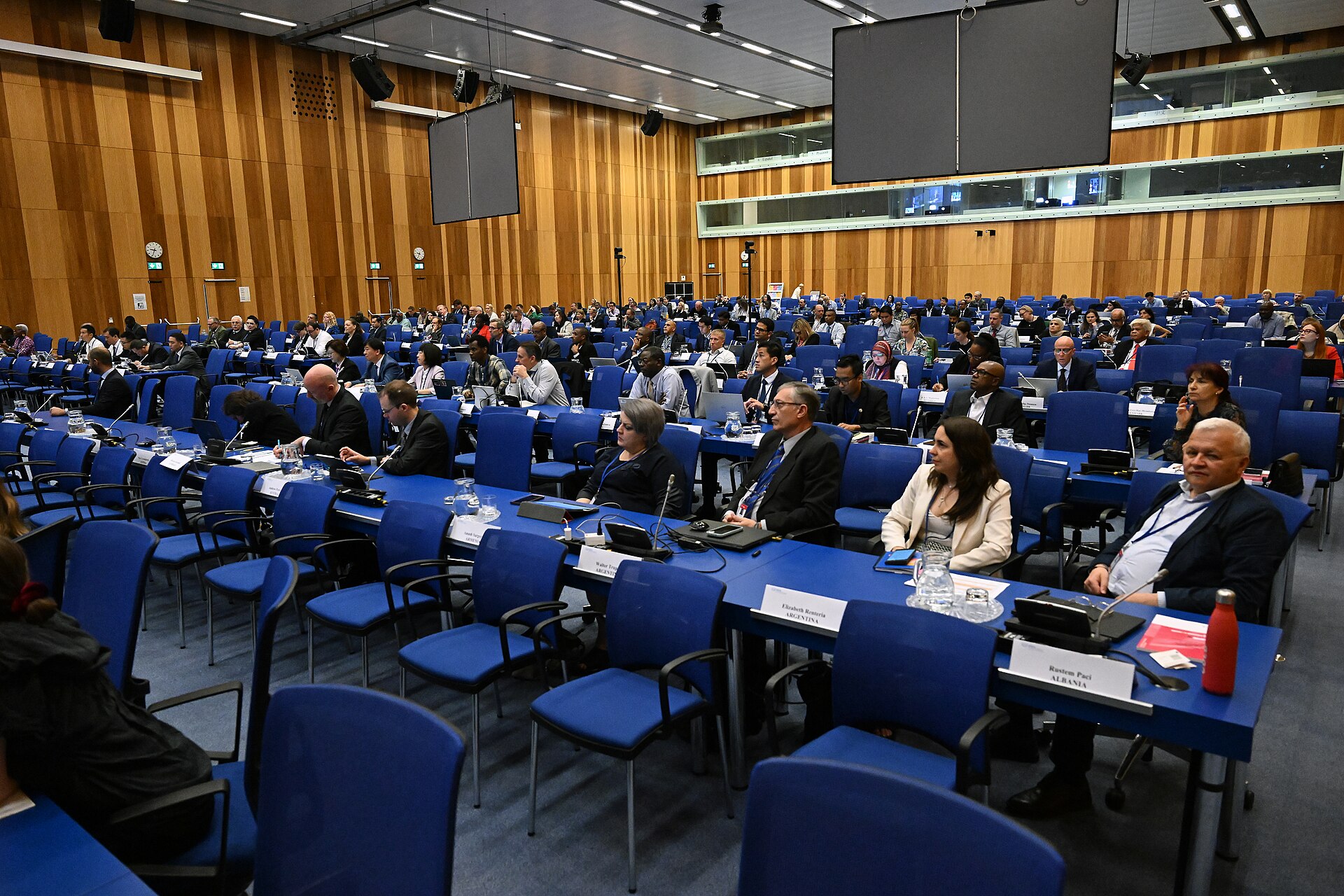
The IAEA Board of Governors convenes its quarterly meeting in Vienna from June 8 to 12, with Iran’s nuclear file as the central agenda item. The United States is preparing a draft resolution condemning Iran’s non-cooperation, though as of Thursday it had not been formally circulated to Board members, according to diplomats cited by US News and Al-Monitor. Russia’s IAEA envoy Mikhail Ulyanov, speaking on June 5, said the resolution would “call upon Iran to provide access to the agency’s personnel to nuclear facilities on the territory of Iran,” but added that he “did not believe the U.S. would actually submit the draft” and warned that it “may antagonize the Iranian side.”
The precedent is not encouraging. The last IAEA non-compliance resolution on Iran, passed in June 2025 by a vote of 19–3–11, demanded that Tehran provide precise nuclear material accountancy information, allow inspectors into struck sites, and implement the Additional Protocol. Iran responded by nullifying the Cairo inspection accord; Foreign Minister Abbas Araghchi said the resolution “killed” the accord entirely. A November 2025 follow-up resolution made five specific demands, including a full centrifuge inventory; Iran’s mission warned at the time that adoption would “unavoidably and adversely affect the positive course of cooperation between Iran and the IAEA.” No cooperation has resumed since that warning was issued.
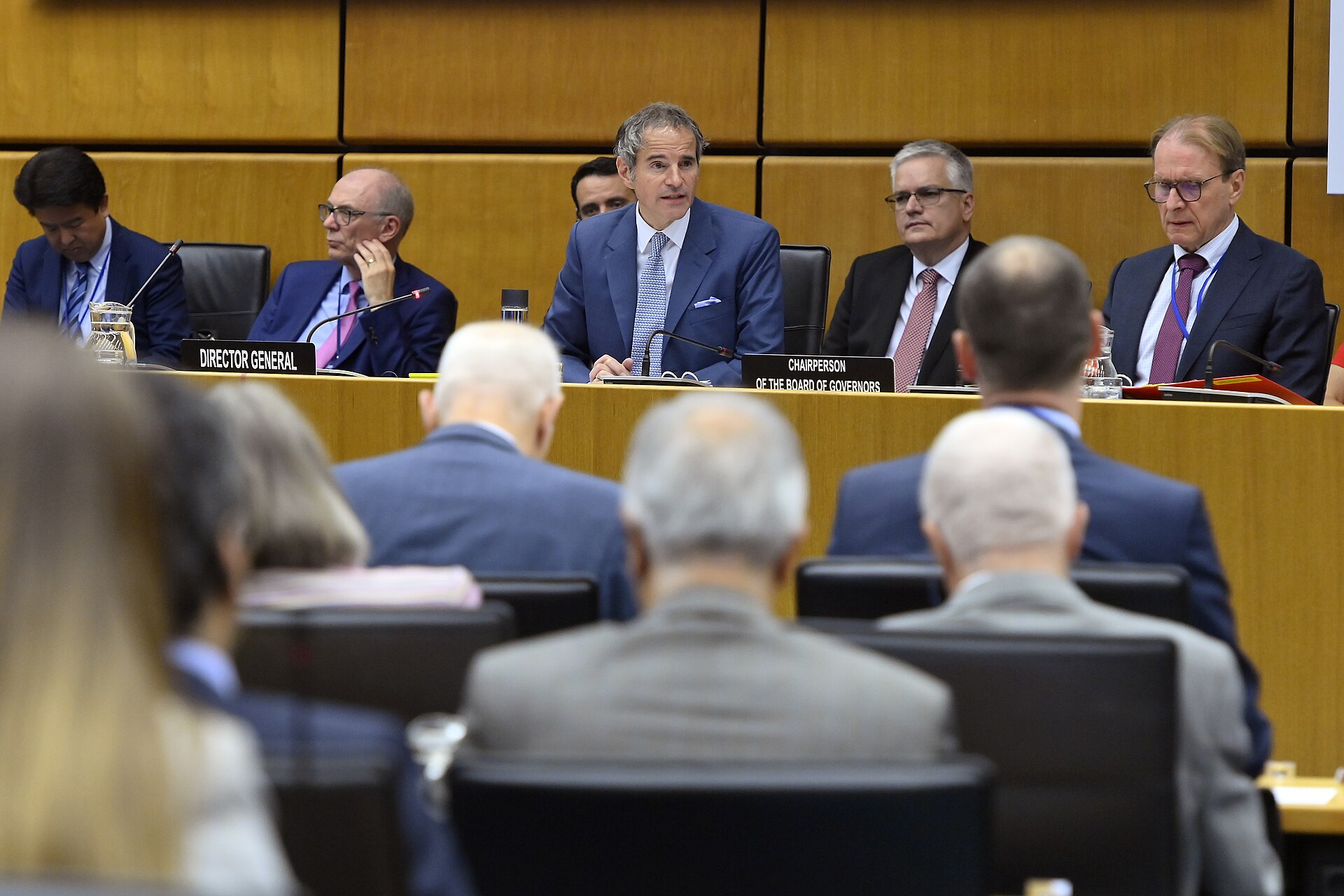
On Thursday, the same day the report circulated, Iran’s Permanent Representative Reza Najafi met Grossi in Geneva alongside China’s Li Song and Ulyanov in a trilateral format — a meeting Tasnim described as intended to convey that “it’s very difficult for Iran to comply with its obligations in the current circumstances.” Russia and China voted against the June 2025 resolution and have opposed every Iran-related censure in the past three years, a pattern that limits the resolution’s practical impact even if it passes.
The pattern — censure, Iranian retaliation, further restriction — is relevant because Washington now faces a dual-track contradiction. The US wants a Board resolution to maintain institutional pressure on Tehran’s nuclear programme while simultaneously pursuing a Phase 1 MOU deal focused exclusively on reopening the Strait of Hormuz, in which nuclear issues are explicitly deferred to a Phase 2 that has no timeline and no framework. A censure resolution that prompts Iran to further restrict residual monitoring — or to accelerate enrichment, as it did after the June and November 2022 Board resolutions — would undermine the very premise of separating Hormuz from the nuclear file.
Saudi Arabia’s Nuclear Blind Spot
Saudi Arabia is not a member of the IAEA Board of Governors and has issued no public statement on Thursday’s report, consistent with a Saudi MOFA silence that has now exceeded ten days. But the report’s implications for Riyadh are structural, not procedural, and silence does not insulate the Kingdom from them.
The Phase 1/Phase 2 framework that Secretary of State Marco Rubio described in his June 2 Senate testimony separates Hormuz reopening (Phase 1, no sanctions relief) from HEU and enrichment negotiations (Phase 2, sanctions relief). Saudi Arabia’s exposure is concentrated in the gap between the two phases: a successful Phase 1 that reopens the Strait collapses the war premium that currently keeps Brent above $94 per barrel, while a delayed or failed Phase 2 leaves Iran’s nuclear ambiguity unresolved and the Kingdom unable to price the risk that a nuclear-threshold neighbour represents to its long-term stability.
Thursday’s report makes the Phase 2 nuclear track harder, not easier. Any deal on enrichment and HEU requires a verification mechanism, and the report is a 119-page acknowledgement that the IAEA’s verification capacity has been broken for nearly a year. Grossi told Bloomberg on June 3 that “something that is not verifiable will lead to a bad agreement” — a statement that reads as a direct warning to negotiators attempting to treat the two tracks as separable.
Grossi’s own Gulf tour underscored the entanglement. After assessing drone damage at Barakah in the UAE — which he described as “potentially more dangerous than Zaporizhzhia” because the Emirati reactors were operating at the time of the strike, unlike Ukraine’s units in cold shutdown — the IAEA chief flew to Riyadh on June 3 to meet Foreign Minister Faisal bin Farhan and Energy Minister Abdulaziz bin Salman. The agenda included the Saudi Nuclear Energy Programme and the US-Saudi 123 Agreement, which Arms Control Association scholar Sharon Squassoni has called a “gilded sweetheart deal” for omitting all three Gold Standard elements: an enrichment ban, a reprocessing ban, and the Additional Protocol. Grossi met Riyadh to discuss Saudi nuclear ambitions on the same day his agency acknowledged it cannot verify the stockpile of the country Saudi Arabia most fears going nuclear. When the Board opened its June 8–12 session, Saudi Arabia’s Board seat placed it in a direct vote on the same safeguards standards its own Section 123 agreement with Washington chose not to require. The outcome of that vote on June 10 — and Saudi Arabia’s strategic exposure after the Cairo accord’s termination — confirmed the structural trap the IAEA report had already identified.
The June 9 Convergence
Three events converge on Monday. Iran is expected to formally reject the US MOU proposal, according to Reuters reporting that Tehran is “preparing to decline” — a harder posture than the Tasnim-announced suspension of June 1 and one that would close, rather than pause, the only diplomatic channel currently addressing Hormuz. Aramco’s $21.89 billion quarterly dividend comes due the same day, a payout that exceeds the company’s $18.6 billion in free cash flow by a coverage ratio of 0.85 — meaning the Kingdom is borrowing to pay a dividend during a war it did not start and cannot end. And the IAEA Board of Governors opens its quarterly session with Thursday’s report as the baseline document and the US draft resolution as a potential agenda item.
The convergence means that by Monday evening, Saudi Arabia will face a formal Iranian rejection of the only diplomatic framework on the table, a dividend obligation it cannot fund from operations, and an IAEA assessment that removes the verification foundation for any future Phase 2 nuclear deal. Each event is manageable in isolation; together they compress a timeline for response that Riyadh has spent 97 days avoiding. The latest ceasefire arrangement — in which Hezbollah was named as a condition rather than a signatory — has further narrowed the diplomatic space by exposing the fragility of the Lebanon precondition that Iran had embedded in the MOU framework.
From Weekly Inspections to Total Blackout
Before June 2025, Iran’s 440.9 kilograms of 60%-enriched uranium was subject to weekly IAEA inspection — the most intensive monitoring regime applied to any NPT state’s enriched material. Iran was, and remains, the only non-nuclear-weapon state party to the treaty ever to have produced uranium at that concentration, a distinction the IAEA has noted in every quarterly report since 2022.
The June 2025 US-Israeli strikes on Natanz, Isfahan, and other declared facilities left Fordow’s underground halls and Isfahan’s tunnel complex largely intact while gutting Natanz’s above-ground centrifuge capacity. Iran responded by restricting IAEA access to struck sites, citing security and sovereignty concerns, but allowed limited monitoring at undamaged facilities through the remainder of 2025. The Cairo inspection accord, negotiated in early 2025, was nullified after the June 2025 Board censure, and a November follow-up resolution failed to restore access.
The complete termination came on February 28, 2026 — the day the broader conflict began. Iran disabled surveillance cameras, removed Agency seals from all declared facilities, and evacuated inspectors. No IAEA personnel have entered any Iranian nuclear site since. The February 27 report, GOV/2026/8, became the last verified snapshot: 440.9 kilograms of 60%-enriched HEU and 8,599.6 kilograms of lower-enriched material. Since then, the only tools available to the Agency have been satellite imagery and the statements of a government that has provided no notification of the fate of its enriched uranium, no confirmation or denial of whether enrichment has resumed, and no explanation for what CSIS satellite analysts described, in a March 2026 assessment, as “possible signs of renewed nuclear activity.” Western officials told Bloomberg on June 3 that “the risk that Iran is covertly pursuing nuclear weapons is higher today than before the US and Israel launched their first military attacks.”
Iran’s parallel diplomacy operated in more visible registers as well. At Hajj 2026, which closed the same week as the IAEA report, Iran sent 30,000 of its 87,550-person quota and attributed the shortfall to the “wartime situation” caused by US-Israeli strikes — placing the war’s attribution inside the pilgrimage that Saudi Arabia administers as custodian for 1.7 billion Muslims. It was Iran’s most public institutional signal since the conflict began.
Frequently Asked Questions
Has Iran threatened to withdraw from the NPT?
Iranian officials have floated NPT withdrawal and “imported warheads” as retaliatory options following the June 2025 Board censure, according to statements carried by Tasnim and reported by the National Council of Resistance of Iran and Iran International. Tehran has not formally initiated the treaty’s 90-day withdrawal process, which requires written notification to the UN Security Council and all other state parties.
Could Iran build a nuclear weapon with its current stockpile?
The Bulletin of the Atomic Scientists assessed in July 2025 that Iran could “still build nuclear weapons without further enrichment” if its Isfahan material survived the strikes, based on the proximity of 60%-enriched uranium to weapons-grade (90%). A 200-centrifuge IR-6 cascade could enrich 50 kilograms from 60% to 90% in approximately ten days. Weaponization — designing and assembling a deliverable warhead — involves additional engineering steps that the IAEA has not confirmed Iran has completed, though Grossi said in April that the Agency “cannot provide assurance that Iran’s nuclear program is exclusively peaceful.”
What happened at the NPT Review Conference?
The June 2026 NPT Review Conference failed to reach consensus, with disputes between Iran and the United States over the legality of the 2025 strikes and the status of enrichment commitments dominating proceedings, according to the Arms Control Association. The failure marked the second consecutive Review Conference to collapse without an outcome document, after the 2022 session also ended without consensus.
What does “loss of continuity of knowledge” mean legally for future inspections?
Under IAEA safeguards terminology, once continuity of knowledge is broken, the Agency cannot certify what happened to declared nuclear material during the gap — even if Iran opens every facility tomorrow. Restoring safeguards after a continuity break requires a full material accountancy reconciliation, a process that took more than two years after North Korea’s 1993 withdrawal from the NPT inspection regime and was never completed. For any future Phase 2 nuclear deal, the broken chain means the verification baseline would have to be re-established from scratch rather than resumed from the February 27 snapshot.