WASHINGTON — The State Department approved a $1.98 billion counter-drone sale to Kuwait on June 6 — the same day IRGC missiles struck Ali al-Salem airbase, the facility where the system will be installed. The package, built by Anduril Industries, passed through the emergency approval track that remains structurally unavailable to Saudi Arabia because the Kingdom has no Status of Forces Agreement with the United States. Kuwait’s 1991 Defense Cooperation Agreement — a 35-year-old document signed in the immediate aftermath of Desert Storm — is now functioning as the legal on-ramp to a layered air defense architecture that Saudi Arabia, despite spending $142 billion on arms in May 2025, cannot replicate at speed.
The sale closes an eleven-day window in which Kuwait committed $3.0 billion to air defense: $1.02 billion for Raytheon’s NASAMS on May 26 and now $1.98 billion for Anduril’s counter-unmanned aerial systems package. Together, these acquisitions construct a three-tier kill chain — kinetic ram, explosive intercept, and medium-range missile — that can engage every class of drone Iran has deployed in 99 days of war without consuming the PAC-3 MSE rounds that Bahrain has nearly exhausted and Saudi Arabia cannot replenish until mid-2027 at the earliest.
Table of Contents
- What Does the $1.98 Billion Anduril Package Include?
- Eleven Days, Three Billion Dollars
- Why Does a SOFA Unlock the Emergency Track?
- The Structural Exclusion of Saudi Arabia
- Bahrain’s Eight Rounds
- Palmer Luckey’s Pentagon
- Iran Struck the Installation Site on the Day of Approval
- How Does a $250,000 Interceptor Change the Cost-Exchange Ratio?
- The Two-Tier Gulf
- FAQ
What Does the $1.98 Billion Anduril Package Include?
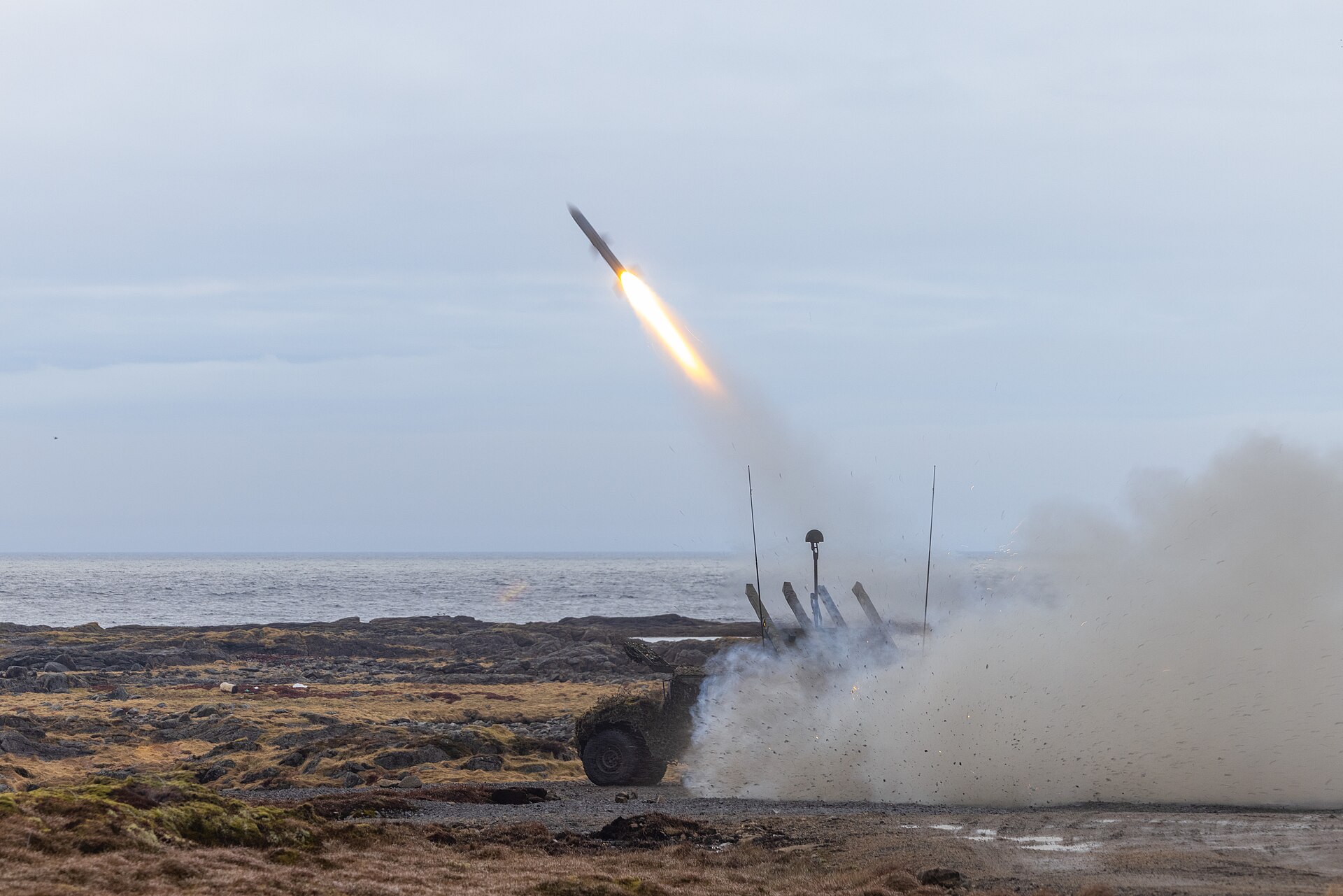
The package approved on June 6 is the first confirmed Foreign Military Sale of Anduril’s counter-drone systems to a Gulf state. It includes the Roadrunner-Munition, a reusable vertical-takeoff-and-landing interceptor designed to engage Group 3 drones — the Shahed-class one-way attack vehicles Iran has launched by the hundreds since February 28 — and cruise missiles. Roadrunner can land and be recovered if no intercept is needed, a design feature with no equivalent in any fielded air defense system.
The House of Saud Daily Briefing
Saudi Arabia's news in 3 minutes, every morning. Free. See today's issue
The sale also includes the Anvil-Kinetic, a drone-ramming interceptor that uses computer vision to collide with Group 1 and Group 2 unmanned systems at speeds up to 200 miles per hour without a warhead. A third variant, the Anvil-M, carries a high-explosive payload for hardened Group 2 threats. The supporting infrastructure is as extensive as the munitions: launch boxes, command-and-control nodes, long-range sentry towers, maritime sentry towers, electromagnetic warfare systems, tactical operations centers, generators, training packages, software development contracts, and logistics support.
The State Department’s Defense Security Cooperation Agency notification stated the sale “will improve Kuwait’s capability to meet current and future threats by providing electronic and kinetic defeat capabilities against unmanned aerial systems” and “will support the foreign policy and national security objectives of the United States by improving the security of a major non-NATO ally.” The language is standard DSCA boilerplate. What is not standard is the speed: the notification went through the emergency determination channel, bypassing the 30-day Congressional review period that Section 36(b) of the Arms Export Control Act ordinarily requires.
Eleven Days, Three Billion Dollars
On May 26, the Pentagon announced contract W31P4Q-26-C-0008: a $1.02 billion award to Raytheon for Kuwait’s National Advanced Surface-to-Air Missile System, managed through Army Contracting Command at Redstone Arsenal. NASAMS covers medium-to-long-range threats at ranges up to 60 kilometers — the envelope occupied by cruise missiles and larger drone swarms beyond Anduril’s intercept ceiling. Eleven days later, the Anduril notification filled the short-range gap. The combined investment of $3.0 billion across eleven days is larger than Kuwait’s entire NASAMS contract standing alone and constructs a layered architecture with no coverage gap between the engagement floor and ceiling.
The three tiers divide the threat spectrum cleanly. Anvil-Kinetic and Anvil-M handle Group 1 and 2 drones — the small quadcopters and tactical fixed-wing systems that Iran has used for reconnaissance and harassment strikes against forward operating positions. Roadrunner-M covers Group 3 threats, including the Shahed-136 derivatives that have struck Kuwait’s Terminal 1 and surrounding infrastructure. NASAMS covers the medium-range cruise missile envelope. None of these tiers requires PAC-3 MSE rounds, which are optimized for ballistic missile defense and cost approximately $4 million per interceptor.
The sequencing was not accidental. Kuwait’s Foreign Minister met Secretary Rubio the day after the Terminal 1 strike, and the NASAMS contract followed within three weeks. The Anduril sale completed the architecture the two governments had evidently sketched in that meeting — or earlier.
| System | Contractor | Value | Date | Threat Coverage | Track |
|---|---|---|---|---|---|
| NASAMS | Raytheon | $1.02B | May 26 | Group 3+ / cruise missiles (up to 60km) | Standard FMS |
| Roadrunner-M | Anduril | $1.98B (combined) | Jun 6 | Group 3 / Shahed-class / cruise missiles | Emergency 36(b) |
| Anvil-Kinetic / Anvil-M | Anduril | (included above) | Jun 6 | Group 1-2 / tactical UAS | Emergency 36(b) |
Why Does a SOFA Unlock the Emergency Track?
Section 36(b) of the Arms Export Control Act requires the executive branch to notify Congress of major defense sales 30 calendar days before issuing a letter of offer and acceptance. The president can override this timeline through an emergency determination — a finding that “an emergency exists which requires the proposed sale in the national security interest of the United States” — which eliminates the waiting period entirely. The legal mechanics are documented in Congressional Research Service Report RL31675, updated March 13, 2026, which notes that emergency determinations have been invoked with increasing frequency since the Iran conflict began.
The determination itself is a political act. But the credibility of the emergency claim rests on a logistical premise: that the United States can deliver, install, train, and maintain the system on an emergency timeline. This is where the Status of Forces Agreement becomes load-bearing. A SOFA — or its functional equivalent, such as Kuwait’s 1991 Defense Cooperation Agreement — provides the legal framework for US military and contractor personnel to operate on the recipient’s soil. It governs jurisdiction over personnel, customs exemptions for equipment, tax status, and the right to establish training and maintenance facilities. Without it, the State Department cannot credibly assert that an emergency delivery timeline is executable, because there is no pre-existing legal infrastructure for the personnel who would execute it.
Kuwait’s DCA, signed September 19, 1991, is among the most permissive security cooperation agreements in the Gulf. It provides for US prepositioning of equipment, basing access at Camp Arifjan and Ali al-Salem, joint exercises, and approximately 13,500 US forces on Kuwaiti soil. When the State Department processes an emergency 36(b) determination for Kuwait, the legal predicate is already in place — the personnel infrastructure, the customs exemptions, the jurisdictional framework. The determination accelerates the political timeline; the DCA has already solved the logistical one.
Secretary Rubio invoked the emergency track repeatedly in the first months of the war: a $23 billion-plus package for UAE, Kuwait, and Jordan in March 2026, and a separate $8.6 billion waiver on May 2 covering Israel, Qatar, Kuwait, and UAE. In both cases, every recipient had a SOFA or equivalent basing agreement. The correlation is not policy — no US official has stated that a SOFA is a prerequisite for emergency approval. But the pattern is unbroken.
The Structural Exclusion of Saudi Arabia
Saudi Arabia has no Status of Forces Agreement with the United States. It has never had one. The Kingdom’s position — maintained across four reigns — is that a SOFA would constitute an unacceptable concession of sovereignty, particularly regarding criminal jurisdiction over foreign military personnel on Saudi soil. The practical consequence, for 99 days of war, is that Saudi Arabia cannot access the emergency procurement track that Kuwait, UAE, Qatar, and Jordan have used to accelerate deliveries.
The $142 billion arms package signed on May 13, 2025 — the largest single defense transaction in US-Saudi history — went through the standard DSCA notification process. The Stimson Center noted at the time that the deal “may not add up to expectations” given the standard DSCA structure, financing questions, and the absence of a SOFA framework. Thirteen months later, the observation reads less like caution and more like a structural diagnosis. The deal extracted those commitments without requiring Washington to solve the SOFA problem — and in doing so, normalized Saudi Arabia’s exclusion from the emergency tier at the precise moment the emergency tier became the only procurement channel that matters. The same exclusion dynamic extended to Saudi diplomacy: when Iran fired the June 6 dual-capital salvo, Saudi Arabia condemned the attack without taking action — its sixth condemnation statement and seventy-seventh day since its last punitive measure.
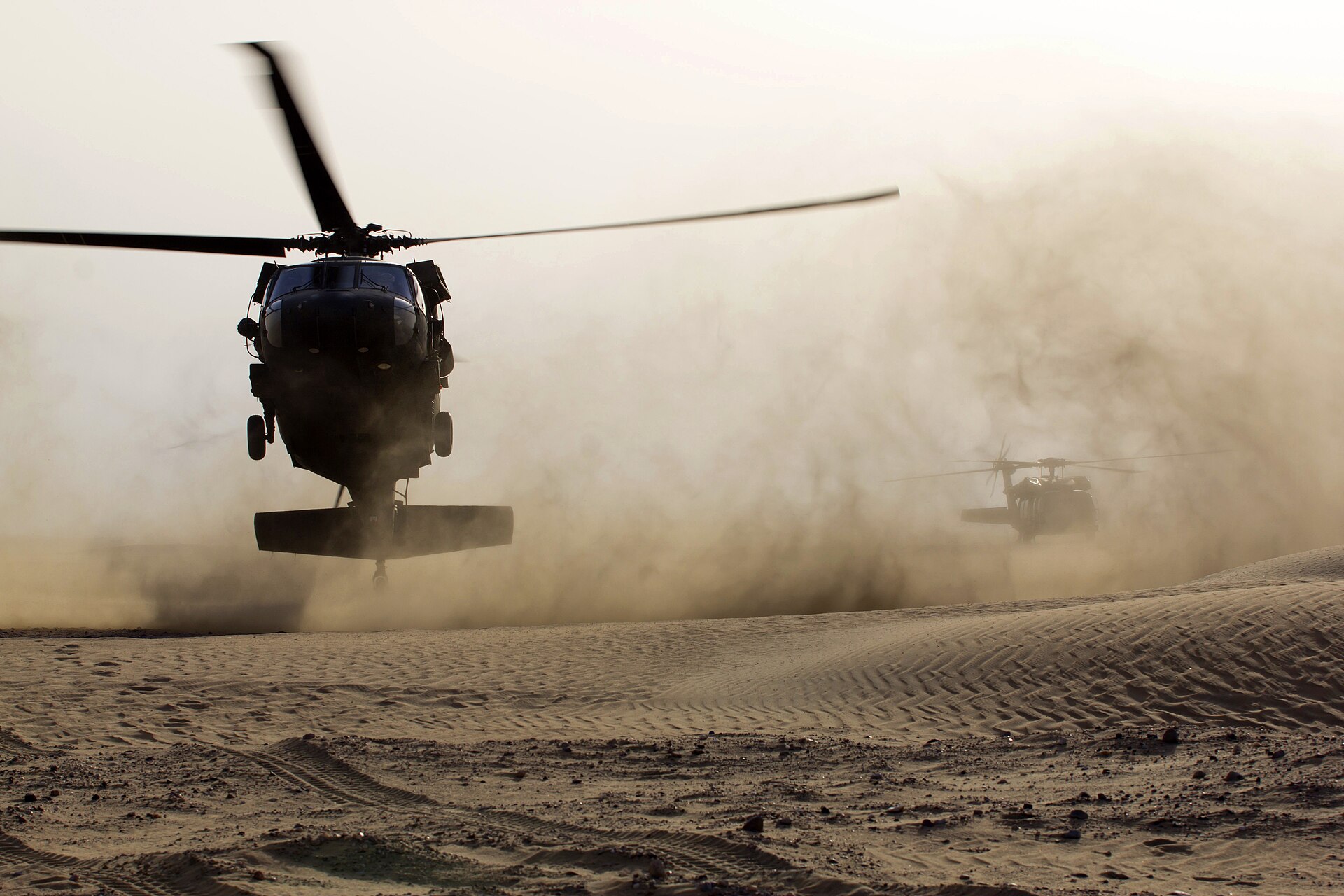
The PAC-3 MSE case illustrates the cost of standard timelines. Saudi Arabia’s $9 billion DSCA notification for 730 PAC-3 MSE rounds went through on January 30, 2026 — one month before Iran’s first strikes on Gulf targets. The earliest delivery date is mid-2027. The Pentagon’s own FY2027 order, published in the Federal Register on June 1 (FR Doc 2026-10920), claims 2,798 PAC-3 MSE rounds at $12.2 billion — consuming the entire Camden, Arkansas production ramp through 2030. Lockheed Martin’s Camden facility currently produces approximately 620 rounds per year for all global customers. Saudi Arabia’s 730-round order sits behind the Pentagon’s own demand in the queue.
The Kingdom’s estimated remaining PAC-3 MSE stockpile — roughly 80 to 150 rounds, or 3 to 5 percent of the approximately 2,800 it held before the war — is not a classified figure. It is derivable from DSCA notifications, published intercept data, and production capacity. At current rates of expenditure, the stockpile may be functionally exhausted before the first replacement round ships from Camden. No emergency waiver has been issued to accelerate delivery. SIPRI data for 2021-2025 shows the United States supplied 77 percent of Saudi Arabia’s arms imports — a dependency ratio that makes the absence of an emergency channel an existential constraint, not a bureaucratic inconvenience.
Bahrain’s Eight Rounds
Bahrain entered the war with approximately 60 PAC-3 MSE rounds. Three IRGC strikes on Fifth Fleet facilities at NSA Bahrain — Mina Salman and Juffair, home to 9,000 US personnel under a 1992 SOFA — have depleted the stockpile to an estimated eight rounds. That is an 87 percent depletion rate over 99 days, and it leaves Bahrain with enough interceptors for a single engagement against a moderately sized ballistic missile salvo. Air raid sirens activated over Bahrain on June 6, the same day the Kuwait Anduril sale was announced.
Bahrain was excluded from Secretary Rubio’s $8.6 billion emergency waiver on May 2. It was also excluded from the March 2026 $23 billion emergency package. The Kingdom has a SOFA — its 1992 agreement is among the oldest in the Gulf — and yet it has not received emergency resupply authorization. The most plausible explanation is that emergency waivers require available inventory to redirect, and there is no available PAC-3 MSE inventory to redirect. The third IRGC strike on NSA Bahrain on June 3 intercepted three missiles; at the estimated remaining count, Bahrain may have used three of its last eleven rounds in that engagement.
The standard FMS pipeline offers no relief on relevant timelines. FR Doc 2026-10920, published June 1, adds 50 PAC-3 MSE rounds to Bahrain through standard FMS with an 18-month delivery window — meaning the first rounds would arrive in late 2027 or early 2028. By then, Bahrain’s current stockpile will have been functionally zero for over a year, assuming Iran continues its established pattern of monthly strikes on Fifth Fleet facilities.
Kuwait’s Anduril purchase is, among other things, an answer to this problem. By constructing a kill chain that reserves PAC-3 MSE for ballistic missiles and uses Roadrunner-M and Anvil for the drone and cruise missile threats that constitute the majority of IRGC attacks, Kuwait is building an architecture that does not depend on a munition it cannot resupply. Bahrain has not made an equivalent investment. Saudi Arabia has not made an equivalent investment. The states that have not built alternatives are the ones running out.
Palmer Luckey’s Pentagon
Anduril Industries was founded in 2017 by Palmer Luckey, who sold Oculus VR to Facebook for $2 billion in 2014 and was subsequently pushed out of the company over his political activities. Luckey donated to a pro-Trump PAC during the 2016 campaign, described himself as a “true Trumper,” and wrote to Donald Trump urging him to run for president as early as 2013. His sister, Ginger Luckey, is married to former Representative Matt Gaetz. These connections are not incidental to Anduril’s market position — they are part of its competitive architecture.
The company’s domestic trajectory accelerated in lockstep with the current administration’s defense priorities. A $1 billion SOCOM counter-UAS contract in February 2022 established Anduril’s credibility in the counter-drone mission. A $642 million Marine Corps CUAS contract followed. On March 14, 2026 — two weeks after the Iran war began — the Army awarded Anduril a 10-year enterprise contract worth up to $20 billion, consolidating more than 120 separate procurement actions under the company’s Lattice command-and-control platform. DefenseScoop and Army.mil described it as the largest single defense technology contract ever awarded to a non-traditional contractor.
The Kuwait sale is Anduril’s first confirmed FMS export to a Gulf state. In the traditional defense industrial base, the path from domestic contract to foreign military sale takes years — the prime contractors (Lockheed Martin, Raytheon, Boeing) build export variants, navigate ITAR restrictions, and negotiate offsets. Anduril completed this arc in under four years from its first major SOCOM contract to a $1.98 billion Gulf sale. The emergency track that a SOFA enables also benefits the contractor: it compresses the Congressional review period that competitors sometimes use to lobby against rival systems.
“I think it’s even good maybe to scare people sometimes.”
— Palmer Luckey, Fortune, January 8, 2026, on the Trump administration’s approach to defense reform
Gulf News and The National, reporting on the sale June 6, noted that Anduril “was founded by a supporter of US President Donald Trump” and that “the sale approval comes directly in response to heightened security threats facing Kuwait from ongoing regional tensions.” The political alignment between Anduril’s founder and the administration that controls the emergency determination authority is a structural advantage that no competitor can replicate through engineering alone. Whether this constitutes corruption, efficient procurement, or both depends entirely on whether the systems perform as specified when the next IRGC barrage arrives.
Iran Struck the Installation Site on the Day of Approval
On June 6 — the date of the DSCA notification — IRGC forces struck Ali al-Salem airbase in Kuwait. The base, which hosts US forces under the 1991 DCA and serves as the primary staging ground for US air operations in Kuwait, is the facility where the Anduril counter-drone systems will be installed, tested, and maintained. The timing may be coincidental. The targeting is not.
IRGC statements, distributed through Tasnim News, claimed the strikes targeted “enemy bases” in Kuwait and Bahrain “in response to US attacks on Qeshm Island and Sirik telecommunications infrastructure.” The IRGC has framed every strike on Kuwait as a response to US basing, not to Kuwaiti sovereignty — a distinction that serves Iran’s diplomatic position (preserving the fiction that it is fighting the United States, not its neighbors) while requiring Kuwait to absorb the physical consequences.
The IRGC’s June 3 strike on Camp Arifjan — the logistics and sustainment hub that feeds Saudi Arabia’s air defense resupply — demonstrated that Iran is now systematically targeting the infrastructure through which US arms flow to Gulf states. Ali al-Salem is the operational complement: where Arifjan stores and distributes, Ali al-Salem operates and launches. Striking both within 72 hours signals that the IRGC has mapped the logistics architecture and is working through it node by node.
Iran has not issued a specific statement on the $1.98 billion Anduril sale as of June 6. But the IRGC has consistently warned that “further aggression would prompt a response beyond limited strikes, including the complete closure of the Strait of Hormuz.” Tasnim News has repeatedly framed US arms deliveries to Gulf states as evidence that “the US uses Gulf monarchies as forward military platforms” — a narrative frame that positions every new sale as additional justification for strikes on the facilities that host it.
The Bahrain Foreign Ministry, responding to separate strikes on June 6, called on Iran to “immediately cease attacks on its Gulf neighbors.” Saudi Arabia’s response to the concurrent attacks on its security partners has followed its established pattern: verbal solidarity without parallel diplomatic or military action. Crown Prince Mohammed bin Salman called the Bahrain attacks “brutal” on June 4 without expelling Iranian diplomats, recalling Saudi ambassadors, or activating any of the mutual defense commitments that the Saudi-Egypt-Pakistan-Turkey quadrilateral has discussed across three ministerial sessions with zero communiqués.
How Does a $250,000 Interceptor Change the Cost-Exchange Ratio?
The arithmetic of the Iran war’s air defense campaign has favored the attacker from the first day. An IRGC Shahed-136 derivative costs an estimated $20,000 to $50,000. A PAC-3 MSE interceptor costs approximately $4 million. The cost-exchange ratio — attacker spend per defender spend — ranges from 80:1 to 200:1 in Iran’s favor for every engagement where a PAC-3 is used against a drone, depending on the Shahed variant deployed. This is the ratio that has burned through Bahrain’s stockpile in 99 days and is grinding down Saudi Arabia’s.
Anduril’s Roadrunner-M was designed to collapse this ratio. The company’s corporate materials, released in December 2023, claim the system offers “three times the warhead payload capacity, three times the maneuverability in G-forces, and ten times the one-way effective range compared to similar traditional air defenses” at a unit cost “in the low hundreds of thousands of dollars.” If the effective cost per intercept is $250,000 — a figure consistent with Anduril’s published range — the cost-exchange ratio against a $30,000 drone drops to approximately 8:1. Still in the attacker’s favor, but an order-of-magnitude improvement over PAC-3 economics.
The Anvil-Kinetic pushes the ratio further. As a drone-ramming interceptor with no warhead, its unit cost is lower still. Against the small Group 1 and 2 reconnaissance and harassment drones that the IRGC uses as precursors to larger strikes, the cost exchange may approach parity or even favor the defender. The reusability of both the Roadrunner (which can land and be recovered if no intercept is needed) and the sentry tower sensors (which are not consumed in engagements) further amortizes the per-engagement cost.
| Interceptor | Unit Cost (est.) | vs. Shahed ($30K) | vs. Cruise Missile ($500K) | Consumable? |
|---|---|---|---|---|
| PAC-3 MSE | ~$4,000,000 | 133:1 (defender disadvantage) | 8:1 | Yes |
| Roadrunner-M | ~$250,000 | 8:1 | 1:2 (defender advantage) | Recoverable |
| Anvil-Kinetic | <$100,000 | ~3:1 | N/A (wrong threat class) | Yes (kinetic ram) |
| NASAMS (AMRAAM) | ~$1,100,000 | 37:1 | 2:1 | Yes |
The table captures a static comparison; the operational picture is more complex. IRGC doctrine since March has emphasized mixed salvos — ballistic missiles, cruise missiles, and drone swarms launched simultaneously to overwhelm single-tier defenses. Kuwait’s three-tier architecture is designed to triage these mixed salvos: Anvil strips out the small drones, Roadrunner-M engages the Shaheds and cruise missiles, NASAMS handles the higher-altitude cruise threats, and PAC-3 (if available) is reserved for ballistic missiles only. The value of the architecture is not in any single cost-exchange ratio but in the matching of interceptor cost to threat cost across the entire engagement envelope.
The Two-Tier Gulf
The Gulf Cooperation Council has six members. Three — Kuwait, UAE, and Qatar — have SOFAs or equivalent defense cooperation agreements with the United States and have received emergency-track arms deliveries since February 28. One — Bahrain — has a SOFA but has been excluded from emergency resupply, likely because the specific munition it needs (PAC-3 MSE) has no available inventory to redirect. One — Oman — maintains its traditional neutrality and has not requested emergency deliveries. And one — Saudi Arabia — has the largest defense budget in the region, the deepest US arms dependency (77 percent of imports), and no legal mechanism to access the emergency procurement channel.
This is not a two-tier architecture by design. No US policy document describes a distinction between SOFA states and non-SOFA states in FMS prioritization. The Congressional Research Service report on emergency authorities does not list a SOFA as a legal prerequisite for emergency determination. But the pattern — every emergency-track recipient has a SOFA; the only major Gulf state without a SOFA has never received an emergency determination — is now too consistent to attribute to coincidence.
| State | SOFA / DCA | Emergency 36(b) Received | PAC-3 MSE Remaining (est.) | Counter-Drone Layer |
|---|---|---|---|---|
| Kuwait | 1991 DCA | Yes (Mar + May + Jun 2026) | N/A (resupplied) | Anduril + NASAMS ($3.0B) |
| UAE | 2017 DCA | Yes (Mar 2026) | Classified (resupplied) | THAAD + layered |
| Qatar | 2003 DCA / 2013 SOFA | Yes (May 2026) | Classified | Patriot + NASAMS |
| Bahrain | 1992 SOFA | No (excluded May 2) | ~8 | None dedicated |
| Saudi Arabia | None | No | ~80-150 | None dedicated |
| Oman | 2010 SOFA | Not requested | Minimal | Limited |
The two-tier structure has a temporal dimension that makes it self-reinforcing. States on the emergency track receive systems faster, train on them sooner, and integrate them into their command-and-control architecture earlier. By the time Saudi Arabia’s standard-track PAC-3 rounds arrive in mid-2027, Kuwait will have had Anduril’s counter-drone systems operational for months and NASAMS for longer. The gap is not just in what each state has purchased but in what each state will have fielded — and the fieldedness gap compounds with every month of war.
Saudi Arabia’s options for closing this gap without a SOFA are limited. The Kingdom has explored parallel procurement from non-US suppliers — the SMDA agreement with Pakistan and Turkey’s defense industrial cooperation have been discussed across three ministerial sessions — but no non-US system replicates the integration depth of US-built air defense networks. The Chinese HQ-9, which Saudi Arabia has deployed in limited numbers, operates on an incompatible data architecture. French and British systems are available but have not been offered on emergency timelines. The binding constraint is not money. Saudi Arabia has spent more on defense procurement in the past 15 months than Kuwait, Bahrain, Qatar, and Oman combined. The binding constraint is legal infrastructure — and the political will to create it.
The $142 billion May 2025 deal was, in retrospect, the moment this constraint became permanent — or at least durable. Washington extracted the largest arms commitment in bilateral history without requiring a SOFA. Having demonstrated that Saudi money would flow regardless, neither government had an incentive to negotiate the sovereignty concessions a SOFA would require. Riyadh avoided the domestic political cost of granting jurisdiction over US personnel; Washington avoided the diplomatic complexity of negotiating terms with a partner whose human rights record makes Congressional SOFA ratification difficult. Both sides got what they wanted in May 2025. What neither side got was a mechanism for emergency resupply in a shooting war that started nine months later. On June 6, the IRGC fired seven ballistic missiles at Ali Al Salem and NSA Bahrain — the first all-ballistic dual-capital salvo of the conflict, and a demonstration that NASAMS alone cannot stop the threat class Kuwait is now facing.
FAQ
Has Anduril’s counter-drone technology been tested in combat?
Anduril’s Lattice platform has logged operational hours through SOCOM deployments since 2022, but the Roadrunner-M and Anvil systems being sold to Kuwait have not been publicly documented in a confirmed combat intercept against IRGC threats. No government after-action report has cited either system in a specific engagement. Kuwait’s purchase is, in part, a live combat validation — the systems will be tested against real Iranian drone and cruise missile attacks at Ali al-Salem, which Iran has struck twice since the war began. Whether the Army’s confidence in the Lattice architecture translates to operational intercept performance against Shahed derivatives is a question that will be answered at Ali al-Salem, not in a procurement document.
Could Saudi Arabia sign a SOFA to access the emergency track?
Technically, yes. Practically, the obstacles are formidable on both sides. Saudi Arabia would need to concede some degree of criminal jurisdiction over US military personnel — a provision present in every existing Gulf SOFA — which successive Saudi governments have treated as incompatible with national sovereignty. On the US side, Congressional ratification of a Saudi SOFA would face opposition from members who have cited Saudi Arabia’s human rights record, the Khashoggi case, and OPEC+ production decisions as grounds for limiting security cooperation. The 118th Congress failed to advance even a non-binding resolution on Saudi security ties. A SOFA negotiation initiated during an active war would carry additional complications: any concession by Riyadh would appear coerced, and any Congressional debate would become a referendum on the war itself.
What happens to Bahrain’s air defense if its remaining PAC-3 rounds are exhausted?
Bahrain’s 9,000 US personnel at NSA Bahrain fall under the US military’s own force protection obligations. If Bahrain’s PAC-3 MSE stockpile reaches zero, CENTCOM would likely redirect US-owned Patriot batteries from other Gulf deployments or the Central Command theater reserve — assets that are already stretched across Kuwait, Qatar, and Saudi Arabia. The 50 PAC-3 MSE rounds authorized through standard FMS on June 1 (FR Doc 2026-10920) carry an 18-month delivery timeline, meaning no relief before late 2027. Bahrain has not announced a counter-drone procurement equivalent to Kuwait’s Anduril purchase, leaving it dependent on a single interceptor type against Iran’s full threat spectrum. The King Fahd Causeway — 25 kilometers of bridge connecting Bahrain to Saudi Arabia’s Eastern Province — means that any collapse of Bahrain’s air defense umbrella directly exposes Saudi oil infrastructure.
Why did the Anduril sale go through emergency channels while the NASAMS contract used standard FMS?
The NASAMS contract (W31P4Q-26-C-0008, May 26) was processed through Army Contracting Command as a standard FMS case — a pathway available for mature, previously exported systems with established ITAR compliance and production lines. NASAMS has been exported to more than a dozen countries and carries no first-export complications. The Anduril sale, by contrast, represents the first FMS export of Roadrunner-M and Anvil to any country. A standard 30-day Congressional notification on a novel platform’s first foreign sale would invite the kind of scrutiny that a first-time export of a politically connected company’s systems tends to attract. The emergency determination bypassed that window entirely.
How does Kuwait’s $3 billion air defense buildup compare to what Saudi Arabia spent in the May 2025 deal?
Saudi Arabia’s $142 billion May 2025 deal dwarfs Kuwait’s $3 billion by a factor of 47. But the comparison inverts when measured by deliverable capability within the war’s timeline. Kuwait will have three operational air defense layers — Anvil, Roadrunner-M, and NASAMS — fielded within months of contract signing, under emergency and expedited timelines enabled by its DCA. Saudi Arabia’s PAC-3 MSE order ($9 billion for 730 rounds) will not begin delivering until mid-2027 at the earliest. Measured in interceptors available per dollar spent per month of the current conflict, Kuwait’s $3 billion is producing more deployable air defense capability than Saudi Arabia’s $142 billion — a disparity driven entirely by legal infrastructure, not purchasing power. That same legal gap shapes the intelligence dimension: Saudi Arabia is pricing its air-defense decisions inside a fourfold uncertainty band about Iran’s remaining missile stockpile — without access to the classified briefings that produced it.
The House of Saud Daily Briefing
Saudi Arabia's news in 3 minutes, every morning. Free. See today's issue