Table of Contents
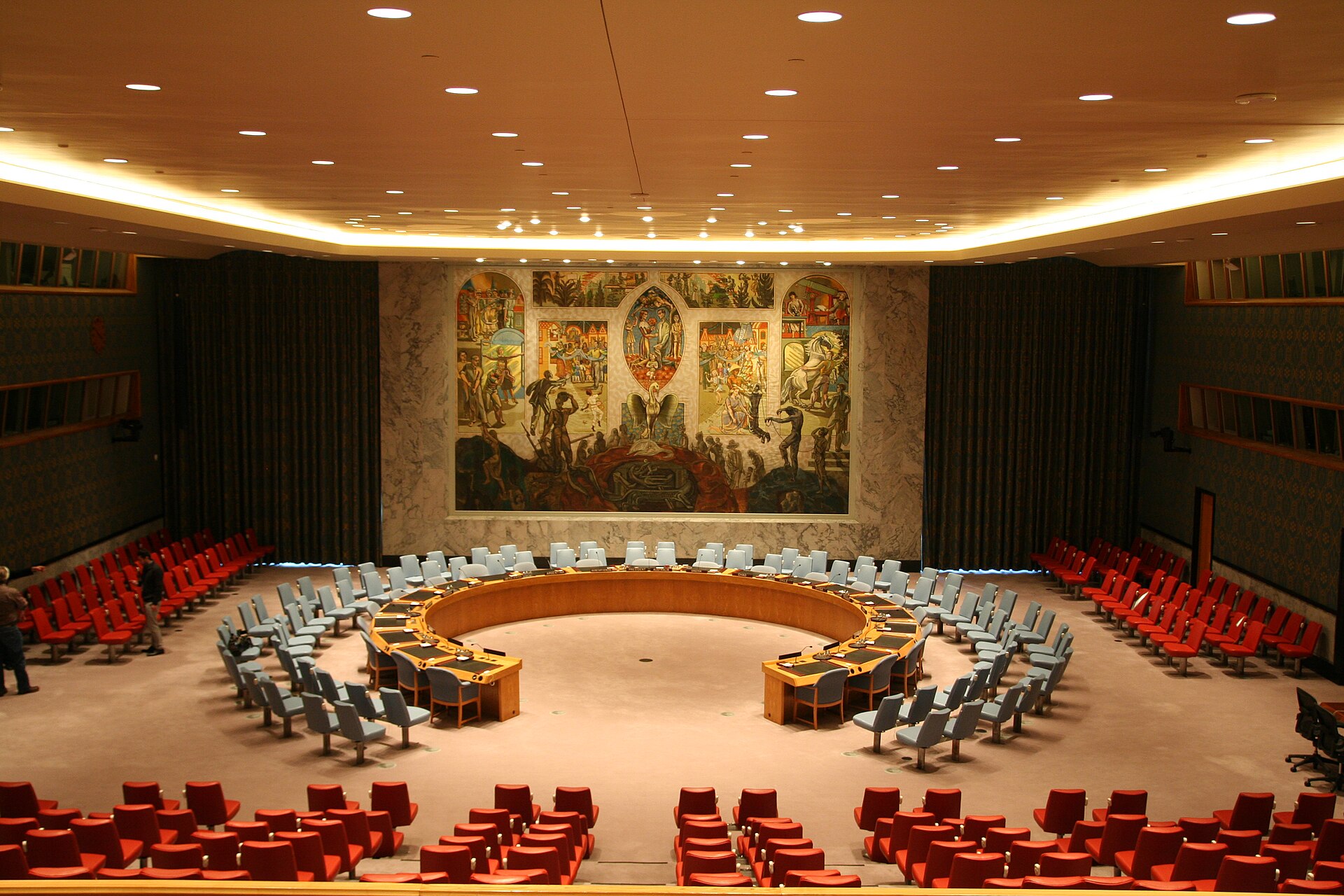
NEW YORK — Russia and China vetoed a United Nations Security Council resolution on April 7 demanding Iran cease attacks on shipping in the Strait of Hormuz, killing the last multilateral instrument that could have compelled Tehran to reopen the world’s most contested waterway. The vote was 11 in favour, two against, and two abstentions — Colombia and Pakistan — on a draft so diluted by pre-vote concessions that it no longer invoked Chapter 7 of the UN Charter or authorized the use of force.
Three weeks later, on April 27, Iranian Foreign Minister Abbas Araghchi sat across from Vladimir Putin in St. Petersburg with Admiral Igor Kostyukov — head of Russia’s military intelligence directorate, the GRU — in the room. GRU chiefs do not attend foreign minister meetings as a matter of protocol. Kostyukov’s presence confirmed what the Washington Post and CNN reported on March 6: Russia has been providing Iran with satellite imagery of American troop positions, ship movements, and aircraft locations in the Gulf since the war began on February 28. The intelligence relationship is no longer covert. It is sitting at the diplomatic table.
The double veto did not merely block a resolution. It structurally closed the multilateral track on Hormuz — the same way 16 Russian-Chinese co-vetoes on Syria between 2012 and 2023 shut the Security Council out of that conflict for over a decade. For Saudi Arabia, which invested its diplomatic credibility in publicly accusing Iran at the UNSC debate alongside Bahrain, Jordan, Kuwait, Qatar, and the UAE, the return was zero. The Council heard the case. Two permanent members killed it. And the same day the veto landed, Iran submitted a “Hormuz-first” proposal — reopen the strait if the US lifts its naval blockade and ends the war, with nuclear negotiations deferred indefinitely — that Secretary of State Marco Rubio rejected within hours.
The Vote That Closed the Door
The resolution that died on April 7 was sponsored by six Arab states: Bahrain, Jordan, Kuwait, Qatar, Saudi Arabia, and the UAE. It represented a unified Gulf front — a diplomatic formation that rarely survives contact with Security Council politics. The original draft invoked Chapter 7 of the UN Charter, the provision that authorizes sanctions and, in extremis, military force. Bahrain, which held the Council presidency, stripped Chapter 7 entirely after Chinese objections before the vote, according to Al-Monitor reporting from April 7.
What remained was a text that “strongly encourages states interested in commercial maritime routes in the Strait of Hormuz to coordinate efforts, defensive in nature, commensurate with the circumstances, to contribute to ensuring the safety and security of navigation,” according to the resolution language published by UN News. It demanded Iran “immediately cease all attacks on shipping and any attempt to impede transit or freedom of navigation in the strait.” It authorized nothing. It compelled nothing. Russia and China vetoed it anyway.
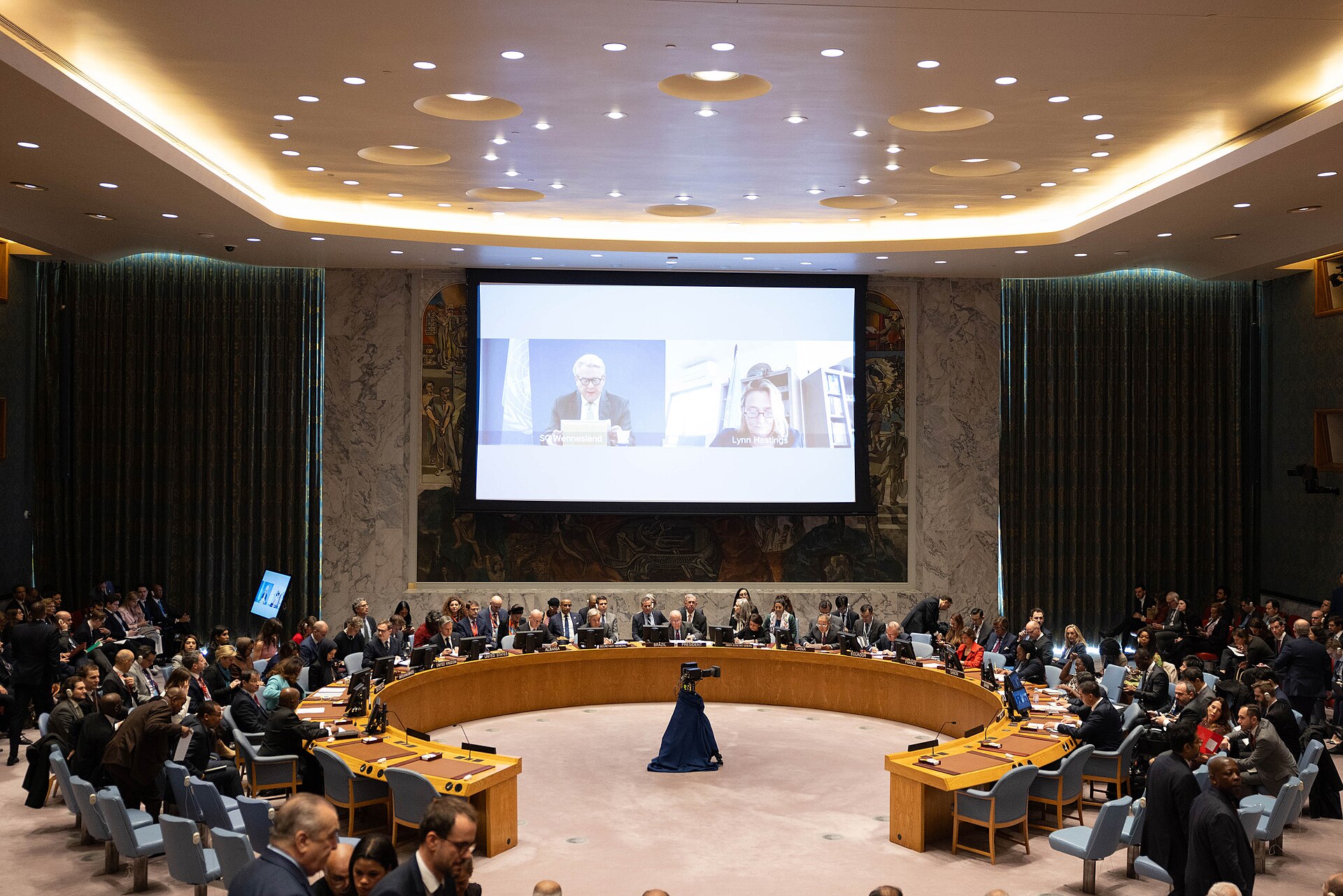
Russia’s ambassador Vassily Nebenzia called the draft “unbalanced, inaccurate and confrontational,” telling the Council that “nearly each paragraph abounded with” such elements. China’s ambassador Fu Cong said the text “failed to capture the root causes and the full picture of the conflict in a comprehensive and balanced manner.” Both ambassadors then tabled a counter-draft that called on “all parties” to cease attacks — symmetrical language that equated American and Israeli strikes on Iranian territory with Iran’s seizure of commercial vessels and mining of shipping lanes.
The Middle East briefing 3,000+ readers start their day with.
One email. Every weekday morning. Free.
The shift from March to April tells the story of deliberate escalation. On March 11, Security Council Resolution 2817 condemning Iran passed 13-0 with 136 co-sponsors. Russia and China abstained — they did not veto. Between March 11 and April 7, the Washington Post and CNN reported Russia’s satellite intelligence-sharing with Iran, Rosatom’s nuclear custodian positioning accelerated, and the IRGC declared “full authority to manage the Strait.” The abstention became a veto. The diplomatic cover hardened into a wall.
Why Did Russia and China Veto a Resolution They Had Already Weakened?
This is the question Bahrain’s Foreign Minister Abdullatif bin Rashid al-Zayani posed implicitly when he told the Council that “failing to adopt this resolution sends the wrong signal to the world — that the threat to international waterways can pass without any decisive action.” The Gulf sponsors had already conceded everything Beijing demanded. Chapter 7 was gone, authorization of force was gone, and the text was advisory, hortatory, diplomatically inert. Russia and China vetoed it because even a non-binding condemnation of Iran would have created a legal and political baseline — a UN-endorsed statement that Iran alone bore responsibility for the Hormuz closure — that could be cited in future enforcement actions.
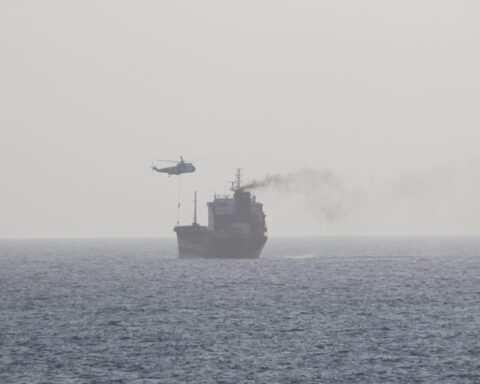
Daniel Forti, head of UN affairs at the International Crisis Group, told Al-Monitor that China and Russia saw the resolution “as too escalatory and not capturing the need for impartial and consistent diplomacy,” arguing it “placed all of the blame on Iran.” But placing the blame on Iran was the point. Only one state has mined the Strait of Hormuz. Only one state’s navy has declared full authority over commercial transit and seized vessels — including the 11,660-TEU MSC Francesca and the 6,690-TEU Epaminodas on April 22, two weeks after Iran’s own foreign minister declared the strait “completely open.”
The veto’s function was not defensive. It was architectural. By blocking even a watered-down text, Russia and China ensured that no UN instrument exists — binding or advisory — that names Iran as the party responsible for the Hormuz crisis. Every future negotiation starts from a symmetrical baseline where Iran’s blockade and America’s counter-blockade are treated as morally and legally equivalent. For Tehran, that equivalence is the prize. For Riyadh, which assembled a six-nation coalition and publicly accused Iran by name in the Council chamber, the equivalence is a repudiation.
Kostyukov in the Room
When Araghchi arrived in St. Petersburg on April 27 for what Iranian state media described as discussions on “the war and the aggression,” Putin told him: “We see how courageously and heroically the Iranian people are fighting for their independence and sovereignty — we will do everything that serves your interests so that peace can be achieved as soon as possible.” The language was instructive for what it conceded. Putin did not call for a ceasefire. He did not urge restraint. He described Iran’s war — including the Hormuz blockade, the mining of shipping lanes, the seizure of commercial vessels — as a fight for independence.
Seated alongside Putin were Foreign Minister Sergei Lavrov, presidential aide Yuri Ushakov, and Admiral Igor Kostyukov. Kostyukov runs the GRU, the military intelligence directorate that the Washington Post and CNN reported on March 6 has been providing Iran with satellite imagery pinpointing the locations and movements of American troops, ships, and aircraft across the Gulf states since the war began. The intelligence pipeline is not a background arrangement. By putting Kostyukov in the room with a foreign minister, Putin signaled that the operational relationship — targeting intelligence for a country at war with America’s Gulf partners — is now part of Russia’s official diplomatic architecture.
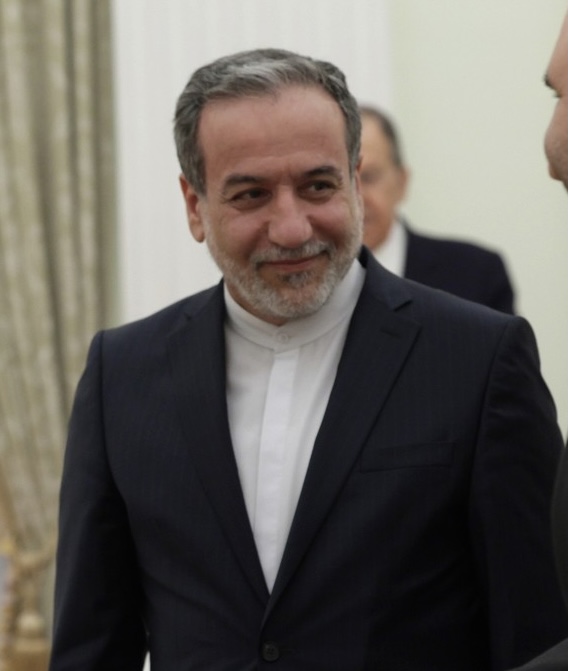
The timing was surgical. On the same day as the St. Petersburg meeting, Iran submitted its “Hormuz-first” proposal through diplomatic channels: reopen the strait if the United States lifts its naval blockade (in place since April 13) and ends the war, with nuclear negotiations deferred to a later phase. Rubio rejected it within hours. “What they mean by opening the straits is, yes, the straits are open, as long as you coordinate with Iran, get our permission, or we’ll blow you up, and you pay us,” Rubio told CNBC on April 27. Two days earlier, Trump had canceled the planned Witkoff-Kushner trip to Islamabad after Araghchi left Pakistan without committing to direct talks.
The Rosatom dimension makes the veto-intelligence-diplomacy nexus structural rather than tactical. Russia signed a $25 billion deal on September 26, 2025 — five months before the war — to build four nuclear power plants at Sirik in Hormozgan Province through Rosatom. Rosatom CEO Alexei Likhachev has since confirmed that Russia stands ready to accept and store Iranian enriched uranium under any future nuclear deal, describing Russia as “the only country with positive experience cooperating with Iran” on nuclear matters. Russia is not brokering peace. It is building the infrastructure — nuclear, intelligence, diplomatic — that makes Iran’s war position sustainable.
What Is China’s Libya Fear — and Does It Hold Up?
Fu Cong’s post-veto explanation, delivered to CGTN on April 17, was unusually explicit. “In exercising its veto on April 7, China upheld international fairness and justice, defended the purposes and principles of the UN Charter and prevented the conflict from expanding further,” he said. He then added that “the veto also created favorable conditions for achieving a temporary ceasefire and launching dialogue and negotiations.” The second claim is unfalsifiable. The first requires examining China’s stated reasoning.
Fu Cong explicitly referenced the 2011 Libya precedent at the Security Council. In March 2011, China and Russia abstained on Resolution 1973, which authorized a no-fly zone over Libya. NATO interpreted the resolution as authorization for an air campaign that ended with the overthrow and killing of Muammar Gaddafi. The Lowy Institute’s Courtney J. Fung and Andrea Ghiselli analyzed China’s April 7 veto through this lens, arguing Beijing feared that even a non-Chapter 7 text could provide “the veneer for unauthorised military operations” — particularly given Trump’s public threats to “blast Iran into oblivion.”
The argument has internal logic but external contradictions. The resolution Bahrain put to vote on April 7 did not authorize force, did not invoke Chapter 7, and did not establish a no-fly zone or any enforcement mechanism. It “strongly encouraged” defensive coordination. If China’s position is that any Security Council text criticizing a state’s military actions could be weaponized as a pretext for regime change, then no resolution condemning any state’s behavior can ever pass — which may be precisely the principle Beijing is establishing. The precedent is not Libya 2011. It is Syria 2012-2023, where 16 co-vetoes ensured the Council never acted while the war ground on for over a decade.
China’s veto also protects a commercial position. On April 6, Beijing intermediated the transit of the Qatari LNG carrier Al Daayen through Hormuz — the first laden LNG exit since the war began — at an IRGC transit fee of $2 million paid in yuan via Kunlun Bank outside the SWIFT system. China prefers operating as Hormuz’s bilateral toll-broker rather than submitting to a multilateral framework that would displace it. The veto keeps the UN out of an arrangement that keeps the yuan in.
Iran’s bilateral licensing regime has continued to expand beyond China’s brokered transits. The Japan-linked Idemitsu Maru transit under Iranian authorization — a VLCC carrying Saudi crude, cleared fee-free by IRGC — signals that Tokyo has secured its own place in the exemption queue through direct negotiation with Tehran, further entrenching the bilateral framework that the double veto has insulated from UN oversight.
Saudi Arabia’s Spent Political Capital
Saudi Arabia assembled the broadest Arab diplomatic coalition to reach the Security Council in years. Six sponsors — the full GCC minus Oman, plus Jordan — co-drafted and co-presented a resolution. The kingdom’s representative publicly accused Iran by name in the Council chamber, breaking with Riyadh’s recent preference for back-channel diplomacy over public confrontation. The investment was deliberate: Saudi Arabia wanted a UN-endorsed baseline that named Iran as the sole party responsible for the Hormuz crisis, a legal and political foundation for whatever came next.
The return was nothing. Not a diluted resolution. Not a presidential statement. Nothing. The veto killed the text. The mandatory UNGA review mechanism — triggered automatically when any P5 member exercises a veto — produced a General Assembly debate but no resolution with enforcement weight. Kuwait, speaking on behalf of the six Arab sponsors, announced intent to submit a new UNGA draft, but General Assembly resolutions are advisory instruments that cannot compel Iran, cannot authorize sanctions, and cannot mandate the use of force.
UN Secretary-General António Guterres called on April 28 for “immediate restoration of free navigation through the Strait of Hormuz” and warned that disruptions risk triggering a “global food emergency” affecting millions in Africa and South Asia. IMO Secretary-General Arsenio Dominguez called for upholding freedom of navigation and rejecting “discriminatory transit measures.” Both statements carry moral weight and zero enforcement power.
“The Strait of Hormuz is too vital to the world to be used as hostage, to be choked, to be weaponized by any one State.”
Mike Waltz, US Ambassador to the UN, April 7 2026
The humanitarian data Waltz cited in the Council put the stakes in numbers: fertilizer prices up 20 to 35 percent across Latin America and the Caribbean, global urea prices up 50 percent as Asia enters its rice planting season, and up to 45 million additional people at risk of acute hunger in 2026. Only 45 vessels have transited Hormuz since the April 8 ceasefire — approximately 3.6 percent of pre-war baseline volume. The strait is not closed in theory. It is closed in practice. And the Security Council, the only international body with the authority to do something about it, has been vetoed out of the conversation.
What Levers Remain After the Veto?
The multilateral track is not weakened. It is closed. What remains is a set of bilateral and plurilateral instruments, each with structural limitations. The most powerful is already deployed: the US naval blockade imposed on April 13, which controls the Arabian Sea entry to the Gulf. Combined with the IRGC’s control of the Gulf of Oman exit — what Bloomberg on April 26 called the “double blockade” — the result is a waterway that requires two separate permissions to transit, neither of which is governed by international law as currently enforced.
The “Uniting for Peace” mechanism (General Assembly Resolution 377-V of 1950) is the strongest remaining UN instrument. Nine Security Council members or a simple majority of UNGA members can convene an Emergency Special Session when the Council is paralyzed by a veto. The IPI Global Observatory’s analysis suggests such a session could declare the blockade a violation of UNCLOS transit passage rights, recommend a maritime monitoring mission, or request Secretary-General mediation. All three outcomes are advisory. None can authorize force or sanctions. Iran is not party to UNCLOS, which limits even the advisory utility of invoking transit passage rights against Tehran.
Saudi Arabia retains two bilateral pressure channels that bypass the UN entirely. Prince Faisal’s mediation architecture — built through direct calls to Araghchi, the French foreign minister, and other counterparts — operates outside the multilateral framework the veto just destroyed. And Riyadh holds commercial pressure over Beijing’s Hormuz broker role: CNPC and Sinopec hold 8 million tonnes per annum in contracted LNG offtake plus 5 percent equity in Qatar’s North Field East expansion. Saudi Arabia and its Gulf partners could redirect LNG supply or adjust official selling prices to pressure China’s preference for bilateral toll-brokering over multilateral enforcement. Whether Riyadh is willing to weaponize energy contracts against its largest crude buyer is a different question — but the option exists.
Rubio’s rejection of the Hormuz-first proposal on April 27 narrowed the diplomatic aperture further. The Pakistan-mediated track in Islamabad has produced three drafts from Araghchi and zero agreements. Pakistan’s role as the sole enforcement mechanism depends on appeals to IRGC commanders whom Iran’s own president has publicly accused of wrecking previous ceasefire efforts. The veto did not create these constraints. But it removed the only framework — however imperfect — that could have bypassed them.
Background
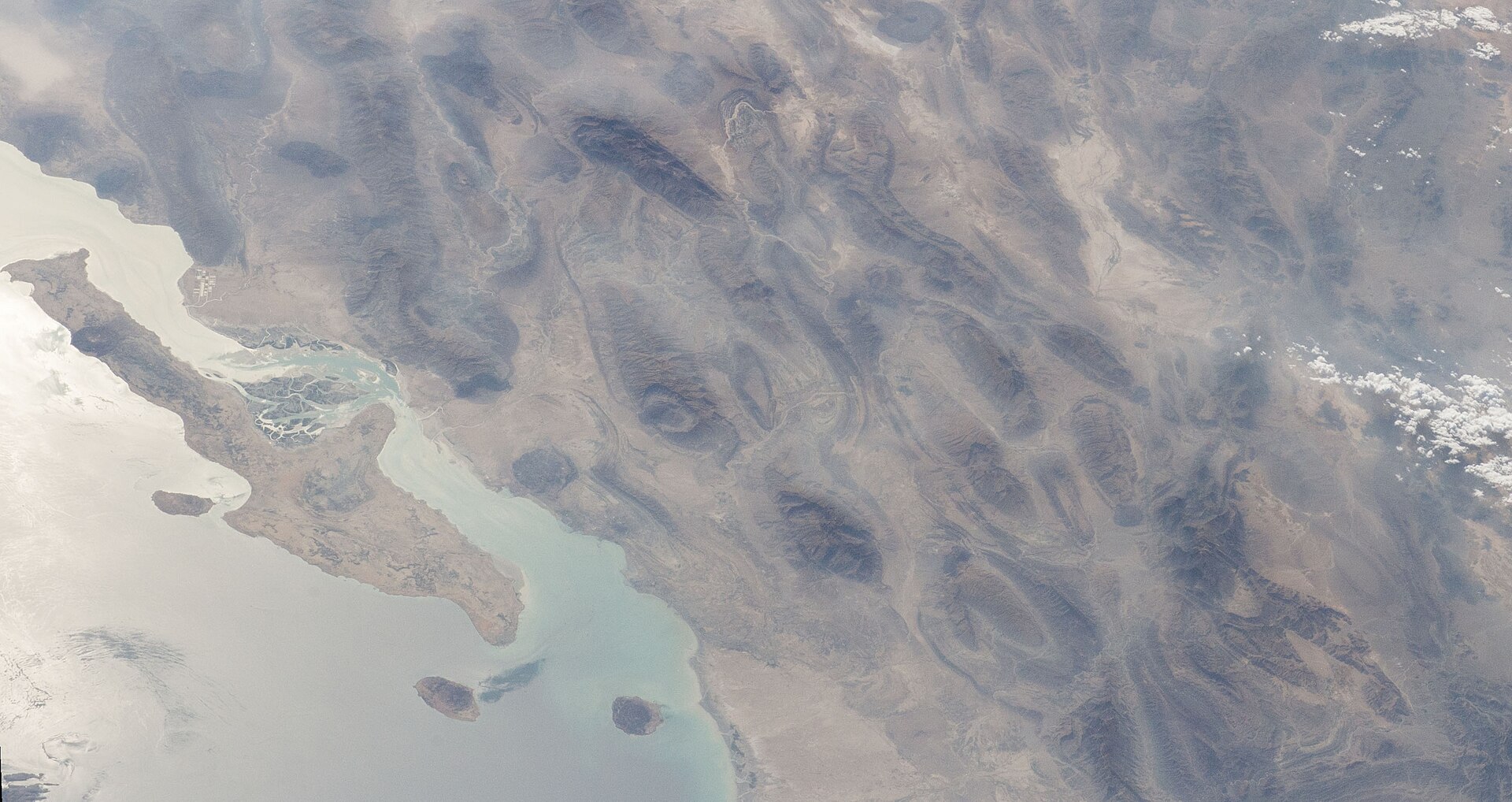
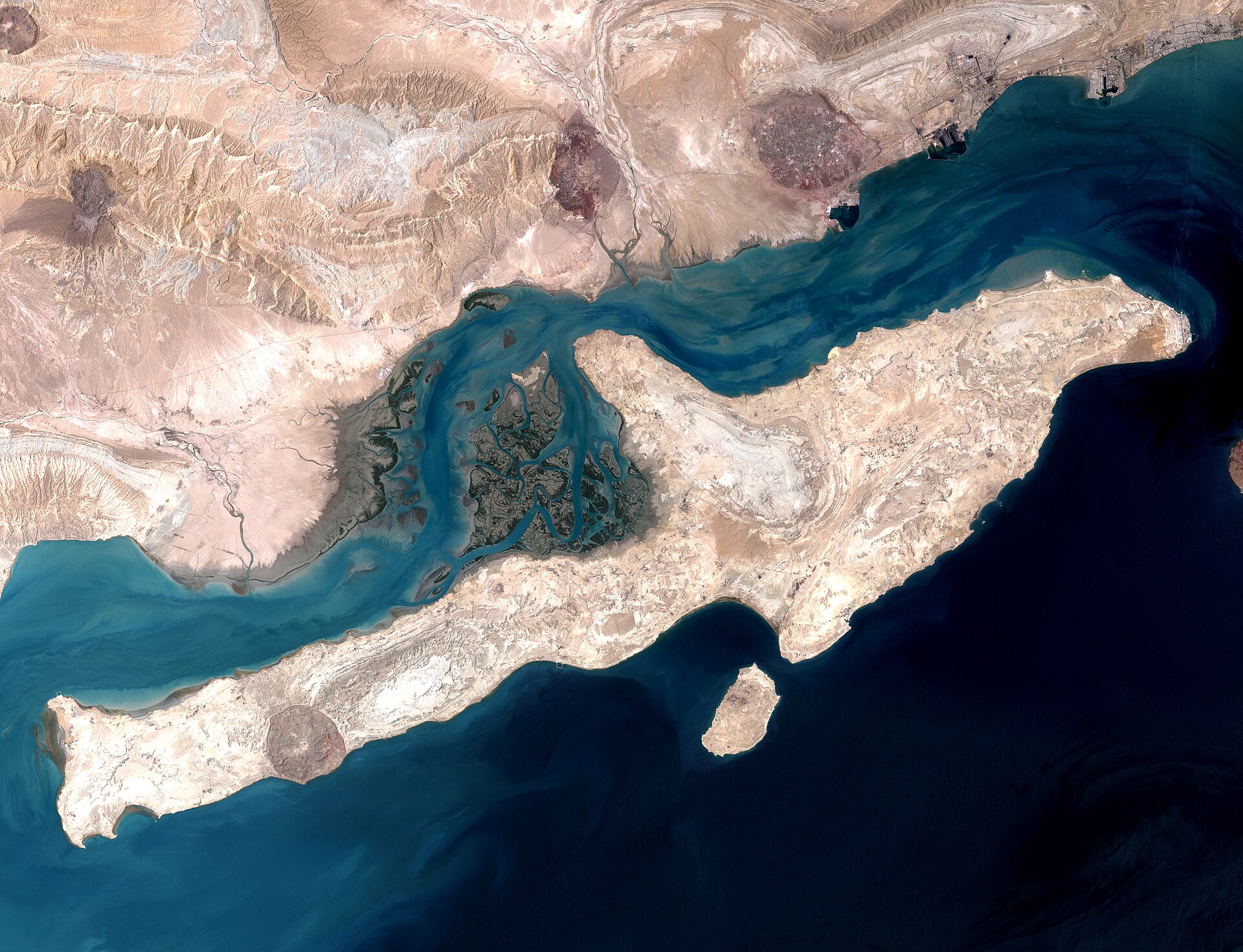
The Iran-US war began on February 28, 2026. The IRGC declared control over Hormuz shipping lanes in early March, redirecting vessels through a narrow 5-nautical-mile channel between Qeshm and Larak islands inside Iranian territorial waters. The United States imposed a naval blockade on Iranian ports on April 13. A ceasefire nominally took effect on April 8 but has not restored commercial shipping — only 45 transits have occurred since, against a pre-war baseline of roughly 1,250 per month, according to IEA shipping data.
Russia’s involvement in Iran’s war effort predates the conflict. The $25 billion Rosatom deal for four nuclear plants in Hormozgan Province was signed September 26, 2025. Satellite intelligence-sharing began on or before February 28, 2026, according to US officials cited by the Washington Post on March 6. The Security Council’s initial response — Resolution 2817 on March 11, condemning Iran with 136 co-sponsors and 13 votes in favour — passed because Russia and China chose to abstain rather than veto. The April 7 shift to an active double veto marked the point at which Moscow and Beijing decided that protecting Iran’s position at the UN was worth the diplomatic cost of openly blocking the Council.
China’s role is dual. Beijing vetoed the Hormuz resolution while simultaneously operating as the strait’s primary commercial intermediary — brokering LNG transits through the IRGC’s toll system and settling fees in yuan outside SWIFT. The arrangement gives China commercial control over Gulf energy flows that a multilateral framework would have diluted. Russia’s role is trilateral: diplomatic shield at the UN, intelligence provider in the field, and nuclear custodian through Rosatom. Together, the two permanent members have converted their veto power from a defensive instrument into an active component of Iran’s war infrastructure.
FAQ
Could the General Assembly override the Security Council veto on Hormuz?
Not in any binding sense. The “Uniting for Peace” mechanism allows the General Assembly to convene an Emergency Special Session when the Council is blocked by a veto, and a session on Hormuz has been held. But UNGA resolutions cannot authorize sanctions, compel compliance, or mandate the use of force. The most a UNGA resolution could achieve is declaring the Hormuz blockade a violation of international navigation rights and recommending a monitoring mission — both advisory actions that Iran could ignore without legal consequence. The enforcement gap between the Security Council and the General Assembly is the gap Russia and China exploited.
Has any state filed an ICJ case on freedom of navigation through Hormuz?
No state has filed an International Court of Justice case on Hormuz as of April 28, 2026. An ICJ case would face jurisdictional obstacles: Iran is not party to UNCLOS, and the ICJ requires either a consenting respondent or a treaty basis for jurisdiction. Even if a case were accepted, ICJ provisional measures are slow to issue and historically difficult to enforce — Russia ignored the ICJ’s order to halt its invasion of Ukraine in 2022. The judicial route remains theoretically available but practically inert.
Why did Colombia and Pakistan abstain rather than vote in favour?
Colombia’s abstention reflected its broader non-aligned positioning on Middle East conflicts. Pakistan’s abstention was structurally constrained: Islamabad is simultaneously hosting the ceasefire mediation between Iran and the United States, making a vote condemning Iran incompatible with its role as a neutral venue. Pakistan’s $5 billion Saudi loan matures in June 2026, creating financial pressure from Riyadh, but the 27th Constitutional Amendment has placed foreign policy under the military establishment’s control, and Chief of Army Staff Munir has prioritized Pakistan’s mediator credibility over alignment with Gulf sponsors.
What is the Syria parallel and why does it matter?
Between 2012 and 2023, Russia and China co-vetoed 16 Security Council resolutions on Syria, ensuring the Council never authorized action against the Assad regime. The multilateral track closed entirely after the first few vetoes; subsequent attempts were performative. The Syria precedent suggests that once Russia and China commit to shielding a partner through vetoes, the Security Council does not recover its role during the active conflict. The April 7 Hormuz veto, following the March 11 abstention, mirrors the pattern of escalating commitment — from passive non-interference to active protection.
What would it take for Russia or China to reverse their veto position?
Historical precedent offers limited guidance, but the structural incentives point against reversal. Russia’s position is anchored by three interlocking interests: the $25 billion Rosatom nuclear deal, the GRU intelligence-sharing pipeline, and the diplomatic weight Moscow gains by positioning itself as Iran’s indispensable partner. China’s position is anchored by commercial interests — the bilateral toll-brokering arrangement through Hormuz and yuan-denominated settlements that bypass SWIFT — and by the Libya 2011 precedent that has become a fixed principle in Chinese Security Council behavior. A reversal would require either a direct threat to these interests (such as secondary sanctions targeting Rosatom or Kunlun Bank) or a shift in the military situation dramatic enough to make continued support for Iran’s position untenable. Neither condition is currently met.
The veto did not end Saudi Arabia’s Hormuz strategy — it redirected it. Prince Faisal’s April 29 call to Guterres, backed by the GCC Decisiveness Summit communiqué, represents Saudi Arabia’s Secretary-General good-offices track on Hormuz: a channel that routes through the Secretary-General’s independent authority under Articles 98–99 of the UN Charter rather than through the Security Council that Russia and China now control.
“Free navigation in the Strait of Hormuz, which is so essential for the countries of the region and the whole of the world, can be guaranteed only through ending hostilities and reaching a negotiated solution.”
Vassily Nebenzia, Russian Ambassador to the UN, April 7 2026