RIYADH — SABIC, the petrochemical giant 70%-owned by Saudi Aramco, filed a formal Tadawul regulatory disclosure on April 8 stating it “cannot provide, at the present time, an estimate for the return to production, as this is contingent on domestic and international factors” — making it the first listed Saudi company to place legally-binding war-damage uncertainty on the public record since the Iran conflict began. The filing warned of a “material impact to 2026 financial results” without attaching a number, a formulation that under Capital Market Authority listing rules triggers continuous disclosure obligations and exposes the sovereign wealth chain — from SABIC through Aramco to PIF — to an unquantifiable liability arriving five weeks before a $3.7 billion debt cliff at the Sadara joint venture.
The disclosure is not corporate caution. It is a securities-law event. Under CMA rules, any interruption exceeding 5% of gross revenues requires immediate material disclosure before the next trading period, according to Baker McKenzie’s guide to the Saudi Exchange. SABIC’s language does not estimate a timeline, a cost, or a recovery path, which means the market is now pricing a company whose own board cannot tell shareholders when production resumes.
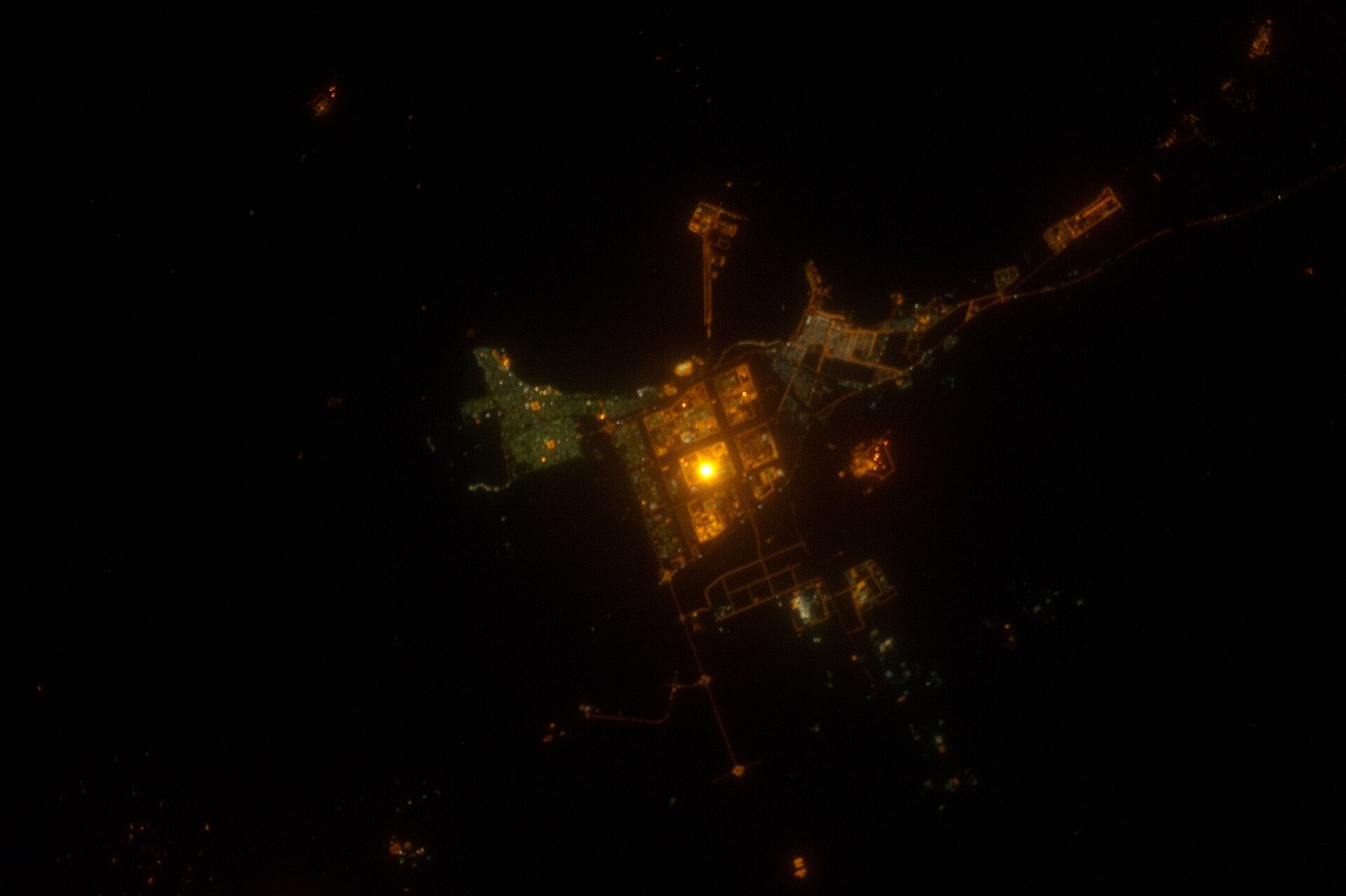
Table of Contents
Three Stages to a Disclosure
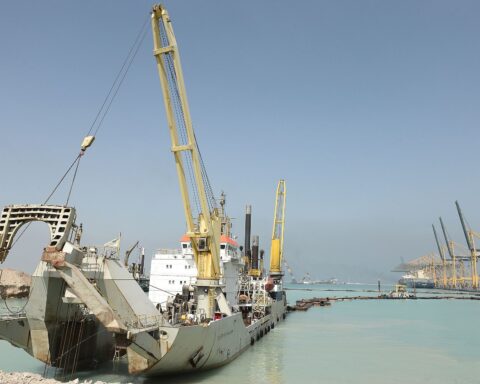
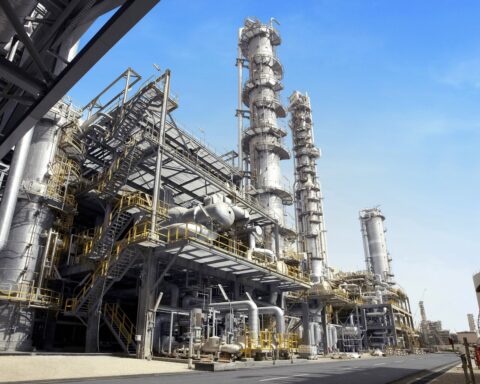
SABIC’s filing did not arrive from nowhere. It is the endpoint of a three-stage degradation that began with supply chains and ended with physical fire. Stage one hit in late March, when Sadara Chemical — the $20 billion Aramco-Dow joint venture sharing Jubail infrastructure — shut down all 26 production units after Hormuz disruption severed feedstock supply. Stage two followed on March 26-27, when SABIC itself declared force majeure on five export product lines: MMA, MEG, DEG, styrene, and methanol, according to ICIS reporting on March 30.
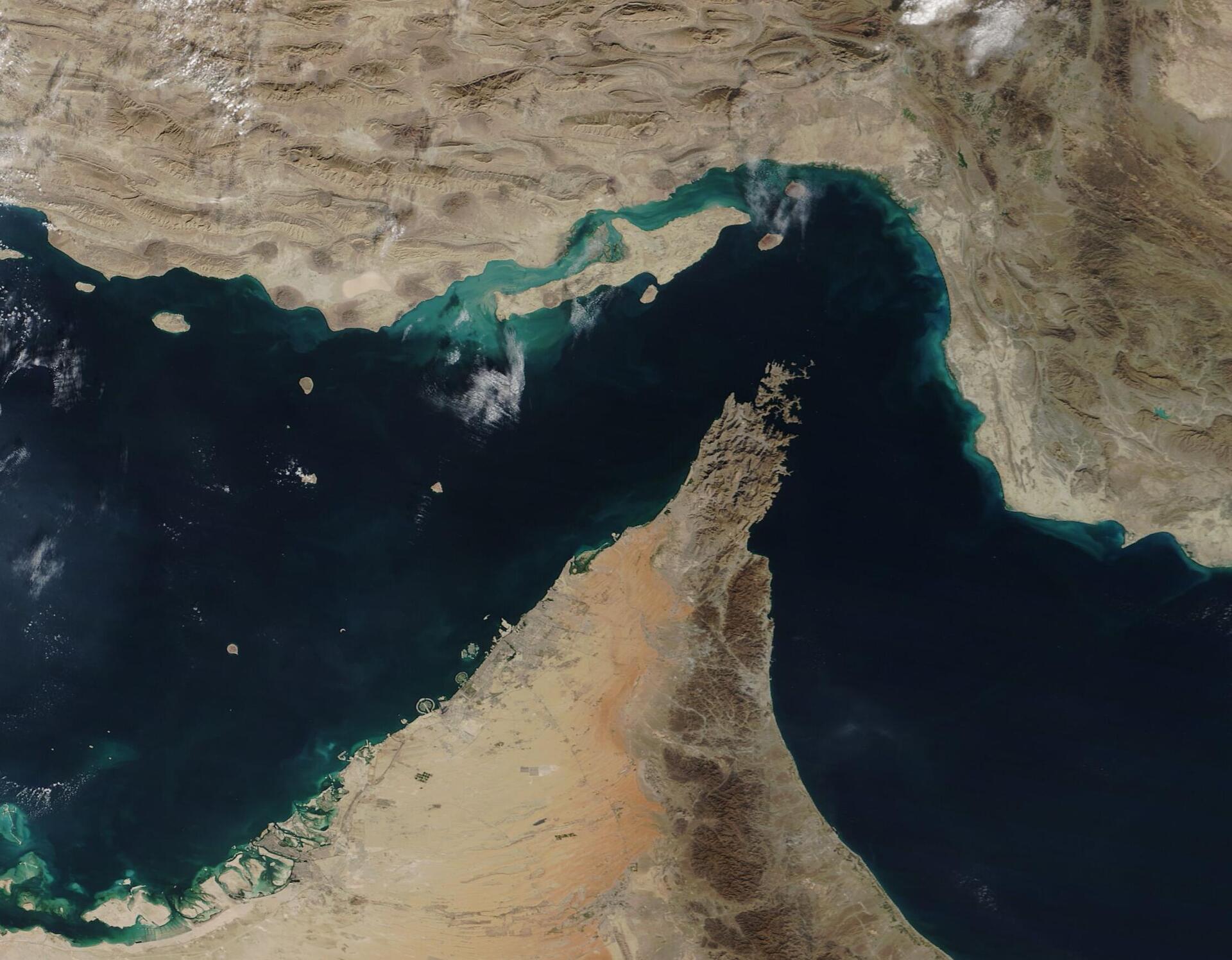
Stage three was kinetic. On April 7, eleven Iranian ballistic missiles targeted the Jubail industrial complex. Saudi air defenses intercepted all eleven, but falling debris ignited a fire at the SABIC complex — a distinction that matters legally (no missile directly struck the facility) but not operationally. Reuters reported the fire on April 7; SABIC did not immediately respond to Reuters’ requests for comment. One day later, the Tadawul disclosure appeared.
The sequence matters because it shows SABIC’s board waited through supply-chain disruption and force majeure without triggering a formal disclosure. It was the physical damage — debris from successful interceptions, not failed ones — that crossed the threshold. A defense system working exactly as designed still produced a securities-law event for the kingdom’s largest listed petrochemical company.
What Do CMA Listing Rules Actually Require?
The CMA’s listing rules mandate disclosure “without delay” before the next trading period for any event that could materially affect a company’s financial position, according to Baker McKenzie’s guide to the Saudi Exchange. The 5% revenue threshold — roughly $1.55 billion for SABIC, based on its $31.07 billion in 2025 revenue reported by Argaam on March 4 — is the bright line. Every month that Jubail stays offline costs approximately $2.59 billion in lost revenue, meaning the threshold was crossed within the first three weeks of disruption.
The Middle East briefing 3,000+ readers start their day with.
One email. Every weekday morning. Free.
What makes SABIC’s language legally consequential is its open-endedness. The filing did not say production would resume in weeks or months. It conditioned recovery on “domestic and international factors” — language that encompasses the Iran conflict, Hormuz shipping access, physical reconstruction, and feedstock supply chains simultaneously. For a company already carrying a $6.87 billion net loss in 2025 — with $20.94 billion of that concentrated in Q4 alone, per The National and Zawya — the disclosure tells the market that the worst year in SABIC’s history has no visible floor.
SABIC shares had already hit a 15-year low in March 2026, and the company had begun divesting roughly $950 million in European and American operations, according to ICIS and Argus Media. The Tadawul disclosure converts what investors could treat as a temporary disruption into an indefinite one, with the company’s own board as the source.
The PIF Liability Chain
The disclosure’s blast radius extends well beyond SABIC’s share price. Aramco acquired 70% of SABIC from PIF in June 2020 for approximately $69.1 billion — the transaction that was supposed to recapitalize PIF for Vision 2030’s giga-projects. That ownership stake means Aramco consolidates SABIC’s losses, and PIF, as Aramco’s controlling shareholder, bears the sovereign weight of both. Every quarter that SABIC cannot estimate a return to production is a quarter that Aramco’s consolidated earnings absorb the damage, and PIF’s dividend stream from Aramco — already cut by roughly one-third under PIF’s 2026-2030 strategy — shrinks further.
This arrives at the worst possible moment for PIF’s credibility with international partners. The fund’s 2026-2030 strategy, published in early April, already disclosed $8 billion in giga-project write-downs, near-zero investment returns for 2024, and the formal suspension of The Line at 2.4 kilometres of a planned 170 kilometres. Construction commitments were slashed from $71 billion to $30 billion. Liquid cash reserves stood at approximately $15 billion as of late 2024, according to Global SWF data. SABIC’s unquantifiable liability lands on a balance sheet that was already under unprecedented strain before a single missile flew.
Sadara Filed the Same Words
Sadara Chemical filed its own Tadawul disclosure using identical language: “cannot provide, at the present time, an estimate for the return to production, as this is contingent on domestic and international factors.” The mirrored phrasing — likely drafted by the same legal counsel — suggests coordinated disclosure across the Jubail complex rather than independent corporate decisions. With all 26 Sadara units offline and the $3.7 billion senior debt grace period expiring on June 15, the identical filing carries different consequences.
Sadara’s debt architecture splits the guarantee between Aramco at $2.405 billion (65%) and Dow at $1.295 billion (35%), established during the 2021 restructuring with final maturity in 2038. PIF carries a third, older exposure: $1.3 billion in direct loans dating to Sadara’s 2013 founding. The company has posted net losses in four of the past five years, and accumulated losses exceeded 100% of share capital by end-2025. A company that cannot tell its creditors when production resumes, five weeks before a $3.7 billion grace period expires, is a company whose guarantors need to start writing cheques — or negotiating extensions.
The June 15 date is not a default trigger in itself. Grace periods exist precisely for situations like this. But lenders’ willingness to extend depends on visibility into recovery, and SABIC and Sadara have just told the Tadawul they have none. Dow’s $1.295 billion guarantee exposes an American blue-chip to the same open-ended uncertainty, a fact that has drawn no coverage from Bloomberg or Reuters as of publication.
IRGC Gave Twenty Days’ Notice
The Islamic Revolutionary Guard Corps pre-announced Jubail as a “direct and legitimate target” on March 18, 2026 — twenty days before the April 7 strike — via Fars News. The IRGC specifically named Sadara, the Aramco-Dow joint venture, among its targets, a deliberate signal that US-partnered industrial assets carried no immunity. When the strike came, the IRGC stated it was “in response to the enemy’s crimes in the aggression against Iran’s Asaluyeh petrochemical plants,” framing the attack as reciprocal targeting of petrochemical infrastructure, according to Fars News reporting on April 7.
Iran’s Defapress treated the SABIC fire as confirmation of effective strike capability, not as collateral debris damage — a framing gap that matters for insurance claims and future targeting doctrine. ExxonMobil owns 50% of Kemya, an elastomers operation at Jubail that the IRGC also named among its targets. The presence of three major American corporate interests — Dow via Sadara, ExxonMobil via Kemya, and the broader investor base via Tadawul-listed equities — creates a US regulatory and legal exposure that extends far beyond the Saudi exchange.
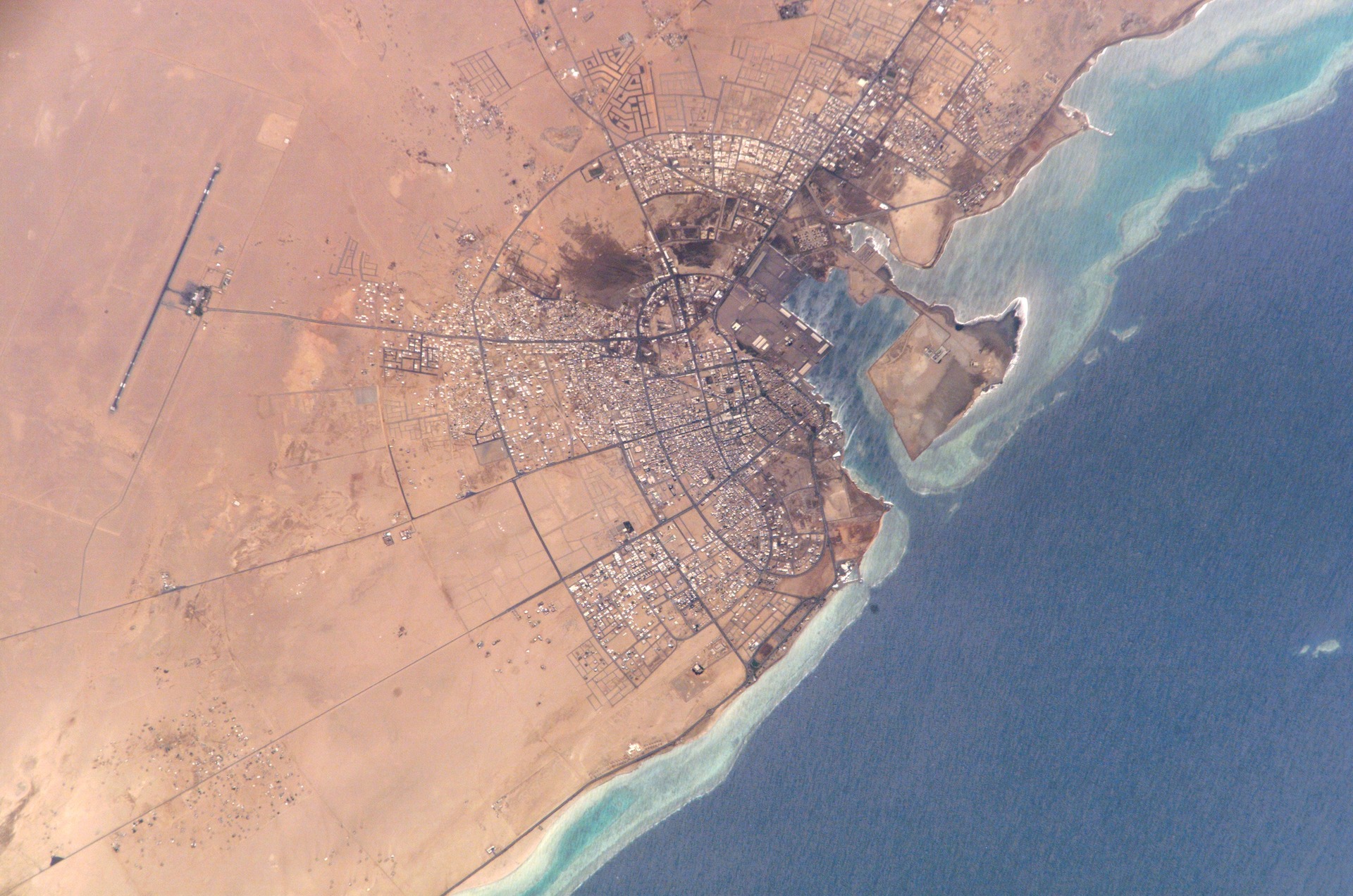
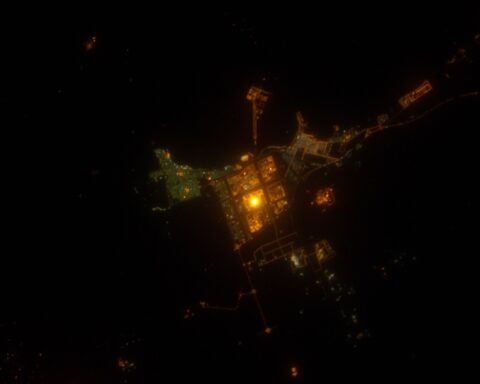
Jubail’s scale explains why the IRGC treats it as a strategic target rather than an industrial one. The complex produces approximately 60 million tonnes of petrochemicals per year, representing a significant share of global output and approximately 7% of Saudi GDP, according to Bechtel estimates. A single industrial zone carrying that concentration of output, ownership, and sovereign exposure has no parallel in the Gulf — which is precisely why its indefinite shutdown registers as a systemic event rather than a corporate one.
How Does This Land on PIF’s Balance Sheet?
PIF now carries three layers of Sadara debt exposure that the Tadawul disclosures have made simultaneously visible. The first is the $1.3 billion in direct loans from 2013. The second is the sovereign backstop behind Aramco’s 65% ownership and $2.405 billion guarantee. The third is indirect — PIF owns the controlling stake in Aramco, which owns 70% of SABIC, which co-locates with Sadara at Jubail and shares the same indefinite production timeline. Each layer was manageable in isolation. The Tadawul disclosures bind them together under a single phrase: “cannot estimate.”
Against liquid reserves of approximately $15 billion, PIF faces the cascading costs of a war economy — from the $3.49 billion already spent on PAC-3 interceptors to the reconstruction bill that no one has yet calculated for Jubail. The fund’s 2026-2030 strategy was designed around disciplined capital recycling: eight planned IPOs, $23 billion in AI partnerships with NVIDIA, AMD, AWS, Qualcomm, and Cisco through the Humain platform, and Expo 2030 and FIFA 2034 as fixed investment anchors. That strategy assumed a functioning petrochemical sector generating the cash flow to fund the pivot from hydrocarbons to technology. SABIC’s disclosure removes that assumption from the spreadsheet.
No other Gulf sovereign wealth fund faces a comparable chain of cascading liabilities from a single industrial zone. Abu Dhabi’s ADNOC has taken hits at Ruwais, but the UAE’s diversified upstream portfolio and geographic dispersion limit the contagion. PIF’s exposure is concentrated — Jubail to Aramco to SABIC to Sadara to PIF — and the April 8 disclosures mark the first time that chain has been documented in legally-binding public filings, simultaneously, by every link.
Frequently Asked Questions
What happens if Sadara cannot make its June 15 debt payment?
The June 15 date marks the expiration of a grace period from the 2021 restructuring, not a bond coupon. If Sadara cannot meet terms, Aramco’s $2.405 billion guarantee and Dow’s $1.295 billion guarantee become callable. Lenders would likely negotiate an extension rather than trigger cross-default provisions, but negotiations require visibility into a production timeline — exactly what both SABIC and Sadara have told the Tadawul they lack. A formal default by a PIF-backed entity would be unprecedented in Saudi sovereign finance and would ripple through PIF’s ability to raise capital for Vision 2030 projects internationally.
Does SABIC’s disclosure affect Aramco’s credit rating?
Aramco consolidates SABIC’s financial results, so an indefinite production halt at SABIC flows directly into Aramco’s reported earnings. Rating agencies typically distinguish between operational disruptions and structural impairments; SABIC’s “cannot estimate” language pushes the classification toward structural. Aramco’s credit profile also carries the $2.405 billion Sadara guarantee as a contingent liability. While Aramco’s upstream oil operations dwarf SABIC’s contribution, the combination of reduced Hormuz-dependent exports, lower dividends to PIF, and now unquantifiable SABIC losses creates a cumulative drag that agencies will evaluate at next review.
Are other Jubail tenants likely to file similar disclosures?
ExxonMobil’s 50% stake in Kemya — an operation the IRGC specifically named as a target — has not yet triggered a comparable Tadawul filing because Kemya is not separately listed. However, ExxonMobil’s SEC disclosure obligations under US securities law may require the company to address Jubail exposure in its next quarterly filing, given the IRGC’s explicit targeting of Kemya and the ongoing production halt. Any other listed Saudi company with material Jubail operations that remains offline faces the same CMA 5% revenue threshold that forced SABIC’s hand.
How does this compare to the 2019 Abqaiq-Khurais attack?
The September 2019 drone and missile attack on Aramco’s Abqaiq processing facility and Khurais oil field temporarily knocked out 5.7 million barrels per day — roughly half of Saudi output. Aramco restored production within weeks and did not file a Tadawul uncertainty disclosure. The difference in 2026 is duration: SABIC’s “cannot estimate” language reflects an ongoing conflict with no ceasefire holding, not a single-event disruption with a clear repair timeline. The 2019 attack cost Aramco an estimated $2 billion in repairs, according to widely-reported figures at the time; the 2026 Jubail damage cost remains, by SABIC’s own filing, unquantifiable.
Does war damage at SABIC trigger insurance payouts, and can they cover the gap?
Industrial war-risk insurance for Gulf petrochemical facilities typically excludes losses from declared armed conflict unless specifically written in as a rider — and most policies were priced before the current conflict began. SABIC’s $6.87 billion net loss in 2025 already exhausted significant financial buffers. Even if war-risk coverage applies, physical reconstruction of blast-damaged infrastructure at a complex of Jubail’s scale typically takes 18-36 months; insurance proceeds would cover repair costs, not lost revenue during the outage. The Tadawul filing’s silence on insurance recovery is itself informative: a company that had clear coverage would typically say so to steady the market.
The same war-risk insurance gap that leaves SABIC’s recovery timeline undefined also confronts the foreign investors now being courted by Saudi Arabia’s four special economic zones, which activate April 16. That tension is examined in Saudi Arabia’s Four Special Economic Zones Activate Wednesday — Into a War.