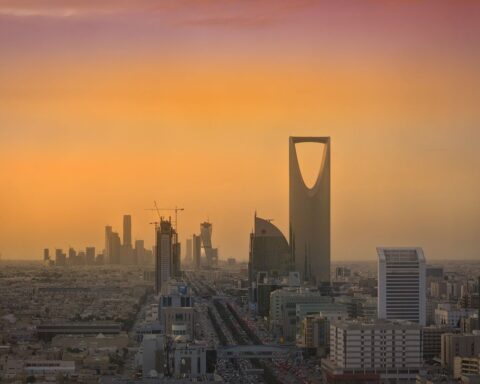
Saudi Arabia’s Four Special Economic Zones Activate Wednesday — Into a War
RIYADH — On April 16, the regulatory frameworks governing Saudi Arabia’s four special economic zones enter full legal force, offering foreign investors 5% corporate tax rates, zero withholding tax on dividends, and customs duty suspension for up to twenty years. The activation arrives forty-seven days into an armed conflict that has pushed war-risk insurance beyond the reach of most commercial underwriters, collapsed the kingdom’s non-oil PMI to its lowest reading since the pandemic, and prompted the first war-damage disclosure in the history of the Saudi Exchange.
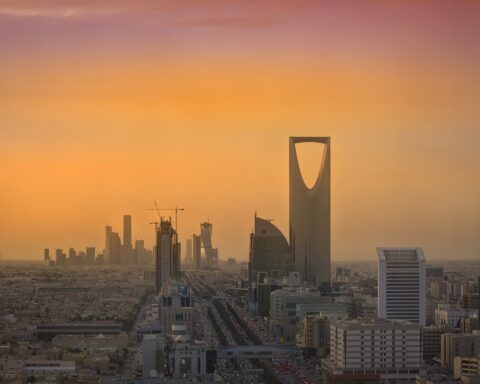
The four zones — King Abdullah Economic City in Makkah Province, Ras Al-Khair in the Eastern Province, Jazan in the south, and a virtual Cloud Computing zone headquartered in Riyadh — were designed in peacetime to close a structural gap: Saudi Arabia attracted $20.7 billion in foreign direct investment in 2024, roughly one-fifth of the annual FDI target Vision 2030 requires by decade’s end. The tax incentives are real. The question is whether any incentive structure, however generous, can function when the insurance architecture that underwrites physical investment in the Gulf has been withdrawn.
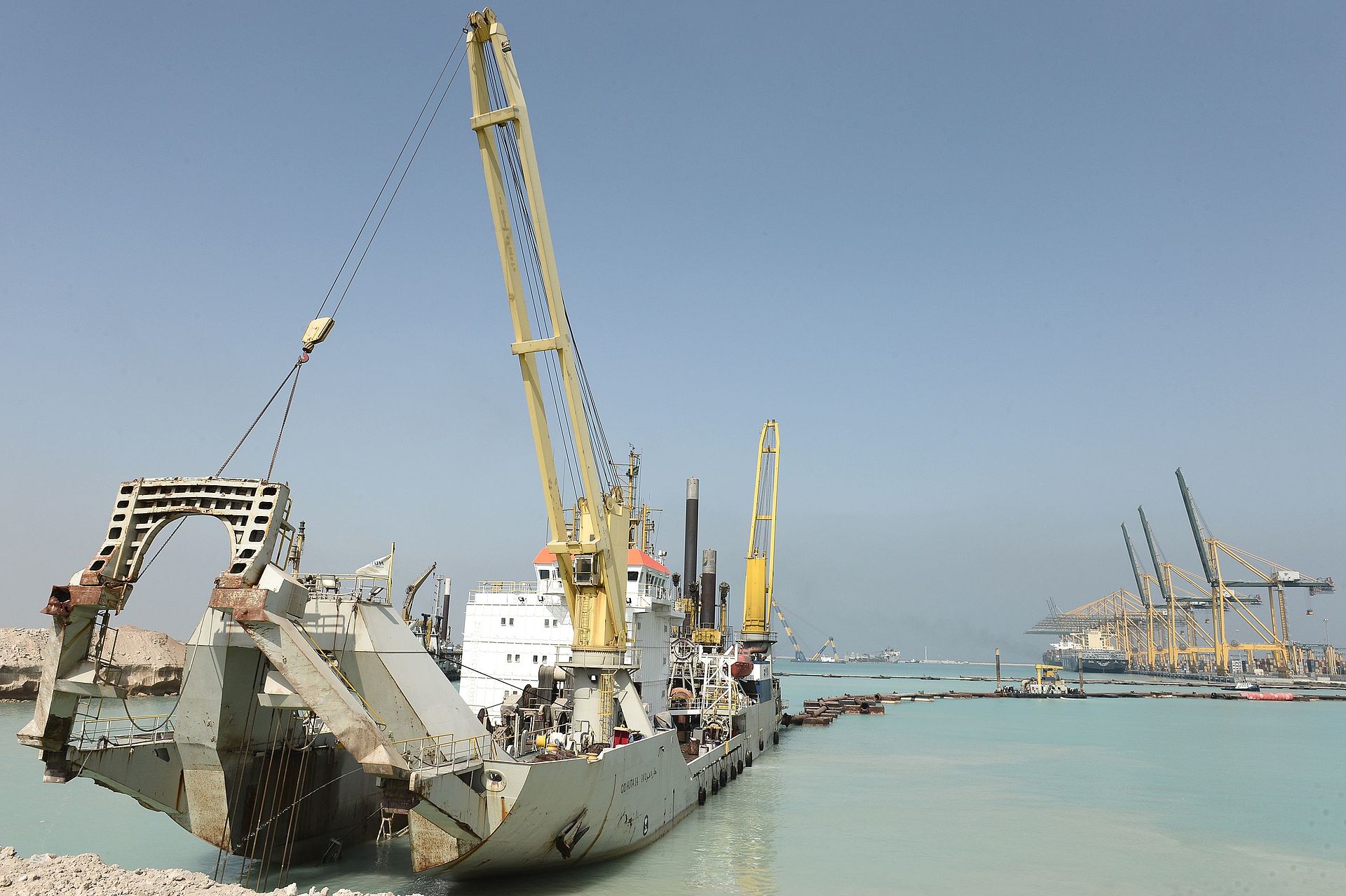
Table of Contents
- What Activates on April 16 — and What Does Not
- The Tax Architecture: What the Zones Actually Offer
- Can Foreign Investors Insure Assets Inside the Zones?
- Ras Al-Khair and the Eastern Province Problem
- Why Do Economic Substance Rules Matter in a War?
- The FDI Gap Before the War
- Lucid Motors: The Flagship That Cannot Leave
- The Cloud Computing Exception
- UAE and Qatar as Alternative Destinations
- The Fiscal Backdrop: Who Pays for Zero-Percent Incentives?
- FAQ
What Activates on April 16 — and What Does Not
The April 16 date is a legal commencement, not an operational launch. The Council of Ministers approved the SEZ regulatory frameworks in January 2026; publication in the Official Gazette triggered a 90-day implementation clock. When that clock expires on Wednesday, the eligibility criteria, tax treatment, and compliance obligations become enforceable law. Individual zone authorities — ECZA for the national framework, with separate boards for each zone — will issue specific licensing guidelines on their own timelines.
No anchor investor move-in ceremonies are scheduled. No ribbon-cutting events appear on any official calendar. The activation is administrative, the kind of regulatory milestone that in peacetime would have generated a week of coverage in the Saudi business press and a ministerial delegation to Davos. In wartime, it generates a legal obligation for zone authorities to begin processing applications under frameworks whose final economic substance regulations have not yet been published.
The Economic Substance Requirements — the anti-shell-company provisions that determine whether a zone entity qualifies for preferential tax treatment — went out for public consultation on February 16, 2026. The consultation window closed March 3. Final regulations remain pending as of the activation date. Investors applying to the zones on April 16 will know their tax rates but not the full compliance burden required to keep them.
The Tax Architecture: What the Zones Actually Offer
The headline incentive is a 5% corporate income tax rate for up to twenty years, against a 20% mainland rate. For capital-intensive manufacturing or logistics operations, the 15-percentage-point differential is material — on $100 million in taxable income, the annual saving is $15 million.
The Middle East briefing 3,000+ readers start their day with.
One email. Every weekday morning. Free.
| Incentive | KAEC | Ras Al-Khair | Jazan | Cloud Computing (Riyadh) |
|---|---|---|---|---|
| Corporate Income Tax | 5% (20 years) | 5% (20 years) | 5% (20 years) | 5% (20 years) |
| Withholding Tax (dividends, interest, royalties) | 0% | 0% | 0% | Standard rates apply |
| Zakat | Exempt | Exempt | Exempt | Exempt |
| Customs Duties (eligible imports) | Suspended | Suspended | Suspended | Suspended |
| VAT on intra-zone goods | 0% | 0% | 0% | 0% |
| VAT on services | Standard 15% | Standard 15% | Standard 15% | Standard 15% |
The Cloud Computing zone’s exclusion from withholding tax exemptions is the most commercially consequential asymmetry. A hyperscaler routing licensing fees or royalty payments through a Riyadh-based cloud entity will face standard Saudi withholding rates — a structural disadvantage against the UAE’s 0% federal WHT regime. For the three physical zones, the zero-WHT treatment on dividends and technical fees is designed to compete directly with Dubai’s free zones and Bahrain’s investment framework.
The comparison that matters, though, is not with Dubai’s tax rate. It is with the cost of doing business in a jurisdiction where property and casualty insurers have activated war exclusion clauses.
Can Foreign Investors Insure Assets Inside the Zones?
The short answer is: not easily, not cheaply, and in some cases not at all.
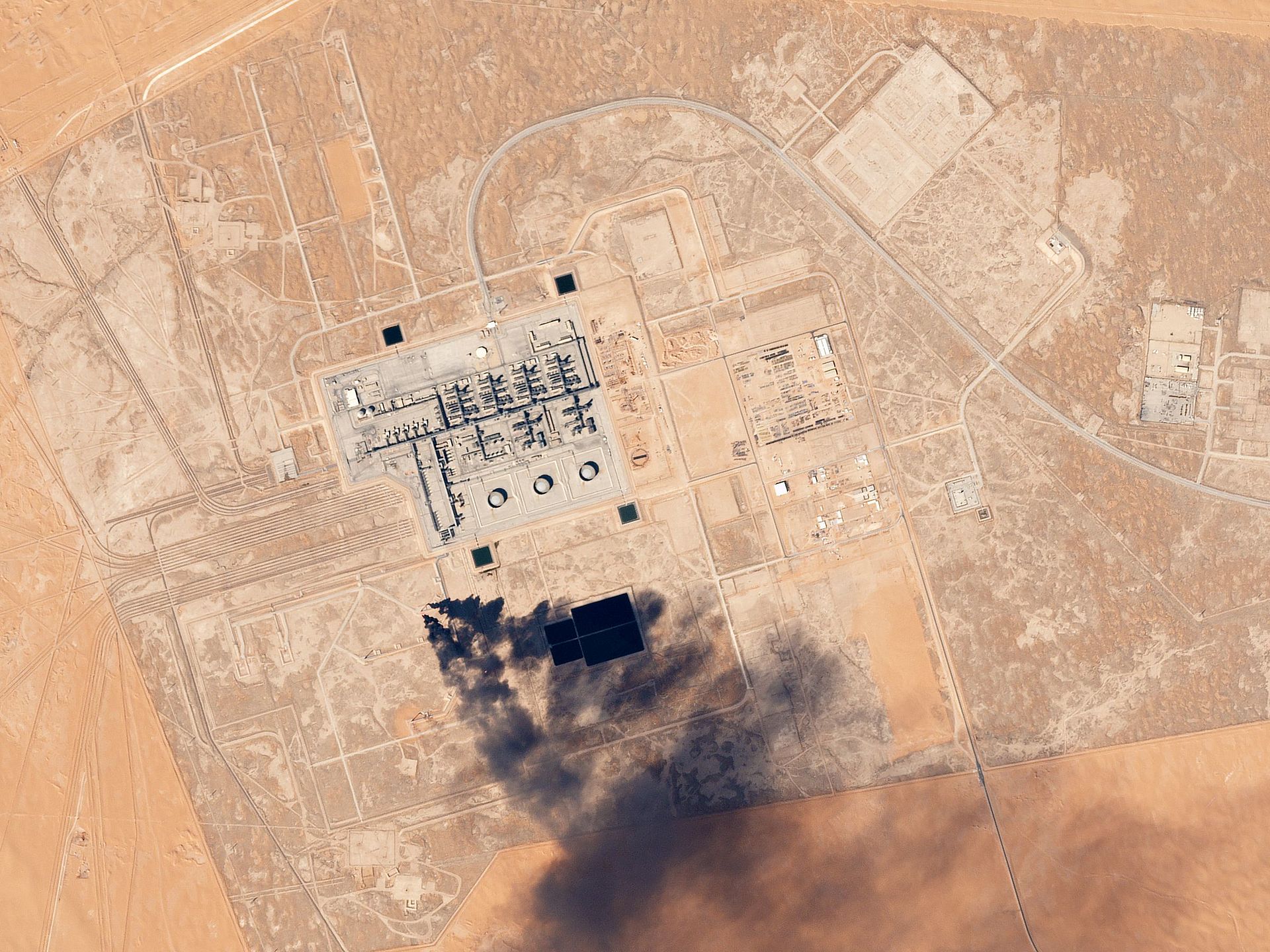
On March 3, 2026 — three days after US and Israeli strikes on Iran triggered the current conflict — the Joint War Committee of Lloyd’s Market Association expanded its Listed Areas designation to include Bahrain, Djibouti, Kuwait, Oman, and Qatar. Saudi Arabia’s territory is not explicitly listed. But the Eastern Province, where Ras Al-Khair sits, is within demonstrated range of Iranian ballistic missiles that struck Jubail on April 7 and Ras Tanura on March 2.
Maritime war risk premiums surged fivefold within 48 hours of February 28. New hull war risk contracts settled at 1% of vessel value per seven-day period, against a pre-conflict baseline of 0.25%. Some tankers faced 3% rates. These are transit costs; they say nothing about the cost of insuring fixed industrial assets — factories, warehouses, data centers — that cannot sail away when the threat level rises.
Standard property and casualty policies contain war exclusion clauses covering damage from “war, warlike, or hostile actions.” In active conflict zones, insurers stop writing new policies and cancel renewals with seven days’ notice. The structural problem for SEZ investors is not the premium — it is the coverage gap itself. Loan agreements and commercial leases typically require continuous war-risk coverage as a covenant. Cancellation of that coverage, even without any physical damage to the insured asset, can trigger contractual default.
“You cannot buy coverage for an actively burning building. Political risk insurance cannot be purchased cheaply once hostilities begin.”R Street Institute, March 2026
The US Development Finance Corporation — the standard political risk backstop for American investors in emerging markets — explicitly cannot provide coverage in Saudi Arabia. The kingdom is listed among nine excluded countries, alongside Bahrain, Kuwait, Qatar, the UAE, Oman, Syria, Israel, and Iran. The Multilateral Investment Guarantee Agency has made no public announcements of new Saudi Arabia political risk guarantees during the conflict period; MIGA’s standard exclusions cover losses caused by war between nations.
The arithmetic, then: a 15-percentage-point CIT saving on $100 million of income produces $15 million annually. If war-risk property insurance — assuming it can be obtained — costs 2-5% of asset value per year on a $500 million industrial facility, the insurance premium alone consumes $10-25 million. The tax incentive does not cover the war-risk premium. The investor is paying for the privilege of operating in a conflict-adjacent jurisdiction.
Ras Al-Khair and the Eastern Province Problem
Ras Al-Khair’s SEZ mandate — shipbuilding, offshore rig platforms, maritime maintenance and repair — requires exactly the kind of heavy fixed-asset investment that war-risk exclusions make most difficult to finance. The zone sits approximately 60 kilometers north of Jubail, where on April 7 debris from an intercepted ballistic missile caused a fire at SABIC’s petrochemical complex. Eleven ballistic missiles and eighteen drones targeted the Jubail industrial corridor that morning; all eleven missiles were intercepted, but the interception itself generated the damage.
SABIC filed a war-damage disclosure with the Saudi Exchange on April 13 — the first formal acknowledgment by a Saudi industrial company that the conflict has caused material financial impact. The filing described quantification of losses as impossible. Sixty-one days from now, the Sadara joint venture — a SABIC-Aramco-Dow partnership — faces expiration of a $3.7 billion debt grace period negotiated before the war.
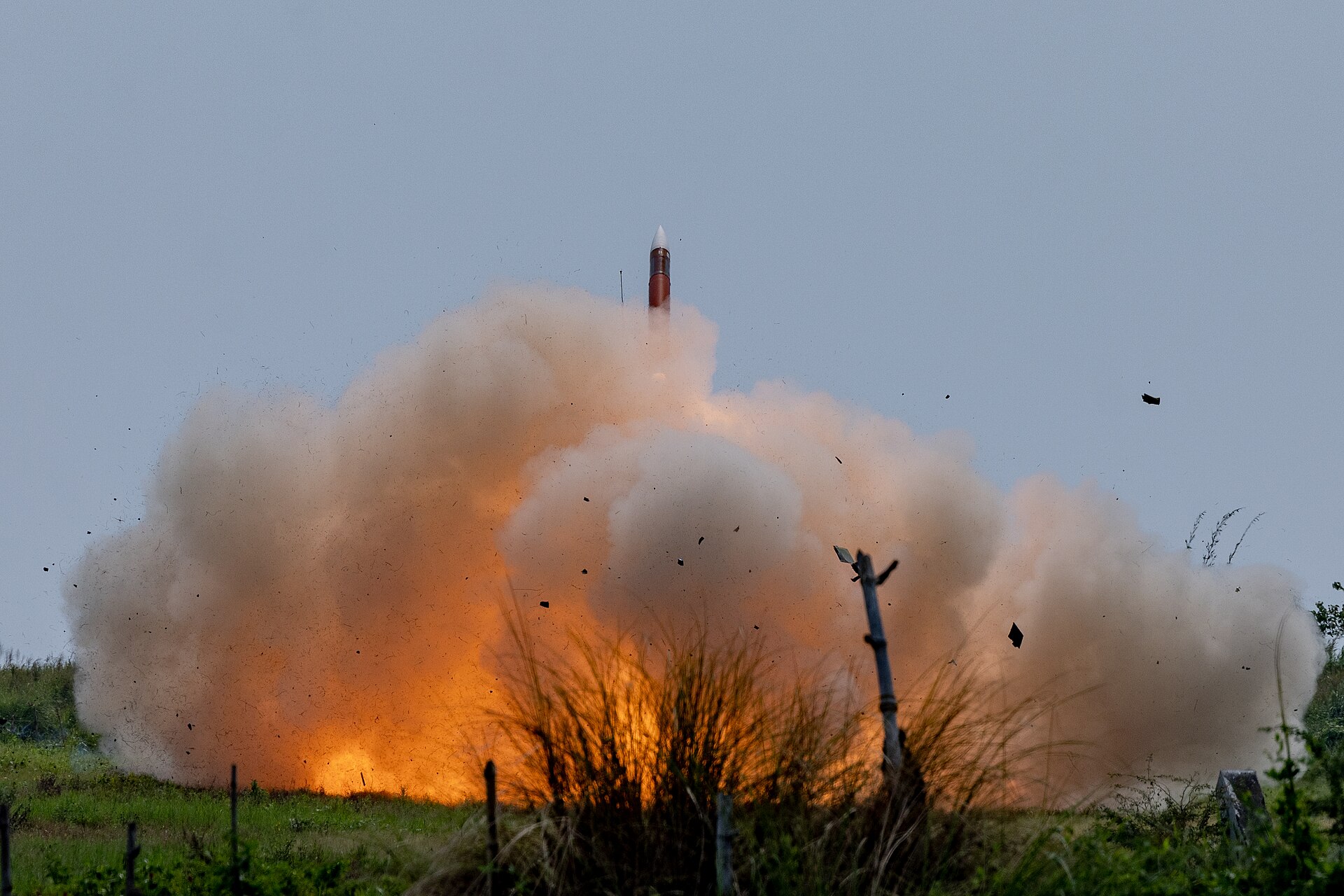
The PAC-3 Missile Segment Enhanced interceptors that defended Jubail are drawing down at an unsustainable rate. Saudi Arabia has fired approximately 2,400 of an estimated pre-war stockpile of 2,800 rounds since March 3, at $3.9 million per interceptor. The Camden, Arkansas production line manufactures 620 per year. Ras Tanura — the world’s largest oil loading facility — sits 65 to 73 kilometers from Jubail, inside the same PAC-3 engagement envelope. Saudi air defense commanders face a triage problem that no SEZ brochure addresses: when missiles arrive simultaneously at Jubail and Ras Tanura, the battery cannot cover both.
An investor evaluating a shipyard investment at Ras Al-Khair is not evaluating a tax rate. The investor is evaluating whether the air defense umbrella protecting the Eastern Province’s industrial corridor will hold for the twenty-year duration of the CIT incentive.
Why Do Economic Substance Rules Matter in a War?
The ESR framework requires zone entities to maintain adequate physical premises, employ full-time staff physically present in the zone, incur operating expenditure proportionate to their licensed activities, and take management decisions from within Saudi Arabia. For entities deriving income from intellectual property, at least half of all directors must be Saudi residents, and the entity must demonstrate a “detailed commercial rationale” beyond pure marketing.
These are conventional anti-abuse provisions — designed to prevent brass-plate operations from claiming tax benefits without genuine economic activity. In peacetime, they function as intended. In wartime, they create a paradox: the zones require physical human presence in a jurisdiction where corporate security teams are advising against deploying non-essential personnel, where some embassies have reduced staffing, and where the insurance that covers employees against war-related injury or death is either unavailable or priced at multiples of the peacetime rate.
A European manufacturer weighing a KAEC production facility must staff it with Saudi-resident managers and employees who meet the substance thresholds. The company cannot operate the zone entity remotely from Frankfurt and claim the 5% CIT rate. The substance requirements convert what might otherwise be a low-commitment tax arbitrage into a real deployment of people and capital into a conflict zone — which is, from the Saudi perspective, exactly the point.
The kingdom does not want shell companies. It wants factories. Factories need workers. Workers need security. Security, at the moment, is the one thing the tax framework cannot provide.
The FDI Gap Before the War
The structural deficit predates February 28. Saudi Arabia’s Vision 2030 targets SAR 388 billion — approximately $100 billion — in annual FDI by decade’s end. The 2024 figure was $20.7 billion, a three-year low and a decline from $26 billion in 2023. The kingdom met roughly one-third of its cumulative FDI targets as of early 2026, before a single missile had been fired.
“Capital is a coward; it doesn’t go into war zones. Investors have other places they can invest.”F. Gregory Gause III, Middle East Institute, March 2026
Investment bank estimates put Q1 2026 FDI inflows at 60 to 70 percent below the same quarter in 2025. The non-oil PMI — the broadest real-time measure of private-sector economic activity — fell from 56.1 in February to 48.8 in March, the first contraction reading since August 2020. The new orders sub-index dropped below 47, its lowest since Q2 2020. Supply chain backlogs rose at their fastest rate since July 2018.
“The softer reading was mainly driven by a pause in new orders as clients adopted a more cautious stance,” said Naif Al Ghaith, chief economist at Riyad Bank. Monica Malik, chief economist at Abu Dhabi Commercial Bank, warned of a “cautious private sector and FDI outlook” threatening the kingdom’s diversification goals.
More than 100 companies had signed SEZ agreements by the end of 2025. No publicly available data distinguishes between signed agreements and operational deployments. The gap between announcement and execution has been a persistent feature of Saudi megaproject economics — but the SEZ framework’s substance requirements were designed precisely to close that gap, by making tax benefits contingent on physical presence rather than contractual commitment.
Lucid Motors: The Flagship That Cannot Leave
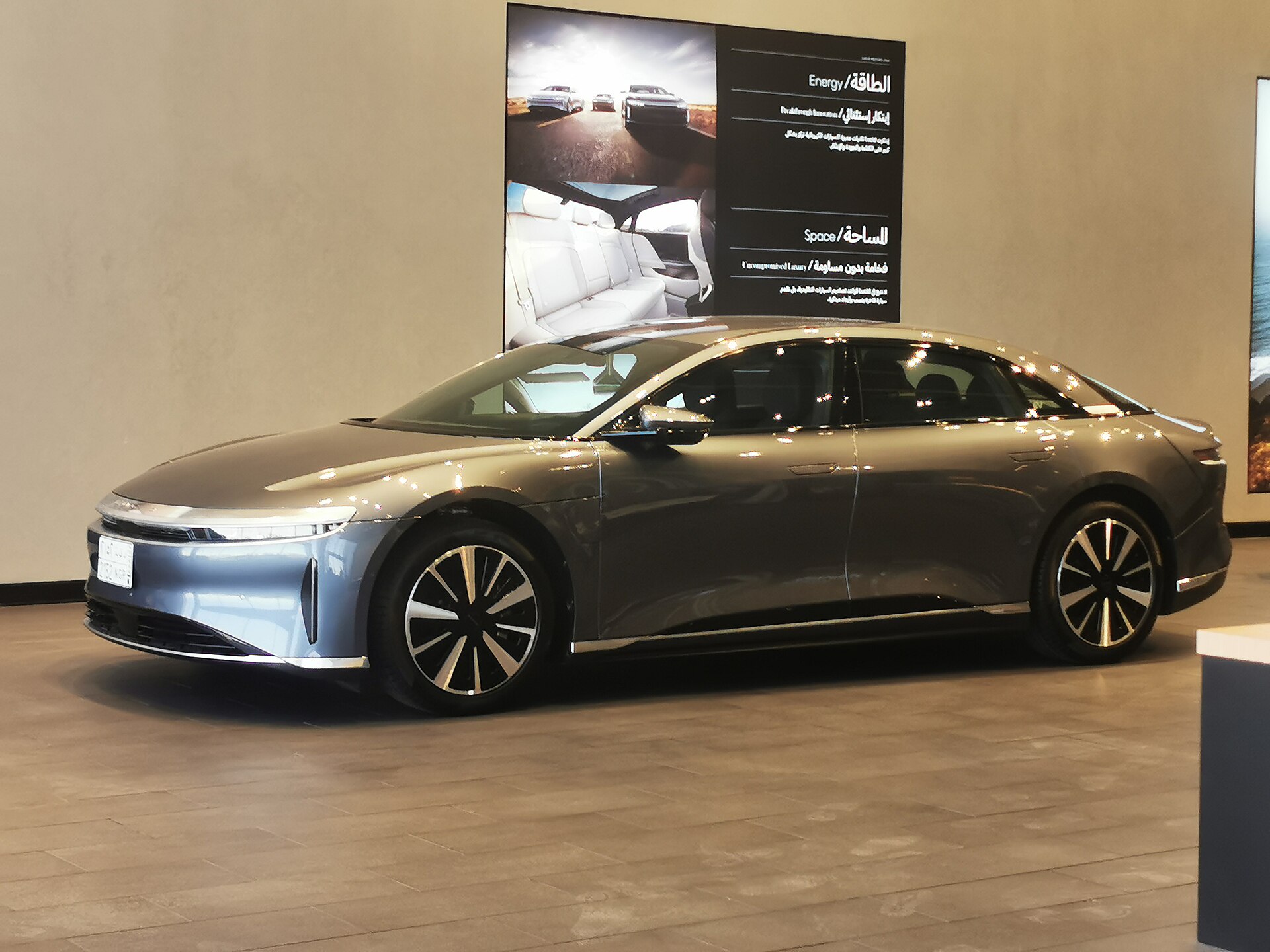
The only confirmed operational anchor tenant across all four zones is Lucid Motors, whose AMP-2 assembly facility near KAEC opened in September 2023. The plant currently assembles vehicles from semi-knocked-down kits shipped from Lucid’s Arizona factory, with a production ramp targeting 150,000 EVs per year at full capacity. PIF holds the controlling stake in Lucid — making the kingdom’s sovereign wealth fund simultaneously the zone’s principal investor, Lucid’s majority shareholder, and the ultimate authority behind ECZA’s regulatory framework.
Lucid’s structural position illustrates the SEZ program’s dependency problem. The company cannot relocate without PIF’s consent. Its supply chain requires continuous maritime logistics through waterways where war-risk premiums have quintupled and the Strait of Hormuz operates at 15-20 vessel transits per day against a pre-war average of 138. Its war-risk insurance status is not publicly disclosed. As a PIF-controlled entity, Lucid is less a market signal to foreign investors than a captive demonstration — proof that the zone can host a factory, not proof that a factory would choose to be there.
Héla Miniaoui, an economist at Lusail University, drew the distinction that matters: large infrastructure and state-backed contracts remain resilient, but “discretionary greenfield investment is most vulnerable — companies can delay or redirect these projects more easily.” Lucid is not discretionary. Everything the SEZ framework is designed to attract is.
The Cloud Computing Exception
The virtual Cloud Computing SEZ — headquartered in Riyadh, with no fixed geographic footprint — is the one zone where the war-risk insurance problem is most solvable. Data center assets can be distributed, redundant, and partially located outside kinetic threat envelopes. Cloud infrastructure does not require maritime supply chains for continuous raw material inputs. The zone’s workforce can operate from hardened or dispersed facilities in ways that a Ras Al-Khair shipyard cannot.
The trade-off is that the Cloud Computing zone is excluded from the zero-percent withholding tax on dividends, interest, royalties, and technical fees — precisely the income streams that hyperscalers and SaaS companies generate. A cloud provider routing licensing revenue through the Riyadh zone faces standard Saudi WHT rates while a manufacturer at KAEC pays zero. The incentive structure was calibrated for an industrial economy, not a digital one. The war has inverted the logic: the zone best positioned to attract investment under current conditions offers the least competitive tax treatment for the businesses most likely to come.
PIF’s recent partnerships tell their own story. The $23 billion in AI and cloud commitments announced under the Humain initiative — NVIDIA, AMD, AWS, Qualcomm, Cisco — were structured as bilateral PIF investment partnerships, not as SEZ tenancies. The capital is flowing into Saudi Arabia’s digital economy. It is flowing through PIF’s balance sheet, not through the zone framework.
UAE and Qatar as Alternative Destinations
The competitive frame is not Saudi Arabia versus Singapore or Ireland. It is Saudi Arabia versus the two Gulf economies that have positioned themselves as stable alternatives during the conflict.
The UAE’s free zones — DIFC, ADGM, Jebel Ali, DMCC — offer 0% CIT for up to fifty years in some cases, with no economic substance requirements comparable to Saudi Arabia’s ESR framework. The UAE is on the JWC Listed Areas expansion but has not experienced direct kinetic strikes on its industrial infrastructure. Dubai’s war-risk insurance market, while disrupted, remains more functional than coverage for Eastern Province assets.
Qatar’s situation is more complex. Its territory falls within the JWC Listed Areas, and its LNG exports face Hormuz transit constraints. But Qatar’s $450 billion sovereign wealth fund gives it a fiscal cushion that Saudi Arabia’s war-strained budget cannot match, and Doha’s positioning as a mediator — rather than a belligerent-adjacent party — gives it a diplomatic profile that risk committees evaluate differently from Riyadh’s.
Karen Young, at Columbia University, offered the medium-term view: tourism, financial services, logistics, and technology sectors may suffer short-term disruption, but the Gulf remains “essential to emerging market economies” as a capital deployer and geographic hub. Justin Alexander, of Khalij Economics, was more direct: “I’m sure in the short term lots will be stalled, but in the medium term it depends on whether Iran ends up stable.”
The SEZ framework was designed to compete for capital that the UAE and Qatar were already winning. The war has widened the gap. April 16 does not close it.
The Fiscal Backdrop: Who Pays for Zero-Percent Incentives?
Tax incentives are forgone revenue. In a fiscal environment where the official 2026 deficit is projected at $44 billion — and Goldman Sachs estimates the PIF-inclusive figure at $80-90 billion — every dollar of CIT not collected from an SEZ tenant is a dollar that must come from Aramco dividends, sovereign debt issuance, or spending cuts elsewhere.
The fiscal breakeven oil price, inclusive of PIF commitments, sits at $108-111 per barrel. Brent is trading at approximately $102-103. PIF’s construction commitments have already been cut from $71 billion to $30 billion, with an $8 billion write-down and approximately zero percent portfolio returns in 2024. Aramco’s dividend has been reduced by roughly one-third, costing PIF at least $6 billion in annual income.
The kingdom is offering twenty-year tax holidays at the moment it can least afford to forgo revenue. If the zones succeed — if foreign manufacturers, shipbuilders, and food processors actually build facilities and hire workers — the forgone tax revenue is an investment in diversification. If the zones remain largely empty, as the pre-war FDI trajectory and current war conditions suggest, the incentives are a subsidy to a future that may not arrive, offered from a treasury that is already drawing down reserves.
Investment Minister Khalid Al Falih confirmed a “decisive shift in priorities” earlier this year — Expo 2030 and FIFA 2034 now sit at the top of PIF’s funding stack. The SEZ program is not on that list. PIF Governor Yasir Al Rumayyan described the fund as pursuing “a more efficient and returns-driven investment vehicle,” with approximately 15% further capital spending reductions ahead. The bureaucratic apparatus that conceived the zones in 2023 continues to execute its implementation timeline. The strategic apparatus that allocates capital has moved on.
FAQ
What is the Special Integrated Logistics Zone (SILZ), and how does it compare to the four SEZs?
The SILZ, adjacent to King Khalid International Airport in Riyadh, operates under a separate framework offering 0% income tax for fifty years — far more aggressive than the SEZ’s 5% CIT for twenty years. For logistics-focused investors, the SILZ’s half-century zero-tax guarantee and its proximity to Riyadh’s airport infrastructure make it the more attractive vehicle. The SILZ was designed for re-export and warehousing operations and does not compete directly with the manufacturing mandates of KAEC or Ras Al-Khair, but for supply chain companies evaluating Saudi Arabia, the SILZ undercuts the SEZ on the single metric that matters most.
Have any countries negotiated bilateral investment treaties that would cover war losses in Saudi Arabia?
Saudi Arabia maintains bilateral investment treaties with over 25 countries, including major European economies and several Asian trading partners. However, BIT protections typically cover expropriation and discriminatory treatment — not physical damage from armed conflict with a third party. The treaties’ war and civil disturbance clauses generally require only non-discriminatory treatment of affected investors, meaning Saudi Arabia must treat foreign investors no worse than domestic ones. They do not provide compensation for war damage itself. No BIT signatory has publicly tested these provisions in the current conflict.
What happens to SEZ tax benefits if a tenant evacuates staff due to security conditions?
The ESR framework — once final regulations are published — will require continuous physical presence, resident directors, and proportionate operating expenditure. An extended evacuation that reduces headcount below substance thresholds could disqualify the entity from preferential tax rates, retroactively converting 5% CIT to the 20% mainland rate for the affected period. The draft regulations do not contain a force majeure provision for conflict-related evacuations. This gap has not been publicly addressed by ECZA or ZATCA.
Could Saudi Arabia unilaterally extend war-risk insurance coverage to SEZ tenants through a sovereign guarantee?
Theoretically, the kingdom could establish a state-backed war-risk insurance facility — similar to Pool Re in the United Kingdom (established after IRA bombings) or TRIA in the United States (after September 11). No such facility has been announced. Creating one would require Saudi Arabia to explicitly acknowledge that its territory is a war-risk zone — a political admission that contradicts the SEZ program’s implicit promise of stability. The fiscal cost would also be substantial: if the sovereign backstops $10-20 billion in insured industrial assets and a successful strike occurs, the liability falls directly on a treasury already running an $80-90 billion deficit.
Are Chinese firms — which face fewer US compliance constraints — more likely to invest in the zones?
Chinese manufacturers and construction firms have shown greater risk tolerance in conflict-adjacent markets globally, and Sino-Saudi trade relations have deepened during the conflict — Beijing brokered the first laden LNG transit through Hormuz in early April. However, Chinese firms face their own insurance constraints through SINOSURE, China’s export credit agency, which has tightened Gulf exposure since March. More fundamentally, Chinese investment in Saudi Arabia has historically been structured as bilateral government-to-government deals — the NEOM-adjacent projects, Huawei’s 5G buildout — rather than through zone frameworks designed for Western FDI conventions. The SEZ architecture assumes an investor that values withholding tax treaties, IFRS-compliant accounting, and English-language arbitration — the profile of a European or American manufacturer, not a Chinese state-owned enterprise.
The PIF’s broader strategic reset — abandoning The Line as a 2030 deliverable while doubling down on Humain and the two mega-events — sets the investment climate the SEZs must compete within; the full analysis is in PIF’s Vision 2030 strategic reset.