RIYADH — Yasir Al-Rumayyan told Al Arabiya on April 15, 2026, that completing The Line by 2030 was “good to have, but not a must have.” The PIF Governor was not describing architecture. He was executing a narrative transfer of liability that the fund’s balance sheet had already required and the Iran war had given political cover to announce.
The statement was made at the press conference unveiling PIF’s 2026-2030 strategic framework. NEOM was simultaneously classified as an “independent ecosystem” within the fund, standalone from the core Vision Portfolio. The gigaproject that defined Vision 2030’s global brand has been lifted off the program’s critical path. What replaces it is an inter-generational hedge — a framing, first floated by Finance Minister Mohammed Al-Jadaan in February, that recasts NEOM as a “50-plus-year plan.”
The question is no longer whether The Line will be built on time. The question is what Vision 2030 means once The Line is subtracted. Humain AI, Expo 2030, and FIFA 2034 remain as anchors. Together they describe something that looks less like a transformation program than a sovereign wealth fund that paid for stadiums and chips.
Table of Contents
- What did Al-Rumayyan actually say?
- The institutional grammar of a demotion
- The balance sheet had already decided
- What does Vision 2030 look like without The Line?
- The war as political cover
- Is Humain a transformation program or a rebranded sovereign wealth fund?
- The LIV Golf pattern
- The 50-year frame
- How does this affect foreign investors?
- Frequently Asked Questions
What did Al-Rumayyan actually say?
Al-Rumayyan, speaking on Al Arabiya on April 15, 2026, said: “People assume that The Line is Neom. Is it necessary for The Line to be completed by 2030? I don’t think so. It’s good to have, but it’s not a must have.” He added that no NEOM projects had been cancelled, but “some projects have been delayed because they are not on the critical path.”
The formulation is unusually precise for a PIF Governor who has historically preferred generalities. Two distinct moves happen inside three sentences. The first decouples The Line from NEOM in public perception — a linguistic severance that clears the way for physical scale-back without brand damage. The second retires the 2030 deadline as a constraint, not a target.
Neither move is new inside the fund. Both are new on television.
The Middle East briefing 3,000+ readers start their day with.
One email. Every weekday morning. Free.
The setting mattered. The interview ran during the rollout of PIF’s 2026-2030 strategic framework, the same press event at which NEOM was classified as “an independent ecosystem within the fund” — one of six sector focus areas, alongside tourism, urban development, advanced manufacturing, industrials and logistics, and clean energy. Al-Rumayyan’s comments were not a slip. They were the strategy document’s first public footnote.
The institutional grammar of a demotion
The Governor chairs the NEOM board. He also chairs Aramco’s board. He is the most senior PIF official below MBS, and the only figure outside the Royal Court empowered to speak on Vision 2030 execution without the Crown Prince himself appearing to recant.
That matters because of how de-escalation moves through Saudi institutions. A Cabinet minister downgrading The Line would have been read as ministerial dissent. A NEOM CEO doing it would have been read as corporate excuse-making. Al-Rumayyan sits high enough that his statement carries the weight of the fund and, by extension, the Crown Prince who chairs the fund’s board. He sits low enough that MBS has not personally had to walk anything back.
The same institutional logic applied in February, when Al-Jadaan told AGBI that “Neom is a 50-plus-year plan” and that anyone expecting completion and profitability within five years was “foolish.” The Finance Minister made the macro case. The PIF Governor, two months later, ratified it with project-specific language. The Crown Prince has said nothing.
What looks like a gradual walk-back is better read as a sequenced handoff — from the ministry that finances the project, to the fund that owns it, with the Royal Court reserving the option to stay above the argument. The PIF 2026-2030 strategy document is the institutional artefact that now carries the downgrade, not a press release.
The balance sheet had already decided
The fiscal case for the Line’s demotion was complete before the first Iranian missile was launched at Saudi territory on February 28, 2026. PIF’s gigaproject book value fell 12.4% during 2024 — from 241 billion Saudi riyals to 211 billion — an $8 billion write-down disclosed with the fund’s August 2025 annual report. Gigaprojects fell from 8% to 6% of total PIF assets over the same year.
The 2024 effective return on the whole fund was, in Tim Callen’s phrase, “close to zero.” Callen, an AGSI scholar and former IMF mission chief for Saudi Arabia, calculated that PIF’s long-run return averaged 7.2% annually from September 2017 to end-2024, down from 8.7% the prior year. Headline AUM growth of $150 billion (19%) in 2024 was driven mainly by an 8% Aramco equity transfer worth roughly $140 billion — an accounting reallocation, not a performance outcome.
Cash reserves stood at approximately $15 billion as of September 2024, the lowest since 2020. Aramco then cut its total dividend by roughly one-third for 2025, to about $84.5 billion. PIF holds 16% of Aramco: the cut implied roughly $6 billion less annual income for a fund that had been spending $50 billion on a single 170-kilometre city.
| Indicator | Value | Source |
|---|---|---|
| PIF AUM (April 2026) | $925 billion | PIF 2026-2030 strategy |
| 2024 gigaproject book value decline | -12.4% ($8B write-down) | PIF 2024 annual report |
| Gigaprojects share of PIF assets | 8% → 6% | Callen / AGSI |
| 2024 effective return | “Close to zero” | Callen / AGSI |
| Long-run annualised return (Sep 2017-Dec 2024) | 7.2% (down from 8.7%) | Callen / AGSI |
| Cash reserves (Sep 2024) | ~$15 billion (lowest since 2020) | AGBI / AGSI |
| Aramco 2025 total dividend | ~$84.5 billion (down ~33%) | AGSI / Discovery Alert |
| NEOM total spend (Feb 2025) | $50+ billion | Rayan Fayez, Davos |
| The Line foundation completed | 2.4 km of 170 km (1.4%) | WEF Davos / NEOM disclosures |
| PIF construction commitments | $71B → $30B (-$41B) | AGBI / Middle East Briefing |
| Full NEOM build-out cost estimate | $8.8 trillion (end-state 2080) | New Civil Engineer, March 2025 |
| The Line population target (2030) | 1.5M → under 300K | WSJ 2024 leaked internal docs |
PIF cut at least 20% from portfolio spending across 2025, with some individual budgets down 60%. Red Sea Global and NEOM bore the brunt. The fund explicitly ring-fenced FIFA 2034, Expo 2030, and the Asian Winter Games — though the Games were later postponed when the Webuild contract for the Trojena dam, valued at roughly $5 billion, was cancelled. Hyundai E&C’s tunnel contract, worth around $540 million, was formally terminated on March 12, 2026.
By the time Al-Rumayyan sat for the Al Arabiya interview, the fund had already absorbed a formal impairment, reduced construction commitments by $41 billion, and cancelled individual contracts worth over $5 billion. Describing The Line as “good to have” was the catching-up of the narrative with numbers already written down. The same process is now underway for Saudi industrial infrastructure: Saudi Arabia’s first war-damage capital markets disclosure arrived via Sadara Chemical’s Tadawul filing, attaching a ‘3.7 billion legal number to damage that the government has not yet publicly estimated.
What does Vision 2030 look like without The Line?
Without The Line at the center, Vision 2030 reorganises around three fixed anchors — Humain AI, Expo 2030, and FIFA 2034 — set within PIF’s new three-portfolio architecture (Vision, Strategic, Financial) and six sector focus areas. NEOM becomes a multi-decade project classified apart from 2030 deliverables. The diversification narrative survives the physical city that symbolised it.
The new arithmetic is easier to defend than the old one. Expo 2030 is fixed in calendar terms: the Bureau International des Expositions contract binds Saudi Arabia to open the event in October 2030. Commissioner General Adel Al-Jubeir briefed the BIE Executive Committee in Paris on April 14, 2026 — the day before Al-Rumayyan’s interview — confirming that 1.5 million square metres of the site had been levelled, roughly 25% of total area, with the Saudi Pavilion and the Iconic Pavilion scheduled to begin construction in Q3 2026.
FIFA 2034 is fixed by the same logic. Fifteen stadiums across five cities, eleven new builds and four renovations, estimated at $10-15 billion in stadium construction alone. Contractors have been told timelines will slip. Several architecture firms have been asked to resubmit stadium plans after cost overruns. Construction-industry reporting in early 2026 indicated that PIF was reviewing the stadium count. The deadline, however, cannot move.
Humain AI is the flagship that was not in the original 2016 plan. It is also the one that can produce visible economic output inside the 2030 window.
What has been lost, specifically, is the architectural symbol. The Line was not a piece of infrastructure. It was the image Vision 2030 used to distinguish itself from every other Gulf diversification programme. NEOM coverage over the past year has made the point quantitatively: the full build-out projected by New Civil Engineer at $8.8 trillion — roughly 25 times the Saudi national budget — against a foundation of 2.4 km completed. The symbol could not survive those numbers. The programme can.
The war as political cover
PIF’s numbers required the demotion. The war allowed it to be spoken aloud.
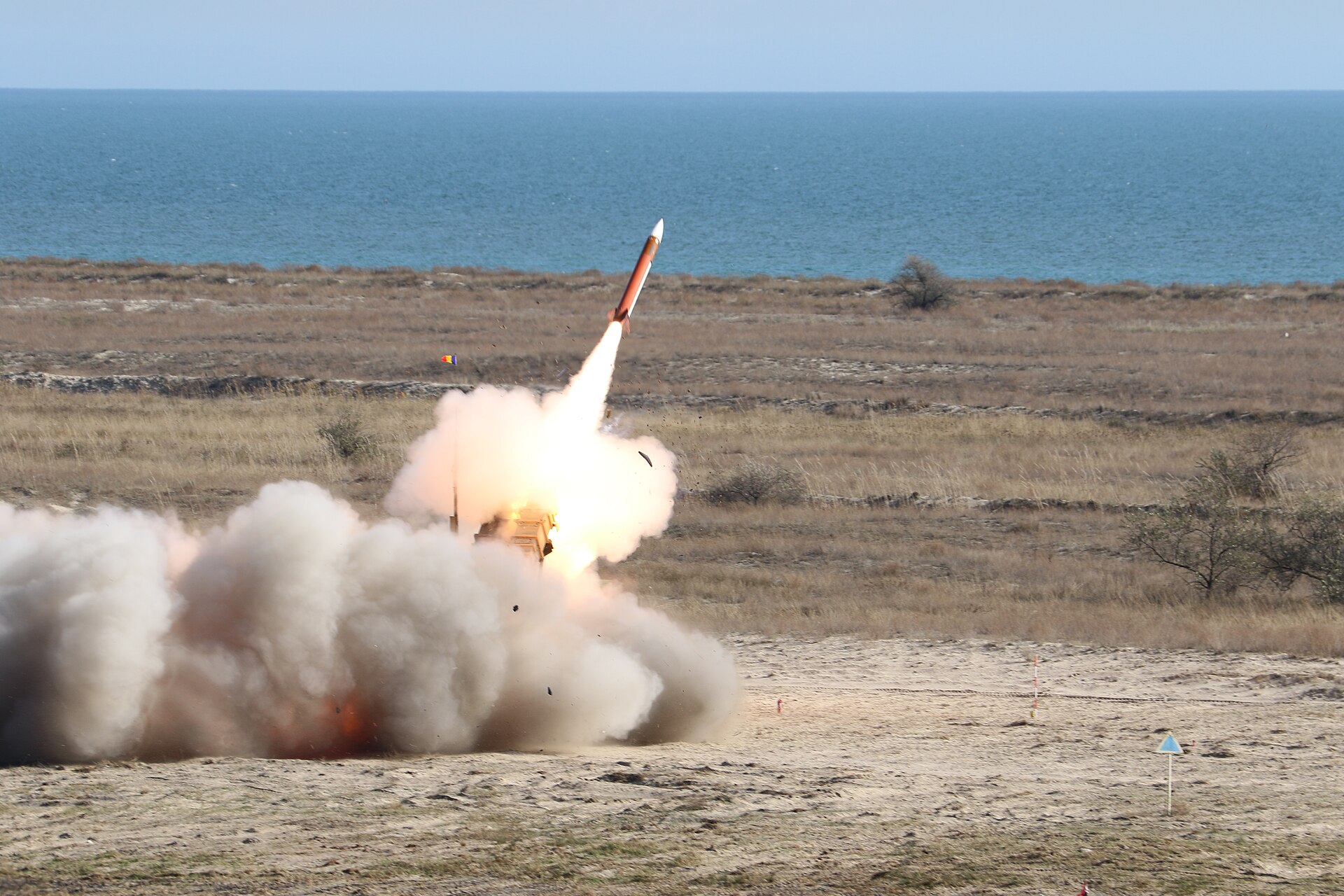
Between February 28 and early April 2026, Saudi air defences intercepted 799 drones and 95 ballistic missiles aimed at Eastern Province targets — 894 engagements across roughly five weeks. The King Fahd Causeway closed briefly on April 7 under ballistic attack. The Kingdom’s PAC-3 MSE stockpile, per defence-industry tracking, fell from approximately 2,800 rounds to around 400. Aramco cut East-West Pipeline throughput to fit the 5.9-million-barrel-per-day Yanbu ceiling after Iran made Hormuz exits unpredictable. Bloomberg’s PIF-inclusive fiscal break-even estimate sat at $108-111 per barrel against Brent trading in the low $90s. The Non-Oil PMI printed at 48.8 — contractionary for the first time in years.
Announcing The Line’s downgrade in January 2026 would have invited a different headline — a confession of over-reach by a Crown Prince who had staked personal prestige on the project. Announcing it on April 15, with the war still unresolved and the fiscal costs visible on every sovereign dashboard, let the same sentence read differently. It became prudence rather than retreat. Reallocation rather than failure.
This is what the “narrative transfer of liability” means in practice. The balance-sheet reality of NEOM does not change whether it is announced in January or April. The political meaning does. Before the war, an Al-Rumayyan quote in those terms would have been a scandal. After five weeks of Iranian missiles, it is hedging.
Saudi diplomats working the Islamabad Accord ceasefire track have made a related argument to European counterparts in private — that the Kingdom’s capacity to underwrite regional security commitments depends on not being simultaneously committed to uncompletable domestic projects. The Vision 2030 retrenchment and the Hormuz diplomacy are, on that reading, the same balance-sheet operation viewed from two different desks.
Is Humain a transformation program or a rebranded sovereign wealth fund?
Humain has $23 billion in announced partnerships — NVIDIA (18,000 GB300 Grace Blackwell chips), AMD ($10 billion, 500 MW of compute, multi-exaflop network), AWS ($5 billion “AI Zone”), Cisco, DataVolt ($5 billion data-centre campus at Oxagon). Almost all are inbound foreign investment or offtake agreements rather than Saudi industrial construction. The pattern resembles a sovereign wealth fund paying global firms to localise.
That is a defensible strategy on its own terms. It is not the same strategy that NEOM was sold as. NEOM was conceived as a greenfield build — Saudi workers, Saudi materials, Saudi design choices, even a Saudi-adjusted gravity for the cognitive city. Humain is a licensing-and-colocation play. It is closer to what Abu Dhabi’s G42 has done with Microsoft than to what Riyadh promised with The Line.
The distinction matters for how Vision 2030 can be credited. A transformation programme produces resident engineers, domestic supply chains, and — at the furthest reach — export capacity in a new sector. A rebranded sovereign-wealth-fund deployment produces data-centre square-footage, licensing fees paid out, and foreign-built hardware in Saudi buildings. Both create jobs. Only the first creates capability.
The AMD partnership, with its multi-exaflop network operational by early 2026, is the most advanced. The NVIDIA GB300 deployment is on track. The DataVolt Oxagon campus has been broken ground on — one of the few NEOM-territory projects still spending capital. The Humain partnership stack is the single strongest argument that Vision 2030 has an identifiable 2030 deliverable beyond stadiums.
Whether it is a transformation is a question the PIF strategy document does not, on close reading, answer. The Humain chapter is written in offtake language, not construction language. The capital commitments flow inward from foreign partners. The exit option — if the compute market softens or US export-control rules tighten around advanced chip sales to the Gulf — is theirs to exercise, not PIF’s.
The LIV Golf pattern
On the same day as Al-Rumayyan’s Al Arabiya interview, CNBC and Sportico reported that PIF was preparing to end support for LIV Golf after the 2026 season. The fund’s cumulative LIV outlay since 2021 stands at $5.3 billion, including a $266.6 million capital injection booked for 2026. Cumulative league losses exceed $1.1 billion.
The LIV exit and the NEOM downgrade are not the same decision. They are the same institutional move. PIF entered both projects with language that implied unlimited liability. PIF is exiting, or partially exiting, both projects now that the ledger has come due. The exits are announced under the cover of broader strategy refresh rather than as discrete retreats.
The pattern has precedent. In November 2024, PIF issued a formal statement that “all previously announced projects will continue to be funded and no projects have been postponed.” Within 120 days, the Hyundai contract was terminated and the Webuild dam cancelled. The fund does not renounce prior commitments. It allows them to expire.
The LIV parallel is useful because it is quantified and contained. $5.3 billion in, losses acknowledged, exit negotiated. The NEOM equivalent, on the public numbers, runs at least ten times larger. Al-Rumayyan’s statement on the Line is the first time that scale of write-down has been directionally acknowledged at the PIF-Governor level.
The 50-year frame
“Neom is a 50-plus-year plan. Those expecting completion and profitability within five years are foolish.”
Mohammed Al-Jadaan, Saudi Finance Minister, AGBI, February 2026
The formulation is unusually candid for a sitting finance minister, and it has done a specific institutional job: converted a transformation programme into an inter-generational asset-development story.
An internal board report seen by multiple outlets has NEOM reaching “end-state” only by 2080. The $8.8 trillion figure reported by New Civil Engineer in March 2025 is the full build-out number associated with that timeline, not the 2030 phase. The phase-one-by-2035 cost alone is estimated at $370 billion, against the original $500 billion five-city concept.
Al-Jadaan had made the same point in a different register as early as December 2023, telling the Washington Institute that “the delay or rather the extension of some projects will serve the economy. There are strategies that have been postponed and there are strategies that will be financed after 2030.” Al-Rumayyan’s April 2026 phrasing is the executive-level compression of that 2023 ministerial formulation.
The 50-year frame is not inherently a retreat. Saudi Arabia’s population doubling projection, its labour-force formalisation, its transition from oil-export dependence — none of those are five-year programmes in any serious economy. The problem is that Vision 2030 was explicitly branded on a five-year delivery horizon, complete with KPIs, the “2030” numeral in the project name, and an announcement calendar that assumed MBS would personally hand over a completed version. Moving to a 50-year timeline dissolves the KPIs as accountability instruments. What remains is the portfolio.
How does this affect foreign investors?
Tim Callen of AGSI has argued that “a scaling-down of domestic investment ambitions could help attract foreign investors if the revised projects become more realistic.” Chatham House’s Dr. Neil Quilliam has flagged persistent difficulty in relocating regional HQs to Riyadh and retaining senior expatriate executives. The Line’s demotion may stabilise counterparty expectations by removing the single most unachievable timeline from the Kingdom’s shop window.
The Regional Headquarters programme — the 2024 rule requiring multinationals to base their MENA HQ in Riyadh to qualify for Saudi government contracts — has produced more than 600 formal RHQ licences on paper. The operational conversion rate has been lower than announced. DSV CEO Jens Lund told investors in August 2025 that “the ramp-up in Neom has been slower than we expected,” and the $10 billion DSV-NEOM logistics joint venture has not, in practice, become operational.
Foreign investors reading the April 15 statement will find two signals. The first is that the fund has admitted, at Governor level, what its balance sheet has been printing. The second is that the projects now marked as fixed — Expo 2030, FIFA 2034, Humain’s AI partnerships — are ones where counterparty risk is shared with calendar-bound events, multilateral sports bodies, or foreign technology firms with their own execution reputations at stake.
That may be the most honest version of Vision 2030 that has yet been put on the table. It is also the most reduced. The programme that began in April 2016 with a commitment to 5% non-oil revenue growth, a 50% female labour-force participation trajectory, and a capital city of 15 million by 2030 — all of which remain extant KPIs — now sits alongside an admission that its signature physical artefact is not on the 2030 critical path.
The diversification numbers have largely held. Non-oil revenue was 50% of total in 2024. Female labour-force participation reached 34.5%. Tourism arrivals crossed 100 million in 2023 and the 2030 target was raised to 150 million. These are the Vision 2030 outputs that do not require The Line to exist. They are the ones that survive Al-Rumayyan’s sentence.
That is why Al-Rumayyan had to say the sentence and MBS had to let him: the marketing proposition for a Crown Prince who personally launched The Line on international television is structurally harder than the portfolio metrics. What the revised Vision 2030 tracker now measures is whether the programme can be delivered on numbers alone — without the architectural image that once made it globally legible. Non-oil revenue at 50%, female participation at 34.5%, tourism arrivals at 100 million and rising. Those KPIs survive. The city does not.
Frequently Asked Questions
What is the current status of the DSV-NEOM logistics joint venture?
The $10 billion DSV-NEOM joint venture, announced with DSV holding 49% and NEOM 51% and granting exclusive logistics rights through 2055, remained non-operational as of February 2026 with no capital allocated beyond initial announcement. DSV’s 2025 spending on NEOM was capped at approximately $100 million. DSV CEO Jens Lund has told investors publicly that the ramp-up has run behind schedule, with no revised start date committed. The venture is the single largest third-party logistics deal associated with NEOM and its stall is used inside AGBI reporting as the clearest operational indicator that the city’s construction phase has not, in fact, resumed.
Which specific NEOM contracts have been formally terminated so far?
Hyundai Engineering & Construction’s approximately $540 million tunnel contract was formally terminated on March 12, 2026. Webuild’s Trojena dam contract, valued at roughly $5 billion, was cancelled earlier in the same quarter. Trojena — the mountain resort intended to host the 2029 Asian Winter Games — has had those Games postponed, though Saudi Arabia retains formal hosting rights and the Olympic Council of Asia has not assigned the event elsewhere. Further terminations at the trade-contractor level have been reported locally but not officially confirmed through NEOM press releases.
How does the 2026-2030 PIF strategy structurally differ from the 2021-2025 version?
The 2021-2025 strategy organised PIF investment around 13 strategic sectors and a growth-through-deployment emphasis. The 2026-2030 strategy, approved by the PIF Board under MBS’s chairmanship on April 15, 2026, collapses these into three portfolios — Vision Portfolio, Strategic Portfolio, Financial Portfolio — and six sector focus areas: tourism, urban development, NEOM, advanced manufacturing, industrials and logistics, and clean energy. The AUM target remains in the $1 trillion-plus range by 2030, but performance metrics have moved toward financial returns after the 2024 “close to zero” print.
Has MBS personally addressed The Line’s downgrade?
As of the Al-Rumayyan interview on April 15, 2026, no. The Crown Prince’s last substantive public statement on NEOM came at the Future Investment Initiative in October 2024, when he reiterated the city’s centrality to Vision 2030 without specifying a 2030 physical target. The sequencing of Al-Jadaan’s February 2026 “50-year plan” formulation and Al-Rumayyan’s April 2026 “not a must-have” ratification has kept the Royal Court above the line. That is itself a deliberate institutional design: MBS retains the option to either endorse or override the downgrade without having personally committed to either.
What happens to Trojena and the 2029 Asian Winter Games?
The likeliest outcome is a rescheduled Games tied to whenever Trojena’s dam and village phase are eventually completed — the 2029 date effectively abandoned without formal relinquishment. The Olympic Council of Asia has not named an alternative host, leaving Saudi Arabia holding a devalued but unchallenged right to the event.
The clearest single signal of PIF’s pivot from reputation capital to hard returns is the decision to end LIV Golf funding after 2026 — the same week four Special Economic Zones activated. That strategic shift is examined in PIF Just Killed the Architecture It Built to Apologise for Khashoggi.